A payment of $0.10 costs more to process through a card network than it brings in. For years this arithmetic kept pay-per-article access, in-game tips, and per-request API billing out of reach, so businesses bundled small purchases into subscriptions or prepaid packages instead of charging for each unit of value.
Crypto micropayments change the cost structure. Low-fee networks, payment channels, and stablecoins let a merchant accept amounts measured in cents or fractions of a cent, and machine-readable protocols let software pay software. The sections below cover how the model works, where it is used, and how fees add up per transaction.
A micropayment is a transfer small enough that a fixed processing cost would consume most of it. There is no formal threshold. In practice, the term covers amounts from roughly $1 down to fractions of a cent — for example, $0.002 for a single API call.
Blockchain micropayments settle these amounts in cryptocurrency or stablecoins instead of card or bank rails. The payer signs a transaction in a wallet, the network confirms it, and the merchant receives funds without an intermediary charging a flat fee per operation. The broader logic is covered in our overview of the main advantages of accepting payments via blockchain.
Card networks and bank transfers were designed for purchases worth several dollars or more. Three structural features make them unprofitable for smaller amounts:
- Fixed transaction fees. A common online card pricing model is 2.9% plus $0.30 per transaction. On a $0.50 purchase, the fixed part alone takes 60% of revenue.
- Minimum payment amounts. Many processors reject charges below about $0.50 to protect their own margin. A merchant billing $0.05 per action has to accumulate charges before collecting anything.
- Chargebacks and processing overhead. A disputed card payment usually carries a fee of $15 or more, regardless of the original amount. One dispute on a $0.20 sale cancels the revenue of 75 other sales.
Subscriptions and prepaid bundles solve the fee problem but add friction: the merchant loses buyers who wanted a single item.
Four technical models are in use. They differ in how often the base blockchain is involved, which determines the cost per transaction:
- Direct on-chain payments. Each payment is a separate transaction recorded on the blockchain. The model is viable only where the network fee stays below a cent, as on Solana or Ethereum L2 networks.
- Layer 2 and payment channels. Participants lock funds in channels and exchange signed balance updates off-chain. Only opening and closing a channel reach the base layer, so thousands of payments share two network fees.
- Aggregated and batched payments. The service records small debits in an internal ledger and settles on-chain periodically. A user tops up $10 once, and each $0.02 action is deducted without a network fee.
- Streaming payments. Value moves continuously, per second or per unit consumed, instead of in separate invoices. Examples include per-minute podcast payments over Lightning and token streams on EVM networks.
Micropayments fit any product whose value can be split into small, countable units. The scenarios below already run in production, though at different levels of maturity:
- Pay-per-article and digital content. A reader pays $0.10–0.50 for a single article, video, or track instead of a monthly subscription. The publisher earns from one-time visitors who would never subscribe.
- Gaming and digital goods. Players buy skins, extra lives, or in-game currency for less than $1. Crypto rails remove the minimum charge, as described in our guide to in-game payments and the methods players prefer.
- Tips and donations. Viewers send creators a few cents, often during a live stream. With no card fee, a $0.25 tip reaches the recipient almost in full; see our article on accepting cryptocurrency donations.
- API metering and pay-per-use services. A provider charges per request, per token, or per megabyte instead of selling fixed plans. The customer pays for actual consumption, and the provider avoids unpaid overages.
- IoT and machine-to-machine payments. Devices pay each other for resources: an electric vehicle for each kWh, a sensor for bandwidth. Amounts are small and frequent, and no human approves each one.
- AI-agent payments. Autonomous agents buy data, compute, or access to paid APIs while completing a task. A stablecoin payment inside an HTTP request lets an agent pay $0.01 without an account or a card on file.

A working setup combines a settlement layer, a unit of account, and a connection to the product. These components are usually used together:
- Bitcoin Lightning Network. Micropayments settle in seconds, from one satoshi, with routing fees of a few satoshis. The merchant needs a node with inbound liquidity or a provider that runs one.
- Low-fee blockchain networks. Solana, TON, BNB Smart Chain, Base, Arbitrum, and Optimism move funds for fractions of a cent. Our comparison of Base, Arbitrum, and Optimism for business covers the differences.
- Stablecoins. USDT and USDC fix the price in dollars, so $0.05 stays $0.05 at settlement. The network still matters: accepting Tether (USDT) payments costs differently on TRON, Solana, or Arbitrum.
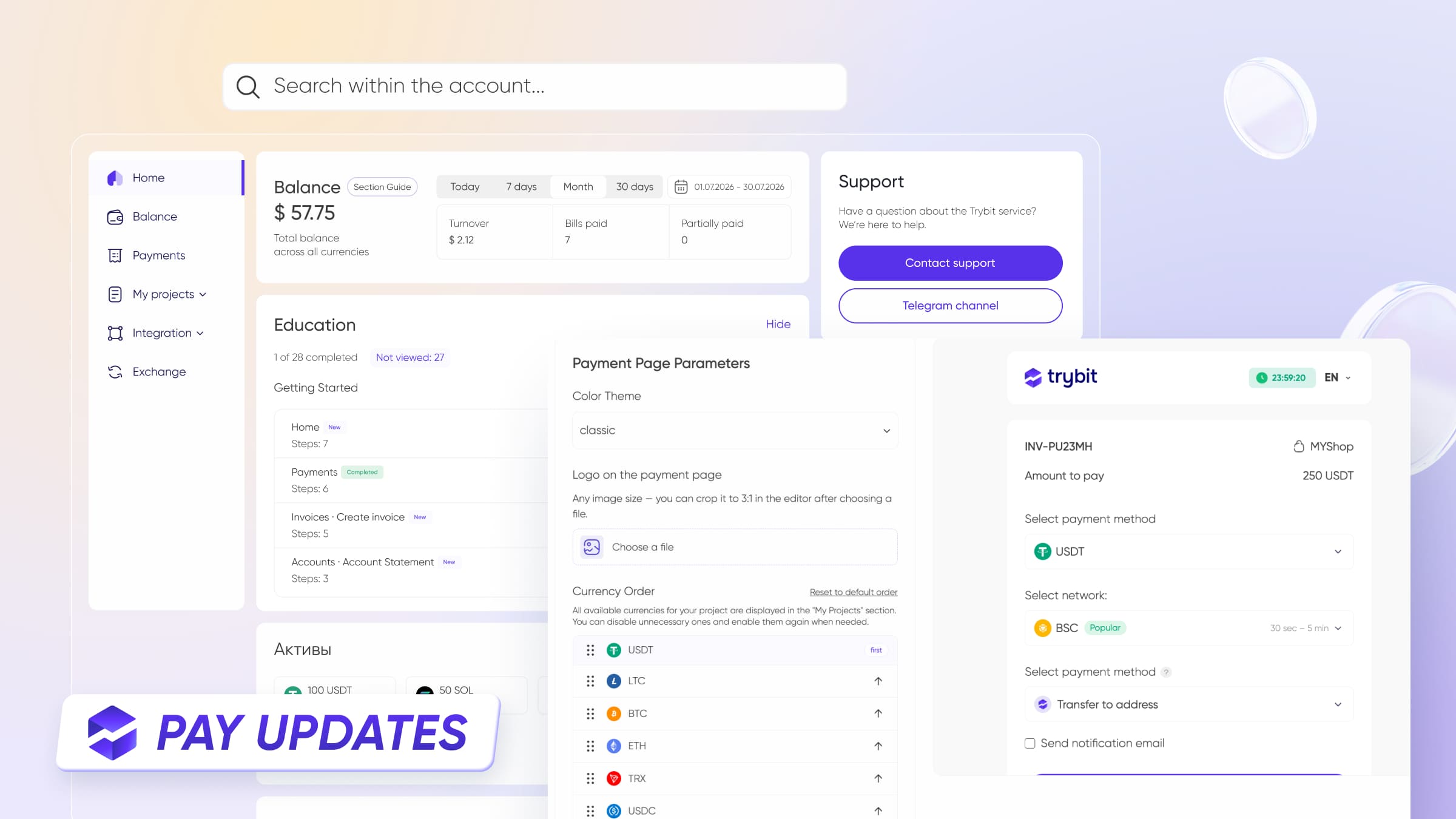
- Wallets and payment APIs. Users pay from Web3 wallets such as MetaMask, Phantom, or TronLink in one or two clicks. On the merchant side, an API creates invoices, tracks confirmations, and notifies the backend.
- HTTP 402 and machine-native payments. The status code 402 Payment Required is now used by protocols such as x402 and L402. The server returns a price, the client pays, then repeats the request with proof of payment.
Fees and Unit Economics
The cost of a micropayment is never a single number. Several layers stack up, and each is measured against the payment amount:
- Network fees. Each on-chain transaction is charged at a rate that follows network load. A Bitcoin fee may reach several dollars during congestion, as our guide on how to speed up a Bitcoin transaction explains.
- Channel and liquidity costs. Lightning requires on-chain fees to open and close channels, plus capital locked as liquidity. Buying inbound liquidity from a service provider adds a one-time or recurring cost.
- Provider and conversion fees. A payment gateway usually takes a percentage of each payment rather than a fixed sum, which suits small amounts. Converting coins to stablecoins or fiat adds a spread or a separate fee.
- Effective cost per payment. The sum of all layers divided by the payment amount. For a $0.20 payment, a 1.9% gateway fee equals $0.0038, while a card fee of 2.9% plus $0.30 exceeds the payment itself.
Benefits and Challenges of Crypto Micropayments
The model offers what card rails cannot, but it also shifts some responsibilities onto the business. One group of factors works in its favor, two others require preparation:
- Speed, global reach, and programmability — payments confirm within seconds or minutes and arrive from any country. Payment logic lives in code: charge per call, stop a stream when the balance runs out.
- Wallet onboarding and user experience — a user without a wallet cannot pay, and installing one for a $0.10 purchase is a barrier. Checkouts with Web3 wallet connection and QR codes cut the number of steps.
- Volatility, custody, and compliance — revenue in Bitcoin can lose value within hours, so auto conversion to stablecoins is common. Incoming funds also need AML screening; see how to identify high-risk crypto transactions.
Implementation starts with the model: direct payments on a low-fee network or a prepaid balance with internal debits. Most platforms choose the balance, since it keeps on-chain transactions to a minimum. Then comes a gateway whose fees do not cancel out the savings.
Trybit is a crypto payment gateway for online businesses that supports 40+ currencies and blockchains, including Bitcoin, Ethereum, USDT, and USDC. The fee is a percentage with no fixed component: 1.9% at the base rate, from 0.4% for large projects. Withdrawals carry only the network fee.
Network choice matters as much as the rate. Payments in Bitcoin, Litecoin, TON, BNB Smart Chain, Solana, Arbitrum, Optimism, and Base, and payments via Web3 wallets carry no Trybit transfer fee.
For platforms with a high volume of small payments, the following features matter:
- Static wallets. Each user receives a permanent address for balance top-ups, and any amount received is credited automatically. This fits the prepaid model used in games and pay-per-use services.
- Auto conversion. Incoming cryptocurrency is converted to stablecoins at the moment of receipt. Revenue from thousands of small payments stays protected from price swings.
- AML/KYT screening. Every incoming transaction is checked, and suspicious receipts are flagged and blocked before crediting. This reduces the risk of an exchange account freeze when funds are withdrawn.
- Stable operation under load. The payment gateway kept 99.9% uptime over the last 12 months, with payment confirmation from 20 seconds. Over $150 million has been processed in more than five years.
- Conversion-focused checkout. The payment page is available in 20+ languages and fixes the exchange rate for the invoice lifetime. Payers connect a Web3 wallet and pay in one or two clicks.
Trybit is a cryptocurrency processing platform that works with popular coins, offers a clear personal account, and supports features from automatic AML checks to auto conversion of payments. The service can be connected for free in a few steps:
- Sign up. Registration requires an email address and a Telegram handle.
- Create a project. Fill out a form with information about the company and the website or application where payments will be accepted.
- Integrate. Connection is available through the API, an HTML widget, Host2Host, or ready-made CMS plugins. For prepaid balances, static wallets are created for users via API.
- Test it. The system prompts a trial payment to confirm that statuses and postback notifications arrive correctly.
Crypto micropayments work where card rails stop: amounts from a dollar down to fractions of a cent, paid per article, per API request, or per action of an AI agent. The infrastructure is in place — Lightning, low-fee blockchains, stablecoins, HTTP 402 protocols — and the cost per payment depends on the network and the provider's fee model.
The practical setup for most platforms is a prepaid balance funded through low-fee networks, with auto conversion to stablecoins. Trybit covers it with static wallets, AML/KYT screening, and a fee with no fixed component, so each small payment stays profitable.
- What is the smallest possible crypto micropayment?
On the Lightning Network, the minimum is one satoshi, or 0.00000001 BTC. On regular blockchains, the minimum is set by the network fee, which should stay a small share of the amount.
- Why are card payments unsuitable for micropayments?
A fixed fee of about $0.30, minimum charges, and dispute fees of $15 or more take most of the revenue on purchases below $1.
- Which networks are best for blockchain micropayments?
The Lightning Network, Solana, TON, BNB Smart Chain, Base, Arbitrum, and Optimism: transfers there usually cost fractions of a cent.
- How can a business avoid volatility when accepting micropayments?
Accept USDT or USDC directly, or enable auto conversion of incoming cryptocurrency to stablecoins at the moment of receipt.
- What is HTTP 402 used for?
The code signals that a resource requires payment. Protocols x402 and L402 use it so applications and AI agents can pay for API access automatically.
- Can Trybit be used for micropayments?
Yes. Static wallets support prepaid balances, many networks carry no transfer fee, and the service fee is a percentage with no fixed component.




 11 min