A blockchain transfer has no cancel button. Once confirmed, it is final, and neither a wallet provider nor an exchange can reverse it. Most losses therefore happen earlier, when the address, network or memo is entered.
This guide covers what to prepare, how sending works, which checks prevent irreversible errors and what to do when a transaction is stuck. The logic is the same for Bitcoin, Ethereum and USDT. Only fees and timing differ.
A transfer depends on five inputs, and an error in any of them can misdirect the funds. Readers without a wallet can start with a step-by-step guide on how to create a cryptocurrency wallet. Before sending, the following should be ready:
- A wallet or exchange account. Funds must sit in a wallet the sender controls or in an exchange account with withdrawals enabled. Exchanges often require verification first.
- The recipient's public address. A string such as bc1… for Bitcoin or 0x… for Ethereum. It is safe to share and is copied from the recipient directly, not from history.
- The correct blockchain network. Many assets exist on several networks. USDT runs on TRON, Ethereum, BNB Smart Chain, TON and Solana, and both sides must use the same one.
- A memo or destination tag when required. XRP, Stellar, TON and Cosmos deposits to exchanges often need an extra identifier. Without it, the funds are not credited automatically.
- Enough funds to cover the network fee. Fees are paid in the native coin. Sending USDT on TRON requires TRX, and sending USDT on Ethereum requires ETH in the same wallet.
Interfaces differ, but the sequence of actions barely changes from one app to another. Most wallets and exchanges present it in this order:
- Select the cryptocurrency. Open the Send or Withdraw section and choose the asset. Similar tickers, such as USDT and USDC, often sit next to each other in lists.
- Choose the correct network. Select the network the recipient named. If the wallet offers only one option, compare it with the recipient's deposit page.
- Enter or scan the recipient's address. Paste the address or scan the recipient's QR code. Typing by hand is a risk: one wrong character produces an invalid or foreign address.
- Add the memo or destination tag. Enter the memo in the separate field. It is often marked as optional, but for exchange deposits it is usually mandatory.
- Enter the amount and review the fee. Set the amount and check the fee estimate. Some exchanges deduct the fee from the amount, so the recipient gets less.
- Confirm and send the transaction. Review the summary, then confirm with a password, 2FA code or hardware wallet button. After that, the transaction cannot be edited.
- Track the transfer on a block explorer. Copy the transaction hash (TxID) and search for it on Blockchair, Etherscan or Tronscan. The page shows status, confirmations and the fee.
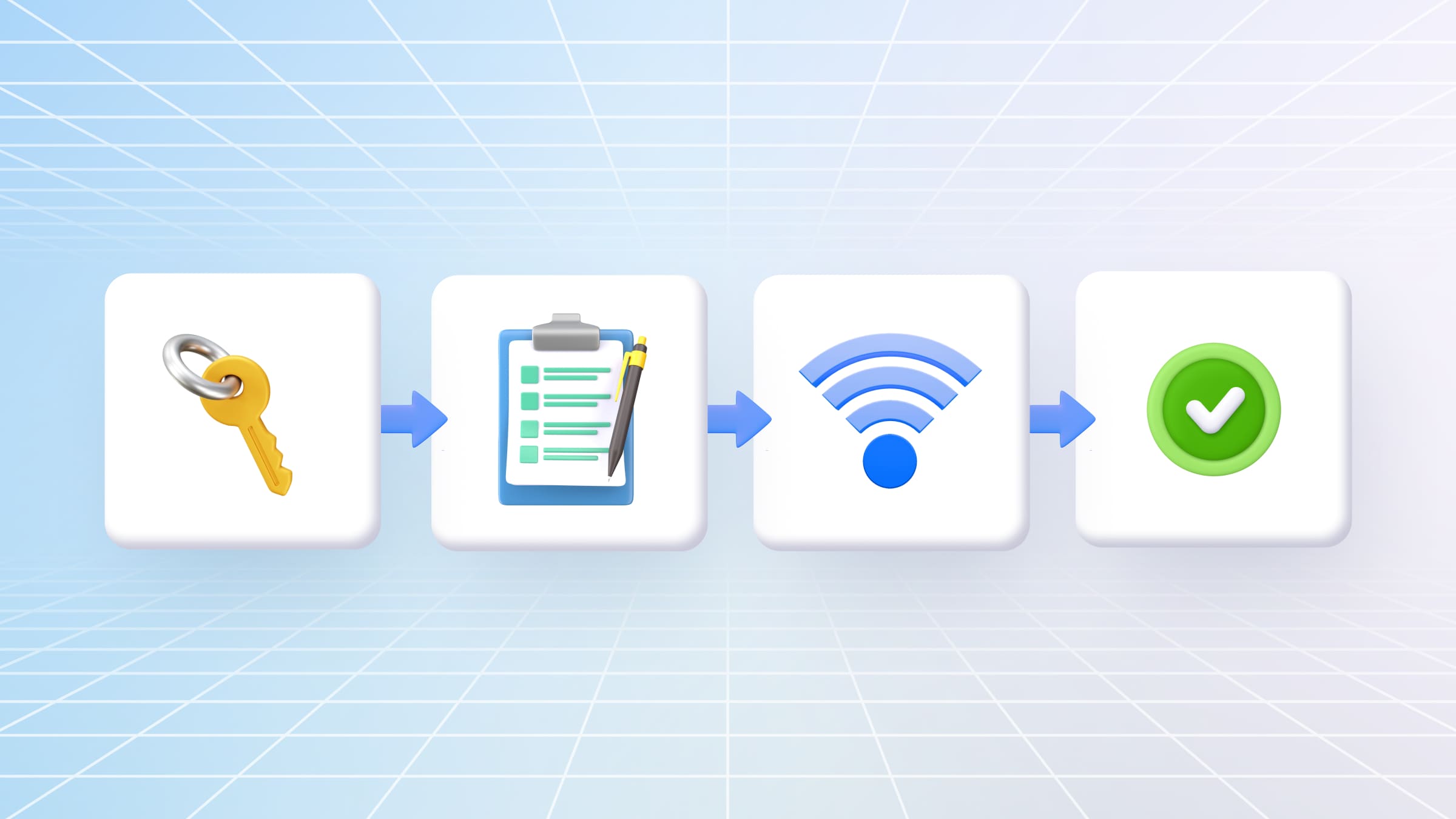
Verification takes a few minutes and targets the errors that cannot be fixed later. The first check concerns wallet compatibility, while the rest concern the address itself.
Match the asset and network on both wallets
A transfer succeeds only when both sides support the same asset on the same network. The address format does not prove this: Ethereum, BNB Smart Chain, Arbitrum and Base all use addresses starting with 0x. More on this in the article crypto wallet address explained: formats, types and uses.
The reliable method is to compare the recipient's deposit page with the send screen. Both should show the same token and network, for example USDT on TRON (TRC20). Standards are compared in the overview of USDT network types: ERC20, TRC20 and BEP20.
Three checks then remain for the address:
- Verify the address through a trusted channel. Request the address in a channel known to belong to the recipient, and confirm it through a second one for large amounts.
- Check the first and last characters. Compare the first and last five or six characters with the original. The middle deserves a glance too: attackers generate lookalikes.
- Send a small test transaction. Before the first transfer to a new address, send $5–10 and wait for the recipient to confirm receipt. An extra fee costs less than a loss.
Common Crypto Transfer Fees and Processing Times
Cost and speed depend on the network rather than the asset: the same USDT can cost cents on one network and dollars on another. Three factors matter here:
- What determines a network fee. It depends on transaction size, load and fee model. Bitcoin charges per byte, Ethereum charges gas, TRON uses energy or burns TRX.
- How network congestion affects confirmation time. At peak demand, transactions with higher fees go first. A low-fee Bitcoin transfer can wait for hours, although blocks come every 10 minutes.
- How to track a pending transaction. Search the TxID in an explorer and check the confirmations. Exchanges credit deposits after a set number of them, from 1 to 12 by network.
Most failed transfers come from a few repeated errors. Some are fixable through support, others are not:
- Sending on the wrong network. If the receiving wallet does not support the network, funds do not appear. The same key may recover them on EVM networks, but rarely on exchanges.
- Using the wrong address or missing a memo. A transfer to a foreign address is final. A missing memo is often recoverable, but support may take weeks and charge a fee.
- Sending an unsupported asset to an exchange. Exchanges credit only listed tokens on listed networks. Other tokens reach the address but not the balance, with no guaranteed recovery.
- Sharing a seed phrase or private key. No wallet, exchange or support agent needs them for a transfer. Whoever holds the seed phrase controls the funds.
Backups and 2FA are covered in the complete guide to crypto wallet security.
Transfer scams rarely break the blockchain. They target the sender: the copied address, the app in use or the person asking for help. Four schemes are common:
- Address-poisoning attacks. An attacker sends a tiny transfer from an address matching the edges of a real contact. The victim later copies it from history.
- Clipboard malware. It swaps a copied address for the attacker's one at the moment of pasting. Comparing the pasted string with the original reveals it.
- Impersonation and fake support. Scammers pose as exchange staff or the recipient in messengers. Real support does not write first or ask for a seed phrase.
- Malicious QR codes and wallet apps. A QR code can encode any address, and a fake app can copy a real wallet's icon. Wallets are installed only from official sources.
Signs of counterfeit apps are described in how to identify fake Bitcoin wallets. P2P schemes are analyzed in the overview of the most common P2P crypto scams.
The starting point is the TxID. A pending status means the network has the transaction but has not yet included it in a block. Usually this resolves once the load drops.
Some networks allow a stuck transfer to be accelerated. Bitcoin supports Replace-by-Fee (RBF) and Child-Pays-for-Parent (CPFP), while Ethereum wallets offer Speed Up, which resends the transaction with the same nonce and a higher fee.
A confirmed transaction missing from the balance points to the receiving side: the recipient contacts support with the TxID, network and memo. Deposits from high-risk addresses may be held for AML review, as explained in the article on dirty USDT and high-risk transactions.
No result in the explorer means the transaction was never broadcast. The withdrawal history then shows whether the exchange holds it for manual review.
The sequence below takes less time than one support request after an error. It is repeated before each transfer:
- Asset and network. The token and network on the send screen match the recipient's deposit page exactly, including the token standard.
- Address source. The address came from the recipient through a known channel, not from transaction history or a new chat.
- Address check. The first, middle and last characters of the pasted address match the original sent by the recipient.
- Memo. The memo or destination tag is entered whenever the recipient's deposit page shows this separate field.
- Fee balance. The wallet holds enough of the native coin, such as TRX or ETH, to pay the network fee for this transfer in full.
- Test transfer. A small test amount has arrived and been confirmed before the main transfer to any new recipient address.
- TxID saved. The transaction hash is copied after sending and checked in a block explorer until the final confirmation.
To send cryptocurrency to another wallet safely, the sender prepares five inputs, checks them before confirmation and tracks the result by TxID. Asset and network must match on both sides, the address must come from a trusted source, and a test transfer covers the remaining risk.
The same routine scales to regular payouts. A list of verified addresses, a saved TxID for every transfer and a new test transaction whenever a recipient changes the address reduce the number of errors that depend on attention alone.
- Can a crypto transfer be cancelled?
A confirmed transaction cannot be reversed. A pending one can sometimes be replaced: via Replace-by-Fee in Bitcoin or the same nonce in Ethereum.
- What happens if crypto is sent on the wrong network?
The funds do not appear on the balance. Recovery via the same key on EVM networks or via exchange support is possible but not guaranteed.
- How long does a crypto transfer take?
TRON and Solana usually confirm within seconds, Ethereum within a minute. Bitcoin deposits to exchanges often take 10–30 minutes.
- Why is a memo or destination tag needed?
Exchanges often share one address among many users. The memo shows which account to credit.
- How much does it cost to send crypto?
The fee depends on the blockchain, transaction size and congestion. It is paid in the native coin, and exchanges may add their own fee.
- Is it safe to share a wallet address?
Yes, a public address exists for receiving funds. The seed phrase and private key are never shared.




 11 min