prankophone

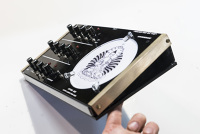
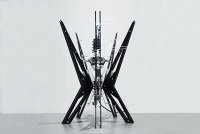
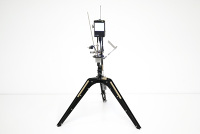
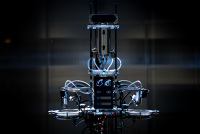
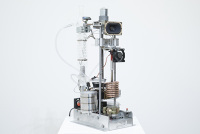
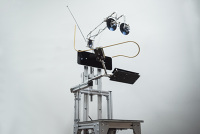
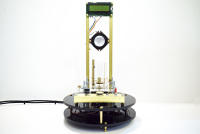
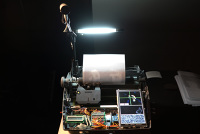
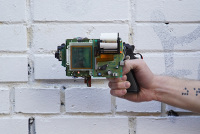
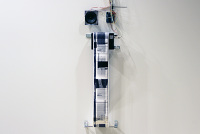
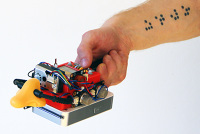
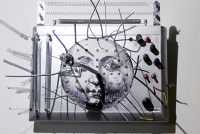
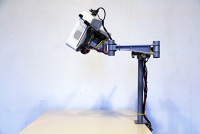
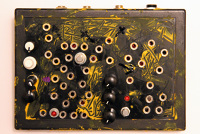
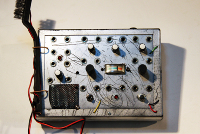
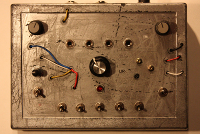
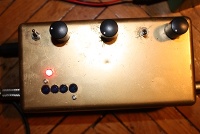
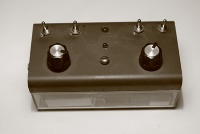
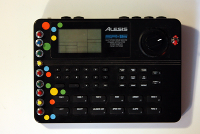
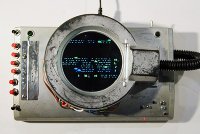
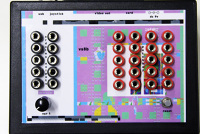
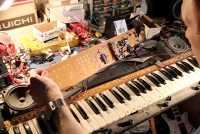
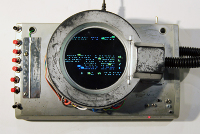
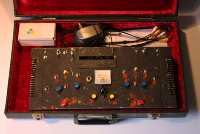
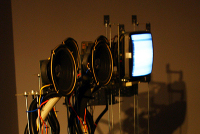
Prankophone is a sound object being a hybrid of synthesizer, telephone and logic module. The main principle of the object’s functioning is as follows: depending on the current mode, the apparatus calls to random or pre-defined recipients and plays them algorithmic melodies created from their phone numbers. The speakers transmit both the synthesized sounds and the sound from answering person. The common sound layer is involving a random recipient who doesn’t suspect anything. The person who answers the phone can’t hear any other sounds except for the synthesized ones.
Nowadays it’s averting to hear in the phone receiver any sound other than human voice – music means that we have to wait for the answer of the operator, strange electronic noises imply some mistake in decoding. Thus the sound from Prankophone would be perceived as some kind of mistake, though in reality it is an individual and anonymous sound message, a micro-noise piece which is unique for each number it managed to reach.

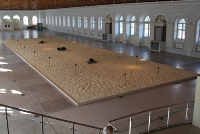
It is also important for me that a small object presented in an empty exhibition space becomes a kind of communicator with potentially huge amount of people who get involved into the project by accident, thus the space it “occupies” is expanded far beyond the gallery premises.
The apparatus features 4 modes of functioning:
- Autonomous mode, in which it generates the numbers by itself and tries to reach them, and play them the sounds.
- Manual mode, which allows to dial any number by pressing standard phone keys. The phone number is further automatically transformed into sounds.
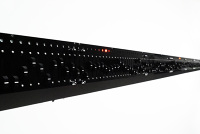
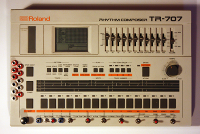
- Keyboard mode – mode of dialing the number on the one-octave keyboard where 10 keys correspond to 10 digits.
- Live mode – the number is defined by any of the previous methods, but the sounds are reproduced not automatically but from the keyboard, thus the user may “communicate” through sound with the person who answered.
The system of automatic generation of numbers may be calibrated depending on the region, or there is also the international mode which takes into account the phone codes, length of numbers and other parameters.

The first version of the sound algorithm is using mainly short intonated phrases, resembling synthetic speech which enters the dialogue. As the gadget will be used in various countries, there will be added new programs for transforming the numbers into sound, which will be possible then to select; this will allow to constantly develop and expand the abilities of the device. The system was first tested in Portugal.

The project was based on several historical references. From its very inception, electronic music owes a lot to the development of telephone and telegraph connection and equipment. Even now the most common format of connector in the musical industry is called Phone Jack, – such contacts were used on the manual phone stations, and later through laboratory equipment were introduced into the musical devices.

The first ever electronic instrument, titled Musical Telegraph, was created by Elisha Gray, American inventor in the field of telephony and telegraphy. The sound of this device was transferred through phone lines, - in fact, it was an advanced telegraph transmitter with piano keyboard. Another famous early electronic instrument was also playing through phone lines – Telharmonium by Thaddeus Cahill, which, by the way, was disturbing lots of accidental recipients: at that time, the interference protection was poor for the phone network, while in order to achieve sufficient sound level, Telharmonium was using very powerful signal, reaching not only the subscribers to this music, but also a great number of other people.

Apart from this, the typing telegraphs which were able to transmit the letters, invented by David Hughes, were using keyboards similar to piano keyboards. As the musical education was very wide-spread, and standard typewriter keyboards were not invented yet, it was a very logical solution for the input interface. Even the very attitude to the transmitting and decoding of the Morse code of the professional telegraphists has rather a sound-intonation nature and not simply counting the dots and dashes.


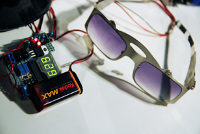
hardware:
- raspberry pi 2
- arduino mega
- Nokia mobile phone
- 2 channel sound system
- GE telephone as button board
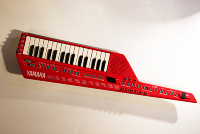
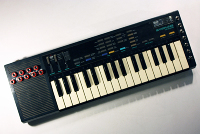
- 1 octave keyboard
soft:
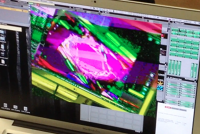
- Pure Data
- Python scripts
Oficinas do Convento, Montemor-o-Novo, Portugal, 2015