phantom
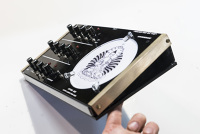
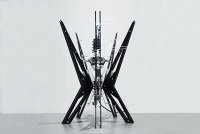
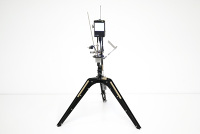
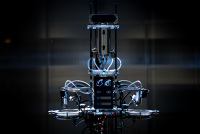
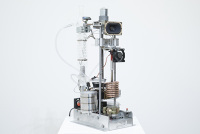
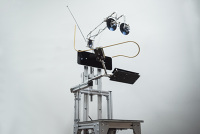
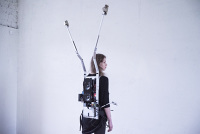
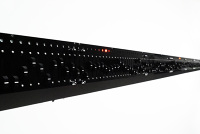
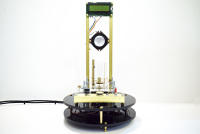
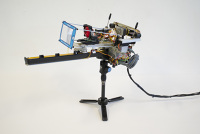
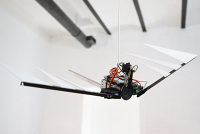
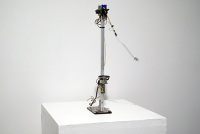
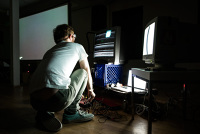
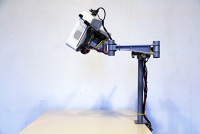
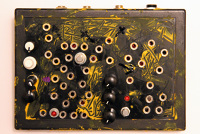
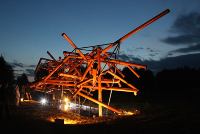
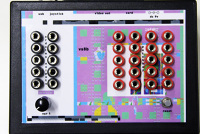
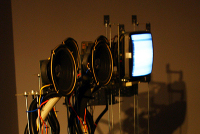
Phantom is a comprehensive system for creating audio-visual images using technologies available at the beginning of the 20th century. This project could even be called a mechanical/analog VR project - the object is designed as an experimental laboratory facility that provides some isolation and deep immersion in sensory experience.

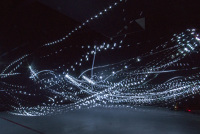
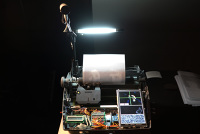
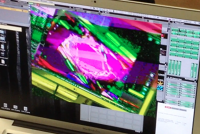
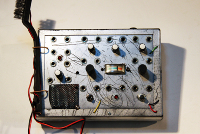
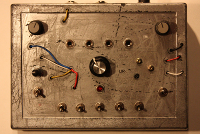
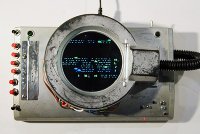
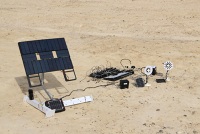
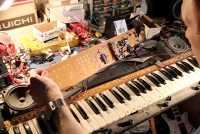
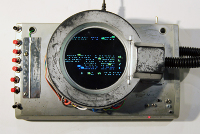
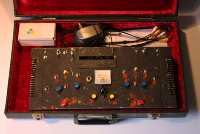
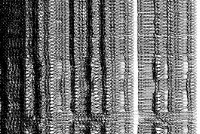
Generating the visual images is based on a system of two Nipkow discs – these are perforated rotating discs used to encode and decode images in the earliest television systems. They even, for a short time, become a widely used technology in television broadcasting. The use of this technology is unique as there are practically no known precedents for using Nipkov discs to create abstract images that are not encoded initially, but instead appear in real time by modulating the rotation speed in conjunction with blinking light sources. To generate the sounds, a radio was used that is capable of receiving short, mid, long and extra-long radio waves, including those that capture electromagnetic phenomena in the atmosphere. This was augmented by one of the few electronic musical instruments that existed at that time: the theremin. The sound directly affects the visual images – not in parallel, but synchronously.

At its core, the project represents media-archaeological research as well as a reflection on possible (or alternative) surges of interest in audio-visual art, perhaps earlier than previously conjectured. As a result, the use of such systems for research purposes includes studies of synesthesia, photoepilepsy, phantom vision, hallucinations and so on.

The project was created especially for the exhibition "New Anthropology", which is located in the Pavlov Institute of Physiology of the Russian Academy of Sciences in Koltushi. Within the framework of this exhibition a number of artists from Russia have created installations in one way or another related to the activities of the Institute. On the one hand, my work is directly related to the Hearing and Vision Laboratory, and on the other hand, it is as distanced as possible from the majority of unethical (animal-based) research at the Institute. In this case, my work can be considered as an experiment on humans, which, in contrast to the experiments on animals, I consider as the only acceptable one.

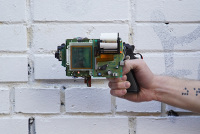
hard:
- raspberry pi
- arduino
- dc motors
- leds
- 2 channel sound system
- lw/mw/sw/am/fm radio
- open theremin
soft:
- pure data
Commission by "The New Anthropology" project.
Model - Valeria Nocebo.