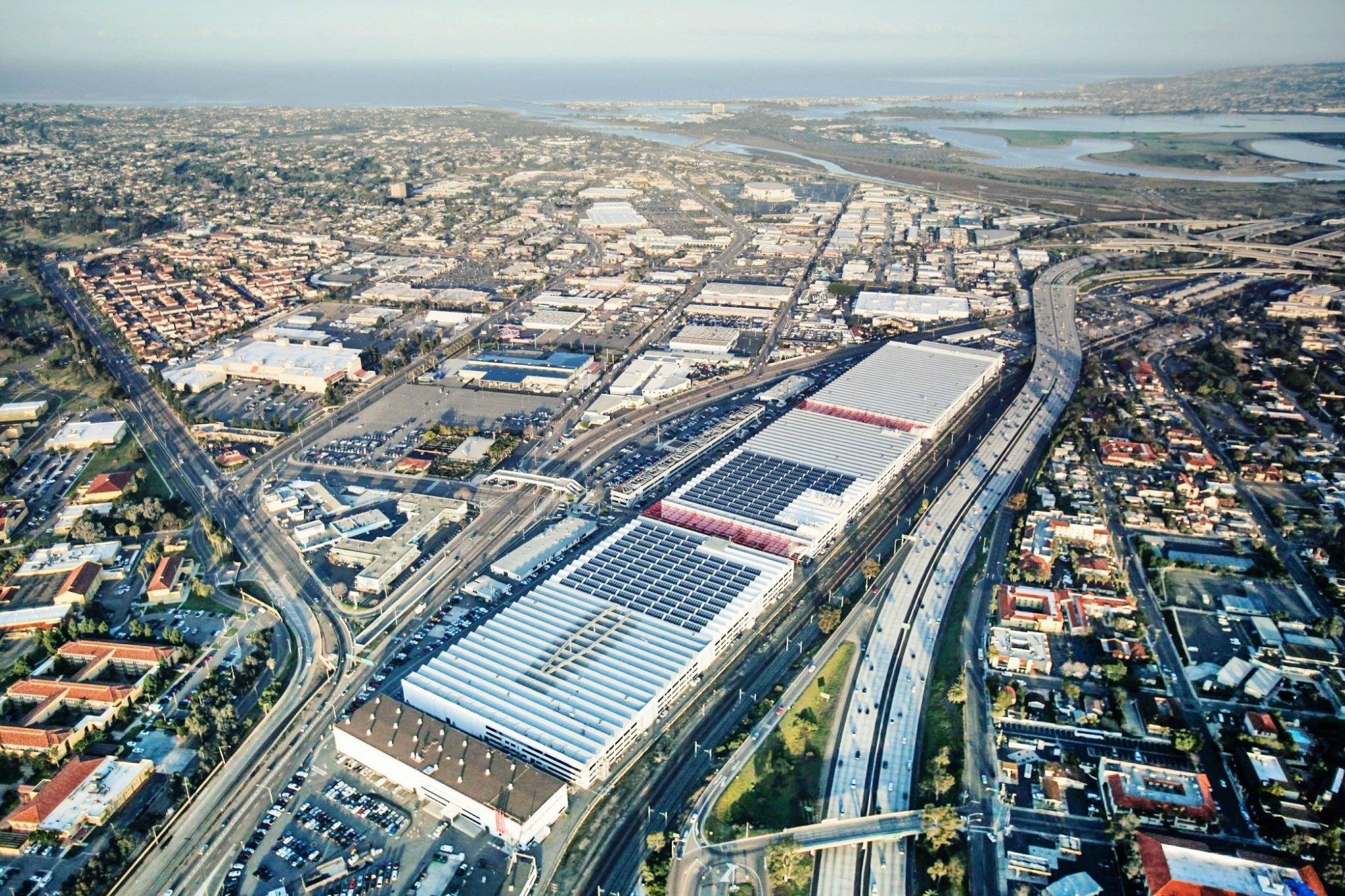

Democrats in San Diego’s delegation of the U.S. House of Representatives say they intend to introduce federal legislation specifically designed to thwart a potential data center from being part of a redevelopment effort at Naval Base Point Loma Old Town Campus, which is home to Naval Information Warfare Systems Command (NAVWAR).
U.S. Reps. Sara Jacobs, Scott Peters, Mike Levin and Juan Vargas said Thursday they want to keep any proposals for a data center from moving forward without local input and approval.
“Communities deserve to know what is being built next door so they have the opportunity to make their voices heard,” Vargas said in a statement.
Executives at the San Diego-based Manchester Financial have confirmed they are looking at the possibility of a data center to make up a portion of the 70.3-acre NAVWAR site — although company president and CEO Ted Eldredge says a data facility is just one of a range of options it is considering. The current development plan already contemplates a number of definitive uses, including 8,900 residential units and two hotels totaling 480 rooms.
But Manchester Financial has floated the idea of a 400-megawatt data center, which would be the largest by megawatt-capacity in California if it were to be built. That has sparked backlash from data center opponents, especially because the Old Town project is on federal land and the city of San Diego does not have jurisdiction over what can be built there.
“The proposal to build a data center on San Diego’s NAVWAR site is especially concerning because local elected officials did not have a seat at the table when the project was chosen, even though their communities will be most directly impacted by the decision,” Levin said in a statement.
Members of the House of Representatives are scheduled to return to Washington shortly after next Tuesday’s midterm elections, and members of the San Diego delegation say they intend to introduce legislation specifically aimed at stopping data center development at NAVWAR.
“This is a bait and switch,” Jacobs said in a statement. “We were promised housing, amenities, and public parks, and instead, we could get the state’s largest data center.”
A critical piece of the growth of artificial intelligence, data centers house racks of computer systems required to train generative AI models and chatbots. Supporters say data centers spur the cutting-edge technology and can drive down overall energy costs through economies of scale.
But critics say the electricity needed to feed such centers will add strain to the power system, leading to higher utility bills, and drive up water consumption because of the facilities’ need for cooling.
Some 70 members of the public spoke out against data centers earlier this week at a sometimes raucous meeting of the San Diego City Council.
Mayor Todd Gloria issued an executive order calling for a temporary moratorium on any new data center development that is within the city’s jurisdiction, and the City Council approved the measure on a 9-0 vote on Tuesday.