Read more

One Logo, One Name – Even More Possibilities

PCSS has become our only official brand for the whole world. In order to enhance communication and global identification of our Center, we decided to cease using PSNC (Poznan Supercomputing and Networking Center) and stay with the acronym of the original Polish name “Poznańskie Centrum Superkomputerowo-Sieciowe”.

Read more

PIAST-Q: A Leap for European Quantum Computing

PIAST-Q in Poznań, Poland is the first inauguration of a EuroHPC quantum computer marks a milestone in building a European quantum computing infrastructure. This is also the first EuroHPC infrastructure located in Poland.

Read more

First Polish AI Factory Consortium: PIAST-AI

Significant step towards making Europe a leader in AI technology has been taken – the PIAST-AI Factory at PCSS was selected by the European Commission to participate in the “AI Factories” program. This makes the Capital of Wielkopolska region a crucial driving force in the development of fields such as: IT, cybersecurity, space technologies, robotics, and sustainable development.

ICT Research and Development Center

PSNC provides access to a world-class e-Infrastructure for the scientific community, a specific research and development environment – DIGITAL SCIENCE – for “proof of concept” projects, prototyping or large-scale pilot projects. Another branch of our activity is in DIGITAL INDUSTRY, which is focused on the creation of innovations based on Information and Communication Technologies (ICT), i.e. the execution of specific implementations for various fields of science and industry. Equally important is our work in the context of SOCIAL INNOVATION to spread knowledge and awareness of contemporary technological opportunities among various social groups, as well as actively fighting against digital exclusion.
For over 30 years, we have been open to extensive cooperation both with research institutions to explore new areas of scientific challenges in joint projects and with industry partners – new entrants or large companies for which our competence and experience can become a strong asset to develop competitive innovation. Come and join us!

PCSS in numbers

employees

laboratories

years of operation

fields of activity

current projects

projects in Horizon Europe, Digital Europe Programme
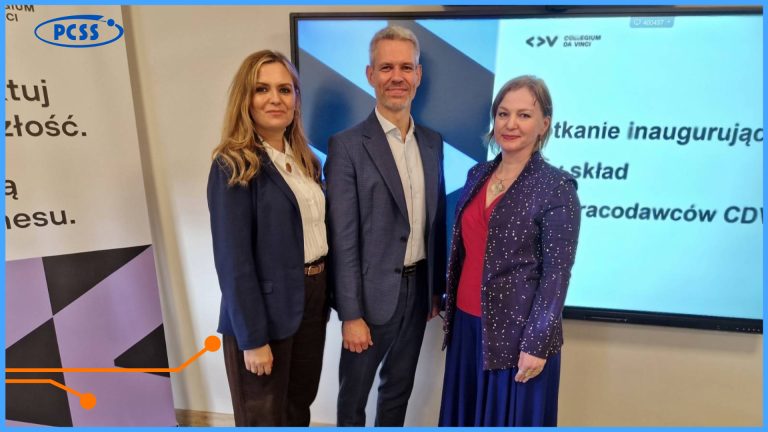
  • Three people stand in front of a banner with the PCSS logo and a screen displaying the CV logo during the inauguration of the CDV Employers' Council. A woman in a blue suit, a man in a gray suit in the center, and a woman in a red dress and jacket on the right.

    PCSS representatives in the Collegium Da Vinci Employers’ Council

    The Employers' Council of Collegium Da Vinci in Poznań is an advisory body of the university, comprising business representatives, which helps align educational programs with current labor market demands. The university emphasizes collaboration with practitioners to ensure a high employment rate. Urszula Grygier-Soboń, Deputy Plenipotentiary of the ICHB PAS Director for PCSS matters, and Dr. Magdalena Baranowska-Szczepańska from the Cooperation and External Relations Department, have been appointed to the Council.

  • A vibrant futuristic logo for PIONIER, displaying the name in glowing neon blue and orange letters with digital particle effects, light trails, and circuit patterns on a dark gradient background.

    PIONIER-Q: Construction of Cross-Border Quantum Key Encryption Connections

    A key stage in the construction of the nationwide quantum key infrastructure, connecting High-Performance Computing centers within the PIONIER network, has been completed. During the March meeting with the European Commission, the test results were successfully summarized, and a strategy for further expansion of cross-border connections was presented.

  • Promotional graphic featuring Piotr Rydlichowski, PCSS Network Infrastructure and Services Department expert, with a blue background, orange accents, and text highlighting the QKD Network Germany-Poland-Czechia project as a key step in building international quantum connections using QKD technology, including the PCSS logo.

    A modern quantum infrastructure connecting Germany, Poland, and Czechia is being developed

    In March, the QKD Network Germany-Poland-Czechia project was launched, which aims to create a secure, attack-resistant quantum infrastructure (QCI) connecting the three countries in our region. This will be the most extensive network in Central Europe utilizing Quantum Key Distribution (QKD)—a technology for generating and distributing cryptographic keys that is resistant even to future threats arising from the use of quantum computers. The initiative strengthens the cybersecurity of the states, ensuring secure communication between public institutions, critical infrastructure operators, the scientific sector, and data centers. One of the project partners is PCSS.

  • A futuristic library interior with glowing blue digital particles and data streams flowing between warm-lit bookshelves, overlaid with the E-RIHS.pl logo in the bottom right corner, evoking the fusion of cultural heritage and advanced research technology.

    PCSS as a member of the consortium funded by a 13-million-PLN grant from the Ministry of Science and Higher Education (MNiSW)

    The Polish node of the European research infrastructure E-RIHS ERIC has received a grant exceeding 13 million PLN from the Ministry of Science and Higher Education. These funds will secure the project's development for the next five years. PCSS, as a key member of the consortium coordinated by Nicolaus Copernicus University in Toruń, is thus fulfilling its mission at the intersection of modern technologies, science, and cultural heritage protection.

  • Two PCSS representatives in dark shirts stand smiling side-by-side on a brightly lit event stage featuring large yellow cubic displays, orange "Spark" and "mixer" branding on screens and backdrops, and sponsor logos including PAIH, PARP, PFR, and Scandio, set against a modern industrial venue in Poland. ​

    AI Innovations and Networking: Report from Spark Demo Day and Business Mixer

    An event combining Spark Demo Day and Business Mixer took place at the Łódź Special Economic Zone headquarters, where the Poznań Supercomputing and Networking Center (PCSS) presented its technological offerings. The meeting, organized on March 5, gathered over 250 companies from across Poland, serving as a platform for establishing strategic business relationships and showcasing solutions developed under the Spark 3.0 program.

  • Promotional banner for PRACE FENIX 2025 Call for Proposals, featuring the FENIX and PRACE logos alongside partners NECTEC, Jülich Supercomputing Centre, and PCSS on a geometric blue-orange background.

    PCSS supports the PRACE FENIX 2025 call for proposals.

    As part of the ongoing PRACE FENIX 2025 call for proposals, the offer of available infrastructure has been expanded to include additional cloud resources provided by PCSS. This initiative aims to support European research projects requiring advanced computing services and to provide free access to modern IT technologies for the scientific sector.

  • Group photo of eight men in business attire standing in front of a blue backdrop featuring the PCSS logo and the PIONIER network emblem, likely executives or leaders from PCSS, PIONIER, and partners discussing AI Gigafactory initiatives in Poznań.

    Poznań is ready for the AI Gigafactory – PCSS as a pillar of technological breakthrough.

    Poznań is emerging as one of the pillars of artificial intelligence in Central and Eastern Europe, and the Poznańskie Centrum Superkomputerowo-Sieciowe (PCSS) plays a key role in this process. As the operator of the PIONIER network and the national leader in research infrastructure, PCSS is laying the foundation for the development of large-scale AI systems, combining unique expertise with the highest data security standards.

  • Group photo of the Artificial Intelligence Council inauguration at the Greater Poland Voivodeship Marshal's Office (UMWW) in Poznań. PCSS logo in the top left corner; three PCSS representatives (Director Robert Pękal, Tomasz Parkoła, and Mikołaj Buchwald) stand among officials in suits against a blue backdrop with UMWW logos; held in a modern room with orange chairs.

    Inauguration of the UMWW Council for Artificial Intelligence

    In the headquarters of the Marshal's Office of the Greater Poland Voivodeship in Poznań, the activities of the Council for Artificial Intelligence were inaugurated. As an advisory body, it will support the processes of building a modern economy and administration based on AI foundations. The main goal of the established body is to develop innovative technological solutions, with particular emphasis on their practical application in the areas of healthcare, ecology, and public services provided to the region's residents.

  • An indoor wide shot shows a group of people in business attire seated around large, black-clothed tables during a formal meeting or conference. The room features white walls, soft ambient lighting from floor lamps, and a large white banner in the background with Polish text and logos related to regional transformation. In the top left corner, there is a "PCSS" logo, and a stylized orange circuit line graphic is visible in the bottom left. The atmosphere appears professional and focused as participants look at documents and engage in discussion.

    PSNC Energy Lab: Meeting of the Subcommittee for Eastern Wielkopolska

    During the 13th meeting of the Subcommittee for Eastern Wielkopolska in Konin (March 24, 2026), progress was presented on key strategic projects for the region. One of the pillars of the discussed activities is the PSNC EnergyLab project, implemented by PCSS, which serves as the research and development (R&D) foundation for a comprehensive socio-economic and energy transformation.

  • Group photo of ECHOES project participants at PCSS conference, standing on grand museum stairs with ECHOES banner, PCSS logo, and elegant architecture in Poznań.

    The ECHOES Second Annual Event: Conference Summary

    From March 16–20, PCSS became the European hub for debate on the future of digital cultural heritage. Partners of the ECHOES project, representatives of the European Commission, and sister projects of ECCCH gathered to review progress to date and outline development directions for the joint data platform.

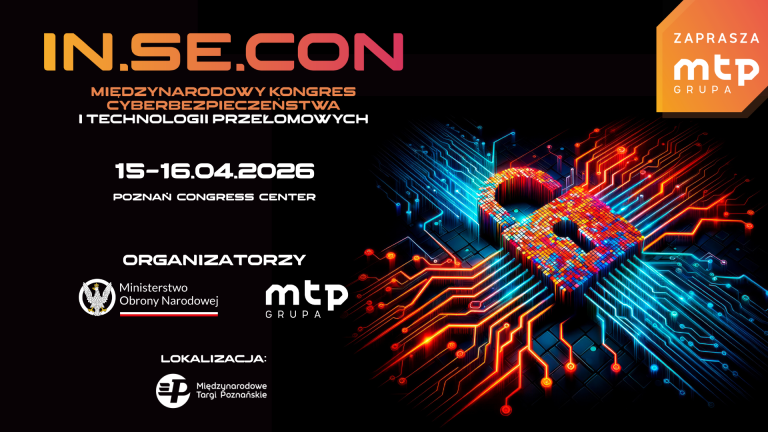
  • Promotional poster for IN.SE.CON 2026, the International Congress on Cybersecurity and Breakthrough Technologies, held April 15-16 at Poznań Congress Center. It features the event title in large pink and white text on a dark background with cyber-themed graphics like glowing locks and digital circuits; organizers listed include Ministry of National Defence, MTP Group, and local partners; dates and "Cyberbezpieczeństwo Technologie Przełomowe" highlighted.

    Visit of Wielkopolski National Park Representatives to PCSS

    A meeting took place at PCSS with representatives from the management and staff of the Wielkopolski National Park. The purpose of the visit was to familiarize the guests with the advanced research infrastructure and discuss the potential of digital solutions for environmental protection. The event laid the foundation for future collaboration at the intersection of natural sciences and IT technology.

  • Promotional poster for IN.SE.CON 2026, the International Congress on Cybersecurity and Breakthrough Technologies, held April 15-16 at Poznań Congress Center. It features the event title in large pink and white text on a dark background with cyber-themed graphics like glowing locks and digital circuits; organizers listed include Ministry of National Defence, MTP Group, and local partners; dates and "Cyberbezpieczeństwo Technologie Przełomowe" highlighted.

    IN.SE.CON 2026: three stages, one agenda – digital security

    Cyberattacks, artificial intelligence, dual-use technologies, and critical infrastructure security—these are just some of the topics that will take center stage at the International Congress on Cybersecurity and Breakthrough Technologies IN.SE.CON 2026, co-organized by the Ministry of National Defence and the MTP Group. On April 15–16, at the Poznań Congress Center, representatives from government, the military, business, and cybersecurity experts will gather to discuss the most pressing challenges related to the digital security of states and organizations. The event is under the patronage of PCSS. This year's program will be delivered across three parallel stages tailored to the needs of decision-makers, business representatives, and operational specialists.

  • Four men in formal attire standing side by side during a meeting, posing in front of a projection screen in an interior hall; the PCSS logo is visible in the upper-left corner, with a decorative graphic line in the lower-left.

    New Leadership of the Konsorcjum PIONIER Council – Artur Binczewski Appointed Chair for the 2026–2028 Term

    On 18 February this year, a reporting and election meeting of the Council of the Konsorcjum PIONIER was held at the Pałac Staszica. The most important item on the agenda was the conclusion of the long-standing mission of Dr. Eng. Maciej Stroiński, who had served as Chair of the PIONIER Consortium Council. Artur Binczewski, Head of the Network Technologies Division at Poznańskie Centrum Superkomputerowo-Sieciowe (PCSS), was elected as the new Chair of the Council.

  • Temple of Debod in Madrid at dusk, illuminated with warm light and reflected in a calm water surface; on the right, the text “Data Spaces Symposium” with a network-style data graphic, and the PCSS logo in the upper-left corner.

    Madrid as the Data Capital: A Summary of Data Spaces Symposium 2026

    The fourth edition of the most important event dedicated to European data spaces has come to a close. Following successful gatherings in The Hague, Frankfurt, and Warsaw, this time digital sector leaders met in Madrid. This year’s theme—“Accelerating adoption. Increasing impact”—set the direction for discussions on the future of the global data-driven economy.

  • The attached image is a promotional graphic for the EU-funded "infinity" project by PCSS (Poznańskie Centrum Superkomputerowo-Sieciowe). It features a starry infinity symbol on the left, paired with a blue PCSS logo square on the right. Polish text reads "nowy projekt infinity" (new project infinity) at the top and bottom left, while the right side states "Wsparcie europejskie" (European support) above "Europejskie Chmury Współpracy na rzecz Dziedzictwa Kulturowego" (European Collaboration Clouds for Cultural Heritage). EU flag, starburst, and circular icons appear at the bottom.

    INFINITY: Support for the European Cultural Heritage Collaboration Cloud

    Representatives of the PCSS Digital Libraries and Knowledge Platforms Department took part in Bologna in the kick-off meeting of the INFINITY project. This pioneering research and innovation initiative, funded by the Horizon Europe programme, aims to provide technological and policy support for the European Collaborative Cloud for Cultural Heritage (ECCCH).

  • A promotional graphic from Associated Press featuring the Poznań Supercomputing and Networking Center (PCSS) logo at the top. The design has a blue background with abstract network lines connecting photos of two PCSS experts: Joanna Kowalska (left, woman with long hair) and Tomasz Parkoła (right, man with glasses). The headline reads "Associated Press: Poland among the 20 largest economies in the world. PCSS - the pillar of technological transformation," with subtext highlighting PCSS experts Joanna Kowalska and Tomasz Parkoła.

    Associated Press: PCSS as the pillar of technological transformation

    From post-communism to the ranks of the world's 20 largest economies – the Associated Press agency analyzes Poland's impressive transformation in its latest feature. A key element of this evolution, alongside education and industry, is innovation, represented in the AP material by PCSS.

  • An isometric digital illustration in shades of blue on a light blue background. In the upper left corner is the PSNC logo. The central graphic features floating digital elements including interface windows, a cloud icon, a pie chart, a folder, and a microchip at the bottom. These elements are connected by thin lines and nodes, representing a cloud-based IT infrastructure or digital services ecosystem. In the bottom left corner, there are two orange stylized circuit lines with circular nodes.

    PCSS Provides AI Technology: Large Language Models within Your Reach

    Access to artificial intelligence models through API is one of the flagship services offered by PCSS. Previously available mainly to researchers, it can now be used not only by the scientific community but also by commercial customers. Originally designed to support research, academic projects, and educational activities, the service is now open to businesses as well. Advanced tools built on PCSS’s state-of-the-art and – very importantly – secure HPC infrastructure are now literally within reach for companies, including small and medium-sized enterprises.

  • Promotional graphic for the "Start z polskim AI" interview on practical AI implementation: Portrait of Tomasz Parkoła, Head of PCSS Network Services Division, against a blue background with PCSS logo and text "Od pomysłu do wdrożenia" (From idea to implementation), featuring the Bielik.AI model discussion.

    About us: Practical implementation of domestic language models

    As part of the "Start z polskim AI" series, organized by Polski Fundusz Rozwoju (PFR), a conversation has been released focusing on the implementation of local artificial intelligence solutions in organizations. The guest was Tomasz Parkoła, Head of the Network Services Division at PCSS, who shared insights into working with the Bielik.AI model. The material serves as a comprehensive knowledge base for entities planning strategic AI deployments based on Polish resources.

  • Michał Zimkiewicz, SHOP4CF Architecture for Flexible Smart Manufacturing, Poznań Supercomputing and Networking Center (PCSS). Promotional graphic featuring PCSS logo, blue background, orange graphic lines, and a photo of a man in a suit.

    PCSS expert co‑author of a scientific publication in a prestigious journal on the modular reference architecture of SHOP4CF

    The article “The SHOP4CF modular reference architecture for flexible process-oriented, data-driven smart manufacturing” by Paul Grefen, Michał Zimniewicz (PCSS, Large-Scale Applications and Services Department), Irene Vanderfeesten, Kostas Tragonas, Pieter Becue, Anders Pedersen, and Genessis Perez Rivera has been published in issue 85 of the Journal of Manufacturing Systems, available on ScienceDirect.

  • The image is a promotional graphic for a project called "Lumen" and features a person named Aleksandra Nowak. A professional portrait of Aleksandra Nowak, a woman with glasses, is on the left side of the graphic. The top right of the graphic contains two smaller images: one of a glass globe resting on a bed of moss, and another of a foggy, mountainous landscape. Below the images is a section dedicated to "Lumen Voices | Spotlight on our partners" with the logo "PCSS" and the name "Aleksandra Nowak." The bottom of the graphic includes text indicating that the project is "Funded by the European Union" and a website address.

    PCSS’ Aleksandra Nowak Is One of LUMEN’s Voices

    An interview with Aleksandra Nowak – the Head of Digital Libraries and Knowledge Platforms Department of PCSS, has just appeared on the lumenproject.eu website as a part of the LUMEN Voices series. Aleksandra gave an insight on her team’s role in the LUMEN project, which combines mathematical sciences, humanities, social sciences, earth systems, molecular dynamics, and more.

  • About PSNC in GÉANT CONNECT

    About PSNC in GÉANT CONNECT

    The latest, June issue of the magazine "CONNECT", focused on the GÉANT network and community, features an article on next-generation research infrastructures. These projects are being implemented within four leading projects run by PCSS and based on the PIONIER Network.

  • GÉANT’s “Foresight 2030: Navigating Change” Report

    GÉANT’s “Foresight 2030: Navigating Change” Report

    At the end of 2024, GÉANT released a report identifying the key opportunities and challenges facing the NREN community (National Research and Education Network) in the coming decade. One of the authors of this document is Raimundas Tuminauskas – Head of the Network Infrastructure and Services Department at PSNC.

  • Three people stand in front of a banner with the PCSS logo and a screen displaying the CV logo during the inauguration of the CDV Employers' Council. A woman in a blue suit, a man in a gray suit in the center, and a woman in a red dress and jacket on the right.

    PCSS representatives in the Collegium Da Vinci Employers’ Council

    The Employers' Council of Collegium Da Vinci in Poznań is an advisory body of the university, comprising business representatives, which helps align educational programs with current labor market demands. The university emphasizes collaboration with practitioners to ensure a high employment rate. Urszula Grygier-Soboń, Deputy Plenipotentiary of the ICHB PAS Director for PCSS matters, and Dr. Magdalena Baranowska-Szczepańska from the Cooperation and External Relations Department, have been appointed to the Council.

  • An indoor wide shot shows a group of people in business attire seated around large, black-clothed tables during a formal meeting or conference. The room features white walls, soft ambient lighting from floor lamps, and a large white banner in the background with Polish text and logos related to regional transformation. In the top left corner, there is a "PCSS" logo, and a stylized orange circuit line graphic is visible in the bottom left. The atmosphere appears professional and focused as participants look at documents and engage in discussion.

    PSNC Energy Lab: Meeting of the Subcommittee for Eastern Wielkopolska

    During the 13th meeting of the Subcommittee for Eastern Wielkopolska in Konin (March 24, 2026), progress was presented on key strategic projects for the region. One of the pillars of the discussed activities is the PSNC EnergyLab project, implemented by PCSS, which serves as the research and development (R&D) foundation for a comprehensive socio-economic and energy transformation.

  • A promotional graphic from Associated Press featuring the Poznań Supercomputing and Networking Center (PCSS) logo at the top. The design has a blue background with abstract network lines connecting photos of two PCSS experts: Joanna Kowalska (left, woman with long hair) and Tomasz Parkoła (right, man with glasses). The headline reads "Associated Press: Poland among the 20 largest economies in the world. PCSS - the pillar of technological transformation," with subtext highlighting PCSS experts Joanna Kowalska and Tomasz Parkoła.

    Associated Press: PCSS as the pillar of technological transformation

    From post-communism to the ranks of the world's 20 largest economies – the Associated Press agency analyzes Poland's impressive transformation in its latest feature. A key element of this evolution, alongside education and industry, is innovation, represented in the AP material by PCSS.

  • A vibrant futuristic logo for PIONIER, displaying the name in glowing neon blue and orange letters with digital particle effects, light trails, and circuit patterns on a dark gradient background.

    PIONIER-Q: Construction of Cross-Border Quantum Key Encryption Connections

    A key stage in the construction of the nationwide quantum key infrastructure, connecting High-Performance Computing centers within the PIONIER network, has been completed. During the March meeting with the European Commission, the test results were successfully summarized, and a strategy for further expansion of cross-border connections was presented.

  • Group photo of ECHOES project participants at PCSS conference, standing on grand museum stairs with ECHOES banner, PCSS logo, and elegant architecture in Poznań.

    The ECHOES Second Annual Event: Conference Summary

    From March 16–20, PCSS became the European hub for debate on the future of digital cultural heritage. Partners of the ECHOES project, representatives of the European Commission, and sister projects of ECCCH gathered to review progress to date and outline development directions for the joint data platform.

  • An isometric digital illustration in shades of blue on a light blue background. In the upper left corner is the PSNC logo. The central graphic features floating digital elements including interface windows, a cloud icon, a pie chart, a folder, and a microchip at the bottom. These elements are connected by thin lines and nodes, representing a cloud-based IT infrastructure or digital services ecosystem. In the bottom left corner, there are two orange stylized circuit lines with circular nodes.

    PCSS Provides AI Technology: Large Language Models within Your Reach

    Access to artificial intelligence models through API is one of the flagship services offered by PCSS. Previously available mainly to researchers, it can now be used not only by the scientific community but also by commercial customers. Originally designed to support research, academic projects, and educational activities, the service is now open to businesses as well. Advanced tools built on PCSS’s state-of-the-art and – very importantly – secure HPC infrastructure are now literally within reach for companies, including small and medium-sized enterprises.

  • Promotional graphic featuring Piotr Rydlichowski, PCSS Network Infrastructure and Services Department expert, with a blue background, orange accents, and text highlighting the QKD Network Germany-Poland-Czechia project as a key step in building international quantum connections using QKD technology, including the PCSS logo.

    A modern quantum infrastructure connecting Germany, Poland, and Czechia is being developed

    In March, the QKD Network Germany-Poland-Czechia project was launched, which aims to create a secure, attack-resistant quantum infrastructure (QCI) connecting the three countries in our region. This will be the most extensive network in Central Europe utilizing Quantum Key Distribution (QKD)—a technology for generating and distributing cryptographic keys that is resistant even to future threats arising from the use of quantum computers. The initiative strengthens the cybersecurity of the states, ensuring secure communication between public institutions, critical infrastructure operators, the scientific sector, and data centers. One of the project partners is PCSS.

  • Promotional poster for IN.SE.CON 2026, the International Congress on Cybersecurity and Breakthrough Technologies, held April 15-16 at Poznań Congress Center. It features the event title in large pink and white text on a dark background with cyber-themed graphics like glowing locks and digital circuits; organizers listed include Ministry of National Defence, MTP Group, and local partners; dates and "Cyberbezpieczeństwo Technologie Przełomowe" highlighted.

    Visit of Wielkopolski National Park Representatives to PCSS

    A meeting took place at PCSS with representatives from the management and staff of the Wielkopolski National Park. The purpose of the visit was to familiarize the guests with the advanced research infrastructure and discuss the potential of digital solutions for environmental protection. The event laid the foundation for future collaboration at the intersection of natural sciences and IT technology.

  • Promotional graphic for the "Start z polskim AI" interview on practical AI implementation: Portrait of Tomasz Parkoła, Head of PCSS Network Services Division, against a blue background with PCSS logo and text "Od pomysłu do wdrożenia" (From idea to implementation), featuring the Bielik.AI model discussion.

    About us: Practical implementation of domestic language models

    As part of the "Start z polskim AI" series, organized by Polski Fundusz Rozwoju (PFR), a conversation has been released focusing on the implementation of local artificial intelligence solutions in organizations. The guest was Tomasz Parkoła, Head of the Network Services Division at PCSS, who shared insights into working with the Bielik.AI model. The material serves as a comprehensive knowledge base for entities planning strategic AI deployments based on Polish resources.

  • Promotional poster for IN.SE.CON 2026, the International Congress on Cybersecurity and Breakthrough Technologies, held April 15-16 at Poznań Congress Center. It features the event title in large pink and white text on a dark background with cyber-themed graphics like glowing locks and digital circuits; organizers listed include Ministry of National Defence, MTP Group, and local partners; dates and "Cyberbezpieczeństwo Technologie Przełomowe" highlighted.

    IN.SE.CON 2026: three stages, one agenda – digital security

    Cyberattacks, artificial intelligence, dual-use technologies, and critical infrastructure security—these are just some of the topics that will take center stage at the International Congress on Cybersecurity and Breakthrough Technologies IN.SE.CON 2026, co-organized by the Ministry of National Defence and the MTP Group. On April 15–16, at the Poznań Congress Center, representatives from government, the military, business, and cybersecurity experts will gather to discuss the most pressing challenges related to the digital security of states and organizations. The event is under the patronage of PCSS. This year's program will be delivered across three parallel stages tailored to the needs of decision-makers, business representatives, and operational specialists.

  • Two PCSS representatives in dark shirts stand smiling side-by-side on a brightly lit event stage featuring large yellow cubic displays, orange "Spark" and "mixer" branding on screens and backdrops, and sponsor logos including PAIH, PARP, PFR, and Scandio, set against a modern industrial venue in Poland. ​

    AI Innovations and Networking: Report from Spark Demo Day and Business Mixer

    An event combining Spark Demo Day and Business Mixer took place at the Łódź Special Economic Zone headquarters, where the Poznań Supercomputing and Networking Center (PCSS) presented its technological offerings. The meeting, organized on March 5, gathered over 250 companies from across Poland, serving as a platform for establishing strategic business relationships and showcasing solutions developed under the Spark 3.0 program.

  • Four men in formal attire standing side by side during a meeting, posing in front of a projection screen in an interior hall; the PCSS logo is visible in the upper-left corner, with a decorative graphic line in the lower-left.

    New Leadership of the Konsorcjum PIONIER Council – Artur Binczewski Appointed Chair for the 2026–2028 Term

    On 18 February this year, a reporting and election meeting of the Council of the Konsorcjum PIONIER was held at the Pałac Staszica. The most important item on the agenda was the conclusion of the long-standing mission of Dr. Eng. Maciej Stroiński, who had served as Chair of the PIONIER Consortium Council. Artur Binczewski, Head of the Network Technologies Division at Poznańskie Centrum Superkomputerowo-Sieciowe (PCSS), was elected as the new Chair of the Council.

  • The image is a promotional graphic for a project called "Lumen" and features a person named Aleksandra Nowak. A professional portrait of Aleksandra Nowak, a woman with glasses, is on the left side of the graphic. The top right of the graphic contains two smaller images: one of a glass globe resting on a bed of moss, and another of a foggy, mountainous landscape. Below the images is a section dedicated to "Lumen Voices | Spotlight on our partners" with the logo "PCSS" and the name "Aleksandra Nowak." The bottom of the graphic includes text indicating that the project is "Funded by the European Union" and a website address.

    PCSS’ Aleksandra Nowak Is One of LUMEN’s Voices

    An interview with Aleksandra Nowak – the Head of Digital Libraries and Knowledge Platforms Department of PCSS, has just appeared on the lumenproject.eu website as a part of the LUMEN Voices series. Aleksandra gave an insight on her team’s role in the LUMEN project, which combines mathematical sciences, humanities, social sciences, earth systems, molecular dynamics, and more.

  • Promotional banner for PRACE FENIX 2025 Call for Proposals, featuring the FENIX and PRACE logos alongside partners NECTEC, Jülich Supercomputing Centre, and PCSS on a geometric blue-orange background.

    PCSS supports the PRACE FENIX 2025 call for proposals.

    As part of the ongoing PRACE FENIX 2025 call for proposals, the offer of available infrastructure has been expanded to include additional cloud resources provided by PCSS. This initiative aims to support European research projects requiring advanced computing services and to provide free access to modern IT technologies for the scientific sector.

  • Temple of Debod in Madrid at dusk, illuminated with warm light and reflected in a calm water surface; on the right, the text “Data Spaces Symposium” with a network-style data graphic, and the PCSS logo in the upper-left corner.

    Madrid as the Data Capital: A Summary of Data Spaces Symposium 2026

    The fourth edition of the most important event dedicated to European data spaces has come to a close. Following successful gatherings in The Hague, Frankfurt, and Warsaw, this time digital sector leaders met in Madrid. This year’s theme—“Accelerating adoption. Increasing impact”—set the direction for discussions on the future of the global data-driven economy.

  • About PSNC in GÉANT CONNECT

    About PSNC in GÉANT CONNECT

    The latest, June issue of the magazine "CONNECT", focused on the GÉANT network and community, features an article on next-generation research infrastructures. These projects are being implemented within four leading projects run by PCSS and based on the PIONIER Network.

  • Group photo of eight men in business attire standing in front of a blue backdrop featuring the PCSS logo and the PIONIER network emblem, likely executives or leaders from PCSS, PIONIER, and partners discussing AI Gigafactory initiatives in Poznań.

    Poznań is ready for the AI Gigafactory – PCSS as a pillar of technological breakthrough.

    Poznań is emerging as one of the pillars of artificial intelligence in Central and Eastern Europe, and the Poznańskie Centrum Superkomputerowo-Sieciowe (PCSS) plays a key role in this process. As the operator of the PIONIER network and the national leader in research infrastructure, PCSS is laying the foundation for the development of large-scale AI systems, combining unique expertise with the highest data security standards.

  • Group photo of the Artificial Intelligence Council inauguration at the Greater Poland Voivodeship Marshal's Office (UMWW) in Poznań. PCSS logo in the top left corner; three PCSS representatives (Director Robert Pękal, Tomasz Parkoła, and Mikołaj Buchwald) stand among officials in suits against a blue backdrop with UMWW logos; held in a modern room with orange chairs.

    Inauguration of the UMWW Council for Artificial Intelligence

    In the headquarters of the Marshal's Office of the Greater Poland Voivodeship in Poznań, the activities of the Council for Artificial Intelligence were inaugurated. As an advisory body, it will support the processes of building a modern economy and administration based on AI foundations. The main goal of the established body is to develop innovative technological solutions, with particular emphasis on their practical application in the areas of healthcare, ecology, and public services provided to the region's residents.

  • The attached image is a promotional graphic for the EU-funded "infinity" project by PCSS (Poznańskie Centrum Superkomputerowo-Sieciowe). It features a starry infinity symbol on the left, paired with a blue PCSS logo square on the right. Polish text reads "nowy projekt infinity" (new project infinity) at the top and bottom left, while the right side states "Wsparcie europejskie" (European support) above "Europejskie Chmury Współpracy na rzecz Dziedzictwa Kulturowego" (European Collaboration Clouds for Cultural Heritage). EU flag, starburst, and circular icons appear at the bottom.

    INFINITY: Support for the European Cultural Heritage Collaboration Cloud

    Representatives of the PCSS Digital Libraries and Knowledge Platforms Department took part in Bologna in the kick-off meeting of the INFINITY project. This pioneering research and innovation initiative, funded by the Horizon Europe programme, aims to provide technological and policy support for the European Collaborative Cloud for Cultural Heritage (ECCCH).

  • GÉANT’s “Foresight 2030: Navigating Change” Report

    GÉANT’s “Foresight 2030: Navigating Change” Report

    At the end of 2024, GÉANT released a report identifying the key opportunities and challenges facing the NREN community (National Research and Education Network) in the coming decade. One of the authors of this document is Raimundas Tuminauskas – Head of the Network Infrastructure and Services Department at PSNC.

e-Infrastructure Center

Our mission is “Integration and development of IT infrastructure of science”. We provide the scientific community with access to world-class IT infrastructure. As the operator of the national PIONIER network and the city’s POZMAN network, we provide fast and secure access to the Internet and network services at international, national and local level. As a Supercomputing Center, we offer a wide range of computing services, access to virtual servers, cloud services, while allowing for fast and scalable data management.
Quantum Technologies
Artificial Intelligence
Cybersecurity
Services and innovations
Laboratories
Digital Innovation Hubs
European Open Science Cloud (EOSC)
Polish Roadmap for Research Infrastructures
PIONIER Polish Optical Internet
High Performance Computing (HPC)
Data Management
Géant

Our membership in international organizations and associations

Our membership

GÉANT Logo
Partnership for Advanced Computing in Europe Logo
European Open Science Cloud Logo
INTERNET 2 Logo
European Cluster Collaboration Platform Logo
Open & Agile Smart Cities Logo
AI DIH network Logo
EUDAT Collaborative Data Infrastructure Logo
Big Data Value Association Logo
GAIA-X Logo
Alliance for Internet of Things Innovation Logo
European Network of Living Labs Logo
Next Generation Internet Logo
FIWARE Logo
OPEN GEOSPATIAL Logo
International Data Spaces Association Logo
IBM QUANTUM Logo
EPSI Logo
AI Factories Logo
Quantum Flagship Logo

PCSS activities are supported by

Ministerstwo Nauki i Szkolnictwa Wyższego Logo
Ministerstwo Cyfryzacji Logo
Ministerstwo Rozwoju i Technologii Logo
Ministerstwo Finansów Logo
EuroHPC Logo
European Commission Logo