

Security testing tools are software solutions used to identify, analyze, and validate security vulnerabilities in applications, APIs, networks, and systems. They help organizations strengthen their security posture, reduce cyber risks, and ensure software is protected against potential attacks.
- Identify vulnerabilities before they can be exploited.
- Automate security assessments and improve testing efficiency.
- Support secure software development and regulatory compliance.
Categories of Security Testing Tools
Security testing tools are classified based on the type of security assessment they perform. Each category focuses on identifying different types of vulnerabilities and helps build a comprehensive security testing strategy.
- Static Application Security Testing (SAST): Analyzes source code to identify security vulnerabilities before the application is executed.
- Dynamic Application Security Testing (DAST): Tests running applications to detect security vulnerabilities during runtime.
- Interactive Application Security Testing (IAST): Monitors running applications to identify vulnerabilities using runtime analysis.
- Software Composition Analysis (SCA): Scans third-party libraries and open-source dependencies for known vulnerabilities and license issues.
- Penetration Testing: Simulates real-world cyberattacks to verify the exploitability of security vulnerabilities.
- Vulnerability Assessment: Scans systems, networks, and applications to identify known security weaknesses and misconfigurations.
- Web Server Security Testing: Evaluates web servers for outdated software, insecure configurations, and common vulnerabilities.
- Network Security Testing: Assesses network devices, ports, and services to identify potential security risks.
Security Testing Tools
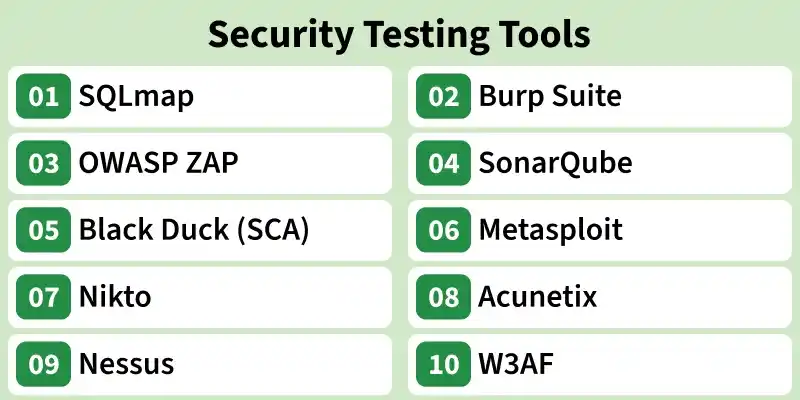
Security testing tools identify vulnerabilities and help keep applications secure from cyber threats. The following are some of the Security testing tools:
SQLmap
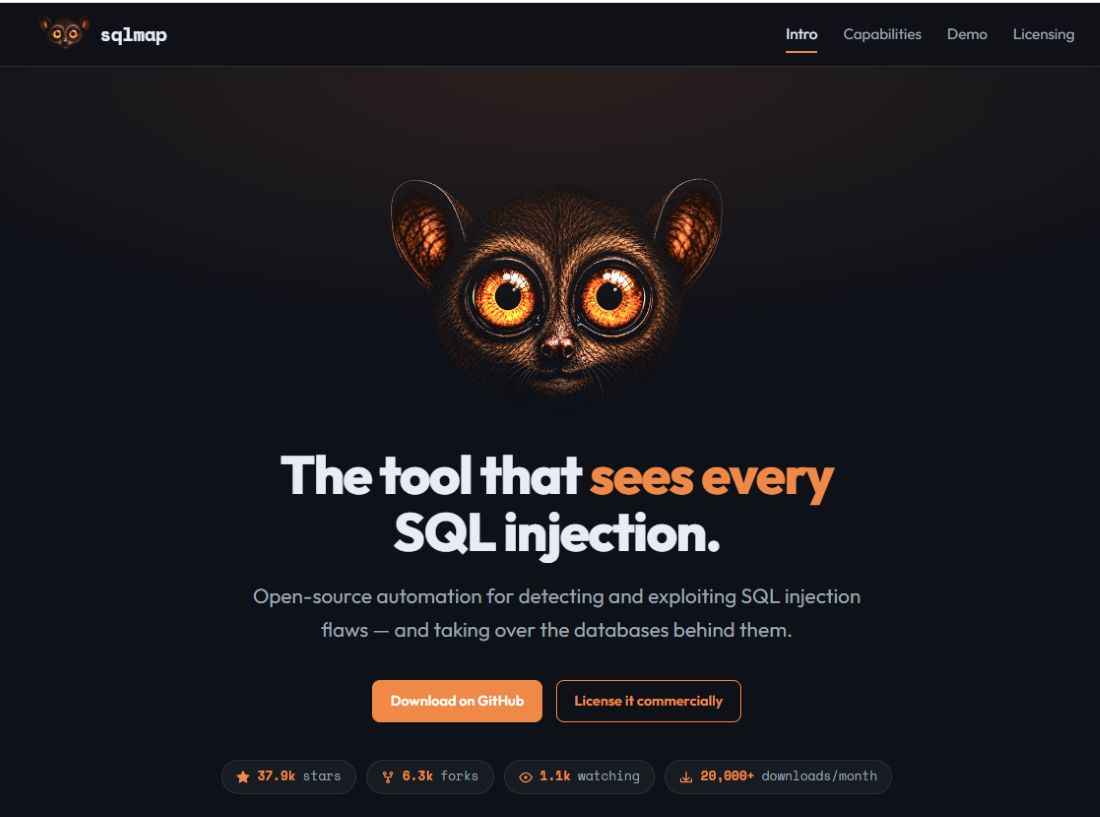
SQLmap is an open-source penetration testing tool that automates the detection and exploitation of SQL injection vulnerabilities. It helps security professionals identify database security flaws efficiently.
- Detects SQL injection vulnerabilities automatically.
- Supports multiple database management systems.
- Extracts database information for security assessment.
Burp Suite
Burp Suite is a comprehensive web application security testing platform used for vulnerability assessment and penetration testing. It enables both manual and automated security testing.
- Intercepts and analyzes HTTP/HTTPS traffic.
- Scans web applications for security vulnerabilities.
- Includes tools like Proxy, Repeater, and Intruder.
OWASP ZAP
OWASP ZAP (Zed Attack Proxy) is an open-source Dynamic Application Security Testing (DAST) tool. It helps identify security vulnerabilities in web applications during runtime.
- Performs automated vulnerability scanning.
- Detects common web security issues.
- Integrates with CI/CD pipelines.
SonarQube
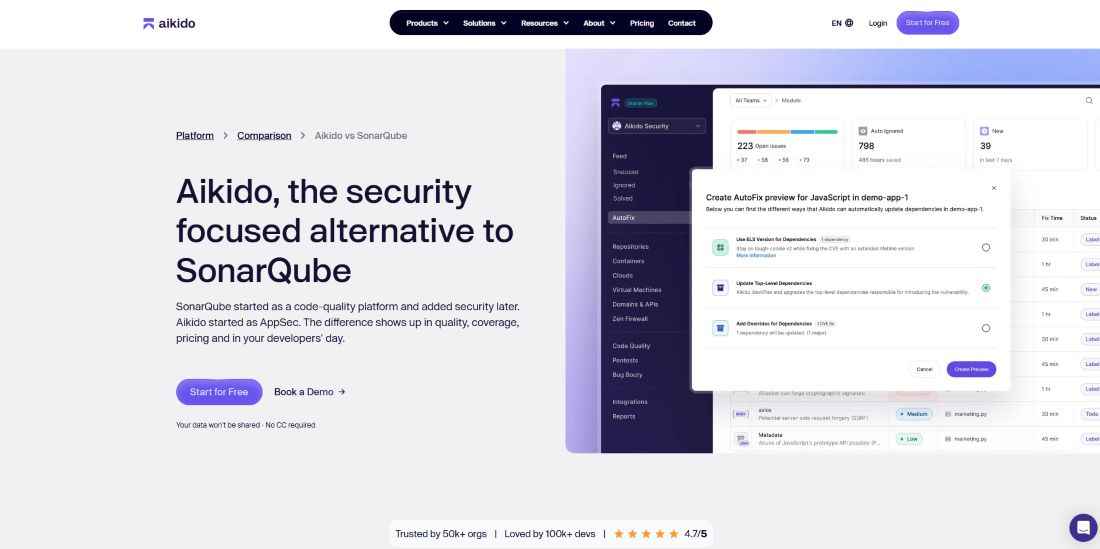
SonarQube is a Static Application Security Testing (SAST) tool that analyzes source code for bugs, vulnerabilities, and code quality issues before deployment.
- Detects security vulnerabilities in source code.
- Improves code quality and maintainability.
- Supports multiple programming languages.
Black Duck (SCA)
Black Duck is a Software Composition Analysis (SCA) tool that identifies open-source components and detects known security vulnerabilities and license risks.
- Scans open-source dependencies.
- Detects known security vulnerabilities (CVEs).
- Verifies open-source license compliance.
Metasploit
Metasploit is a penetration testing framework used to validate and exploit security vulnerabilities in systems and applications. It helps security teams assess real-world attack scenarios.
- Simulates real-world cyberattacks.
- Verifies exploitable vulnerabilities.
- Supports exploit development and testing.
Nikto
Nikto is an open-source web server scanner that checks web servers for outdated software, insecure configurations, and known vulnerabilities.
- Scans web servers for security issues.
- Detects outdated software versions.
- Identifies insecure server configurations.
Acunetix
Acunetix is a commercial web vulnerability scanner that automatically identifies security flaws in websites and web applications.
- Detects SQL Injection and Cross-Site Scripting (XSS).
- Performs automated web vulnerability scanning.
- Generates detailed security reports.

Nessus
Nessus is a vulnerability assessment tool that scans networks, systems, and applications to identify security weaknesses and configuration issues.
- Performs comprehensive vulnerability assessments.
- Detects missing patches and misconfigurations.
- Prioritizes vulnerabilities based on severity.

W3AF (Web Application Attack and Audit Framework)
W3AF is an open-source web application security testing framework used to discover and verify vulnerabilities in web applications.
- Identifies common web application vulnerabilities.
- Supports vulnerability auditing and exploitation.
- Extensible through plugins for advanced testing.

Advantages of Security Testing Tools
Security testing tools improve application security by automating vulnerability detection and helping organizations address security issues before deployment.
- Detect vulnerabilities early in the Software Development Life Cycle (SDLC).
- Automate repetitive security testing tasks.
- Reduce manual effort and testing time.
- Improve the accuracy and consistency of security assessments.
- Identify common vulnerabilities such as SQL Injection, XSS, and CSRF.
- Strengthen the security of applications, APIs, networks, and systems.
- Support compliance with industry standards and regulatory requirements.
Limitations of Security Testing Tools
Although security testing tools are highly effective, they cannot guarantee complete security and should be complemented with manual testing and secure development practices.
- Cannot detect every security vulnerability automatically.
- May generate false positives and false negatives.
- Require skilled professionals to analyze and validate results.
- Commercial tools can be expensive.
- Limited effectiveness against complex business logic flaws.
- Automated scans may miss vulnerabilities requiring manual testing.
- Require frequent updates to detect newly discovered threats.