

Whois Footprinting is a reconnaissance technique used in cybersecurity to gather publicly available information about a domain, website or organization through Whois records. It is commonly performed during the information-gathering phase of ethical hacking and penetration testing. Typical information obtained through Whois footprinting includes:
- Domain Registration Information: Retrieves domain ownership details, registrar information, registration and expiration dates, domain status and associated name servers.
- Administrative and Technical Information: Identifies administrative and technical contacts, organization details and other publicly available records useful for reconnaissance during security assessments.
Working of Whois Footprinting
Whois footprinting works by querying Whois databases maintained by domain registrars and registries to retrieve publicly available domain registration information.
- Submit a Domain Query: The user enters a target domain (e.g., example.com) into a Whois tool or command.
- Contact the Whois Server: The tool sends the query to the appropriate Whois server associated with the domain's registry.
- Retrieve Domain Records: The Whois server searches its database and returns available registration information.
- Analyze the Results: The retrieved records are examined to identify the registrar, registration dates, name servers, domain status and other publicly available details.
- Use for Reconnaissance: The collected information helps security professionals understand the target's domain infrastructure and supports further reconnaissance activities during penetration testing.
Types of Whois Footprinting
1. Passive Whois Footprinting
Passive Whois footprinting gathers publicly available domain information without directly interacting with the target infrastructure, making the reconnaissance activity difficult to detect.
- Public Domain Intelligence: Retrieves Whois records, registrar details, archived website data and public business information from open sources.
- Open-Source Intelligence (OSINT): Collects organization-related information through search engines, social media platforms and publicly accessible online resources to support reconnaissance.
2. Active Whois Footprinting
Active Whois footprinting involves directly interacting with target-associated infrastructure to obtain additional technical information, making the reconnaissance activity more likely to be detected by security monitoring systems.
- Direct Infrastructure Enumeration: Performs DNS interrogation, network scanning and host discovery to identify active systems and network resources.
- Network Path Analysis: Uses techniques such as traceroute to map routing paths, discover intermediate devices and analyze network topology.
Tools for Whois Footprinting
- whois: Command-line utility used to retrieve Whois records directly from Whois servers.
- whois: Web-based service for obtaining official domain registration information.
- WhoisFreaks: Provides Whois records, domain history and DNS information.
- ViewDNS.info: Offers Whois lookup, reverse IP lookup, DNS records and network intelligence.
- DomainTools: Advanced reconnaissance platform for Whois history, DNS analysis and domain ownership research.
- SecurityTrails: Collects historical Whois data, DNS records, subdomains and related domain information.
- Netcraft: Identifies hosting providers, web technologies and domain infrastructure details.
Lab 1: Active Whois Footprinting
- Objective: Query a Whois server directly to retrieve domain registration information.
- Environment: Kali Linux or Ubuntu, Whois package installed, Internet connection.
Steps and Commands
Step 1: Verify Whois Installation
whois --version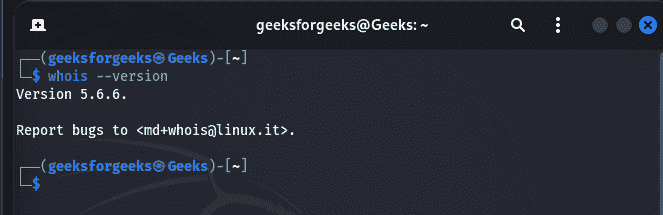
If Whois is not installed:
sudo apt install whois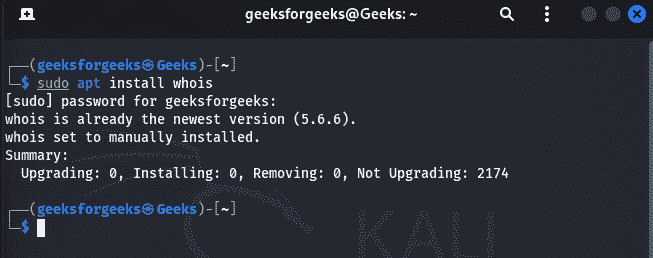
Step 2: Perform a Whois Query
whois geeksforgeeks.org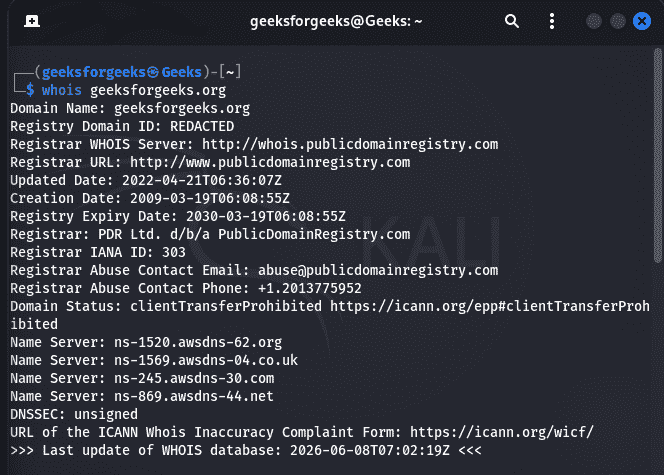
Step 3: Examine the Output
Review the retrieved Whois information to identify key domain registration details:
- Registrar Information: Domain registrar responsible for managing the registration.
- Registration & Expiration Dates: Domain creation, last update and expiration dates.
- Name Servers: DNS servers responsible for resolving the domain.
- Domain Status: Current operational status (e.g., Active, Client Transfer Prohibited, Pending Delete).
Step 4: Save the Results
whois geeksforgeeks.org > whois_report.txt
Step 5: View the Saved Report
cat whois_report.txt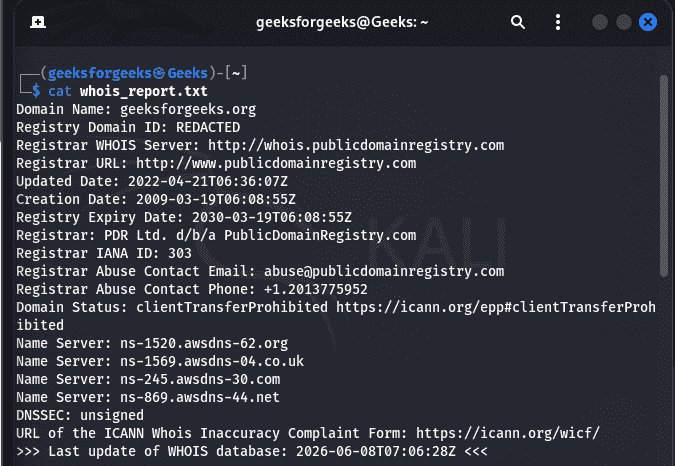
The system directly queried the Whois database and retrieved registration information for the target domain. This demonstrates active Whois footprinting because the Whois server was contacted directly.
Lab 2: Passive Whois Footprinting
- Objective: Gather publicly available information about a domain without directly interacting with its infrastructure.
- Environment: Kali Linux, Ubuntu or Windows, Internet connection, A publicly accessible domain (e.g., geeksforgeeks.org).
Step 1: Visit a Whois Lookup Website
Open a browser and navigate to a Whois lookup service such as Whois.com or ICANN Lookup.

Step 2: Search for a Domain
Enter a domain name, such as geeksforgeeks.org
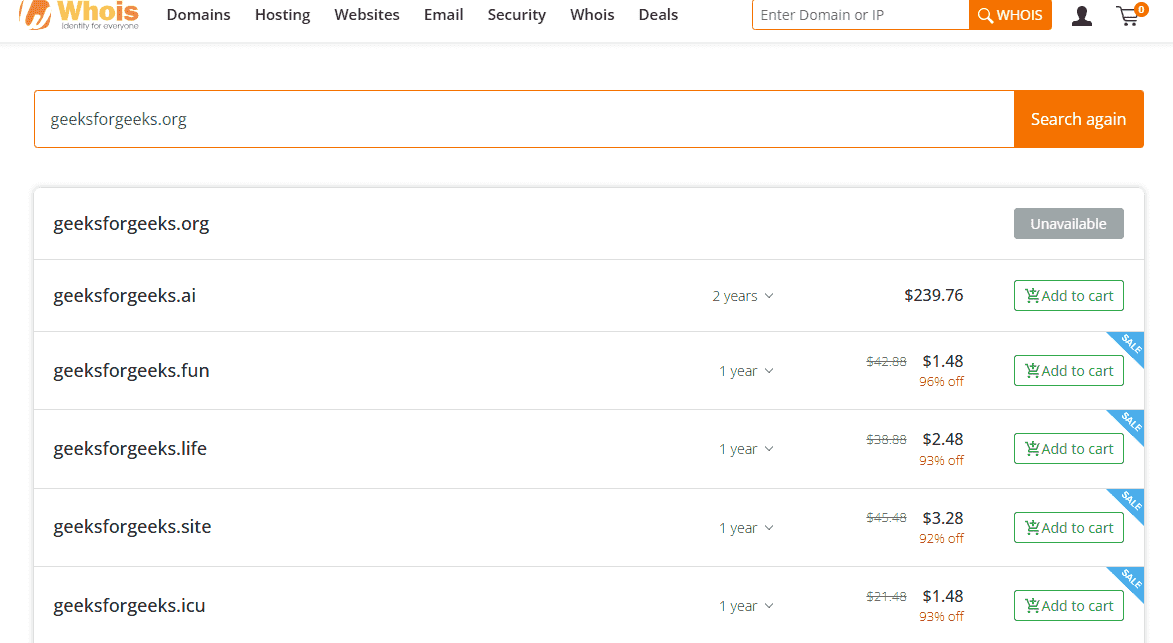
Step 3: Analyze the Results
Review the information returned, including: Domain registrar, Creation date, Expiration date, Domain status, Name servers.
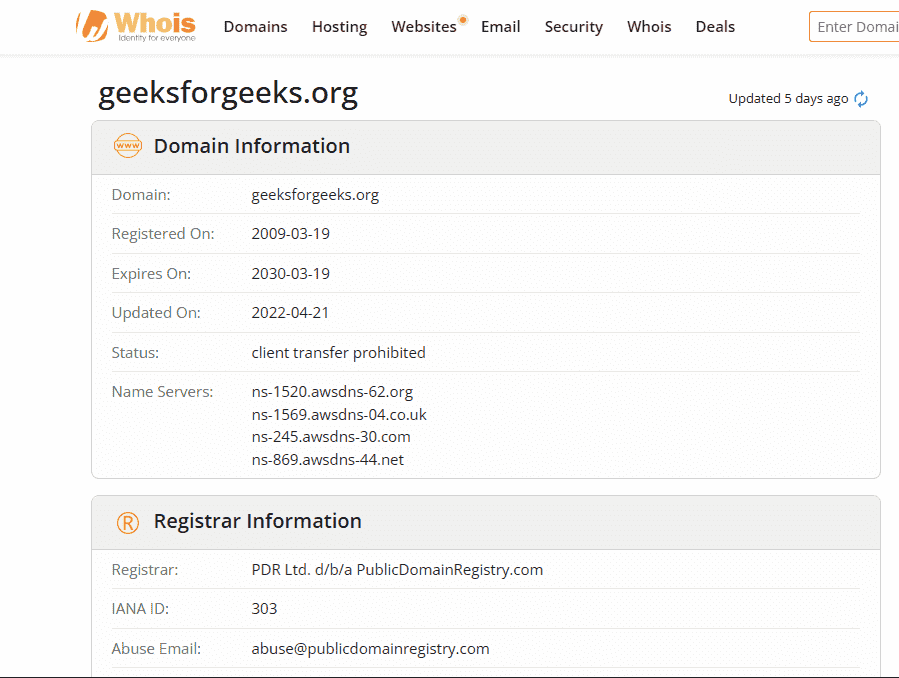
The domain registration details were collected using publicly available sources without directly interacting with the target's systems.
Prevention With Whois Footprinting
Organizations can reduce information exposure by implementing the following measures:
- Use Domain Privacy Protection: Enable Whois privacy services to limit the public visibility of personal contact information.
- Minimize Public Information: Avoid publishing unnecessary administrative details that could aid attackers.
- Regularly Review Domain Records: Audit Whois records periodically to ensure information remains accurate and appropriate.
- Strengthen Security Controls: Implement robust security measures such as firewalls, multi-factor authentication and continuous monitoring to mitigate risks associated with reconnaissance activities.
- Monitor Domain Activity: Track changes to domain registrations and DNS configurations to detect unauthorized modifications.
Advantages of Whois Footprinting
- Security Assessment: Organizations can identify publicly exposed information that attackers may use during reconnaissance.
- Asset Discovery: Helps locate domains, subdomains and related infrastructure associated with an organization.
- Attack Surface Analysis: Provides insight into internet-facing assets that may require additional security controls.
- Threat Intelligence: Supports investigations by revealing domain ownership patterns and relationships between digital assets.
- Security Auditing: Allows organizations to verify domain registration details and maintain accurate records.