

Post Exploitation is the security assessment phase that follows successful exploitation of a target system. It focuses on evaluating the security impact of the compromised host by analyzing privilege levels, system configuration, accessible resources, identity context, trust relationships and potential attack paths within the authorized assessment scope.
Working of Post Exploitation
Post exploitation follows a structured workflow to evaluate the impact of a successful compromise and determine how far an attacker could progress within an authorized environment.
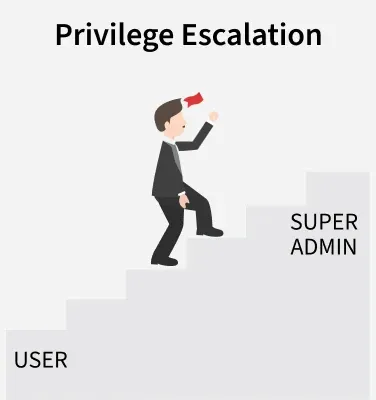
1. Privilege Escalation
Privilege escalation involves obtaining higher permissions than those initially granted after exploitation, such as administrator (Windows) or root (Linux) access.
- Analyze privilege boundaries by reviewing user rights, group memberships, security tokens, service permissions and system configurations.
- Evaluate the impact of elevated privileges, including full system control, access to protected resources and administrative capabilities.
2. Maintaining Access
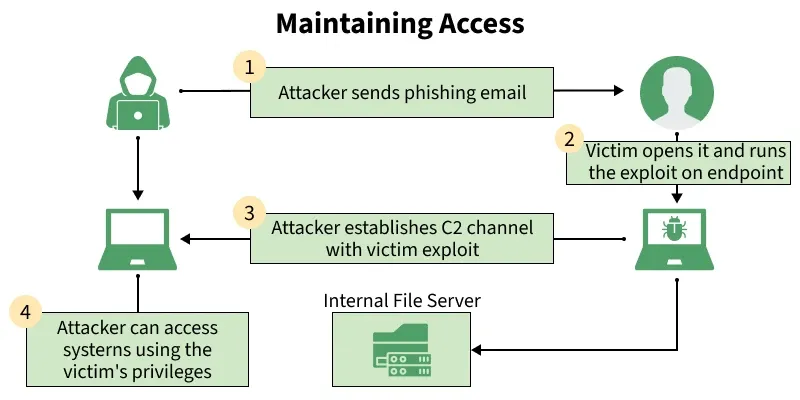
Maintaining access assesses whether access to the compromised system can persist after reboots or routine administrative changes.
- Evaluate persistence mechanisms such as startup programs, scheduled tasks, services and authorized accounts.
- Assess the reliability of persistence against system updates, password changes and security controls.
3. Data Gathering
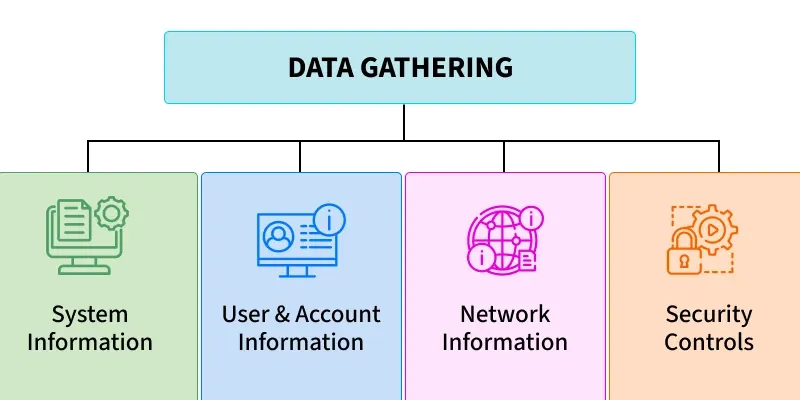
Data gathering focuses on identifying valuable information accessible through the compromised account.
- Enumerate system resources, including operating system details, users, services, network configuration and security controls.
- Assess exposure of sensitive assets such as business documents, databases, configuration files and authentication information.
4. Pivoting
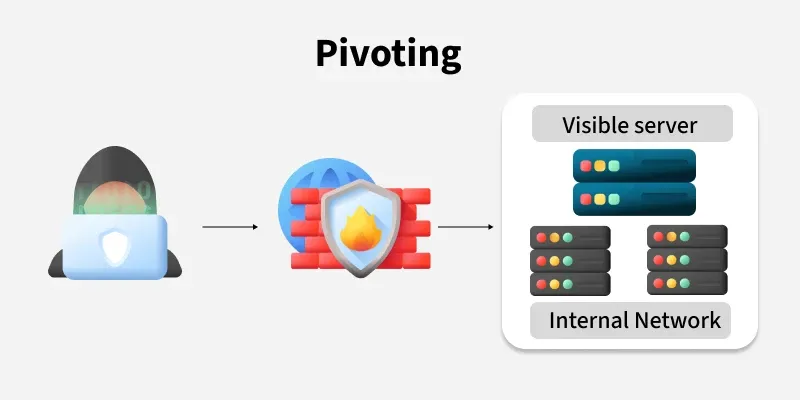
Pivoting uses a compromised system as an intermediary to assess access to other authorized systems within the internal network.
- Analyze network trust relationships by examining segmentation, routing and communication paths.
- Identify potential lateral movement paths to determine whether additional systems can be reached from the compromised host.
Key Outcomes of Post-Exploitation
Here are some key outcomes of Post-Exploitation
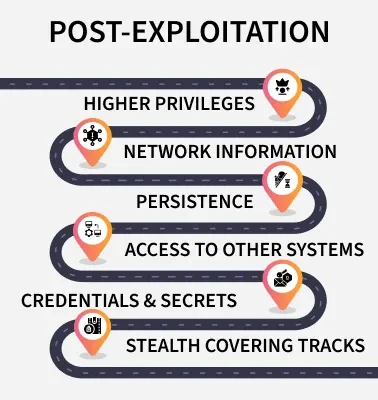
- Higher Privileges: Escalation from a normal user to admin/root, giving full control of the system.
- Persistence: Backdoors, hidden accounts or scheduled tasks that let attackers return later without re-exploiting.
- Credentials & Secrets: Passwords, hashes, tokens, SSH keys or saved login details that can be reused.
- Sensitive Data: Personal data, financial records, intellectual property, databases, configuration files or business documents.
- Network Information: Mapping the internal network: IPs, open ports, connected systems, firewalls and routing paths.
- Access to Other Systems (Lateral Movement): Using the compromised system to spread into deeper or more critical systems in the network.
- Business Impact Demonstration: Showing organizations what an attacker could actually do if a breach occurs (data theft, system takeover, disruption).
- Stealth / Covering Tracks: Methods to stay undetected while continuing exploitation.