Enumeration is a crucial phase of cybersecurity assessment where an attacker or security tester actively gathers detailed information from a target system, network or application. Unlike passive reconnaissance, enumeration establishes direct interaction with the target to extract valuable data.
- Discovers users, services, open ports, shared resources, operating system details and network infrastructure.
- Identifies misconfigurations, exposed services, trust relationships and potential attack vectors for further assessment.
Types of Enumeration in Cyber Security
Several protocols and services can be enumerated depending on the target environment. Below are the major types of enumeration used in cybersecurity.
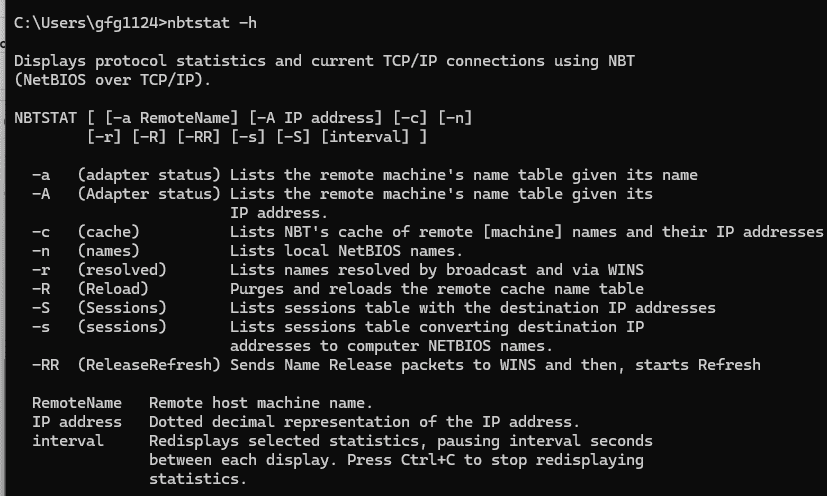
1. NetBIOS Enumeration
NetBIOS (Network Basic Input/Output System) enumeration is commonly associated with Windows environments. It is used to collect information about systems, domains, shared resources and users over TCP/IP networks.
- NetBIOS enumeration reveals computer names, workgroups/domains, logged-in users, shared resources and network services.
- NetBIOS commonly uses Port 139 and the nbtstat utility (e.g., nbtstat -h) is used to view NetBIOS information and available command parameters.
- Mitigation: Disable NetBIOS if not required, restrict SMB/file sharing, block NetBIOS traffic through firewalls and enforce secure access policies.
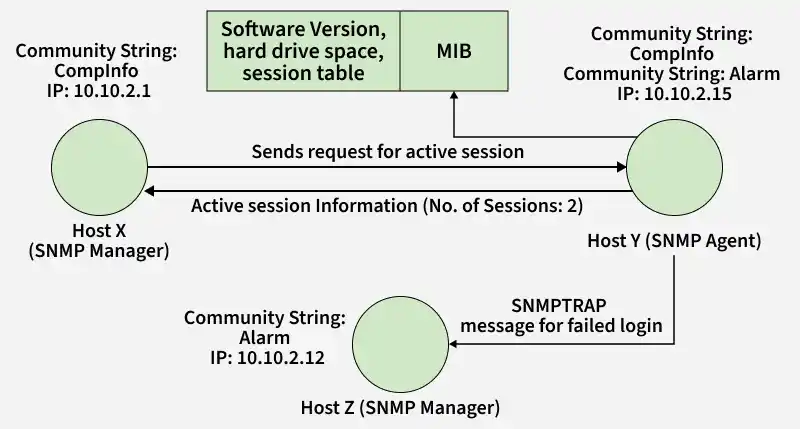
2. SNMP Enumeration
SNMP (Simple Network Management Protocol) is widely used for monitoring and managing network devices such as routers, switches, printers and servers.
- SNMP enumeration collects device information, routing tables, ARP tables, interface details, running services and network topology from SNMP-enabled devices.
- SNMP operates on UDP Port 161 and supports operations such as GetRequest, GetNextRequest, SetRequest and Trap.
- Mitigation: Disable unnecessary SNMP, replace default community strings, restrict access with ACLs and use SNMPv3 for authentication and encryption.
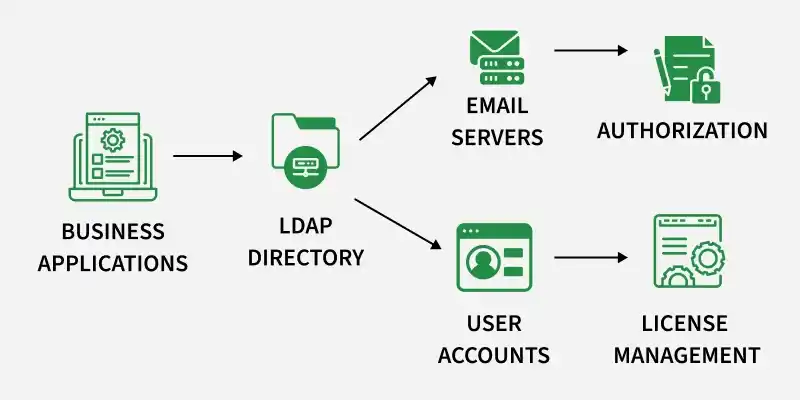
3. LDAP Enumeration
LDAP (Lightweight Directory Access Protocol) is used to access directory services such as Active Directory. Organizations use LDAP to manage centralized information including users, groups, devices, departments and access policies.
- LDAP enumeration retrieves usernames, email addresses, group memberships, organizational units, directory structures and other Active Directory information.
- LDAP uses TCP Port 389, while secure LDAP (LDAPS) uses TCP Port 636 for encrypted communication.
- Mitigation: Use LDAPS (SSL/TLS), disable anonymous LDAP queries, enforce strong authentication and enable account lockout policies.
4. NTP Enumeration
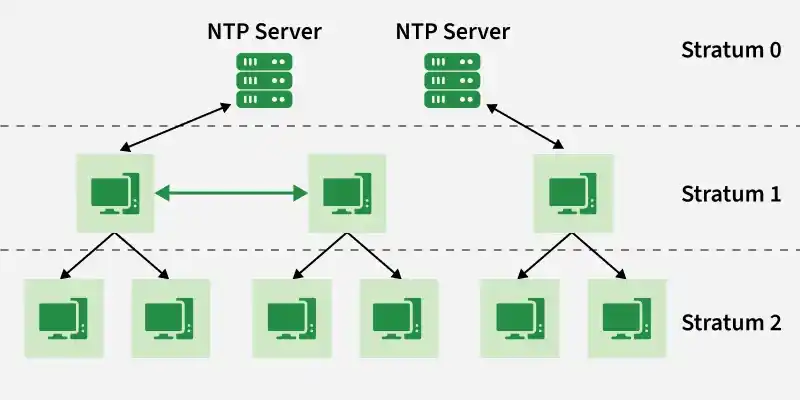
NTP (Network Time Protocol) synchronizes clocks across devices connected to a network. Although often overlooked, improperly configured NTP services can expose useful internal information to attackers.
- NTP enumeration reveals connected hosts, client IP addresses, time synchronization peers, operating system details and internal network information.
- NTP operates on UDP Port 123 and can expose network architecture if the service is misconfigured.
- Mitigation: Use authenticated NTP, upgrade to secure versions, restrict public access and enable cryptographic verification.
5. SMTP Enumeration
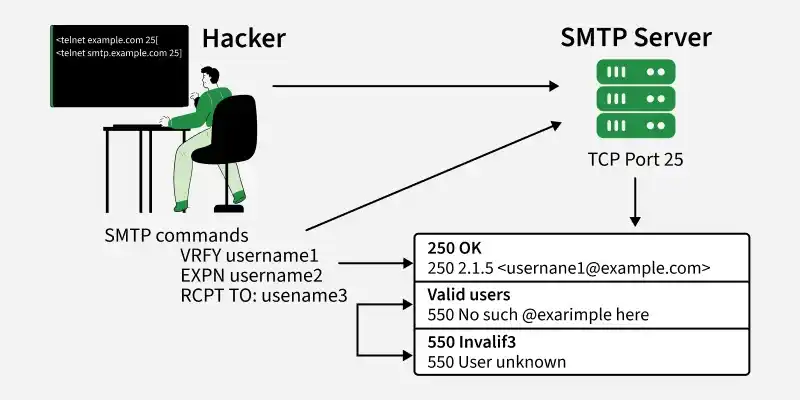
SMTP (Simple Mail Transfer Protocol) is responsible for sending email messages across networks. SMTP servers sometimes reveal valid user accounts by responding differently to specific commands.
- SMTP enumeration identifies valid usernames, mail server details, email addresses and internal mail infrastructure using commands such as
VRFY,EXPNandRCPT TO. - SMTP operates on TCP Port 25 and tools such as Telnet, Netcat, Nmap and Metasploit are commonly used for enumeration.
- Mitigation: Disable
VRFYandEXPN, prevent open relay, limit connection attempts and minimize information disclosed in SMTP responses.
6. DNS Enumeration Using Zone Transfer
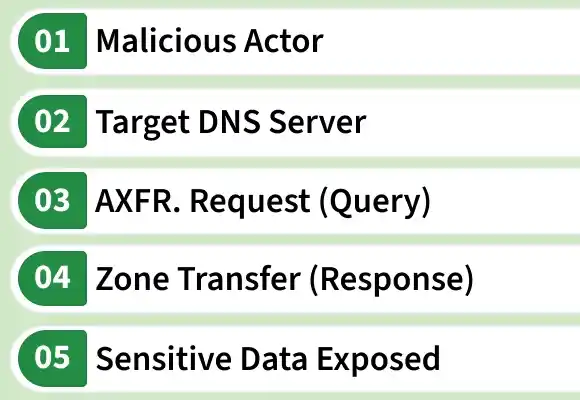
DNS (Domain Name System) translates domain names into IP addresses. DNS enumeration is used to collect information about an organization's infrastructure, hosts, domains and network layout.
- DNS zone transfer enumeration reveals domain records, hostnames, IP addresses, mail servers, name servers and internal network infrastructure.
- Common DNS record types include A, MX, NS, TXT and CNAME; unauthorized zone transfers can expose the entire DNS zone database.
- Mitigation: Restrict zone transfers to authorized DNS servers, avoid exposing internal records and implement DNS hardening and continuous monitoring.
7. IPsec Enumeration
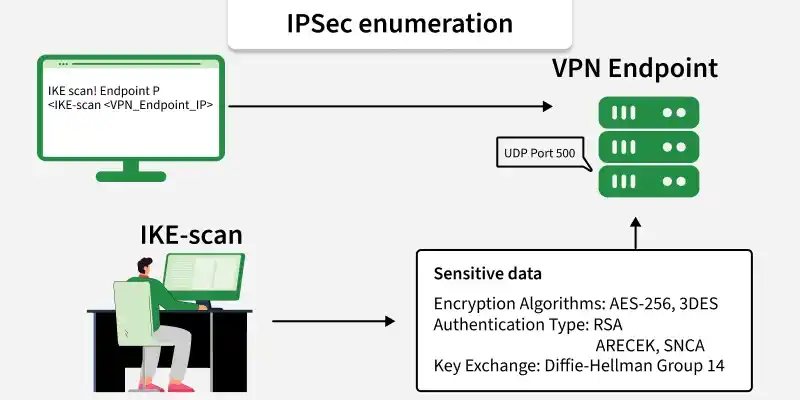
IPsec (Internet Protocol Security) secures network communication and is widely used in VPN deployments. Weak VPN configurations can become valuable attack targets.
- IPsec enumeration identifies VPN gateways, encryption algorithms, authentication methods, hashing algorithms and key exchange configurations.
- IPsec commonly uses UDP Port 500 for IKE (and UDP 4500 for NAT Traversal), allowing attackers to detect VPN services and configurations.
- Mitigation: Use certificate-based authentication, enforce strong keys, restrict VPN access with firewall and IP policies and disable weak cryptographic algorithms.
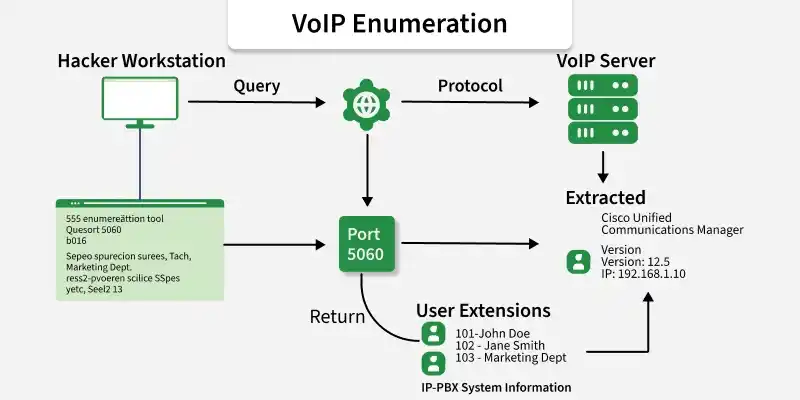
8. VoIP Enumeration
VoIP (Voice over IP) enables voice and video communication across IP networks. Many VoIP deployments rely on SIP (Session Initiation Protocol) for session establishment.
- VoIP enumeration discovers SIP servers, IP-PBX systems, gateways, user extensions and client devices within the voice network.
- VoIP commonly uses SIP on TCP/UDP Port 5060 and SIPS on TCP Port 5061, which can be targeted for reconnaissance and attack planning.
- Mitigation: Use SIPS (TLS), require strong SIP authentication, encrypt signaling traffic and implement robust access control and identity verification.
9. RPC Enumeration
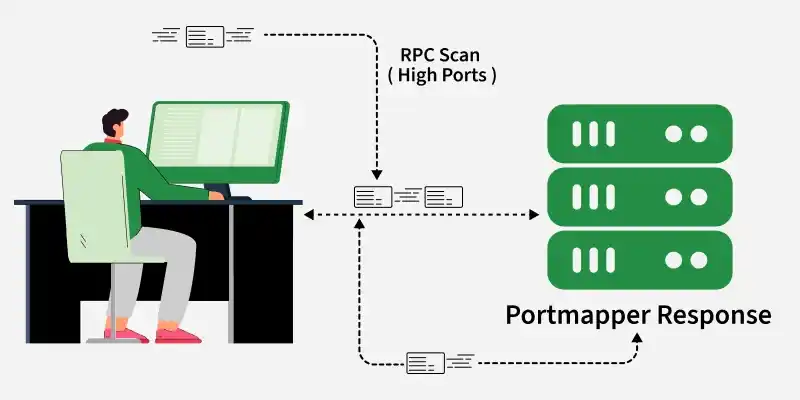
RPC (Remote Procedure Call) allows distributed applications to communicate across networks.RPC services often expose endpoints that reveal active applications and accessible services.
- RPC enumeration identifies running services, registered endpoints, application interfaces and accessible communication channels on remote systems.
- RPC commonly uses TCP Port 135 (Endpoint Mapper) and dynamically assigned high-numbered ports for service communication.
- Mitigation: Disable unused RPC services, restrict public exposure, apply regular security patches and enforce firewall rules to limit RPC access.
10. Unix/Linux User Enumeration
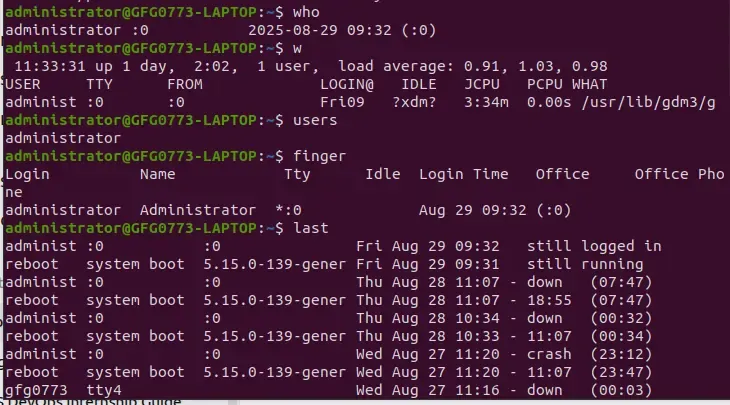
Unix and Linux enumeration focuses on discovering user accounts, sessions, permissions and system details. Because Linux environments power servers, cloud platforms and enterprise systems, user enumeration is highly valuable.
- Unix/Linux enumeration reveals logged-in users, active sessions, account names, host information and system activity using commands such as who, w, users and finger.
- The collected information helps identify valid user accounts, privilege levels and potential paths for credential attacks or privilege escalation.
- Mitigation: Keep systems patched, enforce least privilege, restrict unnecessary SUID binaries and limit
sudoaccess to authorized users only.
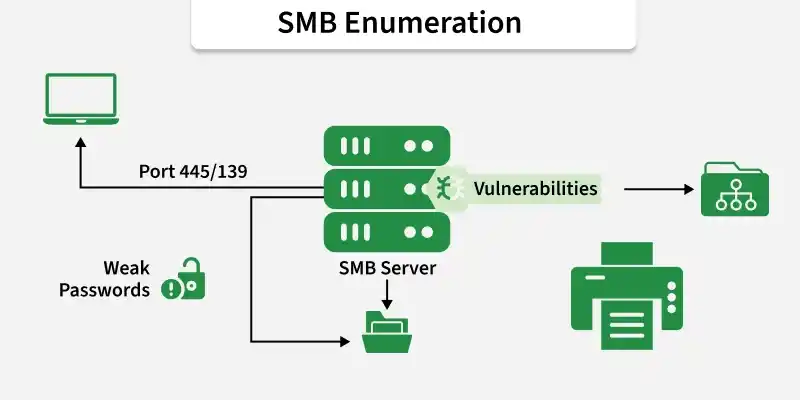
11. SMB Enumeration
SMB (Server Message Block) is a protocol used for sharing files, printers and network resources. SMB is heavily used in Windows environments and is also supported on Linux through Samba implementations.
- SMB enumeration identifies shared folders, user accounts, network shares, permissions, authentication details and server configurations.
- SMB primarily uses TCP Ports 445 and 139, making it a common target for discovering accessible Windows and Samba resources.
- Mitigation: Disable unused SMB services, block external access to Ports 139/445, restrict anonymous enumeration, enforce strong authentication and keep SMB updated.