
In January 2016 I began a series that I was intending to publish as a book but instead I shared on the blog in a series four years ago and I hope new readers to the blog will enjoy reading.
The R’s of Life by Sally Cronin
The title came about as I dipped into a Thesaurus to find some words for a poem I was writing. I noticed that a great many words that reflected key elements in our lives began with the letter ‘R’.
The posts are a bit longer than the average…so I hope you have a cup of tea handy! Last time I shared my thoughts on the importance of recognition in our relationships with others.
Relations
In this post I am going to explore our relations, not to be confused with relationships; which is a whole different world of complications.
Over the years, I have talked about family issues with friends, colleagues and those I have counselled and I don’t think that I have met anyone who can honestly say they had a completely idyllic childhood. Some in fact felt that they had a dreadful time and were only too glad to leave home. Others remember the good times and put the challenges down to part of life.
Everyone has their own story about those years between birth and heading out into the world and each of us has to come to terms with those years in one way or another.
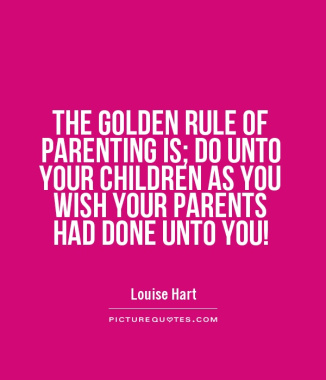
Certainly, as I have mentioned before, I do not believe in a perfect relationship of any kind. I do think that relationships should be two-sided and that they take a great deal of work to develop and sustain. Unfortunately, our relationship with our parents is largely one-sided until we reach a certain age and learn to communicate. Even then it can be a case of ‘their house, their rules‘. Whilst we might resent this at the time, especially as we move into our teen years, it is actually part of the socialisation process, preparing us to work within different relationship structures as adults. However, some children grow up in a very different environment which is harsh and restrictive. Not all children survive that experience with a balanced view of the world and that is tragic.
The teen years, from my own personal experience, and I suspect a fair number of you, were punctuated with minor conflicts. In a close knit family, most of these issues are resolved, in a large part down to a solid background of love and trust that has been established over the years. But there is no doubt that once a child reaches puberty things change.
I cannot speak for those who have had appalling childhoods and can only sympathise. I can only speak to mine with any authority and pass comment on the experiences of those I have come into contact with. I know that I was very lucky in that I enjoyed nearly all of the fundamental needs of a growing child such as security, a roof over my head, plenty of food, a good education and health care. I also recognise that most issues that arose, were because I liked to push boundaries, even as a young child. What I do appreciate about coming from a healthy family environment is that when the going got tough, there was always at least one member to turn to for help and support. Although not necessarily the case for everyone; for most of us there is an enduring sense of connection that lasts through our lifetimes.

The Relations.
The family group that comprises our relations falls into a number of categories. There is the relationship with our parents, which is a subject that has filled the bank accounts of psychiatrists for the last hundred years or so! Then there is where we stand in the pecking order of our siblings; which can result in interesting relationship dynamics as we grow up.
Also, we have the extended family of grandparents, aunts, uncles and cousins. If you are lucky many will be close enough to be in touch regularly and form an important support system. However, this is an area of family that has changed greatly in the last 50 years as people began to move out from home towns for work, emigrated or through marriage. We also have some variations in the family structure that bring new challenges and interesting developments. For example our definition of family is also dependent on the method of conception.
So let’s start with our parents.
Throughout the evolution of humans, biologically, conception required a male and female to be present. However, since 1978 this has not been essential. You can now take sperm and an egg and bring them together in a laboratory before an embryo is implanted into a womb. This of course is a wonderful medical advance for those couples who cannot conceive in the normal way.
This procedure also means that the embryo does not have to be implanted in your own womb, as you can employ the services of a surrogate, who will carry your biological foetus to full term and give birth for you. For example in the case of same sex male partnerships where one of the partners will supply the sperm so that children carry the genes of at least one of the parents.
In some cases single women who wish for a child and are not in a relationship can select a suitable sperm donor from a clinic, and after their donated egg is fertilised, have the embryo implanted into their own womb and give birth themselves.
The other option which has brought family together is through adoption although numbers have dropped considerably in the last few years with only around 3,000 in 2022 in the UK and approximately 117,000 in the USA. One of the reasons is that there are now so many other options for couples who are looking to either conceive naturally or assisted either with egg or sperm donation, or surrogacy. A sobering statistic is that in 2022 in the UK around 36,000 children entered the care system
So, what used to be a fairly straightforward process just fifty years ago now has become a great deal more complex.

Is this important or not?
I don’t think that the process of how and why a child is born is actually critical. In the vast majority of cases, the moment a child, who has just been born or adopted, is placed in its mother’s arms a bond is formed which continues to develop over a lifetime. Sometimes that bond is never formed; but that can happen in any of the circumstances that a child comes into the world or family.
There are some who believe that having a child is ‘a right‘. I disagree with that concept. I certainly see it as a child’s ‘right’ to be born into a loving family that can support, feed, educate and provide security for it until it is able to look after itself. I appreciate the fact that in many countries that is not the case and that children are born into extreme poverty, and in far too many cases also born into incredibly dangerous environments. But that is usually because culturally there has not been a shift in the education of the parents for generations, and many women still do not have a choice in the matter.
We in the western world, in the majority of cases, do have a choice. However, it would still seem that some women will choose to have children despite them not being able to provide for them adequately without external support. I may well be going to cause some controversy with some at this point, because I do not believe that the welfare state was created to enable people to have children deliberately, without the ability to provide for them. It was created to provide for those who through no fault of their own find themselves in dire straits and require help to provide a decent quality of life for themselves and their families.
Tragically it is not just unplanned or planned pregnancies that create single parents. The death of a parent, or contention about custody following a divorce, can also place men and women in a situation where they find themselves as the sole parent. Whilst in many countries there is a welfare state to step in if needed, it is the practical issues that are daunting. Whilst money helps with some of those issues, it does not necessarily provide a sense of security or provide the extra hours needed in the day to look after a baby or young child alone. It does not provide the back up to provide a safe and loving home should there be an emergency, and it was never intended to take the place of an extended family.
This brings up an issue that I feel is going to be an interesting and possibly difficult parenting issue in just a few years. That is when a single mother has chosen to conceive by sperm donation. Whilst the mother might have an extended family on her own side and a support system in place, the child as it grows, will know nothing of its father’s history or in some cases genetic background.
However, in the UK a law was enacted in 2006, and any child conceived through sperm donation can apply at age 16 to find out certain details about their biological father. In 2022 the children born after 1st April 2005, if they have been informed of their method of conception, can request the background and health information about the sperm donor and also the identity of any other children that they might have fathered. A letter will be sent to the father and any other children and it is their right to refuse contact, but it does open up a huge and possibly devastating situation. Particularly if a child being contacted did not know that he or she was conceived by sperm donation.
As a result of this removal of right to anonymity, there has been a significant drop in the number of sperm donors in the UK concerned that they might well become liable for child support for several offspring. However, it would seem that women are turning to overseas clinics where anonymity is still guaranteed. This means that children who are born from overseas sperm donation will not know of any genetic problems that might have been passed on or that might impact their own children’s health in generations to come.

Parenting
Whatever the method of reproduction, the moment that baby is born, or enters a family, the real job of parenting begins. Bonding between a child and a parent has been the subject of years of intense research and there are hundreds of books on the subject. There are all sorts of complexes and syndromes associated with this critical relationship, and there is no doubt the long-term effects of a breakdown in that bond can be devastating.
It used to be considered very unacceptable to talk about your parents in a derogatory manner. However, many people of my age group, in their 60s and 70s, are now sharing their experiences, and it would seem that for many, childhood years were not happy ones.
What this does illustrate to me, is that modern parenting in its various forms, is probably neither better nor worse than it was 50 years ago, when babies were born into what is referred to as a traditional family.
I have not been a parent and that for some time was a cause of sadness. I lost a child late in pregnancy when I was 21 years old and did not find out until I was 39 that there had been more damage than identified at the time, and I could not have more. By that time we were considered too old to adopt and the other options so readily available today were in not common. So consequently I will not attempt to tell anyone how to be a parent but I have been a keen observer over the last 70 years with family and friends and my admiration knows no bounds.
What I can do though is draw on my experience of being a child and whilst overall that experience was by no means unhappy, I do wish that I had been able to enjoy the following.

Grandparents.
I envied my friends at school who had grand-parents who looked after them from time to time, took them on holiday or for days out at the seaside and gave them their time without the constraints faced by parents. As I got older, I wished that I could have found out more about the history of our family from those who had lived it, especially as they had all been born in the 1890s. Sadly both my grand-fathers and one grandmother died before I was born and one grandmother and aunt died in a car accident when I was only three.
In recent years I have researched our family history on both sides and it offered me a wonderful snapshot of the men and women in our family who worked down mines, served on ships, or farmed the land and provided my genetic makeup. Using modern DNA techniques and joining a DNA project provided a link to the bones of a woman who lived 20,000 years ago in a cave on the Northern Spain, Southern France border. For that time in history, she was very long lived in her 40s and passed her mitochondrial DNA down the thousands of years to me and my sisters and through to my niece and her children.
I also discovered that not only was my heritage Irish on my mother’s side but also my father’s making me 40% Irish, 46% English and the rest Scandinavian and Welsh. When my husband did his DNA it turned out that on our paternal lines we both come from the same county in Ireland in the 1700s.
So despite not having any living grandparents I at least have met them and my other ancestors in more detail and respect everything they have passed on to me through the generations.
A full time father.
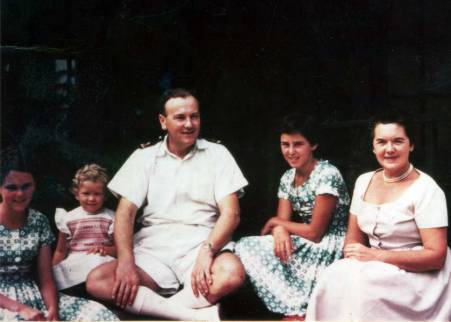
I wish my father who was serving in the Royal Navy had been around more when I was a young child. I don’t really remember him from before the age of five when I discovered him bed with my mother one morning and screamed the house down. I had not seen him for two years and he looked nothing like his photograph at the side of my mother’s bed.
I know that I felt safer when he was home, that my mother was happier and therefore more tolerant of our childish behaviour. I realise now as an adult that she was very lonely when he was away for two years at a time. She was effectively a single mother; with no parents of her own nor supportive in-laws. I now appreciate how tough that must have been.
Including during the war years when my father was at sea for most of the time from 1940 to 1946. He was obviously on leave from time to time, so my mother had two small children under three years old by the end of the war. He continued to be absent for extended periods of time until I was about seven years old. I only really understood the impact that had on their relationship, and mine with my mother when I was very much older.
I missed not having my father there when he was away for long periods of time. He was quite capable of putting the fear of god into us when he was home, and being a bit of a wild child, I was always getting into trouble. But I needed boundaries and I am not sure how I might have developed without his guiding hand in my life. Luckily, we did get to travel with him on his later overseas postings and I definitely know the difference in atmosphere, security and level of harmony, when there were two parents to share the parenting rather than just one.
I was however very lucky to have someone looking out for me.

Sisters.
I wish I had not taken for granted the influence my two elder sisters had on my childhood, and the fact, that in many ways they were my surrogate mothers. When they came home from school in Sri Lanka, where we lived from when I was 18 months old for two years, my amah would hand me over to them and everywhere they went, I went too. This must have been very restrictive on them as they were only eleven and twelve at the time. But they taught me to swim, kept me safe in an environment with dangers including snakes and other jungle wildlife, made me smocked dresses and allowed me to tag along after them.
I am glad that my sisters and I can still have fun when we meet up and in fact we recently shared our joint birthdays of 70, 80 and 81. It is when we are together that you really notice that we look quite similar, sound alike and have the same mannerisms, reinforced by a lifetime of contact. We can say things to each other that you would not say to even a close friend; you can even disagree from time to time without it becoming a major issue. You also have a shared heritage and memories of events that friends cannot share with you. Much of this also applies to friends of mine who were adopted, even down to the characteristics such as speech and mannerisms.

The extended family.
This brings me onto the importance of having an extended family in a child’s life. Life has challenges and even with loving parents and siblings, there are times when we need additional support and a place to go to, a person we trust to speak to and a feeling of belonging to something much bigger and stronger than the world at large. It can make an enormous difference to a child, and its development to be exposed to the influence of an extended family. That influence is not just evident in childhood but also as we develop adult relationships and become parents ourselves.
Apart from the benefits that I mentioned earlier there is no doubt in my mind that a sense of belonging to a ‘clan’ rather than a small family unit, is such an advantage of a child growing up in today’s world. This is even more important for single parents who are struggling to fulfil the role of both parents.
A large percentage of grandparents are now providing childcare so that their sons and daughters can work. The average cost of childcare per week for children under school age in the UK is £140 but can be as high as £225 a week if you have a baby with a registered childminder. That is between £7,000 to £11,000 per year multiplied by the number of children that you have under 5 years old. With more and more grandparents stepping in to take over that care, it is obviously a huge benefit to a young family. There are other things to consider as well. Grandparents, who have been entrusted with the care of a child, are likely to have been good parents themselves and they bring this wealth of experience to the equation.

There is no doubt that both mothers and fathers anticipate the arrival of a new baby with great joy. But it has been, and always will be, a very tough job. It is 24 hours a day, seven days a week for at least eighteen years. However, according to my mother the concern of a parent goes on for the lifetime of the relationship, even when you child is in her 60s!
Our relations, across the board, are connected in so many ways other than our DNA. As we go through life, a family that is close and has a strong bond can make all the difference as we forge our own path. We should not take that for granted and even if we drift apart at times and lose regular contact, it is one of those bonds that is rarely completely broken.
I am not the poster child for family relations or relationships in general, but I do know that I am one of the lucky ones, and that I was given a childhood that provided me with the more than the fundamental needs that every child has a right to. I also recognise that I am the person I am today, in part to those formative years
As I mentioned earlier in the chapter, we all have our own version of what family means to us. Whatever our experiences, there is a physical and genetic link to all those who went before us, and, if we are lucky, there is also a wonderfully sustaining emotional and mental bond.
Images: Pixabay.com
©Sally Cronin 2023

I have enjoyed a nomadic existence living in eight countries including Sri Lanka, Malta, South Africa, USA and Spain, before settling back here in Ireland. My work, and a desire to see some of the most beautiful parts of the world in the last forty years, has taken me to many more incredible destinations around Europe and Canada, and across the oceans to New Zealand and Hawaii. All those experiences and the people that I have met, provide a rich source of inspiration for my stories.
After a career in customer facing roles in the hospitality, retail, advertising and telecommunications industry, I wrote and published my first book in 1999 called Size Matters, about my weight loss journey, losing 150lbs in 18 months. This has been followed by 15 further fiction and non-fiction books, including a number of short story collections.
Having trained as a nutritional therapist I opened my own dietary advisory centre in Ireland in 1998 until 2002. My first book release resulted in a radio interview in Spain that led to four years as a nutritional consultant for an English language station, and this was followed by four years with my own health show and Sunday morning show on local radio station in the UK and then as station director, newsreader and presenter for an online television station.
As important as my own promotion is, I believe it is important to support others within our community. I offer a number of FREE promotional opportunities on my blog, linked to my social media. If you are an author who would like to be promoted to a new audience of dedicated readers, please contact me via my email sally.cronin@moyhill.com. All it will cost you is a few minutes of your time. Look forward to hearing from you.
Links to connect: My books and reviews – Goodreads: Sally Cronin – You can listen to podcasts on Sally Cronin on Soundcloud – Twitter: @sgc58 – Facebook: Sally Cronin – LinkedIn: Sally Cronin
Thank you for dropping in today and I would be delighted to hear your thoughts.


![No Plan B: The unputdownable new Jack Reacher thriller from the No.1 bestselling authors by [Lee Child, Andrew Child]](https://m.media-amazon.com/images/I/51m75vRd+PL.jpg)
























 Smorgasbord Blog Magazine