Smorgasbord Health Column Revisited – What causes your cravings? – Part Three – Salt and Trace Minerals by Sally Cronin


In this post I am exploring a sensation that has been blamed for our consumption or over consumption of certain foods since we were old enough to make excuses! How often do we tell ourselves or others that ‘we crave’ chocolate, crisps, cheese, soda, fried food or even something non-food related… such as dirt or coal?

We tend to assume that our craving is a form of addiction that only one food or drink can satisfy, but in fact it is more likely that it is our body reacting to a lack of an essential nutrient absent from our regular diet. Or that we are under stress and that has resulted in a imbalance in our hormone production.

I am going to be looking at some of the causes of a craving, whether it is a need for an essential nutrient or is down to a habit that has formed or because we are stressed. I will also give you the food fix that will supply that nutrient or suggest some strategies to cope with an unreasonable expectation for a food by your body and your mind.

Last week a craving for Chocolate

Salt cravings and trace minerals.

Women in particular can be hit by a salt craving as they experience more hormone fluctuations than men.

We sometimes forget that certainly during ovulation, your body is preparing for pregnancy. It requires the optimum environment for egg fertilisation, and then safe implantation in the womb. If you are deficient in essential nutrients, even those that have a less major role in our body’s health, there will be a nudge to ingest what is required.

Trouble is there are mixed messages. Our brain signals what it needs but it gets lost in translation, so when we get a craving for salt, diving into a bag of chips smothered in table salt is not exactly what the message contained.

This also happens when you have a chemical imbalance that has disrupted your healthy PH balance in the body and this can happen during stress events, after a crash diet, or following an illness where eating has been irregular.

It can also result from dehydration which I covered in the first of this series.

Recently I wrote about some of the myths surrounding salt which has been demonised to the extent that some people are actually deficient in sodium. Here is a reminder of that post and then a look at the trace minerals that your body is asking you to find to restore its balance.

I originally shared this post three years ago and I wanted to update it with any new reports to support this surprising perspective on the salt we consume in our diet.

One of the first points that I want to make is that I am not suggesting that you consume industrialised foods that contain not only high levels of sodium but also many other additives that do not do your health any good at all. I am very much in favour of a ‘Cook from Scratch’ philosophy when it comes to our food, especially when cooking for young children, in which case you are the person who controls how much salt is consumed through cooking and supervising what is added to meals.

I have been a nutritional therapist for over 20 years, and one of the essential elements of my work has been to remain informed of new research as it becomes available. This has sometimes turned previously held beliefs on their head, and a number of experts and research studies do make us reassess our position on salt in the diet.

I have always watched my salt intake as high blood pressure has been a family health concern. I have also been obese for a great many years of my life and certainly have always struggled to maintain a healthy weight. I do not take any medication of any kind and I have worked to keep my blood pressure at normal levels.

However, if this research is to be believed, I may well have been going about this the wrong way by reducing my salt levels too far. I have read several articles written by Dr. DiNicolatonio and I am sharing excerpts from two that I suggest you read and consider.

I am not suggesting that you suddenly dive into the salt pot and certainly not to stop taking any medication. I am however excited to discover more about this line of research and will be keeping an eye on other studies.

Top scientist says all you’ve been told about salt is WRONG: It won’t give you a heart attack – while having too little will make you fat and ruin your sex life

You can read the rest of the post especially if you have a sugar craving!: Not enough salt in your diet can lead to being overweight with with sugar cravings

Apart from drinking plenty of fluids to ensure that you are not dehydrated, you do need to include foods in your diet, that are not industrially manufactured with additives, including an imbalance of nutrients.

What are Trace Minerals.

You will see a great deal of information on the need to take in sufficient calcium for healthy bones and nails, and magnesium to prevent cramps and to improve energy, but there are other trace minerals that are equally important, even though we do not need in huge amounts… these include chromium copper, iodine, iron, manganese, selenium and zinc.

If you do not include sufficient trace minerals in your diet then this could be the reason that you reach for a bag of chips plastered in salt! Or even that bar of chocolate!

Here is a list of the minerals the body needs and the foods where you can find them.

If you are eating a varied diet with foods from the list, you should be getting sufficient without supplementation. If you are over 50 you may find that you do need additional support in the form of a high quality multi-vitamin and mineral supplement. However, first make sure you are getting from the best possible source which is fresh food.

Go through the list and make a note of any of the minerals that you may not be getting sufficient off based on the food groups that contain them. Any questions please ask.

  • Calcium – dairy, sardines, canned salmon, green leafy vegetables.
  • Chromium – Whole grains, potatoes, onions and tomatoes – liver, seafood, cheese, chicken, turkey, beef, lamb and pork
  • Copper – olives, nuts, beans, wholegrain cereals, dried fruits, meat, fish and poultry.
  • Iodine – cod, mackerel, haddock, eggs, live yoghurt, milk and strawberries.
  • Iron– shellfish, prunes, spinach, meats, cocoa.
  • Magnesium –dairy, seafood, apples, apricots, avocado, brown rice, spinach.
  • Manganese – beans, brown rice, spinach, tomatoes, walnuts, fresh fruit.
  • Phosphorus – poultry, whole grains.
  • Potassium – most fresh fruit and vegetables but in particular bananas, apricots, Brussel sprouts, kiwi, nectarines, potatoes.
  • Selenium – halibut, cod, salmon and tuna, mushrooms and Brazil Nuts.
  • Sodium – the best source of natural sodium is fish and shellfish, plainly cooked without batter.
  • Zinc seafood, pumpkin seeds, wheat germ, egg yolks and tofu.

If you are looking for an alternative salt that has a balance of trace minerals and is more beneficial than table salt… Himalayan Pink Sea Salt... and here is an extract from an article that you might find interesting. It is more expensive than table salt but you don’t require as much and it provides a package of minerals as a bonus.

As scientific research has pointed out, “US Dietary Guidelines recommend a daily sodium intake 2300 mg, but evidence linking sodium intake to mortality outcomes is scant and inconsistent.” (1) The right salt in the right amount is actually very good for your health. Pink Himalayan sea salt contains over 84 minerals and trace elements, including calcium, magnesium, potassium, copper and iron, so it does more than just make your food taste better. Let’s look at why you may want to make the switch to pink Himalayan salt for the its impressive health benefits. Instead of skipping salt all together, why not give it an upgrade?

Read the complete article:Pink Himalayan Salt

I hope you have found useful and please don’t hesitate to ask a question about the post. Thanks Sally.

©Sally Cronin Just Food for Health 1998 – 2021

I am a qualified nutritional therapist with twenty-three years experience working with clients in Ireland and the UK as well as being a health consultant on radio in Spain. Although I write a lot of fiction, I actually wrote my first two books on health, the first one, Size Matters, a weight loss programme 20 years ago, based on my own weight loss of 154lbs. My first clinic was in Ireland, the Cronin Diet Advisory Centre and my second book, Just Food for Health was written as my client’s workbook. Since then I have written a men’s health manual, and anti-aging programme, articles for magazines, radio programmes and posts here on Smorgasbord.

If you would like to browse my health books and fiction you can find them here: My books and reviews 2021


Thanks for joining me for this post and as always delighted to receive your feedback… keep young at heart… thanks Sally.


Smorgasbord Blog Magazine – Rewind – D.G. Kaye Explores The Realms of Relationships – Introduction and Communication


I know that many of you already know that D.G. Kaye’s husband has been diagnosed with advanced cancer and is now home with her. Whilst her focus in on G’s care and well-being, Debby is still visiting blogs, share posts and connecting with her friends in the writing community when she has some time to spare. Very important to have that small window of outside interaction when you are a full-time carer.

Debby is working on her next Realm of Relationship Column  but rather than have the pressure of a deadline, we thought we might share the first posts of the series which began in January 2020 every Monday to bring new readers to the blog up to speed

Welcome to the first post in the series The Realms of Relationships. When Sally suggested I might like to write on this topic I was elated as all my books are about things I experienced in life, and I’m delighted to share my insights here with you all. Now don’t worry, you won’t be finding any psycho-babble here, just plain English from a lifetime of experience.

I’ve been a storyteller since I was a young child – never a fibber – not that kind of storytelling. Whenever I’d heard or ‘overheard’ something when I was young, knowing I wasn’t supposed to be privy to, of course I had to tell someone what I’d heard. I hadn’t yet learned that by not telling all, it was easier to earn trust. By the time I was 10 years old, I was solid. Anyone could tell me anything and my lips were and still are sealed. I pride myself on not being a tattler or a rat and learned to keep my observations to myself.

I was an observer of people, and I didn’t have to look much further than my own family’s behavior to learn what makes people tick. What makes some people angry and some always singing? What kinds of things have I experienced to learn the warning signs of trouble? These are just some of the topics I’ll get into, sharing from my own experience, some of the emotions, and how we react to the different relationships we have with people.

Then I’ll add an experience of my own on the topic to validate my findings. And of course, I look forward to discussion in comments.

So, let’s begin. Today’s topic we’ll start with communication. In order to make and maintain healthy relationships and keep them flourishing, not fizzling, respectful communication is essential. It isn’t just our words, but our body language we emote through our gestures, just as our silences do, the vibe we give off. A shrug denotes indifference, just as hands do waving in the air. And let’s not forget ‘a look’. Hey, I grew up with a stern mother. One scary certain look from her and I knew I’d better run for cover. A slammed door tells another story of frustration just as shouting and belittling of others does.

The old saying, ‘all is fair in love and war’ is cynical. Love isn’t always fair and there’s never anything good about war. We must learn diplomacy when faced with unpleasant situations because we don’t want to leave something hurtful behind from our voice or actions that becomes a future wedge between us and the people we’re upset with. Ranting and raving and throwing around hurtful words never helps any situation. Sure, they can be very cathartic in the short-term, but what about long-term repercussions long after the dispute? We must avoid fanning the flames in already heated moments to preserve our relationships. Even if this dispute becomes large enough that we wish to banish that person from our life or circles – don’t burn your bridges, translation: no bad-mouthing.

Nobody wants to be made to feel that they are small or insignificant by words of anger and it doesn’t serve to resolve anything except escalate an already inflammatory situation. There’s always a graceful way out. Creating bad blood has a tendency to follow us into the future. Life is a circle and we’re apt to meet up with those we’ve banished or bashed somewhere in life again, often unexpectedly – and that’s exactly it – you never know where or when. It could be through meeting other people, a job interview, an introduction to a friend who may be friends with the one you’ve banished or angered. Keep it simple and clean with a break, so those ugly repercussions don’t show up when you least expect them. And be very careful about sharing your hurt feelings on social media because that’s like pouring kerosene and lighting a match to the problem once hurtful words are spread around the cyberverse.

We must learn to convey our grievances with friends and loved ones with honesty and sincerity, explaining what is bothering us and discussing. And believe me, I know very well that some people will never learn to contain their tongues or emotions. If we’ve made the effort to discuss and are faced with the same indignation and screaming match that’s probably a sign it’s time to walk away. Sometimes silence is the healthiest answer. If we’re living under the same roof with the person we’re in conflict with, we need to take a step back, take time to sort our thoughts before we speak.

Once hurtful words are spoken, we can never take them back. If we have good relationships at home and conflict arises, a timeout gives both parties a time to reflect. Once some time has passed and the anger of the heated moment passes, it’s much easier to discuss the issue at hand. A good tip to remember is – speak without shouting or accusing. Don’t point a finger at that person and tell them what we feel they did or said wrong. Speak about your feelings, speak about what you feel has hurt you about the situation to inform the other party about what you are feeling. Nothing will ever get resolved in anger. Remember, don’t try and be logical and problem solving in the heated moment. Take that step back and let the silence cool the embers before attempting to resolve.

Similarly, if we’re conflict with a friend or co-worker, the same distance is suggested. Our relationships with loved ones and relationships with friendships outside the home can be dealt with in the same manner. But if those outside friendships have suffered familiar ongoing issues, and you are faced with a less than agreeable opponent willing to make amends or uninterested in rectifying a situation, that should be a huge flag for us to think about moving on.

Only honest discussions and having respect for other’s feelings can offer healthy solutions with minimal fallout. Using best efforts to eliminate hard feelings or scars when communicating our feelings and gripes can seem trying in the moment of conflict. Also, by not discussing our grievances and by just tolerating the issues that bother us isn’t healthy either. These issues left unattended to will only grow within us, eventually, festering and building a growing resentment for the offending person, which can become a forever wedge in the relationship if left to stew internally and not discussed. Carrying slights and unresolved grievances within us is a recipe for unhappiness. We must try to salvage issues with honest discussion. If we can’t find it in ourselves to confront the one we have issue with, we then have to find a peace within ourselves, acknowledging that we’ve tried our best to rectify to no avail, and make a decision to move on.

We must remember that every good relationship is good because we nurture it by being kind and compassionate, listening, communicating, giving and taking, and most of all respect. When we begin to feel someone stops having time for us, isn’t interested in what we have to say, is not giving back of themselves or displays no interest trying to resolve ongoing issues, it may just be time to leave.

All the above elements in a relationship are the parts we must nurture to keep them solid. This is the work I refer to. I use the word work, but we can easily replace it with effort. If we don’t put in the effort to maintain good relationships, we can’t expect them to last. Simple as that.

~ ~ ~

Later on in this series I’ll delve into some specific relationships we have with people – parents, spouses, friends, children, etc., and talk about what makes them good, warning signs, and steps and actions to take to avoid unpleasant occurrences in our relationships and how to deal with them..

My PHD is life, and my life has been a quite colorful one to say the least when it comes to my life experiences. I grew up as a very insecure, emotionally scarred little girl. My childhood and teenage years were spent observing. I began reading self-help books in efforts to make some sense of my slights in life and trying to better myself and my self-esteem. I did some crazy things along the way, to say the least, but I didn’t really have any teachers, only the will to learn, the desire to feel better about myself, my compassion for others, and the things I witnessed from a young age that children should not have to witness. I wrote a book about some of those things I witnessed, learned and experimented with to help better myself and grow a self-esteem – Words We Carry.

My thanks to Debby for laying out the ground rules for effectively communicating in relationships and I hope you will join us again next Monday.

©DGKaye 2020

Debby Gies is a Canadian nonfiction/memoir author who writes under the pen name of D.G. Kaye. She was born, raised, and resides in Toronto, Canada. Kaye writes about her life experiences, matters of the heart and women’s issues.

D.G. writes to inspire others. Her writing encompasses stories taken from events she encountered in her own life, and she shares the lessons taken from them. Her sunny outlook on life developed from learning to overcome challenges in her life, and finding the upside from those situations, while practicing gratitude for all the positives.

When Kaye isn’t writing intimate memoirs, she brings her natural sense of humor into her other works. She loves to laugh and self- medicate with a daily dose of humor.
I love to tell stories that have lessons in them, and hope to empower others by sharing my own experiences. I write raw and honest about my own experiences, hoping through my writing, that others can relate and find that there is always a choice to move from a negative space, and look for the positive.

Quotes:
“Live Laugh Love . . . And Don’t Forget to Breathe!”

“For every kindness, there should be kindness in return. Wouldn’t that just make the world right?”

When I’m not writing, I’m reading or quite possibly looking after some mundane thing in life. It’s also possible I may be on a secret getaway trip, as that is my passion—traveling.

Books by D.G. Kaye

One of the recent reviews for Words We Carry

Luv2read 5.0 out of 5 stars A gem of a book Reviewed in the United States on January 3, 2021

What starts with the author’s explanation of why she wrote the book: namely to share negative experiences and obstacles in which self-esteem issues and insecurities when faced and dealt with blossom to learning self-love; this is a remarkable revolutionary read. One I wish I would have read in my earlier teen years when I struggled with my own self-esteem issues. Self-perception baggage from wounded egos, what weighs us down, fester and damage the soul the author writes. So true.

This is so well written that it’s not just an enlightening educational tool but a wonderful read from a woman not afraid to show her underbelly, huge heart, and she does it with much authenticity and talent. I resonated with so much of what she wrote in these enlightening pages, but what stands out the most is how I slid down the rabbit’s hole due to my desire to want to belong, to socially fit. I suppose all of us who relate to this unfolding have a personal story of our own. Mine was rooted in a family dynamic that made it difficult for me to have friends to my home and consequently I missed out on social bonding that helps develop a strong sense of self. It wasn’t until later in life, in high school and university, that I encountered warm satisfying friendships. By then the damage was done.

I just wish I had this book in my earlier years to have helped my younger, more formative self. Thankfully, it’s never too late to unwind wounds and deepen self-love, which is another thing I found from this beautifully powerful read. In summation, let me say I am grateful I had this recommended to me by a friend, someone whose words I respect. This gem of a book did not disappoint. Highly recommend.

Read all the reviews and buy the books: Amazon US – and: Amazon UK – follow Debby: Goodreads – : Blog: D.G. Kaye Writer – Twitter: @pokercubsterLinkedin: D.G. Kaye – Facebook: D.G. Kaye – Instagram: D.G. Kaye – Pinterest: D.G. Kaye


Thank you for joining us today and Debby would love to hear from you and she will respond to your comments when she is able. thanks Sally.


Smorgasbord Laughter Lines Extra – Open Mic Night – Special Guest Malcolm Allen – Home Depot and Algebra


Delighted to welcome a new face on Open Mic Night every two weeks.. meet author Malcolm Allen who lives in Australia… Malcolm regularly sends us funnies and time to pass them on.

Malcolm Allen’s latest book in print and Kindle

About the book

This is the third book by the author, following publication of his two autobiographies ‘From Birth to Perth – Memoirs of a Nomad’ in August 2013 and ‘World Turned Upside Down – More Nomadic Memoirs’ published in June 2018. This third book in the nomadic series, is a travelogue of the author’s journeys around the world. He shares both his travel experiences and his views on various subjects, with his usual frankness and humour. It’s a tale of the traveller as he moves by air, land and sea with assorted companions. The world of travel has changed the lives of many and continues to delight and surprise the author each time he packs his luggage and passport. As a fellow author, Michael Palin so eloquently said: ‘Once the travel bug bites there is no known antidote. I know that I shall be happily infected until the end of my life.’

One of the recent reviews for the book

Mr. Ian M. Smith 5.0 out of 5 stars A Nomad who really Entertains Reviewed in the United Kingdom on 29 January 2021

The author has already written his autobiography in two volumes and that is quite a story. He is much travelled and, in this new book, he gives us the benefit of his travels in a novel way. Instead of using a chronological framework, Allen uses an alphabetical format interposing memories of places he’s visited with a miscellany of anecdotes that keep you entertained.

There is plenty of humour and I’ve given the book five stars because of its readability. It’s a winning combination of real world travelogue that puts you right there with the author, and anecdotal humour that will make you chuckle (as well as groan at some of the quips). The result is a book that you will not want to put down. If you enjoy Bill Bryson, you will enjoy Malcolm Allen. He has taken a novel approach to non-fiction that is both entertaining and highly amusing. I now feel that I’ve really been to some of the places that I’ll never get to in person and that must be the highest accolade for a book that is much more than a travelogue.

Buy the book: Amazon US And:Amazon UK – And: Amazon AU

About Malcolm Allen

The author was born in London UK and experienced a challenging childhood, leaving school with no academic qualifications at the age of 15. He had mixed fortunes in his early working days but managed to secure a job in the banking industry at the age of 19. During a period of 32 years he enjoyed a demanding and successful career in London, the pinnacle of which was becoming a Company Director at the age of 37. Following a life changing experience in November 1998 he emigrated to Perth, Western Australia in September 2001, relocating to his current home in Melbourne, Australia in November 2015.

Thanks for dropping in today and I know Malcolm would love your feedback.. thanks Sally

Smorgasbord Health Column – Turning Back the Clock 2021 – Part Eleven – Anti-Aging and a nutrient dense diet by Sally Cronin


Sixteen years ago I had a series on radio called Turning Back the Clock, which I presented in response to listeners in their 50’s and 60’s looking for rejuvenation and tips on staying young. Like me they were exasperated by the claims of the cosmetic industry that the various ingredients in their products could knock ten years off their age. I was asked to design a diet that would help reverse the signs of aging and this developed into a weekly challenge that was undertaken by nearly 100 listeners. The series became a book in 2010.

I try to practice what I preach!  And certainly so far I have managed to maintain healthy key indicators such as blood pressure, blood sugar levels and cholesterol without medication, much to the surprise of my doctor!

In my opinion the answer to turning back the clock by several years is to consider and address a number of factors which include physical, emotional and mental age markers.

Link to part to Part Ten – Taking care of the brain to keep it young: Here

Over the last eleven weeks I have posted about various factors that influence the way we age. For me, fresh food and the nutrients provided by this amazing resource, is the key to being healthy, and also remaining young in body and mind.

I have looked at some of the essential vitamins and minerals needed for specific organs such as our skin, but today I am sharing a list that is broken down into all the essential nutrients we need to be healthy, along with the foods that supply them.

Variety is the spice of life and that includes when it comes to our eating habits. To get the biggest nutritional hit you need to ensure that you are eating a wide range of different foods as they offer different benefits. Some foods contain more of a vitamin or mineral than others and by eating different types you will be consuming healthy doses of what you need.

You will find the shopping list by food at the bottom of the post that you can copy and paste to print out.

First here are the links to more detailed information about the properties and benefits of the individual nutrients.

Vitamins A and B

Vitamin C to K2

Calcium to Manganese

Phosphorus to Zinc

Amino Acids and liver health

Part Six Essential Fatty Acids.

Secondly a reminder of the basic nutrients we need for energy and healthy functioning systems and organs and the main food sources.

  • Vitamins and anti-oxidants – A, B1, B2, B3, B5, B6, B9 (Folate) B12, C, D, E, K,
  • Minerals – Calcium, chloride, chromium, copper, iodine, iron, magnesium, manganese, phosphorus, potassium, selenium, sodium, zinc.
  • Amino Acids  
  • Essential Fatty Acids
  • Bioflavonoids
  • Very strong anti-oxidants.

Quite a few foods fall into several categories so I will give you the top sources within the groups- these are the foods that should make up your basic shopping with seasonal fruits and vegetables when available. In the first list you will find the nutrients with a small selection of foods that contain them.

For example, spinach has Vitamins A, B1, B2, B9, E, calcium, iron, magnesium, manganese and potassium – I have included in the first group only. (Popeye knew what he was doing)

  • Vitamin A – carrots, red peppers, apricots, broccoli, cantaloupe melon, nectarines, peaches and spinach. Cashew nuts.
  • Vitamin B1 – Pineapple, watermelon, sunflower seeds, sesame seeds, oats, brown rice, lentils, beans, eggs, lean ham and pork.
  • B2 – All green leafy vegetables, fish, milk, wheat germ, liver and kidney
  • B3 Asparagus, mushrooms, potatoes, tomatoes, sunflower seeds, wholegrain bread and cereals. Turkey, Salmon, tuna, and cheese.
  • B5 Corn (check non GMO), Cauliflower, Brewer’s yeast, avocado, duck, soybeans, lobster and strawberries.
  • B6 – Walnuts, bananas, lamb
  • B9 (folate) – nuts, beans and dark green vegetables.
  • B12 offal, dairy, marmite,
  • Vitamin C – virtually all fruit and vegetables already mentioned but also blackcurrants, blueberries, kiwi, cherries, grapefruits, oranges and watercress.
  • Vitamin D – Eggs, tinned salmon – fresh and tinned herrings.
  • Vitamin E almonds, eggs, maize, apples, onions, shell fish, sunflower oil.
  • Vitamin K– dark green leafy vegetables, avocado, eggs.
  • Minerals
  • Calcium – dairy, sardines, canned salmon, green leafy vegetables.
  • Chromium – Whole grains, potatoes, onions and tomatoes – liver, seafood, cheese, chicken, turkey, beef, lamb and pork
  • Copper – olives, nuts, beans, wholegrain cereals, dried fruits, meat, fish and poultry.
  • Iodine – cod, mackerel, haddock, eggs, live yoghurt, milk and strawberries.
  • Iron– shellfish, prunes, spinach, meats, cocoa.
  • Magnesiumdairy, seafood, apples, apricots, avocado, brown rice, spinach.
  • Manganese – beans, brown rice, spinach, tomatoes, walnuts, fresh fruit.
  • Phosphorus – poultry, whole grains.
  • Potassium – most fresh fruit and vegetables but in particular bananas, apricots, Brussel sprouts, kiwi, nectarines, potatoes.
  • Selenium – halibut, cod, salmon and tuna, mushrooms and Brazil Nuts.
  • Sodium – usually enough in our food but no more than 1 level teaspoon a day.
  • Zinc seafood, pumpkin seeds, wheat germ, egg yolks and tofu.
  • Essential fatty acids –
  • Omega 3 flaxseed, walnuts, pumpkinseeds, avocados, dark green vegetables, poultry and salmon.
  • Omega 6 olive oil and some of the above.
  • Omega 9– avocado, olives, almonds.
  • Amino Acids – dairy products, fish, meat, poultry, soybeans, nuts and seeds.

Some guidelines.

It is best to eat vegetables and fruit in season and from local sources where possible. They are likely to be fresher than those that have been transported some of which can be days or even weeks old. Avoid buying cut vegetables as they have lost 50% of their nutritional value as soon as they have been chopped.  Frozen food is fine as many of the vegetables have been harvested and frozen immediately.

You won’t find sugar, biscuits and cakes on the shopping list. Having them once a week is not harmful, but currently in the United States adults are consuming over 25 teaspoons of sugar a day, mainly in industrialised foods.  Ireland and the UK are not that far behind. There are some quite interesting statistics: Sugar Consumption and the effect on our health

Variety is the key and it is easy to get into the habit with both shopping and cooking, of preparing a very narrow range of foods. If here are certain foods that you don’t particularly like, then put in a slow cooker with herbs and some light seasoning, simmer and then blitz to make a nutrient supercharged soup.

I know that it can be a struggle to eat the recommended 5 portions of vegetables and fruit a day, but if you can manage that for your vegetables across breakfast, lunch and dinner then add in two pieces of fruit. I have an apple and mandarin orange every day.  That will take you to 7 portions.

The foods that I am listing are common to the UK and Ireland and you can substitute with your similar or alternatively named produce. I have only listed the most common items and you can add in your favourite within that food group. I have added in herbs which have nutritional benefits.

Shopping List to cut and paste to print

Vegetables.

  • Artichoke – Asparagus – Avocado – Aubergines
  • Basil – Beetroot – Broccoli – Brussel Sprouts – Butternut Squash
  • Cabbage – Carrots – Cauliflower – Celery – Chives – Cilentro – Courgette (Zucchini)
  • Dill
  • Fennel – French Beans
  • Garlic – Ginger- Green Beans
  • Haricot Beans
  • Kale
  • Leeks – Lemongrass
  • Marjoram – Marrow – Mint- Mung Beans- Mushrooms
  • Olives – Onions – Oregano
  • Pak Choi- Parsley -Parsnips – Potatoes – Pumpkin
  • Radish – Red Cabbage – Red Peppers – Rocket – Rosemary – Runner Beans.
  • Samphire – Spinach – Spring Greens – Spring Onions (Scallions) – Sweet Potatoes – Swede
  • Tarragon – Thyme – Tomatoes – Turnips
  • Watercress
  • Yam

Fruit and nuts

  • Almonds – Apples – Apricots
  • Banana – Blackberry – Blueberry – Brazil Nuts
  • Cherries – Clementines
  • Dates – High Sugar – occasional
  • Figs – High sugar – occasional – Flaxseeds
  • Grapefruit –  Grapes
  • Honeydew melon
  • Kiwi
  • Lemons – Limes
  • Mandarin oranges
  • Mango – Melon
  • Oranges
  • Papaya – Pears – Plums – Pumpkin Seeds
  • Raspberry
  • Strawberry
  • Walnuts
  • Watermelon

Protein

  • Beef – all cuts.
  • Eggs
  • Chicken
  • Ham (to home cook par boil to remove excess salt)
  • Lamb
  • Pork
  • Cod
  • Hake
  • Mackerel
  • Offal such as lamb’s liver.
  • Salmon – Tinned and North Atlantic wild – Sardines – Shellfish
  • Soy beans (make sure organic as most is GMO)
  • Tofu – Tuna – Turkey

Dairy (Always try to buy grass fed rather than corn fed Vitamin K2)

  • Milk – full fat or half fat
  • Butter (avoid any processed spreads)
  • Cheese – once or twice a week in moderate amounts.
  • Cream – occasional
  • Unsweetened Yogurt

Wholegrains

  • Brown Basmati Rice
  • Porridge Oats
  • Wholegrain Pasta
  • Bread (baked in store)
  • Homemade whole grain bread.

Cooking Oils (the least refined the better)

  • Extra virgin olive oil
  • Coconut oil
  • Butter
  • Lard (in moderate amounts)
  • Organic sunflower oil

Fluids

  • Black Tea
  • Green Tea
  • Herbal infusions (make sure not just added flavouring)
  • Coffee
  • Mineral water ( check for low sodium)
  • Coconut water – high in potassium which may help maintain a healthy blood pressure.

Extras

  • Alcohol – in moderation
  • Dark chocolate 70% +
  • Dessert twice a week
  • Cocoa drink

I hope that you will find this helpful when you are putting your next shopping list together. Look for loose vegetables and fruit, local if you can verify their origins. Mix things up every week so that you are getting a different food within each of the groups.

©Sally Cronin Just Food for Health 1998 – 2024

I am a qualified nutritional therapist with twenty-six years experience working with clients in Ireland and the UK as well as being a health consultant on radio in Spain. Although I write a lot of fiction, I actually wrote my first two books on health, the first one, Size Matters, a weight loss programme 20 years ago, based on my own weight loss of 154lbs. My first clinic was in Ireland, the Cronin Diet Advisory Centre and my second book, Just Food for Health was written as my client’s workbook. Since then I have written a men’s health manual, and anti-aging programme, articles for magazines, radio programmes and posts here on Smorgasbord.

If you would like to browse my health books and fiction you can find them here Sally’s books and reviews 2024

Thanks for joining me for this series and as always delighted to receive your feedback… keep young at heart… thanks Sally.

Smorgasbord Health Column Revisited – What causes your cravings? – Part Two – Need Chocolate? by Sally Cronin


In this post I am exploring a sensation that has been blamed for our consumption or over consumption of certain foods since we were old enough to make excuses! How often do we tell ourselves or others that ‘we crave’ chocolate, crisps, cheese, soda, fried food or even something non-food related… such as dirt or coal?

We tend to assume that our craving is a form of addiction that only one food or drink can satisfy, but in fact it is more likely that it is our body reacting to a lack of an essential nutrient absent from our regular diet. Or that we are under stress and that has resulted in a imbalance in our hormone production.

I am going to be looking at some of the causes of a craving, whether it is a need for an essential nutrient or is down to a habit that has formed or because we are stressed. I will also give you the food fix that will supply that nutrient or suggest some strategies to cope with an unreasonable expectation for a food by your body and your mind.

Last Week: Cravings and Dehydration

Cravings – Part Two – Do you need Chocolate?

Chocolate is delicious, and I am partial to a good Swiss milk chocolate bar, with a large glass of milk in front of a good movie… or to be honest anywhere. There was a time when I would eat not just one bar, but several during the day, and would always have a stash in my office drawer. The taste of the chocolate and its sweetness were not the only reason that I craved it. At that time my job was extremely stressful, I was working 14 hour days, getting hassle from above and below with zero exercise, and little sleep. I was also drinking seven or eight coffees during the day, a couple of glasses of wine in the evening, and meals were definitely more take away than cooked from scratch. I also weighed 330lbs (150kilos, 24stone) which was not doing my general health any good at all.

Something had to give, and in 1995 at age 42, I was told that I was a heart attack waiting to happen and getting to 45 years old was unlikely. Everything that could be elevated was; dangerously so.

It was then that I decided that being good at your job was not worth damaging your health, and when my husband was offered a job in Belgium, I took the opportunity to put my future first. I studied nutrition and the human body to find out what had driven me to such lengths to self-destruct, and you might be surprised by the answer.

As were most of my clients who were very overweight when I told them they were suffering from it too.

Starvation and nutritional deficiency syndrome (my term for long standing voluntary food deprivation)

The body is a complex and highly sophisticated piece of machinery, with many moving parts and chemical reactions that are off the charts. As an entity it requires a constant daily intake of fuel in a form that it recognises, and can process to extract the nutrients it requires. Each major organ and operational system requires its own cocktail of vitamins and minerals to function at optimum capacity, and if they don’t receive what they regard as essential, they will begin to fail.

Think of your body as a formula one race car, with a very finely balanced chemical formula to extract every last inch of performance from the engine. If you put fuel in that has been contaminated with sugar, bad oil, additives that clog the engine and chemicals, the engine will seize up.

That is essentially what millions of people are doing to their bodies each day, as they eat a manufactured industrial diet, that is far removed from the initial food ingredients that you can get.

The body is being starved. And it reacts by urging you to eat and drink to obtain what it needs. But if you are only feeding it rubbish with minimal nutritional content, it will urge you to eat more of it,so it can extract even a small amount of what it needs, and it craves.

It needs fuel and the fastest way to get that is by eating sugars, it is absorbed quickly and burns fast, so you need more and more to satisfy the craving.

Add in a few more elements to your body’s state of health:

  1. Chronic stress, which is relentless day after day. Work, commuting, money, relationships, lack of sleep, poor eating habits, too much of the wrong foods and fluids, ill health.
  2. A decrease in organ and system efficiency. Your digestive system does not know if it is up or down. It is trying to extract gold from a landslide of mud and certain components are running out, such as stomach acid needed to digest the food in the stomach before it is passed to the gut to extract nutrients. You start to suffer from IBS (Irritable Bowel Syndrome), hormonal fluctuations, bone and joint problems, allergies, frequent infections. You become host to pathogens as your immune system fails to kill invaders, and your skin, hair and eyesight begin to age rapidly.
  3. Your brain like any computer is working overtime to find a solution to the problem and other functions begin to suffer such as healthy hormone production, already compromised by low nutrient intake. For a woman, this might mean a complete cessation of her menstrual cycle, for a man it might mean a loss of sex drive.
  4. You begin to take supplements and over the counter medications such as pain killers and multivitamins to counteract you lousy diet. Combined with a few too many glasses of wine or spirits, this further impairs your liver function, which is struggling to fill your blood stream with healthy cholesterol which is necessary for hormone production.

But, for a short time at least you and your body are satisfied because you just had a bar of chocolate, filling your blood stream with sugars and calming that craving. Until an hour later when you need another hit.

Calories are not all created equal.

A bar of milk chocolate (100gm) is 540 calories and high in sugar fats, over 50%, dark chocolate does too! Admittedly that with both milk and dark you are going to get some antioxidants, some calcium, magnesium, potassium, some vitamins A, D, E, B6, B12 E, and some zinc, iron and sodium. But just a couple of squares will be sufficient, you don’t need a whole bar.

N. B.. the body has an average daily requirement of nutrient dense calories of 1500 for women and 1800 for men. That is to run all the operating systems including the brain and immune system 24 hours a day. This will vary according to age and activity levels.. This also applies to moderately active children…

Girls -1000 calories age 2 years old, 2 – 4 years 1200 – 4 – 7 1400, 7 to age 10 – 1600, 10 – 12 1800 and 12- 18 years 2000 calories.

Boys – 1000 calories age 2 years old, 1200 at 3, 1400 4-7 1600 7- 10, 1800 10 – 12, 2000 12 – 18 years old.

For the purpose for comparing the difference in quality of calories ingested, I am going to use three chocolate bars, vs. a day of nutritionally dense foods. (about the amount of calories that a moderately active person would lose weight healthily eating.

That is 1620 calories for three 100gm chocolate bars, milk or dark with more antioxidants contained in chocolate over 70%.

Approximately 54.21 saturated fats (unhealthy fat) and 12 grms of polyunsaturated and monounsaturated (healthy fat)

Here are the same calories but in a high density nutritional daily menu.

Breakfast – A poached or lightly scrambled egg on wholegrain toast, with tomato or spinach with a scrape of butter, small glass of orange juice, cup of green tea. 370 Calories

Lunch – Roasted chicken breast skin off, 100 gm cooked wholegrain rice, Carrots or sweet potato, plenty of broccoli or other green vegetables, and a small amount of gravy. 450 Calories

Dinner – grilled 150gm Salmon, large mixed salad, medium jacket potato or mashed potato and herb oil dressing drizzle. 500 calories

This leaves 300 calories for healthy snacks – half an avocado, plain natural yogurt, an apple, a banana to make up the 1620 calories.

As you will see from the following fat content of the full day menu it offers a far healthier ratio of saturated fats to healthier fats to the three bars of chocolate.

Approximately 10gm of saturated fat but 45gms of polyunsaturated and monounsaturated (healthy fats).

This is not to say that you should not eat chocolate.. I would be very grumpy if I couldn’t have the odd bar from time to time. But I no longer crave them because my body is getting what it needs from the wide variety of foods that I eat each day.

Another reason we crave chocolate is that it contains some nutrients the body needs.

This includes magnesium which is high in chocolate and is a common deficiency particularly as we get older. Also Chromium, B-Vitamins and essential fatty acids.

There is a clue to be found in these particular nutrients that identifies why it is women who seem to crave chocolate more than men!

During ovulation, menstruation and the menopause, our hormones have their own agenda leading to a more intense range of PMS or menopausal symptoms.

If our diets are deficient of the above nutrients, possibly because of repeated dieting, narrow range of foods daily, or stress then these vitamins and minerals are mainly to blame. At these times in particular, our craving for chocolate increases, and coming in handy sweet packets, make a bar or two easily accessible and comforting too.

What you need to include in your diet are the following foods rather than increased amounts of chocolate.

These are the foods that have the best sources of Magnesium.

The best food sources for magnesium are to be found in dark green vegetables such as spinach also in fish, meat, seafood, apples, apricots, avocados, bananas, whole grain cereals such as brown rice, beans and nuts.

https://smorgasbordinvitation.wordpress.com/2018/07/04/smorgasbord-health-column-nutrients-the-body-needs-magnesium-deficiency-alert/

Foods rich in dietary chromium.

vegetablesBroccoli has the highest levels of chromium followed by other dark green leafy vegetables, romaine lettuce, onions and tomatoes. Wholegrains, potatoes, oysters and other seafood, liver, cheese, chicken, turkey, beef and lamb also contain good amounts. As you can see even in the sample menu you would be getting the chromium you need without reaching for the chocolate.

B12 is present in beef, offal like liver, eggs and dairy.. also mackerel, shellfish such as clams and crabs, fortified cereals and tofu, Marmite and cottage, feta and mozzarella cheese.

It is better to drink a cold glass of milk than to eat yoghurt as the fermentation process destroys most of the B12 as does boiling milk.

There are very few sources, if any of B12 in plants, although some people do believe that eating fermented Soya products, sea weeds and algae will provide the vitamin. However analysis of these products shows that whilst some of them do contain B12 it is in the form of B12 analogues which are unable to be absorbed by the human body.

Essential fatty acids

Omega 3– flaxseed, walnuts, pumpkinseeds, avocados, dark green vegetables, poultry and seafood such as salmon.
Omega 6olive oil, eggs, dairy and some of the above.
Omega 9
avocado, olives, almonds.
Amino Acids
dairy products, fish, meat, poultry, soybeans, nuts and seeds.

I know that this has been a long post, but I hope that if you have been drawn to the sweetness of chocolate on more than an occasional snack, you may be deficient in one or more of the nutrients I have mentioned.

Keep a food diary for a week and circle the foods that you were drawn to in particular.. a sudden urge for eggs, onions, potatoes… and also the times that you wanted a bar of chocolate!

If you have any questions please leave them in the comments or if you wish email me on sally.cronin@moyhill.com 

©Sally Cronin Just Food for Health 1998 – 2021

I am a qualified nutritional therapist with twenty-three years experience working with clients in Ireland and the UK as well as being a health consultant on radio in Spain. Although I write a lot of fiction, I actually wrote my first two books on health, the first one, Size Matters, a weight loss programme 20 years ago, based on my own weight loss of 154lbs. My first clinic was in Ireland, the Cronin Diet Advisory Centre and my second book, Just Food for Health was written as my client’s workbook. Since then I have written a men’s health manual, and anti-aging programme, articles for magazines, radio programmes and posts here on Smorgasbord.

If you would like to browse my health books and fiction you can find them here: My books and reviews 2021


Thanks for joining me for this post and as always delighted to receive your feedback… keep young at heart… thanks Sally.

Smorgasbord Laughter Lines Extra – March 19th 2021 – Another Open Mic Night with author Daniel Kemp – Marriage Alphabet and Anesthesiology


Author Daniel Kemp entertains us again with his funnies from: Danny Kemp .. Always a place to find funnies and jokes to cheer you up… plus some satirical political commentary on politicians at home and abroad.

A TV detector van pulls up in a street. A man gets out and goes and knocks on one of the doors.

A woman answered the door.

The man said–I’m from the tv licencing department I would like to see your licence.

The woman said–I’m just leaving for work, can you come back at 4 o’clock when my husband will be in. Tell him the licence is on the mantelpiece in the kitchen behind the clock.

The man said —ok I’ve got a few calls to make.

At 4 o’clock the tv man knocks on the door.

The husband opens the door and the man said—-I’m from the tv licencing department, I’ve come to check out your tv licence.

The husband said—I’m not sure where it is.

The tv man said—it’s on the mantelpiece in the kitchen behind the clock.

The husband comes back two minutes later and said—that’s some bloomin’ detection van you got out there..

A thief entered a house mid-afternoon. He tied up the woman and at knife-point tells the man to hand over the jewelry and money.

The man started sobbing and said, “You can take anything you want or even beat me up. But please untie the rope and let her go.”

Thief: “You must really love your wife!”

Man: “Not particularly, but she will be home shortly….”

Eat whatever you like because

The inventor of the treadmill had died at the age of 54

The inventor of gymnastics died at the age of 57

The world bodybuilding champion died at the age of 41

The best footballer in the world, Maradona, died at the age of 60

And then..

KFC inventor dies at 94

The inventor of the Nutella brand died at the age of 88

Cigarette maker Winston died at the age of 102

The inventor of opium died at the age of 116 in an earthquake

Hennessy inventor dies at 98

The inventors of Afghani food( Qabeli, Manto and Chapli Kebab) are still alive.

How did these doctors come to the conclusion that exercise prolongs life?

The rabbit is always jumping but it lives for 2 years and the turtle that doesn’t exercise at all lives 400 years.

So,  Take rest,  Chill,  Stay cool, eat, drink and enjoy life…


My thanks to Danny for allowing me to raid his Facebook: Danny Kemp

About Daniel Kemp

Daniel Kemp, ex-London police officer, mini-cab business owner, pub tenant and licensed London taxi driver never planned to be a writer, but after his first novel –The Desolate Garden — was under a paid option to become a $30 million film for five years until distribution became an insurmountable problem for the production company what else could he do?

In May 2018 his book What Happened In Vienna, Jack? became a number one bestseller on four separate Amazon sites: America, UK, Canada, and Australia.

Although it’s true to say that he mainly concentrates on what he knows best; murders laced by the mystery involving spies, his diverse experience of life shows in the short stories he writes, namely: Why? A Complicated Love, and the intriguing story titled The Story That Had No Beginning.

He is the recipient of rave reviews from a prestigious Manhattan publication, been described as –the new Graham Green — by a managerial employee of Waterstones Books, for whom he did a countrywide tour of signing events, and he has appeared on ‘live’ television in the UK.

A selection of books by Daniel Kemp

One of the recent reviews for The Story That Had No Beginning

Feb 23, 2021 Roberta Cheadle rated it five stars

This book is an interesting and complex story about twins, Tom and Alice Collins, who enter the foster care system at a young age and are raised separately. The book starts with Alicia Collinson, aka Alice Collins, and her sophisticated boyfriend hosting two friends for a dinner party. Unknow to the dinner participants, the ghost of her brother Tom, known as Bobby Brown among his peer group, is also in attendance. It is obvious from the start that Alicia is a woman of good financial circumstances who mingles with the elite of London’s society. It also becomes evident quite early on, that Tom’s life has followed a very divergent path and he was a member of the mafia-styled criminal class.

The book follows the paths of the twins and how they come to end up in their different circumstances and lifestyles. Alicia is a well-know and talented photographer who owns her own home in London and has plenty of money. Tom has money, albeit ill gotten, but he dies the death of a criminal.

Tom is a conflicting character as he is a man involved in high class prostitution and other shady and illegal dealings. Despite being a seasoned criminal, his narration of the story reveals a different side to his character. One that questions the life he lived and celebrates the good fortune and success achieved by his sister.

Alice or Alicia has the great good luck to become the protegee of a wealthy single woman with no children who effectively adopts her and sets her on the road to success in her chosen field of photography. Unknown to the naïve Alicia, her benefactor isn’t everything she appears to be and some of the people she socialises with are infamous for their continuous promiscuous behaviour with the same, or the opposite, sex. In a contrast to her brother, Tom, who is in the centre of the debaucherous lifestyles led by the wealthy upper classes of London, Alicia hovers around the edges, not realising what is right in front of her.

The author has an in-depth knowledge of the illicit behaviour of the British upper class and paints a detailed picture of how greed, selfishness and a complete disregard for the values and ethics of society lead to the downfall of people.

This book will make you question what success is all about and whether it leads to contentment as the stories of the many characters unfold. This is thought provoking tale as despite the huge difference in the siblings financial and social positions, both of them end up with money but neither of them have good reliable partners or simply and happy lives.

Read the reviews and buy the books also in audio: Amazon UK – And : Amazon US – follow Daniel: Goodreads – Website: Author Danny Kemp – Facebook: Books by Daniel – Twitter:@danielkemp6

Thanks for visiting and I know Danny would love your feedback..Have a good weekend…Sally


Smorgasbord Health Column – Turning Back the Clock 2021 – Part Ten – Anti-Aging- Keeping the Brain Young by Sally Cronin


Sixteen years ago I had a series on radio called Turning Back the Clock, which I presented in response to listeners in their 50’s and 60’s looking for rejuvenation and tips on staying young. Like me they were exasperated by the claims of the cosmetic industry that the various ingredients in their products could knock ten years off their age. I was asked to design a diet that would help reverse the signs of aging and this developed into a weekly challenge that was undertaken by nearly 100 listeners. The series became a book in 2010.

I try to practice what I preach!  And certainly so far I have managed to maintain healthy key indicators such as blood pressure, blood sugar levels and cholesterol without medication, much to the surprise of my doctor!

In my opinion the answer to turning back the clock by several years is to consider and address a number of factors which include physical, emotional and mental age markers.

Link to part to Part Nine – anti-aging the face we present to the worldHere

Many people’s greatest fear is not that they will get arthritis or wrinkles or put weight on. Dementia or Alzheimer’s disease is a terrifying prospect for many of us who feel that being powerless mentally is far worse than any physical disability. This is probably the hardest aspect to aging that we might have to face but despite that, the emphasis is usually on the more obvious physical effects such as heart disease and conditions such as arthritis.

There are a great many theories about the causes of degenerative brain disease but certainly your lifestyle does have a direct impact on your risk factors.

In this post I am going to look at pathways into and inside the brain as they play a key part in our brain health and therefore our aging process.

Holding onto your Marbles

What are the pathways into the Brain?

Vitally important to our brain health are the pathways that take oxygen and nutrient rich blood to this crucial organ. In this case the arteries that are vital to our brain health are the Carotid arteries, which are on either side of the neck.

These arteries supply the large, front part of the brain, which is responsible for our personality and our ability to think, speak and move. The back part of the brain is supplied by the vertebral arteries that run through the spine. I am going to concentrate on the Carotid as this is the one that, if diseased, can lead to degenerative problems.

The damaged carotid is on the left.. and as it should be on the right

What sort of problems can the Carotid Arteries develop?

Like all arteries that supply blood to the various parts of the body such as the heart and brain, the carotid arteries can also develop a build-up of fat and cholesterol deposits, called plaque, on the inside. Over time this layer of plaque increases, hardening and blocking the arteries. This means that the oxygen and nutrients that your brain needs to function are very restricted.

Unfortunately the knock-on effect of a narrowed artery is that plaque can break off and travel to the smaller arteries in the brain, blocking those pathways. Additionally, a blood clot can form and because the arteries have become so narrow it cannot pass and causes a blockage. This is what leads to a stroke.

What are the risk factors for Carotid Artery disease?

People who are at a higher risk of arterial disease are heavy smokers, men and women over 75 years old, High Blood pressure sufferers, Diabetics and if you have higher than normal levels of oxidised LDL cholesterol in your blood.

The good news is that the healthy eating programme that is in the final part of the book is designed to reduce all these risk factors.

How can you tell if your Carotid Artery is blocked?

There may not be symptoms of the disease and it is usually picked up by a doctor who will listen to your carotid with a stethoscope. If there is a problem the doctor will detect an abnormal rushing sound called a bruit which may indicate that your arteries are narrowing and have plaque floating in the blood.

There are diagnostic tests available such as a Carotid ultrasound or Angiogram. However, there are some symptoms that might occur, and if you experience any of these then go to your doctor immediately.

They are usually an indication of a mini-stroke, which is called a TIA (transient ischemic attack)

  • Blurred vision in one or both eyes.
  • Weakness or numbness in your arm, leg or face on one side of your body.
  • Slurring of speech or difficulty in understanding what people are saying
  • Loss of co-ordination, dizziness or confusion.
  • Trouble swallowing.

This may last a few minutes or hours but it is a medical emergency and you should treat it as such. With medical help you increase your chances of a complete recovery.

Is it too late to make changes to your lifestyle and reverse the problem?

Depending on how severe the problem is you may need medication as well as a change of lifestyle to reverse the damage. In some cases as operation may be necessary to clear the arteries but the earlier you make changes the better.

  • Give up smoking immediately.
  • Incorporate a natural, primarily unprocessed eating programme. But be careful not to demonize cholesterol as it is a very important component of many healthy and necessary interactions within the body including the production of hormones.
  • Have regular check-ups with your doctor – I recommend a full medical once a year.
  • You can get most of the indicators checked in your local pharmacy – cholesterol, blood pressure and blood sugar levels. If you are concerned then go to your doctor.
  • Try and stay at a reasonable weight and take exercise regularly.
  • Limit your drinking to within acceptable ranges. One to two glasses per day depending on you as a male or female and your health. Do not binge on a bottle one night a week your liver cannot cope with that.

What about the pathways within the brain?

Firstly, many eminent scientists for thousands of years have been trying to unravel the mysteries of the brain. I am not about to attempt it in one post. However, there are some basics that we can cover and also some ideas for you to develop on your own which in itself will be a way to put this programme into practice.

There are many pathways in the brain that we use on a regular basis to function.

  • To see,
  • to speak,
  • to hear,
  • to feel emotion,
  • to learn something like language.

They are like a giant road network linking all parts of the brain with individual functions and activities. Like any road network blockages can occur from time to time or we find ourselves using the same roads over and over again and the other parts of the network get overgrown with disuse. There are a number of individual pathways that we use every day that usually stay active through our lives such as sight, language and other senses we use constantly to survive.

For example, in a very basic sense – in order for us to see, a physiological signal starts in the retina and travels to the visual cortex in the brain. The optic nerve, which is really more like brain tissue than nerve tissue, carries the signals to the visual cortex at the back of the brain. The visual cortex then interprets the electrical signals from the optic nerves as visual images and we see what is in front of our eyes.

Development of the pathways.

When we are babies and very young children our brain is developing at an incredible rate. Pathways are formed rapidly as the immature brain takes in everything that comes its way. This process slows down in adolescence but we never lose this capability.

Unfortunately, what does happen is that we sometimes prevent ourselves from learning and developing our brain. How many times have you heard someone say that they are too old to learn a language, play a musical instrument, and learn to drive? In fact we are never too old to do any of those things. How we learn is very interesting and again we can limit our knowledge intake by the method we choose to absorb it.

I read a very interesting and appropriate analogy of how we learn by Dr. William Glasser.

He stated that we learn from:

  • 10% of what we read
  • 20% of what we hear
  • 30% of what we see
  • 50% of what we see and hear
  • 70% of what we discuss with others
  • 80% of what we experience personally
  • 95% of what we teach other people to do.

This means of course that you should be going out and discussing this series with others to ensure that you are getting at least some of what we have covered. Perhaps reading aloud might get you a higher percentage. It does make sense to make this an audio book which would also improve the odds of absorbing the information!

Don’t our brain cells die as we get older?

As in every part of our body, cells have a natural lifetime and it is generally believed that brain cells are not replaced when they die off. However, that still leaves billions behind who are more than capable of learning and processing physical and mental information.

Some interesting research has shown that although many parts of the brain have just one set of neurons to last a lifetime, the hippocampus, which controls learning and the processing of new memories DOES make new neurons at a steady, vigorous pace!

If you have led a life of substance abuse such as excessive alcohol intake, smoking or drugs then yes you may have lost more brain cells than someone who has not. But if you change your lifestyle you will find that other pathways will open up and you can still learn new skills and abilities.

Also by following a healthy and nutritious diet you will be improving the hydration of your brain and the amount of nutrients that are able to get through. Don’t forget the power behind the throne, the Hypothalamus and how it is important for our senses, our mobility, mental health and everyday functioning to keep that flow of nutrients getting through.

How do we get back into the learning processes again?

Your brain, like the rest of our body needs exercise to stay trim and stimulated. Here are some of my tips for getting the brain as fit as the rest of you.

  • Do a crossword every morning a cryptic one will really get your brain working – I have a dictionary and a crossword dictionary and I also look things up on the Internet. This is not cheating, it is learning.
  • Play computer solitaire and try and beat your score each time (my personal favourite and I have a score of 18,167 in 40 seconds but it took me 18 years to reach that) great for hand/eye co-ordination but watch out for repetitive strain injury! For the last 28 years I have played almost every day first thing in the morning for 30 minutes and I am set up for the day..
  • Learn to dance – the activities involved will stimulate your brain and your body. You have to listen to music, remember the steps and co-ordinate them. This gets more than one part of your brain working in partnership. Because you need to practice you will retain at least 80% of the information and if you then teach someone else you will retain 95% of it. It is also great exercise which helps maintain a healthy weight and it will get the oxygenated blood flowing to your brain.
  • Learn any activity that requires you to move and learn, as this will exercise body and brain – yoga is an excellent example.
  • Read newspapers, watch TV. Especially the Geography, Discovery channels etc. Go to movies, download when available or rent DVD’s and then find someone to watch and discuss them with.
  • Write down your story from as early as you can remember. Talk about your experiences with others as you remember them and when you have written them down, read them through and correct spelling and grammar. You may have just written a bestseller and left a legacy for your family.
  • Stop using a calculator and go back to mental arithmetic. For example always check your supermarket receipts, they can often be wrong!
  • Make lists of things that you need to do or want to do. It is not a sign of a declining mind if you forget things it is more that you are trying to do too many things at once.
  • Learn to relax and do not obsess about individual issues. It is very easy to be so involved with a worry that you then find that you become forgetful and confused.
  • Start a study group of like-minded people who either want to learn a language or painting etc. If you have a book and a cassette in Spanish or French you will learn approximately 30% with ease. If you are in a study group or a class and discuss the subject you will retain a lot more. Even with today’s restrictions, many people are getting together on Zoom to share crafts, DIY, language, writing groups and book clubs.
  • Learn to play chess or bridge. Both require agility of mind.

The brain is as an organ needs to be exercised to be effective and remain healthy.

Like the body, the expression ‘Use it or lose it’ applies to the brain as well. You need to start using the side roads as well as the main roads. Get off the beaten track from time to time and explore areas that you have not been for a while. You can teach an old dog new tricks; the incentives however need to be a little more exciting that when he was a puppy.

Alzheimer’s and true dementia are actually rarer than you think. A poor diet, boredom and a lack of stimulation is actually the main cause of an aging brain.

It is never too late to learn. As most of you will discover your bodies will undergo some major and beneficial changes in the next few weeks if you follow a healthy eating programme and begin to incorporate regular exercise. Your brain can regain its youth to a surprising degree, with the proper nourishment and exercise.

©Sally Cronin Just Food for Health 1998 – 2024

I am a qualified nutritional therapist with twenty-six years experience working with clients in Ireland and the UK as well as being a health consultant on radio in Spain. Although I write a lot of fiction, I actually wrote my first two books on health, the first one, Size Matters, a weight loss programme 20 years ago, based on my own weight loss of 154lbs. My first clinic was in Ireland, the Cronin Diet Advisory Centre and my second book, Just Food for Health was written as my client’s workbook. Since then I have written a men’s health manual, and anti-aging programme, articles for magazines, radio programmes and posts here on Smorgasbord.

If you would like to browse my health books and fiction you can find them here Sally’s books and reviews 2024

Next week in the last post in this series I will be giving you a shopping list that contains the nutrients that the body and the brain need to be healthy and for your body to remain more youthful than your actual years.

Thanks for dropping in today and always delighted to receive your feedback.. thanks Sally.

Smorgasbord Food Column – Carol Taylor’s Green Kitchen – March 2021 – #Crumpets, #Baking Soda, #Minced Garlic and Egg Boxes uses.


Hello and welcome to Carol Taylor’s Green Kitchen I cannot begin to tell you how delighted I am to be back with a brand- new column at Smorgasbord Magazine… and how welcome you are making me feel.

I am passionate about cooking from scratch using fresh ingredients, the environment and ensuring that the food I make for my family is clean and as chemical free as it can possible be…I would also love to know that instead of counting calories and cost that more people counted chemicals as it is the chemicals in processed foods which affect our health and wellbeing.

Just to recap for those who are new here…This monthly post will cover sustainability, news on food production…changes for the better and maybe a villain or three…haha, a recipe or two including some plant- based recipes, hints and tips on making my household a little greener…aka recycling and composting.

It isn’t easy …in theory we know what we should do …THEREFORE I have looked at what I can do gradually…every small change is a bonus.

This Month’s Recipe…Pikelets/crumpets

There is nothing like a hot buttered crumpet on a cold day…or any day come to that…I have happy memories of toasting mine on an open fire when I was a child a memory which I hope to rekindle next time I go to the village… there is nothing like toast or crumpets cooked over an open flame.

This recipe came about when a C02 shortage affected the production of crumpets. Leaving some people bereft as if they couldn’t get their crumpets.

Hopefully it will also make you smile as I had one of my kitchen disasters…image provided…c02-shortage-cant-get-your-crumpets-recipe-here/

Did you know?

It’s a given that processed foods can save you a little time. But what you gain in convenience, you lose in money, environmental impact and maybe even health.
That’s because processed foods require more labour to convert them from their natural state to something that fits in a box, bag or tub.

You’re also paying for the chemicals added to the processed food to keep them fresh.
You’re paying for the packaging, too, which is totally worthless once you get it home. Indeed, $1 out of every $11 you spend at the grocery store you spend on packaging you throw away.

I will give you a simple example…Baking Powder…

Not all brands of Baking Powder are aluminium free…Baking Powder is a combination of baking soda, cream of tartar and cornstarch or arrowroot powder.

It is also an effective replacement for yeast…a chemical leavening agent that makes your baked goods rise by increasing the volume and lightens the texture.

Healthwise many studies link aluminium to diseases like Alzheimer’s…many cheap baking powders contain fillers and gluten free ones can be a lot more expensive…

All it takes to make your own is 3 white powders so please check your labels I have often picked up the wrong white powder…you will need…

• 2 parts Cream of Tartar
• 1 part Baking Soda
• 1 part arrowroot/corn flour

That’s it just measure and mix the 3 together …I used a tbsp and then seal tightly in a glass jar. The arrowroot/corn flour is added to stop clumping as if you just stored the baking soda and cream of tartar yes it would do the job but it would clump as those of you who use baking know that baking soda does just that.

Ready to use and no fillers or aluminium. Which means that is one more chemical eliminated from our diets…

Does it matter?

You are reading a recipe which says “minced garlic” …you have garlic paste, you could chuck in the whole clove or crush it…couldn’t you?

It’s the same ingredient after all garlic is garlic…Garlic contains alliinase that is activated when the cloves inner flesh is exposed to air…this creates the garlic smell we know and love.

However, the more you slice, dice or mince garlic the more alliinase is released thus creating a stronger more pungent flavour.

Dishes which rely on a bold garlic flavour often call for minced garlic when we roast our winter veggies, we add the whole cloves which then provides a subtler and sweeter taste which is why I roast garlic and add to my garlic mayo and I also roast garlic when I am making soup and tomato sauces…a more mellow flavour.

So yes, if a recipe says minced garlic you know it will have that pungent garlic taste which us garlic lovers enjoy…minced garlic it is…

Growing Your Own…

One of the comments on another post of mine last week was that many people work and have a family and are maybe too tired to grow their own herbs and maybe vegetables…I get that I really do I have always juggled work and bringing up a family…6 kids to be accurate and no it isn’t easy…at one point a few herbs on the windowsill was all I could manage…But that’s fine it is a start…a few veggies among the flowers or a hanging basket with strawberry plants was a big favourite with the kids…Give the kids a little space and a few packets of seeds or seedlings they will love it and stop mithering you…they may get dirty but hey ho a shower works wonders…

Egg Boxes and Egg Shells…make wonderful homes to start your seeds…even an empty cardboard toilet roll …we all have them in our homes no need to go and buy non buy non-biodegradable seed posts.

Make ideal seed trays and the beauty of the cardboard egg trays and boxes is that once the seedlings are ready to transplant just make a few holes in the bottom and plant the whole thing the roots will be able to spread and grow…

Egg shell are also another little vessel for a seed…

If anyone has some hints and tips on how you grow your own please share…we are in this together…

Covid-19has rampaged through the world…many have unfortunately died, many have lost their jobs, schools have had to close…BUT there have been positives…This is one of them…

Sustainability is on the agenda…Food and jobs are on the agenda…a healthy world is on the agenda…

Are you ready to join me in making your kitchen and garden a little greener, are you ready to cook from scratch more often and to count chemicals instead of calories and cost?  Love Carol xx

About Carol Taylor

Enjoying life in The Land Of Smiles I am having so much fun researching, finding new, authentic recipes both Thai and International to share with you. New recipes gleaned from those who I have met on my travels or are just passing through and stopped for a while. I hope you enjoy them.

I love shopping at the local markets, finding fresh, natural ingredients, new strange fruits and vegetables ones I have never seen or cooked with. I am generally the only European person and attract much attention and I love to try what I am offered and when I smile and say Aroy or Saab as it is here in the north I am met with much smiling.

Some of my recipes may not be in line with traditional ingredients and methods of cooking but are recipes I know and have become to love and maybe if you dare to try you will too. You will always get more than just a recipe from me as I love to research and find out what other properties the ingredients I use have to improve our health and wellbeing.

Exciting for me hence the title of my blog, Retired No One Told Me! I am having a wonderful ride and don’t want to get off, so if you wish to follow me on my adventures, then welcome! I hope you enjoy the ride also and if it encourages you to take a step into the unknown or untried, you know you want to…….Then, I will be happy!

Carol is a contributor to the Phuket Island Writers Anthology: Amazon US

Connect to Carol – Blog: Carol Cooks 2 – Twitter: @CarolCooksTwo – Facebook: Carol Taylor


My thanks to Carol for another wonderful post about how we can make a big difference to our health and that of the environment.. do head over to her blog to follow her and take your appetite… thanks Sally.


Smorgasbord Health Column Revisited- What causes your Cravings? – Part One – Dehydration by Sally Cronin


What causes your Cravings – Part One – Dehydration

In the next two posts I will be exploring a sensation that has been blamed for our consumption or over consumption of certain foods since we were old enough to make excuses! How often do we tell ourselves or others that ‘we crave’ chocolate, crisps, cheese, soda, fried food or even something non-food related… such as dirt or coal?

We tend to assume that our craving is a form of addiction that only one food or drink can satisfy, but in fact it is more likely that it is our body reacting to a lack of an essential nutrient absent from our regular diet. Or that we are under stress and that has resulted in a imbalance in our hormone production.

I am going to be looking at some of the causes of a craving, whether it is a need for an essential nutrient or is down to a habit that has formed or because we are stressed. I will also give you the food fix that will supply that nutrient or suggest some strategies to cope with an unreasonable expectation for a food by your body and your mind.

There is one reason to get out of the way before focusing on individual cravings and that is our bodies reaction to be dehydrated to varying degrees. One of the sensations that is often confused with dehydration is hunger. Your body needs an essential nutrient and it is going to prompt you to get it…. being dehydrated reduces the available nutrients that your body needs and by having a glass of water containing minerals might satisfy that craving.

Dehydration.

Recently I noticed that there were a few articles by the experts in the field of nutrition on the subject of hydration. What worried me in particular was that they were touting the belief that you don’t need to drink anymore than your usual cups of tea and coffee as you will obtain sufficient from the food that you eat.

It is true that eating fresh vegetables and fruit will provide you with some fluids but it is still not enough to supply your body with life giving fluids.

We can live for around 6 minutes without air, 6 days without fluids and 6 weeks without food. The very young and the elderly however have a much shorter window than 6 days before dehydration begins to cause severe health issues. In my experience of elderly care most are suffering from borderline dehydration resulting in urinary tract infections, increased symptoms of dementia and if not reversed can become life-threatening very quickly.

Why do we need fluids?

We are as humans made of protein with the few other bits and pieces thrown in. Protein has an extremely high water content and if we were wrung out to dry we would lose approximately 75% of our body weight. It would be a great way to lose weight if we could just plug in a hose and siphon off a couple of gallons from time to time but unfortunately that would be another failed fad diet. Each major organ consists of fluid including the brain 70% the lungs 90% and 80% in blood. As you can imagine, if those major organs become dehydrated the body is going to demand immediate action.

As an estimate we need 1 litre of fluid for every 50lbs of body weight.

So if you weight 10 stone..140lbs – 63kilos.. you would need 2.5 litres per day in varied fluids.

We need oxygen, fluid and food in that order

Not all fluids are created equal

  • It is important to look at the quality of the fluids that you then are taking in.
  • If you are eating a diet that is high in industrialised food, any fluid in the food will be contaminated with artificial flavourings, colourants and hydrogenated fats in many cases.
  • If you drink a lot of coffee, which acts as a mild diuretic (and if you have gallbladder disease or have had it removed, diarrhea)
  • Alcohol is a toxin that not only dehydrates the body but also impairs your kidney and liver function preventing them for removing those toxins from your body.
  • Drinking fizzy sodas, diet or otherwise disrupts the blood sugar levels in your blood.
  • Drinking mineral water with a high sodium level can disrupt the balance of electrolytes in your system
  • You can obtain fluid content from fruit and vegetables but depending on your environment (warm, hot) they would not be sufficient to supply all you need.
  • Teas, especially green tea and herbal teas do contribute to your daily fluid allowance but essentially there is no substitute for water.

Here are the symptoms of dehydration that reinforce that concept.

Fatigue and sluggishness.

Our bodies are about balance and they work very hard to maintain the equilibrium whether it is between calcium and magnesium, blood sugar levels, blood pressure, acidity and alkalinity. Even the smallest changes in fluid balance can affect all the other functions within the body including heart function as the organ has to work harder in order to supply the body with the oxygen and nutrients it requires.

As you become more dehydrated your body will begin to make some executive decisions in order to ensure its survival if fluid intake ceases altogether. It redirects blood to the muscles and away from skin areas resulting in a malfunction in our cooling and heating system. We heat up internally resulting in muscle cramps, light-headedness and fatigue.

Because most of us take in at least some liquid our bodies are left in a state of readiness, not quite dehydrated but not receiving the essential fluids it needs to perform efficiently. This means that we are in a constant state of near exhaustion and with inefficient processing power.

Headaches

As in any part of the body, the brain relies heavily on fats and fluid in the correct balance to function. Loss of fluids thickens the blood, causing the heart to work harder to pump oxygen and nutrients around the system. The brain function is dependent on both oxygen and nutrients and if you are dehydrated it will be affected to varying degrees. Headaches will also vary in severity to mild, just behind the eyes to full blown migraines.

The other consequence can be a feeling of disorientation similar to mild forgetfulness with a touch of dizziness and vertigo.

Skin problems.

There are two issues regarding our skin health and dehydration. One is the inability to flush out toxins from the body, which accumulate in the tissues and in the kidneys and liver. This can result in dry, scaly skin and conditions such as eczema and psoriasis. Additionally water is nature’s moisturiser not only keeping our tissues moist and flexible but also keeping the nutrient rich blood flowing to the tiny capillaries near the skin. Water is actually one of the most effective anti-ageing agents you can use and it is very cheap.

Painful joints and muscles.

Cartilage has a very high water content and dehydration will affect its ability to cushion joints preventing friction, pain and swelling.

I have already established that with sufficient water you can dilute toxins and help flush them from the body but if you are dehydrated the immune system controls are unable to function and bacteria, viruses, heavy metals, poisons accumulate. If you combine lack of exercise to stimulate the circulatory system and dehydration you will suffer both joint and muscle pain.

Poor digestive function.

The digestive process requires fluid. If you drink a pint of water half an hour before a meal (you should not drink excessive amounts with a meal as it dilutes the stomach acid needed to process food) it will pass through the stomach into the intestine and back into the mucous barrier of the stomach. This barrier retains sodium carbonate, which is needed to neutralise acid as it passes through the mucous.

If you are dehydrated too much acid passes through and causes cramps.

Food intolerances and immune system malfunction.

When the body is dehydrated and toxins have accumulated the body’s defence mechanism is activated and histamine is released causing a reaction to anything else that you then put into the system such as food. There are certain foods that have a profile that is allergenic, for example, wheat, tomatoes, spinach, strawberries, seafood, aubergines and peppers. If your body is on the defensive the whole time it will react negatively within a very short space of time. This immune system overload obviously leads to an inability to fight infections, resulting usually in antibiotic intervention and a vicious circle develops.

Thirst and hunger.

There are two issues here. One is the lack of nutrients that are getting around the body in a timely fashion and the other is the hunger/thirst triggers for the body.

Lack of fluids kills the body within about 6 days and over our evolution the body has set up a communication system that will flash messages from the brain to your mouth which will then get dry and uncomfortable until you drink water. Unfortunately we override this messaging system by drinking anything we can lay our hands on in the form of sugar-laden soft drinks, designer coffees and sometimes alcohol. As these really do not satisfy the body’s requirement for pure water to work with you end up being thirsty again in a very short space of time. We develop cravings in an effort to satisfy the demand, which usually includes salty or sweet foods.

Hunger pangs are other signals that your body requires nourishment but if the body is dehydrated it can get confused with the thirst messages. After two or three days of drinking sufficient fluid in a day you will notice a marked reduction in both cravings and hunger pangs.

How to drink fluids.

  1. I have a large glass (500ml) first thing in the morning with a squeeze of lemon – in the winter I have a large mug of hot water with the juice of a lemon. This not only gives me a shot of Vitamin C but has an alkalising action on the body. Viruses and bacteria thrive in an acidic environment.
  2. I drink a normal tea and a coffee in the morning and two peppermint or green teas in the afternoon. –1.5 litres.
  3. I have a litre bottle of water on the go all day that I sip from when I am working.
  4. During the summer months with warmer temperatures in Spain I would have added add an extra 500ml per day.
  5. If I am on the treadmill for 30 minutes I also have an extra glass (of water)

N.B – If you are overweight you will need additional fluids: 1 litre of fluid for every 50lbs of body weight.

And I might have a glass of wine… but more than that and it begins to have a dehyrating effect.

I hope you have found helpful. As the warmer weather begins make sure you have a bottle of water in the car, out for a walk and make sure small children are kept hydrated with small drinks regularly throughout the day. This also applies to pets who can only pant to cool down and should always have fresh water available. Many of them will also enjoy an icecube as a treat.

Next week I am going to be covering the essential nutrients your body might be missing if you have one of the most popular cravings… for chocolate.


©Sally Cronin Just Food for Health 1998 – 2021

I am a qualified nutritional therapist with twenty-three years experience working with clients in Ireland and the UK as well as being a health consultant on radio in Spain. Although I write a lot of fiction, I actually wrote my first two books on health, the first one, Size Matters, a weight loss programme 20 years ago, based on my own weight loss of 154lbs. My first clinic was in Ireland, the Cronin Diet Advisory Centre and my second book, Just Food for Health was written as my client’s workbook. Since then I have written a men’s health manual, and anti-aging programme, articles for magazines, radio programmes and posts here on Smorgasbord.

If you would like to browse my health books and fiction you can find them here: My books and reviews 2021


Thanks for joining me for this series and as always delighted to receive your feedback… keep young at heart… thanks Sally.

Smorgasbord Cafe and Bookstore – #FREE Book Marketing Opportunities 2021 – Making the most of your promotion Sally Cronin


There are a few things going on in the Cafe and Bookstore and I thought this was a good time to have a recap of existing promotions and some new or revised ones coming up in the next few weeks.

I am always delighted to welcome new authors to the shelves of the cafe and if you are new to the blog then here is the link that tells you what I need from you to create your first promotion.  It also shares some tips on how to get the best from your promotion.

Smorgasbord Cafe and Bookstore – New Book on the Shelves 2021 – #Free book promotion

For existing authors in the Cafe and you can check Cafe and Bookstore for your entry and if you have changed covers or have a new book recently released that I have missed please email me with the Amazon link to sally.cronin@moyhill.com.

Authors in the cafe have reviews that are recent within the last six months or have released a new book... this enable me to keep up with the 130 to 150 who are in the cafe at any particular time. I do move authors into another annex and check regularly for reviews or releases after this six month and return them to the main cafe with new events.

If you have a new book being released and have a date for it to be on pre-order or available then please email as soon as possible so I can schedule a new book promotion… sally.cronin@moyhill.com

There will be a weekly news post once a week which will feature five or six authors with recent reviews. Slightly shorter entry but will all the usual links. The reason behind this increased number of authors is to expand the exposure for all those featured.

If you are featured it would be very helpful if you could visit the post and share on your own social media. Not just to spread the news of your own review but to support the other authors in the post. If all of the featured authors share on twitter for example it will promote your books to a much larger potential readership and that makes a huge difference.

For example: If all the authors in the feature share to their followers on Twitter, combined with mine… the post has the potential to reach thousands more potential readers.

On Saturday I posted the new series of share an excerpt which this time around is for previous books. The focus is usually on our latest releases but particularly in the case of a series it is useful to showcase the first book to encourage new readers to start at the beginning. As you can see from this link D. Wallace Peach received 211 views of her post featuring an excerpt from Soul Swallowers (The Shattered Sea Book 1).. which incidentally I am currently reading…

Smorgasbord Cafe and Bookstore – Share an Extract from a Previous Book- #Fantasy – Soul Swallowers (The Shattered Sea Book 1) by D.Wallace Peach More stats 211

Also a good book deserves to have time in the spotlight and with new readers comes more recent reviews which is excellent.  You can find the details of how to participate in the post Here

This recently added annex to the Cafe and Bookstore is thriving with new children’s books being added regularly. I know how difficult it is to market any book, but even more so children’s books where you are marketing to adults rather than the intended readership. I am looking forward to adding more books in the coming weeks and if you have children’s books as well as adult books, you can be in both bookshops. There is no time limit on reviews so happy to share as long as they are available on Amazon.. here are the details for adding your books to the reading room..Smorgasbord Children’s Reading Room

On March 22nd a new series of Meet the Authors kicks off. Since the last series in June last year another 25 authors have joined the Cafe and Bookstore. This is an opportunity to get to know them and their books a little better. I will also include their blog social media links and it would be great if you could follow them there too.

Once I have featured the new authors I will move onto feature the other authors in the Cafe again with updated bios and books etc so it will be a full bookstore promotion that will take us up to the summer.

As I am in author’s Amazon pages and social media frequently I do see some areas that might benefit from being updated. I know that I often nag you about these points but it does make a difference.

Getting reviews: I know what it is like to get your book out there and reviewed, but sometimes you need to give the process a helping hand.

I buy the books that I review unless it is an author that I have previously read and reviewed who asks me to read an advance copy.

I wish I could read a book of every author in the Cafe and Bookstore and the majority of books that I buy and review are for authors on the shelves and apart from the pleasure of reading their books, it also offers me another opportunity to provide additional support. You can find all my reviews for the last two years at this link: Smorgasbord Book Reviews 2018 2021

Here are a few suggestions on how to obtain reviews within the blogging and social media community.

  • Offer the ebook to beta readers before publication so that there are some reviews as soon as it is available.
  • Check book review sites (many are free) and check the submission information and send the book off to them. For example Rosie Amber Review Team has been established for several years and had an amazing team of authors and readers who review books that are submitted.. Getting a great review from one of the team members is a fantastic boost to your book.
  • Offer your book to members of a group that you are part of – limit it to 3 or 5 free ebooks that you can email to them… if you are not already a member of The Literary Diva’s Library on Facebook do check it out…
  • Approach bloggers who interview authors and share an excerpt from your new book plus offer potential readers the chance to get to know you better.
  • If you are a blogger keep a book page up to date but also at the bottom of appropriate posts you can add a cover of your latest book with the blurb and links to buy.

Author Pages on Amazon and Goodreads

The three key Amazon sites for English language books is your country of origin and then US and UK sites. You can set up your Author pages through Author Central on those three sites so that they are identical.

Not all authors that I check out for recent reviews have an author page at all. When you have multiple books that makes it tougher for readers to find all of them in one place and makes it harder for me to promote them.

This also applies to Goodreads – particularly as readers can post there from any country in the world and also if they have not bought the book (Amazon’s review policy) having received as a beta reader, as a gift or borrowed from a library.  There are quite a few authors in the Cafe who don’t have an author page and again this means it makes it harder to promote the books.

Having a Book Page on your Blog

I have all my books on a page on my blog with links to Amazon and to Goodreads.. I am always surprised when I go to a book page and there is not buy link. I know that many of you like me do not have a monetized blog but I have always shared that link and because I am not actually selling through the blog it has never been questioned. Not having a link to find out more about the book is wasting an excellent marketing opportunity.

At the very least put the Goodreads author page with all the reviews and readers can link to  Amazon to buy the books from there. Here is mine by the way.. wouldn’t want to miss a marketing opportunity!! My books and reviews 2021 

Using a pinned Tweet to promote your books.

I bang this drum repeatedly because it is a free and very useful way to promote your books.

Apart from being the first thing that a new follower to your Twitter will see, it expands your profile and enables you to share your books. They sometimes block external sales links such as Amazon so I have a page on my blog with recent reviews for each book and a link to my UK and US Amazon page. As you can see since I put this up on January 11th it has been shared 320 times. That will be then seen on someone else’s timeline and if they have a few thousand followers it is great exposure.

When I don’t have a new book of my own in the offing I will change the tweet every couple of weeks to showcase the Cafe and Bookstore or a new promotion.

Also when someone retweets a post on the blog or follows me for the first time I will go in and retweet their pinned tweet. If there is not one available it is a wasted opportunity for them to be shared to my followers.

Sharing someone’s pinned tweet is a quick and easy way to say thank you.

Posts from your archives is also a good way to promote your books. Open to all bloggers with some variations to each series, those who are authors have an opportunity to showcase their books and their buy links.. The current series is for posts from the last six months of 2020.. and I am currently scheduling for May with posts but you are more than welcome to participate: : Posts from Your Archives 2021

I am usually posting two weeks ahead to keep up to date and this means that I sometimes cannot promote books for authors in the Cafe and Bookstore that are on special offer. To remedy this I am starting a new section to the Blogger Daily that goes out four to five times a week and is therefore more time sensitive for book offers that might only be for a weekend or a week. If you are an author in the cafe.. and you can check your entry here Cafe and Bookstore – email me (sally.cronin@moyhill.com) with the book link on Amazon and the dates that it will be reduced with the price and I will include in the nearest Blogger Daily.

Smorgasbord Cafe and Bookstore has been offering authors FREE book promotion for the last five years. With the various promotions each week and average of 25 authors are featured with their new releases, recent reviews, extracts and special promotions such as the Christmas Book Fair. Additionally there is an opportunity to participate in the Meet the Author and Posts from Your Archives…In the last twelve months there have been over 500 promotions shared on the blog and across my social media network of just over 46,000 connections.

It is very much a collaborative effort and I am so grateful to the amazing authors who go out of their way not just to share the promotions they are featured in but others that they visit each week. It does go a long way to make book marketing more effective .

Smorgasbord Cafe and Bookstore – Author Updates -#Reviews – #Poetry Frank Prem, #Thriller Toni Pike, #Writers Harmony Kent More stats 210

It is two years since I posted the Book Marketing series and around 100 authors have requested the pdf copy that I made available.  In the next couple of months I will be updating and reposting the series so expect some more nagging soon!!

Thanks for dropping by and look forward to sharing your books in one of the promotions soon.  Sally.


Smorgasbord Laughter Lines Extra – Open Mic Night – Special Guest Malcolm Allen – A Plethora of humour


Delighted to welcome a new face on Open Mic Night every two weeks.. meet author Malcolm Allen who lives in Australia… Malcolm regularly sends us funnies and time to pass them on.

Malcolm Allen’s latest book in print and Kindle

About the book

This is the third book by the author, following publication of his two autobiographies ‘From Birth to Perth – Memoirs of a Nomad’ in August 2013 and ‘World Turned Upside Down – More Nomadic Memoirs’ published in June 2018. This third book in the nomadic series, is a travelogue of the author’s journeys around the world. He shares both his travel experiences and his views on various subjects, with his usual frankness and humour. It’s a tale of the traveller as he moves by air, land and sea with assorted companions. The world of travel has changed the lives of many and continues to delight and surprise the author each time he packs his luggage and passport. As a fellow author, Michael Palin so eloquently said: ‘Once the travel bug bites there is no known antidote. I know that I shall be happily infected until the end of my life.’

One of the recent reviews for the book

Mr. Ian M. Smith 5.0 out of 5 stars A Nomad who really Entertains  Reviewed in the United Kingdom on 29 January 2021

The author has already written his autobiography in two volumes and that is quite a story. He is much travelled and, in this new book, he gives us the benefit of his travels in a novel way. Instead of using a chronological framework, Allen uses an alphabetical format interposing memories of places he’s visited with a miscellany of anecdotes that keep you entertained.

There is plenty of humour and I’ve given the book five stars because of its readability. It’s a winning combination of real world travelogue that puts you right there with the author, and anecdotal humour that will make you chuckle (as well as groan at some of the quips). The result is a book that you will not want to put down. If you enjoy Bill Bryson, you will enjoy Malcolm Allen. He has taken a novel approach to non-fiction that is both entertaining and highly amusing. I now feel that I’ve really been to some of the places that I’ll never get to in person and that must be the highest accolade for a book that is much more than a travelogue.

Buy the book: Amazon US And:Amazon UK – And: Amazon AU

About Malcolm Allen

The author was born in London UK and experienced a challenging childhood, leaving school with no academic qualifications at the age of 15. He had mixed fortunes in his early working days but managed to secure a job in the banking industry at the age of 19. During a period of 32 years he enjoyed a demanding and successful career in London, the pinnacle of which was becoming a Company Director at the age of 37. Following a life changing experience in November 1998 he emigrated to Perth, Western Australia in September 2001, relocating to his current home in Melbourne, Australia in November 2015.

Thanks for dropping in today and I know Malcolm would love your feedback.. thanks Sally

Smorgasbord Health Column – Turning Back the Clock 2021 – Part Nine – Anti-Aging and how we face the world by Sally Cronin


Sixteen years ago I had a series on radio called Turning Back the Clock, which I presented in response to listeners in their 50’s and 60’s looking for rejuvenation and tips on staying young. Like me they were exasperated by the claims of the cosmetic industry that the various ingredients in their products could knock ten years off their age. I was asked to design a diet that would help reverse the signs of aging and this developed into a weekly challenge that was undertaken by nearly 100 listeners. The series became a book in 2010.

I try to practice what I preach!  And certainly so far I have managed to maintain healthy key indicators such as blood pressure, blood sugar levels and cholesterol without medication, much to the surprise of my doctor!

In my opinion the answer to turning back the clock by several years is to consider and address a number of factors which include physical, emotional and mental age markers.

Link to part to Part Eight and how flexibility and exercise can stave off old ageHere

Taking care of the way we present ourselves to the world

We have concentrated, up to now, on the internal aspects of aging. But we also need to take a look at our external presentation. Not just healthy eating for skin, hair and nails but also the way that we show them off. At the moment I am sporting a lockdown haircut which is a collaboration between my husband who tidies the back, and me with my scissors to the front and sides.  I also cut his hair every few weeks too, and we are getting quite good at it!!

We would all love to possess radiant and glowing skin, thick and stunningly coloured hair, beautifully manicured nails and eyes with a twinkle in them.

There is no doubt that eating plenty of fresh vegetables and lean protein, combined with drinking sufficient fluids will assist your body to make positive changes in all those areas.

Lack of fluids causes blotchy and dull skin and spots so drinking the 2 litres of fluid a day will give your skin improved tone and texture. Dehydrated skin is very flaccid and flat and a simple test to determine how hydrated you are, is to pinch some skin on the back of your hand and let it go. The longer it takes to return to its former shape, the more dehydrated you are. It should spring back immediately.

Apart from fluids, what else do we need to ensure this glowing skin and shiny hair?

We need a balanced diet of proteins, carbohydrates and fats, with the right amount of the essential nutrients to ensure that all the body systems, such as waste management, are working efficiently. If you are not eliminating waste then it will accumulate and cause tissues such as skin and even the hair to become lifeless and dull.

I have covered the importance of proteins earlier and how we are essentially made up of water and protein. Both the skin and hair need sufficient protein in the diet and this does not mean eating 5lbs of prime-rib every day.

Protein is present in lots of plant foods as well and these would include all types of beans, sprouting seeds and beans, cheese, milk, whole grains. Live yoghurt is great as it also contains the friendly bacteria to keep your intestines healthy. If they are working efficiently then of course you will be eliminating toxins efficiently.

Some of the foods that you should remove or reduce in your diet can cause acne such as too much sugar. Alcohol in particular can cause bloating and refined, white carbohydrates get stored as fat and increase the lumpy and uneven texture to our skin.

We need a certain amount of healthy fat, not only for the B vitamins that it supplies but also because it assists in circulation and improves the suppleness and softness of skin. Extra virgin olive oil, grass fed butter, coconut oil are good options.

Vitamin B – complex is very important for skin tone and the B vitamins are also great for the immune system – keeping us clear of infections.

  • Vitamin B1 – Pineapple, watermelon, sunflower seeds, sesame seeds, oats, brown rice, lentils, beans, eggs, lean ham and pork.
  • B2 – All green leafy vegetables, fish, milk, wheat germ, liver and kidney
  • B3 Asparagus, mushrooms, potatoes, tomatoes, sunflower seeds, wholegrain bread and cereals. Turkey, Salmon, tuna, and cheese.
  • B5 Corn, Cauliflower, Brewer’s yeast, avocado, duck, soybeans, lobster and strawberries.
  • B6 – Walnuts, bananas, lamb
  • B9 (folate) – nuts, beans and dark green vegetables.
  • B12 offal, dairy, marmite,

Other vitamins that we should be including in our diet for our skin health are Vitamin A, which strengthens and repairs the tissues and prevents spots. It is a powerful anti-oxidant, which keeps your skin clear of toxins.

  • Vitamin A – carrots, red peppers, apricots, broccoli, cantaloupe melon, nectarines, peaches and spinach. Cashew nuts.

Vitamin C is vital for wound healing and repair and maintenance of the blood vessels close to the surface of the skin and can be used in creams on the surface to help stabilise the collagen and help prevent fine lines appearing.

  • Vitamin C – virtually all fruit and vegetables already mentioned but also blackcurrants, blueberries, kiwi, cherries, grapefruits, oranges and watercress.

Vitamin E is definitely a great anti-oxidant and has an anti-inflammatory effect when applied directly to the skin. It helps keep the skin soft and smooth and has a mild sunscreen effect.

  • Vitamin E almonds, eggs, maize, apples, onions, shell fish, sunflower oil.

Zinc works like the vitamin C and E and is great for wound healing and in a cream is great for mild rashes etc.

  • Zinc– seafood, pumpkin seeds, wheat germ, egg yolks and tofu

So, if you include foods providing these in your healthy eating programme, you should be getting all of the nutrients necessary to keep your skin youthful.

What about expensive skin creams?

Like most women on the fast track to wrinkles, I have tried most of the face creams that are advertised. I know deep down that I pursuing a photo-shopped pipe dream but you never know!!! However, in my explorations, I have found that there are some great products in the lower end of the price scale. I now use a combination of creams including Nivea soft cream, E45 as a body lotion and Aloe Vera cream after being in the sun. I rarely spend more than £5 a large pot that lasts at least a couple of months.

My mother washed her face at night with soap and water, with a cold water rinse followed by some Ponds Cold cream cleanser and moisturiser from the age of 15 until she died and had great skin at 95. In fact I wrote to Ponds just before her 90th birthday and they sent her six jars free which she thought was a little optimistic.

Men as well as women need to moisturise and care for their skin from the inside and the outside. There is nothing effeminate about a man putting cream on his face, neck and hands. Men need to glow as well as women and there is nothing more attractive than a clean-shaven, slightly bronzed older man with radiant skin. Fragrance free ranges are available and very inexpensive.

Is smoking a leading cause of skin aging?

When you smoke cigarettes, you inhale hundreds of dangerous chemicals into your body, which have a harmful effect every organ including the skin. These toxins help to breakdown the structure of the skin, destroying the collagen fibres, which keep the skin taut and smooth.

The result is premature aging of the skin, with thinning and the early development of lines and wrinkles. Women also seem more prone to wrinkles developing around the mouth as fine lines radiating outwards. There is also a genetic reason that smoking and obesity can cause premature aging and a Professor Spector printed some recent research in the Lancet.

Every time a cell divides, and as people age, their telomeres get shorter. The loss is associated with aging which is why telomeres are thought to hold the secrets of youth and the aging process.

The investigators measured concentrations of a body fat regulator, leptin, and telomere length in blood samples from 1,122 women between 18 and 76. Telomere length decreased steadily with age, and telomeres of obese women and smokers were much shorter than those of lean women and those who had never smoked.

There was a difference between being obese and lean, which corresponded to 8.8 years of aging. Being a current or ex-smoker equated to about 4.6 years and smoking a pack a day for 40 years corresponded to 7.4 years of aging.

Apparently if you stop smoking before 40 this process can be stopped and the effects minimised.

What are the areas of our skin that give away our age most of all?

Most of us as we get older tend to cover up certain bits of our body unless we are very brave and don’t give a fig leaf. If you take care of your face you must make sure that you also moisturise and take care of your neck and your hands. Both these areas are forgotten very often and the face will look great but the crinkly neck and dry and chapped hands will give you real age away.

What about hair and the effects of aging?

We need a nutrient rich diet and plenty of fluids for a healthy head of hair. My favourite foods, salmon and walnuts with their Omega fatty acids are perfect in the diet to prevent the hair looking dry and lifeless.

  • Omega 3– flaxseed, walnuts, pumpkinseeds, avocados, dark green vegetables, poultry and salmon.
  • Omega 6 olive oil and some of the above.
  • Omega 9– avocado, olives, almonds.

Some of the other nutrients are also necessary

  • Copper (mushrooms, sunflower seeds, crab, lobster and oysters).
  • Zinc (barley, oysters, crab, chicken, whole wheat, lamb, beef and turkey).
  • Selenium (brown rice, chicken, shrimp, sunflower seeds, tuna, Brazil nuts, walnuts and eggs) can help promote hair growth and slow down the loss of hair over time.
  • There is another substance found in food called PABA (Para aminobenzoic acid) which may protect the hair follicles and prevent hair loss in men and women. The best food sources for this are barley, oysters (the real reason men eat them) crab, chicken, whole wheat, lamb, beef, turkey, brown rice, mushrooms, eggs and milk.

How about the way that we present our hair and the age it reflects?

This is purely a personal opinion but I find that older men with balding, grey hair look fantastic with a neat haircut and a shiny, slightly tanned, bald head. Long grey hair with baldness or combing long strands of hair over a bald spot are not really sexy. I have seen years taken off men who have gone to the groomed look.

For women it is easy to stick with a style that you have worn for years. You certainly do not need to dye your hair. In fact if not done properly it can look aging. Go and get some advice about your style. A stunning cut can frame your face in the right way and knock years off you. Also, if you are a mottled grey then think about going the whole way and have a silver rinse or go completely white – with the right cut this can look stunning. I am sorry to say that most perms and stiff hairdos can be aging and today it is about light, soft and flattering hairstyles.

Word of warning – look at your hairdressers cut and colour – if it is bright green and looks like a poodle cut – go somewhere else.

Do be careful about what you put on your hair. It is a billion pound business and not all products are produced to the same height standard. Choose the simplest shampoo and conditioner possible. Do a final rinse with cold water and that will bring a shine to any colour hair.

NB. One of the most used words on a label for hair products is ‘Repeat’ do remember the label is written by the marketing department!

How about our nail health and how should we present them?

This is not just for the girls as we all need to make sure that our nails are healthy as they can reflect our inner state of wellbeing too. Healthy nails should be strong, smooth and translucent in colour. Nail health can be compromised not only by poor diet but also exposure to toxins, too many prescription drugs, or by fungal infections. A trained practitioner can tell if a person has health problems such as heart disease or lung problems from the state of the nails.

Taking in the right nutrients for your nails will also benefit your hair. Calcium is important but do remember that if you are taking any supplements of calcium that they should be accompanied by Vitamin D or Magnesium so that it is absorbed. To get the right balance through diet include foods that provide adequate amounts of these nutrients.

  • Calcium – dairy, sardines, canned salmon, green leafy vegetables.
  • Vitamin D – Eggs, tinned salmon – fresh and tinned herrings.
  • Magnesiumdairy, seafood, apples, apricots, avocado, brown rice, spinach

If you are deficient in iron this can cause brittle nails, as can a lack of zinc.

  • Iron– shellfish, prunes, spinach, meats, cocoa.
  • Zinc– seafood, pumpkin seeds, wheat germ, egg yolks and tofu.

The essential fatty acids that I included above are also necessary. I will include all the foods again in the Anti-Aging Eating programme in the last post.

So as long as you are eating lots of fresh vegetables and fruit, moderate intake of dairy foods, sardines, canned salmon (with the bones) spinach and soy products

What about how our hands – does this affect the age we look?

Again this is only a personal preference. Men can often neglect their hands and they need to be moisturised and also have neatly trimmed and rounded nails. I am sorry but men with long nails turn me right off. Also fellows, do remember that you may be touching parts of our bodies that Heineken never reaches so having soft and manicured hands is much more sensual.

A tip for men – women look at a man’s eyes and his hands when they first meet them – short of shoving them in your trouser pockets – get the moisturiser out and the nail file.

For women – long curly nails are a turn off. The fashion for very long false nails may be fine for party night but if you have ever stood in a queue at a check out whilst the cashier pecks at the buttons on her machine you understand that they are not very practical.

I think that smooth soft hands with neat rounded and moderately long nails are lovely on a woman. I like nail varnish and it should always match fingers and toes. (That goes for men too).

Healthy feet are also very important and as much care should be taken with them as with your hands. Unfortunately as we get older our feet can begin to look a little gnarled and ragged around the edges and with all the walking that everyone is now doing, taking that bit of extra care is essential. Treat yourself to a pedicure every few weeks and it will be wonderful.

Make sure that shoes fit correctly and a good soak in some hot salty water with a dash of fairy liquid works wonders for relaxing the whole body.

©Sally Cronin Just Food for Health 1998 – 2024

I am a qualified nutritional therapist with twenty-six years experience working with clients in Ireland and the UK as well as being a health consultant on radio in Spain. Although I write a lot of fiction, I actually wrote my first two books on health, the first one, Size Matters, a weight loss programme 20 years ago, based on my own weight loss of 154lbs. My first clinic was in Ireland, the Cronin Diet Advisory Centre and my second book, Just Food for Health was written as my client’s workbook. Since then I have written a men’s health manual, and anti-aging programme, articles for magazines, radio programmes and posts here on Smorgasbord.

If you would like to browse my health books and fiction you can find them here Sally’s books and reviews 2024


Thank you for dropping by and I would love to read your comments…please join me next week for a post on how taking care of our brain as early as possible may prevent some of the dementia related issues later in life.


Smorgasbord Health Column Revisited – Why do so many people in their 50s suffer from a frozen shoulder? by Sally Cronin


Since I have had a couple of emails about this issue in the last few weeks, here is my post from 2019..

One of the common health complaints that would be noted on the questionnaire that I asked clients to complete when they came to see me, was chronic shoulder pain. Then when I was 52 years old I developed the same problem in my right shoulder that lasted 18 months and was very difficult to manage. I did go to the doctor who told me that I had obviously strained a muscle and to rest it and take painkillers. Not something I was keen on. So I decided to find out other treatments. I discovered that both man and women were suffering the same pain around the same age. It could not be a coincidence.

Why do so many people in their 50s suffer from a frozen shoulder?

A frozen shoulder (adhesive capsulitis) can occur in adulthood and the simplest explanation is that it is the result of wear and tear. It usually effects the shoulder of the dominant hand and arm which makes sense particularly if you are a sportsman, regularly use heavy machinery or over exercise with weights.

However, if you suddenly begin to suffer from pain in your shoulder and upper arm in your early to mid fifties there might also be a number of other factors involved.

Usually the pain will continue for six months and sometimes even up to 18 months or two years. Whilst I am going to look at why it is likely to happen in the first place it is also interesting to note, that like many symptoms associated with both male and female menopause, a frozen shoulder usually recovers naturally, as the body re-balances itself in the two years following the reduction in hormones.

There are some other conditions that might have a link the condition. For example up to 20% of diabetics will suffer from a frozen shoulder at some point. Other diseases include Parkinson’s disease and heart problems. This why it is very important that you do have the pain investigated by your GP to rule out the possibility of a more serious condition.

Hormones and Collagen

Between the ages of 45 to 55 there is a natural reduction in the hormone oestrogen in women and testosterone in men. Both these hormones are involved in the production of collagen which is a major component of our skin. Obviously, the first thing we will notice is that we begin to have a few more wrinkles and our skin tone will thicken slightly. However, collagen is also the main component of ligaments and other soft tissues associated with our joints including the shoulder. Collagen production slows down from around 35 years onwards and as hormone levels also decrease there will also be a loss of tensile strength in the soft tissue causing instability in the joints.

Ligaments comprise two types of collagen. 90% Type 1 collagen which is very strong and takes around three months to form, 9% Type 2 collagen which is maturing into type 1 and 1% fibroblast cells which produce the collagen in the first place.

This is an ongoing process as with other cell renewal in the body but if some of the essential nutrients required for the process decrease or are eliminated you will experience an overall reduction in collagen, particularly Type 1 which is the strongest and keeps the joint stable.

Collagen is also the main component of two other connective materials. Tendons that connect with muscles to move our bones and Fasciae which connects muscle to muscle.

So as you can see if all three of these collagen based connective tissues are not being maintained there will be compromised joint movement.

(There is no actual evidence to suggest that supplements containing collagen or skincare containing it actually work – any good moisturiser will help keep your skin supple but it is more important to include the essential ingredients in your diet to take care of the soft tissues internally that we cannot see.)

Oestrogen

The three most influencing forms of oestrogen in the female body are: Oestrone, oestradiol and oestriol with oestradiol being the one that decreases the most after menopause. Women also produce amounts of testosterone but following the menopause serum levels of this have also declined.

There are two interesting points about this – not only are both of these hormones involved in the production of collagen but also cause an overall rise in LDL (low density lipoprotein) and V-LDL (very low density lipoprotein) cholesterol. With a corresponding decline in HDL (high density lipoprotein) considered to be the healthier of the three. This is significant when I move onto Synovial fluid later in the article.

The second point is that with oestrogen deficiency there is an acceleration in the reduction of bone density with an estimated 3% bone loss per year for about five years dropping to 1% every year after that. The progression can be seen in this photograph.

Progression of osteoporosisCombine loss in collagen strength of the connective tissues attached to porus bone structures and you have increasingly unstable joints such as the shoulder but also knees and hips.

Testosterone

Men obviously have much higher levels of testosterone which is why they have different skin thickness and texture, facial hair etc. But testosterone is also important in stimulating the fibroblast cells to produce collagen. As testosterone declines this will of course result in connective tissue reducing in strength.

Although these hormones do decline they do not disappear completely and it is important that dietary components of all hormones should be considered an essential part of our diet over 40 to ensure that levels are maintained enough to continue to stimulate the replacement of collagen.

What provides the ingredients for hormones?

All hormones require Amino Acids for their production. Amino acids are the building blocks that make up protein, which of course is what we are made of. Vitamins and minerals can’t perform their specific functions effectively if the necessary amino acids are not present.

The Role of Amino Acids in the body

Amino acids help make neurotransmitters, the chemicals that convey messages in the brain and also hormones like insulin. They are needed for the production of enzymes that activate certain functions within the body and certain types of body fluid and they are essential for the repair and maintenance of organs, glands, muscles, tendons, ligaments, skin, hair and nails.

The second very important ingredient to help our bodies maintain healthy hormone levels are Essential Fatty Acids (EFAs) which are necessary fats that humans cannot synthesise and must be obtained through diet. There are two families of EFAs Omega-3 and Omega-6. Omega-9 is necessary but non-essential as it can be made by the body if the other two fatty acids are present.

The third vital ingredient is the demonic Cholesterol if you strip away all the faffing about by some scientific researchers, various food lobbies and fad diet proponents over the last 30 years, you will come back to the fact that the body needs fats. Cholesterol is composed of various types, some prone to free radical damage which is the result of poor diet and lifestyle and therefore potentially dangerous, but each type actually has a function in the body and I go into that in more detail in the posts which I have linked too.

Basically, eating healthy fats in your diet moderately, is essential – the right fat in natural, unprocessed foods including olive oil, oily fish, proteins, and dairy.

Physical causes for a frozen shoulder.

It is no coincidence that the frozen shoulder is usually on the side of our dominant hand. Make a note of your daily activities and identify if there is one activity in particular that stands out as being repetitive.. This could be texting, driving, playing an energetic game such as squash or tennis, walking the dog and holding the lead with your dominant hand (probably one of the contributory factors to my own frozen shoulder).

If you can change to your other side for those activities then do so, and if not then I suggest that you at least build in rest periods regularly during the day. Later in the post I have a video showing some simple exercises that might help.

Vitamin D

Although called a vitamin -Vitamin D is actually what is called a prohormone produced primarily by an interaction with sunlight and 7-dehydrocholesterol in the skin. Molecularly it is more closely aligned with the other hormones that I have already mentioned eg. Estradiol.

The problem is that in the last 20 years we have been recommended to either stay out of the sun or cover ourselves with heavy factor sun-creams. Essential for bone density, hormones and our immune system and brain function, a growing deficiency world wide of this important nutrient is resulting in more cases of rickets in children and other serious diseases. We need around 45 minutes out in sunlight on our forearms and chest area as many days as we can from Spring through to Autumn. Additionally we need to include the few food items that also provide Vitamin D. I have put a link to bone health which outlines the essential ingredients.

Fats v carbohydrate diets.

Over the last 30 years the official advice has been to avoid fats of all kinds with a high carbohydrate diet recommended. The manufacturers have stepped up to the plate and provided us with plenty of artificial alternatives mixed with basically anything that extended shelf life and had a plastic origin. This included trans-fats and dubious sugars that have contributed to increased heart disease and conditions such as diabetes.

This means that those of us in our 50’s and 60’s going into, through and after the menopause may not have consumed as much protein to provide amino acids or healthy fats to maintain our cholesterol or hormone levels.

There are two types of amino acid, essential and non-essential. There are approximately 80 amino acids found in nature but only 20 are necessary for healthy human growth and function. We are made up of protein and we require adequate amounts of amino acids if we are to maintain and repair the very substance that we are made from.

We need to obtain essential amino acids from our diet and our body will produce the nonessential variety on its own if our diet is lacking in the essential type.

https://smorgasbordinvitation.wordpress.com/2018/08/29/smorgasbord-health-column-nutrients-the-body-needs-amino-acids-by-sally-cronin/

Refined sugars and acidic environment in the body.

Apart from the sugars produced from a mainly carbohydrate diet, particularly white carbohydrates, we have also been consuming high levels of refined sugars in the form of processed food which have been more readily available in the last 10 years. Sugars and the additives in food create an acidic environment in the body that results in raised cholesterol levels, diabetes, autoimmune diseases and hormone imbalance. It also contributes to the oxidising of LDL cholesterol which turns it into a harmful rather than beneficial substance in our bloodstream.

Currently there is a push to put everyone over the age of 50 onto Statins for life. This medication is designed to reduce the LDL (oxidised LDL the more harmful type) but actually reduces total cholesterol levels. So added to naturally reducing hormone levels there is the reduction in the basic ingredient needed to make them in the first place.

Long term Statin use data will not be available for at least another 30 years. One of the side effects of this reduction in cholesterol in men and women who do not have elevated levels is a reduction of essential hormones earlier and an increase in connective tissue and joint problems amongst other side effects.

Back to the frozen shoulder

To summarise:-

The decline in hormones oestrogen and testosterone in both men and women will effect the production and maintenance of collagen the main component of soft tissue material such as ligaments, tendons and also our bone density. All of which is likely to make joints unstable. Our hormone production requires certain nutrients and processes within the body.

A restricted diet will limit the amount of amino acids available to the body and it will impact the production of collagen.

Vitamin D is essential for many functions within the body including bone density, immune function and other hormone reliant processes. It is primarily produced by the interaction of direct sunlight on our skin for at least 45 minutes a day. Over the last 20 years we have been told to stay out of the sun or wear high factor sun blocks.

Healthy fats are an essential ingredient for the manufacture of our hormones yet for the last 30 years we have been encouraged to consume a high carbohydrate, low fat diet.

Refined sugars in our diet cause an imbalance in hormones which in turn disrupts their various functions including soft tissue production.

Alternative therapies to help treat the pain of frozen shoulder – Acupuncture

One of the most effective treatments that I have experienced for both my knee problem which is ligament damage, and a frozen shoulder is acupuncture.

Acupuncture is believed to be Chinese in origin, although there is evidence that it might have been used nearly 5000 years ago in India. It is certainly one of the oldest and most respected medical procedures in use in the world. Not only for humans, but also our household pets, farm animals, race horses and exotic animals in zoos are being treated with acupuncture for many different ailments.

There is evidence that suggests that acupuncture has been used for at least 2000 years to treat frozen shoulder and surprisingly the point in the body stimulated by needles to ease the pain of a frozen shoulder is a just below the outside of the knee… Usually treatment can taken up to ten weeks.

You can find out more about acupuncture in my post: https://smorgasbordinvitation.wordpress.com/2018/05/16/smorgasbord-health-column-ancient-healing-therapies-acupuncture/

Exercises to ease a frozen shoulder

Here are some simple exercises that you can do during the day from time to time to ease the pain. Thanks to Upright Health

MEDICAL TREATMENTS FOR FROZEN SHOULDER.

Nonsurgical Treatment

As I mentioned in the beginning most shoulder pain will naturally decrease over a period of 6 to 18 months. Doctors will usually prescribe non-steroidal anti-inflammatories although long term use of these is not good for your general health. Usually aspirin or ibuprofen which do have short and long term side effects.

Cortisone injections directly into the shoulder joint can bring relief but it the problem is associated with the soft tissue surrounding the shoulder then this may not be effective.

Physical therapy does help – there are exercises that can help restore motion to the joint. I found the most effective was a combination of deep massage to the shoulder, joint and upper arm with white Tiger Balm and acupuncture.

Surgical Treatment

If time and the basic treatments do not relief the pain then you may have to discuss surgical options with your doctor. These usually involve manipulating the joint under anesthetic forcing the soft tissue to stretch or even tear. Arthroscopy is a procedure where the soft tissue capsule that surrounds the shoulder joint is cut through to release the tension. Both these procedures may be combined.

You will need physical therapy following the surgery and recovery can take between six weeks and three months.

Nutritional recommendations.

If you have been reading my posts you will know that I advocate a diet comprising any fresh produce you like. Lots of vegetables, lean protein, healthy fats, fruit, fluids and dependent on age varying amounts of wholegrains.

I recommend if possible reducing the consumption of processed pre-prepared foods to about 20% which means that 80% is prepared from scratch.

The best food sources of amino acids are dairy products, eggs, fish, meat, soybeans, quinoa, nuts and seeds

Eat healthy fats in oily fish, grass fed butter, olive oil, coconut oil, avocados, walnuts and almonds.

Take in sufficient vitamin C in vegetables and fruit to improve your soft tissue health and collagen production.
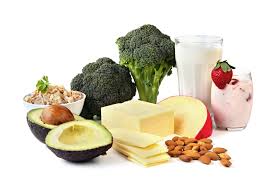
If you live in the northern hemisphere and cannot get consistent exposure to sunshine between May and October, make sure that the foods that contain Vitamin D such as eggs broccoli, strawberries, nuts, avocado, dairy and particular Vitamin D3 in fish oils are part of your diet. This will up your intake of Vitamin E in certain foods which is essential for healthy collagen.

Vitamin D is one of the supplements that I recommend during the winter months that may make a difference to not just your soft tissue health but bones and immune system.

Keep hydrated. As we age are skin becomes dry on the surface but this also applies internally I drink a glass of coconut water every day with green and herbal teas and plenty of water. I find turmeric tea helpful for inflammation and for a reduction in pain and also drink chamomile which is calming and lemon and ginger to boost the immune system.

©sallycronin Just Food for Health 1998 – 2021

I am a qualified nutritional therapist with twenty-three years experience working with clients in Ireland and the UK as well as being a health consultant on radio in Spain. Although I write a lot of fiction, I actually wrote my first two books on health, the first one, Size Matters, a weight loss programme 20 years ago, based on my own weight loss of 154lbs. My first clinic was in Ireland, the Cronin Diet Advisory Centre and my second book, Just Food for Health was written as my client’s workbook. Since then I have written a men’s health manual, and anti-aging programme, articles for magazines, radio programmes and posts here on Smorgasbord.

If you would like to browse my health books and fiction you can find them here: My books and reviews 2021


Thanks for joining me for this series and as always delighted to receive your feedback… keep young at heart… thanks Sally.


Smorgasbord Laughter Lines Extra – March 5th 2021 – Another Open Mic Night with author Daniel Kemp


Author Daniel Kemp entertains us again with his funnies from: Danny Kemp .. Always a place to find funnies and jokes to cheer you up… plus some satirical political commentary on politicians at home and abroad.

Priorities

Morag is standing at the railing of the cruise ship holding her hat on tightly so that it wouldn’t blow off in the wind.

A gentleman approaches her and says, “Pardon me, madam. I do not intend to be forward but did you know that your dress is blowing up in this high wind?”

“Yes I know” replies Morag, “but I need both hands to hold onto this hat.”

“But madam continues the gent. You are actually exposing your private area!”

Morag looks down at her dress billowing in the wind and replies, “Son, anything you see down there is 85 years old.“

”However, I just bought this hat for the cruise yesterday!”

Have you had the Jab – Urgent Notice

This happened yesterday and is important information for our age group.

A friend had his 2nd dose of the vaccine at the vaccination centre, after which he began to have blurred vision on the way home.

When he got home, he called the vaccination centre for advice and to ask if he should go see a doctor or be hospitalised.

He was asked to go back to the vaccination centre immediately
…………….as he had left his glasses behind

The Prison Sentence

A woman goes to prison to visit her husband who has just been sentenced to 40 years in jail.

As soon as she enters the visiting room, she hugs him and exclaims with tears in her eyes: “Oh! Roger, 40 years, Roger?”

And the husband replies: “Well, my love, what are you going to do?”

“Oh, Roger …! I spoke to the judge handling your case,”

“And what did he say, my love?”

“He told me that for every time I make love with him, he will reduce your prison sentence by one year …”

“What !!! What a miserable bastard and what did you say to that son of a bitch?”

“Oh, Roger! We’ll talk about it at home, get your stuff and let’s go.”

My thanks to Danny for allowing me to raid his Facebook: Danny Kemp

About Daniel Kemp

Daniel Kemp, ex-London police officer, mini-cab business owner, pub tenant and licensed London taxi driver never planned to be a writer, but after his first novel –The Desolate Garden — was under a paid option to become a $30 million film for five years until distribution became an insurmountable problem for the production company what else could he do?

In May 2018 his book What Happened In Vienna, Jack? became a number one bestseller on four separate Amazon sites: America, UK, Canada, and Australia.

Although it’s true to say that he mainly concentrates on what he knows best; murders laced by the mystery involving spies, his diverse experience of life shows in the short stories he writes, namely: Why? A Complicated Love, and the intriguing story titled The Story That Had No Beginning.

He is the recipient of rave reviews from a prestigious Manhattan publication, been described as –the new Graham Green — by a managerial employee of Waterstones Books, for whom he did a countrywide tour of signing events, and he has appeared on ‘live’ television in the UK.

A selection of books by Daniel Kemp

Read the reviews and buy the books also in audio: Amazon UK – And : Amazon US – follow Daniel: Goodreads – Website: Author Danny Kemp – Facebook: Books by Daniel – Twitter:@danielkemp6

Thanks for visiting and I know Danny would love your feedback..Have a good weekend…Sally

Smorgasbord Health Column – Turning Back the Clock 2021 – Part Eight – Anti-Aging and Flexibility by Sally Cronin


Sixteen years ago I had a series on radio called Turning Back the Clock, which I presented in response to listeners in their 50’s and 60’s looking for rejuvenation and tips on staying young. Like me they were exasperated by the claims of the cosmetic industry that the various ingredients in their products could knock ten years off their age. I was asked to design a diet that would help reverse the signs of aging and this developed into a weekly challenge that was undertaken by nearly 100 listeners. The series became a book in 2010.

I try to practice what I preach!  And certainly so far I have managed to maintain healthy key indicators such as blood pressure, blood sugar levels and cholesterol without medication, much to the surprise of my doctor!

In my opinion the answer to turning back the clock by several years is to consider and address a number of factors which include physical, emotional and mental age markers.

Link to part to Part Seven and how attitude of mind goes a long way to making you feel younger: Here

In this post I am going to be looking at exercise in general as an anti-aging tool and then exercises to increase flexibility. I think that it is important to review exactly why it is so important for the body to move and exercise regularly.

A great start to becoming fitter is to learn how to breathe correctly and I covered that in Part Six

Our bodies were never designed to be static and the saying “Use it or Lose It” is very appropriate. If you were to leave your car parked up without moving it for months on end you would expect that certain parts would certainly rust and parts like the tyres would probably perish and be unusable. If you left your battery connected it is likely to be flat as a pancake. In short, the car would be kaput.

The same thing applies to us. Muscles wither and shrink – we accumulate fat – bones become soft and brittle and our internal systems are sluggish and unresponsive. We can suffer from depression and we certainly slide further and further down the slippery slope of ill health the longer it goes on.

Is it ever too late to take up exercise?

No, it certainly is not. Although I would recommend that if you have been sedentary for a long time that you talk to your doctor before embarking on a marathon training course, if you start out slowly and carefully, within weeks you will be feeling and looking a great deal better.

What sort of health benefits can someone expect from doing simple exercises such as walking?

As I mentioned in the post on breathing, you do not have to race around doing aerobics and playing squash to obtain the aerobic (oxygen) benefits you need.

If you are doing the breathing exercises and combine these with a walking programme that increases in intensity over a period of weeks you will be getting all the benefits you need. In fact recent research is showing that if you are not fit, it can be dangerous for some people to contemplate marathon running if their heart muscle is not as healthy as it needs to be for that sort of sustained activity.

Even moderate exercise, for example, can reduce the risk of:

  • Coronary Heart Disease,
  • Strokes,
  • Diabetes,
  • High Blood Pressure,
  • Bowel Cancer,
  • Alzheimer’s disease,
  • Osteoporosis,
  • Arthritis
  • Stress.

All these conditions are ones that head the list of the leading causes of aging, so walking is definitely up there as an exercise of choice. If you are trying to lose weight and especially if you are very overweight, walking is the safest and most sensible way to exercise to begin with.

One of the most interesting studies that I read showed a very clear connection between exercise and recovery rates from breast cancer. Results showed that women who exercised between three and five hours a week doubled their chances of a full recovery and survival. Women who were sedentary were twice as likely to die from the disease. I find that very compelling and more than enough reason to exercise daily – this must also apply to recovery rates from other cancers too, logically.

Apart from increasing bone and muscular strength it will also increase your joints range and flexibility. Perversely, doing more exercise can ease the pain of rheumatic joints and if you know elderly. regular walkers you will see what a great posture they have.

What sort of exercise programme should we be following?

Despite the restrictions imposed on us on leaving our homes, in most places exercise is permitted within an designated area in our neighbourhood.

  • Everyone should be out there every day in the fresh air for at least 20 minutes.
  • Brisk walking is the best and being slightly breathless is the point at which you will be fat burning and helping your body to lose fat and form muscle.
  • If you are currently walking for 20 minutes per day then you need to measure the distance you are walking.
  • Over the next 6 weeks raise the time you walk to 40 minutes per day and you can split that if you like.
  • Walking uphill during part of your walk will increase the intensity but the right walking speed for you depends on your age and sex.
  • Over a period of time, aim to walk at an average speed of 3 to 4 miles per hour.
  • Do not overdo it – this is not a challenge but a gradual way to increase your level of fitness, health and youthfulness over a period of weeks and not days.

How important is our flexibility as we get older?

Flexibility

We can maintain our flexibility and actually improve it as we get older. The main reason we get stiff as we age is because we stop moving our bodies into different positions. The body is designed to move, not stay sitting, or slouching, the majority of the time! The more flexibility and space we have in our bodies, the deeper the breaths can be which as you read in the previous chapter has so many vital health benefits.

3 simple exercises to increase flexibility

No1.

Stand with hands by your side and as you inhale your breath, raise your arms slowly until they are above your head in a straight line with the rest of your body. At the same time as you raise your arms, also lift your heels to stretch the whole body upwards, whilst on tip toe. When you exhale lower the arms slowly and the heels back to the floor it is also a balance exercise so it helps develops concentration and focus. Keep your eyes fixed on a point during the exercise. Repeat 7/8 times.

No 2.

It is important not to do this exercise if you have a chronic back problem. Also only do a gentle arch to start with and increase the height over a period of weeks.

Go onto all fours. Hands placed on the floor under the shoulders and your knees under the hips. Imagine what a cat looks like when it gets up to stretch after napping. It arches its back up into the air.

Now with the back flat, exhale and arch the spine up, dropping your head into a relaxed position. Your abdomen is drawn up to support the spine in the arched position. Pause to feel the stretch. Inhale slowly flattening the back again. Pause. Exhale; slowly arch the spine up again etc. Always work slowly. Repeat at least 8 times.

No 3.

This posture is universally recognised as one of the best to help lower back pain but again make sure that you do not attempt if you are very sore. Take it gently over a period of time.

Lie down on your back. Inhale taking your arms back above your head, exhale bringing the right knee to your chest with your hands around it, to draw it in closer. Inhale as you lower your arms back down to your side and your leg back on the ground. Exhale bringing the left knee up with hands on it…and continue 8 times to each knee. Then 8 more times with both knees coming to chest together.

Then relax and lie flat for several minutes to appreciate what you have done and enjoy the benefits of the movements and deep breathing.

Some of you may already be enjoying the benefits of yoga and already perform these breathing exercises…if not then perhaps these two charmers might persuade you…

Other forms of exercise. When you reach a level of fitness that you are comfortable with then take to another level. For some people Yoga, Tai chi are wonderful for keeping the body supple and for others tennis, squash, jogging or pehaps one of the self-defence options!

For me swimming is top of the list and it does not take long for me to get fit if I swim for 45 minutes three times a week. It is exercises virtually every muscle in the body including the facial muscles when you jump in and find the water is only 15 degrees! In the absence of that currently, I can be found with headphones attached prancing around the kitchen as I bulk prepare vegetables three times a week… rock ‘n’ roll definitely never gets old…

Dancing is also fantastic exercise provided you do not have knee problems but after several weeks of walking or swimming you may find that has improved enough to take to the floor.

©Sally Cronin Just Food for Health 1998 – 2024

I am a qualified nutritional therapist with twenty-six years experience working with clients in Ireland and the UK as well as being a health consultant on radio in Spain. Although I write a lot of fiction, I actually wrote my first two books on health, the first one, Size Matters, a weight loss programme 20 years ago, based on my own weight loss of 154lbs. My first clinic was in Ireland, the Cronin Diet Advisory Centre and my second book, Just Food for Health was written as my client’s workbook. Since then I have written a men’s health manual, and anti-aging programme, articles for magazines, radio programmes and posts here on Smorgasbord.

If you would like to browse my health books and fiction you can find them here Sally’s books and reviews 2024


Thank you for dropping by and I would love to read your comments…please join me next week for a post on the youth enhancing benefits of taking care of the face and body we present to the world..thanks Sally.


Smorgasbord Health Column – Recipes that Pack a Punch – Breakfast and Dessert – Smoothies and Fresh Fruit Salad by Sally Cronin


In this series I have shared recipes that pack a punch of nutrition and still taste delicious beginning with some breakfast recipes.By now you know that I believe in a ‘cook from scratch’ approach to preparing meals and I have followed that philosophy for over forty years. In my mid-20s I was cooking food for 110 growing children three times a day, and the focus had to be on the nutrition as well as the taste. As a nutritional therapist for the last 26 years, I have shared these recipes with my clients to ensure that they never went hungry or deficient in the essential nutrients their bodies needed to be healthy.

In this post something for breakfasts but also for desserts that might also be the perfect anti-aging recipe and so much cheaper than all those expensive face creams!

Smoothies and Fresh Fruit Salad

Our local berry farm and shop offers wonderful fresh blueberries, raspberries and strawberries. About this time of year I find myself craving fruit and I end up substituting on of my lighter meals each day with a bowl with some yogurt.

You can mix and match your favourite fruits, but I have selected a few to share with you to illustrate the amount of health benefits they can bring to your body and brighten your day.

First a word about Fruit Smoothies

It is unfortunate that the food industry has latched onto fruit smoothies and labelled them healthy. The industrial process of producing a smoothie removes much of the goodness of the fruit, pumps sugar into the body and does not do much for your teeth either. When the fibre is pureed in the process in the factory or at home, it reduces the body’s ability to process the fructose slowly; giving you one big sugar hit. Squeezing fruit and removing all the fibre is actually worse as there is not even the pureed fibre to slow the absorption down.

Commercially produced smoothies also have a number of industrially produced elements that sort of takes away from the wholesome image and so sometimes… going back to basics is best. Carol Taylor has some great recipes for home-made smoothies that are much healthier along with some amazing ‘Cook from Scratch’ recipes for all the family.

Vegetable smoothies

I do drink vegetable smoothies, especially dark green leafy vegetables, with a carrot to add some sweetness. I usually make mine with cold Green Tea to add its health benefits and you can add other herbal teas too, such as peppermint or ginger which are great for the digestion.

I believe in having at least 8 portions of vegetables and fruit a day.. People often say that they could not possibly eat that much, but in fact it is easier than you think.

  • A chopped banana on your cereal for breakfast.
  • Some nuts and chopped apple for snack,
  • A salad with a large tomato, new potatoes, dark green lettuce and spinach mix and chopped red pepper for lunch with protein.
  • Broccoli, mushrooms and grilled onions with a chicken breast and a large spoon of brown rice for evening meal.

If you add that up you have consumed 7 different types of vegetable with a serving of nuts and three of fruit.

I tend to eat my fruit in the form of a fruit salad that I make and eat, either as a snack in the morning, or take with me when on the go. If I am not having a particularly active day, I will have as my supper. I vary the fruits according to the season and also sneak in a couple of tropical additions from time to time.

Make sure that any fruit that you buy is fresh and high quality and I usually try to find a local grocer if possible who is sourcing the fruit from the area. Try to make the fruit salad fresh every day as cut fruit, like vegetables loses its nutrients once it is prepared.

All of the fruits are alkaline-forming, which will help maintain the necessary pH -Acidity/Alkalinity balance for health and healthy amounts of the anti-oxidants necessary for protection against free radicals, and they all boost the immune system. Individually they add their own specific properties that make them ‘super fruits’ and provide a delicious way to protect your health and repair your body from the inside.

You can use any fresh, unprocessed and sugar free juice as a base but don’t drown the fruit, just use enough to moisten the fruit and help it slip down. I usually use coconut water, which is good source of potassium and is alkaline boosting… I also use blueberry, cranberry or apple juice for a fruit salad I am making for visitors, and usually buy fresh pressed that still has bits of fibre in.

fruit and veg bannerTHE APPLE really can help keep the doctor away as long as you eat the skin as well. Fibre helps reduce unhealthy cholesterol therefore helping reduce your risk of heart attacks and strokes. Pectin in apples will also help your body eliminate heavy metals such as mercury and lead. Like onions, this fruit contains high levels of a flavanoid called Quercitin, which is a very powerful anti-oxidant that has been shown to protect against heart attacks. Apple peel contains certain anti-oxidants called phenols that appear to offer us some protection from harmful UV- B rays. You can find out more about this powerful fruit Project 101 – An Apple a Day

THE KIWI is one of the more alkaline forming foods that adds not only the usual healthy fruit benefits to a fruit salad but has some of its own unique benefits. Kiwi fruit has been the subject of research because of its seeming ability to protect the DNA in the nucleus of the human cell from oxygen related damage. Although the Kiwi has an extremely high Vitamin C content, researchers believe that it is the combination of all its anti-oxidants that gives it this unique ability. One particular health area that really benefits is respiratory disease such as asthma.

THE PAPAYA is not just a taste of the tropics; it has some very powerful healing qualities that make its taste secondary. Papayas are rich sources of antioxidant nutrients, the B vitamins and the minerals, potassium and magnesium; and very importantly, fibre. Together, these nutrients promote the health of the cardiovascular system and may also provide protection against colon cancer. In addition, papaya contains the digestive enzyme, Papain, which is used to treat inflammatory diseases, injuries and allergies.

THE APRICOT has nutrients that can help protect the heart and eyes, as well as providing an excellent source of fibre. Eating Apricots has been shown to prevent the oxidation of LDL, which is the unhealthy cholesterol, this prevents plaques forming and lining the arteries. The apricot is also an alkaline forming food, which is great for helping the body maintain the correct acid/alkaline balance.

Apricots contain nutrients, such as the anti-oxidant Vitamin A, that promote healthy eyesight by destroying the free radicals that can damage the eyes’ lenses.


THE PINEAPPLE is rich in Bromelain which is an enzyme that helps digest proteins. It obviously aids digestion but it can also reduce inflammation and swelling. It is used for sore throats, more degenerative diseases such as arthritis and gout and can also to help patients to recover from operations.

Pineapple should always be eaten either alone or with non- protein foods otherwise the Bromelain’s effect will be reduced as it adopts its digestive role.

Pineapple of course contain the usual high quantities of Vitamin C to boost the Immune system but it also contains an excellent amount of manganese, which is a trace mineral essential for energy production and building the anti-oxidant line of defence. It provides a fantastic support for the body to fight off colds, flu and other bacterial and viral infections.

THE BLUEBERRY may be less available here in Europe and is more expensive than other fruits, but just adding one small basket of this very powerful fruit to your fruit salad will have some tremendous benefits. It is considered to be the most powerful anti-oxidant fruit and has been shown to benefit a diverse range of conditions such as cataracts, glaucoma, varicose veins, heart disease and cancers. Some of its properties actually enhance the work that other anti-oxidants such as Vitamin C are involved in. It strengthens the vascular system throughout the body, which degenerates as we get older.

You can add other fruits in season or for tasteRaspberries, Strawberries, blackcurrants, gooseberries, mango, pears etc, all of which have wonderful nutritional benefits.

If you are having a dinner party then you can add a small amount of liqueur into the fruit salad such as cointreau.. and serve with a dollop of cream or ice-cream.. I won’t tell anyone if you don’t!!

I hope that you are enjoying this series and will experiment with the recipes to suit your own taste… thanks Sally.

©Sally Cronin Just Food for Health 1998 – 2021

I am a qualified nutritional therapist with twenty-three years experience working with clients in Ireland and the UK as well as being a health consultant on radio in Spain. Although I write a lot of fiction, I actually wrote my first two books on health, the first one, Size Matters, a weight loss programme 20 years ago, based on my own weight loss of 154lbs. My first clinic was in Ireland, the Cronin Diet Advisory Centre and my second book, Just Food for Health was written as my client’s workbook. Since then I have written a men’s health manual, and anti-aging programme, articles for magazines, radio programmes and posts here on Smorgasbord.

If you would like to browse my health books and fiction you can find them here: My books and reviews 2021


Thanks for joining me for this series and as always delighted to receive your feedback… keep young at heart… thanks Sally.