Book reviews

I started Presumed Innocent by Scott Turow three times. The first time I stopped reading was because I was distracted by a shiny new offering from my library. The second time I put the book aside was because I really wasn’t enjoying it – the sexism, racism and homophobia exhibited by the characters hasn’t aged very well. The salacious details of the victim’s brutal rape and murder, the slut-shaming and the references within the story to pedophilia put me off, too, as did the connection between politics and the law in the United States – but more on this later.

The third time I started reading Presumed Innocent was after finishing Lady Audley’s Secret, which I enjoyed but found to be long-winded. I figured Presumed Innocent the third time around would be a comparatively fast read and I was right.

The story began with the narrator, Rusty Sabich, the Chief Deputy Prosecuting Attorney in the Office of the Kindle County, on his way to the funeral of Carolyn Polhemus, a Deputy Prosecuting Attorney from his office.

Rusty’s nose got out of joint at Carolyn’s funeral when he learned she had a teenage son, something he hadn’t previously known, giving the reader an inkling that Rusty and Carolyn had recently had an affair. Instead of attending her burial, however, Rusty returned to the office to work on the case, at which time the reader learns how she was killed. For the faint of heart, the method was nasty and there is a lot of detail.

Rusty and Carolyn’s affair was quickly confirmed, as was the fact that he was married and had a young son – but he’d fallen in love with Carolyn, whom he described to his psychiatrist after they’d broken up as sexy, with torrents of blonde hair, a tiny bottom, huge bust and long red fingernails. Carolyn was also hardworking and smart, and Rusty went to pains to describe how wonderful she had been in a recent child abuse case they worked on together, and unfortunately for me, he also described in great detail the cruel and gruesome particulars of the crime itself.

This story was published in 1987, which explains some of the dated ideas, although I wondered if these annoyed me so much because they all still exist. I was amused by other reminders that the book was of that time though, including the example of the police department’s special services having only one computer, which they had to share as it was under another section’s jurisdiction. The computer was capable of running checks on fingerprints, but it was also used for payroll so investigations had to wait their turn! Not only that, results on the fingerprint checks usually took up to ten days to be returned because there was a queue of other people waiting to extract information from that one computer. Staff also smoked at their desks, took long lunches and spent days looking up records on microfilm. My, how times have changed.

I couldn’t get my head around the idea of a Prosecuting Attorney being elected. In Australia we have what’s called a separation of power, in that the legislature (government) deal only with the making of laws, the executive (police) deal only with enforcing the law and the judiciary role is to interpret the law (the court system). Politics are separate from the judiciary, and in my opinion, for good reason. I was outraged that in Presumed Innocent, the Prosecuting Attorney spent 14 hours a day campaigning to be re-elected instead of doing his actual job. Courting finance for his political campaign also took time and effort, while the various departments aligned themselves with one or another candidate, assisting or hampering the murder investigation as they saw fit.

Rusty’s boss lost the election and almost before he could congratulate his successor, Rusty was arrested for Carolyn’s murder on what I thought was fairly circumstantial evidence, finding himself dependent on his former opponents, the Defense lawyers, to prove his innocence.

On page 179 I had a sudden idea of what must have happened and told my husband what I suspected. I was right, the story played out exactly as I had suspected. However, it was at this point that I got interested in the story as it shifted into the courtroom. I recently got out of doing jury duty and was glad to do so, since many of the local court cases in my area are sexual assault cases and the like, so you can imagine how happy I was when I received notice the day before I was due to attend that I would not be required! The author’s skill and experience of the law was used to great effect in this section, as he explained through the story how a jury was assessed and selected, and how a trial was run, lost or won, without me noticing until I’d finished the book that I’d actually learned a great deal about the theatre of a courtroom.

There were plenty of twists and turns to come in the courtroom but what I most enjoyed during this section was the exploration of each character. The judge, the Prosecuting Attorney and his off-sider, Rusty’s long-suffering wife and tormented son, even Carolyn’s lost son all had a story and an axis of their own, and all of these had some bearing on Rusty’s story. I particularly liked Rusty’s lawyer Sandy Stern, a man whose intelligence was frightening.

Rusty was an interesting character. I liked him even though he wasn’t always a good guy and I wanted him to be found not guilty of murdering Carolyn, even though as an unreliable narrator, the reader doesn’t learn what actually happened to Carolyn until the end of the story (unless like me, you have a lightbulb moment on page 179).

Scott Turow leads the reader in the directions he wants them to go, much like I suppose a good lawyer in a court room leads a jury to believe what they want them to believe. The storytelling was good enough for me to overlook the much of the nastiness and the gorier details that I felt had been included for shock value, but I don’t see myself watching the film, (even though it stars Harrison Ford) although I might eventually read another of the books in this series, since I’m reasonably certain I’ve already got another on my bookshelves.

After trying to read Hamnet by Maggie O’Farrell for two weeks and finding myself unable to sustain interest in the story, I decided not to continue. This might not be the author’s fault – I’ve been sick and my concentration is non-existent. All I’m good for is lying on the couch and looking at the window at the washing hanging limply on the line and coughing and snotting – I know that’s not a word, but it should be!

The story followed a young man whose twin sister was extremely ill, probably from the plague since those were the times. Their mother Agnes was away tending to her medicinal plants, and their father, who was unnamed but whom we assume was Shakespeare, was in London working on his plays and theatre. The family lived next door to their abusive grandfather, who Hamnet had been warned by his father to stay away from.

The plot then dipped into the backstory of Hamnet’s parent’s romance. Shakespeare was a young tutor when he and Agnes, who had a kestrel and was different to other girls, met and fell in love. He knocked her up on purpose so that they could be married. I gave up the book for good when both sets of parents learned, to their dismay, that Agnes was pregnant.

I found the historical note and epigraph at the beginning of the story to be far more interesting to me than the fictional story. I learned that the names Hamlet and Hamnet were used interchangeably during Shakespeare’s time and that Shakespeare had a son named Hamnet who died aged eleven. Four year’s after his son’s death, Shakespeare wrote Hamlet. In my opinion, that’s the story.

The book Hamnet has been wildly popular and so has the movie of the same name, however I didn’t like the writing and the romance irked me. Someone who saw me reading the book asked if it was any good and my response was that I wasn’t convinced by it – I suppose what I meant was that the characters and their stories hadn’t become real to me.

However, I am going to see the National Theatre Live’s production of Hamlet soon and am expecting to enjoy that much more.

When the plan to read Lady Audley’s Secret by Mary Elizabeth Braddon from Kelly’s Classics Club list as a Review-along was floated, I didn’t expect to be able to take part, for the simple reason that I thought the book would be hard to get hold of. Not so. My local bookshop had 25 copies because, as the bookshop staff told me, a local high school class is studying Lady Audley’s Secret this year so they had plenty of copies on hand. I suspect that by this time next year, there will be 50 or more second-hand copies of this book filling the shelves of the local op shops. 

So, I had the book in my hot little hand but my next problem was time management. As a student I’d left most of my homework until the last minute and while I’m now a diligent employee, I reverted to my teenage habits with this book, only beginning my reading two weeks before the proposed review date. Life has been busy lately but that’s not an excuse, we all have the same amount of time each day. Anyway, I read like mad and finished the book with a few days to spare.

By the end of the first chapter, Lucy Graham, a poor but beautiful young governess had accepted Sir Michael Audley’s proposal of marriage. He was the biggest catch in the neighbourhood, a wealthy and distinguished widower with an adult daughter. Sir Michael was described as being elderly but fit and healthy, and the hardest horseman for miles around – his age in years is similar to mine now, so I’d clarify ‘elderly’ by saying that if he was living in 2026 he would be considered to be middle-aged. People didn’t live for so long then.

In accepting Sir Michael Lucy told him that she didn’t love him, but he wanted to possess her beauty more than he wanted a bride who loved him – men are such fools for pretty faces! Lucy also hinted at a secret, something that only she knew, and so the mystery was set up. 

Mary Elizabeth Braddon is an author who understands human nature. Sir Michael was helpless in the face of Lucy’s charm and beauty. Her childlike manners were often referred to, and they never failed to grate on Alicia, Sir Michael’s daughter. Lucy’s golden halo of ringlets and blue eyes, reminiscent of a baby doll’s, were frequently described and Alicia, who was desperately in love with her cousin Robert Audley, was furious with he and her father for what she perceived as their brainless admiration for her new step-mother’s style. In contrast, Alicia was described as a dear, bouncing English girl. 

Before we go further, I should explain that Robert, a barrister who was too well-off and lazy to actually practise his trade, was the real star of this whole show. This was unexpected, as his indolently heroic nature wasn’t immediately apparent.

When Robert met George Talboys, an old friend just returned from Australia after making his fortune as a gold miner, he offered George support in the form of a home and companionship after George learned that his beloved wife Helen had unexpectedly died a few weeks before his return to England. Together they visited George’s young son, who lived with George’s father-in-law and settled money on him, before spending the next year travelling through Europe together – during their travels Robert was commissioned with purchasing extravagant furs for the new Lady Audley, who they hadn’t yet met. 

On their return to England George accompanied Robert on a visit to Audley Court, where George’s demeanour changed noticeably after seeing an unfinished painting of Lady Audley. Soon after, they met her and the smitten Sir Michael in person.

George disappeared mysteriously soon after this meeting, leaving Robert to suspect foul play.

This began a long-winded story of cat and mouse as Robert uncovered clues in George and Helen’s past as to what or who might have caused George’s disappearance, and more importantly, why.

What Robert discovered distressed him enormously, and he was loathe to continue investigating knowing that if his suspicions were correct they would be devastating to those he loved, but he felt obligated to avenge what he believed to be a terrible injustice to his friend. He visited George’s estranged father, a man who always had to be right, seeking guidance, which he didn’t find from him. Instead, it was George’s sister Clara who urged Robert to continue his investigations, which led to Robert finding himself in grave danger.

Robert’s gallantry towards the suspected murderer was a major irritation to me. He gave them far too many warnings – I suspect that my own personality is more like Alicia’s – I would have leapt to a faster conclusion then gone in swinging. Robert’s sure and steady gathering of information led him to a surer conclusion, one that would have held up in a court of law.

The list of characters included a pair of blackmailers, and people whose lives had touched on other characters along the way. It wasn’t a huge list of characters and each of them was in the story for good reason.

The dialogue was often overly wordy, particularly to a modern reader. For example, a deathbed confession from a dying man went for three or four pages! I would have thought that by then the dying man wouldn’t have had that much conversation left in him, but he told his story in great detail. The lengthy pages of dialogue and detailed descriptions are a reminder that the world I live in goes at a faster pace than when books like this were written.

Despite the slow pace, none of the dialogue or description was superfluous.

I particularly enjoyed the brief moments when the narrator or author inserted their own opinions into the text.

The villain was described as wicked, with the possibility of them having an inherited madness. I wasn’t convinced by their madness, instead it seemed to me as if they acted the way they did to protect their own interests after finding themself in difficult circumstances.

I’d dearly love to know how the local students are getting along with Lady Audley’s Secret – not very well, I suspect. It is a slow story and I can’t imagine teenagers, whose lives have always without social media (meaning that most of their information comes to them in short, fast bursts of information), loving this story.

At least I get to learn the opinions of other reviewers – I’ll add links as these are posted although this might not be for a day or so as I’ve come down with something and at this very moment feel as if I’d rather die than get up from the couch. I can’t read or crochet and my nose is streaming. I think it’s the man-flu.

Update – finally! Reviews as follows:

Christine’s review is in Fiction Fan’s comments.

Lady Audley’s Secret was book thirty of my second Classics Club challenge to read 50 classics before my challenge end date of September 22, 2028.

It’s been a while since I’ve posted a ‘Bits and pieces,’ so here we go again, May 2026 as seen in my part of the world, starting with an early morning walk around my small town a week ago. The Guineafowls above, who belong to a neighbour, think they own the road. They stretch their necks and raise their wings to make themselves as tall and intimidating as possible, before deciding in their own good time to move off the road so traffic can pass.

Wannon Water, the local water authority had an open day recently at their West Warrnambool Water Tower, so I booked myself in and climbed the 154 steps to take in the view from the top. The tower was built in 1974, is 28 metres high and holds 450,000 litres of water. The mural on the tower is by Claire Foxton and was completed in 2018. It depicts three local migrants/refugees to the local area.

In crochet news, I made the Chevron Lace Wrap by Moogly (Tamara Kelly) using Fiddlesticks Superb 8 Prints acrylic yarn. I’d began making the Sideways Sampler Shawl, another Moogly design, with the same yarn but preferred how the colours played out in the chevron pattern so went with that instead. The finished wrap is lovely and soft. I expect I’ll make the pattern again, and will also try the shawl again with a different yarn.

I’m reading Stiff by Australian author Shane Maloney and when I finish that I’ll start Lady Audley’s Secret by Mary Elizabeth Braddon. Presumed Innocent by Scott Turow is still sitting on my bedside table waiting, waiting, waiting. When I get back to Presumed Innocent I’ll have to re-read the beginning as I’ve forgotten how the story started.

The following photos are from another early morning walk this week on a foggy morning. It turned out to be a beautiful day. The last photo is taken from our nearby ‘big’ town, looking down across the cemetery to the river mouth later in the morning.

I’m taking a little break from blogging over the next few weeks – life has gotten in the way of my reading lately. I’ll be back for the Review-along for Mary Elizabeth Braddon’s Lady Audley’s Secret on Monday June 01, 2026 – it’s not too late to join in the fun if you like!

Happy reading.

It’s time for the Classics Club Spin #44.

The rules are simple, pick 20 books from your Classics Club list and number them 1 – 20, then post the list prior to Sunday 17 May, 2026.

Once the spin is spun, read the book that corresponds to the book # on your list, then review the winning book by Sunday 05 July, 2026.

My book list is as follows:

1. Maupassant de, Guy: The Best Short Stories

2. Maugham, W Somerset: Collected Short Stories Volume 1

3. Huxley, Aldous: The Devils of Loudun

4. Bowen, Elizabeth: The Collected Stories of Elizabeth Bowen

5. O’Hara, Mary: My Friend Flicka

6. Franklin, Miles: The Diaries of Miles Franklin

7. Park, Ruth: The Harp in the South

8. Heyer, Georgette: The Black Moth

9. Richardson, Samuel: Clarissa

10. Butler, Samuel: The Way of All Flesh

11. O’Brian, Patrick: Master and Commander

12. Swift, Jonathon: Gulliver’s Travels

13. Thackeray, WM: The History of Henry Esmond Esq

14. Travers, P.L.: Mary Poppins

15. Twain, Mark: The Adventures of Huckleberry Finn

16. Bronte, Charlotte: Jane Eyre

17. Chaucer: Selections from Chaucer

18. Defoe, Daniel: Moll Flanders

19. Wodehouse, PG: Carry on Jeeves

20. Dumas, Alexander: Celebrated Crimes – The Borgias

I’d read someone else’s review of a book by Sarah Lotz recently and added the title to my own list, but when my library didn’t have it I went with Impossible instead. Winner, winner, chicken dinner! I was engaged from the very beginning, when Bee and Nick met online after Nick accidently sent an angry email to Bee demanding payment for work he hadn’t been paid for.

Bee and Nick began a too-cool-for-school email correspondence, quickly bonding through the type of honesty that can be easier to find with a stranger. The first 40 pages or so flew by, as their email conversations were funny, revealing and to the point. As the story progressed chapters from each of their points of view provided more personal details; Nick was an unhappily married writer who didn’t make nearly enough money, while Bee was a successful seamstress who dated jerks. Before long, their email correspondence had become Nick and Bee’s most important relationship and later, after Nick’s wife left him for his best friend, Nick and Bee decided to meet in person.

Nick and Bee turned up at the appointed place at the appointed time but couldn’t find each other. Despite flagging differences in their locations, both were hurt and angry with the other and left disappointed, vowing never to speak to the other again. After realising how much they missed each other they eventually reconnected on email, which brought about the wow moment!

Turns out, Nick and Bee were living in alternate realities. They were living in the same time but while Bee’s world was recognisably ours, Nick’s world was odd. Some things were better in Nick’s world and some things were worse, but one thing that was much better was that people in his world had begun working harder earlier on climate issues and population control, plus they had a Universal Basic Income so that theoretically, no one in his world should have been living in extreme poverty. There were similarities, too, although in Nick’s world there were no Star Wars prequels, Dwayne Johnson (The Rock) was running for President of the United States and Brexit hadn’t happened.

At this point, Bee and Nick also realised that it would be impossible for them to ever be together in person.

Things took a turn when Nick and Bee decided to look each other up in their own realities. In Bee’s world, Nicholas, as he was known there, was a successful writer and single. Bee attended one of Nicholas’ book launch events, where, not surprisingly they clicked, and from there, started seeing each other.

In Nick‘s world, Bee was known as Becca and was married with a child. Nick engineered a meeting and they became friends.

All the while, Nick and Bee continued to email each other, and intimately discussed their growing relationship or friendship with the alternate version of themselves, but while Nicholas and Becca were great they weren’t Nick and Bee, and the original Nick and Bee still desperately wanted to be together.

Still with me?

By the last page I was crying like a hopeless romantic watching The Time Traveller’s Wife for the seventh time.

I’m sure fellow hopeless romantics who love time-slip stories will also love Impossible.

I saw Loneliness & Company by Charlee Dryoff sitting amongst the new releases at my library and couldn’t resist the cover. The colours reminded me of the 1980s and the font made me think of video games from that era. I think the designer did a great job with the cover; it suited this story of a woman in the near future living her life almost entirely online.

Loneliness & Company was narrated by Lee, a young researcher who at the beginning of the story graduated top of her class in the Program. Lee’s marks should have meant that she was placed with one of the ‘Big Five’ companies, but to her dismay, she was placed into a role in a company that she’d never heard of. She was also provided with an apartment and a flat mate, Veronika, an outgoing young woman who worked in retail.

Lee was a great researcher, but she had such poor social skills that I wondered if she had Autism Spectrum Disorder. Her conversations with Veronika, her work colleagues and her parents showed Lee either never to have learned, or to have been completely out of practice with having a conversation with someone else. She had no friendships, interests outside of work and she didn’t recognise that anything was missing from her life. However, as it turned out, Lee wasn’t alone in that.

Tasked with gathering information to train an AI named Vicky to become a friend, Lee and her colleagues initially floundered. They were surprised to discover that researchers who added personal experiences into their reports were providing what was needed for the program to be successful. They began with the topic ‘Communication’ and Lee, anxious to prove herself and get moved to one of the ‘Big Five,’ found and dumped huge amounts of information into the system. She couldn’t understand that she could use the learnings herself, so missed multiple opportunities to make actual friends with people around her. Later topics including ‘Food’, ‘Love’ and ‘Friendship,’ making Lee and her colleagues’ obliviousness all the more frustrating.

Lee had previously been taught that loneliness didn’t exist, with the word itself having been removed from the emotional index several decades before this story begun. At her new company, Lee was confused and shocked when she and her colleagues were told that even if people didn’t know what loneliness was, they could still feel it, raising the question, ‘If you can’t name it, can you feel it?’

In an attempt to prove herself, Leah became a guinea pig for the project, offering to undergo experiences. She attended a party where people sat around a Screen in silence until a question appeared, prompting the partygoers to talk about the suggested topic until they ran out of conversation, then waiting in silence until they were prompted with another question to talk about. After a lifetime of working alone, Lee found herself well out of her comfort zone as she spent time with other people, went on dates, attended art classes and experienced sustained contact with other people in social settings.

The plot was very clever but there were several problems in the execution, for example, Veronika and her friends were living their lives in the moment and were definitely not suffering from the un-named and dreaded loneliness that was spreading quicker than the common cold. Why or why not? And why didn’t Lee recognise that Veronika’s life style fitted the study perfectly?

The ending felt rushed, too. With only a handful of pages to go I still had a lot of questions, then all of a sudden the whole story was done and dusted.

In short, I loved the idea, but wish the author had waited to write this book until after she’d had more experience. I’ll be happy to read any of Charlee Dryoff’s future works, though, because I think she has a bright future.

I added Wait Here by Australian author Lucy Nelson to my list of books to look out for after seeing Kim’s and Kate’s reviews (see below for links), both of which I’ll read thoroughly now I’ve read this collection of short stories about childless women for myself.

I found something to think about in each of the stories, but have concentrated my review on the stories I particularly resonated with.

Chances Are, We Were High as Kites was about two elderly twins in poor health making decisions about the end of their lives. Childless, they had no guilt about needing to continue living for their children, nor did they have to face the burden or obligation of relying on children for their ongoing and increasing care. They had friends and people they loved dearly in their lives, and a freedom that women who do have children can never have. The question of whether either woman had ever wanted to be a mother was never asked since motherhood or the lack of didn’t define them – it simply didn’t matter. The blurb on the book’s cover was particularly apt for this story; ‘These women will never be mothers. It’s nothing. It’s everything.’ For the two women at this stage of their lives, motherhood was nothing.

The narrator of Ariel. Marvin. I Don’t Want a Boyfriend was a woman who named her possessions, including her car. I get it. I’ve always named my cars, too. My first was Beau, my second was Lachlan, then came Hermoine, Grace and Henry Ford. The current car is known as The FG. The narrator and her workmate’s friendship was cemented after he told her that his car was named Ariel. They had a lot in common, but their friendship almost disintegrated when she discovered that he was a single father – not because he was a single father, but because he hadn’t told her. The friendship survived after an honest conversation where the narrator told him she didn’t want to be anything more than friends. He hadn’t wanted more either, but voicing her feelings made the narrator realise that she didn’t ever want any relationship to ever be more than a friendship.

Father Figure was the story of a woman sharing a house with her sister and young neice, Fia. The narrator was more than an aunt, but less than a mother, a story in which I found much to interest me having brought up a child who was not my biologically my own – in my situation I’ve been more than an aunt, but less than a mother. In Father Figure, Fia’s mother was a single mother and the narrator had moved in to help out two years ago, but as time passed the narrator, although she occasionally resented losing her freedom to take on the responsibility of Fia, also recognised with some sadness that if her sister ever began another relationship then her own role as the other parental figure would eventually be assumed by the new partner. The narrator also worried that Fia didn’t have any men of importance in her life.

The final story, I Am Five, I Am Twelve, I Am Twenty, began with a five-year old narrator feeling disappointed that the doll she had just been given was not a baby doll. When she turned six she pretended her dog was a baby and at eight, she realised sadly that she was now considered to be too old for dolls. At twelve she learned about reproduction; specifically, that she had eggs that might one day become babies. At sixteen, the narrator was aware that her peers were having sex, at seventeen, she and her boyfriend made an unsuccessful attempt themselves. At 23, she had an abortion after falling pregnant with the right fellow at the wrong time. When the narrator’s sister was unable to fall pregnant, the narrator offered her eggs but after much consideration her sister decided that she didn’t want children. At 28, the narrator met a man she wanted to have children with, but he didn’t want children and at 31, she loved another man so much that she was still subduing her desire to have children because he didn’t want them, either. At 34, she and a gay couple had discussions about her being a surrogate mother for them, which never went further than trying to work out how their model family might look. At 37, she asked a friend if he would father a baby for her but he declined, and so it continued. Sometimes falling pregnant at a young age by mistake is the best way.

I’m always interested in stories about women that focus on childlessness/and or motherhood, so this collection leaned into that interest perfectly. Each story had different scenarios and circumstances, and although several of the narrator’s voices were overly similar, most were distinct and their emotions only applied to them and their particular journey. I’d recommend other readers space out the stories to get the most from them.

I can’t finish without saying how much I love the cover art, Wild and Defenceless by Iranian-Australian artist, Anahita Amouzegar, who is based in Melbourne. I thought the cover suited the collection of stories in Wait Here perfectly.

The writing was wonderful, subtle, sensitive, and most impressively, judgement-free. I’ll definitely read Lucy Nelson’s future fiction.

Today is the first Saturday of the month, which means it is time for Six Degrees of Separation, hosted by Kate from Books are My Favourite and Best.

May 2026’s link begins with Wild Dark Shore by Charlotte McConaghy.

The Goodreads blurb for Wild Dark Shore says:

A family on a remote island. A mysterious woman washed ashore. A rising storm on the horizon.

Dominic Salt and his three children are caretakers of Shearwater, a tiny island not far from Antarctica. Home to the world’s largest seed bank, Shearwater was once full of researchers, but with sea levels rising, the Salts are now its final inhabitants. Until, during the worst storm the island has ever seen, a woman mysteriously washes ashore.

Isolation has taken its toll on the Salts, but as they nurse the woman, Rowan, back to strength, it begins to feel like she might just be what they need. Rowan, long accustomed to protecting herself, starts imagining a future where she could belong to someone again.

But Rowan isn’t telling the whole truth about why she set out for Shearwater. And when she discovers sabotaged radios and a freshly dug grave, she realizes Dominic is keeping his own secrets. As the storms on Shearwater gather force, they all must decide if they can trust each other enough to protect the precious seeds in their care before it’s too late―and if they can finally put the tragedies of the past behind them to create something new, together.

A novel of breathtaking twists, dizzying beauty, and ferocious love, Wild Dark Shore is about the impossible choices we make to protect the people we love, even as the world around us disappears.

While I haven’t read Wild Dark Shore yet, I will.

Since the blurb of Wild Dark Shore left me with questions about what is going on in Shearwater, I’ve linked to Margaret Atwood’s Burning Questions, a collection of essays and memoirs with a focus on climate change. Atwood takes the opportunity to remind readers that there won’t be a future for humans if the issue is not urgently addressed, including in the piece How To Change the World.

My second link is to Hovering by Rhett Davis, a novel set in a fictional version of a Victorian city that I thought was Geelong, which had a unique phenomena that tourists visited to see – the city’s streets, buildings and public areas constantly shifted to a different location in the town. I read this story as an allegory for Australia or the district’s history, since before British settlement the traditional owners of the area of Geelong were the Wadawurrung people of the Kulin nation. After settlement Geelong quickly grew into a town with outlying farms expanding further and further out, and this story made me realise that the Wadawurrung people whose ancestors had lived in the district for 25,000 years must have seen unrecognisable changes very quickly after British settlement. In this story, the character’s retired parents were cruising around artificial Pacific islands after real islands disappeared after sea levels rose.

When the Floods Came by Clare Morrall is a story of the effects of climate change in a future version of the Northern Hemisphere. In Birmingham, England, torrential rain and the resulting floods left the main character and her family living alone in a housing tower that had once been home to thousands of people. The family’s goats and chickens lived on the apartment building roof, while the family used purpose-built machinery to farm in the vastly-affected climate, while receiving occasional food drops from American helicopters to survive.

My fourth link is to Juice by Tim Winton, a riveting story of a world that was so hot that life above ground was unlivable for six months of the year. The narrator was something of a Scherezade, telling his Mad Max-esque story to an interested listener in an attempt to save his life.

My fifth link is to The Book of Strange New Things by Michael Faber, a story that lived on in my head for ages after I finished it. An English missionary went to a distant planet to teach the occupants there about the bible, but back on earth, his wife was living through natural disasters caused by climate-change, wars and terror, and a growing divide between the rich and the poor that was becoming impossible to overcome.

My final link is to Bruny by Heather Rose. I think Bruny links back to Wild Dark Shore in two ways, as Bruny Island and Shearwater Island are both islands, and that climate change is important to both plots. Bruny is a cracking read set in the near-future, while the Tasmanian government were building a six-lane bridge between the mainland and the island, for reasons that were not being explained satisfactorily to the locals.

I clearly couldn’t resist going back to a theme to make up May 2026’s chain. Stories of climate change are not happy stories, but each of these books left me with a lot to think about.


I chose the cover above for my review of The Adventures of Tom Sawyer by Mark Twain because it represented the scene from the story that I best remembered from reading the story from a Reader’s Digest Condensed Book as a child.*

Sure enough, right there in the second chapter, Tom scammed every boy in town into painting Aunt Polly’s fence for him by making out the job could only be done by someone with particular skills while he took payment of a dead rat, a kite, a dog collar, a couple of tadpoles and other treasures, even though the task had been intended as a punishment for Tom for some misdemeanor or other. I laughed out loud when the narrator inserted himself into the story during this chapter, describing himself as ‘a great and wise philosopher.’

Tom and his goody-goody half-brother Sid lived with their Aunt Polly and her daughter Mary in St Petersburg, a fictional town on the Mississippi River, in the 1830s or 40s. Aunt Polly had her work cut out for her with Tom since he was always in trouble for something. He was often sorry afterwards, but could charm Aunt Polly into feeling sorry that she had to punish him, and when he couldn’t charm her, he tricked her to escape his punishment.

The story followed Tom’s adventures through the course of a year or so, including a night when Tom snuck out night and witnessed a murder with his friend Huck, with the aftermath of this terrible event woven through the rest of the book.

During one escapade Tom, Huck and another boy stole a boat and ran away to become pirates on an island further down the river, fishing and swimming and learning to smoke pipes. The townspeople thought they had drowned and planned their funerals, but in the most dramatic fashion, Tom and his friends turned up at the church service to prove otherwise.

Tom in love was delightful. Fickle Tom fell out of love with Amy Lawrence the moment he saw Becky Thatcher , the new girl in town. On Becky’s first appearance at Sunday School, ‘he was ‘showing off’ with all his might – cuffing boys, pulling hair, making faces, in a word, using every art that seemed likely to fascinate a girl, and win her applause.’ I laughed out loud when Tom convinced Becky to become engaged to him, then laughed even harder when Tom accidentally put his foot in it with Becky by telling her of his previous engagement to Amy. Obviously this new information meant that Tom and Becky’s engagement was off.

The only chapter I didn’t remember was of a sleepy Sunday afternoon in church, when Tom became engrossed in a battle between a pinch-bug and a stray dog. This chapter might not have been included in the book I’d had.

Superstition ruled Tom’s life. He and the other boys had chants and charms to remove warts, and amongst other signs, believed that a stray dog’s howl signified a death. I’m not sure that Aunt Polly and the other adults didn’t believe in these superstitions, either.

Despite my overall enjoyment of the story and the wonderfully descriptive writing, by the end of the second chapter, I’d become aware of an element of the story that I didn’t notice as a child; the difference between Tom who was white and another child, Jim, who was black and a slave.

I’m more bothered than I thought I would be about how to write about the racism and slavery in the story, neither of which I noticed as a child. I suspect I accepted both without question as just how things were in Tom Sawyer’s world, but as an adult reader both elements marred my enjoyment of the story. And yet, I also accept that the racism shown in by the characters in this story to Native Americans and black people (all of whom I think were slaves), was part of everyday life at that place and time. I suppose I feel disappointed that the author didn’t use the narrator or the characters to question the rights and wrongs of racism and slavery, which is probably unfair of me. Mark Twain was reflecting the world that he saw in this book, and even if he did think that there were injustices, I do understand that as an author he was not obligated to use his story to try to change the world.

Times had changed in other ways, too. Tom and the other child characters were physically punished in ways that an Australian parent would be locked up for now. Tom was particularly mischievous so was regularly beaten, but other children were given regular hidings too. As for Huckleberry Finn, the son of the town drunk, he was homeless, and considered by most to be ‘idle and lawless, and vulgar, and bad.’ Tom and the other boys wanted to be just like Huck, but he dressed in rags, slept on doorsteps and ate scraps.

So on the whole I loved the bits of this story that I probably loved the first time around, and had mixed feelings about the rest. I do think that Mark Twain was a wonderful writer, so will end on that note.

*I wish I could remember what the other three novels where in the Readers Digest book but it disappeared long ago.

The Adventures of Tom Sawyer was book twenty-nine of my second Classics Club challenge to read 50 classics before my challenge end date of September 22, 2028.

I’d been meaning to read more of Australian author Amanda Lohrey’s work after finding much to think about in The Labyrinth, so hoped that The Conversion, a story about a middle-aged woman who bought a deconsecrated church to convert into a home, would be another interesting read. After all, who hasn’t looked at photos of deconsecrated churches, halls and other public venues that are no longer wanted and wondered what they might become next?*

The Conversion began with Zoe and her husband Nick inspecting a church for sale in Crannock, a fictional rural area in the Hunter Valley area of New South Wales. Nick was keen to take on another renovation, Zoe less so, as she loved the home they lived in and better remembered the pain of living in a building site than Nick did.

Next thing we know, Nick was dead and Zoe had bought St Martins, going against the advice traditionally given to people after their partner dies; don’t make any big decisions in the first year, although I don’t remember any mention of Zoe’s friends telling her this.

Zoe and Nick fell on hard times during the 2008 Global Financial Crisis, although as Zoe was a solicitor and Nick a psychologist I found it hard to believe that their savings and superannuation were completely wiped out, however, their plan was to sell their larger, city home to fund the next stage of their lives. So far, so good, although I couldn’t understand why Zoe bought St Martins since she wasn’t religious, had no prior affinity with the area and her children lived in other states.

At first Zoe called the move a tribute to Nick, who had envisioned renovating the church as an experiment, something to do with the psychology of space that I never quite understood. This was explained further as how buildings inhabit people’s spirits.

I wondered if Zoe’s purchase of the church was some sort of revenge move on Nick for something Zoe was holding a grudge over, and so it turned out to be. The flashbacks of Zoe and Nick’s lives showed that Zoe was far more in love with Nick than he was with her, and that although she would always think him wonderful, he wasn’t without fault.

Zoe returned to work, taking a part-time job doing reception work at the Crannock hospital. She settled in, more or less, and enjoyed occasional visits from one of her sons and his children, and from friends from the city. Once in a while she ventured back to the city for appointments where she found the faster-pace no longer to her liking.

As the story progressed Zoe found connections with other people in the district, but her biggest struggle was how to approach the conversion of the church, to make it into a home. The height of the interior dwarfed her and her possessions, and the imagery of the beautiful but fragile stained glass windows were troubling. In many ways, Zoe seemed more comfortable with the exterior of the church; the grounds, the trees that lined the fence line and the views across the surrounding paddocks, vineyards and valleys. Since the church didn’t have any windows that she could see out, this made her decision to buy it even more of a mistake.

The many themes running through the story include grief, religion, major life changes and parenting, although it is not a plot-driven book.

I had expected to learn more about several local people who Zoe interacted with early in the story but none of these progressed. I didn’t really expect a romance, a deep friendship or even a quarrel, but the stories of these interactions seemed unfinished. Perhaps that was the idea. Neighbours and people in regional communities don’t live in each other’s pockets; they meet randomly, have a few words then disappear out of each other’s lives until the next time they come across each other.

I can imagine The Conversion being made into a film; the image of a small country church surrounded by paddocks with an old cemetery across the road, surrounded by grass so long that you need to watch out for snakes and the absolute quiet other than the noise of the magpies and other birds is so vivid in my mind, that I’m hopeful a film-maker will see the potential too. I can picture Rebecca Gibney as Zoe, but can’t think of anyone who’s just right for Nick. Not that he matters much, he only needs to be handsome and charismatic, because this is Zoe’s story.

*Living in a former church doesn’t appeal to me at all, although I’m always interested in how conversions are managed. Links to former churches for sale in the Western District, if you’re interested.

https://www.realestate.com.au/property-other-vic-warrnambool-150133216

https://www.realestate.com.au/property-house-vic-warrnambool-146660316

My purchase of The Conversion continues my New Year’s resolution for 2026 to buy a book by an Australian author during each month of this year (April). I purchased this book from Ironbird Bookshop in Port Fairy.

Mutiny on the Bounty: A Saga of Survival, Sex, Sedition, Mayhem and Mutiny by Peter Fitzsimons has been on my wishlist after visting Tahiti and Moorea several years ago. Later, I wished I’d read this book before I went – I’m yet to watch the 1962 film of the same name starring Marlon Brando too, but no doubt that is in my future. Anyway, French Polynesia is one of the most beautiful places on earth and the water really is as crystal-clear as the travel brochures show, and in all imaginable shades of blue. The landscape is green and lush, the colourful and exotic flowers are stunning, there are chickens everywhere, the snorkeling is sensational and it’s easy to understand why the mutineers from the HMS Bounty wanted to stay there with the women they’d formed relationships with.

Chapter One began with a description of breadfruit, the reason why the Bounty sailed to Tahiti in the first place.

The intention was for breadfruit trees to be obtained in Tahiti, then taken to the West Indies to be grown as food for slaves. The rights and wrongs of slavery didn’t enter into this story, but cooked breadfruit, which tastes like a blend between mashed potato and bread, would be a cheap food-source if the experiment was successful.

Lieutenant William Bligh was put in command of the Bounty and began the18-month journey from Portsmouth, England in 1787. Despite the lateness of the season Bligh attempted to sail around Cape Horn, the most direct route to Tahiti in the hope of cutting almost a year off of the trip. After battling headwinds on the Cape for nearly a month without making headway, Bligh eventually directed his exhausted crew to turn around and sail back to Cape Town, before they sailed the long way around, travelling south of Australia and New Zealand to get to Tahiti.

By the time the Bounty arrived in Tahiti, I couldn’t blame the mutineers from wanting to stay there. Bligh was a short tempered, angry man whose crew were too afraid of him to tell him the truth when things went wrong. Their trip had been long and arduous, through weather that caused even the most experienced sailors to feel constantly seasick. Several of the crew were so inexperienced they were almost incapable of doing their jobs, and Bligh had belittled and angered his crew to the point where most of them hated him.

Many of the men were orphans from poverty stricken slums in England. In Tahiti, they found a tropical paradise with plenty to eat, hardly any work to do and sexually available women who welcomed their advances and even more amazingly, made advances of their own to the men! It wasn’t at all surprising that most of the crew didn’t want to leave Tahiti when the time came five months later, by which time many of them had formed relationships with Tahitian women.

Back on board the Bounty, it wasn’t long before the combination of Bligh’s ongoing petty criticisms, unkindness and outright cruelty towards his crew led to Christian Fletcher, a well-liked and seemingly honourable man leading a mutiny against Bligh, resulting in 18 men dubbed the Loyalists being cast off the Bounty into an overloaded 23-foot launch with Bligh somewhere in the Pacific Ocean south of Tofua.

A handful of men left behind on the Bounty had wanted to remain with Bligh, or rather, not to be mutineers, but there was no room on the launch boat for them. Approximately 25 men, a combination of mutineers and Loyalists remained with the ship.

The story then split into two, with short chapters describing Bligh’s 48 day, 4,000 mile journey in an open boat to Timor. Bligh eventually returned to England where he was acquitted of any wrongdoing, and feted as a hero after publishing the story of his successful return, which became known as one of the most remarkable feats of navigation in history.

Bligh’s journey was alternated with the story of the mutineers’ joyful return to Tahiti and their lovers. Once in Tahiti, the mutineers’ paths diverged again. The Loyalists waited in Tahiti for another English ship to arrive to take them home, while some of the mutineers settled down to life there. When the HMS Pandora arrived in Tahiti the Loyalists met it willingly, while others were forcibly rounded up. On returning to England, Loyalists and mutineers alike were tried as mutineers though, and several men were hung. It didn’t take long before Bligh’s reputation as a hero began to suffer though, as these men’s stories contradicted Bligh’s. The public soon realised that as a result of Bligh’s poor leadership he had arguably brought the mutiny on himself. Bligh had previously been involved in other skirmishes, including adding to the escalating tensions in Hawaii that led to the death of Captain Cook. Later, as Governor of New South Wales, Bligh was outed after citizens and soldiers effectively mutinied in what became known as the Rum Rebellion.

Back in Tahiti, the mutineers kidnapped a number of Tahitian men and women and sailed off in the Bounty to find a hard-to-find island where they could make a life, hidden from the English Navy who they knew would come looking for them. From the beginning Fletcher Christian had been nominated as the mutineer’s leader, although as the leader of a crew of mutineers his authority was limited. The mutineers visited several already inhabited islands unsuccessfully, but eventually found Pitcairn Island in a different location to where their maps said it would be, and settled there, knowing that the island would only be found by accident.

On Pitcairn, the mutineers divided up land on the island to farm with their wives, and forced the Tahitian men to become their slaves. Eventually the Tahitian men rebelled and after four or five years there was a spate of murders, the later ones carried out by the Tahitian women who realised there would be no peace amongst them until the men were all dead. Once things settled down there was only a single man, nine women and nineteen children living on the island. The women had wanted to return to Tahiti years before, but the Bounty had been burned soon after their arrival on Pitcairn and the men had been unwilling to build another boat.

I’d been down at least 12 rabbit holes before I’d even got to page one of the first chapter. The introduction left me with questions about the location of Pitcairn Island in relation to Tahiti (2,170 kilometres or 1,350 miles), which led to me looking at photos of both places, reading up the geographical details, populations, histories and other details of both countries on Wikipedia. I looked at photos of breadfruit, delved into Tahitian sexuality (unmarried women had a degree of freedom that was unknown in European cultures at the time the Bounty was there), and learned more about Captain Cook’s death than I’d ever known. I already knew that Pitcairn Island was one of the most isolated places on earth and was interested to learn that the majority of the 50 or so people currently living on the island are descended from the mutineers.

While this isn’t related to the story of the Mutiny itself, I was horrified to come across news stories from 2004 and 2005 reporting historic and ongoing sexual assaults against women and girls on Pitcairn island. One third of the men living on the island were implicated, and the abuse of women and very young girls was shown to be intergenerational and ingrained into Pitcairn culture.

While I found the conversational style of this book very easy to read I was occasionally put off by the constant inclusion of the author’s side-remarks. I think if I’d listened to this book as an audiobook, I would have appreciated the interjections better as they would have felt more natural. My opinion on this is subjective, though, Peter Fitzsimons is a very popular author and it might be just a case of me getting used to his writing style.

The middle of the story dragged slightly – I skimmed a few sections then got very interested in the story again later on, particularly after the mutiny. The bones of the story are fascinating and I’d recommend Mutiny on the Bounty to anyone interested in the subject and the people involved.

As for the breadfruit, the trees eventually made their way to the West Indies but although the crops were successful, slaves didn’t like the taste of the fruit.

The following photos are from my trip to French Polynesia.

Suffering terribly from FOMO, I read Flannery O’Connor’s short story, Everything That Rises Must Converge for Kaggsy and Simon’s 1961 Club.

Everything That Rises Must Converge was first published in 1961 in New World Writing magazine. Although it is a short story it has an awful lot to say – ‘awful’ in this context isn’t a word that I ever use, but Flannery O’Connor’s characters say this sort of thing and they rubbed off on me!

The story follows Julian, who is not long out of college and sells typewriters for a living, although he wants to be a writer. On the evening this story takes places, Julian escorts his mother to the YMCA in their Southern American city for her evening slimming class.

Julian believes he has moral superiority over his mother, who embarrasses him with her racism and outdated ideas and manners, and he’s right; in many ways his mother lives in the past. She reminisces to Julian with pride about his great-grandfather who was a former governor of the state, and his grandfather, who was a prosperous landowner, along with his grandmother, who was a Godleigh, presumably a family who had once mattered in their town. Then we learn that Julian’s great-grandfather had a plantation and two hundred slaves, and that Julian’s mother wants Julian to escort her to slimming classes because she wouldn’t ‘ride the buses by herself at night since they were integrated.’ She has strong opinions about black people and their place in the world; in her opinion the slaves ‘were better off where they were,’ and Julian is mortified when she said these things in public.

When a well-dressed black man got onto the bus Julian made a point of sitting next to him in a move intended to rile his mother and show her that her opinions were outdated and needed to change. Next, a black woman and her child boarded the bus and sat opposite to Julian’s mother. Julian realised his mother and the woman were wearing the exact same hat, a purple and green monstrosity, and he couldn’t help but laugh unkindly at the coincidence and at his mother. When they got off the bus, Julian’s mother tried to give some coins to the child but was spurned by the woman, triggering a physical conflict and a tragedy that no one could have foreseen.

I’ve lately been reading The Adventures of Tom Sawyer by Mark Twain and found myself comparing attitudes towards racism in the two stories. None of the characters in Tom Sawyer, or the narrator who I believe is Twain, questions or challenges the status quo relating to racism or slavery, they simply accept and reflect their world as it is, while in Everything That Rises Must Converge Julian, regardless of his reasons, goes out of his way to show his mother that the world has changed and that her racist opinions must change, too.

As always, Flannery O’Connor’s writing style is frank and the characters clearly reveal themselves through their dialogue and actions. O’Connor doesn’t shy away from showing characters as human, with good qualities and bad. Neither Julian or his mother were all good or all bad, the point was that their reasons for their beliefs, right or wrong, were held for the wrong reasons. Julian wanted to be morally superior to his mother, while his mother was racist because she thought that the older ways were for the best, and that graciousness was everything. They were both right and they were both wrong.

Warning to other readers, the dialogue and language used in Everything That Rises Must Converge is of the time, as are some character’s views.

Other books I’ve previously reviewed that were published in 1961 include:

Wake in Fright by Kenneth Cook,

Revolutionary Road by Richard Yates

I saw The Man Who Died Seven Times by Yasuhiko Nishizawa at my library and leapt on it, thinking that I’d read a review or that someone had recommended the book to me, but I can’t find any notes to say where the recommendation came from. Time loop stories are my favourite genre at present and I enjoyed this one very much, so many thanks to whoever recommended or reviewed this book.

I was hooked from the beginning of the story, which was translated from Japanese by Jesse Kirkwood. Initially I struggled a little with the unfamiliarity of the Japanese character’s names but thanks to a family tree chart and the distinctive qualities of each character, that quickly became a non-issue.

The story began with a murder. The narrator, sixteen-year old Hisataro and his family were visiting his extremely wealthy grandfather for the family’s New Year celebrations when they found his grandfather dead in the attic, smashed over the head with a copper vase. Hisataro, his family and his grandfather’s staff were shocked, but despite his distress Hisataro noticed that one of his cousins’ appearance was different to the day before. This was significant, because in this time-loop story, Hisataro experienced certain days nine times in a row and while other characters re-experienced each repeat day without any changes or knowledge of the repetition, Hisataro realised what was going on and could change the outcome of conversations and events.

The cause of the murder was presumably money, since Hisataro’s grandfather rewrote his will every year in favour of a new person, usually one of his grandchildren but sometimes one of his staff. His warring children, Hisataro’s mother and aunt weren’t in the running for the money, although they fought bitterly about which of their children should inherit. Hisataro was the only grandchild who didn’t want to inherit his grandfather’s business, and he took it upon himself to find out who the murderer was with his advantage of being able to relive the day nine times.

With each repeating day Hisataro changed his behaviour to prevent the person he believed to be the murderer from taking action, only to find that his grandfather was killed by a different person each time. As the ninth repeat drew closer Hisataro was hopeful he had both solved and prevented the murder, but unlike previous loops, the repeating day seemed to have different rules to what he usually experienced.

The story-telling style was straightforward, but the words had a formality that was recognisably Japanese. The characters addressed each other formally and often used turns of phrase that pointed to the book having been written in a language other than English.

The premise and plot were clever, although I struggled with the romance between two of characters who were first-cousins, (acceptable in Japan but a taboo in Australia), and the emotional immaturity of Hisataro’s family was hard to take. Sure, families fight over money and inheritances, but a chapter-long pillow fight? Hmm. At least when the day of the pillow fight ‘reset’ Hisataro was the only person who remembered it.

Something I hadn’t expected but thoroughly enjoyed was the exposure to various Japanese customs and words. I found myself looking up the significance of adding ‘Chan’ to someone’s name and learned it’s an endearment often used for children or a sweetheart. I discovered that the variously-coloured chanchanko jackets that Hisataro’s grandfather forced his staff and family to wear during the family visits to him are a traditional padded sleeveless vest worn for longevity celebrations. I was not surprised to find that many of the male characters were at least slightly misogynistic, but was more surprised to discover that Hisataro’s underage sake drinking wasn’t frowned upon, although in fairness to some of these points, this book was published over thirty years ago and has only recently become available in English. Perhaps some of these behaviours have changed since then.

The Man Who Died Seven Times was fun and I’d recommend it to readers who enjoy time loop stories too.

I didn’t want to wait too long before reading On the Caluculation of Volume 2 by Solvej Balle after reading Volume 1 several months ago.

Volume 2 began with Tara Selter realising that time wasn’t magically going to jump into November 19 just because she had already lived through 365 repetitions of November 18.

On day 368 she woke up in Paris, having returned to the Hotel du Lison after spending most of the previous year in her home town. Tara visited her antiquarian friends again and repurchased a sestertius, an ancient Roman coin, just as she had on her very first November 18, before spending so long in Paris that she began to feel semi-transparent.

Tara then began travelling by train around France, listening in on other peoples conversations and enjoying casual interactions with other travelers. Next she visited her parents in Brussels, where she explained to them what had been happening to her, and convinced them to celebrate a pretend Christmas with her to give her the illusion that time was actually passing – I remain surprised at how easily Tara was able to convince Thomas in the first book and then her parents and sister in the second book that she was experiencing the same day over and over. I’m sure if I tried to explain to my loved ones that I was repeatedly reliving a single day they would tuck me into bed then sneak off to make an urgent call to a doctor, and yes, I’m aware that it’s irrational for me as a reader to accept the time-loop premise of the story without question, but am unable to accept that Tara’s husband, parents and sister believe her!

After celebrating Christmas with her family Tara felt that she needed to experience winter, as being stuck in an endless autumn had become unbearable to her. She left her parents to travel north, careful never to travel overnight or late in the day in case the vehicle she was travelling on reverted to its starting point when the reset happened, leaving her adrift or worse. For the same reason, Tara didn’t travel by air or overnight on a sea-going vessel.

For the remainder of the year, Tara followed the weather, creating an illusion of the seasons passing. She travelled to places that had snow, then visited south England to experience the milder weather that reminded her of spring. In England she saw lambs in the field, that added to the illusion, and ate spring onions and other green vegetables that reminded her of spring. When she was ready for summer, Tara travelled south to a holiday area where she wore sundresses, went out dancing and found an approximation of summer.

She didn’t phone or visit her husband, not even once.

At this point I was reminded me of something I think about when I see graffiti love hearts with names in them and ‘4 eva’ scrawled underneath. I don’t think teenagers (or adults) realise how very long eternity might last for. In Tara’s example, experiencing the same day with Thomas on repeat had not been challenging or enjoyable, and even making allowances for him not knowing what was going on until she explained it, they could not grow as a couple.

Eventually Tara went to Düsseldorf because there was a warm wind there and the place didn’t remind her of Thomas. Around about day 889, Tara found her sestertius in a forgotten pocket, and after thinking about the coin’s life became obsessed with Roman history, buying a laptop to research every possible aspect in the question of why the Roman Empire expansion had stopped. I enjoyed learning more about the Roman Empire than I’d previously known and found the reason that Tara discovered for the expansion to stop to be very interesting, too.

As in Volume 1, the writing in Volume 2 had a careful quality found in translated works. The narrator explored her ideas in great detail, sometimes repetitiously, much like actual thoughts – sometimes we can’t let them go until we’ve covered every possible angle. I like these introspective types of plots, but for those who like more action – I’m thinking of you, FictionFan – I don’t think this series will suit your tastes.

The story ended with a cliffhanger in Tara’s third or fourth year of repeating November 18. I remain intrigued by the idea and the story.

This book was originally written in Danish and translated by Barbara J Haveland.

Hilary Mantel’s Learning to Talk was the author’s first collection of short stories. I wasn’t sure how I’d get along with them though; I love Mantel’s writing, especially her essays and think that her snark is entertaining, but that same snark can also feel horribly unkind.

The collection began with King Billy is a Gentleman, a story about a young fellow called Liam who grew up with a single mother. The lodger eventually became Liam’s mother’s partner even though unmarried or adulterous couples were looked down on, causing Liam to have to contend with judgmental neighbours whose children threw rocks and insults at him. The King Billy bit, which I’d never heard of, was a rhyme used by the Protestant children to cast aspersions on Catholics. The writing in this short story was so, so good, and even though my review will end up overly-long if I quote every bit of writing in this collection that thrills me, I can’t go past the sentence describing Liam’s teacher, who ‘carried a bulging tartan bag with her, and every morning deposited it, with a plump thud, on the floor by her desk, then in no time at all the shouting and hitting would begin.’ The ‘plump thud’ electrified me, I dropped my own handbag (a black canvas shoulder bag) on the floor just to hear the sound for myself.

Destroyed was a more personal story about a girl whose mother told her ‘there is no such thing as a substitute. Everything is intrinsically itself, and unlike any other thing.’ The girl believed everything her mother said, but later wondered why she was expected to call her stepfather ‘Dad.’

The intriguingly-named Curved is the Line of Beauty was a story about being lost, either physically or by being damned. The narrator’s greatest fear as a Catholic child in the 1950s was that she might die midpoint between her monthly confessions to the priest, which would cause her to go to hell if her sin was great enough. In what was becoming a theme, Curved is the Line of Beauty also featured a child narrator with a stepfather figure, although in this example, more scandalously than in previous stories, the narrator’s father still lived in the house along with Jack, his supplanter. Jack took the narrator, her two younger brothers and her mother to Birmingham to visit his friends, where she and the daughter of the other family get lost in a car wrecking yard. The anxiety from being lost was real, just as real as the narrator feeling lost in her own confusing family life.

I wondered if the title story, Learning to Talk, was autobiographical. After moving to a posh area the narrator, who wasn’t afraid of public speaking and liked to argue, was sent to elocution lessons because ‘people’ thought she might become a lawyer. This story had the snark I’d been waiting for. The narrator said of her elocution teacher, a Miss Webster, ‘She and the dog seemed alike: crushable, yappy, not very bright.’ In the end, the narrator suggested that her elocution lessons were a waste of time, deciding that after the age of seven a local accent was a permanent fixture.

Third Floor Rising told of the narrator’s first job at the department store where her mother worked. ‘Reek of armpits, rattling coughs: these were my colleagues. Life in the stores had destroyed them. They had chronic sniffles from the dust and bladder infections from the dirty lavatories. Their veins bulged through elastic stockings. They lived on £15 per week.’ Surprisingly, this story wasn’t a tragedy, although it might easily have been.

The main character in The Clean Slate was trying to get details about her family tree out of her secretive mother, as she reflected on her childhood fear of the drowned village where her ancestors had once lived. The woman’s irritation with her mother, who believed untrue things despite evidence to the contrary, rang true to me.

All of the stories in the collection had a strong sense of being autobiographical. The stories themselves might have been fiction, but the emotions, the fear, the anxiety, the confusion and the unhappiness were true in that the author must have felt them as a child or a teenager.

I read one story a day from the collection so as not to swamp myself, and thought that worked well. I’m thinking that the Wolf Hall trilogy might be the next book I read by Hilary Mantel, although I’m not ready to commit to a timeline.

Today is the first Saturday of the month, which means it is time for Six Degrees of Separation, hosted by Kate from Books are My Favourite and Best.

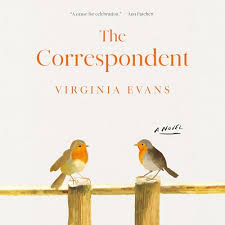
April 2026’s link begins with The Correspondent by Virginia Evans.

The Goodreads blurb for The Correspondent says:

“Imagine, the letters one has sent out into the world, the letters received back in turn, are like the pieces of a magnificent puzzle. . . . Isn’t there something wonderful in that, to think that a story of one’s life is preserved in some way, that this very letter may one day mean something, even if it is a very small thing, to someone?”

Filled with knowledge that only comes from a life fully lived, The Correspondent is a gem of a novel about the power of finding solace in literature and connection with people we might never meet in person. It is about the hubris of youth and the wisdom of old age, and the mistakes and acts of kindness that occur during a lifetime.

Sybil Van Antwerp has throughout her life used letters to make sense of the world and her place in it. Most mornings, around half past ten, Sybil sits down to write letters—to her brother, to her best friend, to the president of the university who will not allow her to audit a class she desperately wants to take, to Joan Didion and Larry McMurtry to tell them what she thinks of their latest books, and to one person to whom she writes often yet never sends the letter.

Sybil expects her world to go on as it always has—a mother, grandmother, wife, divorcee, distinguished lawyer, she has lived a very full life. But when letters from someone in her past force her to examine one of the most painful periods of her life, she realizes that the letter she has been writing over the years needs to be read and that she cannot move forward until she finds it in her heart to offer forgiveness.

Sybil Van Antwerp’s life of letters might be “a very small thing,” but she also might be one of the most memorable characters you will ever read.

Kelly from Kelly’s Thoughts & Ramblings read and recommended The Correspondent recently, so it is on my list.

As the main character in The Correspondent wrote letters to the authors whose books she read, my first link is to Agatha Christie’s Cards on the Table, because her wonderful character Ariadne Oliver was an author who often received letters from her readers, usually telling her what they thought of her latest book and to her annoyance, pointing out details about her Finnish detective that she had gotten wrong!

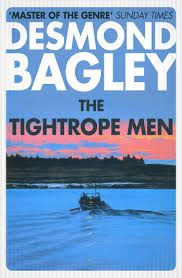
My second link is to The Tightrope Men by Desmond Bagley, a Cold War spy novel that featured a Finnish scientist and engineer, Dr Meyrick. No doubt Desmond Bagley also received letters from readers pointing out details from his book about science, engineering, the Cold War and spies that he had gotten wrong, although if I had been writing a letter to him I would have said that while I enjoyed the first part of his story, the plot was too far-fetched for me to believe in.

My third link is to Ann Patchett’s State of Wonder, which also featured a scientist doing something amazing, in this case, working in the Amazonian jungle to create a new drug that would allow women to remain fertile their entire life. Unfortunately I don’t believe this idea is too far-fetched for some fool to try to make happen, but in my opinion meddling with nature to allow women to have children when they are old is a ridiculous idea.

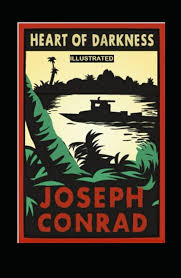
My fourth link is to a story set in a different jungle, Heart of Darkness by Joseph Conrad, which tells of a man called Marlow’s dangerous search for an ivory poacher who had gone missing in Africa. The greed of the characters and the companies they worked for was horrendous, and reading about their travels on a river steamer while being shot at with poisoned arrows was thrilling, the book wasn’t really to my taste.

My fifth link is to Jock Serong’s Cherrywood, a story set in Melbourne that revolved around an ill-fated paddle steamer built from cherrywood of dubious provenance, that was designed to carry passengers around Port Philip Bay. I wasn’t a fan of the magic realism elements of this story, preferring the more realistic components instead.

My final link is to Islands by Peggy Frew, a book that is set on Philip Island, located in Victoria’s Westernport Bay, (the next bay to the east of Port Philip Bay). Islands is the sad story of a fractured family who never recovered after a teenage daughter went missing. I’m a fan of Peggy Frew’s writing but have to space her books out so that I’m not overwhelmed by sadness.

So there you have it, for a change I’ve linked a selection of books without an overarching theme to make up April 2026’s chain. I’ve gone from fan letters to authors, Finnish characters, mad science, stories set in jungles, steam boats, to Victorian bays, and can’t see a link between the starting and finishing books in my chain.


My copy of The Lilac Bus by Maeve Binchy is falling apart; the story has been a comfort read for me since I was a teenager. If I ever find a copy in an Op Shop with the same cover I’ll replace mine, but until then the pieces are staying on my bookshelves. I chose to read The Lilac Bus this time for Cathy at 746 Books twelfth annual Reading Ireland Month.

The Lilac Bus is a novella comprised of eight short chapters that each follow a different character. The characters travel three hours together every weekend from Dublin to their home town, Rathdoon on a lilac-coloured mini-bus, with the connections between the characters evolving as the story progresses. Each of the characters face a crisis or a turning point over the weekend.

The first chapter followed Nancy Morris, who was mean with money and ungenerous of spirit. Nancy had a well-paid job at a Dublin hospital but returned to Rathdoon every weekend to eat her mother out of house and home. When a drunken Mrs Ryan told Nancy baldly that her nickname was Miss Mean Morris, Nancy was shocked.

The subject of the next chapter was golden-girl Dee Burke, who was studying the law and having an affair with a married doctor who Nancy worked for at the hospital. Dee also had a rude awakening over the weekend when she realised that her lover had been lying to her about the strength of his marriage, the moral of the story being that a man who lies to his wife will also lie to his bit on the side.

Mikey Burns was a middle-aged bank porter who everyone avoided. He missed the mark with his tasteless jokes, and although his colleagues and fellow bus travellers could see that he had a good heart, he was often left out of things. Mikey returned to his family home in Rathdoon every weekend and was made welcome by his brother Billy, sister-in-law Mary and their children. Mary looked after Mikey and Billy’s father, who had dementia, with Mikey spelling her over the weekend. In Mikey’s chapter, changes to Billy and Mary’s circumstances forced him to take on responsibilities that I like to think would soon be the making of him.

Everyone on the bus, except for Nancy Morris, adored Judy Hickey. She had a past that was still talked about in Rathdoon; as a young married woman with two young children Judy had gotten in with a fast crowd before being busted for dealing drugs. Her husband subsequently left her and took their children to America, cutting off all contact and leaving her as a mother without children. The solution to Judy’s big dilemma of how she could prevent the health shop where she worked from going broke was unexpected.

The chapter about Kev Kennedy, an anxious and secretive young man who worked as a security guard, explained how he had accidentally got involved with a gang of professional thieves and had no idea how to extricate himself without being thrown into the River Liffey wearing concrete boots. Kev went home to his father and brothers in Rathdoon every weekend to minimise his unwanted involvement with crime.

Despite Rupert Green’s relatively privileged background, he had his problems, too. He felt disconnected from his elderly parents, and despite Judy’s encouragement, felt unable to talk to them about anything. Without going into spoiler territory, the issue discussed in Rupert’s chapter was probably a risk for the author considering the book was published in the 1980s.

Celia Ryan was a nurse who came home every weekend to help her alcoholic mother out behind the bar of the family hotel. Celia, who deserved better, needed to convince her mother that she had a problem with drinking. Celia’s brothers and sisters didn’t want to hear anything about the troubles concerning their mother and infuriatingly, they also assumed that Celia and their mother was raking in a small fortune from the pub.

The last chapter followed Tom, who owned and drove the bus. To use as many cliches as I can in a single sentence, Tom was rolling stone who wouldn’t allow himself to be pigeon-holed, with a bit of the dog in the manger about him when he mistakenly thought that the woman he liked was going to make a go of it with someone else, even though he’d never made a move on her himself.

It’s the characters that keeps me returning to this book. I love how interconnected they are, in the multitude of ways that happens in small towns. The story began with them all on the bus together, then they bumped into each other throughout the weekend, at the pub, at each other’s houses or in the street. Sometimes the connections were as slight as one character’s opinion of another when they chanced upon each other, other times they discussed the ins and outs of another character’s business or history with their own friends or relatives. As always, the author’s warm and inclusive voice made me feel as if I belonged, too.

The plots in The Lilac Bus aren’t as strong as in Maeve Binchy’s later novels and there are spelling errors and typos in my edition, but no matter, this story remains one of my favourites. 

I read The Spinx Without a Secret, a short story by Oscar Wilde for the twelfth annual Reading Ireland Month, hosted by Cathy at 746 Books.

The Spinx Without a Secret was narrated by a man who unexpectedly met a former schoolmate, Lord Murchison on the streets of Paris, of whom he said, ‘We used to say of him that he would be the best of fellows, if he did not always speak the truth.’

The narrator found his friend much changed in Paris from his cheerful former self, instead of his usual high-spirits, Gerald seemed ‘anxious and puzzled’. The narrator guessed that a woman was at the bottom of things and asked if his friend was married yet, only to be answered that Gerald didn’t understand women well enough yet for to marry. In a distinctive Wilde witticism, the narrator answered, ‘women are meant to be loved, not to be understood.’

Gerald then showed the narrator a photograph of a beautiful woman, one whose beauty appeared to be ‘moulded out of many mysteries,’ but declined to say any more about the affair until after he and the narrator had dined.

After dinner, Gerald went on to tell his story, He described how he had first glimped the woman in the photograph when she passed him by in a carriage. He was instantly intrigued by her face and air of mystery and after searching for her for many days finally met her at a social event. Gerald was smitten by the woman, whose name was Lady Alroy, and entranced by her secretive nature. Infatuated, he asked her to marry him and she accepted, but later he became maddened by the mysteries that surrounded her. The couple argued and Gerald left the city; on his return a month later, he learned that Lady Alroy had caught a chill at the opera and died.

The story ended with Gerald telling the narrator what he had learned about Lady Alroy since her death, and the narrator’s interpretation of her character.

This is a very short story, only four pages, but the engaging and descriptive plot and the fabulous dialogue, are recognisably Oscar Wilde’s writing.

The Sphinx Without a Secret can be read here.

In a moment too funny not to share with other readers, He Who Eats All of Our Leftovers and I were both due to visit the optometrist, and HWEAoOLs asked me if I’d be happy for him to make appointments at Oscar Wilde when we were next in Melbourne. “Sure,” I said, knowing that he meant Oscar Wylee Optometrists! 🙂

When my local library advertised they were hosting an author event with Fiona Lowe, whose most recent book is The Drowning, I booked Aunty G and myself in, then raced down the street at lunchtime to buy the book. The next day I heard an interview with Fiona Lowe on my local community radio station and thought she sounded bright and cheerful, and happy to be interviewed.

I found the story to be equally as interesting as the author’s radio interview had promised, a real page-turner. It began with a family tree and a prologue; the family tree was useful but I thought the prologue was redundant as the information contained in it was also covered in the story itself. This was a very small quibble, though.

The story itself began with CC driving down the coast to the beach shack she’d summered at as a child with her third cousins, excited to see James, Ollie, Lily and Felix together again as adults. Soon after her arrival, CC was excited to learn that she had been left a fifth share of the shack, along with her cousins, although James, now a lawyer, was reluctant to tell her the news. CC, however, was so happy to have been included in the family she could have cried with joy.

During the next few days though, resentments and family rivalries arose, as they always do when money is involved. James and Felix’s wives would much have preferred to holiday at Lorne, Torquay, or better yet, Portsea, with the who’s who of Melbournians in summer instead of at Kooramook, a fictional small town near Portland, more than four hours drive from Melbourne. Gretel and Bronte hated the asbestos-walled shack, the crappy old mish-mash of furniture, and the single bathroom that everyone had to share. Felix, an architect, wanted to replace the shack with a modern beach house with enormous plate glass windows, enough bedrooms for everyone and ensuite bathrooms, while James wanted to sell the place. Ollie and CC wanted everything to stay the same forever, and as for Lily, whose use of magic mushrooms and Ritalin for what was dangerously close to self-diagnosed ADHD was a problem, she wanted the impossible; peace and love and harmony within the family.

CC was about to take up residency at the nearby Portland hospital and asked for her cousins’ permission to stay at the shack for six months, but was not allowed. Instead, James introduced a booking system for each family member to book their time at the shack, and while Ollie, Lily and CC were happy to share their time with the others, James and Gretel, and Felix and Bronte wanted their own visits to be exclusive to their own families.

When CC received a legal notice from James saying that her share of the inheritance was being challenged, she was devastated. At that point, I would have walked away from all of them, but CC wanted to be in the family so desperately that she dug in and fought as hard as she could, with varying levels of support from her cousins.

Although the story included a drowning that might have been suicide, an accident or even a murder (to say which would be a spoiler) and a romance for CC with a local surfer/singer in a band/pharmacist, The Drowning was really a story about the shifting sands of family, constantly changing factions and the manipulations that go on beneath the surface. I didn’t entirely believe in some of the character’s attitudes after they found out something that I can’t explain here, since to say more would be a spoiler. I had a feeling about the big twist too and wasn’t surprised when the ending played out as I had expected.

I’ve visited Portland a handful of times so don’t know the area very well, but enjoyed the local references which are also common to my area of the coast. I’d never heard the acronym ‘PFM’ that the author used to describe the People From Melbourne who overrun coastal Victorian towns during holidays, but when I lived in Batemans Bay on the NSW South Coast during the 1980s and 90s visitors from Canberra were known as Yogis, because like Yogi Bear, they arrived in summer and took all of the best picnic spots. The local references to hospitals and roads and other locations rang true, though.

Despite my little quibbles I enjoyed this book very much and would be very happy to read other books by Fiona Lowe.

So, to the author event with Fiona Lowe at the library. Approximately fifty attendees attended and I think it would be fair to say that we all enjoyed the event very much. Librarian Leigh Higgins was a terrific host, and Fiona’s talk was practiced, professional and entertaining. She told the audience which local town Kooramook was based on – for anyone local, it starts with ‘N’, and explained how she had walked the streets of Portland to get the details around the town right. She talked about how she developed her plot and chose her characters, and how the story came together. Fiona has published one book per year for many years and her routine sounded absolutely grueling, and not at all like the stereotyped idea I had of a writer, merrily tapping away into a laptop in some quirky Melbourne coffee shop or other.

My purchase of The Drowing continues my New Year’s resolution for 2026 to buy a book by an Australian author during each month of this year (March). I purchased this book from Collins Booksellers in Warrnambool.

I was delighted to spin A Fortunate Life by A.B. Facey in the Classics Club spin # 43. This book is an Australian classic, the autobiography of a man born in Maidstone in Melbourne in 1894 who, despite growing up illiterate, wrote one of the most loved Australian books of all time.

As a young fellow, Albert Facey didn’t have a fortunate life at all. The first section began with the words, ‘Many people had little feeling or sympathy for those in need,’ which generally turned out to be the author’s experience throughout his childhood.

Born into extreme poverty, Albert’s father died when he was two, the youngest of seven children. At the time Albert’s two eldest brothers had been at the Western Australian goldfields with their father, and before long, his mother deserted him and his other brothers and sisters, leaving them in the care of the elderly grandparents to go to Western Australia too. After his grandfather died a few years later, his grandmother sold up what little she had and took the remaining children to Western Australia in the hopes of their mother taking on her children again, only to find she had remarried, was pregnant again and was unable or unwilling to take more than one of her daughters, most likely because her daughter would be useful to her. An Uncle took pity on the family and took in Albert, his grandmother and another sibling (another daughter had been left in Victoria to look after another uncle) at at his farm in Wickepin, about 200 kilometres south east of Perth.

It was a stretch for Albert’s uncle to feed the extra mouths so when he was about eight Albert was sent to live with an elderly lady as a farm worker, where was brutally mistreated by her family of criminals. After recovering from a horse-whipping that almost killed him Albert ran away, walking bare-footed over several nights to return to the farm and his beloved grandmother.

This part of the story was very hard reading. The author wrote matter of factly about his trials but they reminded me of stories where the hero cannot catch a break, where things just get worse and worse and worse. Unlike a novel, though, this was real.

Albert, now aged eleven, was hired out again to a poultry farmer, but after several months had not been paid or clothed as he had been promised, so he left there to work at another farm about five miles from the first. Albert worked there for a week before learning that again, he would not be paid, so he returned to his grandmother and uncle.

The people at the next place where Albert was sent to work were kinder and grew very fond of him. Their own son had died and they wanted to adopt Albert and send him to school, but when his mother, whom he barely knew, refused their offer the relationship soured.

Interspersed between the bigger details of Albert’s life were the daily happenings, stories of life on remote farms as they were being cleared of trees and growth to create farmland to grow wheat and support sheep or pigs or cattle, with many funny stories of mishaps. One time young Albert got stuck in a tree after being chased by a ferocious boar, and of course, this being Australia, there were terrifying tales of snakebites and horse thieves, and dingoes howling all night. Despite all of the hardships and injustices, Albert always saw the funny side of life and some of his stories were hilarious.

At the age of fourteen Albert went to Perth to live with his mother, where he quickly learned that he was expected to support himself financially by paying his mother and her husband board. Albert realised his mother was more interested in money than in him, so signed on for a six-month stint droving cattle over a thousand-kilometre route. He had plenty of adventures during this time too, including getting lost in the bush when the cattle stampeded during a thunderstorm and being saved by Aboriginals. His own bush skills, already good, continued to improve and he grew into the type of man who could turn his hand to anything.

During this time Albert taught himself to read and write, although he never attended school. Around the age of 18 he became a professional boxer with a travelling troupe, and was in Sydney when World War One broke out. Two of Albert’s brothers were killed at Gallipoli, and Albert himself was badly wounded there also and sent home to Australia. He wrote of war openly and in plain words, as he did all of his stories, describing horrors that I found almost to much to read.

While at Gallipoli Albert had received a pair of hand-knitted socks in a parcel sent by a member of the Bunbury Girl Guides from Western Australia. Albert asked the soldiers from Bunbury if they knew Evelyn Gibson, the girl who had knitted his socks and they said they did, that she was ‘a good-looker and very smart, and that she came from a well-liked and respected family.’ In an extraordinary coincidence Albert met Evelyn while he was recuperating in Perth and they started knocking about together, fell in love and married.

From then on, Albert was part of a ‘we.’ He and Evelyn lived in Perth for a few years where Albert worked on the trams, later moving to Wickepin where they took up land as part of the government’s soldier settlement scheme. They worked hard, but went through all of the ups and downs that still plague farmers, including droughts, the depression years and crop prices too low for anyone to make a living from. One of the worst ‘downs’ was a result of a silly mistake that caused their house to burn down, a common event of the time. Albert and Evelyn had seven children and were married for sixty years, and I admit that big, heaving gulps got the better of me when Albert told of his wife’s death.

I’ve delved a little into the author’s story and it seems as if some of his stories were exaggerated or improved on for publication, but Albert Facey’s voice as a storyteller was direct, humble and sincere. I could almost hear his voice telling me his story of his life, and thought that despite living what I would consider to be a very hard life indeed, that he thought his life was fortunate, was wonderful.

Reading about the author’s experiences of clearing land for farming purposes brought up mixed emotions for me, as my grandparents, great-grandparents and great-great grandparents must have worked just as physically hard and lived in similar rough conditions. I wish they had left more trees, bush and scrub, though, as do most of my generation! Albert wrote many times of his fear of Aboriginal people, which added to my unease about a question I wonder about but can never know the answer to, were any of my relatives personally responsible for the murders or driving away of Aboriginal people from their districts? There would have been a code of silence among the settlers responsible at the time, even if they weren’t involved they wouldn’t have told the authorities who was, and the stories didn’t get told to the next generation, at least not in my family if the did. I feel the guilt anyway, as I’ve said many times before, I’ve had a good life as a descendant of convicts.

My edition was illustrated by Robert Juniper, an Western Australian artist whose line drawings throughout and dusty, red-dirt cover reflected the story perfectly.

In a funny little side note, my copy contained a handwritten page of a diary from someone unknown to me – my copy of A Fortunate Life has been on my shelves for thirty years and I cannot remember who gave it to me, although it might possibly have been the writer of the diary – who was camping somewhere near Peterborough on the Great Ocean Road for a fortnight over the Christmas break during 1995/1996. During this time, their family visited the cheese factory at Timboon, went up in the plane from Peterborough and flew over the Bay of Islands then across to Port Campbell and back, and another day they walked to the Bay of Martyrs for a swim where one of the children almost stepped on a snake. During the two weeks they were on holidays they caught 64 crayfish. 64! They must have been just picking them up off of the ocean floor! The diary was a reminder for me of summers gone by, and I thought it was fitting that I found it written on a blank page at the back of my book.

A Fortunate Life was book twenty-eight of my second Classics Club challenge to read 50 classics before my challenge end date of September 22, 2028.

I was excited to discover a copy of A Long Way from Verona by Jane Gardham in an Op Shop, after reading and loving her Old Filth books years ago (before blogging).

My understanding is that A Long Way from Verona was the author’s first novel and that it was written for teens. I found the story and writing style to be suitable for adult readers too.

In the first chapter the narrator, thirteen-year old Jessica Vye told the reader she was not normal, having had a violent experience at the age of nine – the experience turned out to be discovering that she wanted to be a writer. Chapter 2 began with another truth, that Jessica was not popular; in her own words, “Some people in fact do not really like me at all. In fact, if you really want to know quite a lot of people absolutely can’t stand me.” What Jessica couldn’t understand was why people began by liking her very much then went off of her. Jessica was also certain that she knew what other people were thinking, and that she always told the truth.

The story was set during the first year of World War Two, when Jessica and her schoolmates had gotten used to carrying gas masks around with them, along with their school satchels. Some of her fellow students were evacuees from London and she mentioned Polish refugees recently arriving in the area. The Yorkshire Spa town where her school was located was often bombed as it was on the ocean and close to the docks, but it was the Order marks that Jessica received from her teachers for misbehaving at school that troubled her most of all. One day, she received three Order marks, putting her at risk of being expelled.

Jessica had constant adventures, which included meeting a dangerous escaped Italian prisoner, falling instantly in love with a boy with the most beautiful blonde hair, arguing with her parents, getting over tonsillitis, and surviving an air raid bombing while on an excursion with Christian (the blonde boy) to look at the slums – Christian had discovered Communism and wanted to convince Jessica that all slums should be bulldozed.

I loved Jessica’s stubborn, independent, outspoken nature from the very beginning. She is a character made for readers to love, and I’m sure many of us would agree with her when she said, “I wish I read slower as a matter of fact because I can’t get books to last.”

Jane Gardham’s books are exactly the type of books that I wish lasted longer.

The Book of Forgotten Authors by Christopher Fowler has ninety-nine short chapters featuring once-popular authors who are either unheard of now or vastly less well-known than they were at their peak. At best, books by these authors can occasionally be found in Op Shops, at worst – good luck finding any of their works anywhere.

The first chapter featured Golden Age writer Margery Allingham. I’ve read Mr Campion and Others, a collection of short stories featuring Allingham’s gentleman detective, but I’ve seen many reviews of her books on WordPress and believe her books are now available again. Possibly Allingham has made a comeback since The Book of Forgotten Authors was published in 2017.

The star of the second chapter was Virginia Andrews, who wrote the wildly popular Flowers in the Attic series. In fact, I saw this book on the shelf of an Op Shop the morning I wrote this review! There can’t be too many voracious reader my age or older who didn’t read these way back when – and I freely admit, I was too young for these disturbing books when I read them! Were the stories any good or do they deserve to be forgotten? I don’t know, but there must have been something about them since I still remember their plots. Shock value, perhaps. I was interested to learn that after Virginia Andrews died someone else wrote another seventy or so books under her name, though.

Having read R. M. Ballantyne’s The Coral Island for The Classics Club last year, I was beginning to feel quite smug when I saw this author’s name, along with Emma Orczy, otherwise known as Baroness Orczy, who wrote The Scarlet Pimpernel. Then it hit me. Most of the books that readers read for The Classics Club aren’t wildly popular any more, and a big part of why we review classics is to bring good books by forgotten or unknown authors to the attention of other readers. If you’re not already linking your reviews to The Classics Club’s lists, I encourage you to do so!

Another chapter was on Margery Sharp, who although her books feature a wicked sense of humour, is best known now for creating The Rescuers after it became an animated Disney movie in 1977. The Nutmeg Tree was hilarious – good luck finding a copy, though. The Foolish Gentlewoman was a more serious book, which I thought very good also.

But then I got to Georgette Heyer – oh, say it isn’t so! I can’t bear the thought of her Regency romances being forgotten. Perhaps one of the following will tempt you; Sylvester, Bath Tangle, April Lady, Faros Daughter or Arabella. I have most of her books on my shelves and read and reread them.

The name Thomas Tryon also sounded familiar, but I couldn’t figure out why until Lady was mentioned. I loved Lady as a teenager and would be more than happy to read something else by this author (note to self, keep an eye out while browsing the shelves of Op Shops).

There was a chapter on Charles Dickens that included stories or books titled The Haunted House, Mugby Junction and The Battle of Life. Anyone? Anyone? No, I hadn’t heard of these either.

Or how about Eleanor Hibbert? I had no idea who she was until I learned that her pen names were Victoria Holt, Jean Plaidy, Philippa Carr and Kathleen Kellow!

I’ve only recently discovered Barbara Pym thanks to reviews on WordPress. I adored Crampton Hodnet and have another book by this author on my shelves. Her personal story was fascinating – she wrote her first book aged sixteen and her second at twenty-two but was unable to get either published until 1950, when she was almost forty. After having six books published she then fell out of favour again ten years later and lost her contract with her publisher. In 1977 Pym was named the most underrated novelist of the 20th century and overnight her books were re-published. She was shortlisted for the Booker Prize and discovered by American readers, but died two years later. I believe her books are now available again.

I was taken aback by the chapter on Peter Van Greenaway, an author I’d never heard of, after learning that his plots included one about a group of Vietnam veterans crash crashing a passenger plane into the Pentagon and a series of terrorist attacks on tall buildings in the USA. I am not at all tempted to find and read these books.

There were many, many authors who I hadn’t heard of. Quite a few of the featured authors had short stories used on Alfred Hitchcock Presents, including an author who wrote a version of The Birds thirty years before Daphne du Maurier’s story was published. I read the short story as part of a collection of suspense stories selected by Mary E MacEwen years ago and have been watching out for killer birds when I go our walking ever since!

I’ve added a few authors to my list, in the hopes of finding copies of their books. One of these is Australian author Patricia Carlon, whose books are described as ‘nerve-racking novels with strong Australian themes.’

The author added an interesting footnote to the chapter about Clifford Mills when he bought a second-hand copy of the children’s book Where the Rainbow Ends. He got a lovely surprise when the book arrived and he opened it up to see his own name written inside, aged seven.

I was also amused by a chapter on authors who should be forgotten. These included Edward Buller-Lytton who coined the phrase, ‘It was a dark and stormy night.’ I’m not convinced. Presumably he was the first one to write that particular phrase, in which case, good for him!

I thought The Homemade God by Rachel Joyce was one of the best books she’d ever written while I was reading it, but several weeks after finishing reading the book I’m struggling to remember the characters and the story. Some books are like that. I wrote a rough draft for this review the day I finished reading, otherwise this review would have finished with this sentence.

Vic Kemp, a reasonably famous 76 year-old artist, arranged a family lunch at a trendy London noodle bar to tell his four middle-aged children he was marrying a fellow artist, a 27-year old woman called Bella-Mae whom he’d known for six weeks.

Instead of dragging their father off to have his mental capacities checked, Netta, Susan, Goose and Iris offered their father shocked congratulations. They were even more surprised several months later to learn via a text message that Vic had married Bella-Mae, since they’d expected the romance to fizzle out. The children were also somewhat suspicious of Bella-Mae’s true intentions since Vic was reasonably well-off.

In the same text Vic asked his children to join him and Bella-Mae for a summer holiday at the home he owned on an island on Lake Orta in Italy. The phone ran hot between the children as they agreed to ignore Vic’s text, until they received word six weeks later that their father had drowned in the lake, then they dropped everything to get there, to meet Bella-Mae and her slimy cousin Laszlo, search for a will and try to discover if Bella-Mae had anything to do with Vic’s death.

As they waited for the autopsy results they looked for the painting their father said he’d been working on, which he’d said would be his masterpiece. The children wanted the missing painting to secure Vic’s reputation as an artist, since his work to date had been popular but not particularly good or original.

I know it seems odd to continue calling siblings of this age ‘children’ but they really were, in that their charming, selfish, complicated father was still overly-important to each of them in entirely different ways, possibly as a result of their mother having died when they were very young. Netta wanted to impress Vic, to fight with him and boss him around, Susan wanted to be indispensable to him by taking care of his home and all of his needs, Iris wanted to remain the baby forever and Goose, poor Goose, wanted to be an artist. He had tried and failed, and had a mental breakdown in the process, after which he worked for his father in his studio, preparing canvases and cleaning brushes. The relationships between the siblings was fascinating, and watching cracks appear between them as they waited and waited and waited for their father’s autopsy results was like watching a train wreck in slow motion.

The story was slightly too long and it didn’t have the emotional pull that the Harold Fry books had for me, which was disappointing since I’ve come to expect a good cry when I read Rachel Joyce’s books. I felt as if I knew each of the characters quite well, but never got the chance to really like any of them.

Some of the twists I saw coming, and other twists that I expected didn’t arrive. I liked the very last twist at the end, though, because one of the children got their happy ending. I expect fans of Rachel Joyce will enjoy this book, and readers who know Lake Orta, will get a huge kick out of visiting the area via this story. I don’t expect I’ll ever go there myself, but it looks lovely.

Today is the first Saturday of the month, which means it is time for Six Degrees of Separation, hosted by Kate from Books are My Favourite and Best.

March 2026’s link begins with Wuthering Heights by Emily Bronte.

The Goodreads blurb for Wuthering Heights says:

Emily Brontë’s only novel, a work of tremendous and far-reaching influence, the Penguin Classics edition of Wuthering Heights is the definitive edition of the text, edited with an introduction by Pauline Nestor. Lockwood, the new tenant of Thrushcross Grange, situated on the bleak Yorkshire moors, is forced to seek shelter one night at Wuthering Heights, the home of his landlord. There he discovers the history of the tempestuous events that took place years before; of the intense relationship between the gypsy foundling Heathcliff and Catherine Earnshaw; and how Catherine, forced to choose between passionate, tortured Heathcliff and gentle, well-bred Edgar Linton, surrendered to the expectations of her class. As Heathcliff’s bitterness and vengeance at his betrayal is visited upon the next generation, their innocent heirs must struggle to escape the legacy of the past.

I read Wuthering Heights as a teenager and hated it, because I’d been expecting a story about a grand, passionate romance. It wasn’t. When I re-read the book for the Classics Club thirty-odd years later, I realised the story was about revenge and the cycle of domestic violence. I didn’t expect to love the book as much as I did, with my only complaint being slight confusion from two characters called Catherine (mother and daughter Catherine Earnshaw Linton and Catherine Linton, plus Cathy senior’s ghost).

My first link is to An Abundance of Katherines by John Green, which might give you a clue to how I plan to connect the books in this chain! In this story the main character, a teenager called Colin, went out with 19 girls called Katherine. I found this a little hard to believe since Colin was not all that popular with girls, and also because Katherine is a fairly uncommon name, at least in my world. Despite the multitude of Katherines, the story made perfect sense and I was never confused about which Katherine Colin was talking about.

My second link is to One Hundred Years of Solitude by Gabriel Garcia Marquez. This story didn’t have a single Catherine or Katherine in it, however there was an abundance of male characters named either Jose Arcadio or Aureliano or variations of these names. To make matters worse, this was a multi-generational story and all of the characters with the same or similar names lived to be very old, so they were all alive at the same time. I was confused, but eventually realised that I was enjoying the story so much that I didn’t really care which character an incident was happening to.

My third link is to a play, The Crucible by Arthur Miller. The writing itself was excellent but I struggled to remember who was who because quite a few characters had names that started with ‘P’, and all the wives had ‘Goody’ in their names, short for ‘Good Wife.’ There was Goody Ann, Goody Elizabeth, Goody Rebecca and so on. I expect the story is easier to follow if watching it as a play because the audience can make a visual and aural connection to each character and their name.

My fourth link is to another play, The Importance of being Earnest by Oscar Wilde. The story has several characters who call themselves ‘Ernest.’ One ‘Ernest’ called himself that because the girl he liked told the world that she could only love a man called ‘Ernest’, while another chap called himself ‘Ernest’ because the pretty young thing he was wild about got his name wrong. The confusion is hilarious!

My fifth link is an outlier, in that Charles Dickens, arguably the best author of all time when it came to naming his characters, gave them unique names that characterise them at a glance. In Nicholas Nickleby, Madame Mantalini couldn’t have been anything other than a milliner and dressmaker, while her husband Alfred Mantalini was clearly a no-good, spendthrift, philanderer. The Cheeryble brothers were obviously good-hearted, loving philanthropists, and Sir Mulberry Hawk was a scoundrel. Newman Noggs was an unexpected hero and Wackford Squeers was an abusive, cruel bully.

My final link is to We All Want Impossible Things: A Novel by Catherine Newman, which I think connects back to Wuthering Heights because of the author’s name, ‘Catherine.’ I also chose this book to finish up with because I found the characters’ names to be troublesomely similar, Ash and Edi, and Jude, Jonah and Jules. Otherwise, I loved this story and laughed and cried my way through it. I’m yet to read Wreck and Sandwich, but they’re on the list.

So there you have it, a selection of books with confusingly named characters to make up March 2026’s chain.


I’d read several reviews of Heart the Lover by Lily King and wanted to read it for myself, even though I knew the narrator was a college student at the beginning of the story – I’m not ageist, but too much angst and attitude of younger characters in contemporary novels can be uninteresting to me. I needn’t have worried. The narrator owned her crap and told her story about life, love, friendships, choices, regrets and the one who got away – without any annoying melodrama.

The story was told in three sections, spanning thirty years of the narrator’s life and began with a dedication to an unknown person, someone she had clearly once loved dearly. Their story began in a fiction writing class they shared, with an assignment to write a contemporary version of Bacon’s essay ‘History of Life and Death.’ Hers was read aloud by the professor, causing two guys who sat at the front of the class to pay attention to her. One of them, Sam, asked her out and she accepted. Soon she and Sam, who she was wildly attracted to, were having an affair, although it was the other guy from her class, Yash, who she was better friends with.

When the narrator and Sam broke up acrimoniously, she took up with Yash.

Love triangles are always complicated but it was clear from the beginning, and ultimately heartbreaking, who it was that the narrator loved. A series of circumstances, miscommunications and difficult choices eventually caused the narrator and her ‘heart the lover’ to separate.

Sam and Yash had begun by calling the narrator Daisy because that was what they always nicknamed their dates, but they changed that to Jordan from F Scott Fitzgerald’s The Great Gatsby when they learned she was in college on a golf scholarship. I think Heart the Lover‘s cover is reminiscent of the original cover of The Great Gatsby, which used a painting called Celestial Eyes by Francis Cugat.

As a literature student, Jordan told her story articulately, almost conversationally sometimes, and always with grace. Her feelings rang true and I felt that everything she said or thought was valuable.

The book’s title was based on a card game, Sir Hincomb Funnibuster that the characters played as college students. Jordan later taught the game to her own children. I looked up the game but don’t think it exists. I wish it did.

Lily King has written six other books that I haven’t read yet, which is something to look forward to.

An Afternoon of Time: Tales of the Great Ocean Road and country Victoria by Don Charlwood completely charmed me.

The collection of short stories and tales based on the author’s experiences began with a foreword saying that after Australian publishers Angus & Robertson was sold to HarperCollins, authors had the opportunity to regain rights to their work. The author did this and since then An Afternoon of Time has been published by Burgewood Books, a family company set up by his daughter to publish his books. Looking through my bookshelves I realised I already have several of Charlwood’s other books on local shipwrecks, which I’ve read multiple times, plus a novel, All the Green Year, that I am yet to read.

The book began with a piece called Reflections that was written in the author’s 95th year (my edition is a re-release with two additional stories to the earlier editions), which tells of Charlwood’s childhood in Frankston during the Depression, and how he discovered he loved to write while working on a local history school project – it was his mother who suggested he interview elderly locals. After leaving school Charlwood worked for an auctioneer, but when he turned 18 he was no longer required since the young woman he trained up to replace him would be paid a lesser wage. The author then travelled to the Western District of Victoria where he worked for his aunt and uncle at Burnside, their property near Nareen, north-west of Hamilton.

My jaw hit the ground in Reflections when Charlwood said that his grandmother had been shipwrecked ‘on a reef near Cape Otway’ on the Schomberg‘s maiden voyage. I spent my childhood looking out to sea at the Schomberg reef, reading books about local shipwrecks and wishing that the sandbar that the old people talked about still reached the reef. On one extraordinary occasion I actually visited the reef with my aunt, uncle and cousins on my uncle’s rubber duck (an inflatable boat).

I had always understood the cause of the wreck to have been the captain’s inattention, since he was below deck playing cards with a lady who was not a lady until it was too late for the ship to avoid hitting the reef. It turns out the story I knew was incorrect. The captain was indeed playing cards with the author’s grandmother, but it seems she was in fact a lady (not titled, but ladylike).

The Schomberg reef is the speck around the middle of the following photo, almost on the horizon. When I was a child, a lot more of the rock was out of the water. I expect that the reef was even more prominent in 1855 when the ship was wrecked.

The remainder of the collection was a mixture of stories (fiction with a very strong connection to actual places) and tales of people and places the author knew. Some were set around the coast of the Great Ocean Road and others were set inland around a fictionalised version of Burnside.

Salmacis, London was a short story (fiction) set near Princetown on the Great Ocean Road, where a 90m tunnel was created at the base of Point Ronald in 1906 to manage the Gellibrand River bar. The tunnel has long-since been boarded up, but in this story, the teenage narrator and Marcia, the daughter of another family who were also camping at the beach that summer, clambered through the tunnel to see the Sow and Piglets (the original names for the Twelve Apostles rock formations. Muttonbird Island was the sow and the other eight rocks – there were never twelve – were called the piglets. At the time of writing this post, there are only seven stacks left). Marcia was already familiar with the tunnel, having dreamed of it, but when they travelled through to the beach the narrator also began to see Marcia as she was in her dream – no longer a teenage girl but a man who had worked at the nearby Glenample Station and come down to the beach to save shipwrecked sailors. I loved the blend of the real place with the fictional story of a shipwreck. The time-travel had an additional element of strangeness since the story (for a modern reader) was already set in the past, and the characters time-travelled even further back into the past.

Dunphy’s Hide was also fiction and set somewhere on the Great Ocean Road, or the Ocean Road, as it was known when these stories were written. In this story the narrator, an eleven-year old boy and his schoolmate, Dunphy, visited a blowhole known as Glover’s Drop, which I think is based on the real blowhole at the Loch Ard Gorge. To get to Glover’s Drop they pushed aside a large rock, crawled through a tunnel then climbed around a narrow ledge inside the blow hole itself, as waves churned madly below them and the sounds of these thundered and echoed. The narrator only just made it around the dangerous rock shelves and was too frightened to attempt the return journey, so Dunphy knocked him out and carried him back around the ledge as if he were a sack of potatoes.

The Pilgrimage Year was a story about a fictionalised version of the author’s grandmother returning to the Curdies River to view the reef where the Schomberg had been wrecked when she was a young woman. The narrator accompanied his grandmother, uncle and cousin as they travelled through the Otways, stopping along the way to view the Loch Ard Gorge, where the Loch Ard was wrecked with only two survivors. As they drove through the bush they talked about other ship wreck sites they passed, numbering how many people had died at each wreck. Once they arrived at the headland overlooking the beach and the reef where the Schomberg had been wrecked (see the photo above) the narrator’s grandmother asked what happened to the sandbar that used to stretch from the spit to the reef only to be told it had been washed out years ago. Later, his grandmother hinted at a love triangle that was exposed during the shipwreck that had fractured her relationship with her sister.

To the New Country was a tale of the author walking through the Otways to the sea at Apollo Bay and from there to the Cape Otway lighthouse, then on to a farm near Princetown, past the cemetery at the Loch Ard Gorge and on to Port Campbell and Peterborough, where a passing driver offered him a lift to Hamilton, where an employee of his uncle drove him the rest of the way to Burnside in a buggy. The author stayed there until World War Two, when he left to join a Bomber Command with the RAAF.

Percy the Rabbiter was more or less factual, a tale of a man and his beloved dogs, all of whom had the most extraordinary names. Adolphus Bannockburn Ree, Dr Willie Roper, Barney Boo and Bill Stickers were just some of the dogs who accompanied Percy on his rounds, catching and killing the rabbits that overran Burnside. Percy was an absolute character who lived a simple life; ‘when he was not working in the open air he was either eating gluttonously or was asleep. Bedtime was’ … ‘eight o’clock.’

The Match at Fyan’s Creek had me laughing out loud (in public!) as I ate my cheese and vegemite sandwich in the sun outside my town library during my lunch break. Somehow or other, the local postmistress wrangled Charlwood into playing in a cricket match with the local team against the Fyan’s Creek team, despite the author’s reluctance. Charlwood grew even more apprehensive when Percy (the rabbiter) reported that Fyan’s Creek had a new fast bowler, ‘a reg’lar killer they reckon. He injured darn near half the Glenelg Crossin’ team a few weeks back…’ Percy was playing, along with ‘Jack Henshaw the fencer, Mick Hogan the publican, Neil Austin-Smith who ran ten thousand sheep somewhere to the west, Roger McIntyre who had seduced a dozen girls within fifty miles, Nick, an Aboriginal with long arms and flexible wrists, Alan Knowles, the new schoolteacher, Barney Moore, a jackaroo from Triabunna and lastly there was Claude Shippard, the captain, and Greig, his fourteen year-old son’ (the Shippards were fourth-generation squatters). On arrival, they learned the new fast bowler had once bowled the great Bradman out! Someone killed a snake on the cricket ground during the match and hung it over the fence, and when it was Charlwood’s turn to bat he somehow hit a four before being saved by a fire in Ginty Steven’s house paddock – players and spectators alike raced there to put it out, saving the house but not the shed. When they got back to the ground it was Fyan’s Creek’s turn to bat. Rain eventually stopped play.

I appreciated that the author was respectful of Aboriginal people and didn’t shy away from admitting that white settlers had taken their lands and lives, something that I think was rare when these stories were written. On one sad occasion he referred to, ‘a past going back into the days of the vanished aborigines,’ and there were other examples of these sentiments throughout the book.

The Brothers O’Connor broke my heart. I was left with a lump in my throat, tears, the absolute works and I’m generally not a crier. Gerry O’Connor was a shearer, a bachelor in his fifties, while his younger brother Terence worked at the local forge. When Charlwood brought in a horse to be shod, Terence said he thought life was passing him by – he’d rarely been to Melbourne, and he felt reading about the greater world was making him feel unsatisfied. Terence compared himself unfavourably with Gerry, who he said was the most contented man he knew because he lived for his work. A chance remark by Charlwood set Terence on a new path – he married and set up a home with his bride. The author then told Gerry’s history; his father had died when he was fourteen so he set himself up as the man of the house, working to give his nine younger brothers and sisters a chance in life – which they all took and ran with. But, when Gerry fell ill and had nothing to live for, things took an unexpected and tragic turn.

Reception at Kerry Hills was the recounting of several tales Charlwood’s uncle told him – no doubt the names were changed to prevent anyone from recognising themselves! On this occasion Charlwood and Percy attended a wedding at the home of a shiftless family who had been living rent-free in one of Charlwood’s uncle’s properties for twenty years or more. The wedding went well and the guests sat down to a fine meal, although most of the guests wondered how the bride’s family would pay for it. They found out when the bride’s father began auctioning a piece of furniture that the local women had been coveting the whole of their own married lives!

While I think An Afternoon of Time would be of great interest to readers from Victoria’s Western District, I also think that the stories and tales will appeal to readers who enjoy Australian history, and those who like stories and tales of bygone days in general. The author included himself in most of the stories and wasn’t afraid to poke fun at himself as well as those around him, but I also felt as if he genuinely liked and cared for his friends and neighbours, even though he could see their faults.

My copy included photos taken by the author during his travels and time at Burnside, which add to my enjoyment. I especially liked seeing Percy and some of his dogs!

My purchase of An Afternoon of Time continues my New Year’s resolution for 2026 to buy a book by an Australian author during each month of this year (February). I purchased this book from Collins Booksellers in Warrnambool.

I’m also counting this book in Reading Independent Publisher’s month, hosted by Kaggsy of Kaggsy’s Bookish Ramblings.

The Light Years by Elizabeth Jane Howard, book #1 of the Cazalet Chronicles reads like a soap opera. Short scenes, an extended family of characters and lots going on left me unable to put the book down as the story skipped through the Cazalet family’s lives during the two years prior to World War Two.

The character list and the family tree in the front pages were invaluable as there was a cast of thousands, each person equally as important as any other.

William Cazalet, who was known as ‘the Brig’ had made his money in timber. He and his wife Kitty, aka ‘the Duchy,’ had three sons who were married with children of their own and one unmarried daughter, Rachel.

His sons Hugh and Edward worked in the family business, but Rupert, the youngest, was a school teacher who lived to paint. As a spinster, Rachel was much put-upon by the family although she was also much-loved, especially her many nieces and nephews, all of whom had their own distinct personalities and storylines.

The entire Cazalet family regularly holidayed together at a family property in Sussex called the Home Place, which allowed the children to play together, and the adults to come together to gossip, talk business, and play tennis or swim. I was amused by how few bathrooms the Home Place had and as a result, someone was always in the bath. The water was shared as it used to be when I was as a child – one person hopped out and the next person hopped in, with the grubbiest person getting in the bath last.

I was already a fan of Elizabeth Jane Howard’s works, but before I got to the halfway point of this novel I already knew that I didn’t want the story to end, even though there are another four books in the series. I adored most of the characters right up until when I didn’t – predatory behaviour by one of the men towards his teenage daughter left me feeling sick to the stomach. Up until then, I’d thought him a charmer and forgave him his affairs and flirtations, so this story line gave me a horrible jolt.

All of the characters were very human in that they had their good points and their bad points. I had my favourites, one of whom was the self-sacrificing Rachel, and I was also very fond of poor old Miss Milliment, who the children said had a face like an old toad. Miss Milliment was too old to work but too poor not to, an artistic nature and an extraordinarily good temper..

I felt sorry for Zoe, Rupert’s very young wife, who reminded me slightly of poor Emma from Madame Bovary. No doubt Zoe had expected something more glamorous than what she’d gotten when she married Rupert and became stepmother to his two children.

The social aspects of this book were absolutely fascinating. Money and class differences abounded, and anti-Semitism showed itself as an everyday part of life in England. Some of the storylines were trivial while others were enormous, but what I appreciated was that each was a big deal to the character involved.

And the food! As one character said, ‘If people had to spend all of every day getting enough food to eat like animals, they wouldn’t have time to make aeroplanes or bombs.’ In one scene, Mrs Cripps, the cook, spent an entire morning:

plucking and drawing two brace of pheasant for dinner; she also minced the remains of the sirloin of beef for cottage pie, made a Madeira cake, three dozen damson tartlets, two pints of egg custard, two rice puddings, two pints of batter for the kitchen lunch of Toad-in-the-Hole, two lemon meringue pies, and fifteen stuffed baked apples for the dining room lunch. She also oversaw the cooking of mountainous quantities of vegetables—the potatoes for the cottage pie, the cabbage to go with the Toad, the carrots, French beans, spinach and a pair of grotesque marrows.

The threat of war hung over everything with politics and current events of the time being discussed, and events such as gas masks being distributed and other preparations for war occurring. The story ended with Chamberlain’s peace in our time breaking out, which just like a soap opera left me frantic to know what happens in the next book, because we all know that wasn’t the case.

In my experience Jane Austen fan-fiction can go either way. Sometimes it’s cringe-inducing crap and other times it’s an enjoyable look at someone else’s idea of what might have happened next in an Austen story. I’m happy to say that Jennifer Paynter’s Mary Bennet, or The Forgotten Sister as it is known in the UK was great fun and fell into the enjoyable category.

Mary Bennet uses Jane Austen’s Pride and Prejudice as framework to tell the story from Mary’s point of view but best of all it goes further, giving Mary, who was eclipsed in the original story by her prettier, more sparkling and most importantly, more socially intelligent sisters, a life and love story of her own, with the known events (such as Mr Bingley and co coming to Netherfield, Jane’s romance in three acts, Elizabeth and Mr Darcy’s love-hate relationship, Mr Wickham’s seduction of Lydia and the rest), occurring in the background of Mary’s story.

Mary’s story began long before Mr Bingley came to Netherfield; instead, as a child she watched on as a scandalous plight between the previous tenants of Netherfield imploded for all to see. Elizabeth, then a young teenager, was almost implicated in the mess, having become smitten with the man at the tip of the Netherfield love triangle.

Mary was also watching on from the background as Mr Bingley and Jane fell in love and were parted, and she realised long before Elizabeth did, that Elizabeth and Mr Darcy were attracted to each other. Mary also knew who Mr Wickham was meddling with in the village long before his true nature was revealed to the rest of the Bennet family.

Sometimes Mary’s version of events were funny but other times sad, since she was far more self-aware in this version than the original. She remained socially awkward, moralising and pendantic, without Lizzie’s wit or Jane’s beauty and goodness, and she was often left out of things since Jane and Lizzie were a pair and so were Lydia and Kitty. This story allowed the reader to understand and feel sympathy for Mary, and also hope she found the courage to pursue a romance of her own with Peter, a musician and gamekeeper.

As the son of Mary’s wet-nurse, Peter had known Mary since she was a baby. Mary and Peter fell in love soon after they met again as adults, but Peter’s lower status gave Mary and her family pause.

Although I appreciated Pride and Prejudice as the foundation for Mary Bennet, I actually preferred the sections where Mary’s own story took off in entirely different directions to the original. I expect that next time I read Pride and Prejudice I’ll look on Mary with much greater sympathy and far less irritation.

After deciding The Mayor of Casterbridge by Thomas Hardy would be my next read for The Classics Club, I cleaned house, did some crochet and read several other books. In other word I procrastinated, even though I’d happily cried my way through Tess of the d’Urbervilles and laughed through Far from the Madding Crowd.

When I finally ran out of excuses not to read The Mayor of Casterbridge, I fell straight into the story and stayed there quite happily until the very end.

Michael Henchard and his wife Susan married young. Several years later, disillusioned with each other and generally unhappy in their marriage, Henchard got drunk at a fair and sold Susan and their baby daughter Elizabeth-Jane to a sailor at an auction. Once he sobered up Henchard was sorry but couldn’t find his wife and daughter again, so vowed not to drink alcohol again for 21 years. He went on to Casterbridge and told people he was a widower, worked hard, got rich and by the time the present-day story began, had become the mayor.

After her sailor ‘husband’ died, Susan took to the road with her daughter to find her former husband. When they met again in Casterbridge Henchard wanted to atone for his past so arranged to remarry Susan without telling anyone that he’d previously sold her. Before his second marriage to Susan he broke off with Lucetta Templeman from Jersey, who he’d become intimate with and would have married if he’d been certain he was a widower.

The same day that Susan and Elizabeth-Jane arrived in Casterbridge, a young Scotsman called Donald Farfrae was also passing through town. Farfrae gave Henchard advice about what to do with wheat that had gone bad, and Henchard convinced him to stay in Casterbridge and become his foreman.

Susan died soon after remarrying Henchard, and on hearing the news Lucetta hot-footed it to Casterbridge with the intention of becoming the next Mrs Henchard, but after her aunt died she became a wealthy woman and after seeing a side of Henchard that she didn’t like, Lucetta fell in love with the handsome and affable Farfrae instead. Poor Elizabeth-Jane, who had hopes of Farfrae herself, was left out in the cold.

Elizabeth-Jane was much to be pitied, as Susan told Henchard on her deathbed that the girl was not his child, causing Henchard to withdraw his affection towards Elizabeth-Jane without telling her why.

When Henchard’s 21 years of abstinence from alcohol were up he started drinking again, and eventually lost everything as a result of his bad temper and foolish decisions, which weren’t helped by an occasional lack of generosity of spirit and his misplaced pride.

Like a see-saw, Farfrae’s fortunes rose as Henchard’s went down. Henchard was very human and an enormously frustrating character, because when he wasn’t behaving badly he could be extraordinarily thoughtful, kind and generous. The problem was though, as Lucetta discerned, no one ever knew which version of the man they were going to get. Henchard always regretted his sins but without fail went on to do the same things again or worse. I suppose there is a huge lesson in this story for those of us who are slow learners – we bring most of our problems on ourselves.

I was amused to recognise several characters from other books by Thomas Hardy in this story, who appeared as bit players or people in the crowd. Farmer Everdene and Farmer Boldwood from Far from the Madding Crowd were referenced and there might have been other characters who I missed – I was helped along by annotated notes at the back of the book, which were terrific.
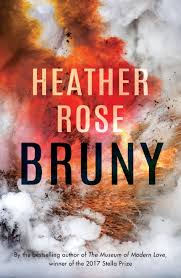
The story was quite long, but there were plenty of twists and turns and I was well entertained. As always, Hardy’s descriptions of the characters made me feel as if I knew them and the settings quickly became familiar, too. By midway through the book I could have walked down the streets of Casterbridge and pointed out to a newcomer who lived where.

I’ve still got a number of Hardy’s books to read for the first time – hopefully by the next one I’ll remember that his books aren’t as serious as their covers make them out to be and open it up with happy expectation rather than trepidation.

The Mayor of Casterbridge was book twenty-seven of my second Classics Club challenge to read 50 classics before my challenge end date of September 22, 2028.

Tag Cloud

Design a site like this with WordPress.com
Get started