Pages

Showing posts with label Parakeet. Show all posts

Tuesday, 31 March 2026

Home of wildlife - Part 1


Khao Yai National Park is a pristine landscape that provides sanctuary to countless species of flora and fauna. I knew about this park even before I started birding. Naturally, I was excited for my maiden visit and what it has in store for me. We were just minutes from the main entrance when our guide did a detour. We stopped just outside the borders of the park because that particular locality is a known birding hotspot. As always, have faith in your guide. True enough, the diagnostic wing beats of a hornbill echoed across the vicinity and very few things in life can rival the emotional whirlwind caused by coming face to face with a Great Hornbill first thing in the morning.


I have been birding a long time and through the decades, I have come across a number of truly remarkable species. And believe me when I tell you this behemoth of a bird deserves a place right up there among the best. And it has been too long since I last saw one in the wild.


The smaller Oriental Pied Hornbills were also recorded in vicinity. Naturally, they were overshadowed by their bigger relative. And I only began to take notice of this male once the Great Hornbill was gone.


Another species that I cannot help but to take notice are the Red-breasted Parakeets. Apart from increasing my global life list, they occur here in exceptionally high numbers.  However, they seem to always perch on the tallest trees and good photographic opportunities were hard to come by.


Parakeets are also known to mate for life and this pair certainly appeared to be in the loving mood judging from their public display of affection.


Eventually I did find a lone male perched lower than the rest. It may not be the perfect shot but it will do.


This locality is also the domain of an impressive nocturnal predator and we were fortunate enough to be shown a roosting individual. This trip has been great so far when it comes to owls. This was the fourth species and I can confidently say the best although there are two more days before this Thai adventure ends. The Spot-bellied Eagle-Owl bears some resemblance to the Barred Eagle-Owl back home. But it is bigger and a lot more imposing. When it looks our way, I am grateful I do not form part of its diet.


The Spot-bellied Eagle-Owl alone was a good enough reason to delay our entry into the home of wildlife which is the tagline of the national park. Every bit of birding inevitably effects the lives of the birds that we birders revere. The goal is to keep our intrusion to a minimum. Not only for the sake of the birds but also to give to others a chance to enjoy what you have just experienced.


We spent roughly two day exploring Khao Yai National Park and the one of the first birds to greet our photographic intentions was the diminutive Collared Owlet. Ironically, every owl encounter so far in our trip took place in the daytime. But I for one, am not complaining.


Any habitat that houses hornbills should and must be conserved. The park authorities here are doing a great job and these winged rhinos are still able to roam freely (and safely) within its borders. A male Great Hornbill gorging on a fruiting tree just next to the access road is proof of that.


Resting comfortably in the canopy level of the forest was this male Wreathed Hornbill. The lighting was getting harsh by then and the bird was not exactly close. Still, it was a picture of bliss as we observed him preening and watching the world go by.


Another male was recorded during our exploration of the park. Although this species not be able to conjure up as much emotions as the Great Hornbill, the photographic opportunity provided was so much better.


One glance at the Black-crested Bulbuls found here and any Malaysian birder will notice the red throat that this subspecies possesses that is absent from the ones back home.


Whenever the opportunities present themselves, I would try to improve my images of these ‘red-throated’ Bulbuls.


Quite a number of Bulbuls require scrutiny to determine their identifications. This is pretty much the case for the Puff-throated Bulbul until I found out from my guide that the similar-looking Ochraceous Bulbul, a species I am very familiar with, does not occur here.


I guess sooner or later I have to man-up and write about these two particular species of Bulbuls that I encountered in central Thailand. There are four almost-identical Bulbul species that occur in this country. Luckily, the Olive and Buff-vented Bulbuls (which I have encountered both before) are restricted to the southern region. In Kaeng Krachan National Park, I tried my best to obtain a record shot of the Baker’s Bulbul but it got the better of me on every one of those few occasions our paths crossed. I fared much better in this national park and obtained what should be (after I have given my all in confirming the identification) Grey-eyed Bulbuls.


Fruiting trees are always a good place to stop for a look. We were fortunate to come across a few next to each at one of the camp grounds. Naturally, we spent a considerable amount of time here. And lucky we did. I had a brief encounter with the Golden-crested at the last national park we visited. This time, we had a pair and they stayed considerably longer. By the way, a pair of Common Hill Mynas also alighted on the same tree but they were out of the picture - naturally.


Although not exactly ‘feather-counting’ quality, I obtained the improvement shots I so badly wanted. There is this occasional occurrence in birding when once you finally unblocked a species that you have been trying to do so for many years, it will no longer be as difficult anymore. My second Golden-crested Myna in four days - unbelievable.


Here is an image of the female which finally received my attention when the male moved further away.


The fruiting tree also attracted three species of barbets and all of them new to me. The Green-eared Barbet is probably the most confiding and when any member of this family of birds performs well, one must take full advantage of it. Lord knows barbets can be difficult to photograph due to their preference for the highest canopies.


The plumage coloration of the Green-eared Barbet may not be as striking as some of the others but being new to me is novelty that surpasses beauty.


Because of the recent split, the Blue-eared Barbet was replaced in my life list by the Black-eared Barbet. There was not much reason to celebrate when the Blue-eared Barbet was re-entered back into my life list here in Thailand. Perhaps it was the least interesting to me and I did not put much effort in obtaining a photograph. The Moustached Barbet, on the other hand, had my full attention. The availability of food also made it forgo its natural instincts and provided excellent views which was a true blessing. And emotions certainly ran high for us at the fruiting trees...


In Southeast Asia, there are very few species that can rival Hanging-Parrots in terms of cuteness. Past experiences with the Blue-crowned Hanging-Parrot back home have taught me that they are not exactly easy to photograph. In this neck of the woods, the Vernal Hanging-Parrot replaces it and we were delighted to find a small flock patronizing one of the fruiting trees. I could not help but to feel a little disappointed because I think they were all females or immatures and none of them had a red bill.


It was the same outcome when we encountered these parrots again suggesting it was the same flock. One of the birds ventured exceptionally low, upside down and looking simply adorable. And the disappointment gradually faded away.


Then I caught sight of a single bird resting a little further from the flock. Unless my eyes (and camera) betrayed me, it had a significantly redder bill. But the blue tinge on throat does not give me enough confidence to call it a male.


I think it is safe to say that the Black Giant Squirrels in both the national parks we have been to are exceptionally confiding by nature. With fruiting trees as an enticement, one can almost reach out and touch them on the tail.


The Finlayson’s Squirrel is another stunning species drawn to the fruits and capturing a few images was and including it in my post was the least I could do. One thing that I noticed here is there are not as many birders present when compared to Kaeng Krachan National Park. Even at the fruiting tree we basically had the place to ourselves.


To be continued…

Friday, 20 December 2019

The magic of Christmas?


Bukit Larut is not new to me. Back in my teenage years, this rustic hill resort located in the state of Perak was heaven sent. Wild and teeming with birds, every visit was pure ecstasy except when it rained (it is the wettest part of Malaysia after all). Nowadays, it is pale comparison. There is a noticeable drop in the bird population and I am not even going to mention about how they run the jeep shuttle service up the hill. Anyway together with my guests Nigel and Jimmy, we decided to give Bukit Larut a chance to proving itself worthy again as a birding hotspot. There is now a stakeout at the foot of the hill and the feathered patrons there were the main targets of this trip. As it was my first visit to this spot, I was equally as excited as the Oh brothers. I tried my best to conceal my emotions as I do have a reputation to keep.


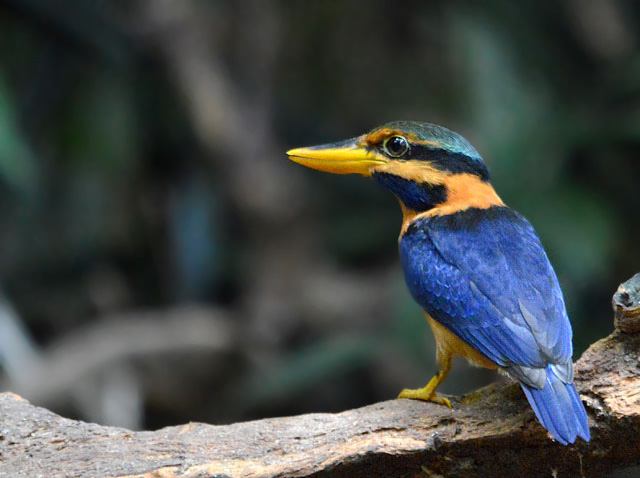
It did not take long for the first bird to appear and it turned out to be the biggest and baddest one of them all. The Rufous-collared Kingfisher is a true gem of the forest that does not reveal its splendour all that often. This handsome male bird out in the open and at such close proximity, provided the excursion with an excellent start.


Set against the gloomy surroundings of the forest understorey, the bright colouration of the Rufous-collared Kingfisher was just incredible. I have my fair share of frustrating encounters with this kingfisher before and the performance of this individual, deserved my wholehearted appreciation.


And for once, the dense vegetation of the forest could not deny me the opportunity to admire and photograph this kingfisher to my heart’s content. Its size and robust nature gave it the edge over the other patrons and the king usually had the whole stakeout to himself.


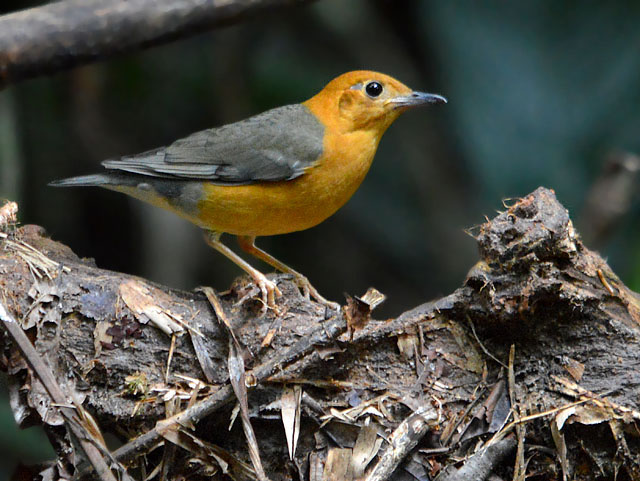
Once the Rufous-collared Kingfisher was done, the other patrons started to appear. The next bird to grace the vicinity was another cracking species. The migratory Orange-headed Thrush is uncommon enough to make me feel giddy once again. I am now quite sure I will be making a few more trips here before the end of this migratory season.


The contrasting colouration of orange and grey makes it an attractive species indeed. In recent years, I have been privileged enough to come across the Orange-headed Thrush more frequently than ever before. And this individual is maintaining that trend and for that, I am most grateful.


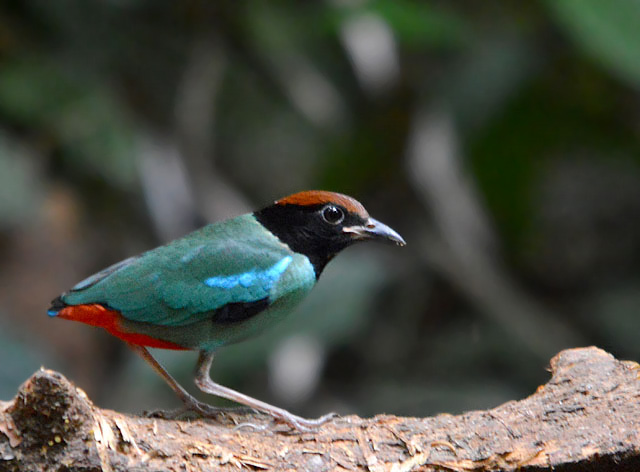
Pittas are remarkable creatures. It does not matter if it is a common species. Every encounter with one of these terrestrial birds is an exhilarating one. In Malaysia, the Hooded Pitta breeds in northern Peninsular Malaysia but it occurs as a migrant throughout the country like this individual.


I do not have many intimate encounters with this pitta as I find the resident ones up north to be exceptionally shy. The only other time a Hooded Pitta had me trembling with excitement was at another stakeout in central Peninsular Malaysia. That may all change if strutting about in the open at this stakeout becomes an annual affair for this charming migrant.


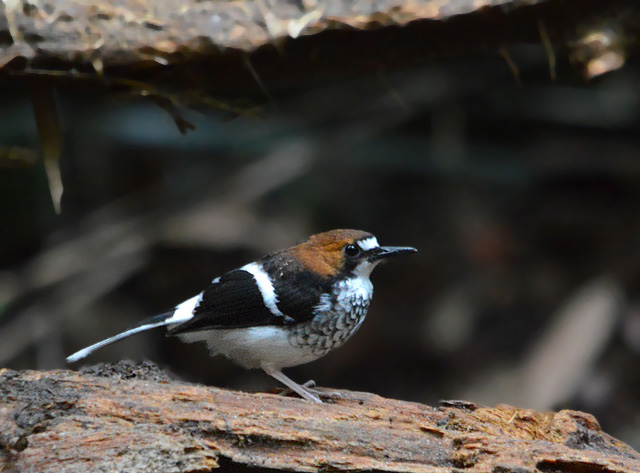
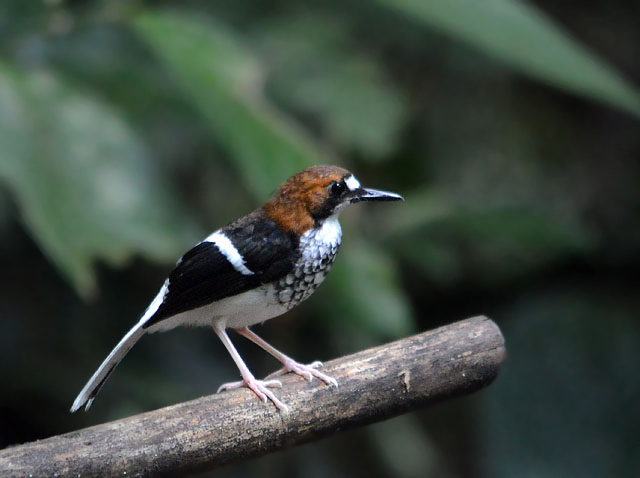
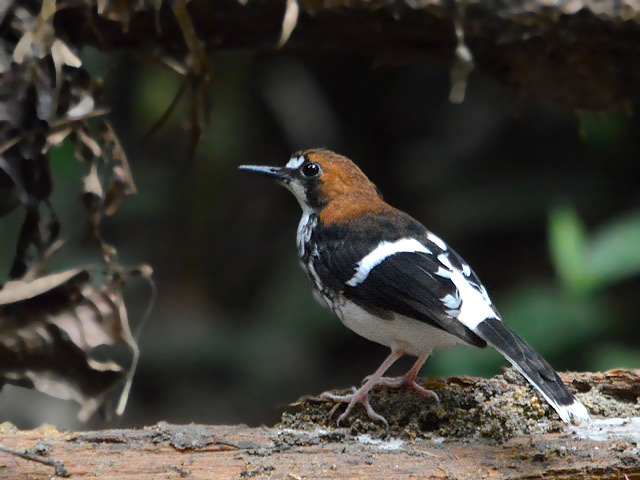
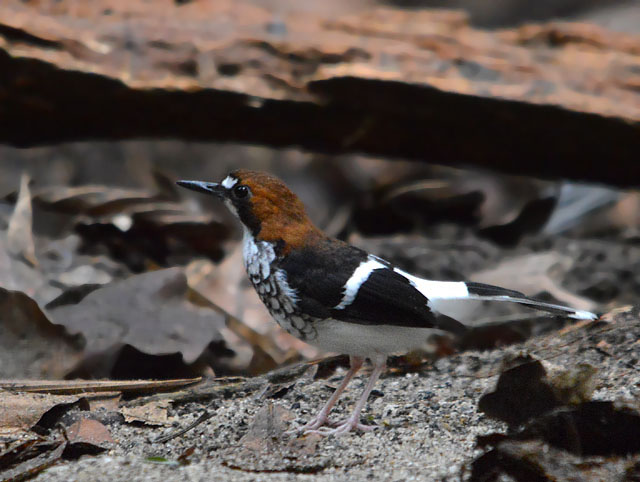
Of all the birds present today, one managed to outdo the rest and earned itself bird of the day. Forested streams and rivers are home to a group of intriguing but shy birds known as forktails. Their plumages are strikingly marked and they have a habit of flicking their tails which just enhances their demeanour. The Chestnut-naped Forktail is not a rare bird and it even occurs in a few of my regular haunts. The reason for me to drive more than 100 kilometres to see this one is because I could finally ogle at its true beauty and capture the moment at close range.


Today, this male Chestnut-naped Forktail stayed the longest at the stakeout offering the three of us ample time to spend with this beautiful species. I simply adore the intricate patterns he sports on his upper breast and his lovable antics was irresistible. He alone would have made the drive here worthwhile and I am sure my guests agree.


I know that birding at a stakeout is not old school. The thrill and challenges of locating birds on your own is missing. But given the situation of the world today, birding is a far cry from the good old days. Back then, it was so much easier for birders to enjoy a rewarding excursion. With the drop in the numbers of birds and the constant destruction of birding sites, stakeouts are a much welcomed addition to my birding routine. And for difficult species like this Chestnut-naped Forktail, it is probably the only way to obtain excellent views and images.


At one time, the Chestnut-naped Forktail decided to forage on the ground in front of us and it was probably the best moment with this fascinating bird. The movement of the forktail somehow gives an impression of the bird being light footed and graceful. Not unlike a ballerina on stage and it was a truly captivating performance.


Being the smallest of the lot, the Green-backed Flycatcher could only sneak in between appearances of the bigger birds. It was a handsome male bird and this uncommon migrant played a small part to make our visit here so memorable.


A good excursion will usually build up a good appetite and we headed to a nearby food court location within the Taiping Lake Gardens as noon approaches. A public display of affections by a pair of Long-tailed Parakeets on top of one of the many Rain Trees in the gardens, had my undivided attention and lunch will just have to wait. Nigel who lives in Singapore do not share my enthusiasm as this species is common in the southern half of the peninsular. In fact, Taiping is probably the closest to home where I stand a good chance to encounter this native parakeet.


Another species that is absent from home but present here is the Oriental Pied Hornbill. Because of its small size and common nature, this hornbill is often taken for granted. It can be quite confiding at several localities throughout the country but I do not encounter it often enough to pass an opportunity as good as this. The usual stares from the other visitors to the gardens did not prevent me from enjoying the moment.


Love was certainly in the air because like the parakeets, the Oriental Pied Hornbills looks set for the coming breeding season. The Taiping Lake Gardens is known for its romantic setting and this pair of love birds fits in perfectly.


As we headed back north, I made a little detour to another former favourite birding site of mine – the marshlands surrounding the Pulau Burung landfill in mainland Penang. Like Bukit Larut, this site has seen better days and human intervention was one of the root causes for this locality’s downfall. As we drove alongside the perimeter fencing, a sense of nostalgia started to develop from within. During the good old days, there were no fencing and the marshlands was left literally to the care of Mother Nature. Naturally, birds and other wildlife thrived.


A flock of Lesser Whistling Ducks and other water fowl resting along the water’s edge almost brought me back to the glory days of this birding haven. Almost...


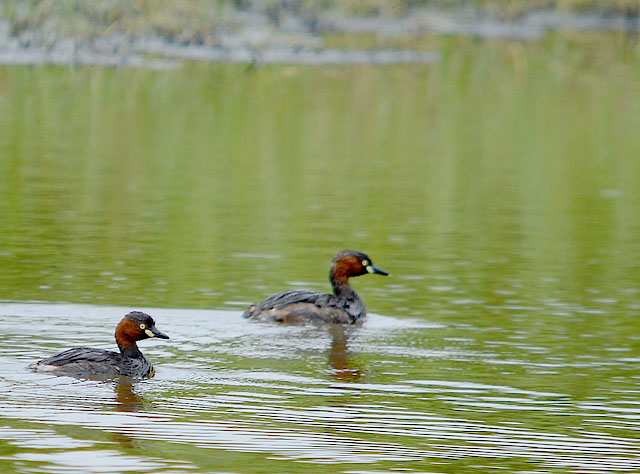
Little Grebes still managed to endure in the current environment. A pair was leisurely paddling along the lake and it was a picture of utter bliss.


But dangers lurk throughout the marshlands and the water birds here like these Lesser Whistling-Ducks have to be vigilant of predators like the Water Monitor Lizard.


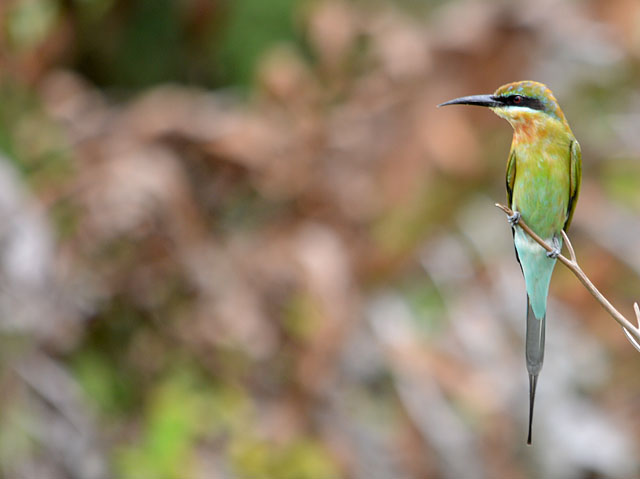
This is one of the best sites to photograph the elegant Blue-tailed Bee-eater and it remains so till this day. Finally something to cheer about. We took our time with these common winter visitors before departing to the next location of the day and they were obliging indeed.


It has been awhile since I last paid homage to the urban owls of Bukit DO. As usual, one of the regular walkers of this suburban park pointed out the roosting owl upon our arrival. It was on a high perch and the lighting was not exactly on our side. However, it is always good to see the Barred Eagle-owl still calling this modest park home.


The paddy fields of mainland Penang was the next location of the day. Most of the fields had fresh paddy stalks and that made it difficult to locate the water birds that find sanctuary here. When we came across a recently planted patch, there was a flock of Grey-headed Lapwings present. Normally, these birds have low tolerance towards approaching birders. They were friendlier on this occasion and we managed to obtain some reasonably good images.


Only a few juveniles were among this flock and the pale colouration made it relatively distinct from the adults.


Apparently there is no getting over the Asian Openbill phenomenon and today’s excursion had a fair share of these unique storks. A small flock was foraging among the paddy stalks and the sea of green provided a nice backdrop for our photo session. One of the storks is starting to moult into breeding plumage but it remained further away throughout our observation.


The rest of the Asian Openbills present sported slightly different plumage coloration due to age and different stages of moult. Again, the storks tolerated our intrusion and was more confiding than the ones I used to encounter before the invasion.


This is my favourite image from our encounter with the Asian Openbills. Although almost half the storks were hidden by the paddy stalks, the scenic landscape and the bond between the two was absolutely captivating to my eyes. It has been a long time when I last enjoyed an outstanding excursion like this. But then again Christmas is almost here and everything tends to be more beautiful and sweet this time of the year.


A formidable Crested Serpent-Eagle overlooking its swampy domain at the Air Hitam Dalam Educational Forest was a good encounter to wrap things up for the day. It may be a common raptor but when a predatory bird is as confiding as this, it should not be taken for granted.