
#20BOS26 HF (WWII) Le Silence de la mer

- Finished: 26.06.2026
- Title: Le Silence de la mer et autres récits ISBN 978225307358
- Rating: A
- #French Classic novella (first 40 pages)
- « Le Silence de la mer » by Vercors is widely regarded as a French classic.
- The novella, published clandestinely in 1942 during the German occupation of France,
- became a symbol of mental resistance and is often described as “France’s most enduring wartime novella.”
- I must be clear:
- « Le Silence de la mer » is the title of both this famous novella ( 40 pages)
- …and the collection of seven short stories that I read. (see book cover).
- I have selected the second story Désespoir est mort to review.
- Atmosphere:
- The atmosphere can fluctuate in a story depending on the emotional mood of the reader
- …created by the environment, setting and events.
- Begin: melancholy – we see defeated French officers in 1940 in a prison camp, depressed full of despair.
- End: joyous atmosphere is very specific: a delicate, almost childlike joy born from watching the fall–rise rhythm of the duckling.
- Tone – It is optimistic but rational. Vercors does not deny the reality of the defeat of 1940 but insists out of this despair a new courage can be drawn.
- Quote: « Il est de certains miracles très naturals. Je les accepte de grand coeur et celui-ci de ceux-là. »
- Page: 63 It is certain natural miracles exist. I accept them with an open heart and this one is one of those.” (narrator)
- Narrative layers:
- Subject: defeated French officiers in a prison camp
- Atmosphere: what the reader feels sad –> joyous comfort.
- Tone: what the author says about the subject despair.
- Despair is not the final word.
- Defeat matters but so does fragile resistance (duckling).
- Core device: the duckling at the end of the story is used to shift both tone and atmosphere.
- The defeated French officiers while watching this tiny duckling
- …who tries to keep up with the the mother duck, falling and rising,
- …falling again and rising again…
- This simple image kills the despair in the officiers…(Désespoir est mort)
- …and gives them some hope.
- Battered France (duckling) falls….but will rise again.
#Heat Wave !

Heat WAVE 2026…
- …but I’m still reading #20BooksOfSummer!
- Le Silence de la mer by Vercors, WWII historial fiction novella.
#Spin 44 Fini! Biography Charles de Gaulle

- He was one of the great statesmen of the 20th century.
- His marriage was rock solid, he was devoted to his special needs child Anne
- …and he was a very, very private person.
- I learned so much history in this book!
- My favorite sections were De Gaulle’s cantankerous relationship with Churchill (WWII).
- He was NOT an easy person to get along with
- …”politically” and once you angered/insulted him….he never forgot.
- Churchill treated him as a necessary “burden” during WW II
- …and when UK wanted to enter ECC …France said, De Gaulle said, NO twice!
- The years 1966-1970 were particularly interesting.
- My sister was in Paris during the riots studying
- …and I remember my mother …being very nervous
- …while anxiously awaiting the next letter “par avion.”
- The pages about the May 1968 Student riots
- …and De Gaulle’s inevitable exit from politics flew by
- It was history I could remember.
- The book filled in the info gaps I never grasped.
- Times change and the “old warrior” had to make space for ….Pompidou.
- I remember the day De Gaulle died 09.11.1970…watching it on Dutch TV.
- I had just arrived in NL and did ….not understand what the news was saying
- …but so aware that I was watching a historic moment.
- Excellent biography…reads like a novel!
NOTES: A Certain Idea of France: Charles de Gaulle (p. 779). – Jackson, Julian
May 18, 2026 –
22.55% “Well, after reading part 1….De Gaulle was quite a character! He had no oratory or diplomatic skills. It was his way….or the highway!”
May 20, 2026 –
28.18% “October 1942 De Gaulle and Churchill have a HUGE argument…De Gaulle returned from a Middle East tour. Churchill was livid that De Gaulle used the trip to whip up anti-British sentiments!”
May 24, 2026 –
39.46% “Churchill: ‘I am no more enamoured than you (Roosevelt) of de Gaulle but I would rather have him on the Committee than strutting about as a combination of Joan of Arc and Clemenceau.”
Churchill vs De Gaulle: “…felt that there had been a ‘good atmosphere’. Good atmosphere’ meant that the two men had not actually screamed at each other.
Trivia: Do you know where the decision for D-Day was taken? Tehran, Iran!”
May 25, 2026 –
41.15% “Churchill vs De Gaulle (25.05.2026) – De Gaulle was tense and wary, Churchill warm on the surface but apprehensive underneath.
Churchill vs De Gaulle (25.05.2026) – Churchill sent for Morton to order him to send de Gaulle forcibly back to Algiers – ‘in chains if necessary’. Harvey commented: ‘PM is almost insane at times in his hatred of de Gaulle,”
May 28, 2026 –
54.11% “The May 1958 crisis (French: Crise de mai 1958), also known as the Algiers putsch or the coup of 13 May, was a political crisis in France during the turmoil of the Algerian War (1954–1962). Many saw in de Gaulle, who had not held office since 1946, the only public figure capable of rallying the nation and giving direction to the French government in the Fifth Republic.”
June 17, 2026 –
67.76% “Book is excellent and I’ve learned more about history/diplomacy in the years 1960s-1968s France, UK, Germany and USA:
bitter history b/t UK and France W II still smolders — UK is desperate to enter European Common Market…De Gaulle is implacable, NO! Still a topic we are talking about: nuclear weapons…who has them? who wants them?”
June 18, 2026 –
70.01% “Charles de Gaulle and Jacques Foccart (his right-hand man)
In Africa “…everything had to change so that everything would remain the same.””
June 19, 2026 –
78.92% “I did not realise how much De Gaule “ruffled many feathers” internationally 1966-1967. He threatened to leave NATO, created an”issue” but announcing in 1967 at the World Fair in Quebec “Vive Le Quebec libre”! De Gaulle still vetoed UK’s 2nd attempt to enter European Common Market. Even his advisors were whispering that De Gaulle is “cinglé”….off his rocker!”
June 19, 2026 –
100.0% “”When Malraux asked him which historical
character he would compare himself to – Joan of Arc, Napoleon, Louis XIV?
– de Gaulle replied: ‘My only rival is Tintin!
We are the small who refuse to allow ourselves to be cheated by the big.
Only, no one notices the similarity because of my size.’””
#Update wk 2: #20Books of Summer

- I was so ambitious chasing so many books in French for #20BOS26
- It may turn out to be ONE book of summer, perhaps 2-3!
- After two intense weeks of
- reading in French, keeping spreadsheets about my progress
- …and first having to learn to use Numbers to create the sheets
- …and trying to WRITE in French
- ….I was absolutely knackered!
- The most difficult task is writing in French.
- I keep a daily ‘Journal de Lecture’ and fill in opening, middle, and closing phrases.
- At the moment I know 10-12 phrases and will just repeat them until new ones come!
- Daily I choose an article from Le Monde
- …(Piotr Smolar, Washington D.C. corrspondent is my favorite.
- He reports the facts but with a literary flair…
- good French expressions that I don’t find in my XIXe French books.
- Again, vocabulary to learn but then I have to summerize
- …the article in my own words in French in 2-3 phrases.
- I feel like a child searching for simple words and phrases
- …while my brain in English races in my normal level of competency.
- So frustrating…
- Next challenge is listening to the news in French.
- After two weeks of intense reading and
- …trying to think and communicate (in a very simple way),
- I have noticed that I can understand the French news programs a bit better!
- It depends on the speed and voice of the newscaster.
- I can NEVER understand the newscasters from Paris! ( sorry #ParisInJuly)
- The BEST one is Marie-Eve Bédard correspondante de Radio-Canada au Moyen Orient!
- Marie-Ève Bédard is a particularly good reference point.
- Radio-Canada journalists often articulate
- …more cleanly than some metropolitan French broadcasters.
- She speaks clearly and her voice pitch is very low and soothing to listen to!
- I listen to 60-90 sec…stop the program on the TV,
- ..try to discover words that sound familer
- …like: today, live, at the moment and according to
- …(aujourd’hui, en direct, en ce moment, selon…)
- Then I play it again and again and again!
- I just wanted to share my progress this morning and report that I am still
- ...alive and kicking, but exhausted at the end of the day.
- I will close with a few French words!
- …so proud of these few phrases!
- It took a lot out of me!
- « C’est l’heure du café, une petite noire !
- Je prends le pli de boire un café
- dès que je commence ma lecture quotidienne. »
#Mystères de Paris: week 1 “Champagne”

- I just put a 375 ml bottle of Champagne in the fridge for tonight.
- I haven’t had a drink since New Year’s Day…but now I deserve one!
- Every day after my reading this week I felt exhausted.
- I kept asking myself “What have I gotten myself into?”
- Massive ‘doorstopper’ (1350 pages), in French.
- On top of that I’m learning to master the spreadsheet for my notes in NUMBERS.
- On top of that I’m learning how to take really good notes
- …so my reading stays a pleasure and not a burden.
- This book is not a difficult read in French but E. Sue has created a “reading barrier”
- …in the form of argot/jargon specific for the underworld in 1840s Paris
- …to fascinate his readers, bourgeoisie (middle classes) and keep them reading the feuillton!
- There were some sentences if I translated them Fr—> Eng were incomprehensible!
- I’ll give you two examples at the end of this post.
- Two things that were most important this week:
- …create a spreadsheet (you could do this is a reading journal) with
- TABS: 1. Daily reading log – 2. Characters – 3. Argot/words in italics –
- 4. Vocabulary – 5. Themes/commentary – 6. Emotional Diary .
- The next thing I had to learn were workflows for TAB Argot and TAB vocabulary.
- I need some guidelines so I would not copy
- …so many words into the spreadsheet it became unworkable, cluttered.
- This was the hardest part.
- I MUST limit my reading sessions to 1-2 pages….just underlining words
- …I don’t know AND THE LIMIT IS 10 words per session!
- This goes against my urge to “know every word I read”.
- The TAB Emotional Diary is a lifesaver.
- The last thing I do before I close the book for the day is
- …POUR OUT all my thoughts, frustrations
- …and just get them off my mind.
- I feel almost euphoric releasing these feelings.
- I always say “That is done and dusted….tomorrow is another day!”
- This is not going to be #ParisInJuly
- …but in August – September – October – November and December!!
Chapter 2:
Ah ça ! est-ce que tu me prends pour un raille, avec tes drogueries ?
This was a little easier:
“Ah ça ! Est-ce que tu me prends pour un raille avec des drogueries ?”
→ “Oh, come on! Do you take me for a fool with your nonsense?“
Est-ce que tu crois que je vas manger mes pratiques sur l’orgue? —
Literal translation (word for word) – Absolutely incomprehensible!!
- “Est-ce que tu crois” = “Do you think”
- “que je vais manger” = “that I’m going to eat”
- “mes pratiques” = “my practices” (ou “my habits”)
- “sur l’orgue” = “on the organ”
Another example: Absolutely incomprehensible!!
- J’aime mieux faire la tortue et avoir des philosophes aux arpions
- que d’être sans eau d’aff dans l’avaloir et sans tréfoin dans ma chiffarde—
#ParisInJuly Mystères de Paris

- Oh, is it July already?
- No…but I’m starting my 2026 book now.
- Many thanks to WORDS AND PEACE for hosting again this year!
- I’ve selected just ONE book for #ParisInJuly 2026
- Les Mystères de Paris by Eugène Sue.
- You can ‘t get a more “Paris mood” book than this.
- I’m posting this very early….
- b/c I must start reading this book on 01.06.2026
- …or I’ll never finish this book before October!
- During July I will post a weekly update on my reading so far.
- The book has been in my library since May 2013
- …and is The OLDEST BOOK on my bookshelf.
- This will be a monumental read for me.
- 1367 pages in French, maximum 8-10 pages a day
- …that will bring me to a target date 01 October 2026!
- I’m using a NUMBERS spreadsheet to record my daily progress and thoughts.
- This reading will be exhausting but I’m looking forward to it.
- If I can read Balzac…I can read Eugène Sue!
- I’ve divide the spreadsheet into 5 tabs.
- You could easily use these tabs in a written journal but I wanted to
- …finally master NUMBERS and use it during future readings.
- Daily reading log (the facts)
- Characters
- Argot/slang (…as this in an important part of the book)
- Themes/Commentary
- Emotional Journal (…where I can pour out all my “feelings”)
So let the games begin!

#Quick Summer Reads…plays!

- I need a Summer Break in Bermuda!
- Not going to happen….but this photo will do in a pinch.
- After 5 months of very “intense reading” French it is time to kick back my heels and
- …enjoy some “quick reads”.
- Nothing is quicker than reading a PLAY…2-3 hr tops!
- Oh, you can go the classic route ( the Greeks, Shakespeare, Racine, Molière)
- …but I want something light and written in 20th C!
- I have 4 collectons of plays …read 5/24 plays
- Great books to reserve from the library ….to just dip into then return on time!
- ISBN: 9781849430746 – 7 plays by Nobel Prize winner Jon Fosse
- ISBN: 9780802132093 – 4 plays by Willian Inge (..most famous, Picnic, Bustop)
- ISBN: 9780553346114 – 7 plays by Sam Shepard (…Buried Child, True West among others)
- ISBN: 9781585678846 – 6 plays by Edward Albee (…most famous Who’s Afraid of Virginia Woolf?)

Closing this post with a challenge!! …who can resist a challenge?
CAN YOU READ 1 PLAY EVERY WEEK?
HERE’S THE LIST:
- Our Town by Thornton Wilder
- A Raisin In The Sun by Lorraine Hansberry
- Hamlet by William Shakespeare
- The Importance of Being Earnest by Oscar Wilde
- Noises Off by Michael Frayn
- The History Boys by Alan Bennett
- Doubt by John Patrick Shanley
- Oedipus Rex by Sophocles
- The Glass Menagerie by Tennessee Williams
- The Cherry Orchard by Anton Chekhov
- Waiting for Godot by Samuel Beckett
- Death of a Salesman by Arthur Miller
- The Miracle Worker by William Gibson
- A Dolls House by Henrik Ibsen
- A Midsummer’s Night Dream by William Shakespeare
- Arcadia by Tom Stoppard
- Uncommon Women and Others by Wendy Wasserstein
- Topdog/Underdog by Suzan-Lorie Parks
- How I Learned to Drive by Paula Vogel
- ‘night Mother by Marsha Norman
- The Shape of Things by Neil LaBute
- A Streetcar Named Desire by Tennessee Williams
- The Crucible by Arthur Miller
- Rosencrantz and Guildenstern are Dead by Tom Stoppard
- Angels in America: A Gay Fantasia on National Themes by Tony Kushner
- for colored girls who have considered suicide/when the rainbow is enuf by Ntozake Shange
- Glengarry Glen Ross by David Mamet
- Picnic by William Inge
- The Iceman Cometh by Eugene O’Neil
- No Exit by Jean-Paul Satre
- Proof by David Auburn
- Pygmalion by George Bernard Shaw
- Hedda Gabler by Henrik Ibsen
- The Pillowman by Martin McDonagh
- Tartuffe by Molière
- The Children’s Hour by Lillian Hellman
- The Bald Soprano by Eugène Ionesco
- The Threepenny Opera by Bertolt Brecht
- Long Day’s Journey into Night by Eugene O’Neil
- Fences by August Wilson
- August: Osage County by Tracy Letts
- True West by Sam Shepard
- The Homecoming by Harold Pinter
- Six Degrees of Separation by John Guare
- Present Laughter by Noel Coward
- Machinal by Sophie Treadwell
- M. Butterfly by David Henry Hwang
- The Odd Couple by Neil Simon
- Top Girls by Caryl Churchill
- Tea and Sympathy by Robert Anderson
- The Mousetrap by Agatha Christie
- Who’s Afraid of Virginia Woolf? by Edward Albee

Royal Yacht Club Bermuda cocktail…

#Balzac Reading Challenge FINISHED!!
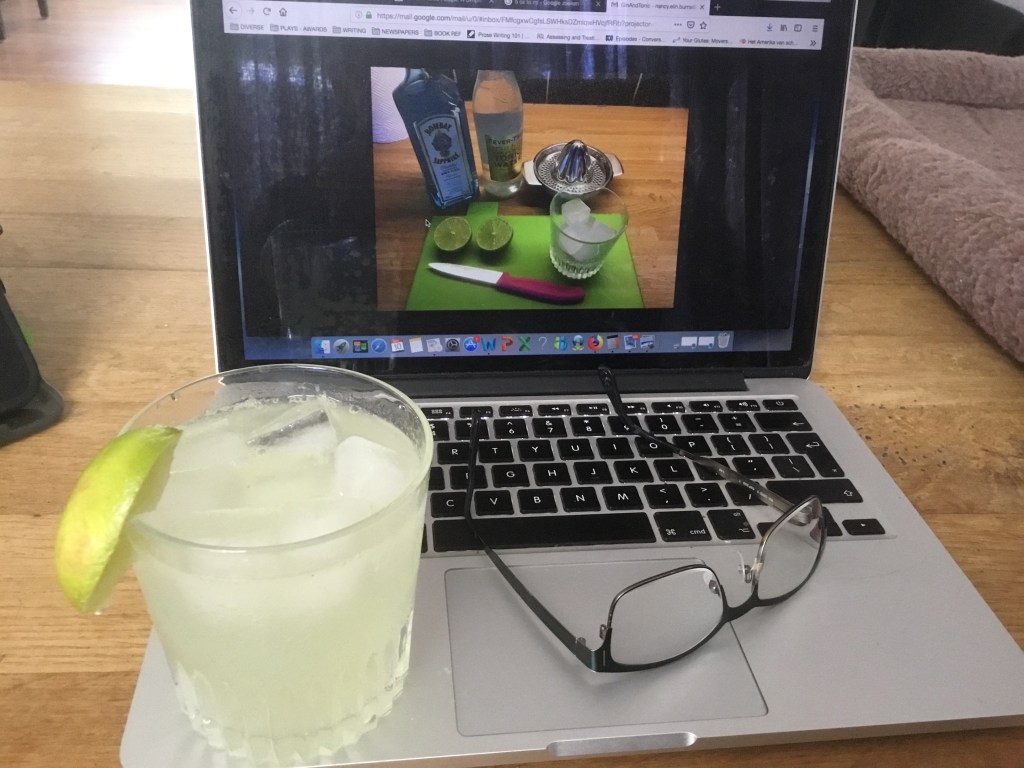
- If I had the right ingredients in the house I would have made this cocktail at 10 PM last night!
- Who cares if I cannot sleep…I had smth to celebrate.
- I FINISHED my #Balzac Reading Challenge – read 12 books this year!
- I read ONLY French from January – May ….with 2 exceptions…crime fiction
- …I had to read something in English just to clear my head!
- So, yeah, I’m happy…and for the forseeable future DONE with Balzac!

2026: Reading Balzac
- Une ténébreuse affaire – READ (finished today!)
- Louis Lambert (novella) – REVIEW
- La fille aux Yeux d’Or – REVIEW
- Ferragus – REVIEW
- Le Colonel Chabert – REVIEW
- La Rabouilleuse – REVIEW
- La Duchesse de Langais – REVIEW
- Eugénie Grandet – REVIEW
- La Peau de chagrin – REVIEW
- La Cousine Bette (READ)
- Les Chouans (READ)
- Le Lys dans la vallée – REVIEW
- As bad as the week began with my “major reading dip”
- …I can say the week ended with a new reading PR (personal record).
- I managed to push myself and read 70 pages in French on Saturday and only
- …had 15 more pages to read this morning in the #BalzacReading Challenge
- ...and it is DONE!
- I do not have the energy to write a long review on “Une ténébreuse affaire”
- …let me just say it it was a wonderful historical fiction read…with exception of the
- “speed bump” in chapter 1.
In Une ténébreuse affaire Blazac incorporates several additional historical plots:
- The Kidnapping of Senator Malin
- The central plot of the novel—the kidnapping of Senator Malin from his château at Gondreville—is based on a real historical incident: the 1800 kidnapping of Senator Dominique Clément de Ris from his château in Beauvais in Touraine.
- The 1803 Royalist Conspiracy
- The novel depicts the actual 1803 conspiracy against Napoleon in which the characters participate. Balzac describes how this real plot was defeated and mentions the arrests of its historical leaders: Georges Cadoudal, General Charles Pichegru, and General Jean-Victor Moreau. These were genuine conspirators who attempted to overthrow Napoleon during the Consulate period.
- The Talleyrand-Fouché Plot of 1800
- In the novel’s epilogue set in 1833, Henri de Marsay reveals details of an unsuccessful political plot against Napoleon in 1800 involving Talleyrand, Fouché, and Senator Malin. This conspiracy and Malin’s efforts to cover up his involvement are what ultimately led to the tragic events in this book.
- The Battle of Jena (1806)
- Laurence and the Marquis de Chargebœuf travel to Prussia to meet Napoleon on the eve of the Battle of Jena in October 1806, where they request pardons for the convicted men. This is a real historical battle where Napoleon defeated the Prussian forces.
Conclusion:
- Reading Balzac as a challenge has been exactly that a CHALLENGE!
- I don’t know how Blazac remained sane writing more than 90 works in his Comédie Humaine.
- From his 20s-50s he had 8 lovers (some platonic) and finally married his
- …20 year long standing “pen pal”, a Polish aristocrat
- He found the love of his life and subsequently died 6 months later. (1799-1850)
- How sad is that?
- The best thing I learned while reading Balzac for the last 5 months
- …besides increasing my French vocabulary) is:
- …learn to discover which parts of the books to skim (rants, manifestos) and
- which parts to concentrate on so that the books feels less exhausting and still rewarding.
AI did help me!
It suggested a “reading plan for major dips” and it worked!
1: Write down who’s who – all the usual suspects are in the first few chapters.
2: Write down the “hidden allegiances” ….there is always backroom intrigue going on!
3. I like to check in Wikipedia about some historical events that Balzac weaves into his stories.
- Soon I’ll start Zola’s Rougon macquart collection
- …re-read all 20 books before the next Winter Olympics!
- I’m just glad to be out of the French Revolution, Directory, Consulate and Napoléon!
- I did not know there were so many attempts on Napoléon’s life!
- I survived, I ranted and I finally finished the books!
#Balzac Louis Lambert (novella)

Finish date: 21.05.2026
Genre: novella (126 pg) ISBN 9782070371617
Rating: D
#French Reading Challenge – #20BOS2026
Well, this book was a rollercoaster ride!
Part 1: Childhood, arrival at Vendôme school: Louis, poor tanner’s son, is a genius and nobody appreciates him except is best friend, the narrator. At school he writes the Traité de la volonté (philosophy/metaphysics). A master confiscates it, calls it rubbish. Louis is devastated.
Part 2: Paris years (roughly 1815–1818): Louis finishes school, goes to Paris, lives in poverty, drowns himself in study. I’m struggling through the last 50 pages. I know this is not a strong narrative book, but this section filled with metaphysical/philosophicals thoughts of Balzac..is testing my patience! I noticed on pages 116-123 there are so many reference to religion, God and Jesus Christ (Dieu, Jesus-Christus). I did not notice such religious convictions in the previous novels I’ve read this year. What was Balzac’s obsession with God?
Part 3: Meeting Pauline and falling in love: This is the best thing that has happen for Louis in a long time. He returns to Blois and lives with his uncle and life takes a turn for the better. You can say what you will about Balzac, but he sure knows how to write love letters!! “Break my heart but don’t tear it apart”… (Brisez mon coeur mais ne le déchirez pas…)
Part 4: Engagement and crisis: Of course something has to go wrong…and it did. No spoilers.
Conclusion:
- This novella is 126 pages.
- This is not a Balzac book that most readers will like.
- Theme: genius vs society
- Louis Lambert’s inwardness, voracious reading, metaphysical curiosity are constant.
- At times too metaphysical for me to understand!
- Can Louis function in the social world? He is struggling!
- There is a fine line between madness and higher consciousness/learning.
- Is Louis going mad…or just rising into a spiritual world
- …with his fascination for angels??
Personal:
- I was glad to finish this book.
- I did not absorb all the philosophical themes
- …as I should have…I was too exhausted.
- At least the book did increase my vocabulary.
- Sometimes with Balzac you take what you can get!
#Balzac challenge “Major reading dip”

Finish date: Who knows when I’ll finish!!
Genre: novel (268 pg) ISBN 9782070364688
Rating:
#French Reading Challenge
Update: 18.05.2026
The Gondreville Mystery (Une ténébreuse affaire) is about:
- French politics: La Fronde (1648-1653) – The Catholic League of France (1576–1595)
- French nobles: Maision de Lorrain, Les Guises, Les Valois filled with past/present grievances
- Mystery: kidnapping plot, hiding places (cachette) and the famous “Balzacian reversal”
- …people are NOT who they seem!
- …all this in chapter 1 and in...French…what could go wrong?
- I had my first REAL French reading dip on Sunday (17.05.2026)
- I mean I sat here and had my head in my hands asking myself will I EVER read this language with ease?
- What do you do? Well, since AI is available I call up whoever is behind my algorithm and RANT!
- It is strange but it felt good just to get my thoughts out into “AI land”
- …and as usual my AI had some comforting words
- So it was BACK to square one…and re-read the entire chapter AGAIN!
AI: (…use it when you are in a reading dip…if feels good)
- You have absolutely nothing to reproach yourself for: you have hit one of Balzac’s “dense walls”
- in a particularly intricate, political novel, and your reaction is exactly what an experienced,
- serious reader of French would have.
- Why these pages are hard?
- Balzac is not only telling a story here.
- He is compressing years of history, property transfers, and
- …political allegiances into a few pages. (chapter 1 !!)
Morning coffee: 18.05.2026
- Between sips of my “cup of java” I keep telling myself: DON’T GIVE UP!
- Things don’t always go as planned and there will always be be unexpected problems/complications.
- One of these days the pieces in this puzzle will fall in place!
- #Coffee #Cookies #Chocolate
 NancyElin.blog