MLMM Photo Challenge — Failure To Communicate

DE1CA96C-3864-4255-A0DB-7BF5F05BE382“What we’ve got here is a failure to communicate,” Aaron said as he reached up with a pair of scissors and attempted to cut the cord that his parents were using in their vain attempt to communicate with one another.

Aaron was cursed with this recurring dream ever since his parents got divorced. The three of them were in the water of a shallow lake. His parents were sitting on wooden chairs facing in opposite directions. He was in between them, crouched down inside a wooden barrel. They were holding tin cans next to their ears with a piece of rope connecting the cans. It reminded him of a walkie-talkie experiment that he and his friends tried when he was younger. It never really worked, but they liked to pretend it did.

Just as Aaron’s parents pretended to be talking with one another. But instead, they were talking to one another, neither listening, both talking, and not really saying much at all.

Aaron believed that his parents’ break up was his fault, that he was responsible for cutting the lines of communications between the two of them, just as he was doing in the dream. But that, of course, was not the reality.

Aaron tried to postpone falling asleep each night, but when sleep finally overtook him, he once again found himself sitting, scissors in hand, in the barrel in the lake between his opposite facing parents.


Written for this week’s Mindlovemisery’s Menagerie Photo Challenge. Photo credit: Nicolas Bruno.

Plastic Surgeons

I wrote a post earlier today in which I referenced plastic surgeons. And then I began to wonder why they are called “plastic surgeons” as opposed to “cosmetic surgeons,” “reconstructive surgeons,” or “miracle workers.”

My first thought was that the “plastic” in plastic surgery takes its name from the use of silicone and other man-made materials (i.e., plastic) to achieve specific cosmetic or reconstructive goals. That sounded plausible to me, but I decided that, rather than assuming my intuitive conclusion was accurate, I’d do some research.

So I Googled it. And I learned that I was wrong. Well, not entirety wrong, but not entirely right, either.

“Plastic,” in the context of plastic surgery, is derived from the Greek word “plastikos,” which means to mold, or to have the ability to mold. Just as synthetic plastic materials can be molded into different shapes, plastic surgery molds, or reshapes different parts of the body.

So, the “plastic” in plastic surgery doesn’t mean that a synthetic substance (like plastic) is necessarily used, but that the surgeons are changing the shape of, or molding, the part of the body they are working on.

IMG_2578.PNG

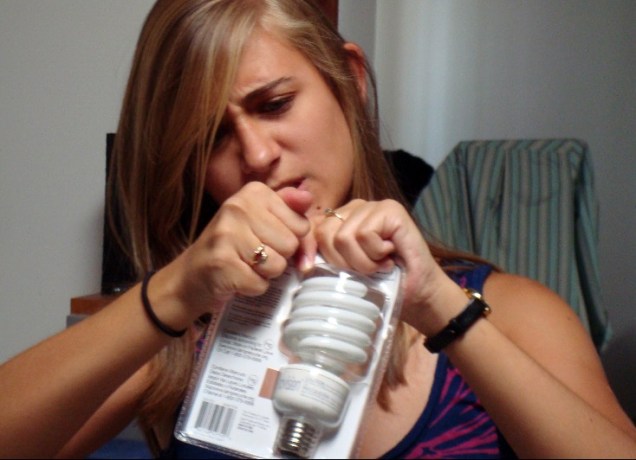
I think the name plastic surgeon is misleading. I think what plastic surgery should be all about is opening up those small items that you purchase that are encased in a hard plastic clamshell-like packaging.

It’s pretty close to impossible to get into those things without using a box cutter or an extra sharp pair of scissors. And more often than not, I end up cutting myself on some piece of plastic that sprung loose during the operation to surgically remove the item from its hard plastic shell.

So I Googled how to open those clamshell packages without injuring myself, and here’s what I found:

“Squeeze your can opener into the side or edge, and it opens easily without cutting yourself with scissors, knives, or the sharp sides of plastic packages. This is the easiest way to open plastic packages or clamshell packaging.”

With this knowledge, I now declare myself to be a plastic surgeon.