Writer’s Workshop — Watching and Waiting

For his Writer’s Workshop this week, John Holton gives us six writing prompts and we are tasked with choosing one of the prompts (or as many as we want) and writing a post that addresses that (or those) prompts. The prompt I chose this week is #5. If evidence of intelligent life elsewhere in the universe were discovered, would it alter your core beliefs or sense of self?
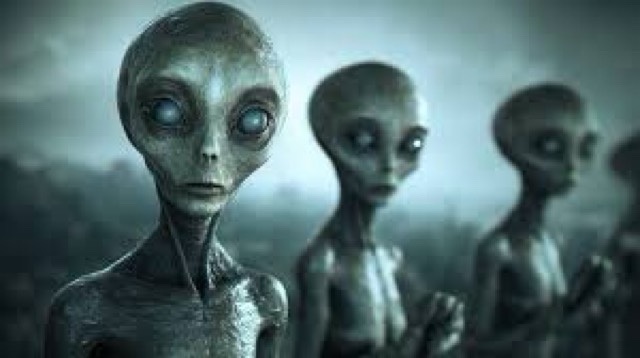
I have already written on several occasions on this blog that I would be shocked if, in the incomprehensible vastness of the universe, there is not intelligent life somewhere else out there besides on planet Earth.

Seriously, folks, what are the odds that, of the 3.2 sextillion planets in the observable universe, only one — the Earth — is capable of being a habitable host to intelligent life? How egomaniacal must we human beings be to believe that no other planet in the universe aside from our own could possibly host intelligent life?

There is a consensus among scientists that, in order for planets to actually support intelligent life, there must be, at the very least the presence of liquid water, stable climates, and suitable atmospheres.

Let’s be very conservative and say that only 1/100th of 1% of the 3.2 sextillion planets in the observable universe is. That comes to 320 quadrillion planets in the universe that could be habitable.

Or let’s just look at our home galaxy, The Milky Way, with 300 million potentially habitable planets and say that just 1/100th of 1% could be inhabited by some level of intelligent life. That leaves 30,000 planets in our own home galaxy that could support intelligent life forms.

Yet there isn’t any definitive evidence that any such intelligent life forms have ever visited our planet, which leads many people to believe that our home planet, Earth, is the one and only planet in the entire universe that has intelligent life. As my British friends might say, “Bollocks!”

So the bottom line is that neither my core beliefs nor my sense of self would be altered if evidence of intelligent life elsewhere in the universe were discovered.


The Outer Limits

In her post today, Nan (Nan’s Notebook), raised that age-old question about whether or not we on planet Earth are now being — or ever have been — “visited” by extraterrestrial life. 

I don’t know for sure, and I certainly don’t have any concrete evidence to demonstrate that we have ever had visits from space aliens. However, I do believe that there are likely to be forms of intelligent life on other planets somewhere in our vast universe.

Before you call me a hypocrite for not believing in the existence of God due to a lack of evidence, while also believing in the possibility of intelligent extraterrestrial beings without any evidence of their existence, let me explain.

I believe in science, math, statistics, and probabilities. So let’s look at the facts.

There are an estimated 700 quintillion to 3.2 sextillion planets in the observable universe, and potentially far more in the unobservable universe. In terms of habitability, scientists suggest there are about 300 million potentially habitable planets in the Milky Way galaxy alone, which translates to roughly 50 sextillion across the entire universe.

However, only a small fraction of these planets may actually support intelligent life due to strict requirements, such as the presence of liquid water, stable climates, and suitable atmospheres. Based on current estimates, that would mean about 2.5% of these planets could potentially be habitable. The exact number of planets that support intelligent life remains unknown, with Earth being the only confirmed planet that hosts intelligent life.

So let us be conservative and calculate what 1% of the 3.2 sextillion planets in the observable universe is. That comes to 32,000,000,000,000,000,000 (or 32 quintillion) planets in the universe that could be habitable.

Or let’s just look at our home galaxy, The Milky Way, with 300 million potentially habitable planets and say that just 1/4 of 1% could be inhabited by some level of intelligent life. That leaves 750,000 planets in our own home galaxy that could support intelligent life forms.

If that’s the case, then why isn’t there any definitive evidence that any such intelligent life forms have ever visited our planet?

Space is inconceivably vast and the distances between stars is enormous. So traveling from planet A to planet B is not an overnight journey.

The speed of light is 186,282 miles per second. The closest star to Earth, other than our own Sun, is Proxima Centauri, located approximately 25 trillion miles away, which translates to 4.25 light-years away. But humans can’t travel at the speed of light. Traveling 25 trillion miles with current technology, such as a spacecraft traveling at 36,000 miles per hour, would take almost 80,000 years to get to Earth from a planet in the closest solar system to our own. 80,000 years!

Intelligent human beings have been inhabiting our planet for only a couple of hundred thousand years. So given the vast distances and the lengths of time it would take to travel those distances between stars, it shouldn’t be a surprise to anyone that there is no evidence of extraterrestrial visits.

What are the odds that, of the 3.2 sextillion planets in the observable universe, that only one — the Earth — is capable of being a habitable host to intelligent life?

How egomaniacal must we human beings be to believe that no other planet in the universe aside from our own could possibly have intelligent life?


I am neither an astrophysicist nor a mathematician. Anyone who is should feel free to check and correct, if necessary, my calculations.

Double Duty — Space Science

Today is a perfect example of serendipity. For the Mindlovemisery’s Menagerie Friday Faithfuls, Jim Adams invited us to write about astronomy, planets, stars, constellations, or galaxies.

For her Provocative Question today, JYP asked us to find a news article or journal article about an interesting scientific finding and share why you found it interesting.

Well, just this morning I read about how two new “possibly habitable” planets have been discovered by an international team of researchers led by the University of Göttingen in Germany. They discovered these two new Earth-like planets near one of our closest neighboring stars, “Teegarden’s star.”

How’s that for serendipity? Astronomy, planets, stars, and science.

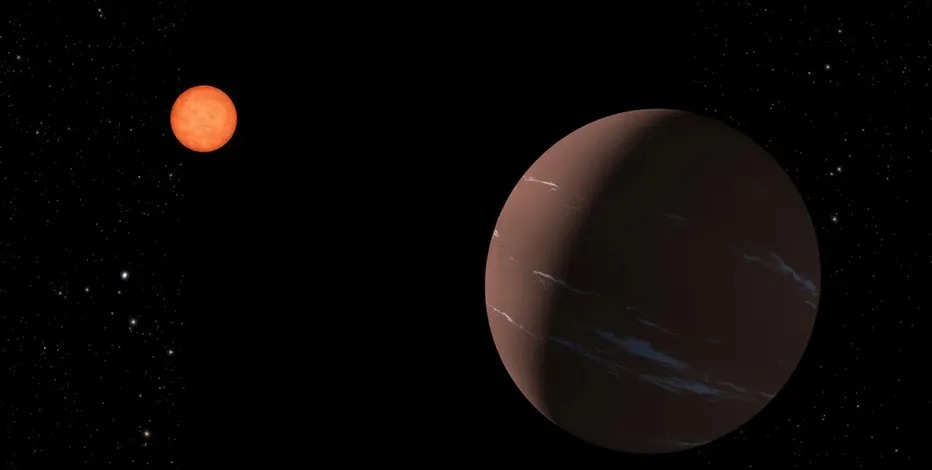
This illustration shows one way that planet TOI-715 b, a super-Earth in the habitable zone around its star, might appear to a nearby observer.

Why is this of interest to me? Well, TOI-715 b is slightly larger than Earth, measuring about 1½ times as wide, and is “fairly close to us,” at 137 light-years away, a close proximity from an astronomical standpoint. The planet orbits a small reddish star within the “conservative habitable zone,” the distance from the star that would provide the planet with a suitable temperature for the formation of liquid water on its surface, according to NASA. 

And it’s not just one planet. There is a second Earth-sized planet that could be in this same system and also exhibits qualities that could make it potentially habitable. If confirmed, this second planet “would become the smallest habitable-zone planet discovered so far.

Now here is where things get hairy. If there are other habitable planets in the universe, and potentially by intelligent life, what implication does that have for the infinite, all-powerful God as the alleged creator of everything? According to the Bible, Earth was created before any other planet or star existed, including the Sun. Earth came into existence on the first day of Creation. God withheld the creation of the Sun, the Moon, and the stars until the fourth day. Earth is unique and holds center stage in God’s Creation.

So does this discovery blow up the whole notion that God created the universe — and, therefore everything, including us? Or does it just mean that God did create everything and just forgot to mention that he created other life-supporting planets to anyone?

Now that is a provocative question.

SoCS — Planets, Stars, and Dark Money

For this week’s Stream of Consciousness Saturday prompt, Linda G. Hill has given us the word “astronomical.” As you know doubt already know, “astronomical” has two main definitions. First, it’s “of or relating to astronomy,” as in “astronomical observations.” Second, it more informally means “enormously or inconceivably large or great,” as in “he ate an astronomical number of doughnuts.”

I’m going to use the word both ways in this post. First, related to astronomy.532C3D4C-2FF4-4726-9428-E8C93FBAF02FOver the past few nights, except for last night when it was cloudy, I noticed a very bright, white object in the southern sky when I was walking our dog for her last walk of the day. I knew that the object I saw was a planet and not a star because it didn’t twinkle.

Did you know that stars twinkle because of something called astronomical scintillation? Stars are so distant that they appear as pinpoints of light in the night sky, and because all the light is coming from a single point, its path is highly susceptible to atmospheric interference. As the starlight travels through the blanket of air around our planet, it is diffracted (bounced around) causing a quick apparent dimming and brightening — a star’s signature “twinkle.”

But unlike stars, planets don’t twinkle. Because they are much closer to Earth, planets appear as tiny disks in the sky. Their apparent sizes are usually larger than the pockets of air that would distort their light, so the diffractions cancel out and the effects of astronomical scintillation are negligible.

Anyway, I wanted to know what planet that bright, white object was, so I downloaded an app for my iPhone and, based upon its position in the sky — almost due south — I confirmed my suspicions. That bright, white object in the southern sky was the planet Jupiter, and it was easily visible with the naked eye! Did any of you see Jupiter?

The other use of the word “astronomical” is related to its informal use as an extremely large amount. Have you ever heard of “dark money”?8FC3FE24-D889-447A-ACC6-C21D3825046CDark money refers to political spending meant to influence the decision of a voter, where the donor is not disclosed and the source of the money is unknown. Depending upon the circumstances, dark money can refer to funds spent by a political nonprofit or a super PAC.

Ever since 2010, when the U.S. Supreme Court ruled in what is known as the Citizens United case, an obscenely astronomical amount of dark money has found its way into American politics, allowing special interests, big corporations, and even foreign interests, spend huge sums of money to benefit candidates and causes that will help these donors achieve their objectives. In other words, these extraordinarily wealthy donors have bought and paid for politicians using dark money and much of it can’t be attributed to specific donors, entities, or even countries.

Thank you, SCOTUS, for paving the way for the buying of America.

Okay. That’s All Folks.bd97b21b-0ddd-4a23-a961-ec833b7b60af.png

Backyard Camping

Camping in a Tent Under the Stars and Milky Way GalaxyWhen I was a kid, my parents never sent me to summer camp, but they did allow me to set up a large tent behind our house on weekends. They would let me invite a few friends over to spend the night under the stars in our backyard.

Each kid would bring over snacks, like Oreos, potato chips, or candy, although George, who was a vegetarian, always brought homemade spinach chips that his mother made. Truth be told, they weren’t as bad as one might think spinach chips would be.

Speaking about being under the stars, one of my friends, Andy, would claim, as we looked up at the night sky, that God had placed all the heavenly bodies in the night sky and that they all orbit the Earth. I thought what Andy said was a demonstration of his credulity with respect to religion and the Bible.

I told my father about what Andy was saying. My father explained that the universe is vast, is expanding, and is not delimited. He also pointed out that the stars and planets do not, in fact, orbit the Earth. And then he gave me a book, an astral guide, so that I could point out all of the planets and stars to my friends.

Apparently Andy told his parents that I had a book that contradicted the Bible and that I was telling everyone that God did not put the planets and stars in the sky. Andy’s parents then decided that he could no longer join me and my friends on our weekend backyard camp outs. I guess they thought my family and I were “confusing” him.

Andy is now a Republican member of Congress.


Written for these daily prompts: Fandango’s One-Word Challenge (camp, house), Daily Addictions (spinach), The Daily Spur (mother), Nova’s Daily Random Word (credulity), Your Daily Word Prompt, (delimited), Word of the Day Challenge (book), and Ragtag Daily Prompt (astral).