
For his Writer’s Workshop this week, John Holton gives us six writing prompts and we are tasked with choosing one of the prompts (or as many as we want) and writing a post that addresses that prompt (or those prompts). I am responding to two of the prompts this week:
- Write a post in exacly 9 sentences.
- What is something that the past did better than the present day?
Time for me to step up on my soapbox.

Critical thinking used to be an everyday muscle, not an optional exercise.
When information arrived slowly, people had the opportunity to digest it, to question, compare, and reflect before accepting anything as true.

Today, the pace of modern life and the speed of information available 24×7 via the internet and various social media sites reward instant reaction, and the sheer volume of content encourages skimming rather than scrutiny.
That shift has consequences, in that we risk mistaking familiarity for understanding and speed for accuracy.
The past wasn’t perfect, but it cultivated a habit of more thoughtful evaluation that feels increasingly rare these days.
Asking “What is something that the past did better than the present day?” forces us to confront how easily critical thinking can erode when convenience replaces curiosity.
If we want a healthier public discourse, we need to reclaim that older discipline — not out of nostalgia, but necessity.
The present may be louder, faster, and more connected, but without critical thinking, it’s also more vulnerable to misinformation, confusion, and, worst of all, manipulation.
Remember that critical thinking is the habit of questioning, analyzing, and evaluating information before accepting it as true or making a decision, and rediscovering that past strength might be the most modern thing we can, and should, do.

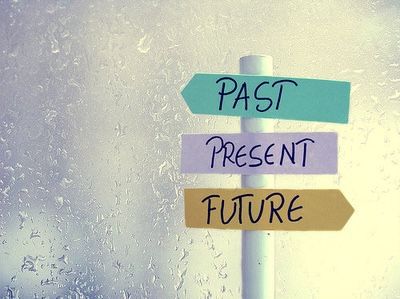
Image conjured using Copilot.








 Facts, Fictions & Fantasies