
Written for the Mindlovemisery’s Menagery Friday Faithfuls prompt from Jim Adams. The topic this week is the extreme heat that much of the nation and the world is experiencing this summer.
Jim highlighted Death Valley, CA in his post. He noted that summer months in Death Valley frequently see consecutive days over 125°F (51.7°C) in the shade. Death Valley sits 282 feet below sea level and the dark rocks and soil absorb solar radiation, making surfaces hot enough to cause instant burns to exposed skin. It is exceptionally arid, and it is the driest location in North America.
My wife and I drove through Death Valley on one of our many cross-country drives between 2010 and 2015. And yes, it was hot — in triple digits — when we drove through it.

Jim’s post triggered memories for me of the old Western TV show called “Death Valley Days.” It was was an anthology western built around true stories and frontier legends from and around Death Valley, California. It wasn’t about one recurring family or hero; each half-hour episode told a different tale. Each episode was introduced by a host, the most famous of which was Ronald Reagan. Other hosts included Stanley Andrews (aka The Old Ranger), Robert Taylor, and Dale Robertson.
The stories usually involved mining camps, wagon trains, prospectors, outlaws, settlers, and other hard-luck people trying to survive the Old West. A lot of episodes were based on local lore and historical incidents tied to the Southwest.
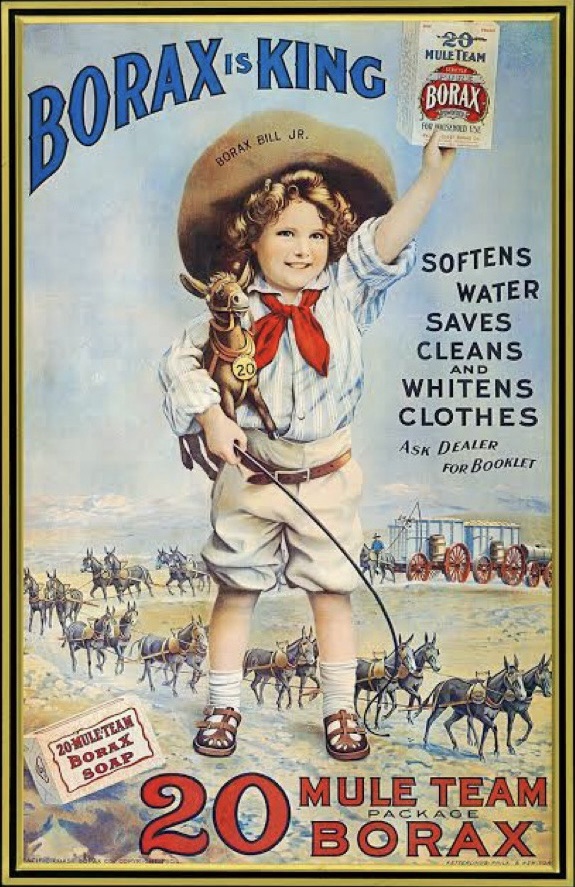
The show was sponsored by 20 Mule Team Borax, which tied neatly to Death Valley’s history and gave the series its identity. It also became one of the longest-running Western series on radio and television. The TV series ran from 1952 to 1970. A radio version of the show ran from 1930 to 1951.
The radio show often felt more like a Western noir in spirit — darker, grittier, and was dependent upon dialogue and sound effects to tell the stories. The TV version played more like a straightforward historical adventure anthology, leveraging visuals and scenery and had a more conventional Western style. And it was also more “family-friendly.” The overall premise stayed the same — stories from the Old West, especially around Death Valley, but the medium changed the mood quite a bit.
Note: I remember watching the TV show, but I wasn’t born yet when the radio version was in its prime.
Photo from Wikipedia.








 Facts, Fictions & Fantasies