Don’t Miss the Boat

As it happened that was never going to be likely. 

Our chosen means of transportation to return from Brazil to Europe was the cruise ship Norwegian Star. We booked our Stateroom, with balcony, back in December 2024. Sometimes it’s good to plan the end of a long journey even if the bits in the middle remain a bit vague. This would extend our trip to just short of 7 months.

Port of departure was Rio de Janeiro, handy because that’s where we happened to be🙄!

The 16 day cruise would take us up the coast of Brazil, across to the Cape Verdi Islands, on to the Canary Islands and Madeira before arriving in Lisbon.

However, we had a delayed start, the Star was returning from an Antarctic cruise. A couple of days before getting to Rio it encountered strong winds and sea currents so things were behind schedule. Not so bad for us as our landlady didn’t have new guests arriving that day so we chilled out for a few hours instead of hanging around at the docks. It was a good move because by the time we got to the ship there were only short queues. 

This was our 4th cruise with Norwegian so we knew the drill (including the obligatory emergency muster drill) and once aboard headed straight to the Garden Restaurant buffet on deck 12 for some much needed sustenance. NCL do good food, even in the buffet. 
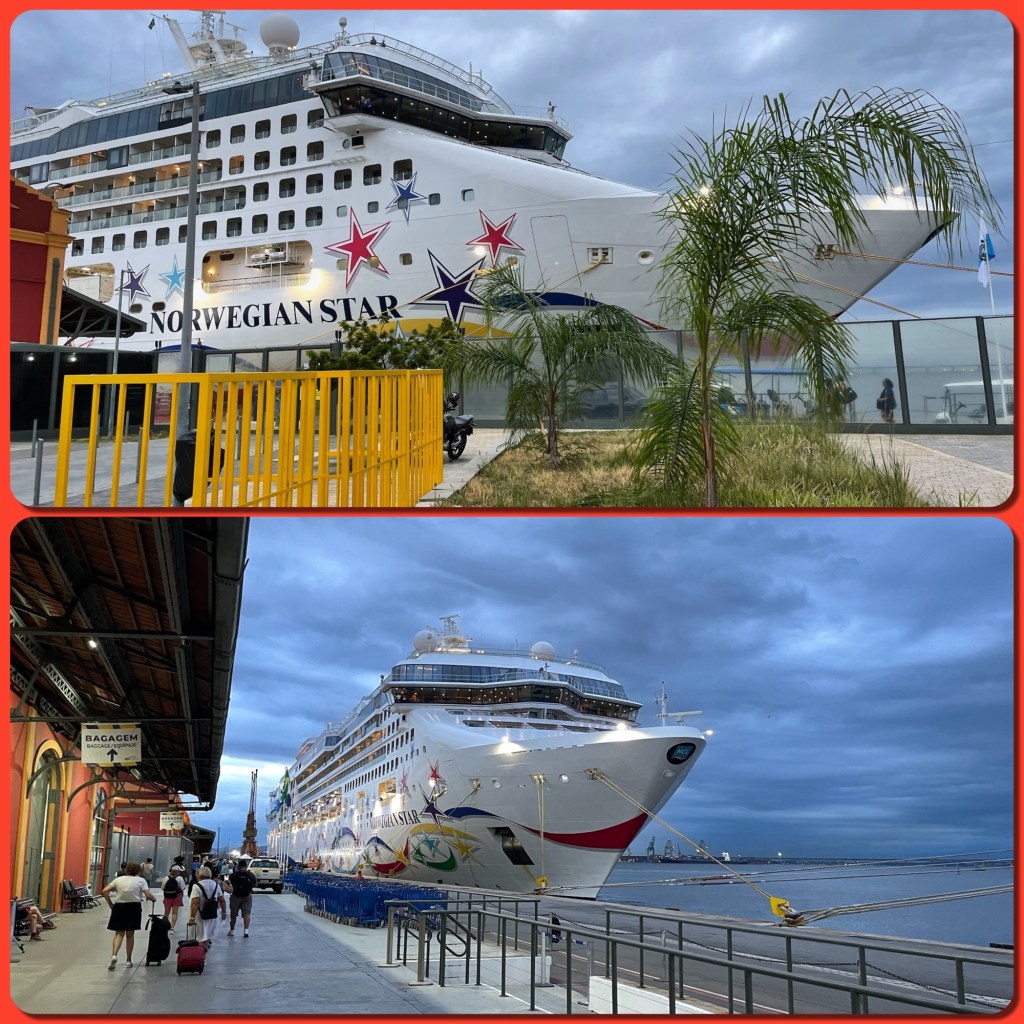
Leaving Rio

Sail away was in the dark so our final view of Rio was by streetlights.

Followed an MSC cruise ship for several days

The first port of call was Buzios, Brazil and was a tender port (so the ship was at anchor a little offshore and we were taken to dry land by one of the lifeboats). They chose to use the lifeboats on our side of the ship so we were awake early!

Lowering the launches

Buzios’ claim to fame is that its beaches were discovered by Bridget Bardot.
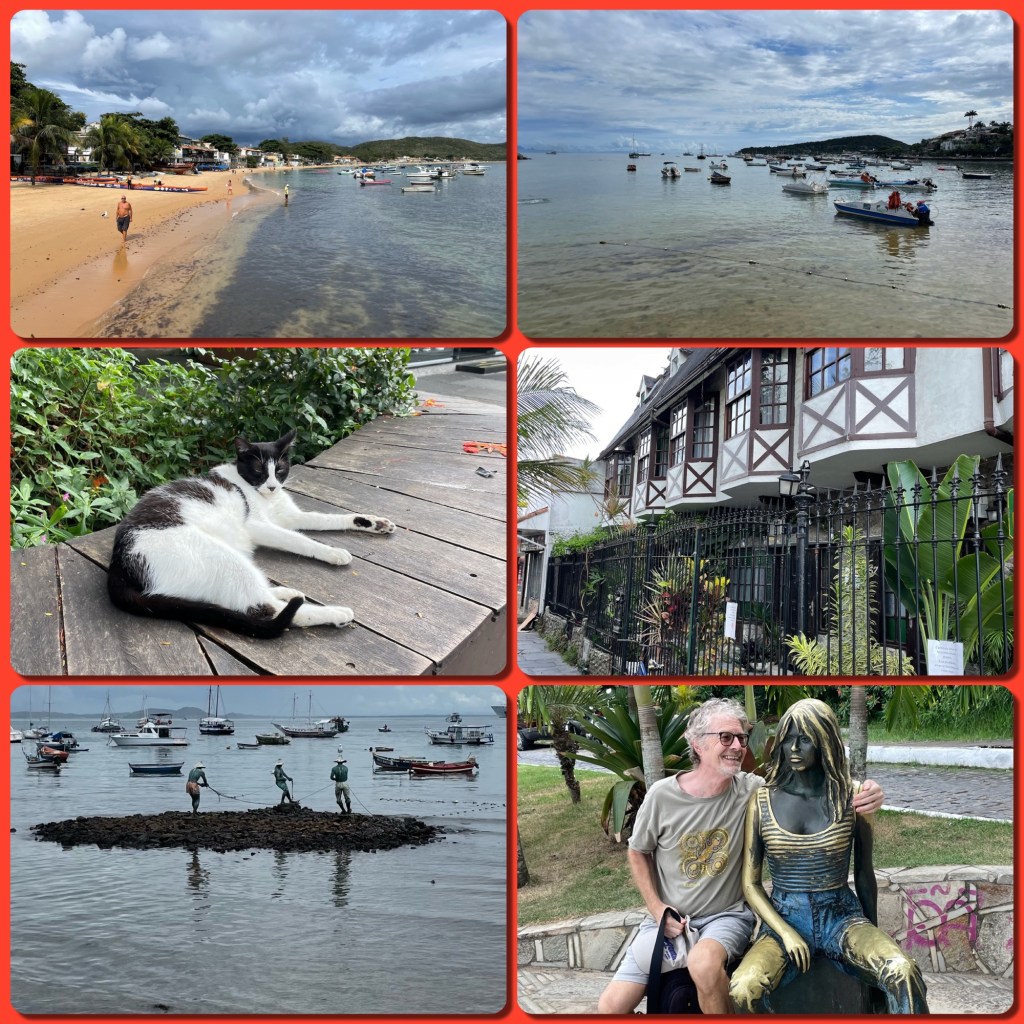
Such a nice girl!

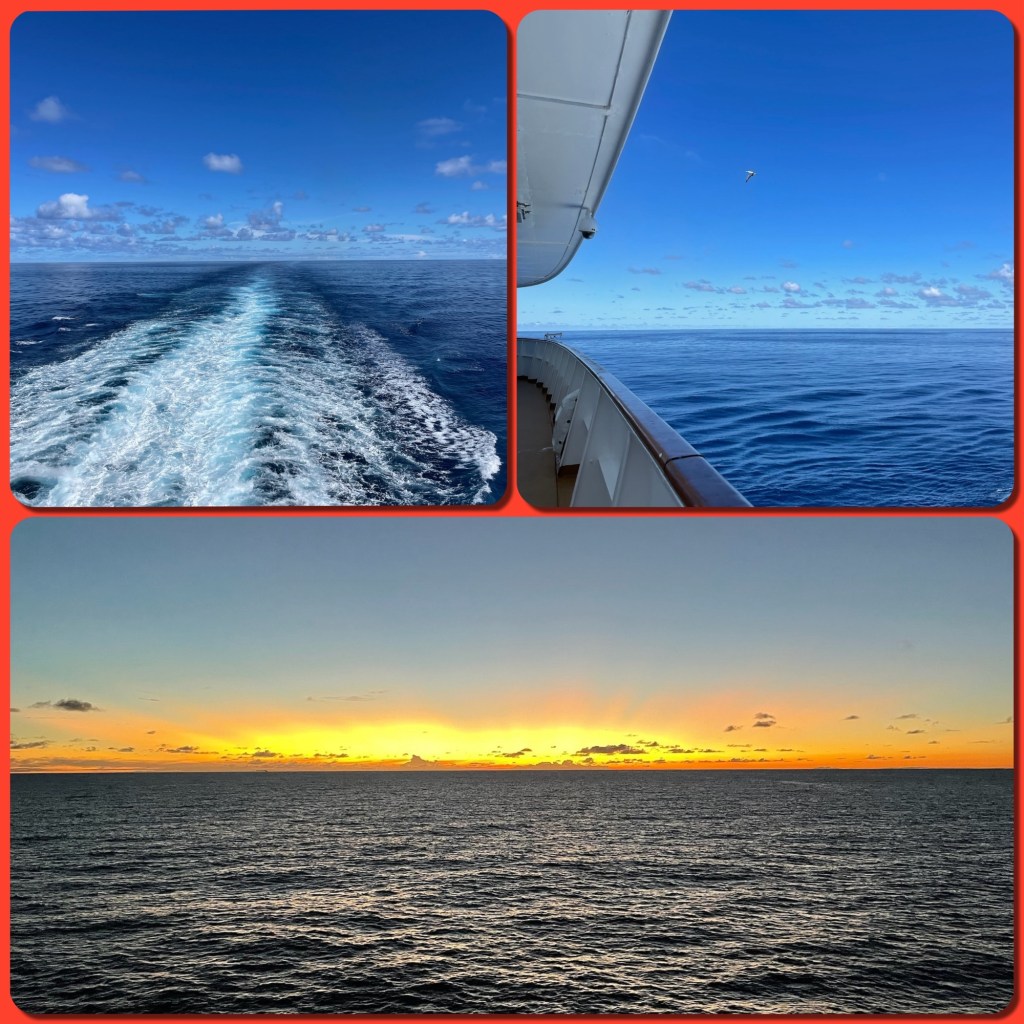
The next day was an ‘at sea day’ a chance to witness waves and a stunning sunset.
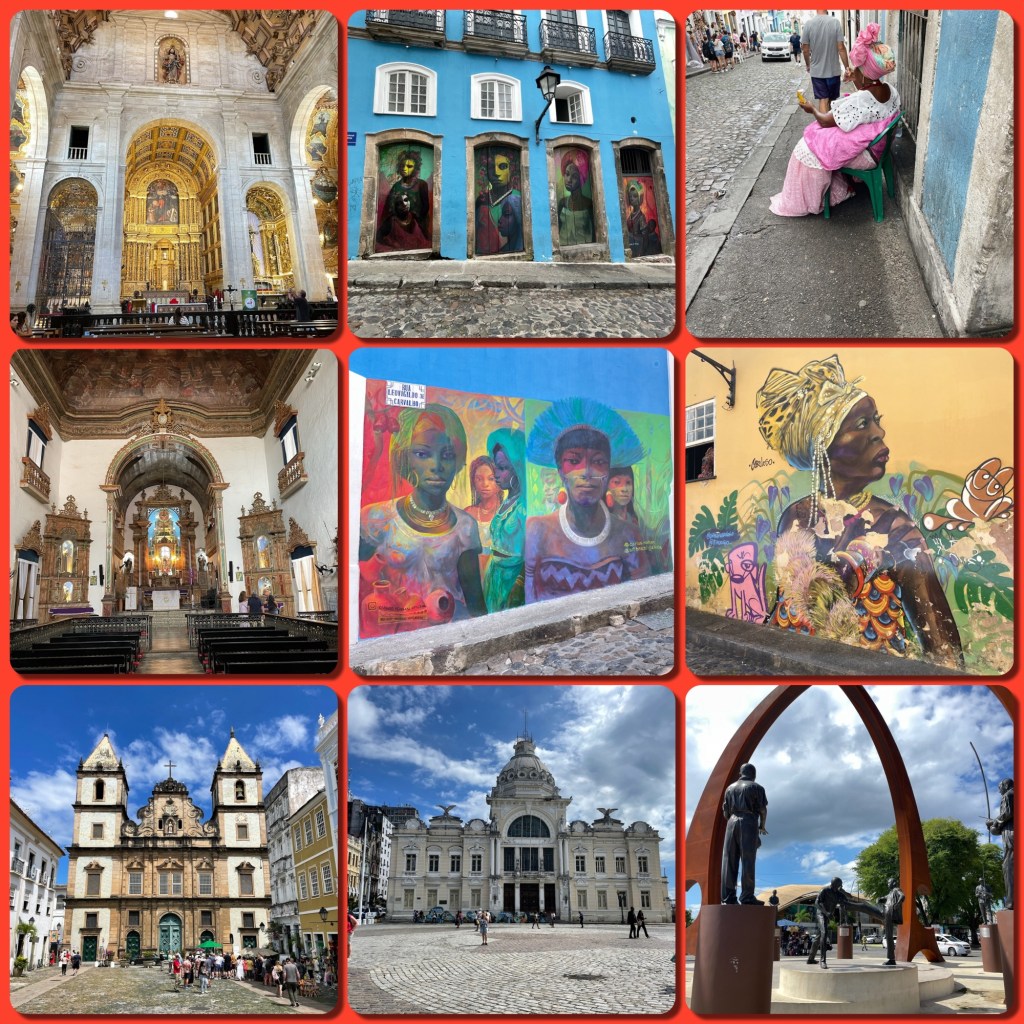
Salvador, Brazil was our next port, its people and culture is still heavily influenced by the historical connection with Africa namely slavery. There is still a real fruit and vegetable market together with the inevitable tourist tat. Colourful and curious but with 2 cruise ships offloading several thousand passengers into this small town it was stuffed with us sightseers!
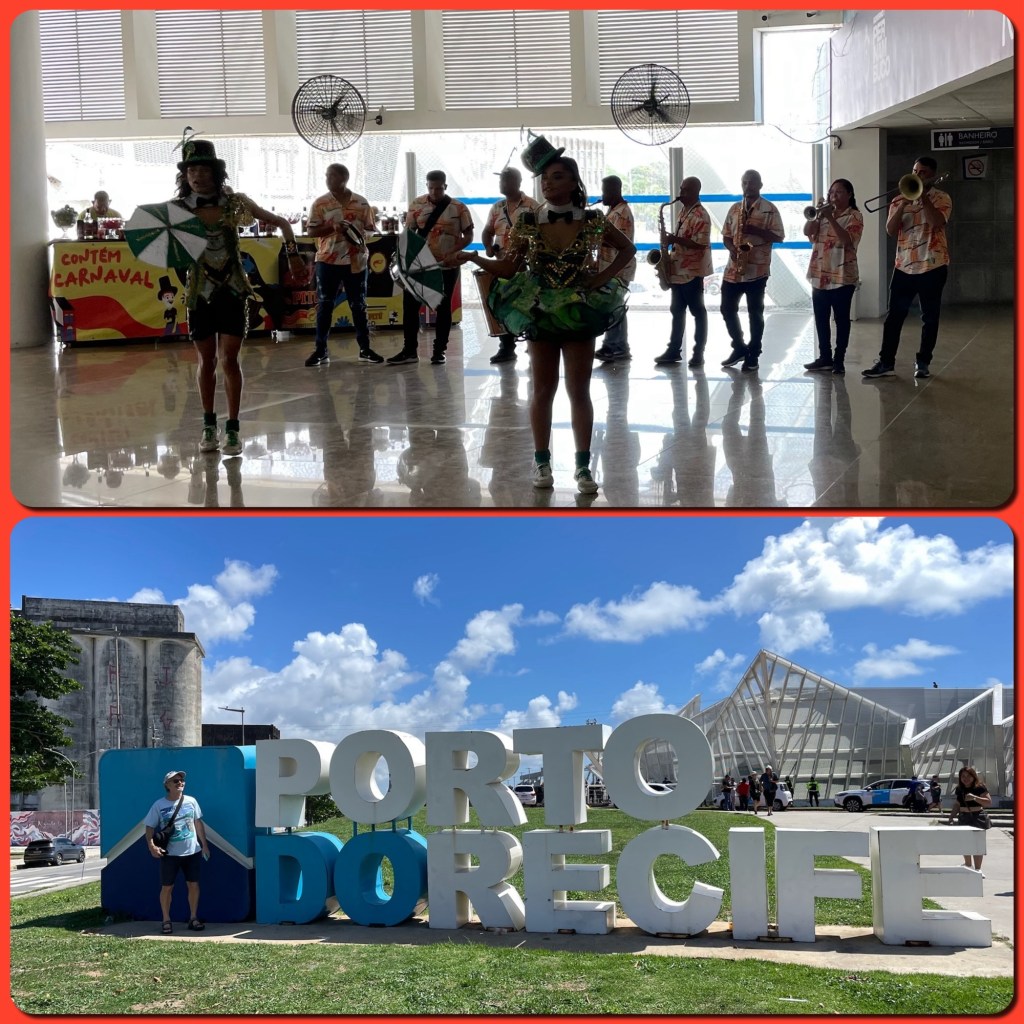
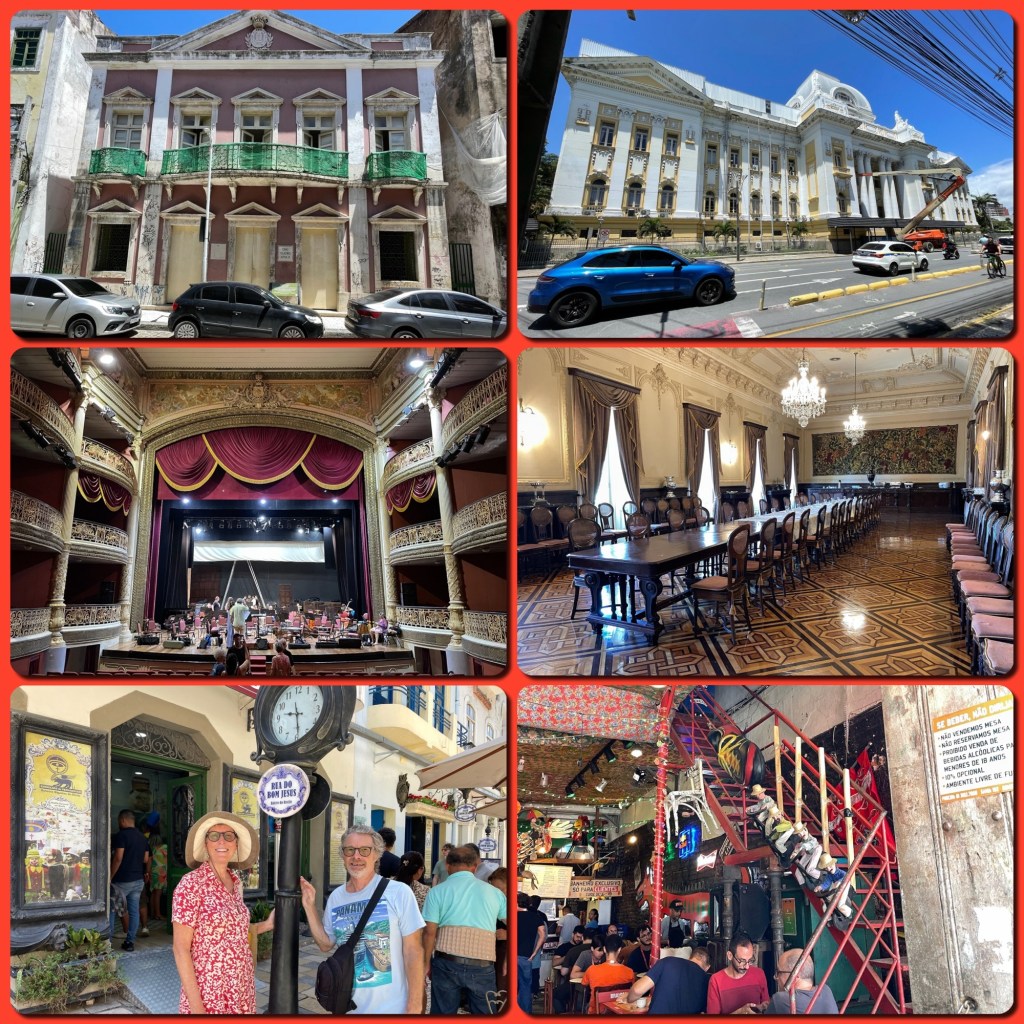
Recife, Brazil. The ship docked at the new cruise terminal, so new it had yet to install air-conditioning but we were greeted by a band playing some local music (full marks for effort!). Recife has been on the tourist map for some time having many colonial buildings and a very interesting theatre.
After 3 more at sea days we docked at Mindelo, São Vicente, Cape Verde Islands (once owned by Portugal but since 1975 independent; it even has its own currency the Cape Verdean Escudo but Euros are accepted). The islands are much less orientated to tourism so had a more natural, if basic, charm but not short on architectural delights and markets.
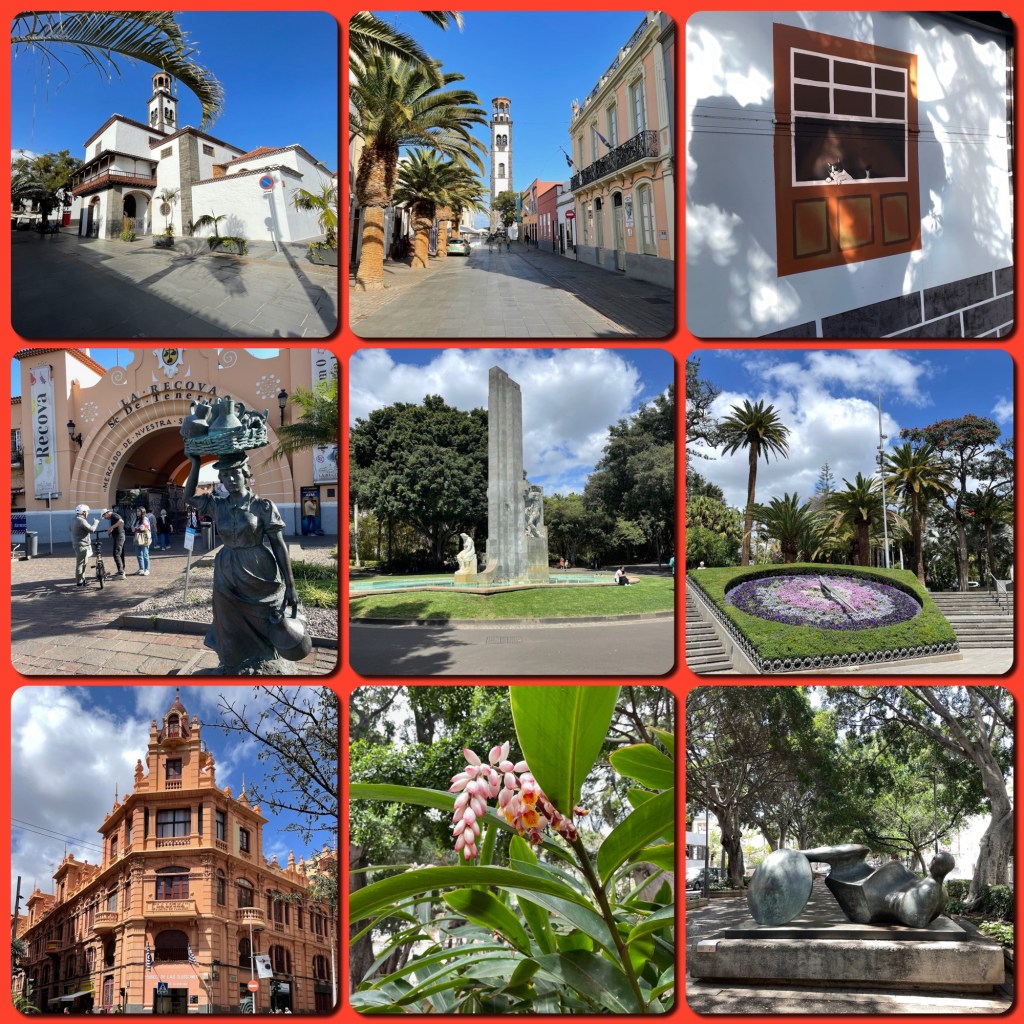
More at sea days brought us to Santa Cruz de Tenerife, Tenerife, Canary Islands (Spain). Having lived for 5 years in the Canaries we’d visited Tenerife a few times but never stopped to explore Santa Cruz. We were amazed at how different it was to Las Palmas on Gran Canaria, spacious with more green spaces offering cool shade.
Next up was Las Palmas de Gran Canaria, Canary Islands (Spain), our home from 2012-2017, so we spent our time catching up with some old friends.

Sorry just a boring port photo

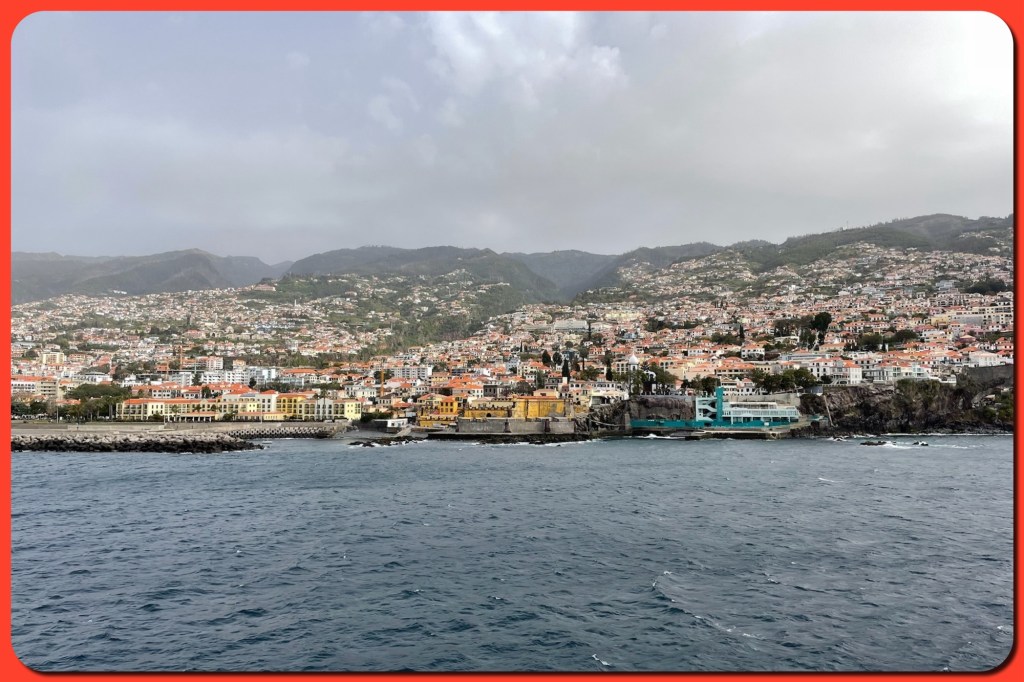
Our final port of call was Funchal, Madeira (Portugal). We spent our honeymoon on Madeira back in 1993 and visited Funchal on a previous transatlantic cruise. Today it was fresh and very windy so did little more than find a good cafe for coffee and pastel de nata before returning to the ship.
Destination port Lisbon, Portugal. We elected to manage our own luggage so made a swift exit and avoided the organised chaos that often occurs at disembarkation to make for the airport lounge.

Sunrise then over Portugal

Early afternoon we were on our TAP flight LIS -MAN then a pre-booked taxi to Skipton and our boat.

No more adventurous travelling plane for this year …
Riotous Rio

We arrived in Rio at the end of Carnival, having had the full on Carnival for 5 years in Gran Canaria we chose a VRBO apartment (we’re boycotting AirBnB because of the Musky connection) a little out of town in Urca, hoping for a bit of peace and quiet. But we couldn’t help ourselves and bought tickets for the last night at the Sambadrome to see the winners parade.

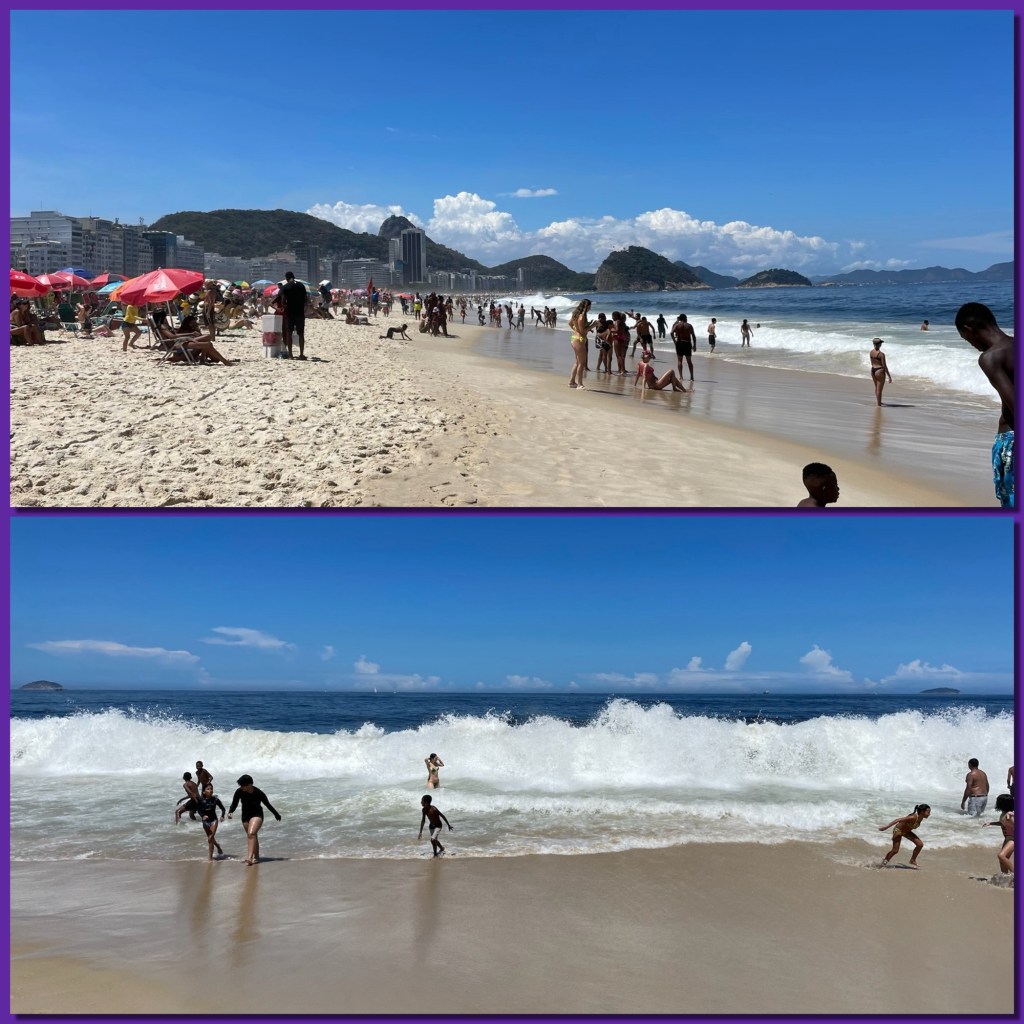
The ticket pick up was at a hotel near Copacabana beach so that was our first bit of sightseeing. 3km (2 miles) of sizzling bodies, some under parasols, in lines 5 or 6 deep close to the water’s edge. To get to this select location and dip your toes in the water meant crossing 200m (200 yds) of red hot sand but those in bare feet were spared any blistering because at intervals along the beach were leaky hoses providing a path of damp sand from the top of the beach to the sea.

Copacobana

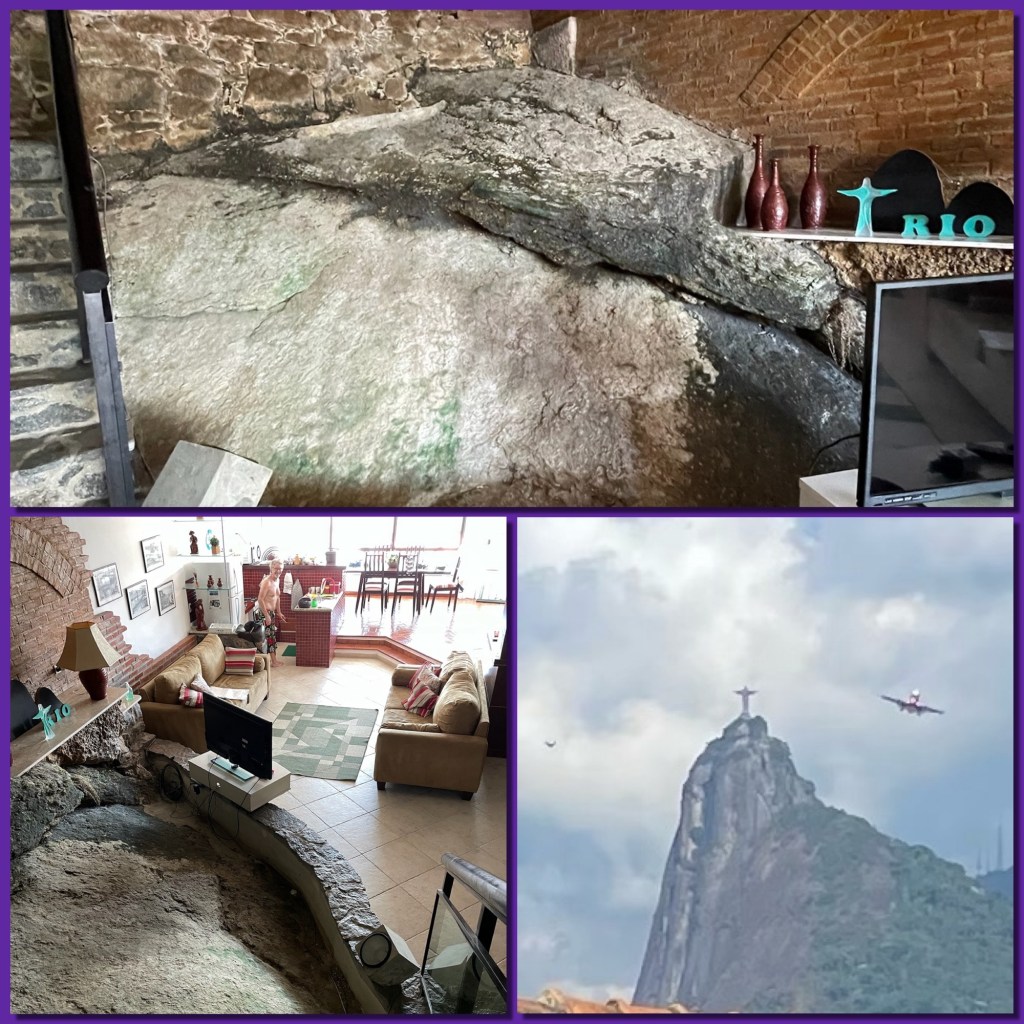
First though a bit about our pad in Urca. The location is at the foot of Sugar Loaf mountain, quite literally, as the exposed rock is a feature of the lounge area. Also, from the small terrace we had a view of Christ the Redeemer, sometime clear sometimes with his head in the clouds but always with aircraft seemingly flying right under his nose.

And our view of Christ the Redeemer

A visit into the city centre comes with all sorts of heath warnings especially to the packed Samabdrome on a Saturday night during carnival but it just means being a little bit exta streetwise like you would be in any city. In fact despite the total lack of official information on how to get there safely and with many of the the approach roads closed to traffic, our Uber driver did a remarkable job of getting us close to the entrance we needed for the stand we were in. 

Gates opened at 7pm with the first of the 6 parades due to start at 10pm. The seating was unreserved so we got there at about 8:30 to pick our spot and soak up the atmosphere. As the stand filled up, with Samba music already playing and people dancing we soon got into the mood. A couple of Caipirinhas (the local drink- …) also help 

Gran Canaria’s carnival did not prepare us for what we saw. The floats were enormous!

Sambadome
Mega floats

Finding Cafes is hit and miss in Rio, there are a lot of street bars that sell beer, empanadas, and black coffee (probably like an Italian express but we didn’t try one to find out) however there was one excellent place nearer enough to walk to from our apartment and close to the the cablecar station for Sugarloaf mountain. Some house sitting friends (we first met in San Miguel de Allende, Mexico) were on a housesit in Niterói across the bay from the city so we arranged to meet up for a sunset climb (actually by 2 cablecars) of the rock. Late in the afternoon it becomes a party rock with plenty of places to eat and drink and, of course, look at the views. Not much of a sunset when we went up but very atmospheric.

Something we learned and made full use of here happens to be a perk of being over 60. Brazilian law permits us to jump to the head of any queue along with others with who would benefit such parents with push chairs and the physically challenged. An additional bonus is that if you are in a group the others can accompany you, much to the delight of our housesitting friends.

Going up

Next it was time for a city walk and the usual round of spectacular government buildings, churches and theatres. We couldn’t get a tour of the Teatro Municipal so we went one better and got tickets for an evening Viennese Orchestral music. Perfect for our last night in Rio. 

Views, Sunset & Nightfall

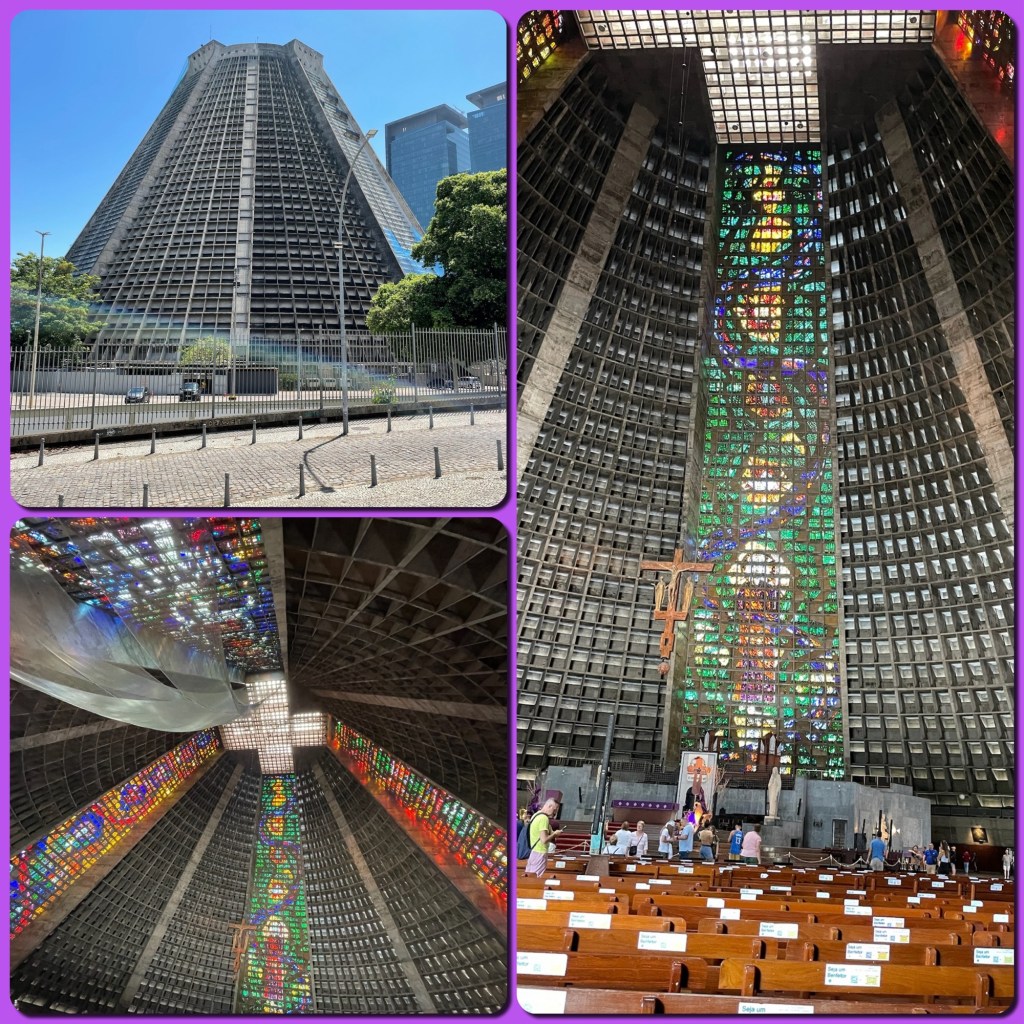
Last of the ecclesiastical buildings was the modern Cathedral built deliberately to resemble an Incan pyramid, which it does from the outside. Indide there are 4 immense floor to roof stained glass panels.

Catholic Pyramid

The following day we went across the bay to meet our friends at their sit in Niterói. The journey is possible by ferry but this only runs at peak commuter hours so took an Uber over the Ponte  Rio-Niterói (Bridge) with its impressive spans over the inlet. A lazy afternoon of a light lunch provided by our friends and a walk along to a beach bar for a couple more Caipirinhas plus some much needed dog therapy meeting the pet they were caring for, Caro the Brazilian/collie type dog.

Niterói

All too soon it was our last evening and the concert.

All dressed up!

Post Script: About Brazilian bottoms (no nothing rude) something we very soon discovered was the Brazilian toilet seat. Everywhere we went they were the same, they had the usual hard lid but the seat itself was a soft plastic ring that released a gentle sigh (or soft fart) as you lowered your buttocks. One can only assume that Brazilians want to be comfortable while they roost as most of the other seating is quite firm! (Sorry no photos.)

Watery Wonders of the World – Iguazú/Iguaçu

It’s all about the water. Not often listed in the 7 natural wonders of the world (except in Argentina and Brazil) it is bigger, by a large margin than Niagara and Victoria Falls, although it does have the largest continuous curtain:

  • Number of waterfalls: Iguazu Falls is made up of 275 individual waterfalls. 
  • Height: The tallest waterfall, Devil’s Throat, plunges almost 262 feet (80m). 
  • Size: Iguazu Falls is the world’s largest waterfall system. It’s taller than Niagara Falls and 3,000 (914 m) feet wider than Victoria Falls. 
  • Location: Iguazu Falls is located on the border of Argentina and Brazil, in Iguaçu National Park. 
  • Formation: The falls were formed by millions of years of volcanic activity and erosion. 
  • UNESCO World Heritage Site: Iguaçu National Park was designated a UNESCO World Heritage Site in 1986. 
  • New 7 Wonders of the World: Iguazu Falls was named one of the New 7 Wonders of the Modern World in 2011. 
  • Tourism: Iguazu Falls attracts about 1.5 million visitors each year. 
  • Film locations: Iguazu Falls has been featured in several movies, including The Mission, Indiana Jones and the Kingdom of the Crystal Skull, and Miami Vice. 

It’s not just impressive, it’s awesome (an overused adjective I know but here I mean it the true sense of the word). During our stay of 5 nights here we spent 3 days exploring the falls, 2 on the Argentinian side and 1 on the Brazilian. We started by treating ourselves to 3 nights at the Meliá hotel, located within the national park on the Argentinian side. This turned out to be a very shrewd move for a number of reasons:

1 You only need a one day pass to the national park because the hotel is in the park and should you want to go out to Puerto Iguazú your hotel key card gets you back into the park.

2 All the trails start just outside the hotel grounds, it even has a train station that takes you to the Devil’s Throat falls nearby.

3 Although the official opening times of the park are 8am to 6pm you can certainly get out before the crowds at 7am when it’s relatively cool.

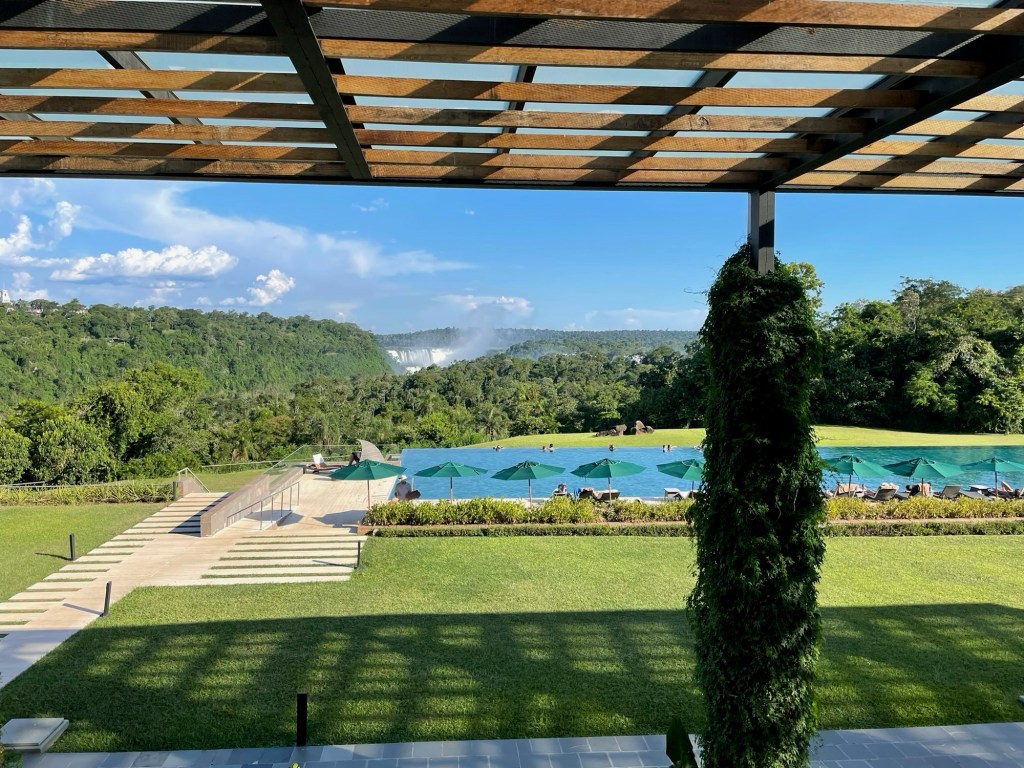
4 The hotel has a big infinity pool with a clear view to part of the falls.

5 It’s good to treat yourself and it’s cheaper than the Belmond, the equivalent on the Brazilian side.

Look beyond the hotel pool

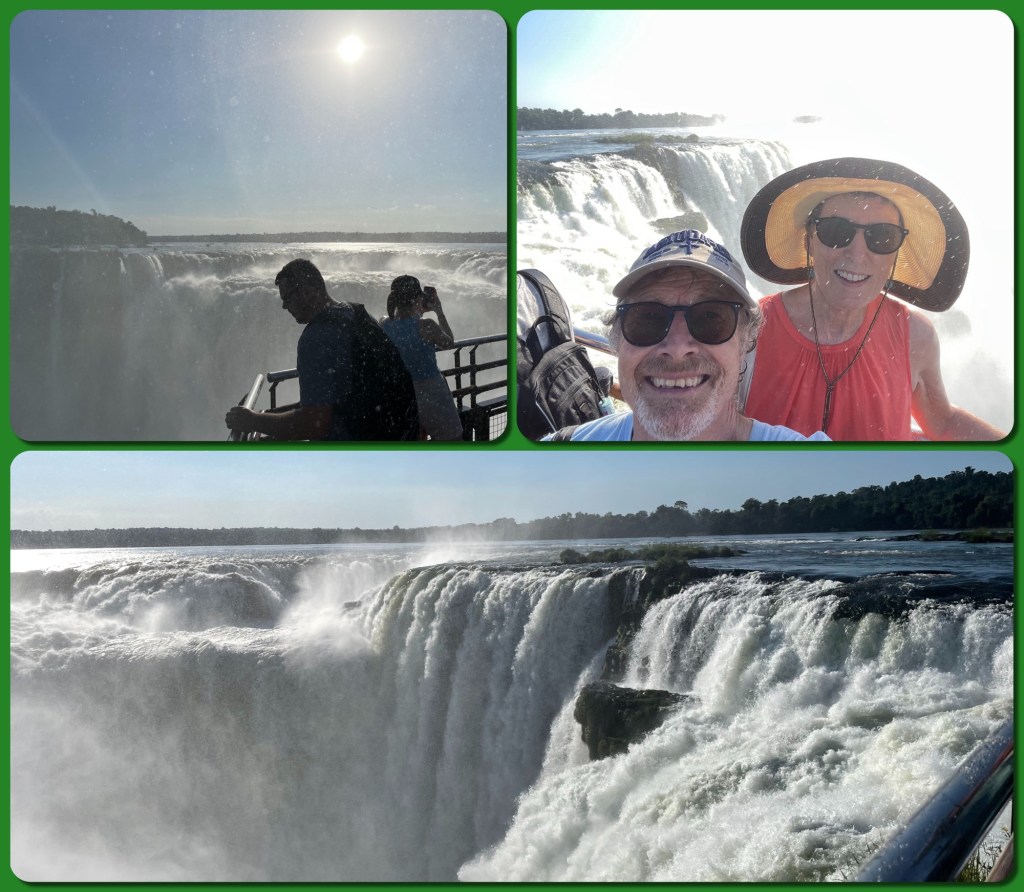
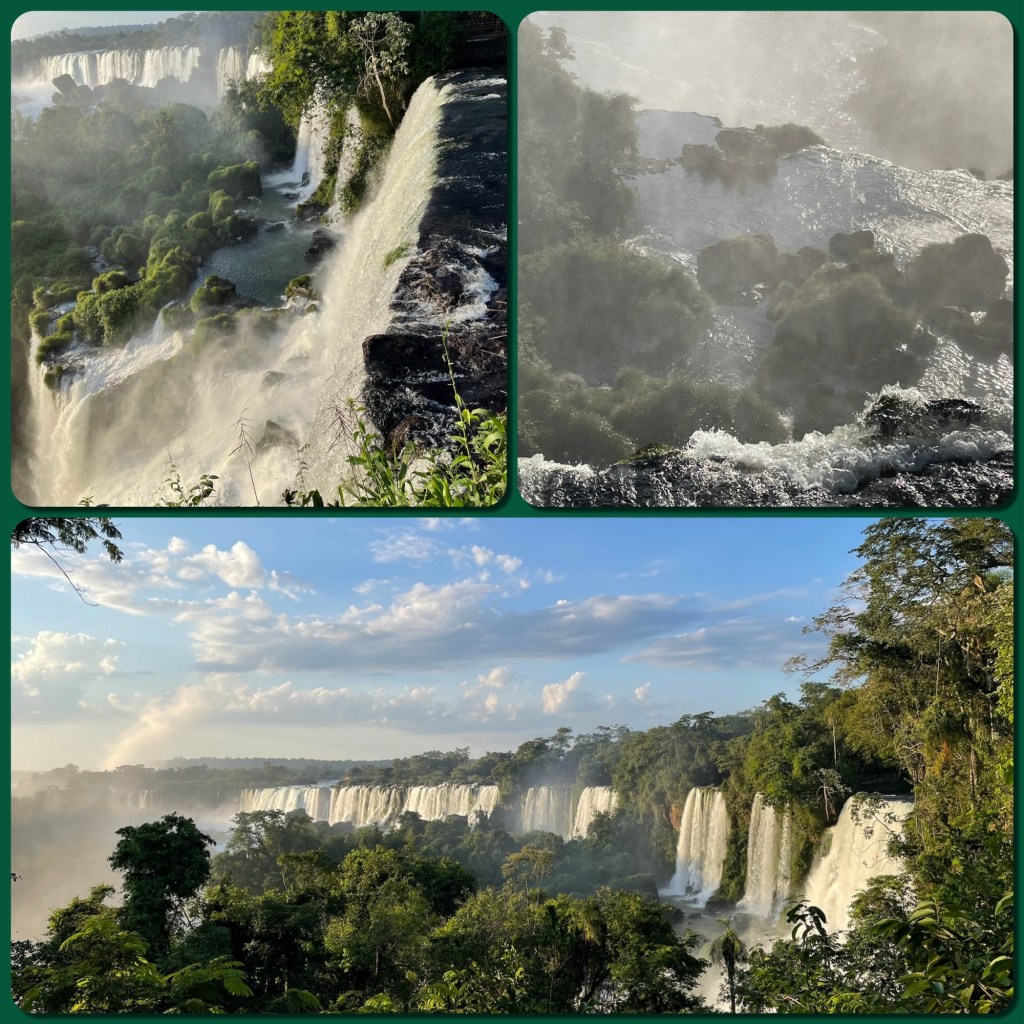
Enough said here are some photos, that in no way do it justice.

Devil’s Throat
The lower trail
From the upper trail
More from the upper trail

Leaving the Meliá we took a taxi to visit Güirá Oga a wildlife refuge,

Spot the fake?

then a brief stop at the Triple Frontera to wave at Paraguay and Brazil before crossing the border into Brazil. 

The 3 frontiers

Crossing into Brazil by taxi is so painless you hardly notice that you’ve stepped into another country. Taxis go back and forth between both sides all the time, they have their own lane at border control. Exiting Argentina the driver presents your passports to the officer at the kiosk, you wind down the windows and smile at the guard, you don’t even get out of the vehicle. Entering Brazil the taxi pulls up, you go with the driver to a small police station, you hand over your passports, smile again (or perhaps not) your passports get stamped and you’re on your way. Considering the fuss at airports with security, baggage checks and the stressful queues this is the only way to go!

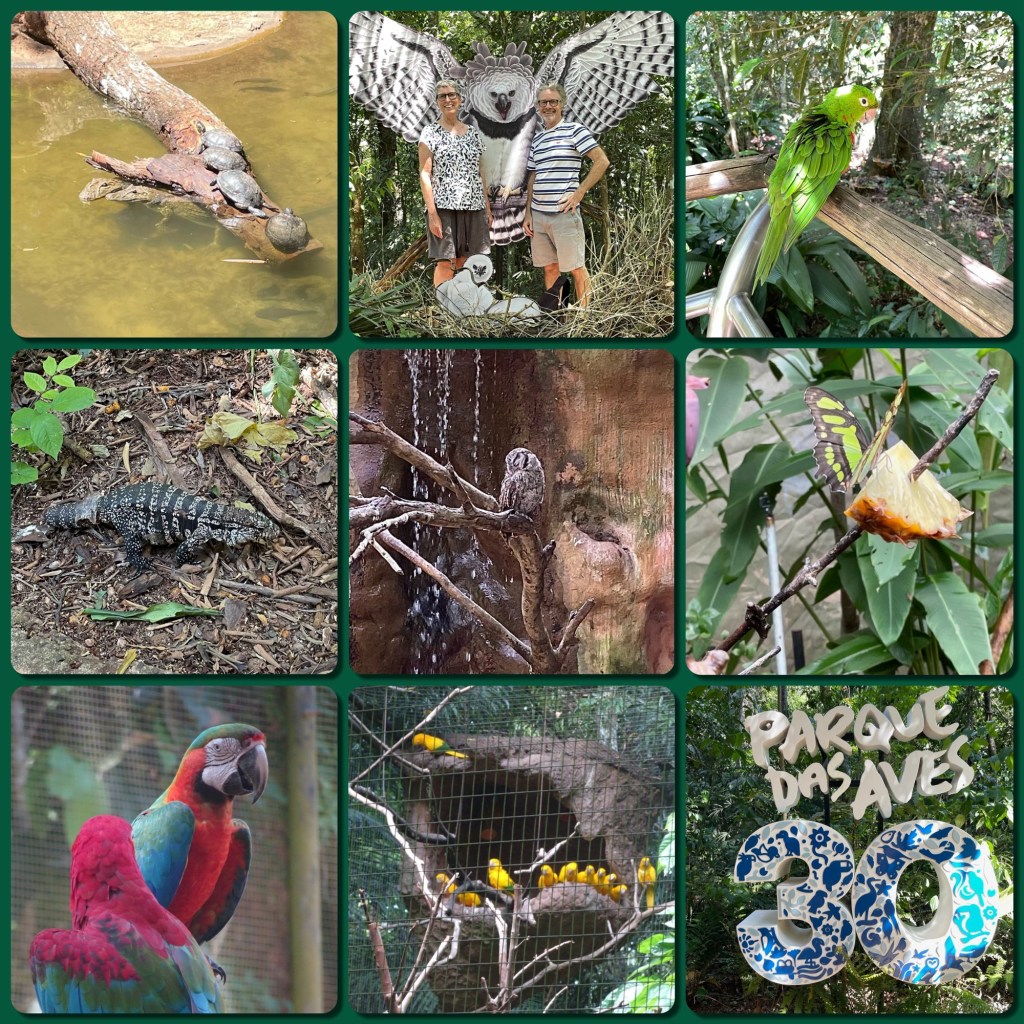
We had another couple of days on the Brazilian side to view the falls again, staying this time at the budget, Hotel Colonial Iguaçu, a walkable 20 mins from the park entrance but in the heat we were glad the hotel ran a shuttle service. To be honest after the fantastic experience on the Argentinian side we wondered if it was even worth the effort so on our first day we went to Parque das Aves a bird park also very nearby. Spent the whole day there which was enchanting. 

Bird park

The next day we went to see the falls again. Hotel shuttle to the park entrance then a 25 minute bus ride to the start of the falls trail. Which happens to be where the Belmond hotel is located (went in for a coffee just to be nosey!) We were so glad we made the effort. True we were walking in with the crowds but the panoramic views from this side are breathtaking; a totally different perspective. And you still get to go up close and personal at the end. We definitely did it the right way round. So more photos:

The Brazilian side

Bewildering Buenos Aires

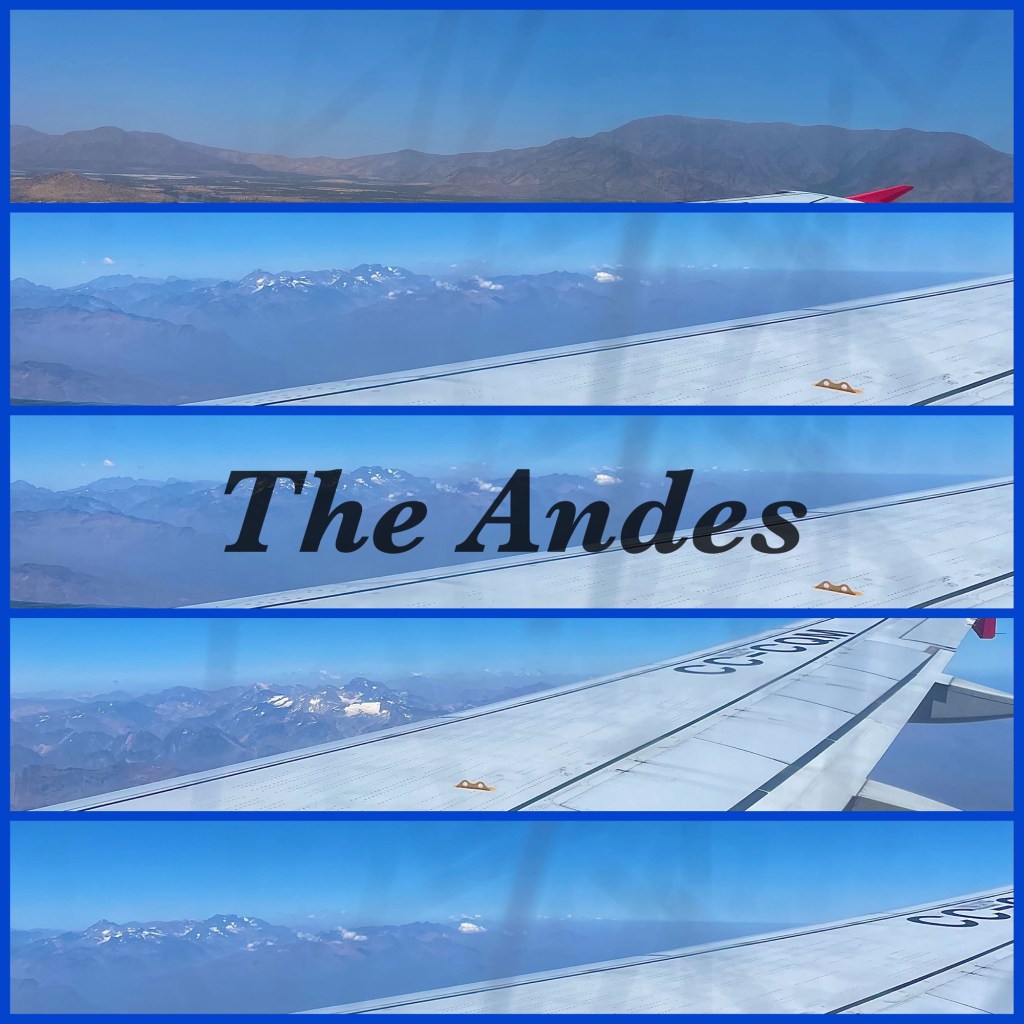
Our flight was over the Andes, the longest mountain range in the world. Not the best quality photos but this is what we saw …
So far on this adventure we have visited the big cities of Mexico City, Bogotá, Medellín, Santiago de Chile and a few smaller ones along the way with their crowded, traffic filled streets and often tedious transport links. Our research on Buenos Aires, the biggest city we would encounter to date, led us expect more of the same. But we were to be pleasantly surprised!

This is a city that works. It was built from conception to be on a strict grid system with wide avenues, streets and pavements. Back in the early 1800s the government enlisted French engineers and based their ideas on European cities, in particular Paris (of course it had to be better so they made improvements to almost everything). Even in more recent times when they got it wrong the weren’t shy of making radical improvements. This they did by demolishing all but one building along a main street to make Avenida 9 Julio (9th July) the widest avenue in the world and now with 16 lanes of free flowing traffic and 4 lanes dedicated to buses, plus shady tree lined stretches of walkway on both sides. In short everything is on grand scale even the bronze monuments that are everywhere.

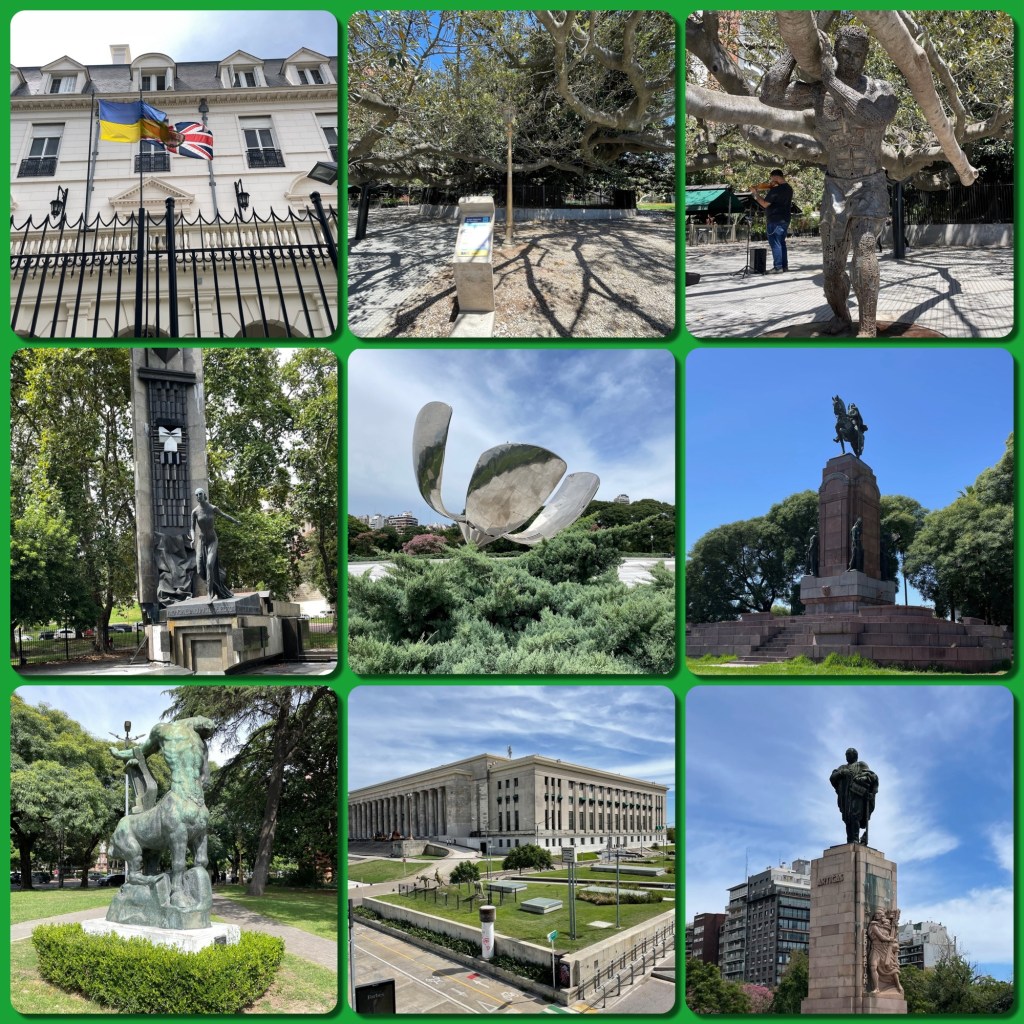
Our first outing was a wander around our AirBnB neighbourhood. This included the metro station, to get our ‘SUBE’ card so we could use public transport, a coffee from a cafe round the corner from the British Embassy (you never know when you might need it), we saw the 213 year old called Gran Gomera (it’s not actually a gum tree but a ‘Morton Bay Fig Tree from Oz), found the slightly hidden monument to Evita (María Eva Duarte de Perón). We also passed by the Floralis Genérica a giant stainless steel flower with 6 petals that open and close only that day there were only 4 petals that were stuck half open, maintenance!

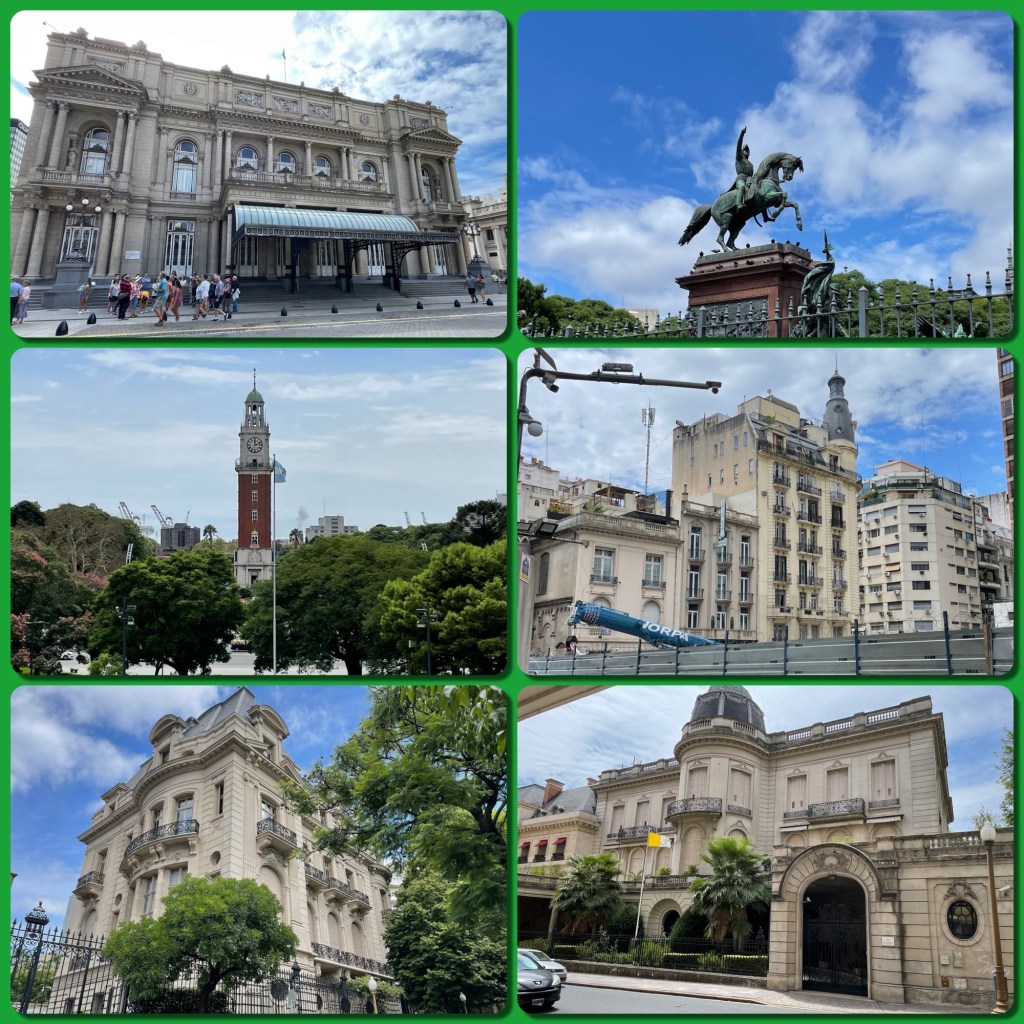
Needless to say, downtown, we started with a ‘free’ city walking tour. Commencing outside the Teatro Colón and ending up at the Recoleta Cemetery, very close to our AirBnB. We were given a tip, if you want to stay friendly with the natives don’t refer to those islands 300 miles east of the southern end of their coastline as the Falklands! [Historic claim of inheritance vs Continuous Administration, it is curious to think that if you pursued the Argentinian claim to its routes the UK could just as soon hand the islands back to Spain.]

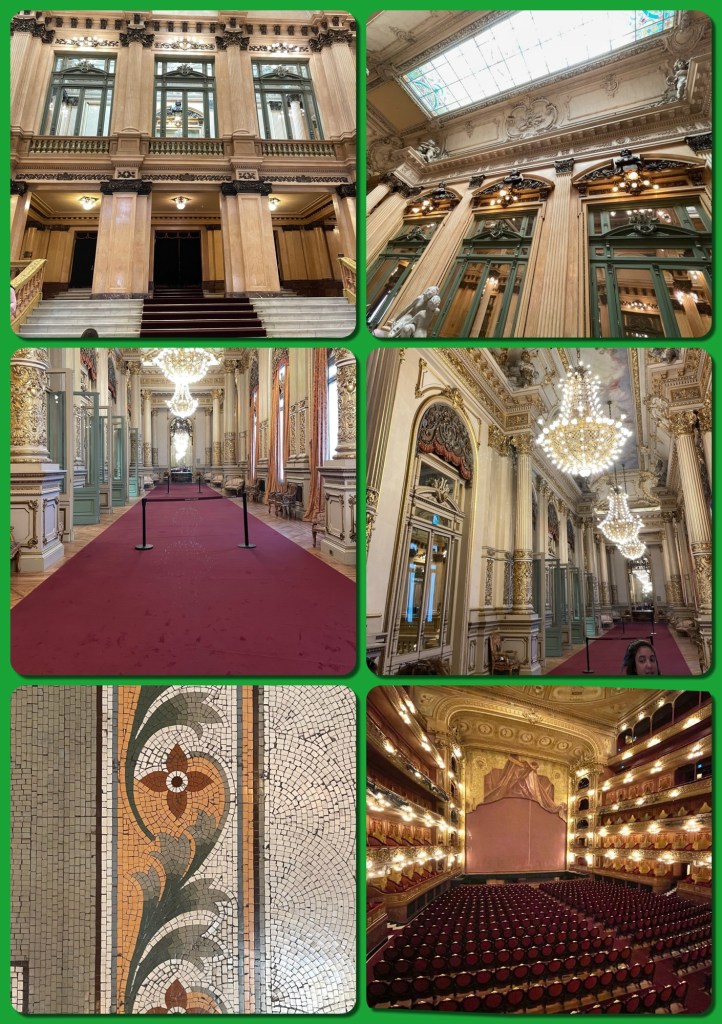
We returned to Teatro Colón (given Sandy’s background we have to do a theatre whenever we can) for a tour of the interior. We would have preferred to see a performance but there was nothing on during our stay. It is Argentina’s and South America’s premier opera house, ranked amongst the top ten in the world with the “best acoustics for opera”. It took 19 years to build and opened in 1908. It has a palatial interior and fine mosaic floors.

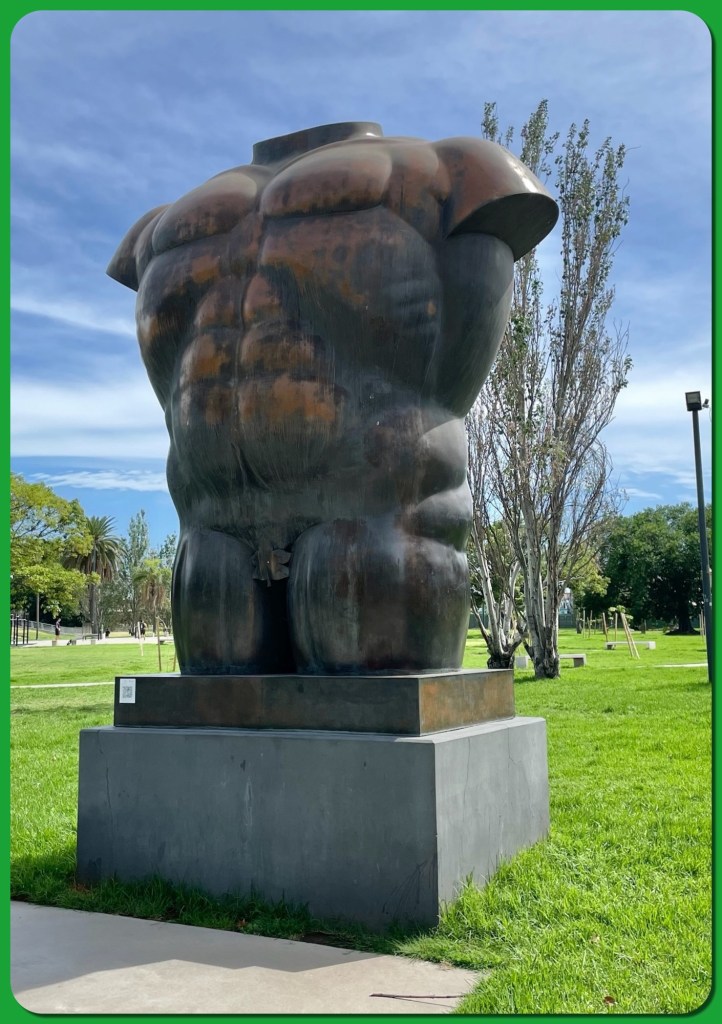
More Botero, he gets everywhere.

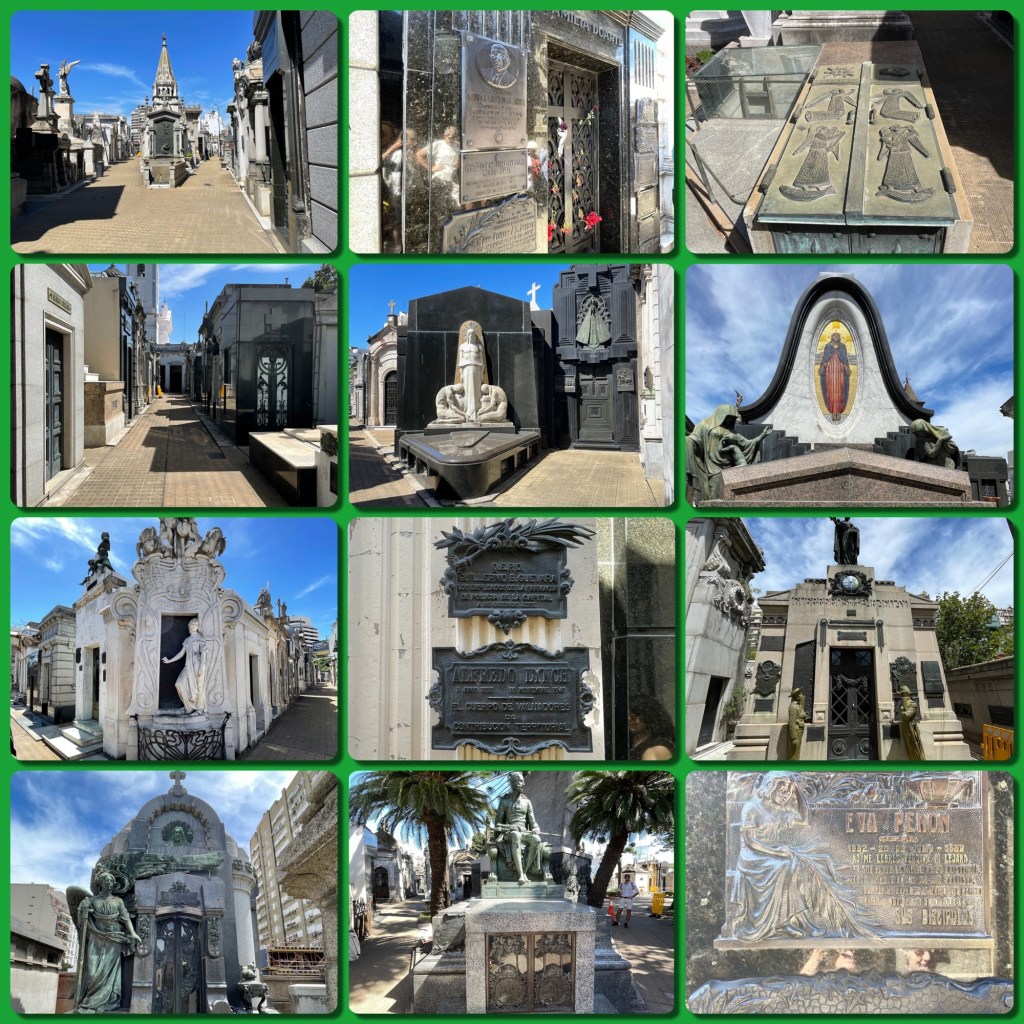
Recoleta Cemetery, also on our doorstep, is a small town of mausoleums, a necropolis. The first public cemetery (ie one not belonging to a church) in the city, re modelled in 1882 it became the burial site of many famous people, including presidents, writers, politicians, Nobel laureates and, eventually, Eva Perón (highlight of every guided tour). Curiously, although the tombs go down several metres, when you peer in through the doors you see caskets on shelves around the inside walls, must be a lively place come halloween.

The streets have magnificent buildings, monuments and a Cathedral, typical city sites. However, downtown San Telmo has an amazing covered market with all the usual food stalls, little cafes and restaurants.

And no wandering about a city these days can avoid the graffiti, including tributes to footballers Diego Maradona and Messi

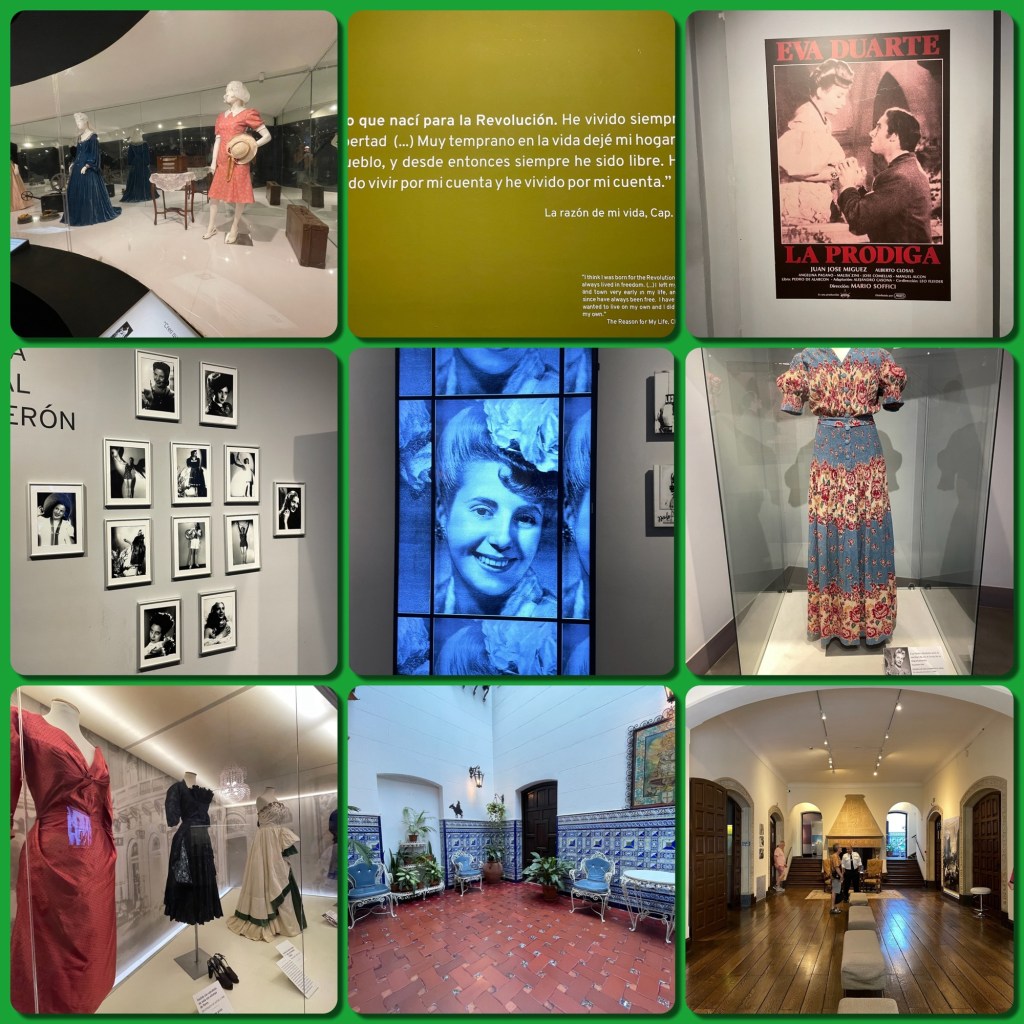
More Evita – there’s a museum set in one of the properties she bought as a shelter for women and children. It charts her life from a poor upbringing to being the candidate for vice president alongside her husband Colonel Juan Perón when she fell out of favour with the BA elite.

10 p

Secrets underground 

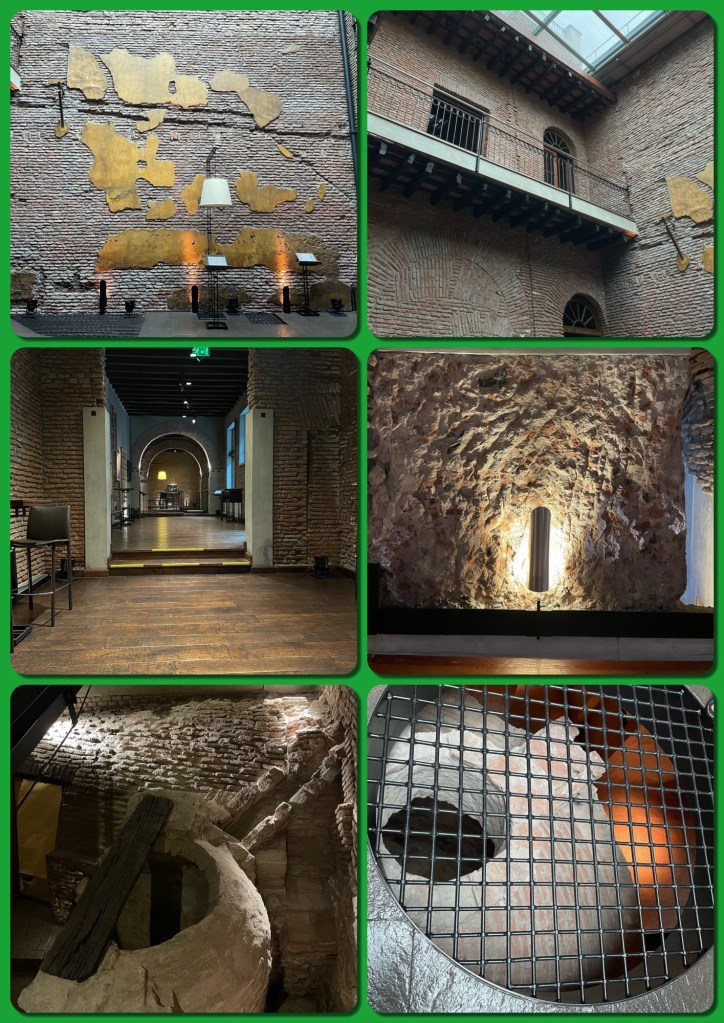
Tucked away at the edge of the San Telmo district is the El Zanjón de Granados museum. The owner of this property which occupies a good chunk of one of the original city blocks bought it as a derelict building and had plans to turn it into a grand restaurant. However, during the initial clearance of the accumulated rubble and rubbish he discovered underground chambers. The project turned from a restaurant to an archeological dig to a museum. What was found was a covered river which was sealed below the floor level because it was also the main sewer for this part of town. For us it was just fascinating to see the history of a building not just its occupants. We weren’t allowed to photograph the culvert section we walked through as they wanted to preserve its hidden secrets for future visitors.

Food & Drink (apologies to our vegan friends, plant based meals are hard to come by here).

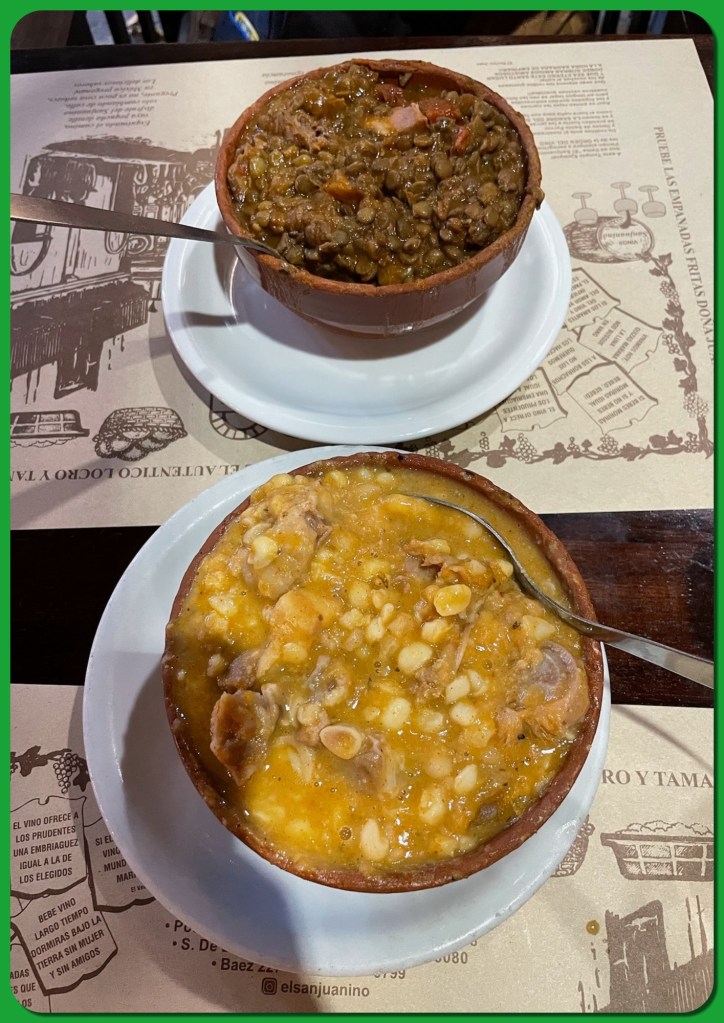
Our first meal out was at El Sanjuanino just around the corner. We ordered local comfort food: Lentejas (lentils) & Locro (corn, tripe and other bits of pig).

By contrast the very next day we went for real posh food as it was our wedding anniversary. These days it’s just a good meal out and this was no exception. Sandy did the research, found and booked a cosy table for 2 in the wine cellar at Roux, a Michelin listed restaurant again within easy walking distance. Suitably expensive for a special occasion!

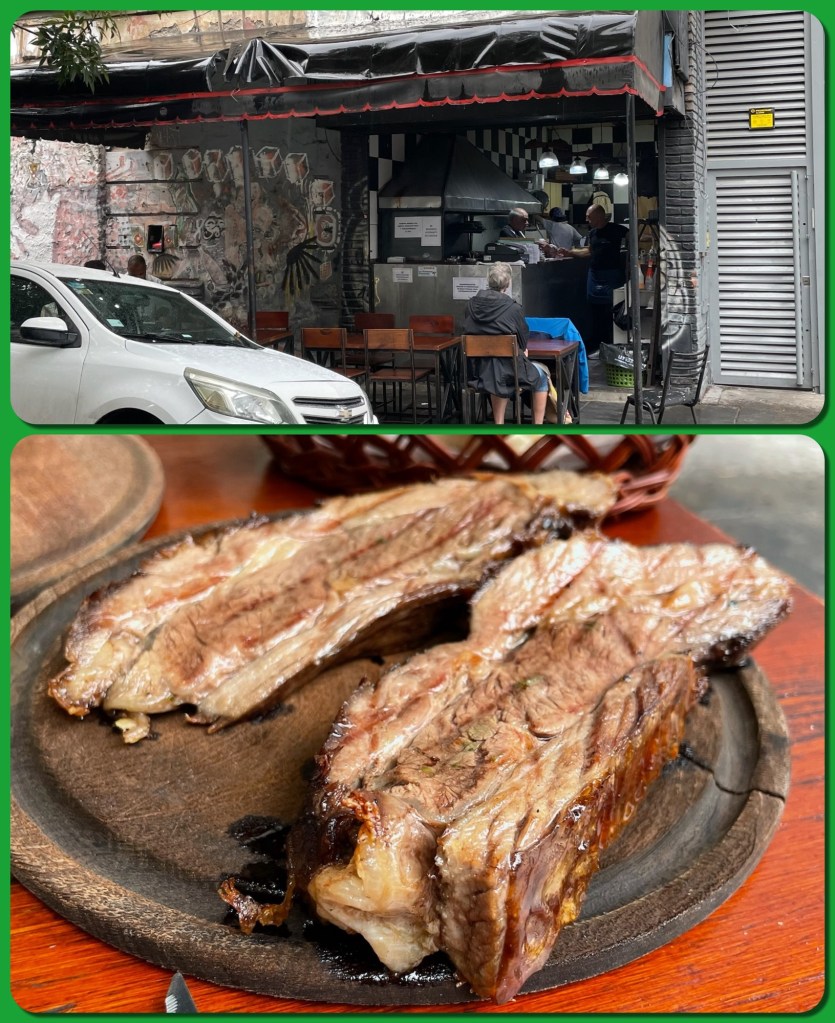
Steak, what Argentina is famous for, but we downscaled to a street side Parrilla (grill) at Parrilla la 10 on La Valle. It was also pouring with rain so had its own special atmosphere?

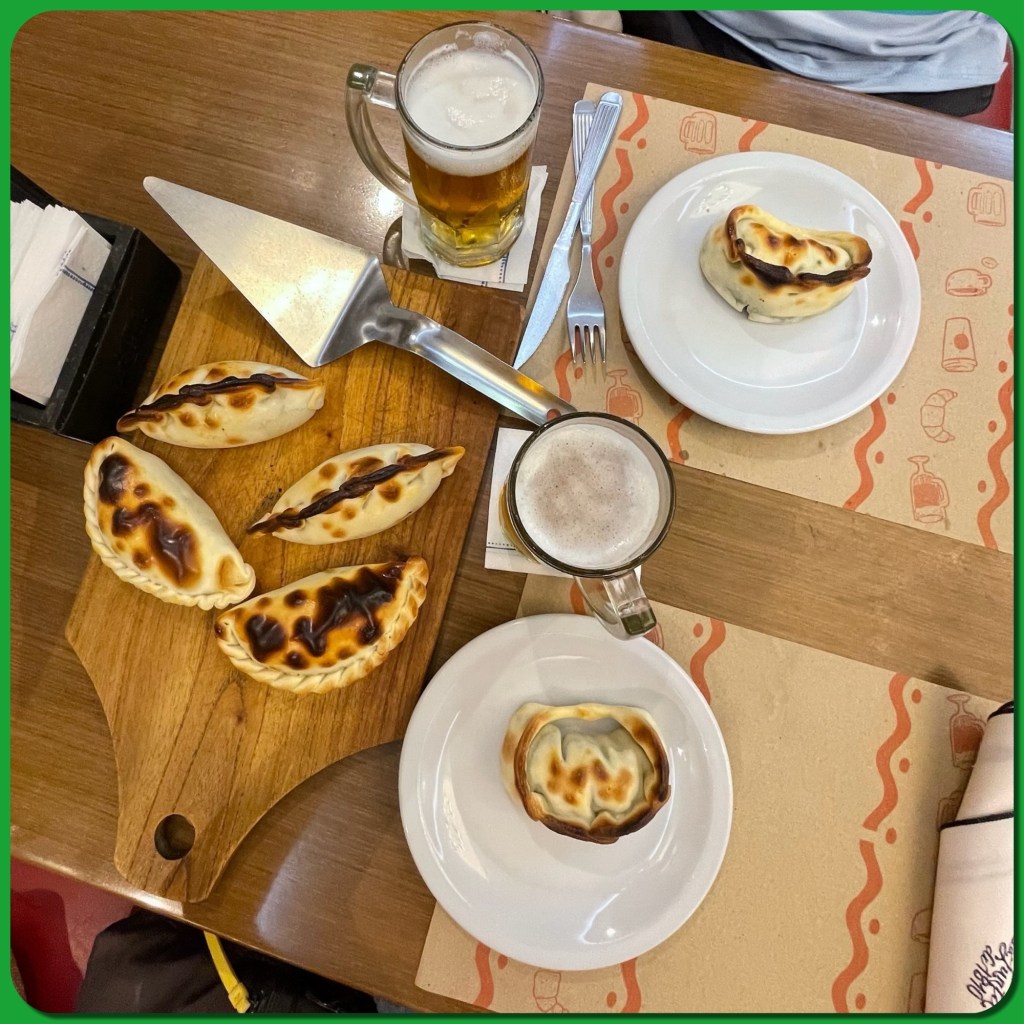
Empanadas (small pasties) are another notable local specialty these pasties don’t rival the Cornish variety on size but do on the variety of contents.

p15

Cafes and coffee shops:

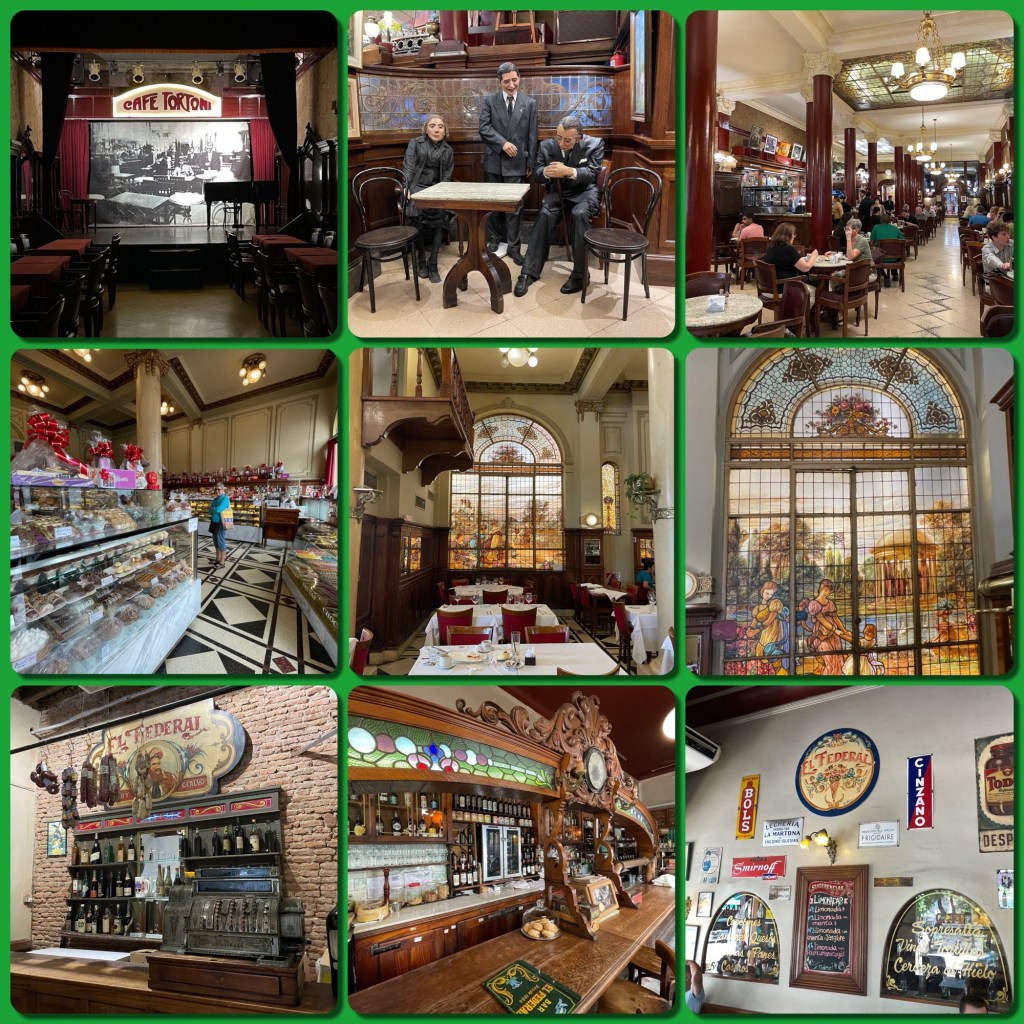
Recoleta, where we were staying, had cafes everywhere of varying quality and price (usually quite high) but downtown we found cafes of much superior quality with bags of atmosphere yet cheaper. The oldest, Cafe Tortoni, was opened in 1858 by a French immigrant (yes I agree Tortoni sounds more Italian there were a lot of immigrants from Italy too so perhaps he was trying to appeal to the widest possible clientele?). They also did Tango shows here which we sampled later (mediocre tourist stuff but they mostly are). However, the cafe we liked best was La Violeta (1884) which greeted you with a stunning display of patisserie (if you went in through the wrong door like we did). Hard not to buy something sweet and sticky. Bar El Federal, (1864) as the name suggests is a bar but also served a good morning coffee and croissants. A great place to meet up with friends and walk the streets of the San Telmo district.

And finally Tango, any followers of Strictly (The UK’s Dancing with the Stars) will know all about the Argentine Tango. Unfortunately in Buenos Aires this has turned into a money spinning tourist attraction and the genuine article is hard to find.

This was as far south as we would get on this continent and we headed north to the border with Brazil.

A short stay in Santiago de Chile

This stop was not on our original itinerary for South America but Buenos Aires has always been on our bucket list. In attempt to avoid too many long haul flights we looked for a way to break up the journey from Colombia. We seriously considered going via Peru and seeing Machu Picchu but the logistics became too difficult to independently arrange and confirm, especially as the pre-booking of the entrance to the site via the official website was reporting problems. So we scrapped that and ended up in Chile.

Santiago, as a tourist destination has mixed reviews. Some say a couple of days is enough then head to Valparaiso and the coast. We had a week and were in need of a bit of downtime so decided to stay in the city (with the option of a day trip to Valparaiso). 

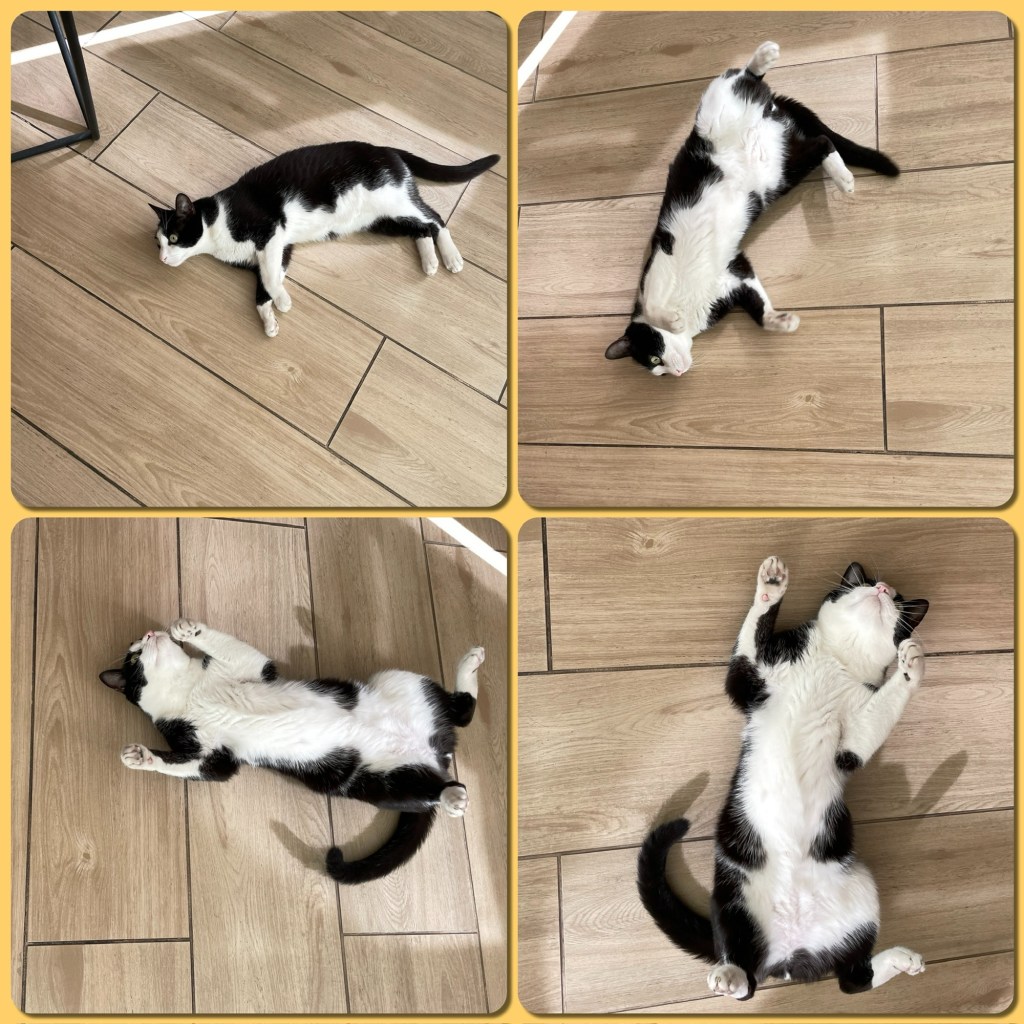
As it turned out Santiago had plenty to keep us amused. We started with a couple of days on a housesit looking after a cat in the well-to-do area of Vitacura, short sits are not usually our thing but it did mean we could get some much needed laundry done and catch up with some pet therapy. 

Chaplin

Second day there we headed into town to do a ‘free walking tour’ these are great for getting the lie of the land (though not really free as there is an all but obligatory tip expected at the end) but you often get some good insider knowledge.

Red to Green

Then we moved to an Airbnb in the heart of the city. From here it was easy to access the numerous attractions the city has to offer:

At its centre is Plaza de Armas (The Square of Weapons) over the years it has had other names, Plaza de Mayor and Plaza de la Independencia but reverted to its classical Spanish Conquistador name which I believe is because the planning of the city was done by the military.

The City Walk

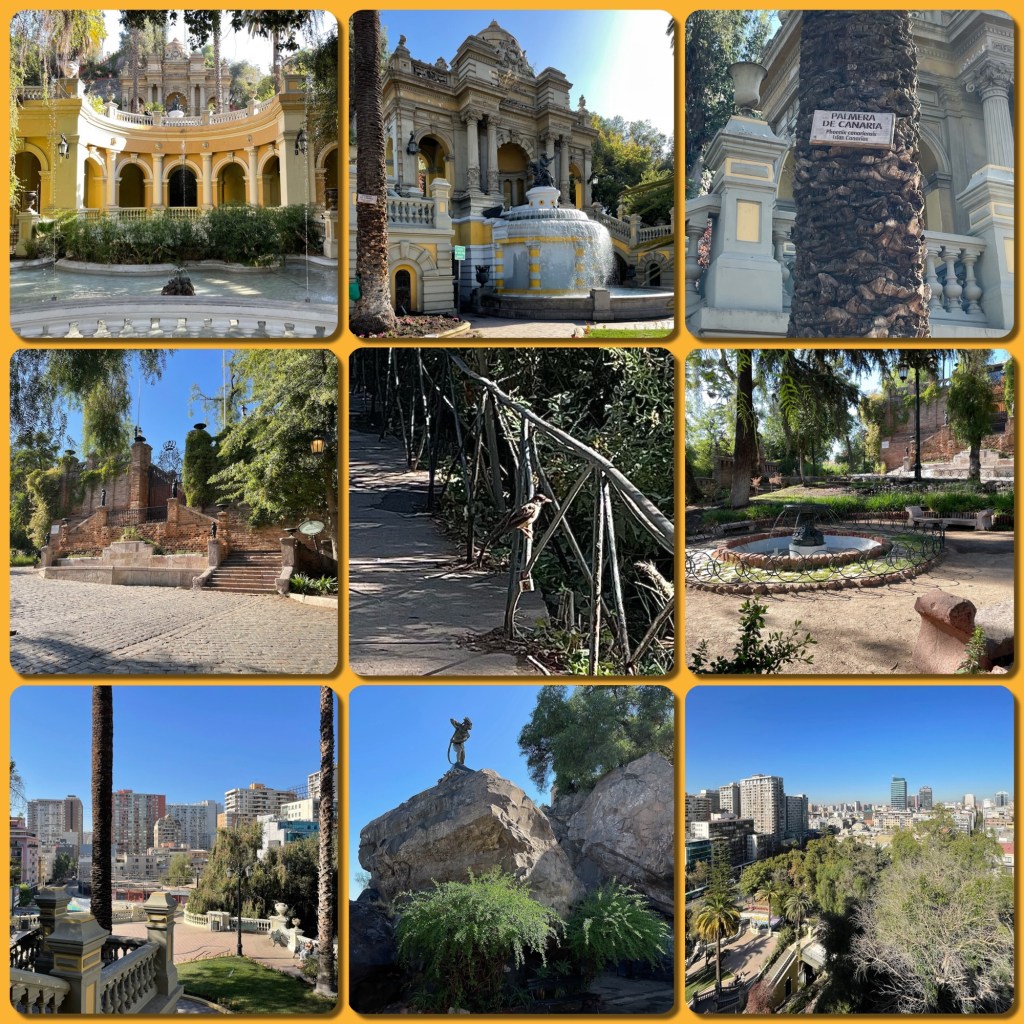
There are two noticeable hills in the city the first of these is Cerro Santa Lucia just across the road from our AirBnB. Roughly teardrop in shape it has several walks going around and up it through lush greenery to Castillo Hildago (not open when we were there). But it does have the impressive Fuente Neptuno at its southern end. And views across the city from higher up.

Cerro Santa Lucia

The second and much larger is Cerro San Cristóbal. This is also much higher and quite a climb however any unnecessary exertion can be avoided by taking either the cable car or funicular, we took the latter.  Top of the rock is a statue of the Virgin of the Immaculate Conception complete with an open air church, I presume the faithful walk up here on Sundays.

Cerro San Cristóbal

We met up with our friend Lisa who we knew about from the various nomad chat groups so managed to do a few things together. And found a group meet up with other like minded people where it’s great to exchange experiences and travel tips. 

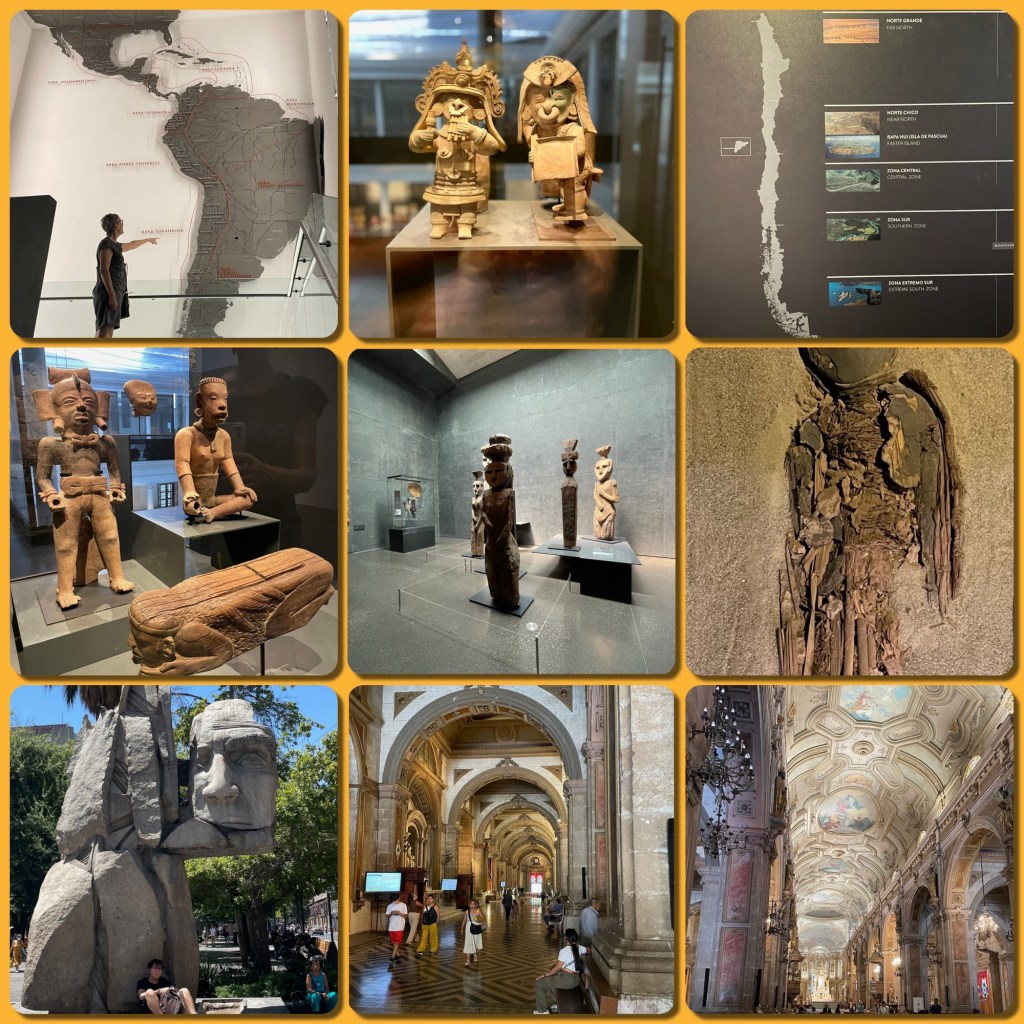
Of course there are the museums where you can learn Chile’s personal history from indigenous populations, through the Spanish conquistadors (1541 Pedro de Valdivia) to modern times. Not forgetting the Metropolitan Cathedral of Santiago Catedral Metropolitana de Santiago de Chile.

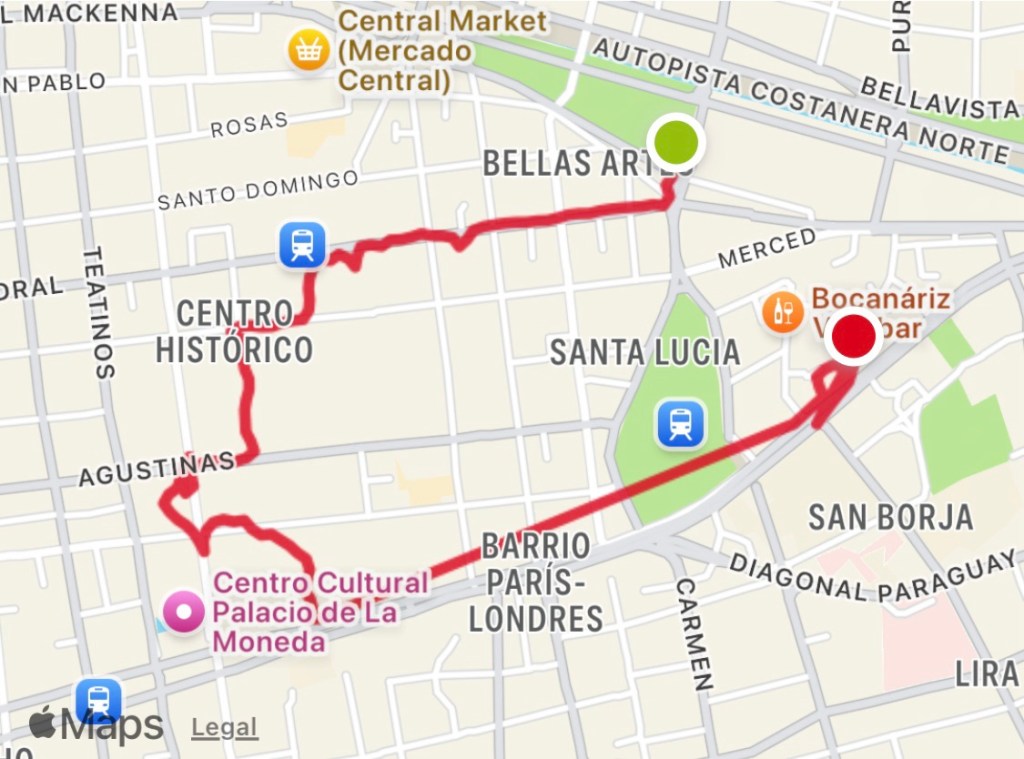
Our last day was spent wandering the streets around the city’s Central Market, Santiago Domingo Church, Railway Station now an events venue, Parroquia Santuario, Lunch, the Post Office, two curious streets that meet at a crossroads called Londres and Paris. At Londres 38, the cobbles in the pavement bear the names of those who were detained at this address, tortured and died during Pinochet’s dictatorship. We ended up at the Church of San Fransisco before heading to the airport and on to Buenos Aires.

London-Paris-Pisco sour

Beyond Bogotá

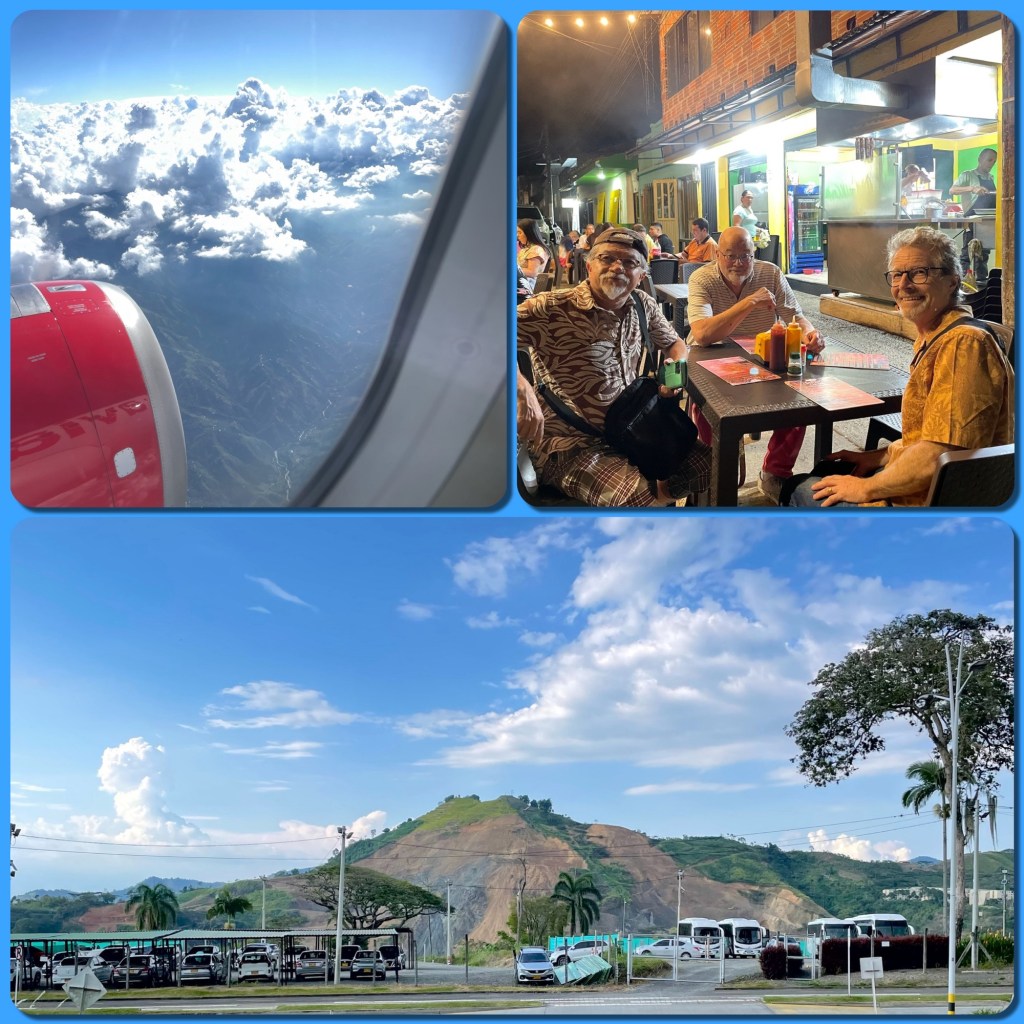
So we flew from BOG to PEI (Bogotá-Pereira) approximately 110 miles to the East. Less than half an hour’s flying time but over 7 hours by car.

This is the heart of the Axis of Coffee area (and depending on your view of the wicked brew that coffee is) could be the Axis of Evil and perhaps it was when Cocaine was widely grown.

Arrival and meeting Barry & Adriano

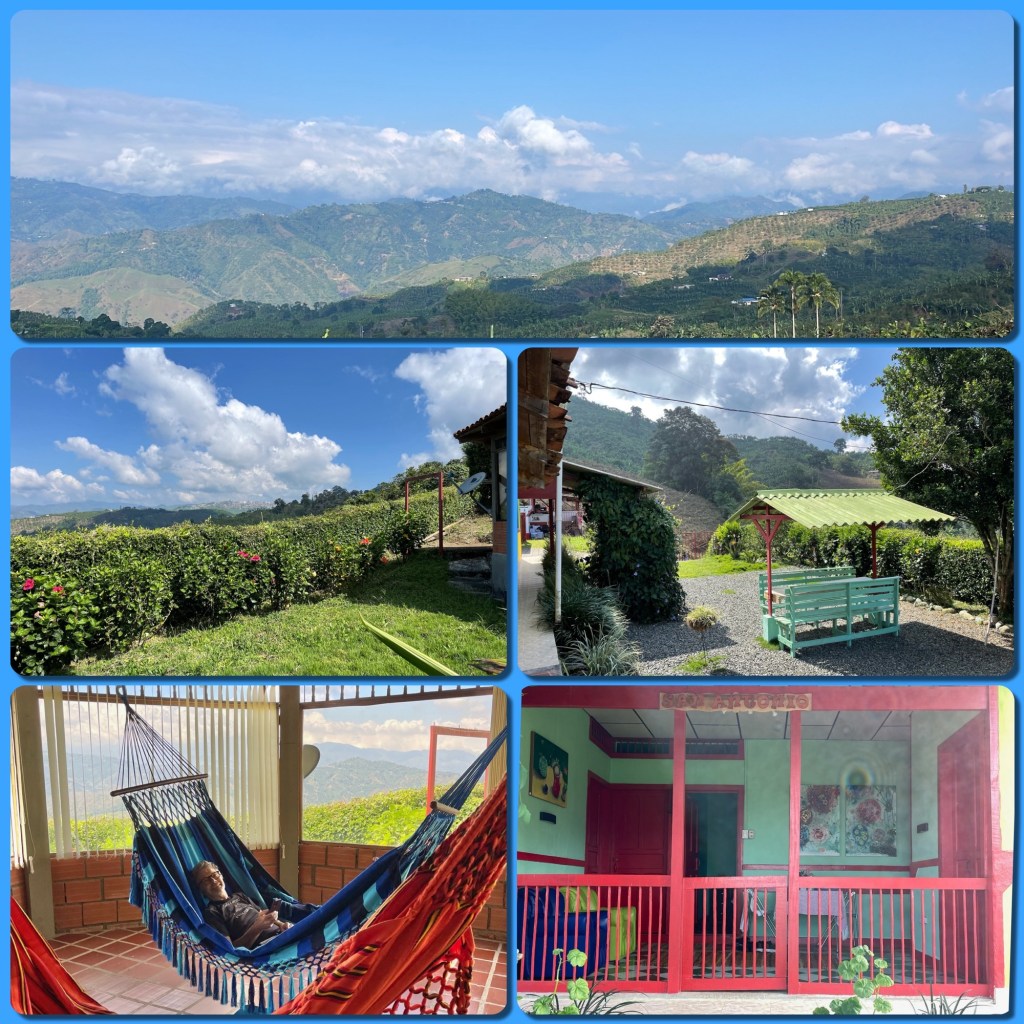
We arrived on an Avianca flight (our first trip on this budget airline but suffered merely a 3.5 hr delay (beats the 3 day delay we had on Volaris out of Mexico!) We had the privilege of being hosted by our friends, Barry and Adriano, who own a number of coffee plantations around Anserma. So we were met by our friends and transported to our accommodation on one of their many small plantation farm houses, Finca San Antonio. We arrived late in the evening, in complete darkness, but awoke to breathtaking views.

Finca San Antonio near Anserma in the region of Calda

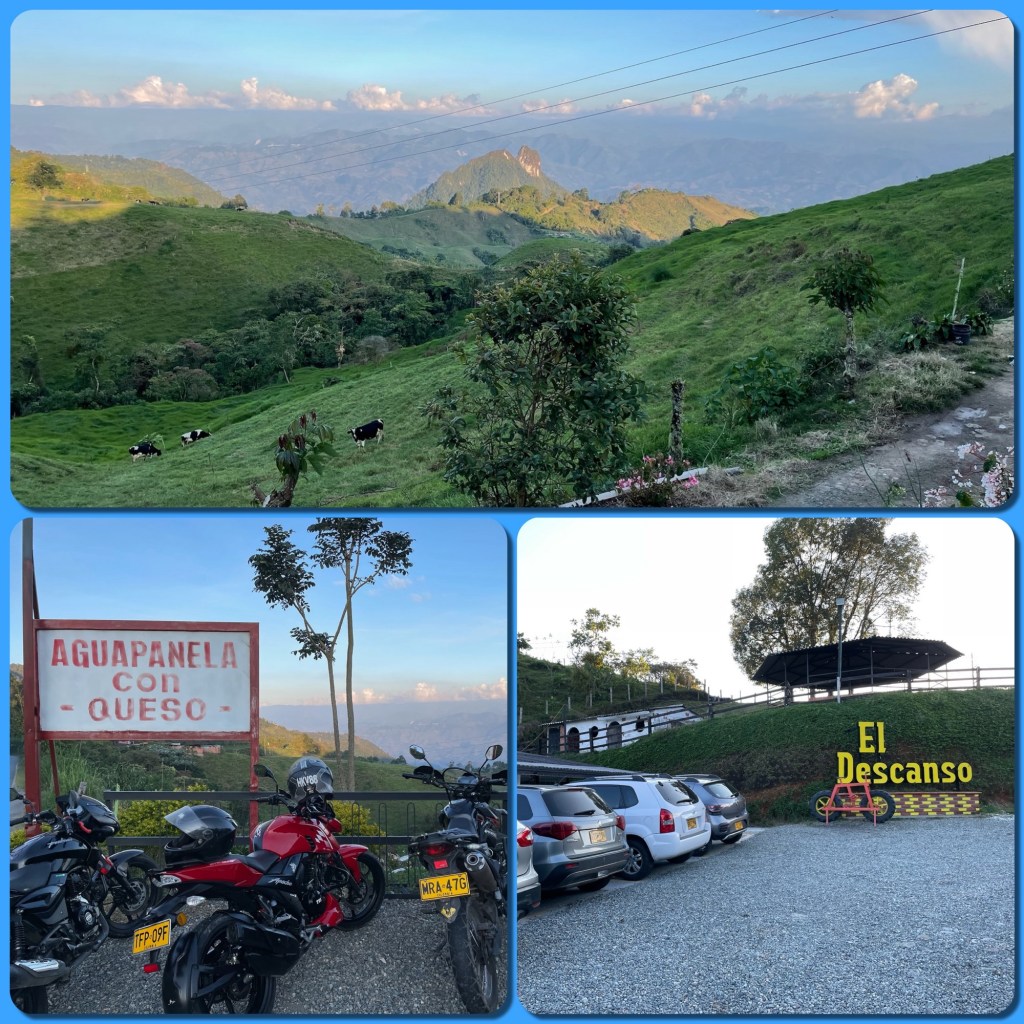
The next day we were taken on a tour through Anserma (the nearest town) up into the mountains through glorious plantation scenery. Bananas as well as coffee are grown on the steep slopes of this region. All the work required to tend these farm is done manually. It’s hard work but employs many of the local people. 

Mountain Cafe – El Descanso (The Rest)

Aguapanela con Queso is hot water with panela (an unrefined sugarcane sweetener) dissolved into which you drop chunks of mozzarella like cheese (an acquired taste but I loved it).

Local transport around is by Willy jeep (of ex-USA Army type) and of course our friends had their own and took us on a 4×4 adventure through the plantations.

4×4 adventure

Adriano is an amazing artist and an accomplished chef and of course happily confuses the two. So all their places are uniquely decorated inside and out. We were treated to several fantastic dining experiences (one of which was a surprise, kind of) birthday meal for Sandy.

Adriano Artist

Adriano Chef

Happy Birthday!

After a few days of tranquility in the ‘campo’ we were ready to move on. There are lots of villages in the coffee region, hidden gems, but only accessible by long twisty roads which we would have enjoyed if we had had the time to recover from and explore these places. Instead we chose a bit of city life in Pereira which is often overlooked because of the picturesque places such as Jardin, but is well worth spending some time in. Not least because it isn’t saturated with tourists. 

Pereira is the capital of the department of Risaralda and the most populated city in the coffee-growing region. The three main highlights, for us, were:

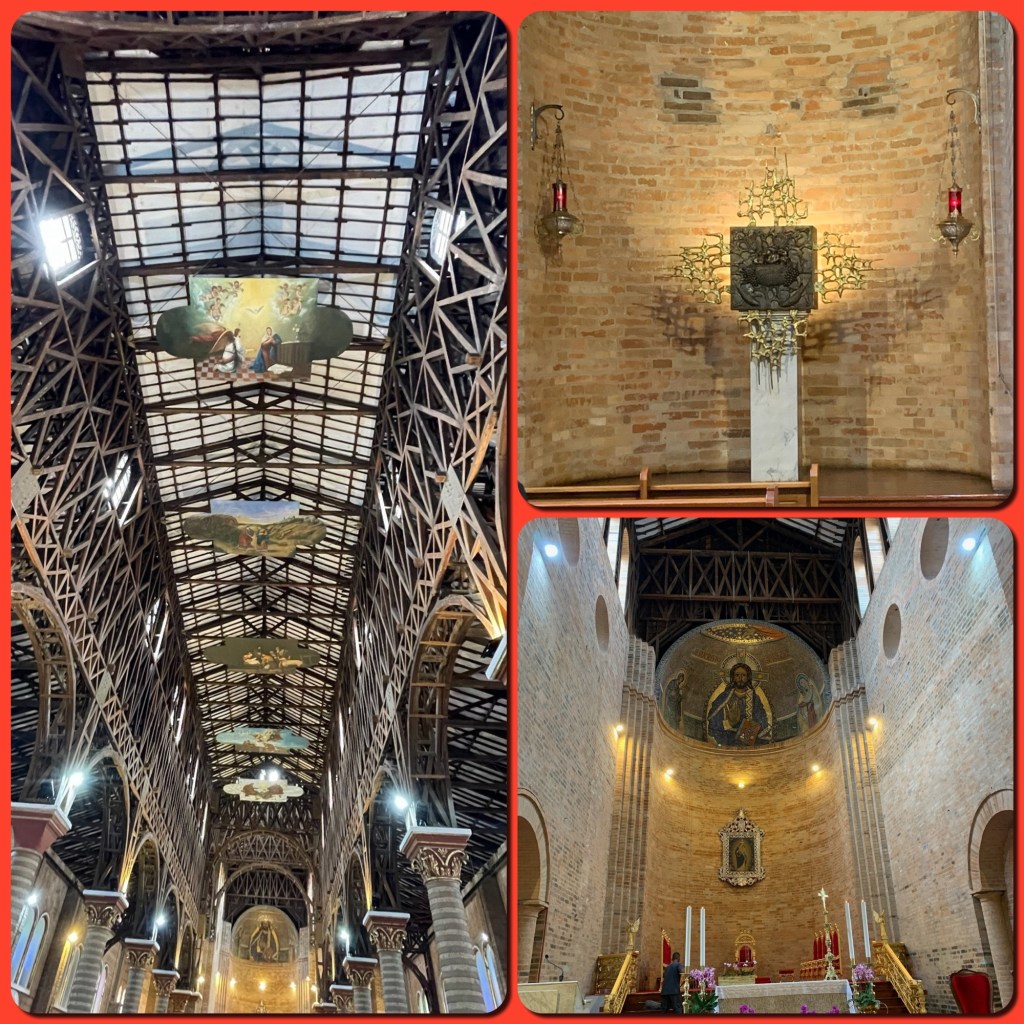
the 19th-century Cathedral of Our Lady of Poverty has an intricate latticework roof  

Can’t quite see the poverty?

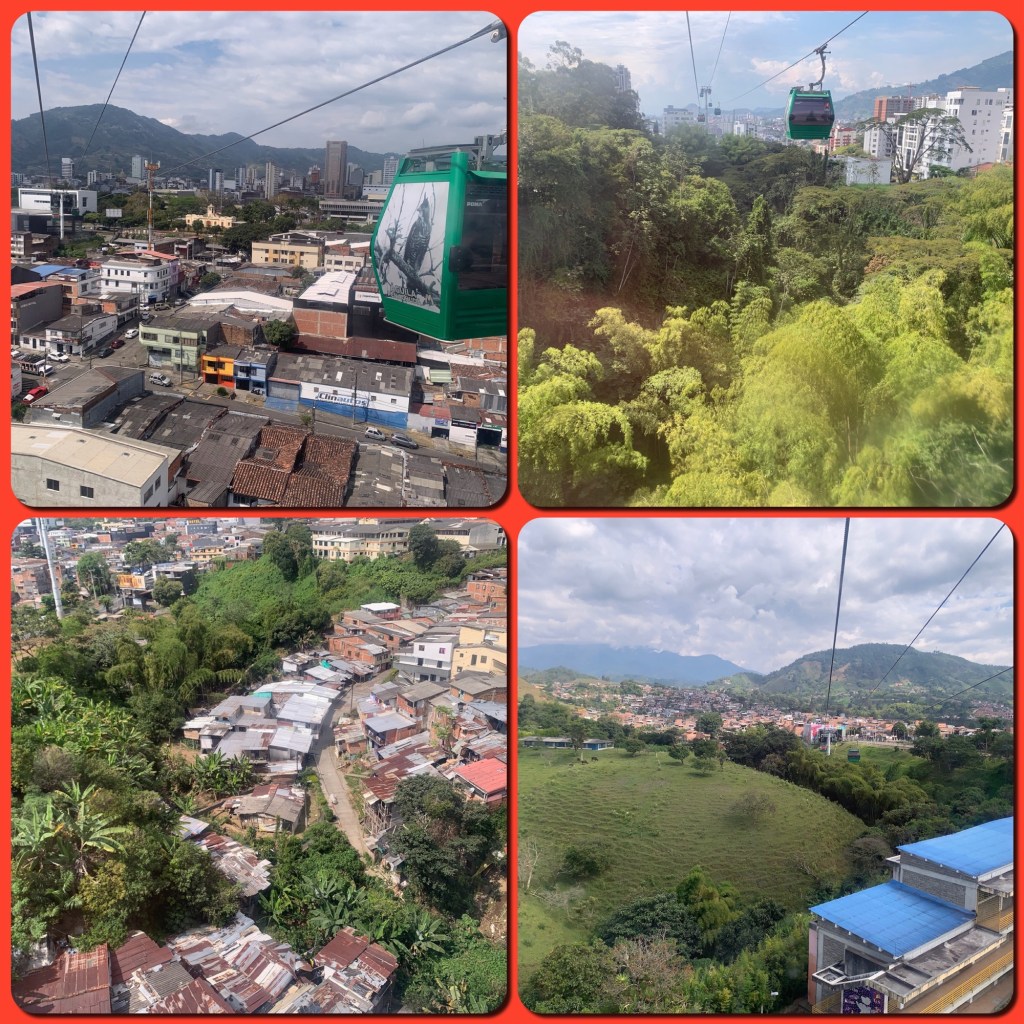
and the MetroCable, opened in 2018, which provides an essential transport link to the shantytown districts with the heart of the city. It is considered to be the first fully integrated cable transport system. But the accolade of the first urban cable propelled transit system in South America (2004) belongs to Medellín  (see below).

Up, up and away.

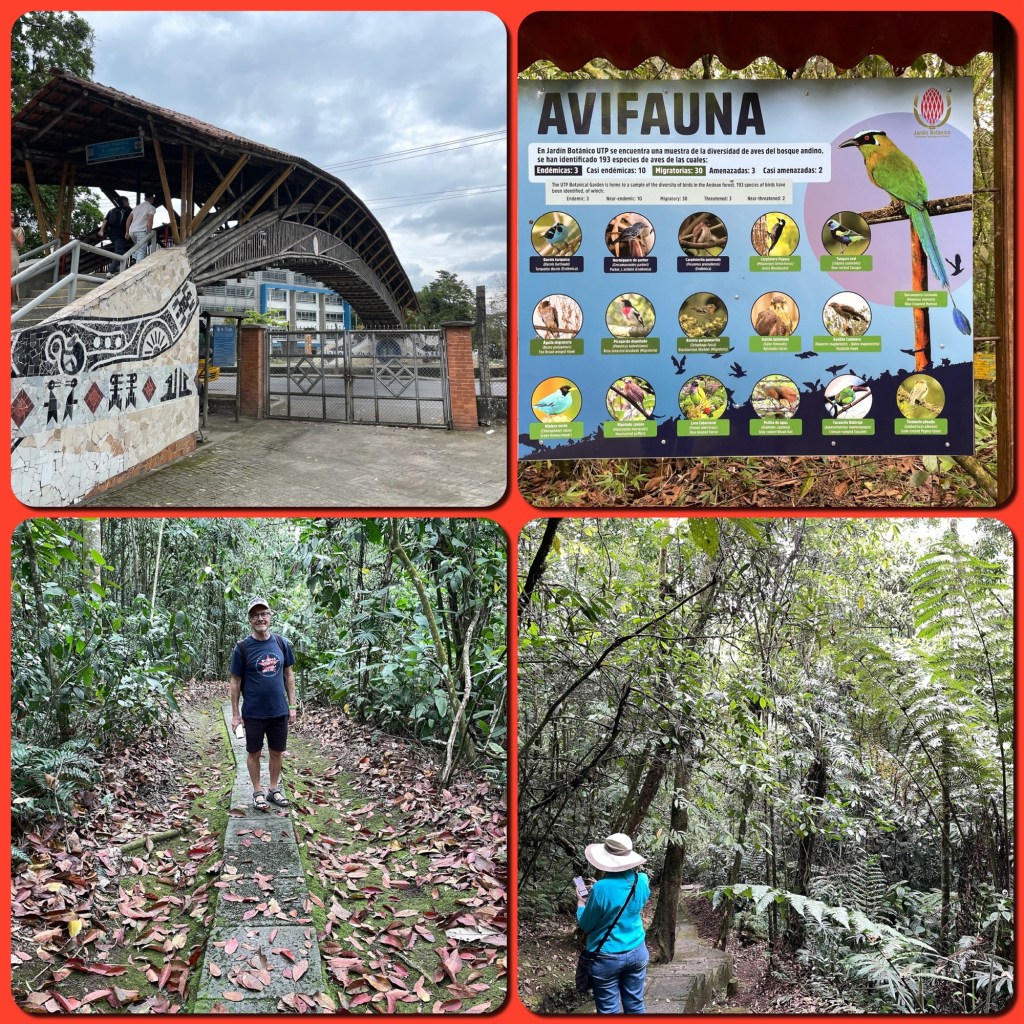
thirdly the very secluded botanical gardens which required another ride on the Megacable and a walk through the UTP (Universidad Tecnológica de Pereira). 

From university to jungle

PS Barry & Adriano supply Nespresso. If you want to know more about how they became coffee growers read Barry’s book ‘Better than Cocaine’ available through Amazon https://www.amazon.co.uk/s?k=barry+max+wills&crid=2A33HIMZQ97DQ&sprefix=barry+max+wills%2Caps%2C287&ref=nb_sb_noss

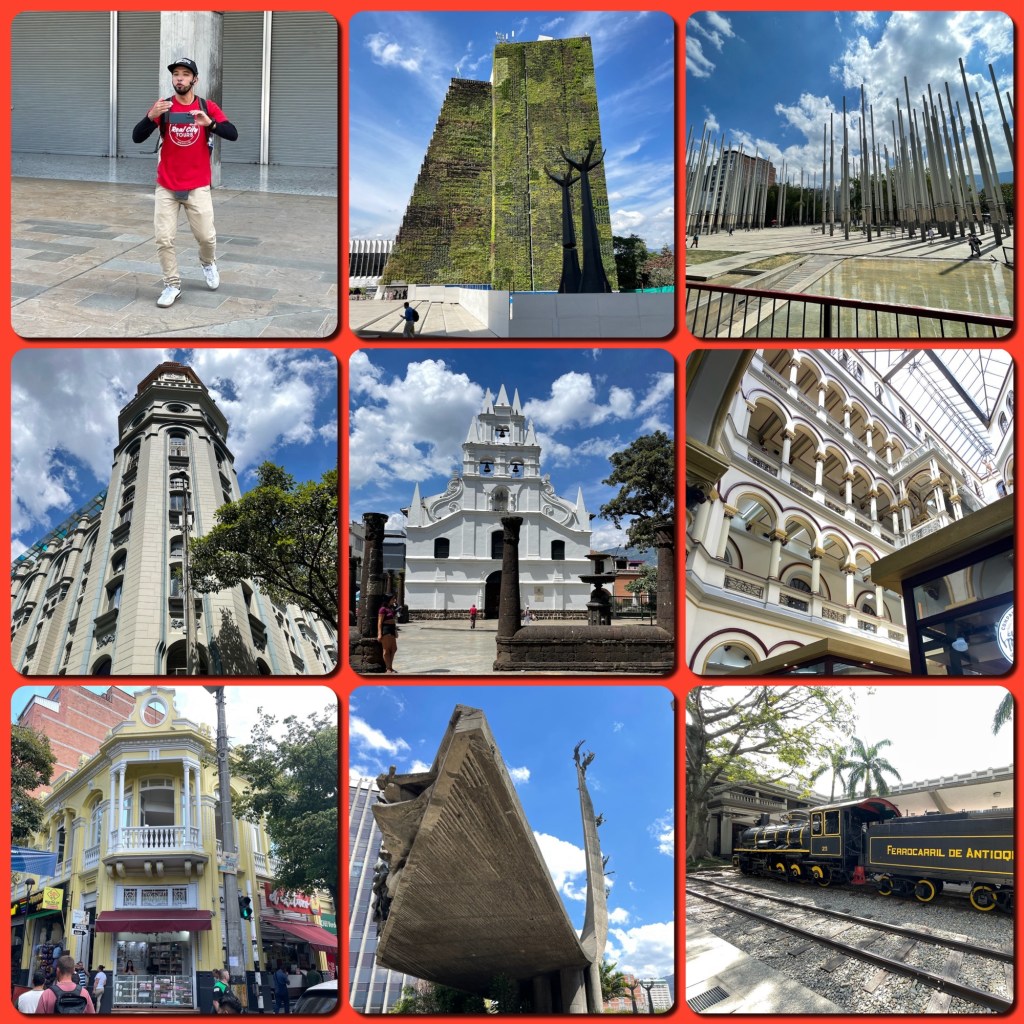
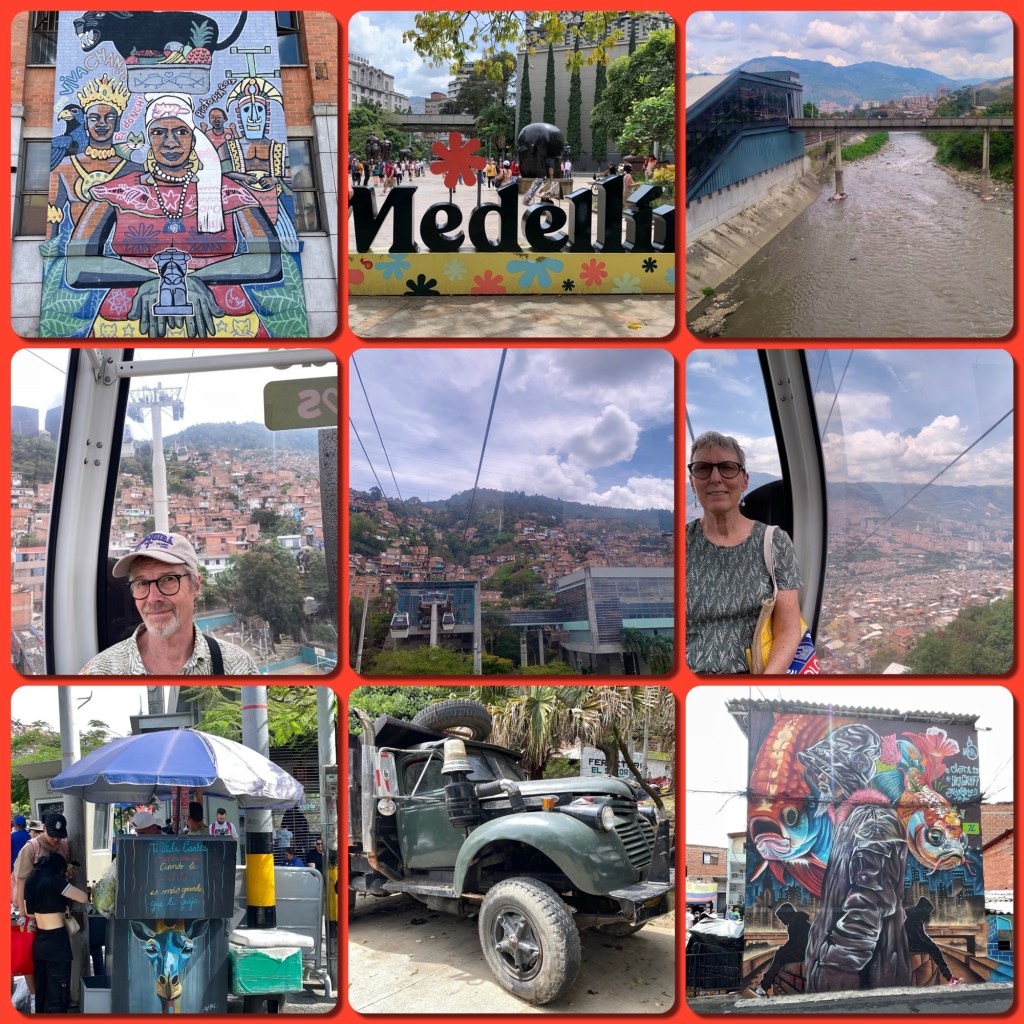
We then flew the north of the coffee to the metropolis of Medellín, Colombia’s second largest city and the most notorious, though it has come along way in the last 30 years those ‘troubles’ and the efforts to remedy them created a deeply divided population. Today they cope with that part of their past by choosing to forget (unfortunately this has left a hole in the history education of the younger generation?) we however got our historical insight from Dio our excellent ‘Real City Tours’ guide who spoke from the vantage point of having lived through it as a child and youth (and not just through watching Narcos on Netflix!).

Real City Tours

Paisas, people born in the region and the especially Medellín, are exceedingly proud of  their metro system which includes the cable cars, buses and escalators (see next) it was built against all the odds and is the biggest single factor that has united all the people (>2.7 million) of Medellín. This is attested to by the fact that there is no graffiti on it, in it, around it (including the vast acreage of concrete on which it is supported) not so much as a scratched window! (Not even Tokyo’s metro can claim this).

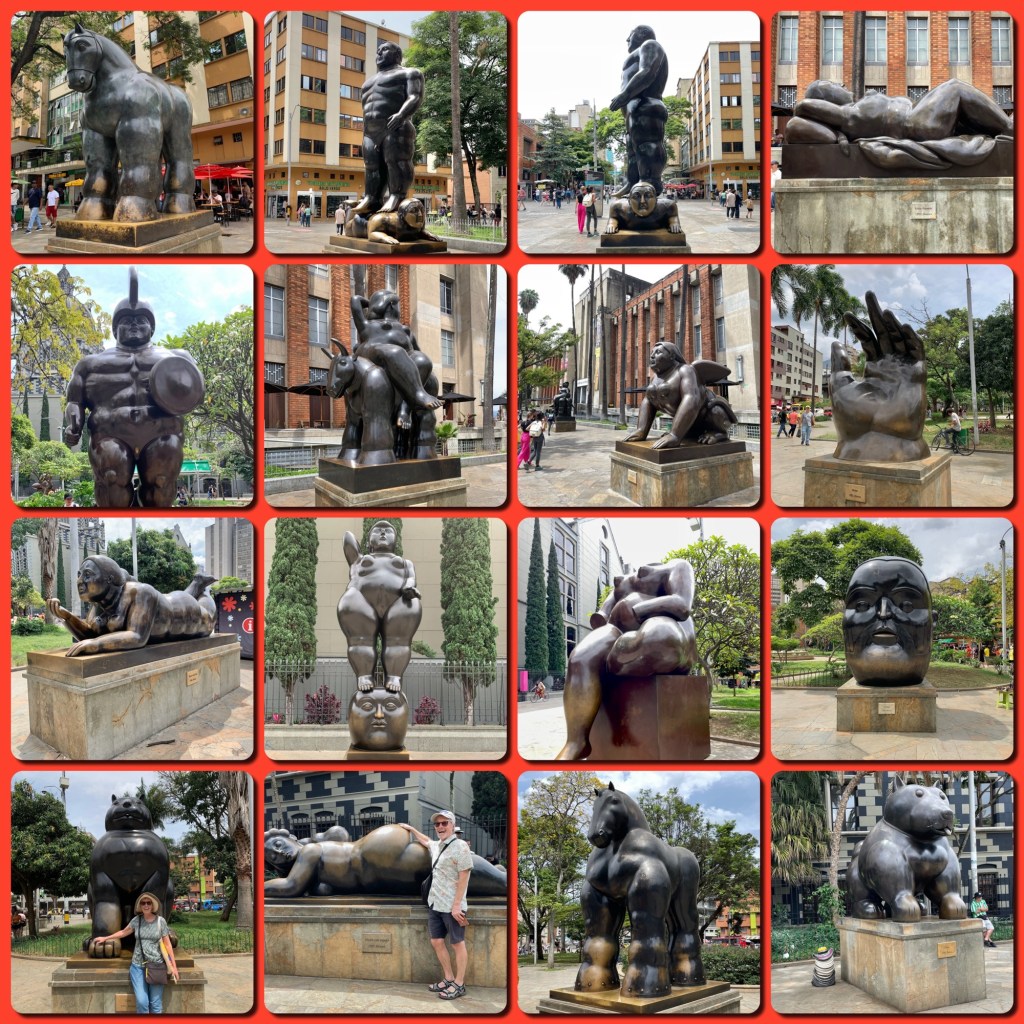
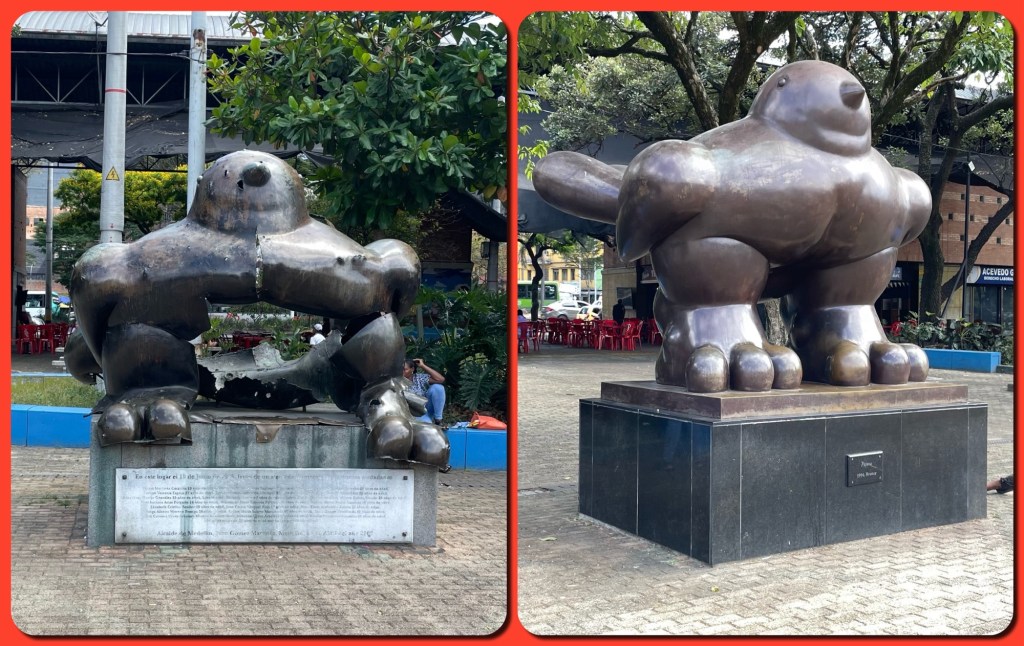
Medellín is also home to more Botero artworks, this time he bequeathed the city his large collection of larger than life bronzes (again if perspectively enhanced).

A few Boteros
Bottom left a bomb blasted bird a reminder of past troubles, right the replacement 

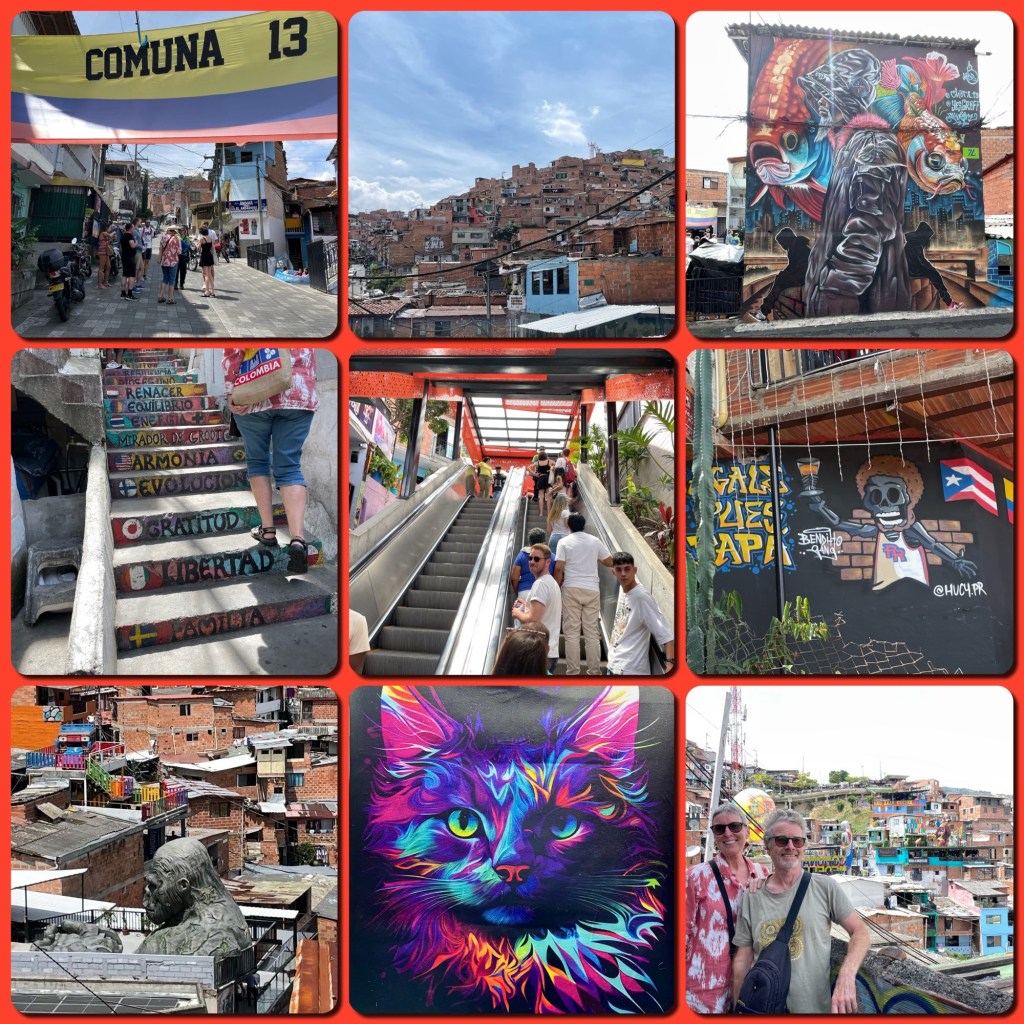
We did a second ‘free’ walking tour with, Zippy Tours, of Comuna 13 [Comuna 13, Medellín – Wikipedia]  and learned a lot more real history and also that all political factions have committed atrocities such that the last 30 years has no official, objective, unbiased historical account which means that not even Google is going to give you the truth.

Zippy walking tour of Comuna 13

What we also learned is that when the worlds first innovative, integrated bus, metro and cable car transport system was expanded up into the poorer Comunas the ground in 13 was found to be unsuitable for constructing the supporting pylons. So, very imaginatively, an interconnecting series of escalators were built. Now everyone has seen escalators in department stores, shopping malls, airports etc. so what’s so special about these? Nothing as it happens, yet almost immediately after they were opened it attracted ‘tourists’ initially it was locals from neighbouring Comunas but fairly soon there were day trips by the bus load. Now it’s the number 1 attraction in the City and has created its own economy as food stalls, gift kiosks and artisan shops now line the route. Which in a way is a very good thing as it gives the place an alternative attraction to being just the hideout of drug cartels.

We were fascinated by how much the people of this once most dangerous city on the planet (outside a war zone) have pulled themselves free of those times. 

More Medellín

Highlands and Islands

A few days R&R on the remote Scottish peninsula to the north of Loch Sunart. Staying with friends who have a passion for living significantly off the beaten track. This time at at least we could get all the way there by car albeit via a ferry and about 20 miles of single track road. Not so bad when previously a foot ferry or beach walk had been required. Such remoteness comes with tranquility of setting and perfect peacefulness!

Here going shopping means a trip down the loch by boat (actually by a pretty


quick rib) to Tobermory on the Isle of Mull. Taking care not to disturb the locals too much.

So we had coffee at the Chocolate shop and fish and chips on the jetty.

Now the weather has turned decidedly normal i.e. grey and wet, so it’s an enforced down day (or 2) …
HOME or NEXT 

Bogotá Part 2 – 2025

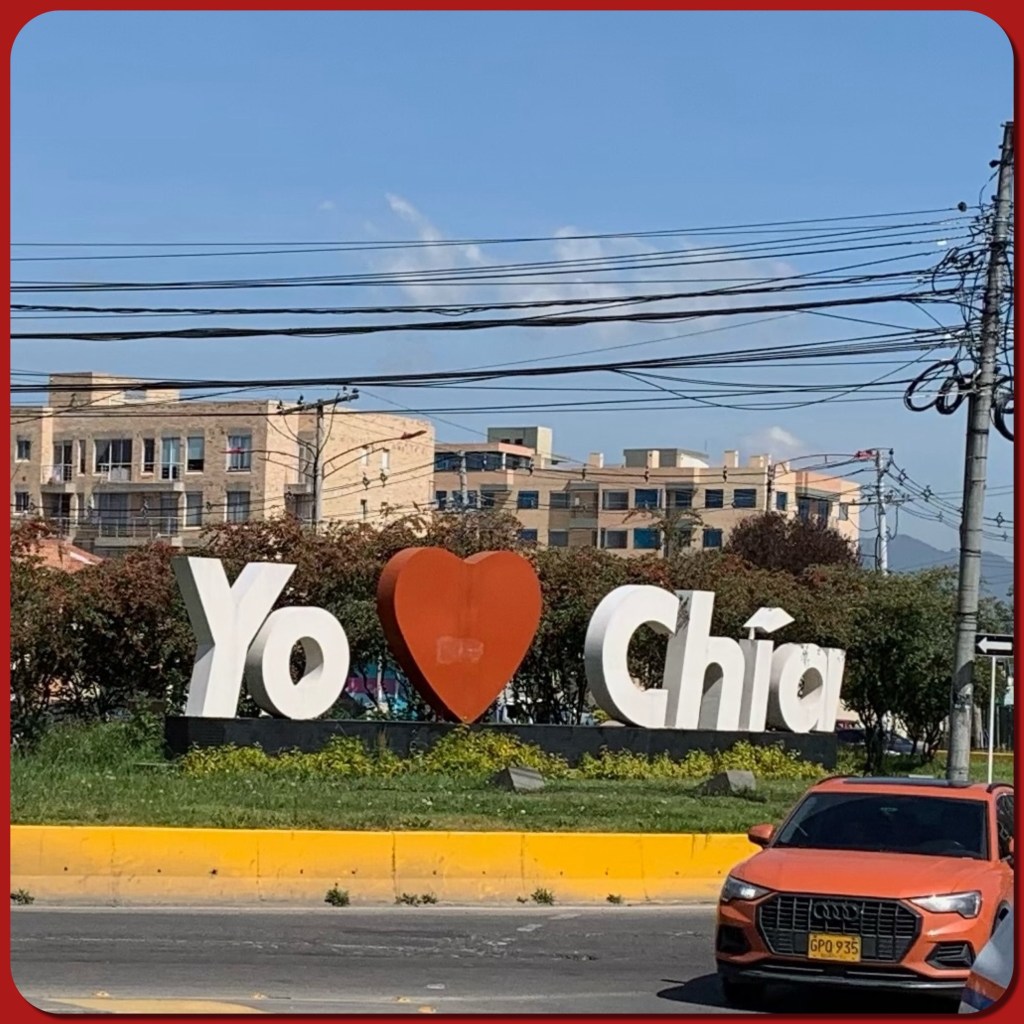
Although Chia appears to be consumed by the northward urban sprawl of Bogotá it is the capital city of its own municipality in the department of Cundinamarca.

Our housesit was less than 10 minutes walk from the thriving main square, aka Chia Main Park or Santander de Chía Park or Parque Principal de Chia depending on which map app you’re using. One of the first things we noticed was that more than half the names of the businesses around town include the word Luna (also the name of the cat we were looking after), why?

There now follows an etymology lesson so you might want to skip the next paragraph the place name “Chía” in Chibcha language or Muisca language refers to the Moon as a star and as a goddess in Muisca mythology, in whose honour there was a temple built in the Pre-Columbian town. So that explains it! 

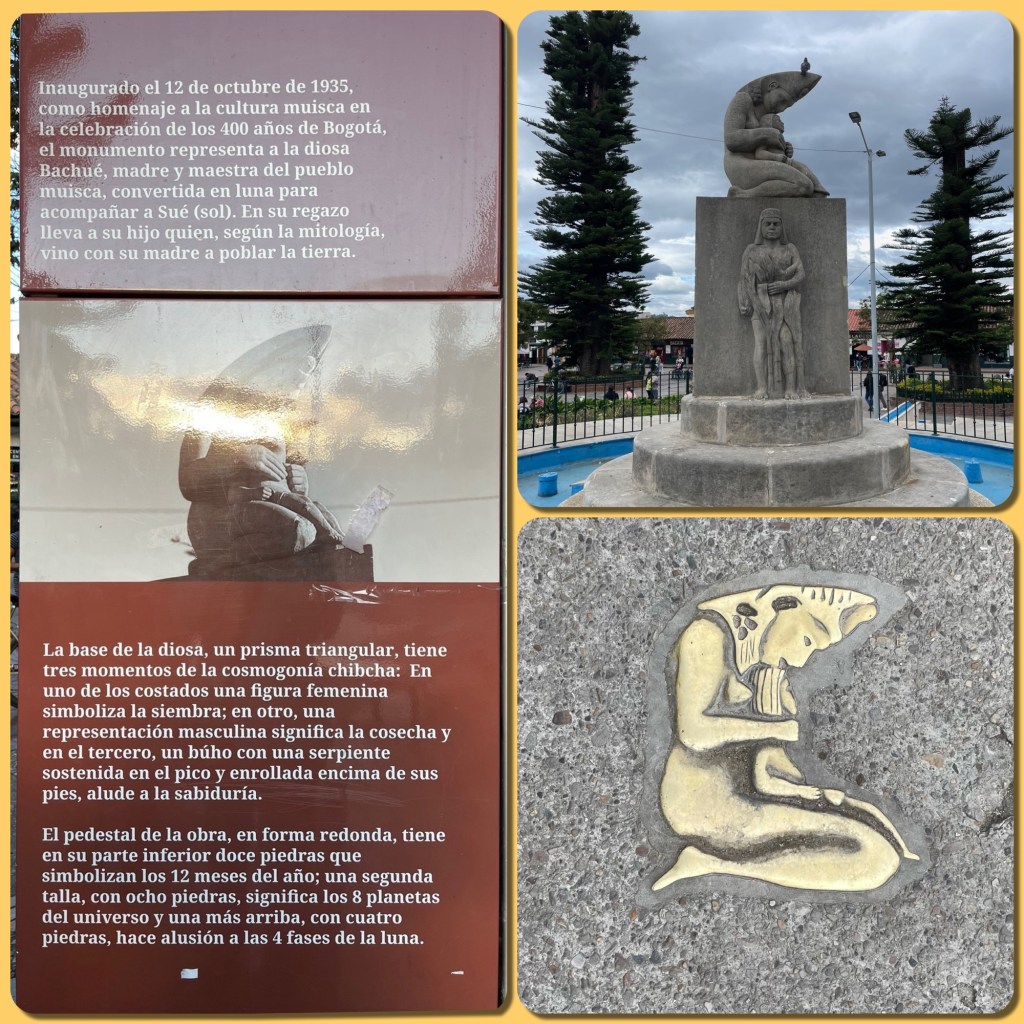
I had to google that info. The goddess is everywhere around the square but nothing explains the link with the name. This is the closest you get: 

Chia goddess

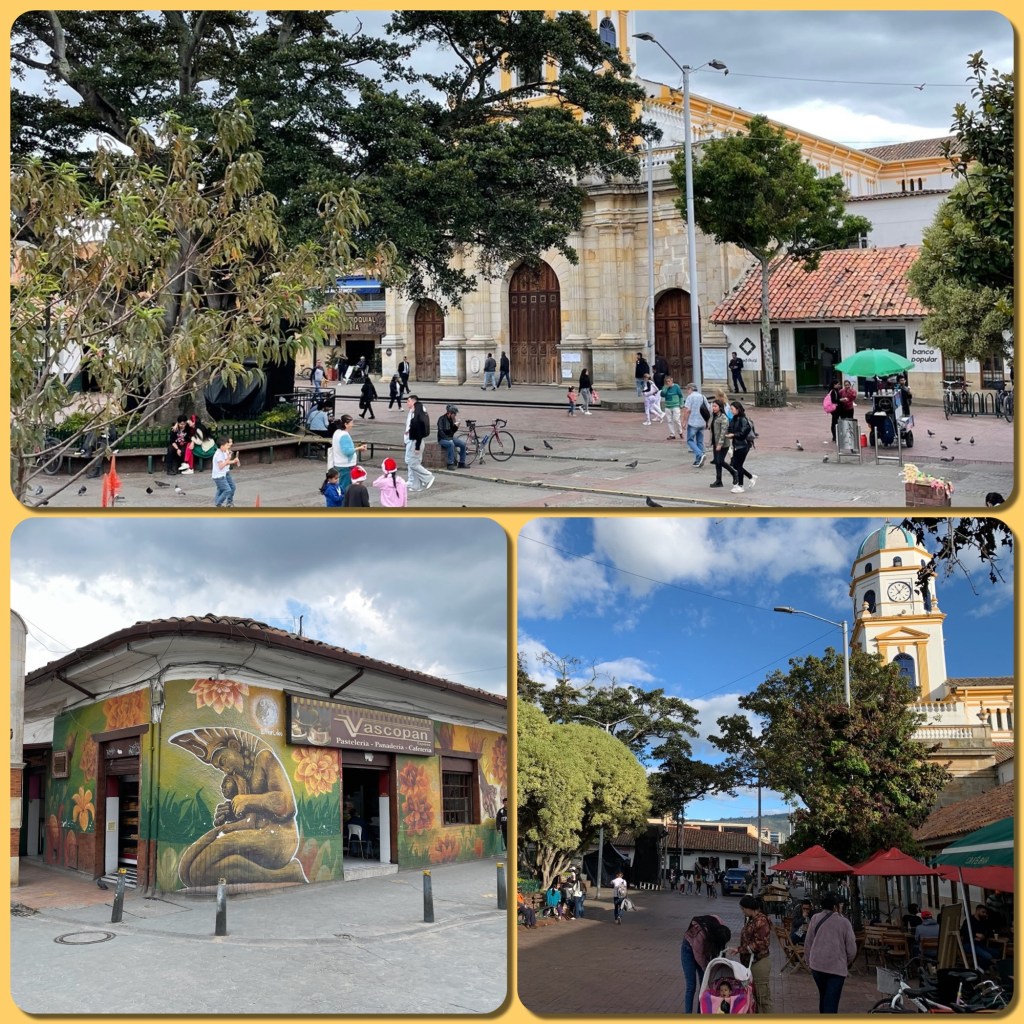
The main square is quite large and lined on all four sides with small single storey shops, cafes, pharmacies, banks giving the air of a town or village. In fact this bustle of little businesses continues almost uninterrupted for two blocks all around the square. They used to say that England was a nation of shopkeepers but here it’s still true. What’s most amazing that each street contains the same type of shop, often in repetition. Pharmacies are the most frequent, others, being small they tend to specialise in just one or two items such as Pyjamas!

Around the square

Then there are the restaurants and mini food courts that you enter through a small doorway and disappear into areas behind the shops. This is all the more surprising when you realise that within two or three miles there are a number of large shopping malls which don’t appear to have killed off the town centre as they have in the UK (no charity shops either).

Doors to alleyways

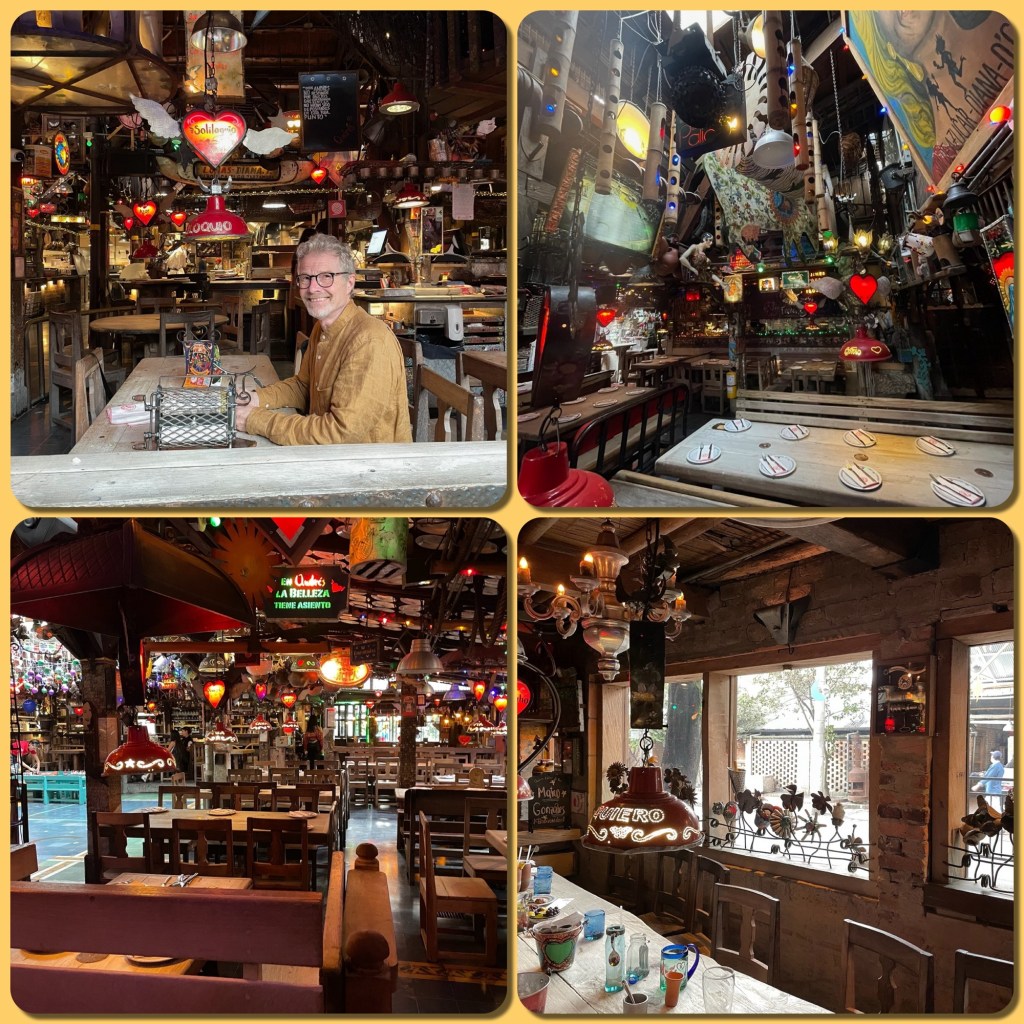
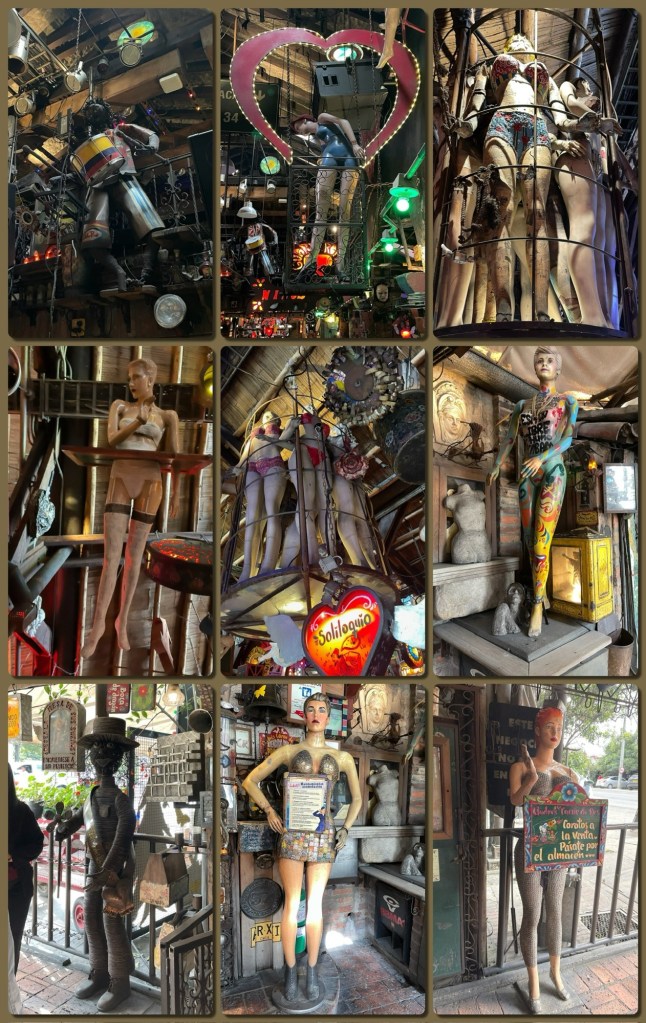
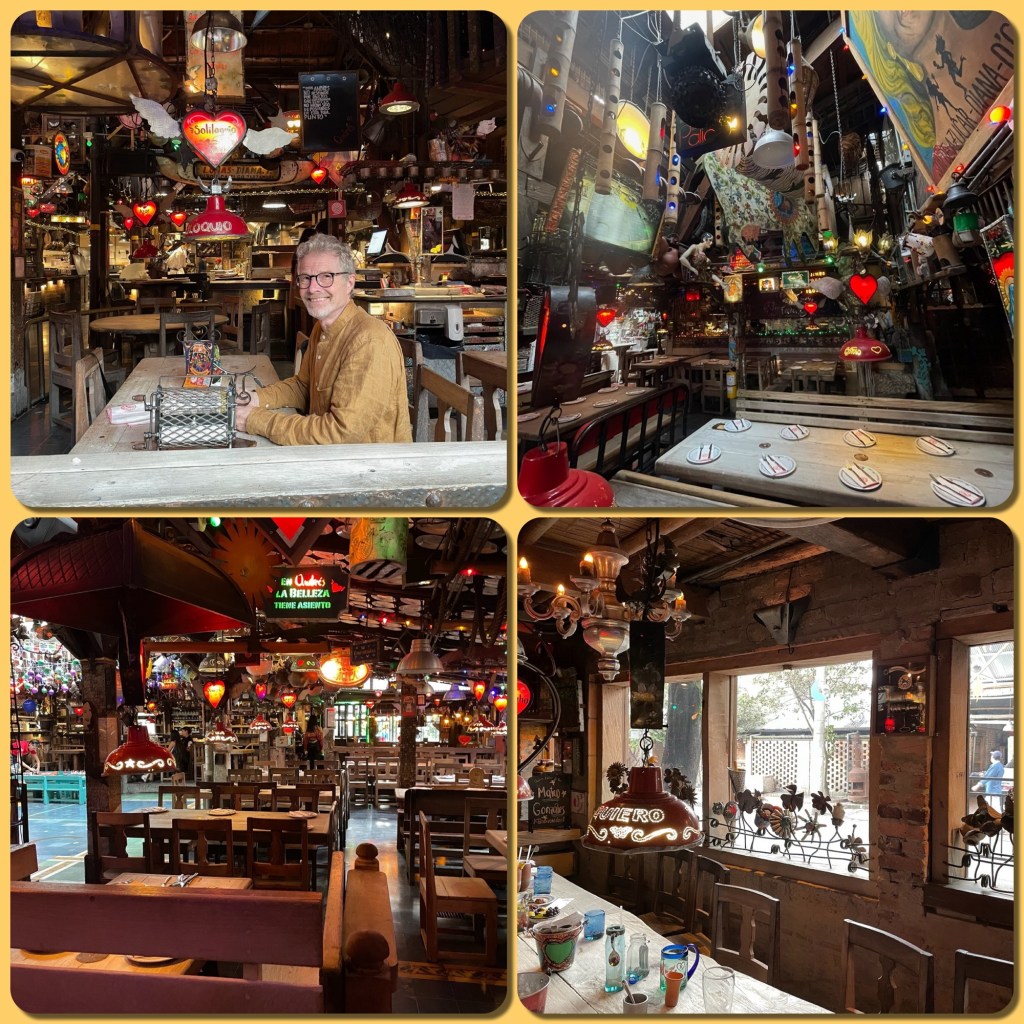
We’ve sampled a few of the eateries from the fairly dire Restaurante – Bar Zona Safari, very basic but local grub to the ‘world’ renowned Andrés Carne de Res. The latter, which has a sister restaurant in the city, was our treat for Nochebuena (Christmas Eve). This was a surreal experience in a huge sprawling space (it actually continues next door and over the road) decorated eclectically with what would be called junk anywhere else but here is turned into art. The first things that caught my eye were the manikins. We dined mid-afternoon but in the evenings the place provides entertainment: music, dancing, fire eaters … the usual stuff. The food was excellent, specialising in steak so perhaps not so good for vegans but they did have veggie options and each food type had its own separate kitchen area that you could wander past and see the chefs at work.

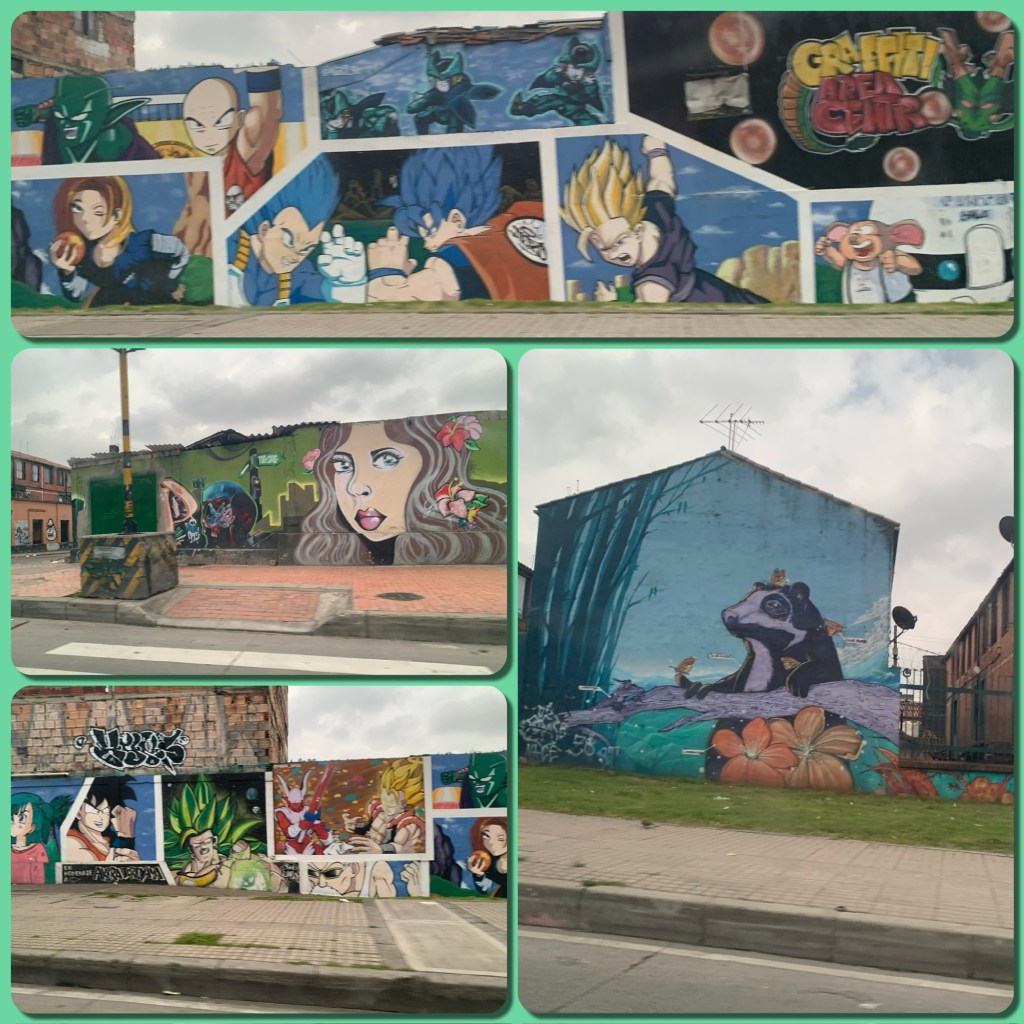
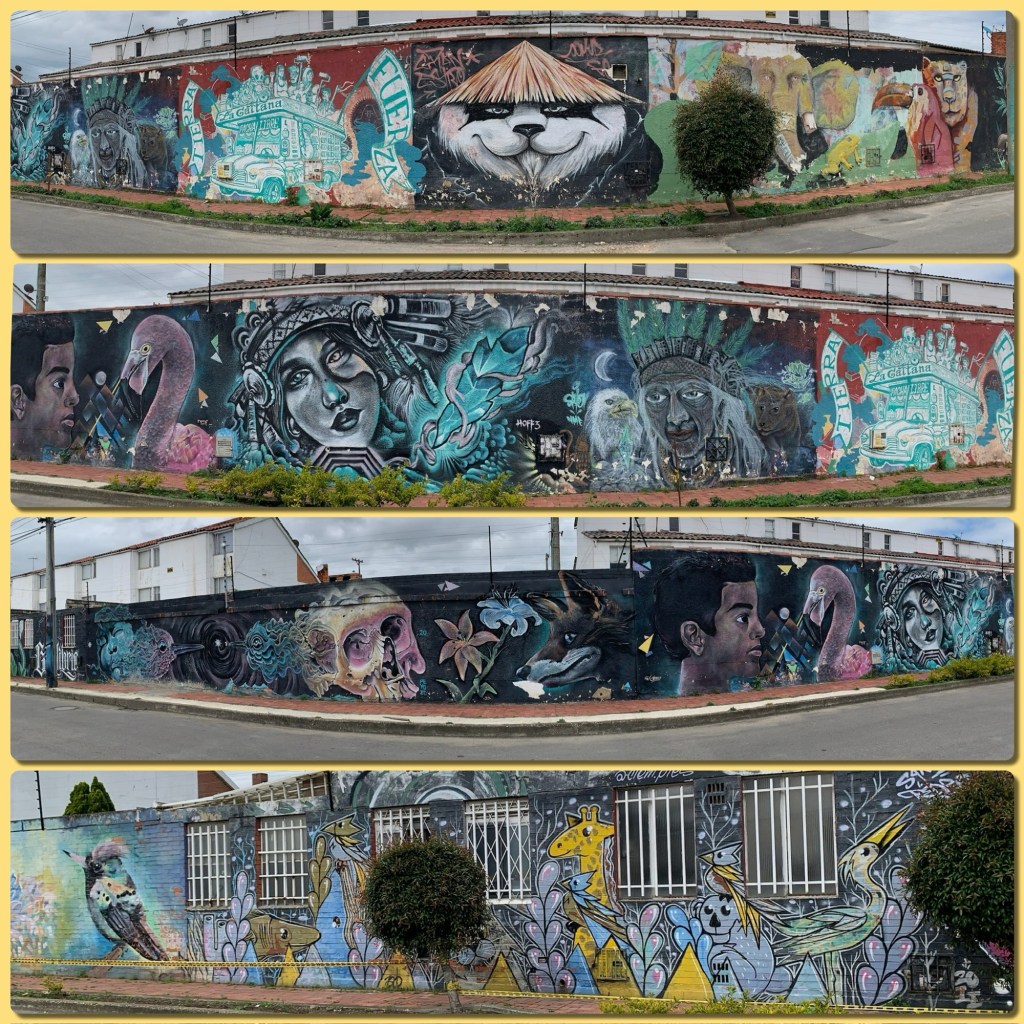
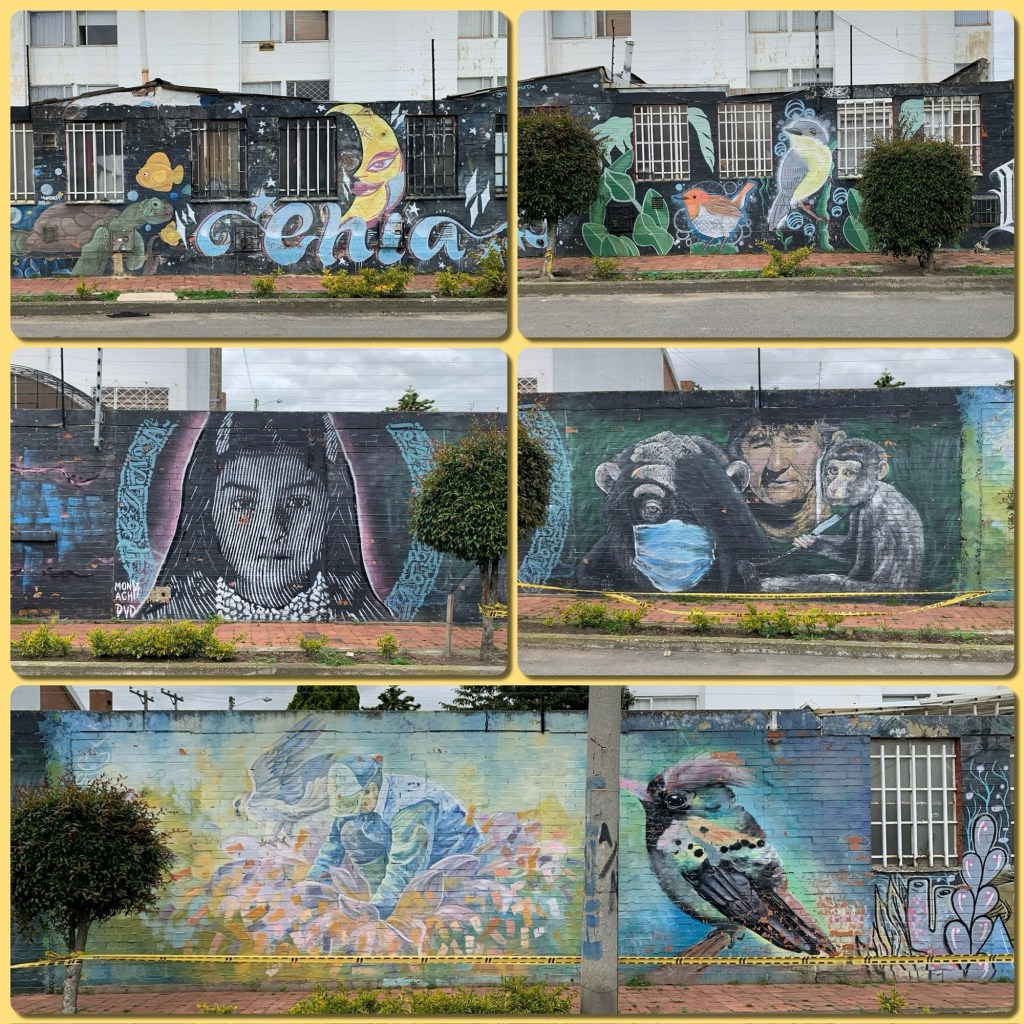
On one of our exploratory walks of the streets around the square we came across a very basic Mexican restaurant. The manager/owner was outside and immediately engaged us (in Chia we are the only non locals so always worth a punt) and he was over the moon (Chia!) to hear that not only had we toured Mexico but that we loved his home town of Patzcuaro. Needless to say we visited his place a couple of times for his authentic Mexican tacos. Also captured some amazing graffiti in what appeared to be a quiet residential street.

Our final culinary delight was an asian place called Māo in another of those long passage ways that lead away from the road through what at first glance looks like just a doorway.

We managed a few more trips in to the city while the traffic was light (Bogotanos flee the city after the festivities and the drop in the number of cars is very noticeable, one of our journeys took a mere 55 mins!). 

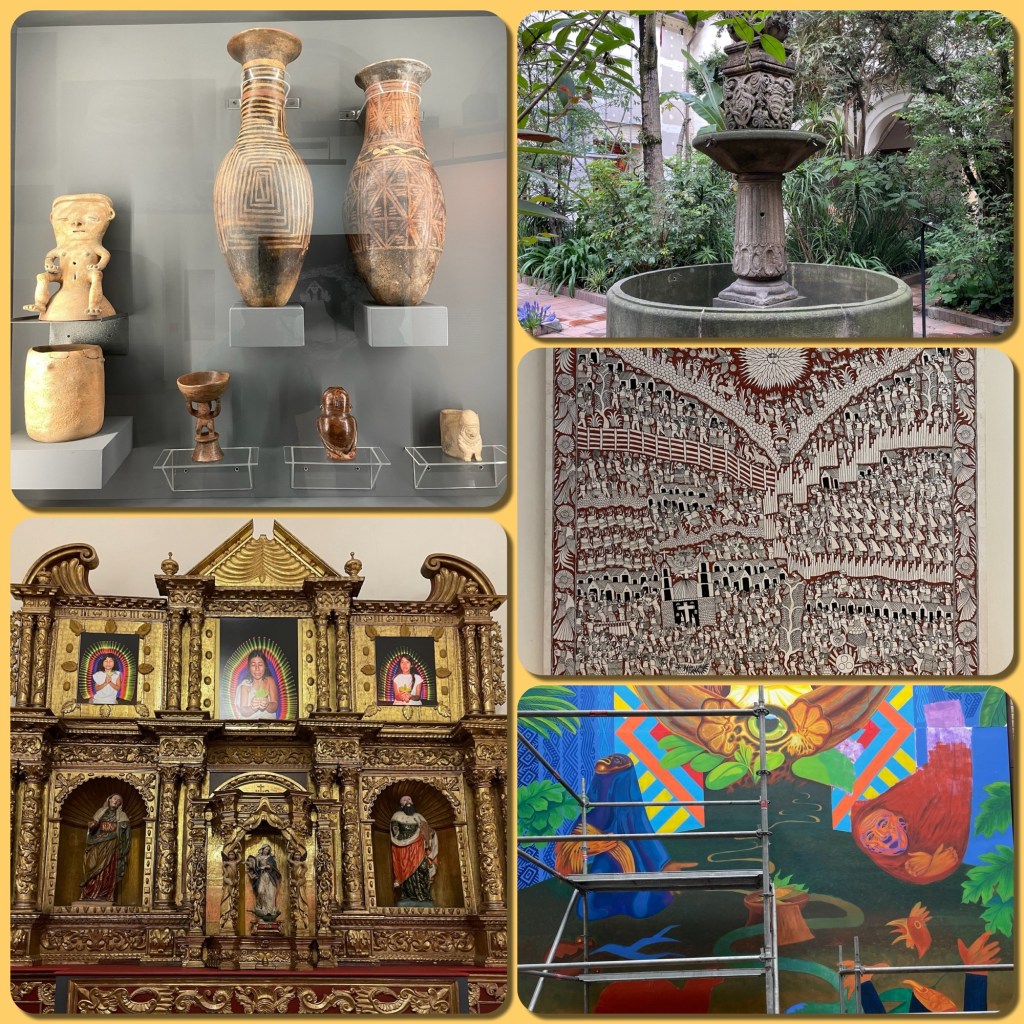
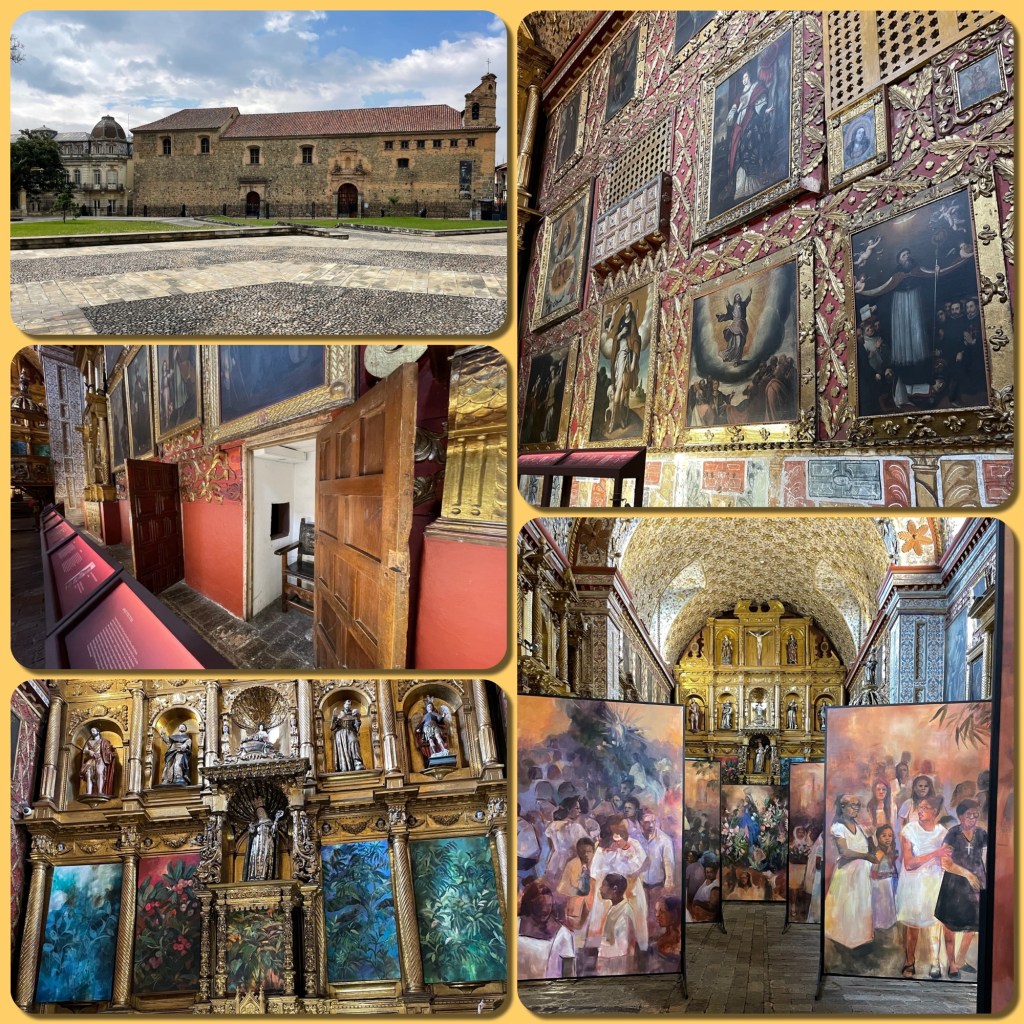
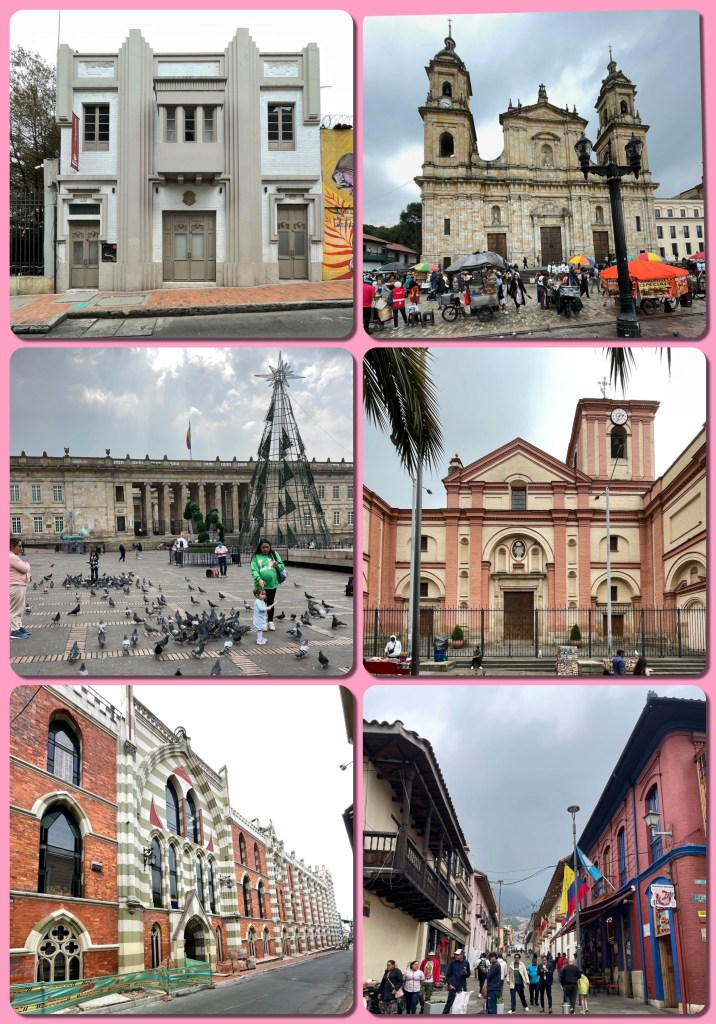
Just after New Year’s we attempted a tour of various churches of note in the Candelaria district. This failed because these were located around the University so with no students about everywhere was shut: cafes and churches (and no one had updated Google). So we had to content ourselves with outside views and a couple more museums: Museo Colonial with its courtyard garden, Museo Santa Clara, a wander around Plaza de Armas and a glimpse of the ceremonial guard in front of Casa de Nariño (the official presidential residence).

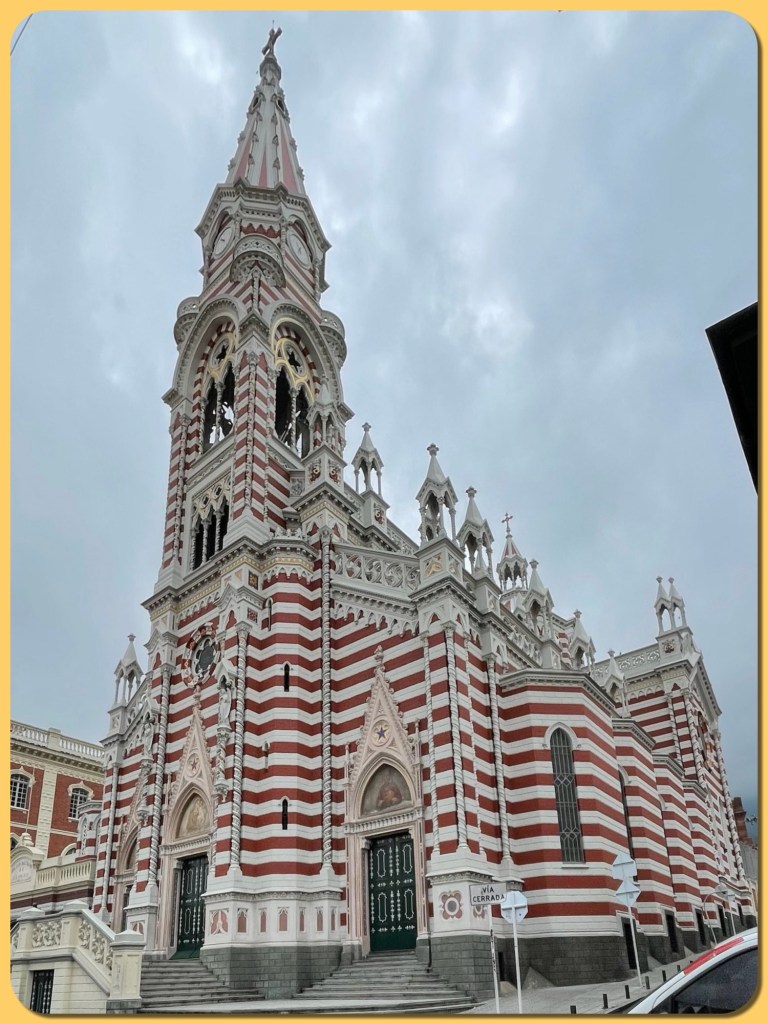
Santuario Nuestra Señora del Carmen
Museo Colonial
Museo Santa Clara
Ceremonial Guards

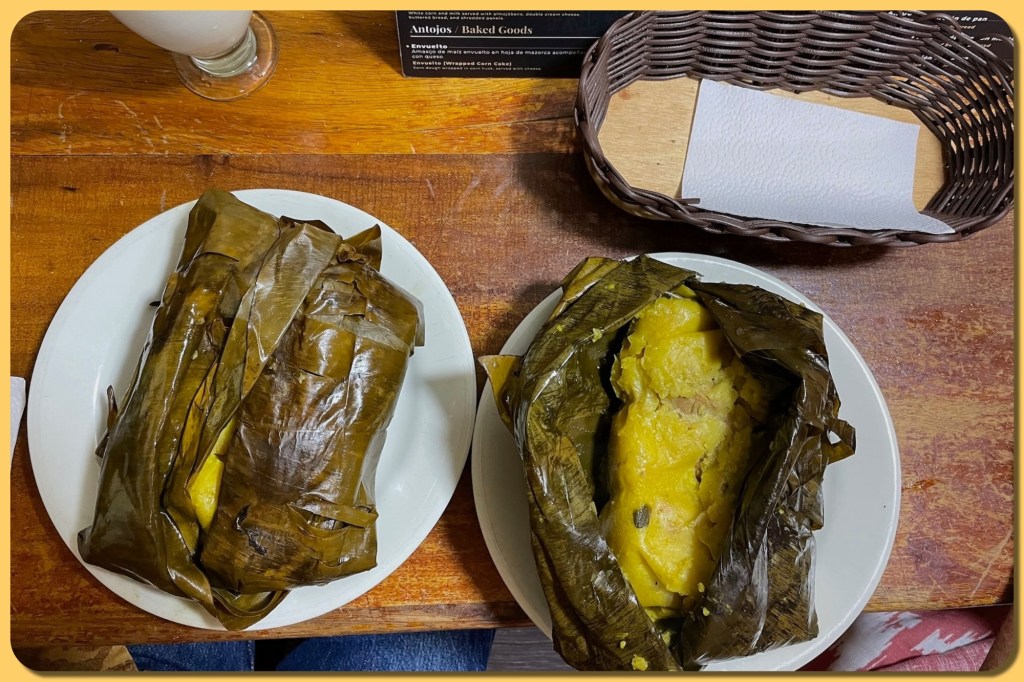
The highlight though was lunching on tamales at the famous Puerta Falsa cafe which has been in existence since 1816. 

Tamales

We ventured in again the following week to Parque 93 where we met up with our coffee  plantation owning friend Barry who gave us a tour of his barrio and then had a long lunch. So more talking than sightseeing.

Our final city trip was on a Sunday to see the Flea Market in Usaquén, starting with second breakfast at the very upmarket Café Amarti. It’s called a flea market and probably started life as a collection of second hand stalls (we saw one) but nowadays it’s gone all artisanal but colourful and bustling nonetheless. Sunday is also Cyclovia day when they close half of one of the main roads through the city, The Septima (7th Avenue), to traffic so cyclists, walkers, skaters, push chair & wheelchair users can have it to themselves.

Usaquén

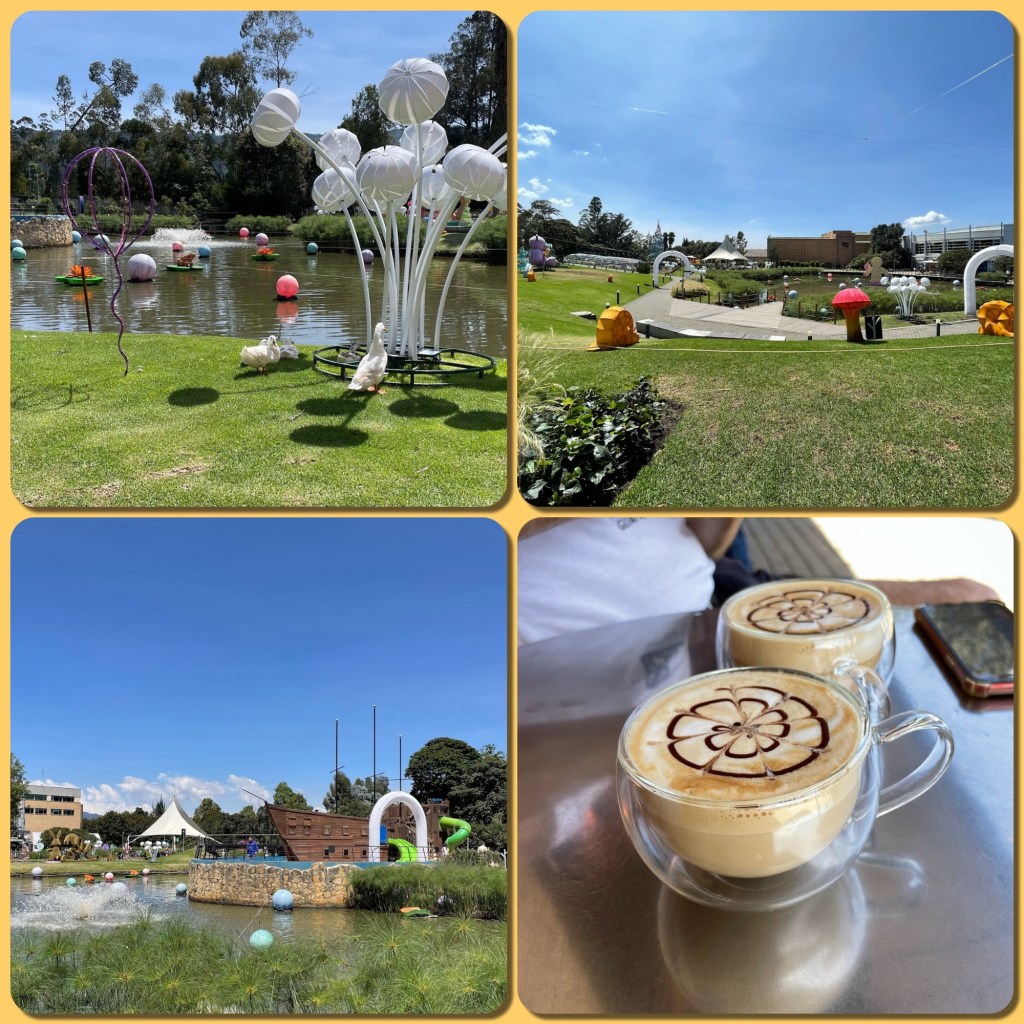
A surprise was to find a fairyland park we discovered through the Carulla Centro Chia shopping mall.

Then, almost too soon, it was back to the airport for our flight to the coffee growing region around Pereira to stay with our friend Barry.

Bogotá December 2024

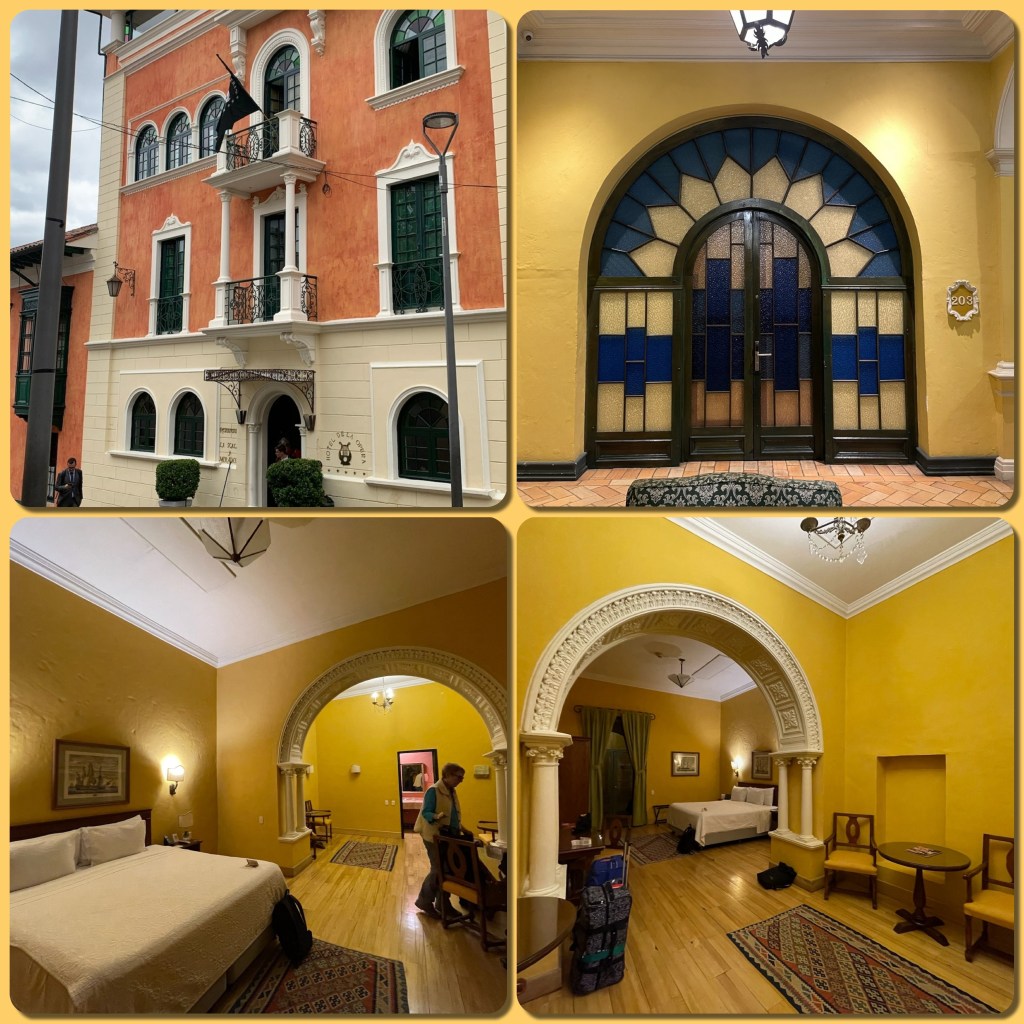
We flew SJO to BOG and had an overnight at Hotel de la Opera in La Candelaria (Bogotá old town) before journeying to the suburbs to start our house sit.


Our room at the hotel Opera

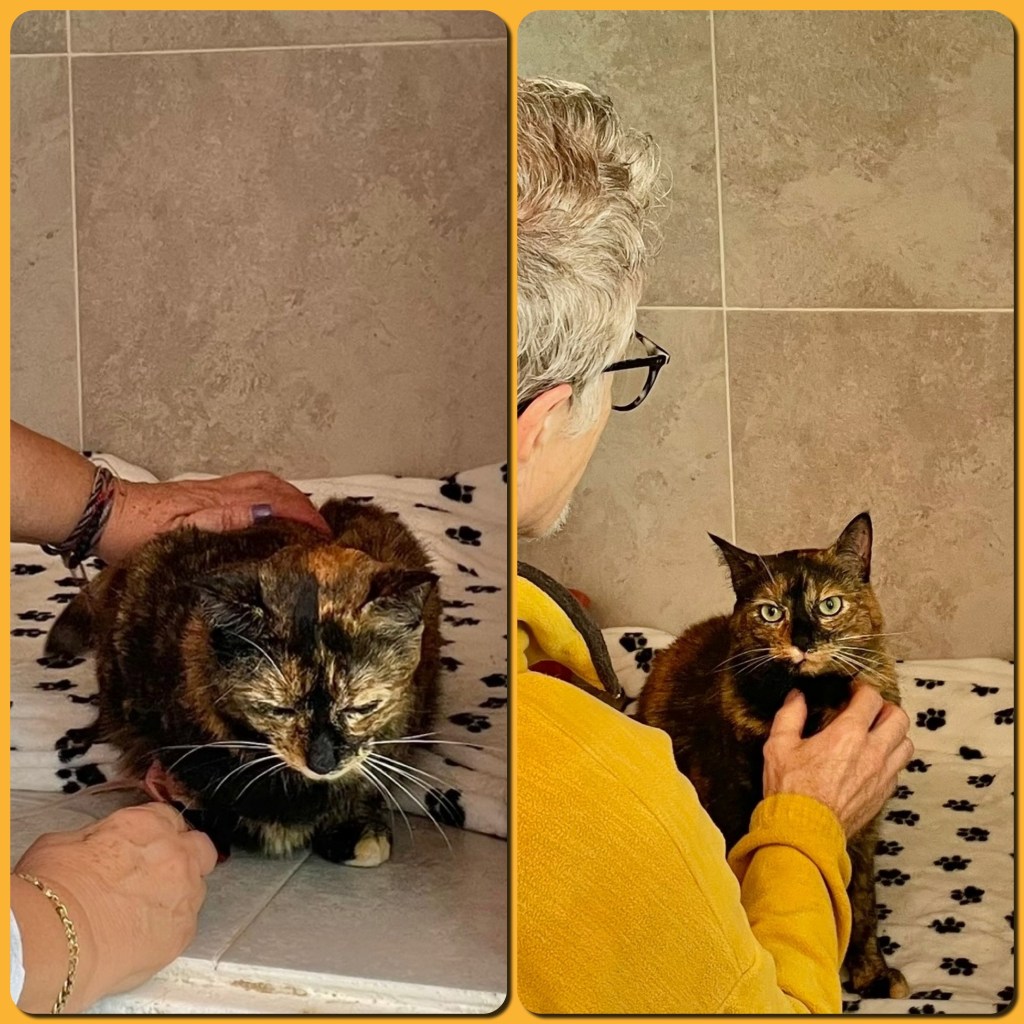
However, we were not to have a normal start to the sit. The day before our flight from San José to Bogotá we heard news from the homeowner that she had taken Luna, the  cat we were to be looking after, to the vet’s because of a complete loss of appetite and tests were indicating renal failure so they were keeping her in the vet hospital for medication by drip and monitoring.

Luna at the vet hospital

We’d taken various pets to the vets over the course of our many pet sits but this was the first time we’d be arriving with the pet already at the vets and with prognosis that did not look good. So our first day was a trip to the vets with the homeowner to see Luna and the possibility of a hard decision to make. The homeowner was due to fly to Europe that evening. But later that afternoon the Vet phoned to say that Luna was responding to treatment and, although not eating yet, appeared to be perking up.

Was this good news? Luna was to stay at the vet’s hospital for a couple more nights, which was fine but if things didn’t continue to improve would we be the ones making the hard decision?

In the end the homeowner delayed her departure by a week to oversee Luna’s recovery and settle her back into the apartment. She also, very kindly, decided that the apartment was now our space so she would stay with her sister-in-law until she could start her holidays. It all turned out well in the end. Though it took up the first week of our 6 week stay.

We were staying in a suburb called Chía (like the seeds) approximately 20 miles north of downtown Bogotá. There are motorways but the place is notorious for its slow moving traffic so the journey can take over 2 hours (and be prepared to spend 4 hours of any day out in traffic), which it did the first time we ventured back into the city. 

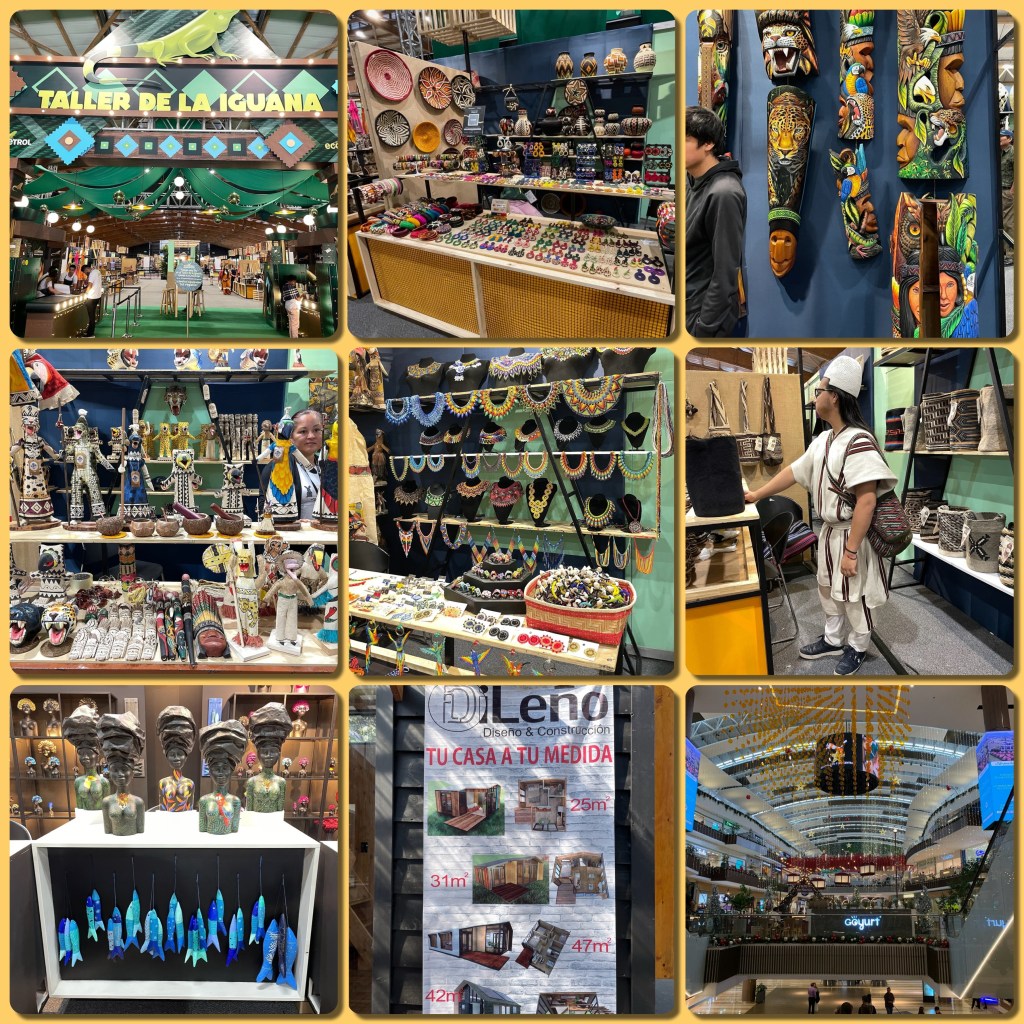
Expo Artesanías at Feria Exposition Internacional, in the El Chico district. A typical city exhibition centre which for a month every year is devoted to Colombian artisanal crafts and products. The top floor of one of the huge halls was filled with stands and each had a map of the regions of Colombia indicating where their craft was made. All hand made and crafted by indigenous peoples.


Made in Colombia

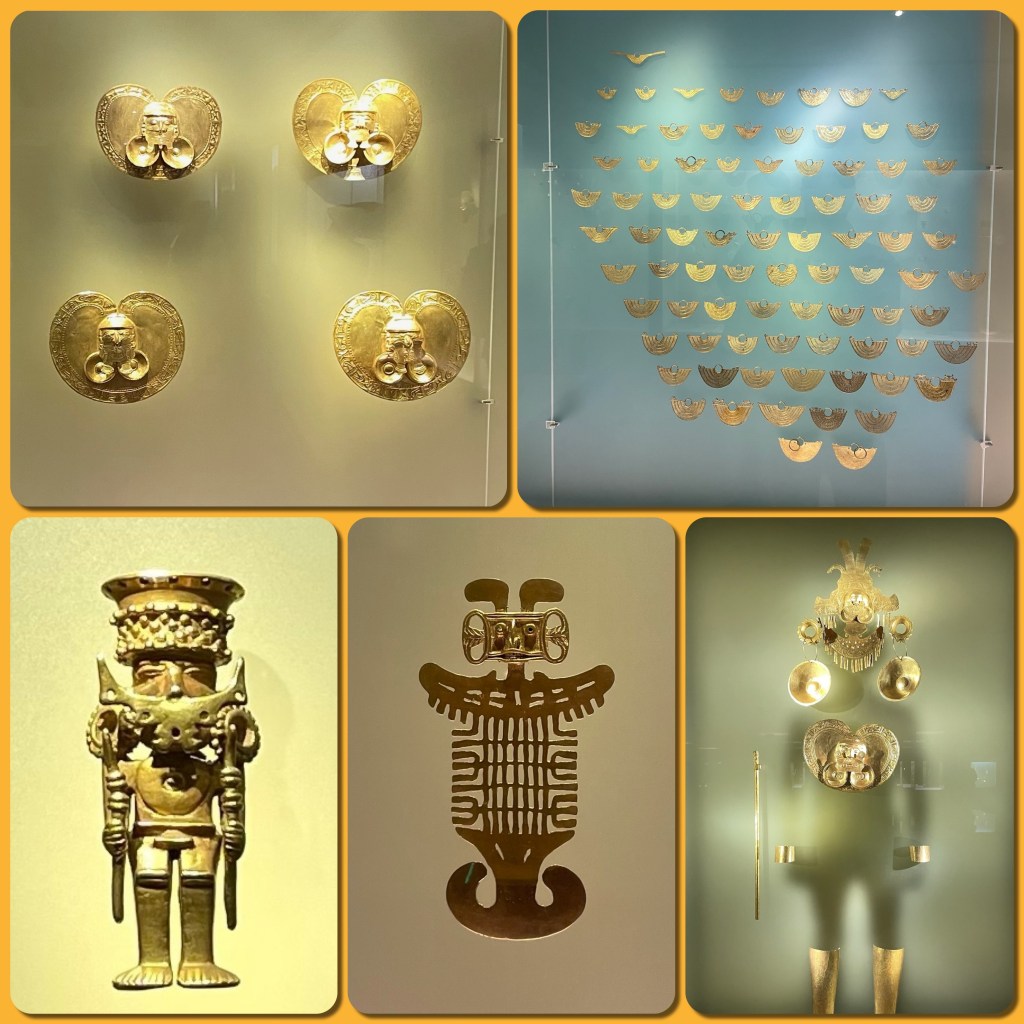
Colombia’s past was irreparably determined by the blood and gold thirsty Spanish conquistadors so it was only fitting that we visited the gold museum.

In the
Museo del Oro

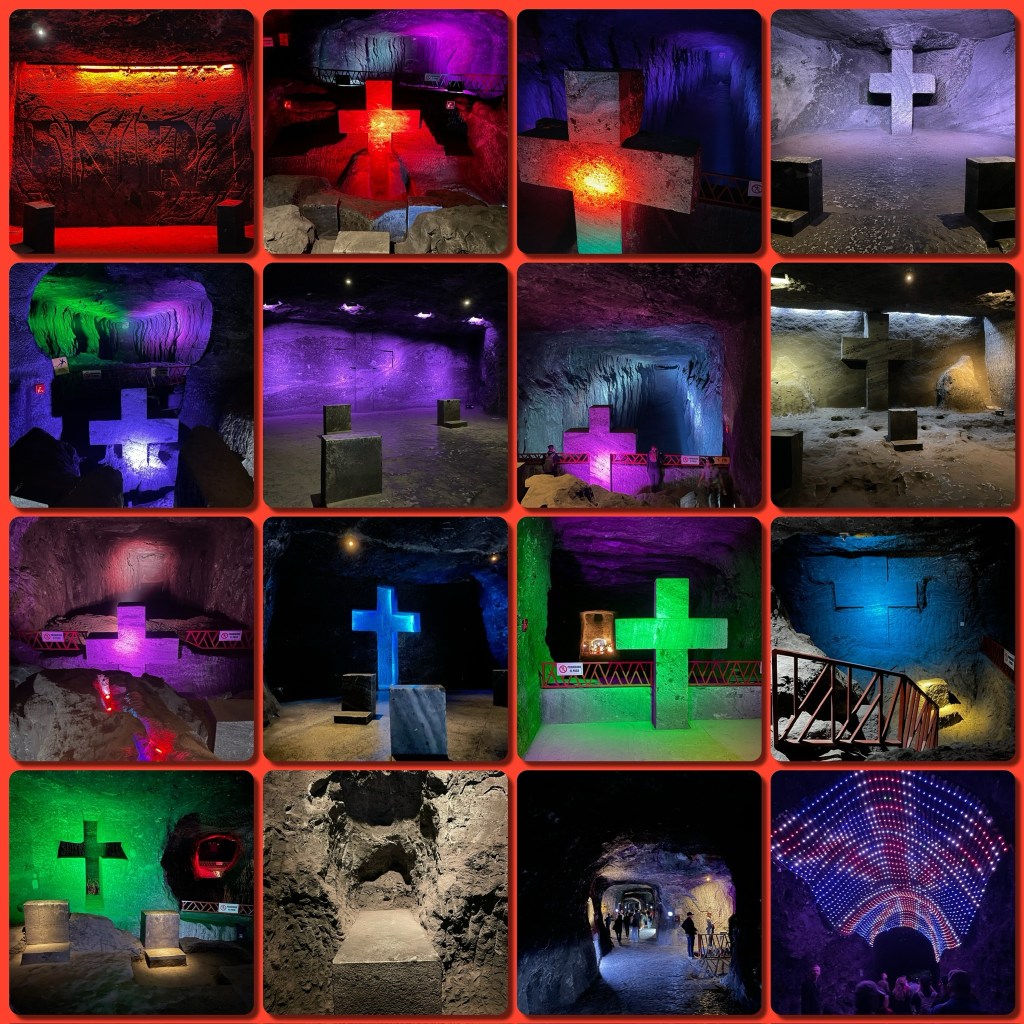
The trip into the city was exhausting so we stayed around Chia for the next few days before venturing further afield to the famous Salt Cathedral at Zipaquirá, a small town 15 miles to the north.

Apart from knowing of its existence we had no idea what to expect as our brains could only conjure up traditional images of ecclesiastical buildings. Constructed in the tunnels of a colossal salt mine that dates back to C5th BC and has been estimated to have contained over a million cubic meters of halite (rock salt). The idea of a cathedral grew from the sanctuaries carved out by (Roman Catholic) miners around 1932, to say their prayers, presumably asking for protection for their hazardous working day. Today the large worked out drifts have been fashioned to depict the 14 stations of the cross and a main nave including a monumental cross. All stunningly lit with changing colours.


Catedral de Sal de Zipaquirá

The old town area is called La Candelaria where you find grand colonial buildings, numerous plazas, the museums, churches and the cathedral. The streets too are fascinating, one in particular is called Calle Del Embudu or Bottleneck Alley because it gets narrower as you walk up it.


Buildings & Bottleneck

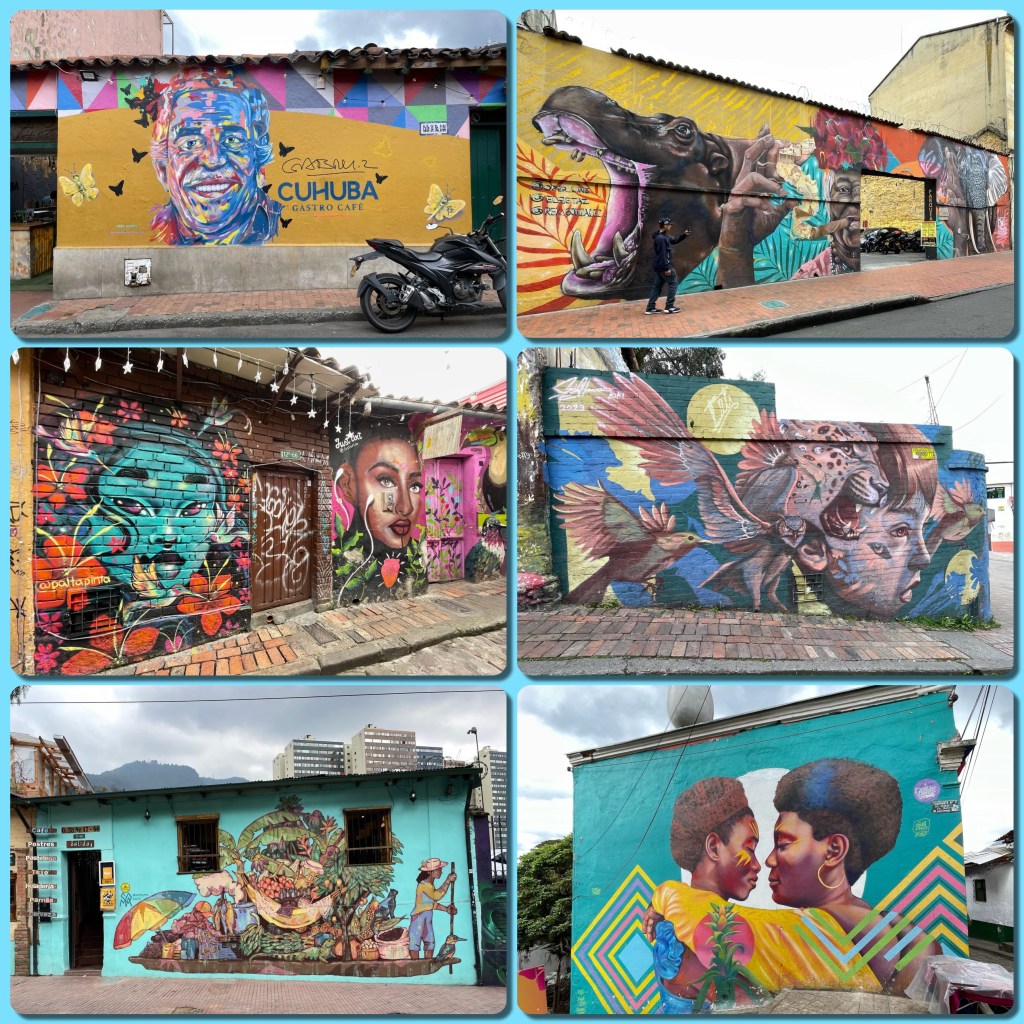
And of course Graffiti

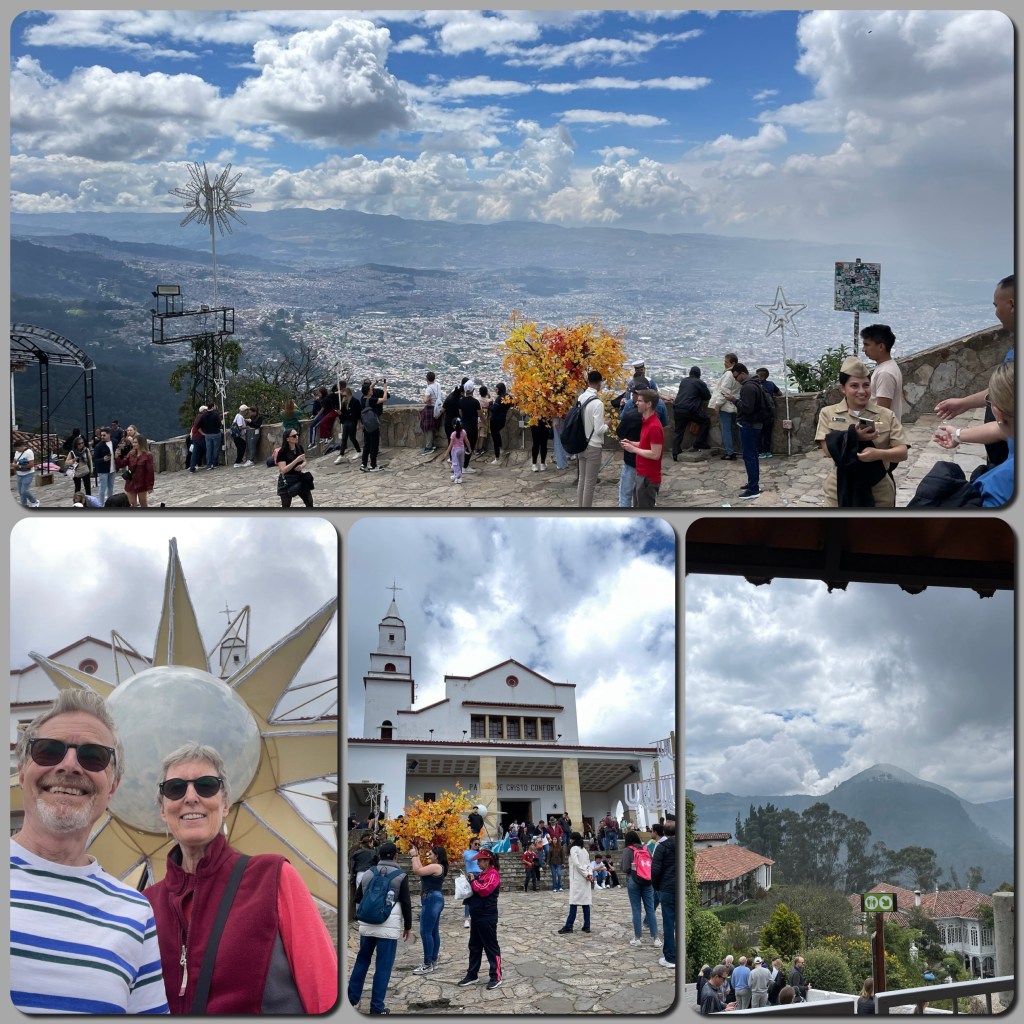
Rising 522 m above the city at a height of 3162 m sits the mountain of Monserrate  (it is part of the Andes). Google reckons you can walk to the summit in 50 minutes maybe you can but I think it would be more like 1hr 20mins if you’re fit. And why would you do that when there is a Funicular and a Cable car that will take you up without the effort, which of course is what we did. 

We queued for around an hour to get the funicular/cable car tickets (the service swaps over at midday) and at that time it was cloudy on top and a hint of rain was in the air but we were treated to glorious sunshine when we were up there. 

What’s at the top? Well apart from the incredible views there is a Basilica so I suppose devout pilgrims would walk it. There is also an arcade of tourist tat and some food stalls all selling pretty much the same local food stuffs, we settled just for a coffee at the first kiosk when we got to the top. 


Top of Monserrate

Then it was back down to walk some more of the old town followed by sushi at Ichiraku Ramen.

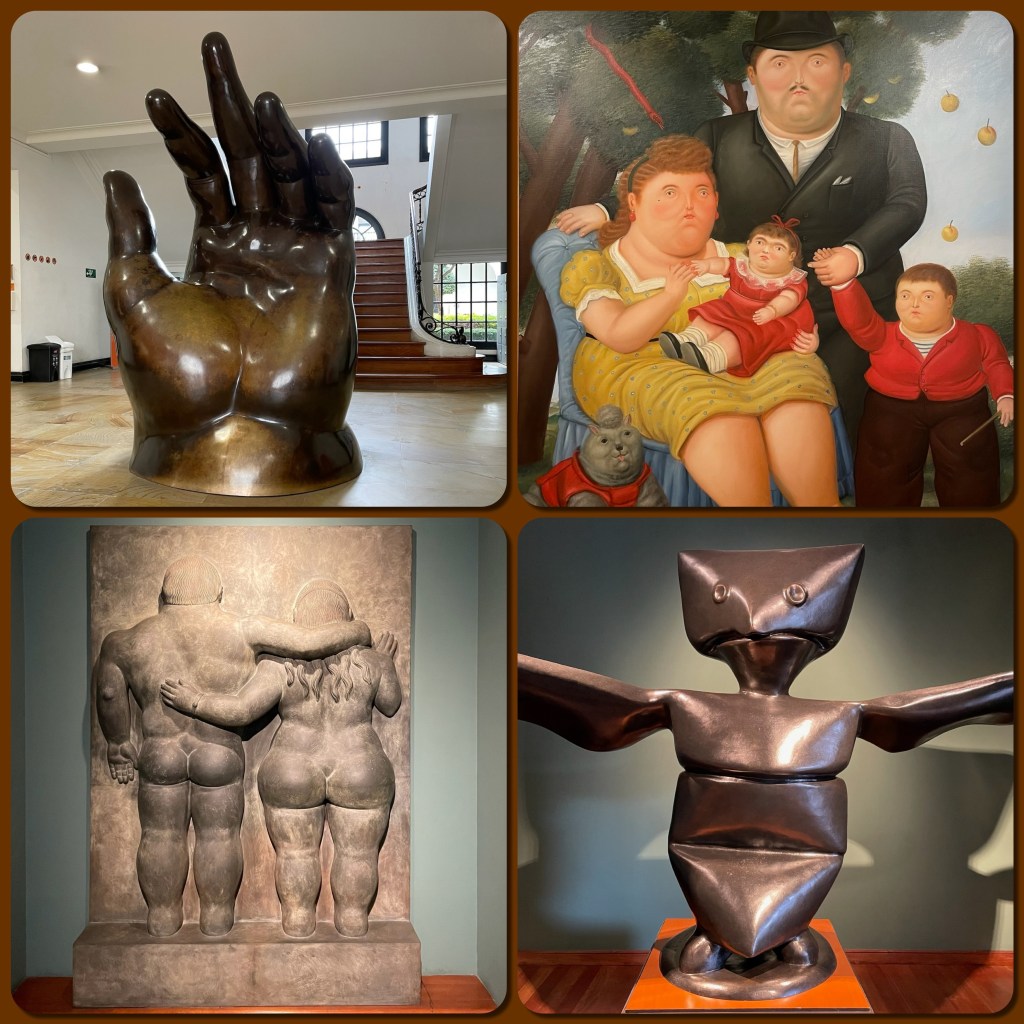
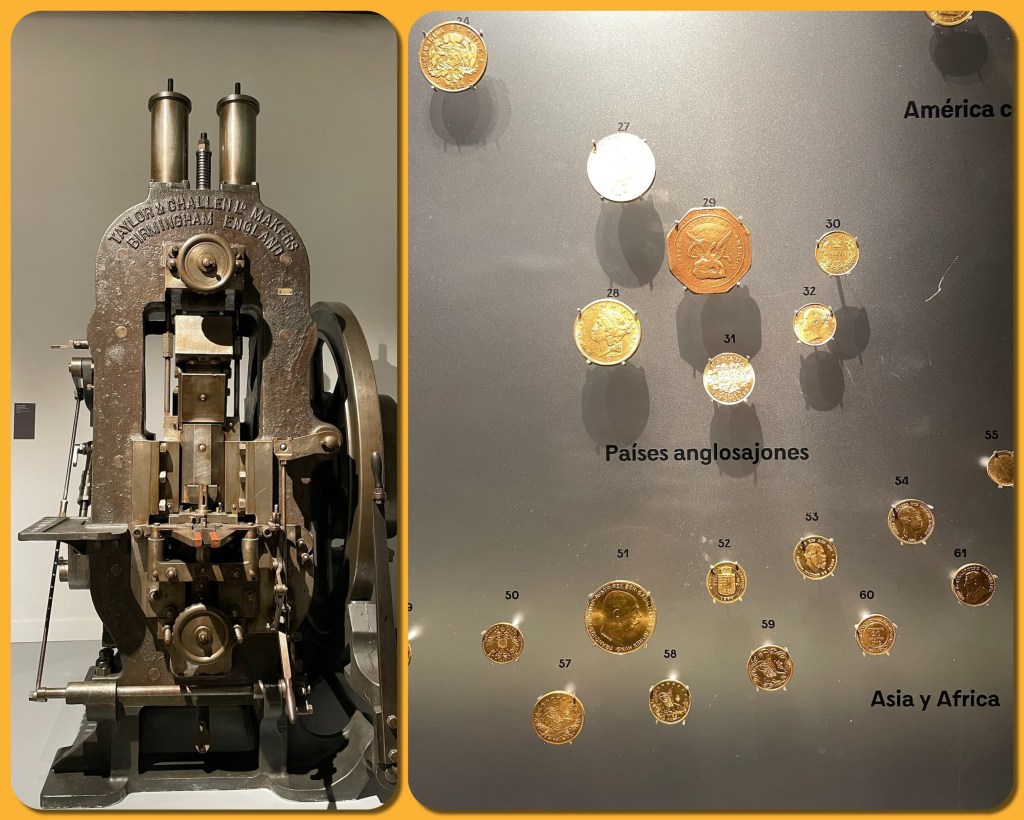
Our last expedition into the centre before the end of the year was to do a trio of museums: Museo Botero, named after a local artist Fernando Botero who only recently died, left a lot of his work and his own extensive art collection to the city in a tax settlement. Museo de Arte Miguel Urrutia -MAMU- (art and iconography from the C16th to modern and Museo Casa de Moneda (more gold and the history of money in Colombia).

Samples of
Fernando Botero’s distinctive style
Clockwise from top left:
Renoir, Pissarro, Salvador, Dalí Degas
At the
MAMU
Money money money!

New Year’s Eve we watched the sky light up from our balcony in Chia.

The Caribbean Coast of Costa Rica

The week’s rest was a welcome break to recharge our batteries. The housesit was less than half an hour from the centre of San José (on a good day) but we didn’t feel the need to do any more than walk the two dogs around the neighbourhood and visit the local Lincoln Plaza shopping mall.

Denver and Mochi

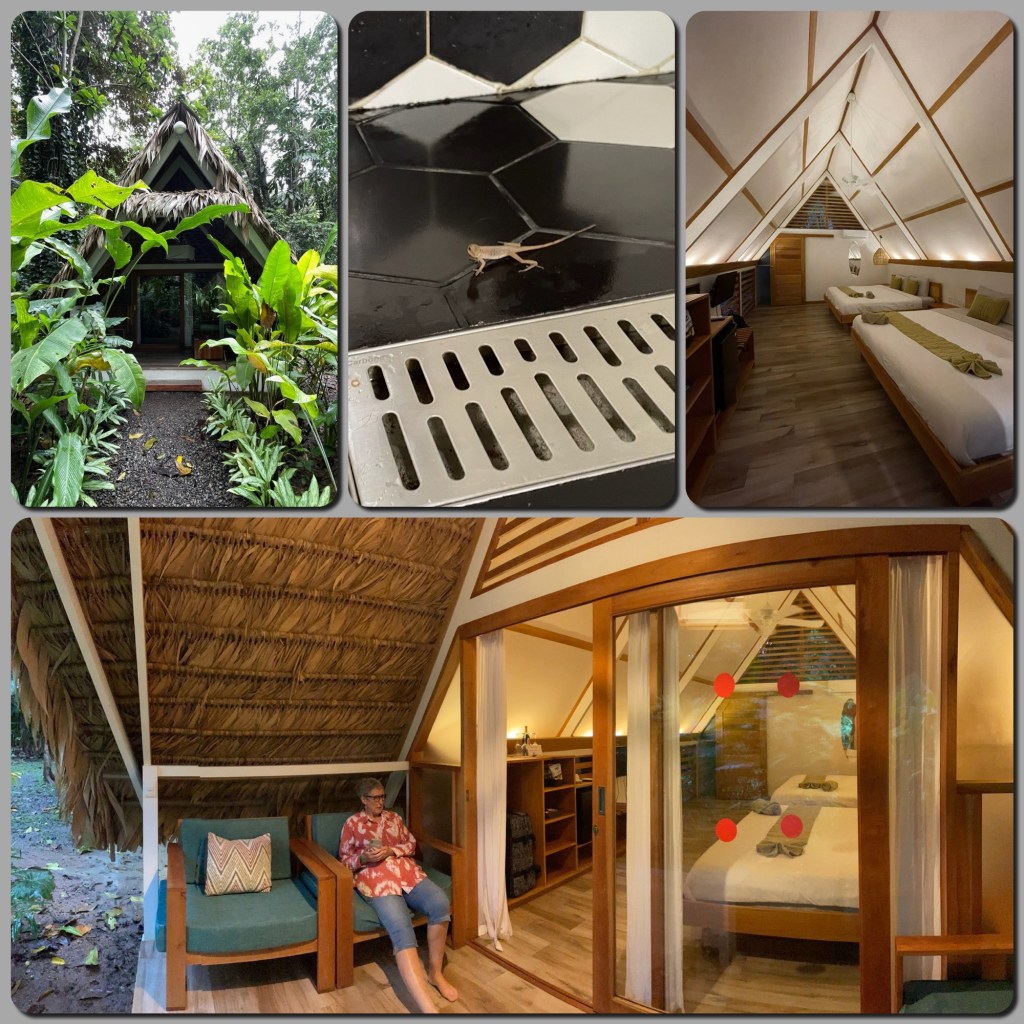
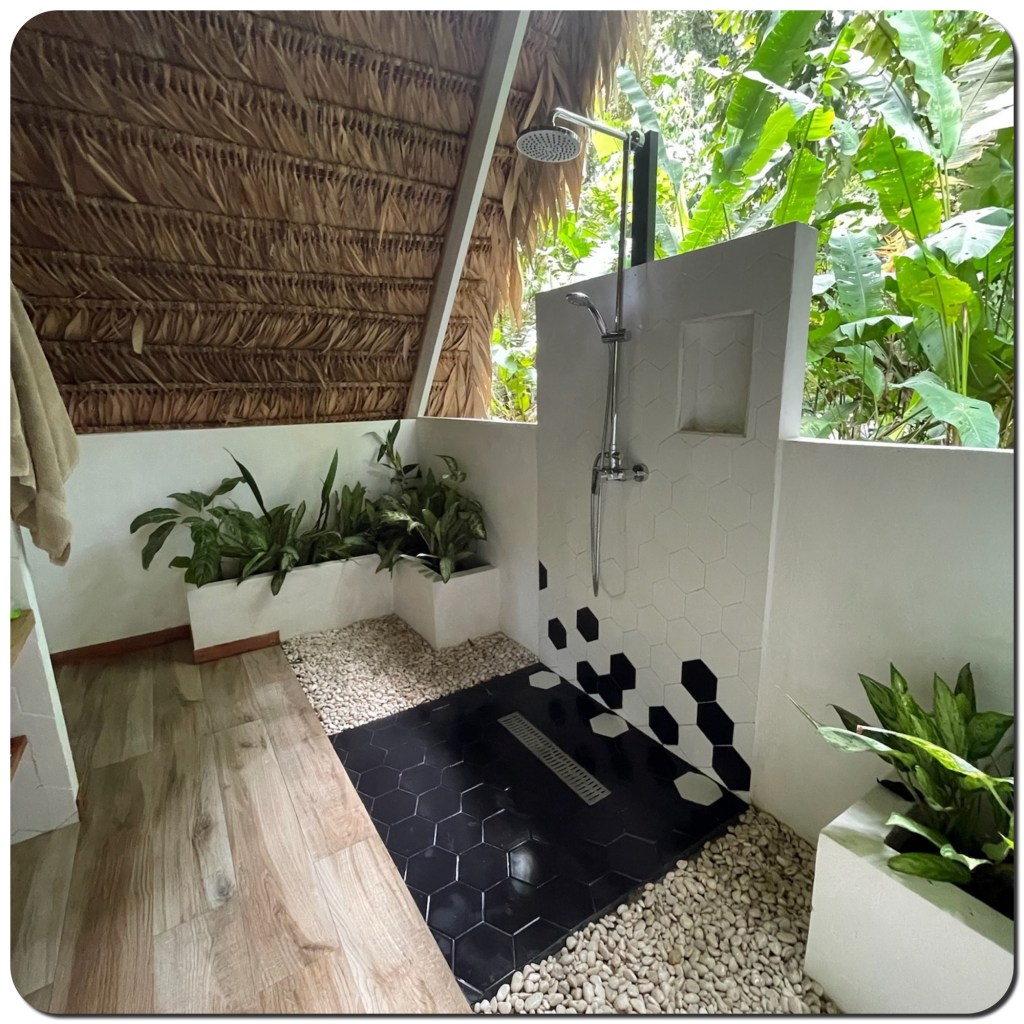
Mid morning we were picked up for our private transfer to Puerto Viejo at the southern end of Costa Rica’s Caribbean coast. A chance to see more Costa Rican scenery (through the rain) on the way. Our next stop was at the Shawandha Lodge in a stunning A-frame chalet complete with a bathroom open to the jungle and house gecko.

A frame chalet
Where the gecko lived

The grounds melted into the jungle at every step, here and there were agoutis (a big almost cuddly looking rodent) that seem to gnaw on anything and a grand old Ceibo tree.

Didn’t get to try the pool

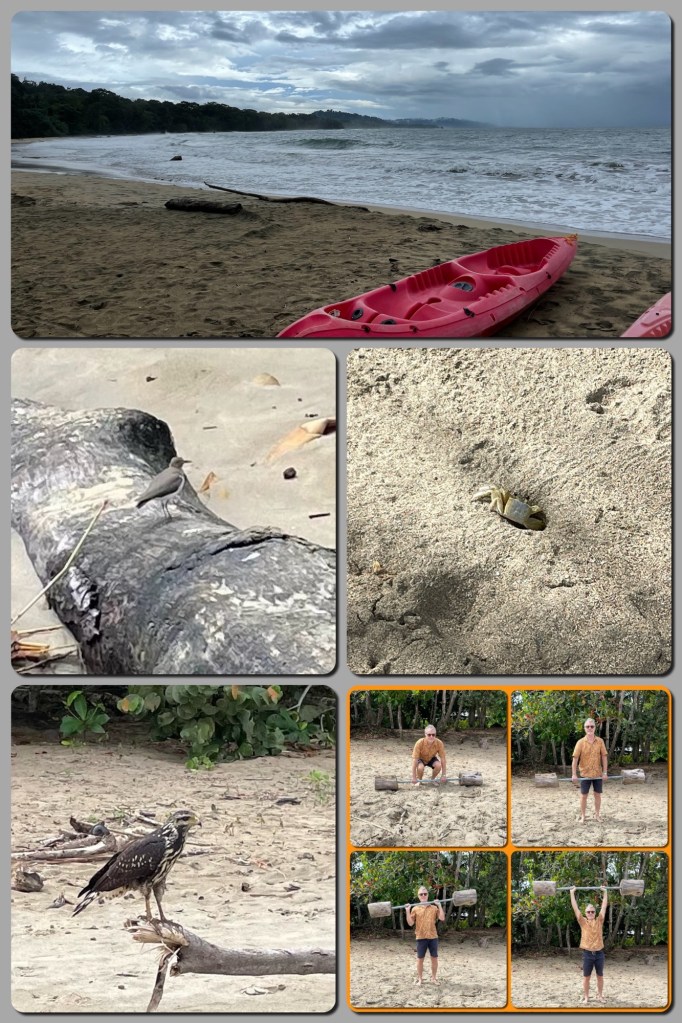
Playa Chiquita, a Caribbean beach, was just 5 minutes walk away. The sea was rough, so no swimming but the sands offered a very pleasant walk past plovers, crabs, a juvenile black hawk and a gym.

The daily workout?

An early start the next day for a guided walk in the Refugio Nacional Mixto de Vida Gandoca-Manzanillo created in 1985 thanks to the efforts of the entire village community, and to protect the area from deforestation caused by logging companies. Here Costa Rica is bounded to the north by the Caribbean, to the south and west by the border with Panama.

This was another wet tramp in search of interesting things: Cappuccino monkeys, more Sloths, a Strawberry poison-dart frog, parrots and other bugs.

Cappuccino monkeys perform for bananas

We also had night visitors, a couple of raccoons, they didn’t hang around for a photo shoot but left evidence of their presence.

Paw prints on the deck

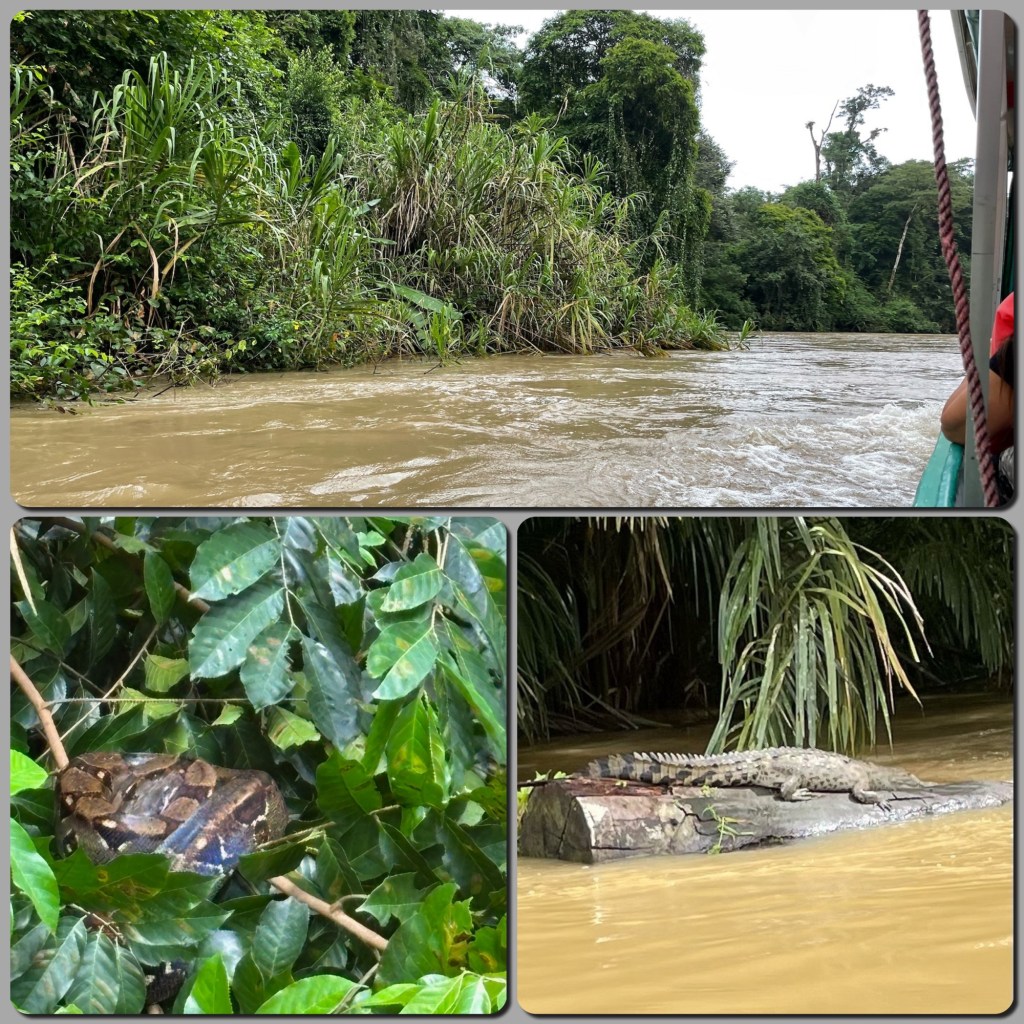
Moving again we transferred to the Parque Nacional Tortuguero de Sirenio Fernando Hernández Vaquerizo (bit of a mouthful). Entry in to this reserve is strictly controlled not least by the fact that to reach our next hotel, Pachira Lodge, was by an hour and a half boat ride along a canal onto a long lagoon that runs parallel to the coast. Lurking at the water’s edge was a boa constrictor and a cayman chilling out on a log.

Boat transfer
Keep your hands inside the boat!

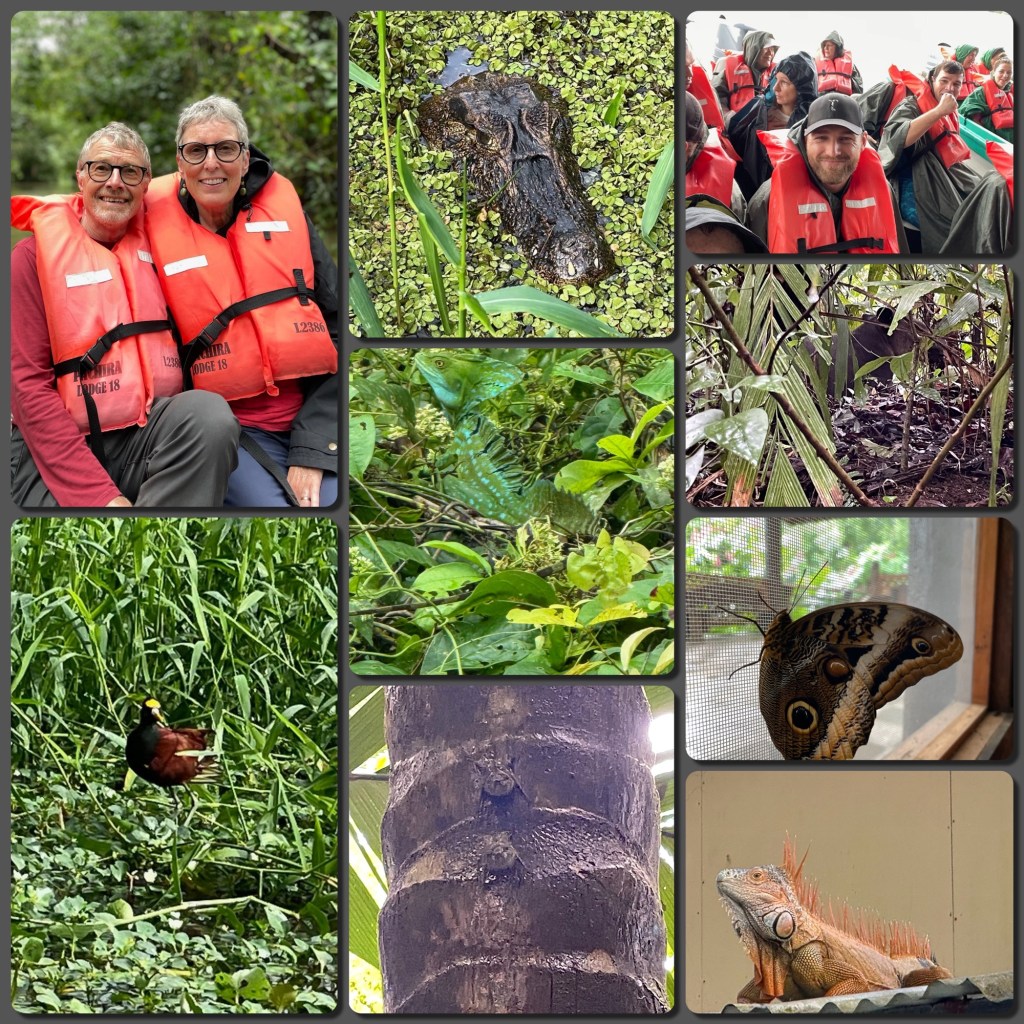
Then it was out on the lagoon with the sun shining at last, for more wildlife spotting; caimans, a basilisk iguana, wattled jacana, bats and a tapir.

Tapir is second down on the right

With our Costa Rican adventures over we travelled back to San José for our final night with the homeowners and a chance to dry out before our long awaited journey into South America.

Leaving into clear skies, of course!