When people picture the nuclear standoff of the Cold War, they usually imagine missile silos, long-range bombers, or the nightmare of intercontinental ballistic missiles arcing over the poles. But another, lesser-known front existed far from the headlines — a hidden contest fought in the deep oceans, where submarines carried weapons powerful enough to end civilisation in minutes.
In Doomsday Torpedoes: Live Testing of Soviet Naval Nuclear Weapons, 1954–1962, historian Krzysztof Dąbrowski shines a light on this secret world. His new volume in Helion’s Technology@War series examines how the Soviet Union, outmatched by the vast nuclear-armed carrier fleets of the United States, sought to redress the balance through the only means available: by giving its submarines and surface warships nuclear weapons of their own.
Nuclear parity beneath the waves
In the years after 1945, the Soviet Navy faced a humiliating truth. While the Red Army dominated on land, the USSR’s fleet was small, battered, and technologically backward. The US Navy, by contrast, could strike from multiple oceans with carrier-borne aircraft capable of delivering nuclear bombs. Soviet planners quickly concluded that conventional weapons could never bridge that gap. What they needed was a “leveller” — a single, devastating blow that could destroy a carrier group outright.
The solution they devised was as audacious as it was terrifying. Soviet scientists began designing compact nuclear warheads small enough to fit onto torpedoes and anti-ship missiles. The result was the T-5 “Doomsday” torpedo, mated to the RDS-9 nuclear device and tested live in the frigid waters of Novaya Zemlya in 1955. The detonation, though “only” 10 kilotons, confirmed that a submerged submarine could unleash a blast capable of obliterating any fleet within several miles.
A world on the brink
Through meticulous research, Dąbrowski reconstructs the fraught story of these weapons and the submariners who trained to use them. Drawing on Soviet and Western sources alike, he chronicles the design and deployment of the post-war Whiskey, Zulu, Foxtrot and Romeo-class submarines — the vessels that formed the core of the USSR’s nuclear torpedo force. He also traces how their missions evolved as the Cold War intensified, culminating in the Cuban Missile Crisis of 1962, when several Soviet submarines armed with nuclear torpedoes were cornered by US destroyers. In those tense hours, one wrong signal or misinterpreted order could have triggered a nuclear exchange.
Doomsday Torpedoes shows that these near-disasters were not isolated incidents. As both blocs tested and deployed new nuclear systems, the margin for error shrank dramatically. The book reveals how the Soviets used live testing to understand the effects of underwater blasts — from the pressure waves that could crush a ship’s hull to the radioactive contamination of seawater and atmosphere. These tests were both scientific experiments and rehearsals for a war that everyone hoped would never come.
Innovation, secrecy and risk
Beyond the weapons themselves, Dąbrowski situates this dangerous programme within the broader technological and political race of the 1950s. He explores the role of the Soviet design bureaus that pioneered nuclear-capable torpedoes, missiles and submarines; the engineers of Gidropribor and KB-11; and the Admirals such as Sergey Gorshkov, who pushed the Navy into the nuclear age. The story becomes one not only of scientific progress, but of rivalry, paranoia and state secrecy — a reminder of how innovation and existential fear were entwined in the Cold War’s most perilous decade.
Richly illustrated and meticulously researched
As with all volumes in Helion’s Technology@War series, Doomsday Torpedoes combines authoritative analysis with striking visual presentation. More than a hundred rare photographs, maps, and full-colour artworks by Tom Cooper and Anderson Subtil depict the aircraft, submarines and missiles that defined the Soviet quest for naval parity. Readers will find illustrated profiles of the Li-2, Il-28, Tu-16 and other aircraft used in nuclear testing, as well as detailed renderings of the submarines that carried the T-5 torpedo and early ballistic missiles.
The result is both a history and a cautionary tale — a vivid reminder that the nuclear age was not merely a contest of numbers and warheads, but of men working at the edge of the unknown. By focusing on the Soviet Navy’s little-known live nuclear tests, Dąbrowski restores a crucial piece of the Cold War story that has long been overshadowed by the land and air arms races.
A chilling new chapter in the Technology@War series
Doomsday Torpedoes brings the reader face to face with the reality of an era when the world came closer to annihilation than most realised. It is a gripping account of how the pursuit of deterrence almost unleashed disaster — and how, by a mixture of restraint, chance and exhaustion, the planet survived.
For anyone interested in Cold War strategy, submarine warfare or the evolution of nuclear technology, this volume is an essential addition to the Technology@War library.
Doomsday Torpedoes Live Testing ofSoviet Naval Nuclear Weapons, 1954-1962 is now available here.
On the rare occasions that they are examined by historians, galloglass are usually called ‘mercenaries’. While the description is truthful up to a point, it is a long way from the whole truth. Write my new book for Helion, I have become aware of just how misunderstood – and often plain ignored – medieval Gaelic armies are. Historians sometimes imply that medieval Ireland, and also Scotland, were so factional and so ‘dog eat dog’ that they were places of non-stop anarchy and division. There undoubtedly was much disorder in medieval Ireland and Scotland – but medieval England was also often disorderly.
We must not romanticise galloglass but they were clearly motivated by more than simply financial profit or power as an end in itself. They were more culturally and politically committed than that. What follows is an attempt to get us away from thinking of galloglass as straightforwardly ruthless soldiers of fortune, and instead see them as Gaelic Ireland’s professional warrior class who, whenever possible, would attach themselves to causes that advanced Gaelic control of Ireland, and diminished English control of Ireland.
The galloglass lord Maol Mhuire Mac Suibhne (MacSweeney) escaping from an English ship by jumping into the Foyle and swimming for it (painted by Fergus Cannan-Braniff).
Culture & Politics
‘Galloglass’, or in its Gaelic form gallóglach (singular) or gallóglaigh (plural), were originally Scots who carved out a name for themselves in Ireland as well-equipped, well-trained soldiers of fortune. It is true they came to Ireland seeking land, wealth and advancement, and so one might expect galloglass to have been the very epitome of Machiavellianism. But, just as Michael Mallett found when researching the mercenaries of renaissance Italy, the galloglass clans were not outcasts, but active and involved parts of local cultural and religious life.[1] Doubtless some galloglass were extremely unpleasant people, but to call the galloglass Machiavellian in the sense of being unscrupulous or unprincipled is to ignore other important aspects of their character. If one had to select three words which best capture the mentality of the galloglass, one would find that none of the three words particularly imply nihilistic ruthlessness: Gaelic, religious, military.
Although following a profession which was destructive, it is not illuminating to see galloglass as mindless thugs. Hiram Morgan’s definition of galloglass as ‘the heavy infantrymen of the Gaelic revival’ conveys much better than words like ‘mercenary’ the sort of cultural loyalties these people had.[2] There were political patterns and recurring themes to their violence. Factional rather than anarchic, galloglass became integral to the great Fitzgerald-Butler rivalry in Ireland, and they played a consistently prominent role in risings against English rule all the way down to the advent of the Stuart age. They also had a keen sense of their own status, ancestry and honour, the galloglass leadership building their own castles and becoming landed gentry as well as axe-wielding warriors.
The evidence suggests galloglass had an esteem for their own Gaelic culture. I believe they came to Ireland from Scotland regarding themselves not as foreigners but as fellow Gaels, speaking Gaelic and with an evident respect for Gaelic customs and traditions. Yet the galloglass commanders knew their family trees which gave them a distinctness among the Irish nobility. Even though his ancestors had migrated to Ireland several centuries earlier, a member of the famous Mac Síthigh (MacSheehy) family of galloglass in Munster was nevertheless still described as a Scot.[3]
The long twilight of the Irish Middle Ages: Máire Rua or ‘Red Mary’ O’Brien with courtiers, somewhere around the middle years of the 17th century, painted by Fergus Cannan-Braniff.Away from Anglicised areas of authority, some Irish landowners were able to maintain enclaves of traditional Gaelic life, and so we have imagined Máire as attended on by her dogs, a harper (for entertainment and the preservation of folklore), a henchman (reminiscent of a galloglass, albeit a rather tatty one, for protection), and an old crone-like maid in a shaggy cloak (for gossipy company and meeting Máire’s every whim). The henchman’s ragged cloak references the fact that although Máire had thousands of acres she was not a wealthy woman in the sense of money or possessions by the time of her death in 1686.
Galloglass were mercenaries in the sense of being available to the highest bidder, but they had a clear preference for Gaelic or Gaelicised employers. The stop-start, usually fairly limited inter-clan wars they fought in were aimed at obtaining greater power within the Gaelic status quo, not overturning the system and building something radically different. None of this should make the galloglass seem nice people. In a way it makes them even more frightening because it shows there was thought and planning in their actions. Galloglass could be duplicitous, but their political ideal seems to have been that Ireland and Scotland should be run by Gaels, or at least by rulers who would respect their status and customs – or, failing that, at least leave them to their own devices.My impression is that when galloglass accepted work or land from the English authorities in Ireland, it was not their first preference but a case of short-term deals to be accepted until something better came along. When they did surrender or swap sides, fear and a simple desire to survive were probably just as common motivating factors as Machiavellian cunning, perhaps especially among the galloglass rank-and-file.
Unlike the Swiss or German Landsknechte, galloglass did not take their trade outside their native realms. Allowing for the fact that there is a debate to be had over whether Dürer had seen with his own eyes the galloglass-like Irishmen he depicted in 1521, it is nevertheless fair to say that galloglass remained rooted within the Gaelic world. On the other hand, they did not live in isolation from the outside world; instead they seem to have been able to adapt and develop militarily. But as well as soldiers, the galloglass leadership were patrons of bardic verse, and they produced some interestingly intellectual descendants, suggesting there had always been more to them culturally and economically than just fighting.[4] Indeed, rather than simply fighters, galloglass may well have been integral to the running of local estates, , perhaps involved with duties like the collection of taxes and tributes, and the enforcement of law.
Perhaps there was a jolly side to the galloglass as well. It would be no be surprise if galloglass were musical people, given that they lived in an age where singing and the performing and enjoying of music was normal and common to all ages and social backgrounds. An illustration in John Derrick or Derricke’s Image of Irelande (published 1581) shows, albeit mockingly, a Mac Suibhne or MacSweeney (one of the best known galloglass families) enjoying himself amid his entourage which includes a harper. Quite possibly galloglass used bagpipers in their military units. Another illustration in Derricke’s Image of Irelande shows what seems to be a galloglass unit formed up behind a piper, and a set of bagpipes is shown amongst galloglass in John Thomas’ picture-map of the battle of Erne Fords (1593).
Perhaps some of this regard for music passed down through the generations. The uilleann piper Tarlach Mac Suibhne (1818/32-1916) was an itinerant piper descended from the Mac Suibhne galloglass of Doe Castle. Living in tiny thatched cabins, Tarlach grew up playing the fiddle as well as the pipes, claiming his skill at the pipes was limited until an encounter with fairies.[5] While the ancestry of the harpist and poet Cahir Mac Cába (born something like 1670) is unknown, the fact that he was from County Cavan (where Mac Cába or MacCabe galloglass had settled), strongly suggests galloglass lineage.[6]
Another possible window onto the things galloglass held dear is their heraldry. Galloglass heraldry (and how, if ever, they used heraldry while they were still actually galloglass) is a topic worthy of further study. They appear to have had banners, but heraldry was not traditionally a part of the Gaelic conception of noble status. However, when galloglass families did adopt coats of arms they selected proud emblems like axes – always considered the classic gallóglach weapon – and symbols relating to the countryside (such as deer) and seafaring (such as ships). As well as powerful visual references to their family histories, their coats of arms indicate, I think, a degree of affection for local landscapes and natural surroundings. By this time the traditional Gaelic order was crumbling in Ireland and galloglass coats of arms also feel an attempt at keeping the old ways alive.[7]
Pious Mercenaries
When we consider galloglass from a religious angle, we again find that appearances can be deceptive. At least some of the galloglass leaders gave considerable attention to their devotions. As a statement of religious belief we surely have to take seriously the poetry in the ‘Tinnakill Duanaire’. This book of Gaelic poetry was probably commissioned by Aodh Buidhe Mac Domhnaill, galloglass captain of Tinnakill castle who died 1619. The poetry is so heavily religious that, as Anne O’Sullivan comments, one might think this was a collection of poetry commissioned by an ecclesiastic rather than a commander of galloglass.[8]
Both the Mac Suibhne galloglass of Fanad and the Mac Suibhne galloglass of Boghaineach (or Banagh) established monastic houses.[9] There is a memorable description of a Mac Suibhne and his retinue at Clondavaddog church in Donegal, who lay decorated swords on the altar, and bring with them, at least on feast days, satchels filled with musical instruments and books.[10] When Killybegs harbour was raided in 1513 it was believed that a young member of the Mac Suibhne family and a scratch force of shepherds and farmers had been able to defeat the raiders due to the ‘miracles of God and St Catherine’.[11]
Living in often violent times and following a military profession perhaps enhanced a preoccupation among the galloglass with the afterlife, faith and fate. I doubt there was a clear line in their minds between their devotions and their activities as soldiers. It does not seem that Gaelic beliefs about the relationship between reason and religion in warfare were fundamentally different from those found across pre-reformation western Europe. In poetry and song, the ideal medieval soldier was often a person of unquestioning Christian faith who surrendered himself to the will of God – or in the case of some medieval tales, a military adventurer who was happy to follow wherever fate and chance took him, fighting and questing as an end in itself.
But some of the more intellectual medieval discussions about war emphasised that God was unlikely to grant victory to fools. Medieval thought-leaders therefore reasoned it is commanders of armies and nations, not God, who are responsible for planning, tactics and logistics.[12] What humans could not control (luck, fate, fortune) was in the hands of God. Yet even then one could not automatically expect God to intervene. A 16th-century life of St. Colum Cille, a saint venerated by the Mac Suibhne galloglass and their Ó Domhnaill (O’Donnell) overlords in Donegal, warns that God does not like to answer prayers concerning worldly matters such as victory in battle – even when those prayers come direct from Colum Cille himself.[13]
Irish lord and his court, 16th century, sketched by Fergus Cannan-Braniff.
The Red Stone
There are also more mystical, supernatural threads to the galloglass, principally a belief in charms, rituals and saints, which have passed unnoticed by scholars. Those seeking to recreate the gallóglaigh through re-enactment, wargaming or model-making cannot achieve authenticity with conveying these (sometimes seemingly contradictory) characteristics of piety, ritual, wasteful lavishness, pride in ancestry and belief in fate and the supernatural. The Mac Suibhne family, for example, are said to have had a gold ring with a precious stone which made one invincible in combat.[14]
A fascinating glimpse of how sound military preparation could go hand in hand with a belief in ritual and the supernatural is contained in a document, again concerning the Mac Suibhne galloglass, in the Royal Irish Academy entitled ‘the Will of Donall O’Gallagher aged 41 years concerning all the ‘old customs of O’Donnell in the territory of Tirconnell A.D. 1626’.[15] The original 17th-century document is apparently lost, but what the Royal Irish Academy have is a translation from Irish into English made by John O’Donovan, one of the most famous and interesting of Ireland’s early historians. Cambridge University also have a copy in Irish made by an anonymous scribe in the 18th century of the same lost document.[16]
There is much to say about the ‘old customs’ described here. For a start, Donall’s family name is significant, given that the Ó Gallchobhair or O’Gallagher chiefs were ‘marshals’ of Ó Domhnaill’s forces. Born in 1806 the son of a Catholic tenant farmer, O’Donovan studied Gaelic Irish history with an energy and enthusiasm that few others have had, before or since. Among many interesting details in the Royal Irish Academy’s ‘old customs’ document is the pact between three Mac Suibhne septs and Ó Domhnaill, which was to supply 300 galloglass (a very formidable force) and also ‘a person to carry the armour and stone of St Columbkille.’[17]
What was this stone, and how and why was it carried? St. Colum Cille (Columcille, Columkille, Columba) is a major figure in Celtic Christianity. One of Ireland’s patron saints (Patrick being the primary patron), Colum Cille is said to have been born at Gartan, Donegal, around 521.[18] Asterisked at the bottom of his translation, O’Donovan has added the question: ‘Is not this Columkille’s reade stone mentioned in the Inquisitions.’[19]
Galloglass at prayer, circa 1600, at the chapel of Gartan in Donegal, birthplace of St. Colum Cille; painted by Fergus Cannan-Braniff. The ruins of the chapel, known to have been once thatched, still stand. We have attempted here a of a late galloglass, based on an interpretation of John Thomas’ picture-map of the battle of Erne Fords. The galloglass here has a ceramic hand grenade on the ground next to him, based on an example now in the Ulster Museum which came from a Spanish ship, Trinidad Valencera; the ship had participated in the 1588 Armada campaign and was wrecked in Kinnagoe Bay, Donegal.
It looks like O’Donovan was right. In ‘the year of our Lord 1532,’ Maghnas Ó Domhnaill, chief of Tír Conaill, dictated ‘from his own lips’ the life of Colum Cille which we quoted from earlier.[20] Maghnas’ book mentions several stones, including a flagstone on which Colum Cille was born (but Maghnas tells us it remained at Gartan), and a flagstone on which Colum Cille was baptised, and thereafter had the power to heal – but this one, Maghnas recounts, was lost.[21] The saint’s ‘armour’ and ‘read’ or red stone cannot have been that big as it sounds like there was only one person assigned to carry them. This means we can rule out ‘St. Columba’s Pillow’, which is 48cm long and, was found near Iona Abbey (who now care for it), and not in Ireland.
Mac Suibhne chiefs were, it is true, originally inaugurated at Iona by Colum Cille’s successors there, but from the time of Toirdhealbhach Ruadh Mac Suibhne of Fanad (died perhaps c. 1438), inauguration of each Mac Suibhne Fánad was performed at the Columban foundation of Kilmacrenan in Donegal, the ceremonial rites overseen by the Ó Firghil (O’Friel) family. The same family also inaugurated each Ó Domhnaill ruler.[22]
To find the ‘red stone’ we need to turn back Maghnas Ó Domhnaill’s account of Colum Cille, in which he tells of a ‘round stone’ which was the ‘colour of blood’ known was ‘An Cloch Ruadh’ (= ‘The Red Stone’), which Colum Cille left to Gartan to work miracles.[23] Perhaps it was used as a healing stone to prevent or cure wounds. Two other healing stones are known in Donegal, and a protective ‘charmstone’ was possessed by the Highland Campbells of Glenorchy.[24] Maghnas says the red stone could not be covered with gold or silver, though people had tried, but it would ‘suffer’ a case made from those metals.[25] In 1609 it was recorded that a member of the Ó Náthan (or O’Nahan/Nawn) family, who was coarb (hereditary successor) of Gartan, ‘carrieth Columkillie’s read stone’.[26] Surely this is the stone carried by the man – likely a cleric of the Ó Náthan family, rather than a galloglass – supplied by Mac Suibhne Boghaineach.
Armour for the Body, Armour for the Soul
The attachment the Ó Domhnaill dynasty and their followers had for Colum Cille went beyond the fact that that this was a local saint of regal ancestry. There is a violence to elements of Colum Cille’s legend and in the language used to tell that story, and no doubt this resonated with the Ó Domhnaill and Mac Suibhne families. Even Colum Cille does not escape painful physical punishment when an angel strikes him for his disobedience.[27]
Maghnas tells, as well, the story of Colum Cille and his people slaughtering the enemy in a great battle at Cúl Dreimne, aided by the archangel Michael taking the form of a great warrior.[28] Colum Cille, then, was something of a military saint (he is also said to have subdued the Loch Ness monster),[29] and this brings us to the question of Colum Cille’s ‘armour’. At this point comparison between O’Donovan’s translation and a recent translation of the Cambridge manuscript is worthwhile. The Cambridge University copy of the ‘old customs’ uses the Irish word ‘lúirigh’, from the Latin lorica (a general term meaning ‘body armour’). O’Donovan opted for the general word ‘armour’, but the recent translation of the Cambridge version renders this as ‘breastplate of Columcille’.[30]
Yet ‘lorica’ is the term for a protection prayer, as well as body armour. It does not seem medieval people thought of armour as something which only protected the body; armour could protect both body and soul. And so we find warfare with physical weaponry and warfare of the spirit in Maghnas’ biography of Colum Cille, a saint who, Maghnas says, destroyed carnal enemies with ‘the arms of battle’, and spiritual enemies with the ‘weapons’ of ‘abundant vigils’ and the ‘frequent shedding of tears.’[31] Again, the very old (at least 8th century) ‘breastplate’ prayer of St Patrick appeals to Christ to ‘protect me to-day / Against poison, against burning / Against drowning, against wound,’ and Ephesians 6:14 urges us to ‘Stand firm … with the breastplate of righteousness in place.’
Real armour could act as a charm. Possibly the fact that armour is uncomfortable to wear meant it was seen as a way to strengthen the spirit. To medieval ears, it was good that St. Richard, bishop of Chichester until his death in 1253, had worn a ‘hairshirt’ and ‘breastplate’ (what form of armour this means is unclear), and so ‘inflicted on his flesh the arms of this world, so that his spirit would more easily bear the arms of Heaven.’[32]
All the same, the Gaelic word ‘lúirigh’ or luireach used in the Cambridge University copy of the ‘old customs’ was often used by early writers to mean specifically a mail shirt.[33] Given the connection with galloglass, we might expect this to mean the ‘hawberk’ of Colum Cille. Galloglass used other forms of armour, but they are often described as wearing mail shirts. This would not be the only known example of holy or ‘magic’ mail armour in Ireland (if that is what it was). The National Museum of Ireland has a crozier and band of rivetted mail associated with St Mura. This piece of mail and crozier are recorded as having been presented to the antiquary and artist George Petrie, who died in 1866, by a Mr Woods of Sligo. Variously described as ‘bronze’ or ‘brass’ (although it cannot be brass in the modern sense of the word), the mail band is 2.4 metre-long.[34] An uneven number of rings have been used, indicating bits are missing and that this could be the remnant of a garment.
Mura was the patron saint of the Ó Neill dynasty.[35] If the crozier and mail does have a connection with Mura, it is conceivable Ó Neill’s Mac Domhnaill (MacDonnell) galloglass knew of them, and had perhaps even drawn strength from them in their rituals. It is, just to confuse matters, possible that this mail band and crozier actually came from the church of St Lommán of Portloman, Lough Owel (Co. Westmeath), where a crozier and chain of Lommán’s are recorded, the chain being wrapped around women to heal and protect them during childbirth.[36] But either way, one suspects that Colum Cille’s ‘lúirigh’ was a piece of actual armour – quite possibly mail – which was believed to have belonged to the saint, perhaps at the battle of Cúl Dreimne.
Along with the ‘red stone’, Colum Cille’s ‘lúirigh’ may well have been a talisman used in rituals, led by a Ó Náthan, involving protective prayers or oath-swearing, with perhaps the stone and armour carried for public display in a portable altar. We know Richard II made Irish nobles swear allegiance on St. Patrick’s crozier or staff,[37] and Richard Stanihurst tells us in his De Rebus in Hibernia Gestis (1584) that upon enrolment galloglass traditionally swore with ‘religious solemnity’ never to turn their backs on the enemy.[38] We can easily imagine such oaths being sworn in front of the Colum Cille relics; to those swearing their oaths such objects may well have felt as potent and powerful as battlefield weaponry.
But a Hollow Laugh (No Doubt) from Machiavelli
It would be interesting to know whether the galloglass oaths mentioned by Stanihurst were focussed solely on battlefield courage or if they contained any wider political or religious ideals. But it is, in my opinion, clear that words like ‘Machiavellian’ and ‘mercenary’ do not tell the whole story when it comes to the gallóglaigh. There remains another question to consider, though: what Machiavelli himself said about mercenaries. Machiavelli, whose ideas were read with interest around Europe, warned in The Prince, which he wrote in 1513,that mercenaries ‘are useless and dangerous’, and that a state who relies on them ‘will never be either stable or safe.’[39] Elements of this are certainly true of the galloglass. The English issued pardons and land grants to galloglass leaders, and hired units of galloglass and Irish ‘kern’ light infantry. Yet members of these supposedly English-aligned groups of galloglass and kern turned on the authorities when they had the chance, the government’s Mac Domhnaill galloglass in Leinster being described in a report as ‘a nowghty race’ who are ‘disposed to Rebellion.’[40]
Machiavelli would no doubt have uttered a hollow laugh at this. But his analysis of mercenaries does not in other ways ring true for the galloglass. For if we consider the evidence carefully, we find the galloglass were rather more complex characters who had political scruples, a code of honour and a high regard for their own traditions and religious practices. Often caught up in extremely difficult political events, the galloglass clans survived for as long as they did by following a mix of caution, belligerence and hard-headed realism. But beneath the Machiavellian exterior existed values, agendas and long-term political goals based around fairly consistent ideals of culture, identity, religion, ancestry and clan.
The Gaelic World at War: Soldiers & Soldiering in Ireland 1366-1547 is now available to buy here.
[1] M. Mallett, Mercenaries and Their Masters: Warfare in Renaissance Italy (2024), chap. 8.
[2] H. Morgan’s review of S. Duffy (ed.), World of the Galloglass, in Scottish Historical Review, vol. 89, pt. 1 (April 2010), p. 102.
[3] M. MacCarthy-Morrogh, ‘The Munster Plantation, 1583-1641’ (Royal Holloway College PhD thesis, 1983), p. 182.
[4] Such as (if we are right that they are MacSweeneys) Eugene Swiney, an eminent printer, publisher and bookseller who was probably born around 1730 in Limerick city, and Owen Mac Swiney, born 1680 in Co. Wexford, who, although apparently a soldier as a young man became a playwright and London theatre manager (see Dictionary of Irish Biography entries for both). Others were successful in commerce: in the early 18th century Sheehys were noted Catholic merchants in Limerick and Cork.
[5] ‘Mac Suibhne (McSweeney), Tarlach’, Dictionary of Irish Biography (entry by D. McCabe).
[6] Perhaps Mac Cába’s ‘erudite literacy in the Gaelic verse tradition’ and that he would not accept money for his bardic performances, indicate a long-standing Mac Cába respect for poetry and music: ‘MacCabe (Mac Cába), Cathaoir (Cahir)’, Dictionary of Irish Biography, (entry by D. McCabe).
[7] For MacDonnell arms: B. Burke, The General Armory of England, Scotland, Ireland, and Wales (1989), p. 638; E. MacLysaght, Irish Families: Their Names, Arms & Origins, 4th edn. (1991), p. 166. For MacDowell arms: Burke, General Armory, p. 639. For MacSheehy arms: Burke, General Armory, p. 918; MacLysaght, Irish Families, p.184. For MacCabe arms: F. Cannan, Galloglass 1250-1600: Gaelic Mercenary Warrior, illus. by S. Ó’Brógáin (2010), p. 47; Fairburn’s Crests, rev. by L. Butters (1989), p. 305; MacLysaght, Irish Families, p. 161. For MacSweeney arms: Cannan, Galloglass, p. 27; MacLysaght, Irish Families, p. 184; Burke, General Armory, p. 647; see also the MacSweeney arms in MS 125, GO 60 in the Office of the Chief Herald of Ireland. I am grateful to Fergus Gillespie, former Chief Herald of Ireland, for discussing the heraldry of families of galloglass origin with me.
[8] The ‘Tinnakill Duanaire’ (Trinity College Dublin MS 1340), the commissioning of which perhaps involved Aodh’s wife Mary O’More, can be viewed online, together with O’Sullivan’s very useful article, at the Irish Script on Screen website.
[9] The Church of Ireland clergyman Mervyn Archdall, born in Dublin in 1723, found that near Killybegs town, in Donegal, Mac Suibhne Boghaineach constructed a ‘small house’ for Franciscan friars. When the friary was no more, the local people made from its ruins a church dedicated to St. Catherine – Archdall, Monasticon Hibernicum (1873), vol. 1, p. 199; see also ‘Mac Suibhne Boghaineach’ in F. Gillespie, ‘Gaelic Families’, in W. Nolan, L. Ronayne & M. Dunlevy (eds.), Donegal: History and Society (1995). For the Fanad family’s involvement with religion see Gillespie, ‘Gaelic Families’, p. 781; K. Simms, ‘Images of the Galloglass in Poems to the MacSweeneys’, in S. Duffy (ed.), The World of the Galloglass: Kings, Warlords and Warriors in Ireland and Scotland, 1200-1600 (2007), p. 106; Leabhar Chlainne Suibhne: An Account of the MacSweeney Families in Ireland, ed. P. Walsh (1920), p. xxviii.
[10] J.J. Silke, ‘Raphoe and the Reformation’, in Nolan, Ronayne & Dunlevy, Donegal, pp. 271-272.
[12] See C. Tyerman, How to Plan a Crusade: Reason and Religious War in the High Middle Ages (2016), esp. chap. 1, for a good outline of the place of reason in medieval military thought.
[13] Manus O’Donnell, The Life of Colum Cille, ed. B. Lacey (1998), p. 99.
[15] Royal Irish Academy Miscellaneous O’Donovan MS, labelled ‘Ordnance Survey, Ireland’, 14/B/7, p. 423.
[16] Cambridge University Library MS Add. 2766(20)(7), which has been translated in D. McGettigan, Red Hugh O’Donnell and the Nine Years War (2005), ‘Appendix One: Administrative Documents Connected with Red Hugh’.
[17] Royal Irish Academy Miscellaneous O’Donovan MS, labelled ‘Ordnance Survey, Ireland’, 14/B/7, p. 423.
[18] Alban Butler, Lives of the Saints, ed. B. Kelly, 4th edn. (1936), vol. 2, p. 614; M. Manser (ed.), Collins Dictionary of Saints (2004), p. 57.
[19] Royal Irish Academy Miscellaneous O’Donovan MS, labelled ‘Ordnance Survey, Ireland’, 14/B/7, p. 423.
[24]R. Ó Floinn, ‘Sandhills, Silver and Shrines – Fine Metalwork of the Medieval Period from Donegal’, in Nolan, Ronayne & Dunlevy, Donegal, p. 141, note 113; F. Cannan, ‘A Family of Highland Blacksmiths: The Macnabs of Barachastlain’, Journal of the Antique Metalware Society, vol. 19 (2011), pp. 34-35.
[32]Saint Richard of Chichester: The Sources for His Life, ed. D. Jones (Sussex Record Society vol. 79), p. 185.
[33] P. Harbison, ‘Native Irish Arms and Armour in Gaelic Literature, 1170-1600’, Irish Sword, vol. 12 (1975-1976), pp. 173-199 & 270-284; F. Cannan, Scottish Arms and Armour (2009), p. 18; Cannan, Galloglass, pp. 18-21, 61.
[34] National Museum of Ireland object record; Ó Floinn, ‘Sandhills’, in Nolan, Ronayne & Dunlevy, Donegal,pp. 113-116.
[35] W. Reeves, ‘Saint Mura’, Ulster Journal of Archaeology, vol 1 (1853), p. 272.
[36] National Museum of Ireland object record; Ó Floinn, ‘Sandhills’, in Nolan, Ronayne & Dunlevy, Donegal,pp. 113-116.
[37] D. McGettigan, Richard II and the Irish Kings (2016), p. 112.
[38] Richard Stanihurst, Great Deeds in Ireland, ed. J. Barry & H. Morgan (2015), p. 123.
[39] Machiavelli, The Prince, Selections from the Discourses and Other Writings, ed. J. Plamentatz (1972), p. 91.
Another new book on the battles of the Wars of the Roses might warrant an apology, or at least an explanation. Since Tony Goodman and John Gillingham published their ground-breaking work on the military aspects of the Wars over forty years ago, there have been dozens of books published on individual battles, prominent individuals or the campaigns in general. Academic historians and popular historians alike have written on Towton – often said to the biggest and bloodiest battle fought on English soil – Barnet and Bosworth, as well as lesser-known encounters like Mortimer’s Cross and Hexham.
Yet what these accounts, at least for 1459 to 1461, have in common is their reliance on battle narratives drawn mainly from the Tudor chroniclers. These were embellished by the fertile imaginations of nineteenth- and early-twentieth-century historians. The accepted version of the Battle of Towton, for example, is almost entirely derived from the mid-Tudor chronicler Edward Hall, while the various explanations for the ‘battle’ of Wakefield come from a mish-mash of later fifteenth- and sixteenth-century chroniclers and Victorian historians with a sprinkling of Shakespeare added in for good measure. Equally, the confusing and contradictory accounts of the Second Battle of St. Albans in February 1461 are usually made sense of by recourse to the theory of ‘Inherent Military Probability’ and the work of the Great War artillery officer Alfred Burne. In fact, very little of the generally accepted narrative of this first stage of the Wars of the Roses – from Blore Heath on 1459 to Ferrybridge and Towton eighteen months later – is borne out by the contemporary sources.
The base of ‘Dacre’s Cross’ at Towton. Often thought of as a contemporary memorial of the battle, it was in fact erected in the early 20th century. (Author’s photograph)
This book, the first in a three-volume military history of the Wars of the Roses covering the period 1455 to 1471, offers a new account of these well-known battles. It questions many of the commonly held assumptions about the Wars. It is firmly grounded in the contemporary documentary evidence and underpinned by a careful contextualisation of the chronicle evidence.
The first and most fundamental misunderstanding about the military campaigns of the Wars of the Roses is the nature of the conflict itself. The Wars were not a long, drawn-out civil war involving vast armies raised by squabbling nobles all competing in a bloody struggle for the English throne. Contemporaries understood very well what constituted a civil war and wrote about such conflicts in France and elsewhere in Europe, illuminated by the concept of civil war as applied to the Roman Republic and other Classical exemplars. It is important to realise that no fifteenth-century Englishman (or woman), as far as we know, referred to the conflicts of their own time as a ‘civil war.’ Instead, the ‘Wars of the Roses’ (a concept first used in the seventeenth century referring to the heraldic badges of the houses of Lancaster and York) was a series of rebellions against royal authority, some successful and others not, understood within the legal framework of treason and notions of good and effective lordship.
Understanding that the Wars of the Roses were not a civil war, but an intermittent series of rebellions helps us appreciate the nature of the campaigns. Between May 1455 and March 1461, there was probably only some three to four months of active campaigning in England. The crown and its aristocratic rivals had neither the time nor the resources to assemble and maintain armies of the size raised for expeditions abroad (which took months, if not years, of preparation and careful negotiations with local communities to fund and supply). ‘Overmighty subjects’, such as the dukes of York and Somerset and the earl of Warwick, did not routinely maintain armies of hundreds, let alone thousands, of retainers, nor could they mobilise thousands of tenants and servants at short notice to take the field. The armies of this first stage of the Wars were significantly smaller than the numbers given in contemporary (and later) chronicles and were probably smaller than even the most conservative estimates given by recent historians.
Part of the Historic England Registered Battlefield on Towton Dale looking down towards ‘Bloody Meadow.’ (Author’s photograph)
Appreciating that these campaigns were not sustained affairs waged by large armies in the context of a long-running and all-consuming civil war also has a bearing on the way we understand how the battles were fought. There was probably no massed archery at Blore Heath, Towton or any battle between 1455 and 1461. The battles were predominantly fought by the retainers and household men of the various lords, many more of whom probably wore full harness than we might imagine. Englishmen rode to battle, contemporary observers tell us, but usually fought on foot, but in many of these battles, speed of movement and opportunity may have played more of a role than previously thought. Mounted troops probably determined the nature of battle at St. Albans and Ferrybridge/Towton and perhaps also at other times and places. While battles were frequently fatal for the losing commanders, there is little evidence of mass casualties among the rest of the armies. There seems little significant economic impact, no obvious spikes in the number of deaths recorded in probate records, nor evidence of large numbers of wounded or invalided seeking charity. We can be certain that tens of thousands of men were not killed on Palm Sunday 1461 nor in any other battle during these years.
This manuscript illustration of the fighting on Palm Sunday 1461 was produced in the Low Countries, probably in the 1490s, for a copy of the chronicle of the so-called ‘Monstrelet Continuator.’ (Bibliothèque Nationale de France, Manuscrit Français 2679)
Yet if that was the case, why have the Wars been portrayed as one of the darkest periods of English history? On one level the answer is simple: it suited the Yorkists and later the Tudors to stress how they rescued the realm from chaos through strong royal government. On a broader level, the Wars of the Roses played an important part in the grand sweep of English history and the emergence of the stable and justly governed parliamentary monarchy of the nineteenth century. Stripping the mythology from the Wars of the Roses and the battles fought between 1455 and 1461 by returning to the strictly contemporary sources will, I hope, give a better understanding of the events and places that continue to fascinate us today and shape our common heritage.
The Wars of the Roses, Volume 1: The Triumph of York 1455-1461 is now available to buy here.
Almost every year seems to bring out a new biography of Alexander the Great. Many now try to set themselves apart from the pack by taking some new angle (Alexander was an alcoholic; he suffered from PTSD; he was a lousy general; he owed all his success to his father). Perhaps surprisingly, rather less has been published over the years about what it was that made Alexander’s conquests possible, his army.
There has been much academic debate about specific aspects of the army. This has centred chiefly on trying to resolve several particularly thorny issues in the sources, such as the number of units in the phalanx, or the number of hipparchies and the identity of the hipparchs. The chief objective of such scholarship has been to identify and enumerate the various units of the army – little consideration has been given to how these units were equipped, and almost none to how they were used in battle.
The number of book-length examinations of Alexander’s army remains relatively small – a situation in strange contrast to the vast range of publications dealing with the Roman army. The most important is still, after several decades, Nick Sekunda’s The Army of Alexander the Great, published by Osprey in 1984. Sekunda’s approach is rigorously based on archaeological evidence, but the limited page count of an Osprey publication does mean that the book goes into less depth and covers less of the army than might be desired. Of similar vintage, though covering a much broader chronological period, is Duncan Head’s Armies of the Macedonian and Punic Wars. This book is astonishingly comprehensive and deeply researched but again suffers a little from the format.
A few more titles have appeared in recent years dealing with Alexander’s army specifically or Macedonian armies in general. Stephen English’s The Army of Alexander the Great is a very sound analysis of the army and its use in battle, while David Karunanithy’s The Macedonian War Machine is an outstanding account of numerous neglected aspects of Macedonian armies of the period. Gabriele Esposito’s The Macedonian Army of Philip II and Alexander the Great is generally disappointing but does include some useful photography of reenactors.
None of these titles, however, seemed to me to be precisely what I was looking for in a book on Alexander’s army. What I wanted was a book that covered all of Alexander’s army, not just the core Macedonian units; that included but was not limited to discussion of ‘orders of battle’, the size and composition of the various units; that covered clothing (‘uniforms’) and equipment; that was illustrated, including with reconstructions of the various units identified; and that also covered the use of the army in combat, both in pitched battle and in other types of operations. Following the publication of my own analysis of one component of Macedonian armies, The Macedonian Phalanx, I was approached by Helion to write a book on Alexander’s army, so I jumped at the chance. I was aiming for a book that combined academic rigour with accessibility for a general audience, one that would be of interest for scholars of Alexander and that would also contain all the information needed by a wargamer wanting to build and use a model army.
Writing the book involved revisiting the notes I have acquired over several decades of reading and thinking about Alexander’s campaigns and army. The problem lies, as in much of ancient history, in trying to keep on top of a positive avalanche of modern writing on the subject, all of which is built on a relatively modest amount of original source material. These sources consist chiefly of the writings of historians in antiquity, and especially the ‘big four’ of Arrian, Diodorus, Quintus Curtius and Plutarch, all of whom wrote several hundred years after the time of Alexander but are the nearest we have to contemporary sources. This material can be supplemented by a growing amount of archaeological evidence, though Alexander’s army in general is poorly served by archaeology, with the exception of a few well-known monuments and (if the chronological parameters are stretched a little) a number of recently discovered Macedonian tombs. Most of the detailed scholarly debates are too involved to be dealt with in depth in the type of book I had in mind, and I did not want to refer extensively to modern literature, preferring to provide a higher-level account of the army without getting into too many of the details of the modern scholarly debate. The text of Arrian provided the basis for most of my account. It is fashionable now to denigrate Arrian’s writings and to place greater emphasis on the ‘vulgate’ authors, Diodorus and Quintus Curtius, but my experience has been that in military matters at least Arrian’s text is far more reliable and contains more detailed information, and that where conflicts arise between the various sources, Arrian is almost always to be preferred. Even so, Arrian himself can be at times frustratingly vague about matters of organisation and equipment, or the course of the major battles. My view is that it is better to be open about the limitations of the sources and to admit that often we simply do not and cannot know exactly what happened or why, especially in battle. Some readers, I know, seek certainty in modern accounts of the past, but I feel that acknowledging the limitations of the evidence, while not being so bound by the need for certainty as to be unable to offer reasonable speculations, is the best approach.
When it comes to the reconstruction drawings of clothing and equipment, I have been lucky enough to work with an artist (Renato Dalmaso) whose precise but dramatic illustrations do a great job of depicting the various soldiers of the army. I have not adopted the strict approach of Sekunda’s book, where every detail had to be justified by archaeological evidence. Perhaps surprisingly, there are very few contemporary depictions of Alexander’s army, and very little surviving equipment that belonged to it. To provide comprehensive coverage of the army, it is necessary to take a slightly more speculative approach and pull in evidence from the period shortly after Alexander’s reign to supplement what little direct evidence we do have. The reconstructions give a general idea of how Alexander’s army looked, even though we cannot provide definitive details on every aspect of its appearance.
How successful I have been in my objectives readers will soon be able to judge. I certainly have not written the ultimate book on Alexander’s army. Too much had to be left out (it is much easier to write a long book on this army than a short one) and there are too many questions for which it is not possible to provide definite answers. But I hope that I have at least covered a wide range of topics, and provided the sort of information that most people with an interest in Alexander’ army will be looking for.
You can now purchase The Army of Alexander the Greathere.
On the recent 80th Anniversary of VE day, 20 years after the passing of the soldier in my story, it felt like a great responsibility fulfilled to have the book about his escape ready for publication.
Hearing the witness accounts of the last few survivors was moving, as well as reassuring for me as writer of a book based on an untold personal account from that time. Many of the details they mentioned, and that remained vivid in their long memories, connected immediately with those I had gathered: the sorrow for the fellow servicemen and women who did not get to have a long life; the worry of those back home, waiting, hoping, and not knowing; the awareness that there was so much sheer luck in who survived and who didn’t; the overwhelming joy when a long-missed loved-one returned home.
The account is inspired by the factual war time record of Captain R. E. Selby, dictated in the late 1980s and supplemented by the family’s research in subsequent years. Knowing and hearing from some of the close members of his family too, his sister and step-brother and his sister-in-law, means I have been able to try to capture how it felt for them at home, having their loved-one in peril and not to know for many months at a time if he was alive or dead. I hope I have captured at least some of their emotions, alongside the courage and determination of the soldier and of all those who helped him in his escape to freedom.
The TV commentary around the VE Day celebrations focused repeatedly on the need to record the experiences of those who served, to keep their stories alive and to share them with the next generation. The young today will not get to meet with and talk to people who were actually there. They can learn the facts of strategy and outcome, but it is the accounts given by many individuals that make such unimaginable experiences feel a little closer – as if we could touch the past even as the horrors and joys in their accounts touch our hearts.
Like many, Reginald Selby was taken prisoner in North Africa and shipped to a prisoner of war camp in Italy. When Italy changed sides in September 1943, Reg was one of fewer than five thousand from the seventy or eighty thousand Allied men then in Italy to survive and escape recapture to get safely home.
It seemed right to record his experiences and journey for our own family’s new generations to hear and I was delighted when Helion accepted the manuscript for their military publications. This was all the more significant, since Reginald was the second generation in succession in his family to spend the best years of his youth – most of his twenties – fighting for his country. His father had won the DSM in World War I as a young man and had gone on to witness many more years of that brutal conflict.
Both father and son survived to return, have families and live full lives, but each kept their war experiences closed away. When Reginald was finally persuaded to dictate the record of his experiences, it prised open a door not just to the account of an individual’s role within Allied military exercises, but to the courage, love, fear and sheer determination of individuals and families that are hard to imagine, 80 years on.
At a time of conflict in Europe again, especially between peoples, nations, with so much apparently in common, it feels significant to add another story, inspired by his untold account, to the wider record of that past battle for freedom.
Helion Wargames and other stuff editor Charles Singleton was in the hood so we decided to have a game with his newly painted Italian Wars army, and a beautiful thing it is too. I let Charles choose a scenario from the new ‘Wargaming the Italian Wars’ book and he chose Marignano 1515AD, mainly I think to get his Swiss on the table.
The battle was a two day affair, on the first there was ferocious fighting as the Swiss tried to breach the French defences and silence their artillery, it was only the onset of darkness which called a halt. The next day the Swiss again assaulted the French line to no avail as the artillery and massed arquebusier fire scythed their ranks, charges by the French cavalry also pinned them and with the arrival of the Venetians even the vaunted Swiss had had enough.
I set the game up as per the new book using Furioso rules, immediately I had my doubts just how effective the cavalry would be, the Gendarmes like the real battle could only throw themselves at the pike blocks to wear them down, they probably could not actually stop them. This meant that for most of the action I simply repositioned the heavy cavalry to attack any pike block which made it across the bulwark, the light cavalry to my front I hoped would annoy the Swiss and cause some casualties and weaken them before they came to push of pike. In the end they too were pulled off to the flanks to give my guns a clear line of fire.
A view from the French position.
The French camp.
The French.
As the Swiss advanced they too had a problem getting the best use out of their artillery and the Milanese cavalry as the battlefield funneled troops between the road and the dry ditch. My artillery at first was desultory to say the least and even with the addition of my missile troops the Swiss easily shrugged off the odd casualty. I decided to let my men at the breastworks take the brunt of the enemy attack then hopefully when they were disordered and struggling send in my Landsknechts to finish them off. A heavy fusilade forced back the first block that tried to force the works but it came back again and managed to maintain its order as it cut down some crossbowmen along with a smaller French pike block. I had moved two Landsknecht blocks up for just this occurance as a large hole appeared in my line, one failed to contact while the other charged in but was pushed back by the victorious Swiss.
The Swiss left.
Milanese and artillery.
The Swiss advance.
A second and then a third enemy kiel smashed into my entrenchments, I lost an artillery piece but the defenders held helped by the fact that both of the new combatants had become disordered by the terrain. The main Swiss block on my right was now beginning to suffer as casualties mounted and a second Landsknecht block hit them. I rained down curses on the Germans as even with a wounded Swiss kiel to their front they were pushed back, my cavalry, now set up to hit the enemy in the flank looked on waiting their moment. The Landsknechts took the hint and reversed their backward slide and dealt out enough hurt to disorder their opponents.
Nearly there.
The French in disarray.
A fight between mortal enemies.
With all three Swiss blocks held and disordered and with fresh mercenaries ready to enter the fray supported by Gendarmes on the wings we called a halt. Despite the fact that my cavalry had not made one charge due to the outstanding performance of my infantry they would no doubt have mopped up any Swiss survivors who cleared the breastworks. The battle is a huge ask for the Swiss commander but once we got to grips it kept us amused for several hours of fighting back and forth along the defences. I would be tempted to fight it again despite the long odds.
The rest of the Swiss hit the breastwork.
The end.
Charles kindly left me with a copy of the Helion book and if I say so myself it is an excellent wargame guide for the period which covers every aspect from the history to flags and scenarios.
You can buy All is Lost, Save Honour: A Wargames Guide to the Italian Warshere.
Recently Charles Singleton, who oversees the (amongst the other things) Century of the Soldier 1618-1721 series, asked me to write new entry for the Helion & Company blog. I was to write something about the new book, ‘Confrontation of Kings, 1656. The Three-Day Battle of Warsaw in the Swedish Deluge, 1655-1660’, that I co-authored with Michael Fredholm von Essen. My first thought was to write some overall information about the battle, typical mix of interesting facts about the armies and commanders involved, maybe something about the sources we that we used. But then I have completely new idea: what about writing about the process itself, about how two authors co-operated while writing the book? And here how the story goes…
It was July 2022, when Charles contacted me, mentioning that Michael had some proposal for me. I then received an email from Michael himself, in which he mentioned that he was contracted to write a book about the Battle of Warsaw in 1656, largest fight of the 1655-1660 Polish-Swedish was, known also as ‘The Deluge war’. He thought it would be more interesting and useful, if such book presents new perspectives of the battle. That’s why he wanted to check, if I may be interested in co-writing the book about the battle. At that time, I was still writing my Against the Deluge. Polish and Lithuanian armies during the war against Sweden 1655-1660, so I already had quite a lot of researched materials for the Battle of Warsaw itself. At the same time, I already had another volume (The Khotyn Campaign of 1621. Polish, Lithuanian and Cossack Armies against the Ottoman Empire) planned, so I could not commit to another book until mid-2023. Considering that Michael also had some of his books in writing, he very generously agreed to wait with our new ‘joint venture’ until I finish my already started projects. Charles was happy to wait for the new book as well, so he gave us a green light.
Fast forward to August 2023, when the work on the new book, at that stage still untitled, could begin. Considering that Michael lives in Sweden, and I live in Scotland, one can imagine that there were plenty of emails exchanged since then. Already in 2022 Michael prepared very good overall plan of the work, which was a great start, as we could more easily divide the topics we would individually focus on. It was very new and very interesting experience for me, as I never worked as a co-author on the historical book. I have my own ways of research and writing, so had to learn a new approach and aligning my text with my co-author. Luckily Michael, with his vast knowledge and with so many books under his name, was a brilliant leader of this project. Small suggestion or correction here and there, good discussions on the topics where we may have some minor disagreement or a different point of view, plenty of sharing the information and updating the text. He also showed a lot of patience, even though at the time I was rather stubborn on certain matters.
As for the way how, we divided the work. Michael focused on Swedish and Brandenburg armies, I wrote about Polish and Lithuanian ones. Tatar auxiliary force was very good example of the co-authoring, with some basic outline written by me but then vastly updated by Michael. In similar way we wrote about the three days of the battle, with overall framework of the text gradually updated, corrected and improved to show different point of view on the battle. We used plenty of the primary sources, available in Swedish, Polish, German and French. More modern research was utilised as well and we often pointed out how the way that the battle was described by different researchers changed through the years. We also co-operate closely on the choice of the proper illustrations, to ensure that they highlight the text and provide the good visual company to the description of the battle. As for the colour plates, so closely associated with the Century of the Soldier 1618-1721 series, we worked with our long-time collaborated, very talented Sergey Shamenkov.
There is a question I am often asked by my readers: how long it took to write a book? In this case, thanks to the long trail of emails between Michael and me, it is fairly easy to trace it. If we take August 2023 as a start of the work, it would be just over a year to finish it, as by mid-September 2024 manuscript was sent to Helion & Company. Afterwards of course few months working on corrections, proofreading, updates to the colour plates – all those necessary steps to ensure that book end up the way both authors and publisher wants.
Working on Confrontation of Kings, 1656. The Three-Day Battle of Warsaw in the Swedish Deluge, 1655-1660 was definitely very interesting experience for me. I am very grateful to Michael for inviting me to co-write this book and to Charles and lovely folks at Helion & Company for their support. I think this new book would be of a great interest to readers on the English-language market, as it provides with very detailed description of the armies and the events of the battle. Having authors from both Sweden and Poland helped with showing a wider perspective and different points of view, providing most up to the date study of the battle available in English. There are many more interesting battles between the Polish-Lithuanian Commonwealth and Sweden, so who knows, maybe we will see some more co-authored efforts in future…
Confrontation of Kings, 1656: The Three-Day Battle of Warsaw in the Swedish Deluge, 1655-1660 is now available to buy here.
Kevin Gélinas, author of Frontier Soldiers of New France, Volume 2, discusses how French soldiers adapted to the challenging North American climate.
At the end of the Seven Years War, New France spanned from Hudson Bay in the north to the mouth of the Mississippi in the south, reflecting French efforts to broaden their influence, extending beyond territorial claims. For more than a century, they engaged deeply with Indigenous populations, forming crucial economic and military alliances that helped maintain control over this vast territory and defend it against both British encroachment and hostile native tribes.
This expansion was further facilitated by colonial troops, particularly officers, who played a vital role in orchestrating the defence of the territory and establishing a military presence at the various forts and trading posts while pushing westward. Among them was the colonial officer Louis-Joseph Gaultier de La Vérendrye, the son of the famous fur trader Pierre Gaultier de Varennes et de La Vérendrye, who became the first European to cross the northern Great Plains and see the towering peaks of the Rocky Mountains in present-day Wyoming in early 1743, 61 years before Lewis and Clark’s expedition in 1804.
French officers arriving in Canada in the 1680s quickly realised that European military tactics were ineffective in the rugged, roadless terrain of New France, where seasonal travel required snowshoes or canoes and made traditional artillery and cavalry unusable. Over time, they adopted Indigenous warfare methods that emphasised mobility, stealth, and small-unit raids while still maintaining European discipline and command structures. The fusion of Native American tactics with European military coordination created a highly effective and uniquely adapted fighting force on the frontier.
By the mid-eighteenth century, most colonial officers were Canadien-born and integral members of the noblesse canadienne. They often donned lavish small swords, silver-mounted walking canes, powdered wigs, and elegant habits while strutting about in towns or socialising at formal gatherings, including dances and balls. As incredible as this may seem, as far west as Kaskaskia in the Illinois Territory (near present-day St. Louis, MO) and as early as the 1740s, the French dressed in the latest fashions from the court at Versailles. For instance, upper-class women, such as Petit de Coulanges’ daughter, wore a “robe à panier” or robe à la française (sack-back gown), drank imported French wine, and enjoyed soirées filled with violin playing and billiard games. On duty or during formal occasions, these officers wore their regulation dress, complete with gorgets, and were armed with a spontoon and a small sword, attire that reflected their rank and was indistinguishable from their European counterparts.
Remarkably, when leading small-scale wilderness raids on the frontier, these officers donned their ‘à la Canadienne’ kit, tried and tested by the milice canadienne, which was a distinctive blend of French west coast sailor attire and Indigenous clothing. They chose lightweight hunting guns for long-range accuracy and convenience, and for close combat against the enemy they armed themselves with hunting swords, sabres, cutlasses, tomahawks, pistols, and butcher knives. Such a campaign outfit would have stood in sharp contrast to the formal military dress expected at the time and would have been seen as unbecoming of a French officer back in Europe. Following the example set by the officers when performing guerilla warfare, the colonial soldiers quickly adopted the ‘à la Canadienne’ style of clothing, while retaining their regulation-issued muskets, powder flasks, cartridge boxes, and buff leather waist belts, leaving behind their encumbering swords and replacing them with tomahawks in the field.
Before the 1750s, it was customary for colonial officers and soldiers to receive standard campaign-issue supplies before expeditions, campaigns, detachments, voyages, or when stationed at forts and outposts. Certain items were specific to either winter or summer operations, and the quantity provided to each man varied depending on factors such as rank and the nature and duration of the mission. Most of these supplies, intended for all the men who comprised the fighting forces (militiamen, Native warriors, and soldiers), were typically identical. In fact, most items such as point blankets, awls, knives, and flint strikers were drawn from the same stockpiles in the King’s storehouses used as trade goods in the interior. The arrival of the metropolitan battalions in Canada in 1755 marked a pivotal shift in the operational landscape. From this point forward, the equipment inventories for both officers and enlisted men of the colonial forces were rigorously controlled and systematically regulated for each campaign by the newly arrived high-ranking military superiors.
With the exception of Bacqueville de La Potherie’s engraving of a Canadian in snowshoes heading to war during d’Iberville’s 1696–97 campaigns, most likely showing a Canadian militiaman, or perhaps a colonial soldier, no other known images depict such troops in winter campaign attire. As a result, our understanding of a colonial soldier’s summer or winter campaign appearance is largely based on fragmented sources and speculative reconstructions, which have given rise to persistent myths. In recent decades, misinterpretations, fuelled by limited documentation, romanticisation, and reliance on outdated sources, have shaped perceptions of their appearance and the campaign-issued supplies they received.
This engraving by Bacqueville de La Potherie, likely showing a Canadian militiaman or possibly a soldier heading to war on snowshoes, is the only known image that may represent such a combatant in winter campaign dress. Created to illustrate d’Iberville’s campaigns in Newfoundland and Hudson Bay (1696–1697), it provides a rare visual glimpse into the period. Though somewhat naïve in style, the image offers a general sense of the clothing and equipment used during winter campaigns, which will be discussed in the book. According to Marcel Fournier, during his 1697 expedition to Newfoundland, Le Moyne d’Iberville brought 100 Canadiens, including 30 colonial soldiers. (Claude-Charles Le Roy Bacqueville de La Potherie, Histoire de l’Amérique Septentrionale, 1722. Canadiens en raquette allant en guerre sur la neige, Creative Commons)
Thus, Frontier Soldiers of New France, Volume 2 aims to re-examine the clothing, arms, equipment, and supplies issued to the colonial troops during wilderness military operations in New France between 1683 and 1760, using the most current research available. Combined with a wealth of complementary period sources, iconography, extant artifacts, and archaeological evidence, a more complete picture of each of these objects begins to take shape, shedding light on the ingenuity, bravery, and resourcefulness of the French soldiers who waged war in the wild, uncharted reaches of the North American frontier.
You can register interest in Frontier Soldiers of New France Volume 2: Campaign Clothing, Armament, and Equipment of the Colonial Troops in North America (1683–1760)here.
Having finished the draft of the forthcoming Helion book, War on the Turtle’s Back: Indigenous Peoples During the Period of the Seven Years War in North America, 1752-1766, I decided that my next book project would be a history of the wars fought by Indigenous Peoples of the Eastern Woodlands of North America during the 17th century, the so-called ‘Beaver Wars.’ Perhaps the most well-known appellation for the period, here I have used it as a convenient title for the book. However, it is a misnomer, the ‘Beaver Wars’ were actually a series of unrelated conflicts and for differing motives, mostly not over access to furs, as Indigenous Peoples sought to gain balance and security. Importantly, to give context to the wars, information on beliefs, governance, trade, daily life and its adaptations to new circumstances, and the changing fashions of Indigenous Peoples during the period are related.
Although European goods had been available on the Atlantic coast and in the Gulf of Saint Lawrence since the first half of the 16th century, this rapidly increased when professional fur trading companies from France set up at Tadoussac in the 1580s with the agreement of the Innu (Montagnais) people. Indigenous Peoples were great travellers and extensive trade networks by waterways and forest trails already extended through the woodland areas to the Mississippi valley already existed. This new source on the periphery of the Turtle’s back became important for the seemingly powerful materials that could be obtained. Not least among these were metal objects, superior to native copper, including hatchets and knives, and kettles which could be fashioned into arrowheads and spearheads, giving those who possessed them some tactical advantage against their foes in extant conflicts.
Seneca Longhouse, Ganondagon (near Victor, NYS).
Around 1570, the Mohawks and probably the Oneidas (two nations of the Haudenosaunee or Five Nations Iroquois Confederacy) started raiding the Innus and their Algonquin ally along the Saint Lawrence in order to obtain these new goods. Then in the summer of 1609 a Mohawk war party met one of Innu warriors with their allies the Algonquins and Arendahronon Wendats (Huron Rock nation) for a ritual battle near Ticonderoga on Lake Champlain. Not expecting anything else the Mohawks were surprised when their opponent’s invited guests, Samuel de Champlain and his companions, emerged from the allied formation to fire their arquebuses at them causing three casualties and they to flee, the first-time firearms had been used in action in the northeast of America. The Haudenosaunees needed to counter this new terror weapon brought by the newcomers. Not only did this encounter lead to an abandonment of open battlefield tactics and the use of field fortifications but it, in effect, also rendered protective amour and shields obsolete. Appreciating the power of these new weapons, which caused grievous wounds compared to those of arrows, made it a priority to obtain firearms both to protect themselves and to control the fur trade. The book will present the adaptation of indigenous tactical doctrine, additionally giving account of the whys and wherefores of how war parties were formed, campaigned and fought.
Wendat (Huron) Armour.
In 1614 the Mohicans permitted the Dutch to establish a trading post at present-day Albany. Through treaty with the Dutch the Mohawks were able to trade for guns with them. However, the Mohicans had them pay a tariff for the privilege. Tensions arose and in a war between 1624 and 1628, the Mohawk defeated the Mohicans extending their territory, the ‘rafters of the longhouse,’ up to the west bank of the Hudson River and direct access to Dutch guns and trade goods. The Mohawk, having become conversant firearms, dictated to their inherited tenants, the Dutch that they wanted modern flintlocks rather than the matchlock muskets that equipped most European armies at the time. And so, ambushes of Wendat and Algonquin fur fleets travelling to trade with the French merchants along the Saint Lawrence continued.
The Siege of Onondaga 1615.
Adding to those lost due to other forms of mortality, in the mid-1630s epidemics of smallpox, measles and other diseases brought over from Europe struck indigenous communities, possibly causing significant losses in population in the short term. This also resulted in some loss of knowledge, the wisdom of elders. Grief at loss of family, made extremely traumatic by the numbers dying, spurred a need to replace the dead and assuage their spirits, resulted in in an on-off intensification of existing wars between the Haudenosaunees (vilified by the Jesuits in their Relations) and other Indigenous Nations – the so-called ‘Mourning Wars’ – from 1635 to obtain captives for adoption (who would play their part in forthcoming campaigns). Even so, nearly surrounded by nations allied with New France, the Haudenosaunees made peace overtures, as required by the League’s constitution. These were ignored or rejected. From 1648 a series of mostly stunningly executed large-scale campaigns against neighbouring Iroquoian-speaking nations by the Haudenosaunee nations integrated thousands of captives through adoption by clan mothers to ‘requicken’ their populations, both physically and spiritually. By the mid-1650s, the Haudenosaunees had adopted so many captives that they outnumbered the native population.
Haudenosaunee (?) War Club (Cleveland Art Museum).
To the west Indigenous Peoples of the Great Lakes met with French explorers and missionaries, which led to opening access for them to European trade goods and guns, and choosing to forming alliances with New France. Even so, disease and incursions by the Haudenosaunees and other conflicts in the region between Indigenous Nations caused a ‘shatter zone’ throughout the Ohio valley with frequent diaspora, which, nonetheless, led to nations sharing from a ‘common pot.’ Furthermore, chapters in the book will also cover conflicts occurring elsewhere, such as the involvement of Lenape and Wappinger Peoples in Kieft’s War; the Pamunkeys in Bacon’s Rebellion; and the Westos in the Carolinas.
Cohoes Falls, Mohawk River (Photo: Beyond My Ken).
Two years ago, we published Bushidan: Miniatures rules for small unit warfare in Japan, 1543 to 1615 AD by established writer of novels and rules for both wargaming and role-playing Pauli Kidd. In April at the Salute Wargames show, we shall be publishing Pauli’s latest rule set Heiho, The Art of War: Wargames Rules for large battles of Sengoku period Japan, 1560-1615. Designed for any scale of miniatures, the rules depict massed battles of the period, which saw armies with strengths from 20,000 to 100,000 men. The game reflects the unique mixed arms deployment styles of the period, as well as the often-elaborate battle formations. Games are played on a table divided into square grids – or not, if players want to use more traditional measurement and movement.
‘Heiho, The Art of War’ is part of a partnership project between Helion and Wargames Atlantic. The ‘Heiho’ ruleset will feature in forthcoming Wargames Atlantic boxed sets of their ‘epic’ scale (12mm-15mm) Japanese Sengoku era army boxed sets.
In the Katori Shinto Ryu, when we rise and approach a training partner to ask them to train with us, we say “Onegaishimasu”. In this context it means “I have an honourable request”, or ”Please join me on this journey”.
The Daimyo contemplates his strategies
So – Onegaishumasu!
“Heiho (The art of war)” is game about the big battles that were fought at the end of Japanese “Age of War”. In these battles, the great daimyo warlords raised armies that numbered tens of thousands of men and fought battles that were truly Napoleonic in scale. New battlefield technologies created radical changes in battlefield tactics, and sophisticated military systems arose.
Long experience with wargaming the 16th and 17th centuries showed at there were no rules that were truly suited for depicting this great age of samurai warfare.
Firstly, there was the matter of deployment. Japanese armies in no way organised themselves in the linear formations so beloved of wargamers. Clans deployed their troops as ‘sonae’ (effectively brigades) of mixed arms troops. A sonae fought in depth, coordinating skirmish lines, firearms troops, shock infantry and cavalry – sometimes with integral artillery as well! Troops could strike well ahead of the main body in spoiling attacks or skirmish lines. There was a sophisticated set of tactical notions on sonae deployments – some being based around defence in depth, or in serried defence coupled with envelopment – other styles were based upon attacks in wedges, serried lines, central or flank attacks. Sonae in turn were gathered into “te” (divisions), which acted as independent forces capable of attack, defence and independent missions.
There were many textbook styles of deployment for armies themselves. Florid names aside, the styles sift down to plans such as attack in depth, attack concentrated on one or more flanks, defence in depth, attack in depth…. Where possible, reserves were kept, and armies seldom engaged rashly.
Ashigaru move through the forests
Down at the individual sonae level, the period saw troops being broken down into several distinct types: firearms troops who were equipped with matchlocks, spear armed shock troops, and cavalry. There were also often archers integrated into units of shot – either attached as individual archers supporting each small team of 4 musketeers, or as small, dedicated support formations. Likewise cannon and super-heavy firearms were used support weapons within the sonae.
Cavalry had undergone their own evolution. They were extremely capable both fighting while mounted or on foot and were ready and willing to dismount. They often worked closely with infantry in mixed arms sonae. Eastern cavalry had evolved into a force largely equipped for melee combat with the yari. Western forces, who often operated in closer terrain, used a lighter, looser-formed cavalry that was utilised in a skirmishing fashion at need. Some clans were even advocates of mounted fire with carbines and pistol, using their cavalry as mobile firepower (and thus being able to dismount them like dragoons).
Samurai were an incredibly useful resource. All cavalries were samurai – but samurai also had their uses as elite heavy infantry, as elite firearms troops. They were a limited resource, however, and were massively outnumbered by the rank and fil commoners.
Samurai heavy infantry was valued as a back-up for the spear armed infantry, following up their attacks, or flanking enemies once the spear had engaged them. They were also useful for supporting cavalry. Cavalry could be useful as part of all-cavalry sonae who could range swiftly across the battlefield. These formations were, however, often fragile. It was recommended that all sonae contain a mounted element that could be used to destroy fleeing foes or help support the infantry battle lines.
SO!
“Heiho” took choices to bring out some of this period flavour without drowning play in too many details.
The basic unit used in play is a ‘sonae’. This is composed of several bases of troops – each of a set type. The sonae can also contain small support elements such as archers and artillery. These do not add to the numerical fighting power but instead give bonuses to the sonae under set circumstances.
A sonae is about 1000 men. Some elite formations were larger.
“Heiho” decides to depict sonae deployment in the field abstractly by having players ‘stack’ basses of troops into columns. These columns represent each formation’s prioritisation of different troop types in battle.
When sonae engage, they choose a general deployment style in secret, and some styles have a bonus against others. The missile troops attack their opposite numbers, hoping to disrupt the enemy formation and make it vulnerable. Sonae may elect to keep their distance and skirmish, or close into battle.
A body of Ashigaru armed with Yari’s is supported by other armed with bows and arquebuses
Once melee is entered, the numerical strength of the sonae is modified by advantages in the tactical deployment chosen. The lead ranks of the column engage (and can have advantages if properly supported by the right sort of following ranks!). The second ranks then engage – and the result of the overall melee is decided.
If a unit is driven off in melee, a victor who has kept a cavalry reserve will wreak extra havoc on their foes.
Command and control is represented by “zanshin” (situational awareness). A commander has a limited stack of zanshin points. These can be used to issue orders, to micromanage combats and to rally troops. A particular hallmark of the period is “commanding from the enclosure”, where a commander crated a static command post and controlled the battle via a network of trusted couriers, observers and sub commanders. The game thus lets players chose to “command from the saddle”, having a general who rides the battlefield surrounded by staff, and “commanding form the enclosure’, where the C in C has a static HQ. Commanding from the saddle allows a general to directly intervene in the battle, but their attention can be caught up in local affairs! Commanding from the enclosure requires a general to pre-plan some of the tide of battle beforehand. Commanding form the enclosure requires planning and forethought but becomes an easier system to control the battle once armies become large!
Some clans were renowned for quirks in training, equipment or character. Heiho allows unique clan profiles to be created. An army can consist of troops from many different clans.
The armies face each other
Sub-commander in the period ca with their own rather radical personalities. Some were rash, some were pompous and over-technical. Some were loyal while others were untrustworthy. All were utterly opportunistic. Heiho generates random character traits for subordinate generals. Part of a commander’s skill is placing the right man the right job. A fierce, rash commander might be perfect for a central attack but might also lead you into trouble. Zanshin is often used to retrain commanders rather than give them specific orders!
Some of the Wargames Atlantic box art that will feature in Pauli’s new book
I chose to do a game that would be played on a tabletop that is divided into clear, square ‘sectors’. This takes out so much of the arguing and bitterness between players, and speeds play immensely. However, the players are also given the option to play the game ‘old school’ with tape measures. It is, after all, YOUR game!
I hope the game gives everyone hours of enjoyment. I am personally damned keen to get some more armies painted for this ASAP.
The rules can be used with any scale of figures
You can register interest in Heiho: The Art of War Wargames Rules for Large Battles of Sengoku period Japan, 1560-1615here. The book will be available at Salute in April 2025.


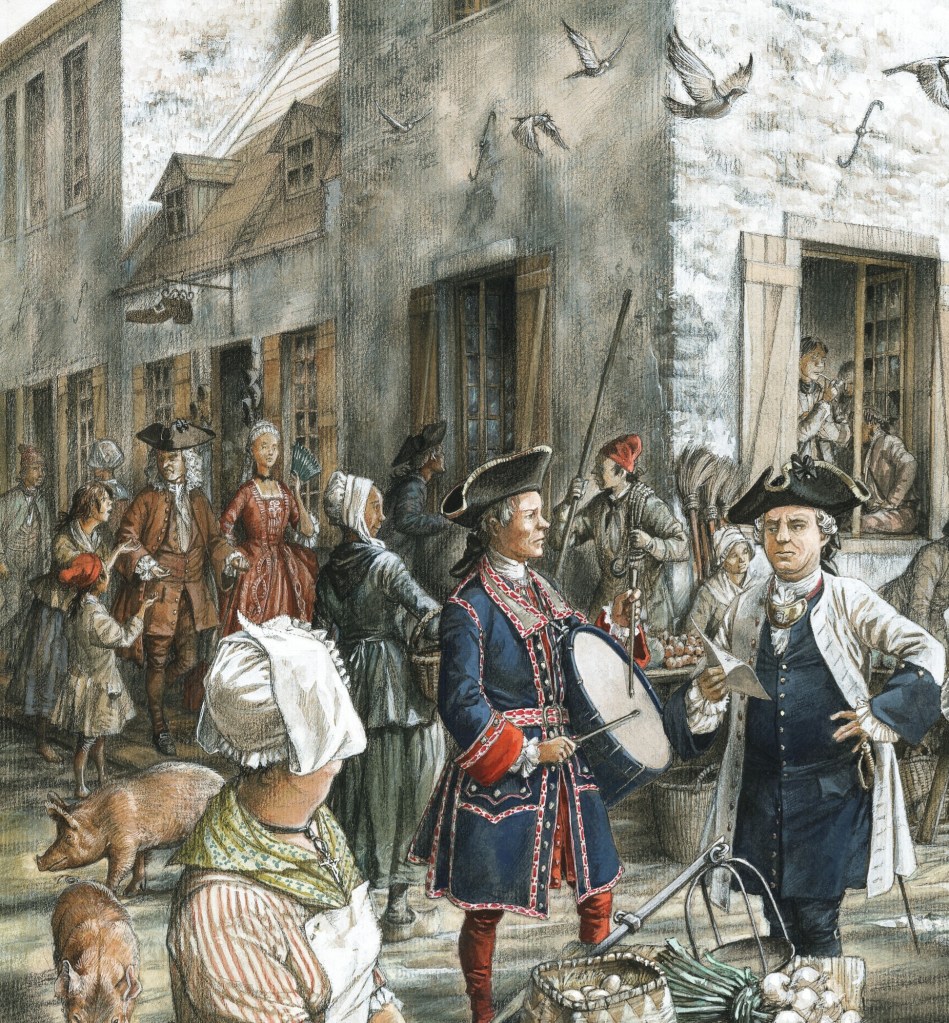
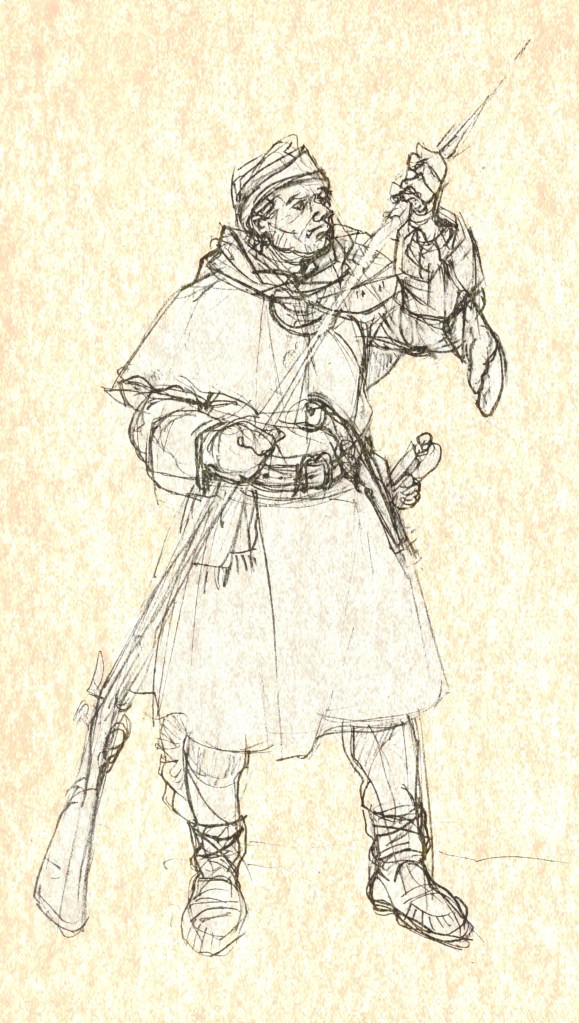

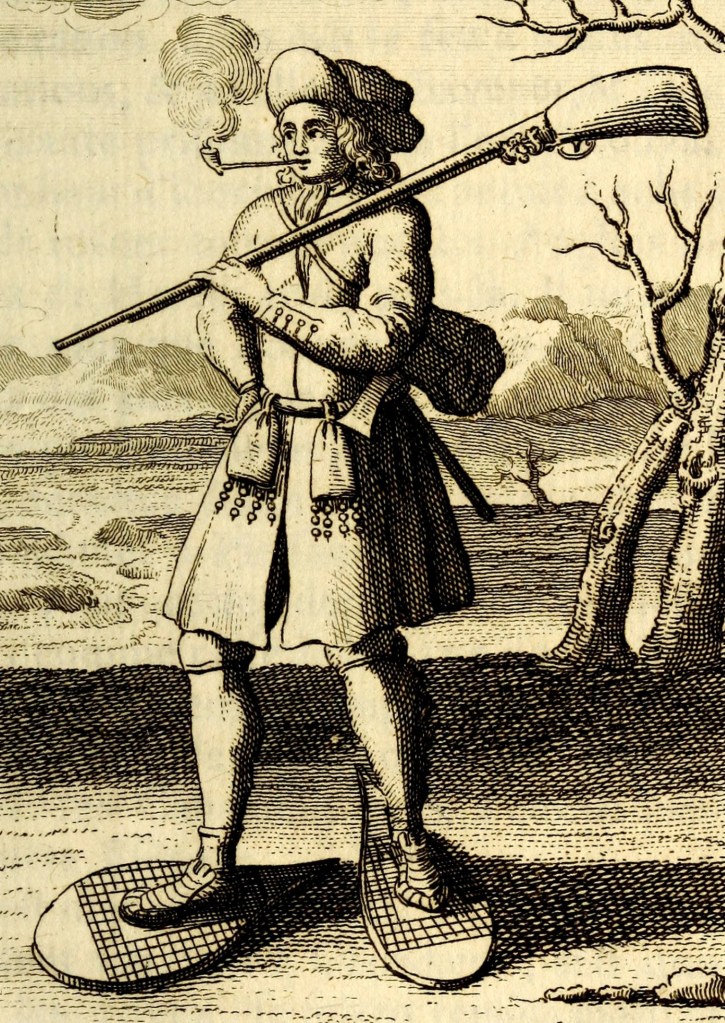
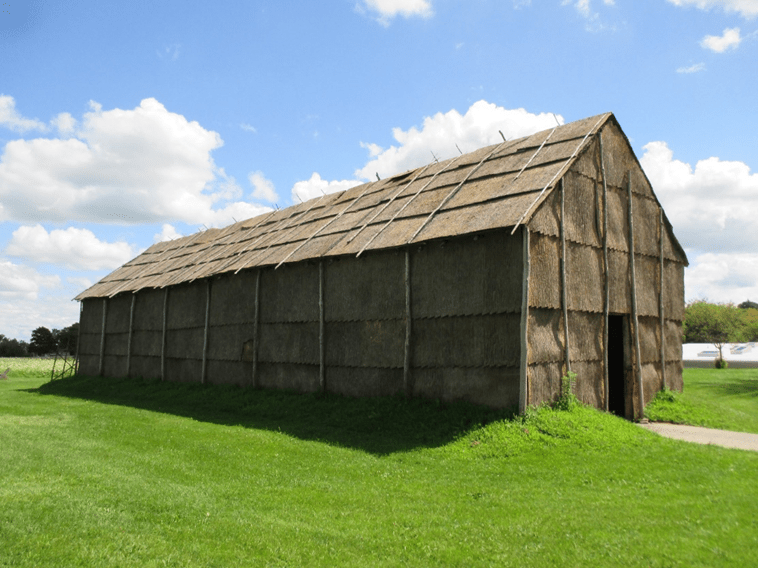


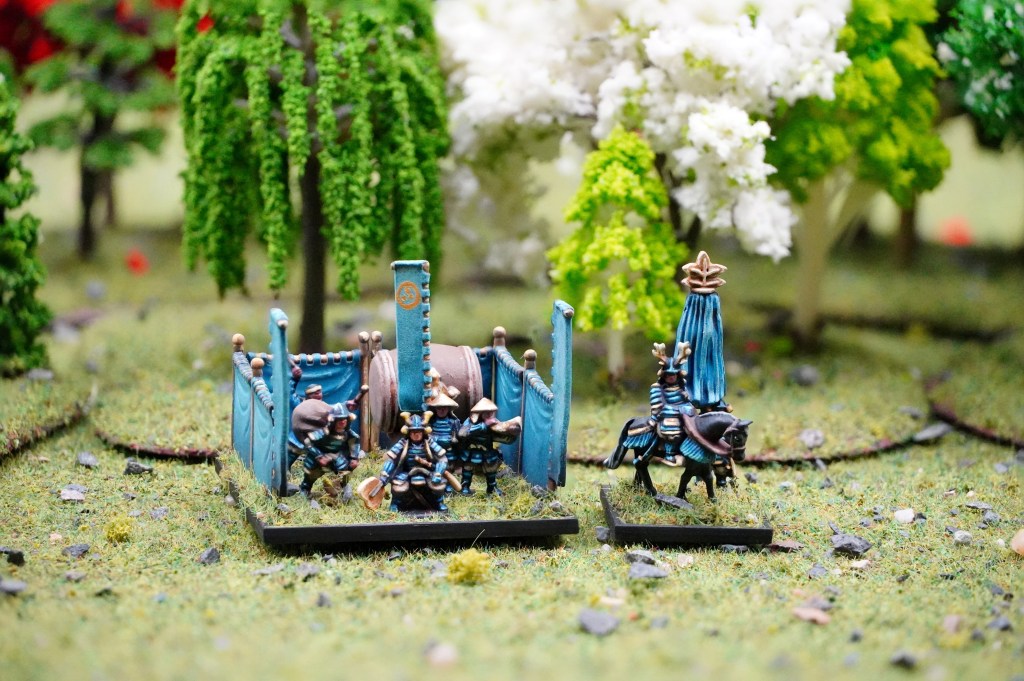


 The Helion & Co. Military Book Blog