Love is the opening door, love is the key one must turn.
Elton John
*****
A
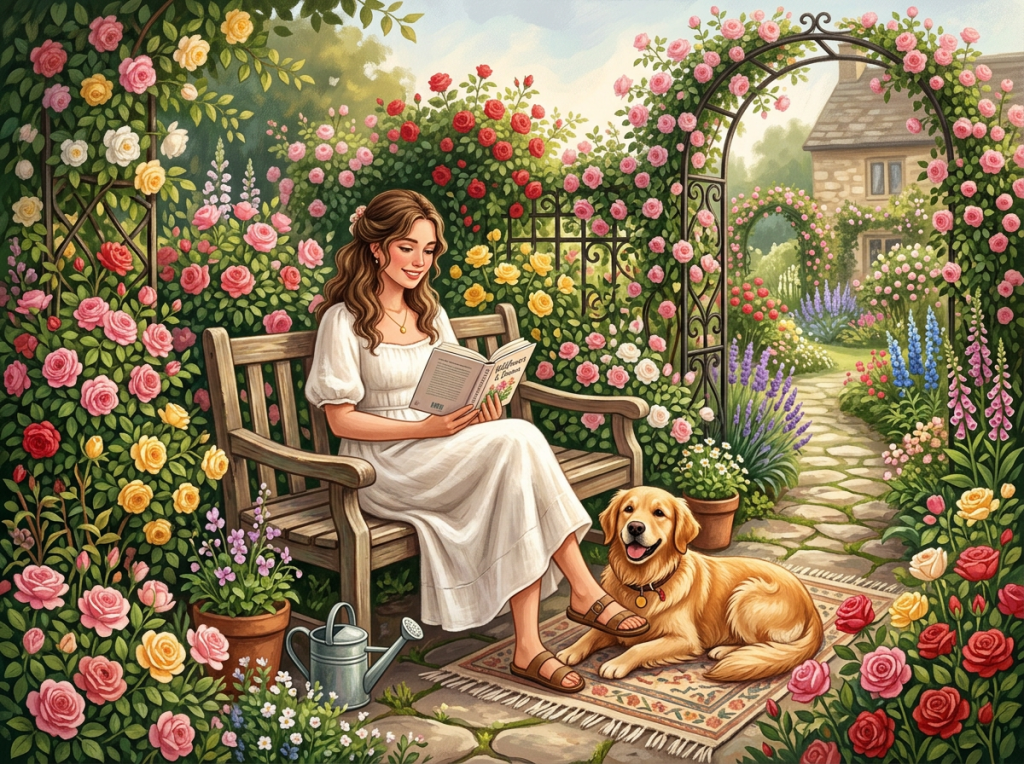
Image – AI Generated
Image Prompt – Haiku Poem – Flowers Radiant Bloom
Poem Attribution – Goff James – Flowers Radiant Bloom
Copyright (c) 2026 Goff James – All Rights Reserved
Thoughts About the Poem
The poem consists of three lines, each with a maximum of five syllables, adhering to the traditional structure of a haiku.
The three lines are written in a single paragraph, and the poem does not have any punctuation to signify a clear division between thoughts or phrases.
The poem focuses on the beauty of the natural world during the summer, with its flowers blooming and gardens in full bloom.
The poem uses sensory imagery to evoke the experience of the moment, particularly through sight and touch.
There is a suggestion that the beauty and joy depicted are fleeting, as the haiku does not provide a full picture of the summer’s duration but rather focuses on a moment.
Flowerssymbolise beauty, joy, and life’s ephemeral nature.
The “radiant bloom” suggests a vibrant and full life.
Gardens represent a space of peace, beauty, and nature.
“Robed in summer’s kiss” indicates a place that has been touched by the warmth and vitality of the summer season.
Summerrepresents youth, love, and abundance, and “summer’s kiss” evokes the gentle touch of the season, which brings warmth and life.
The “garden robed in summer’s kiss” metaphorically personifies the garden, suggesting a human-like experience of the summer season’s touch.
“Radiant bloom”, found in the first line, contains consonant repetition that adds a rhythmic quality to the line, which enhances the haiku’s musicality.
The haiku leaves out certain details, relying on ones imagination to fill in the blanks.
The tone of the poem is positive and contemplative.
It is peaceful and serene, highlighting the beauty of the summer and the fleeting joy it brings.
In conclusion –
The first line of the poem provides a sense of wonder and appreciation for nature’s splendour, as the flowers are described with “radiant bloom.”
The second line takes a step back, focusing on the garden as a whole rather than a single flower, suggesting a broader, more reflective perspective.
The third line transitions into a feeling of bittersweet nostalgia, as “love’s sweetness” implies the fleeting nature of the summer’s warmth, suggesting that this feeling is also transitory, like the flowers that bloom.
A tender heart, with no shield, beats so fast, Young love’s bright flames, a flicker, then are gone. The world’s rough edges, sullen overcast, And life constant e’er pulls one on and on.
Such dreams once held, like mist, begin to fray, The easy laughter fades to weary sighs. Responsibilities take hold each day, Ones busy life obscures what once did rise.
The gentle touch, the whispered, sweet delight, Each lose their power as the years go passed. One stumbles onwards, in the fading light, And holds on tightly, hoping love will last.
Yet through it all, a quiet hope remains, To mend the heart and soothe the haunting pains.
*****
Poem Attribution – Goff James –
Copyright (c) 2026 Goff James – All Rights Reserved
Thoughts About the Poem
The poem is written in the traditional classical sonnet form, which consists of 14 lines with a rhyme scheme of ABAB CDCD EFEF GG.
The structure is designed to build a narrative and emotional arc, with the final couplet providing a resolution or a moment of clarity.
The key themes of the poem include –
The Vulnerability of Love:
The poem begins with the image of a “tender heart” that lacks a shield, symbolising the innocence and fragility of young love.
It explores how this tender love is contrasted with the harsh realities of the world.
The Passage of Time:
The poem repeatedly mentions the passing of time, with references to “flicker[ing] flames,” “years go passed,” and “fading light.”
This theme is central to the poem, highlighting the inevitability of change and the fading of youthful dreams.
The Struggle of Adulthood:
The middle section of the poem focuses on the challenges of adulthood, with the mention of responsibilities and a “busy life.”
It reflects on how the simplicity of young love is replaced by complexity and stress.
Hope Amidst Trials:
Despite the difficulties and the loss of innocence, the poem ends on a note of quiet hope, suggesting that even in the face of pain and struggle, there is still a chance for healing and comfort.
The use of symbolism in the poem includes –
The Tender Heart:
This symbolizes both the softness and the sensitivity of the young lover’s emotions, as well as the heart’s physical vulnerability without protection.
The Bright Flames of Love:
These flames represent the passionate and intense nature of youthful love, which is fleeting and can quickly be extinguished.
The World’s Rough Edges:
This symbolises the harshness and challenges of life that young love is often unprepared to face.
The Fading Light:
This represents the end of something, whether it’s a phase of life or the fading of love’s intensity.
The literary devices used in the poem include –
Metaphor:
The “tender heart” and “bright flames of love” are metaphors for the delicate and intense nature of love.
Imperative Mood:
The use of the imperative mood (“beat,” “begin to fray,” “lose their power”) creates a sense of urgency and reinforces the actions taking place in the poem.
Alliteration:
The repetition of the “f” sound in “flicker[ing] flames” and “fading light” creates a rhythmic effect and draws attention to the theme of time.
The tone of the poem shifts from a light and hopeful beginning to a reflective and introspective middle, culminating in a hopeful yet bittersweet ending.
Here’s how the tone changes through the poem:
Initial Tone:
The opening lines are hopeful and perhaps a bit whimsical, with a focus on the young and unguarded heart.
Middle Tone:
The middle section becomes more somber and melancholic, reflecting the speaker’s contemplation of the passage of time and the challenges of adult life.
Final Tone:
The final couplet offers a touch of hope and resilience, suggesting that despite the struggles, there remains an underlying optimism that things can be mended and life can continue to have meaning.
The key to nature’s therapy is feeling like a tiny part of it, not a master over it. There’s amazing pride in seeing a bee land on a flower one planted – but that’s not ones act of creation, it’s ones act of joining in.
Victoria Coren Mitchell
*****
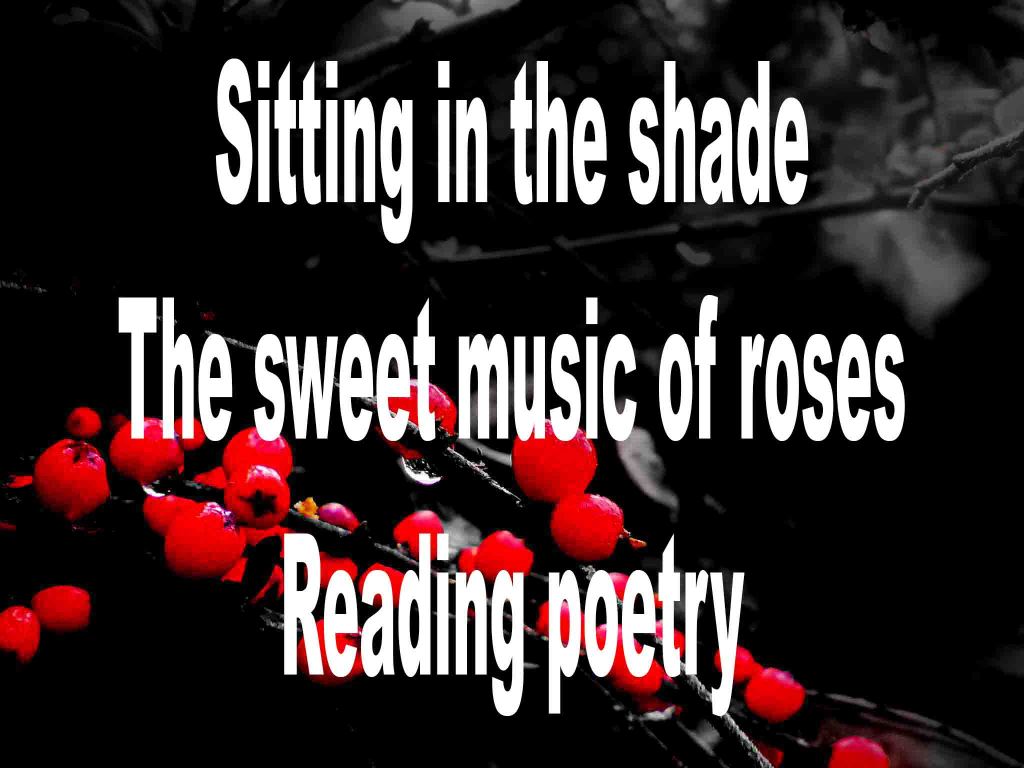
Image – AI Generated
Image Prompt – haiku Poem – Summer Idle Spills
Poem Attribution – Goff James – Summer Idle Spills
Copyright (c) 2026 Goff James – All Rights Reserved



 Art, Photography, Fiction and Poetry