
An Alaska last will is a written document that lets a testator direct how their property is distributed after death and name an executor to carry out those wishes.
Anyone with assets, such as a home, savings, or personal property, can use one to state who receives what and who should care for minor children.
This page offers a free, fillable Alaska last will and testament template, the state's signing requirements, a step by step guide to completing the form, and answers to common questions.

Build Your Document
Answer a few simple questions to make your document in minutes
Save and Print
Save progress and finish on any device, download and print anytime
Sign and Use
Your valid, lawyer-approved document is ready
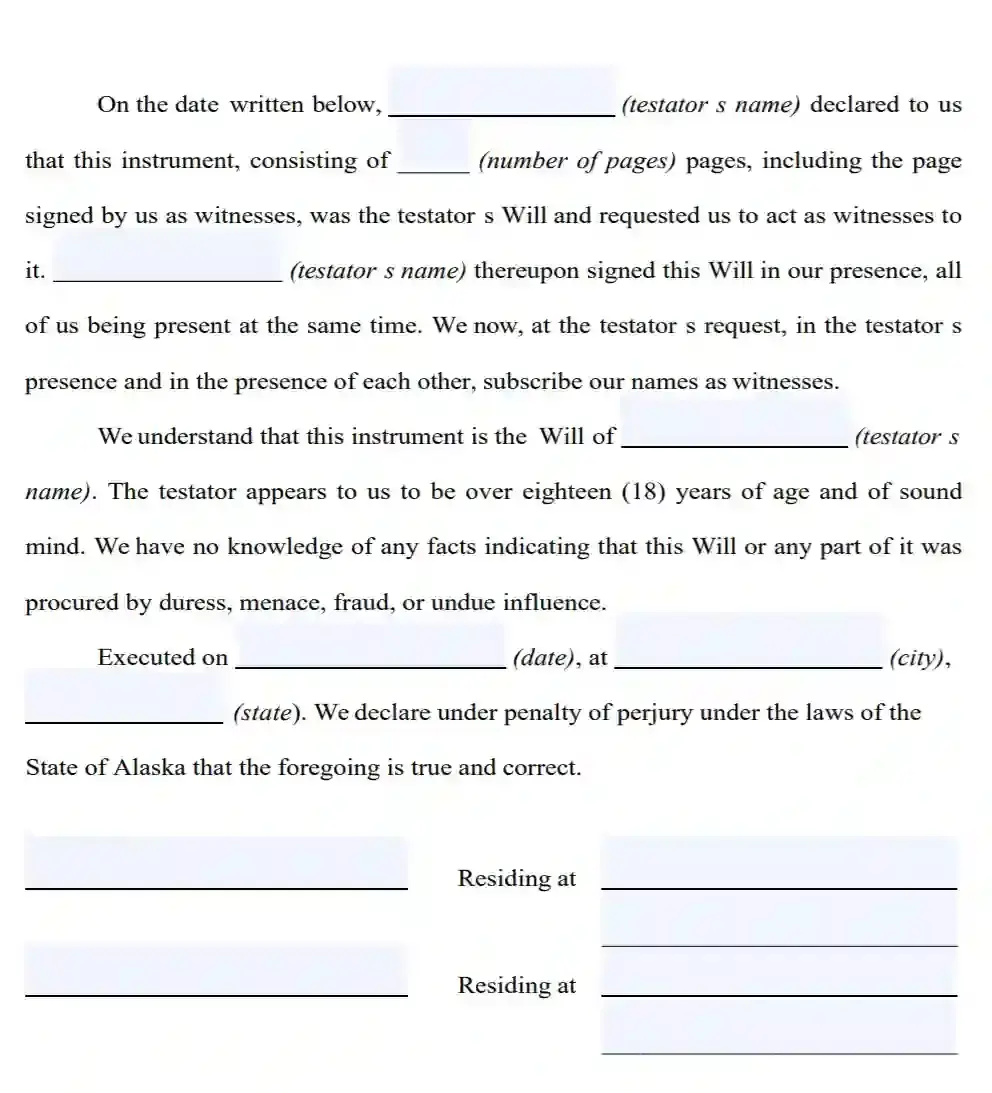
Alaska law requires a last will to be in writing and signed by the testator, or by someone else at the testator's direction and in their presence.[1.2] It must also be signed by at least two witnesses who watch the signing or hear the testator acknowledge it.[1.2]
The testator must be at least 18 years old and of sound mind.[1.1][1.3] A will validly made in another state is also recognized in Alaska.[1.5]
Last Updated: September 2026. This guide is reviewed and updated regularly to reflect current Alaska law. If you notice an error or outdated information, please contact us.
| Requirements | State laws | |
| Statutes | Title 13 – Decedents’ Estates, Guardianships, Transfers, Trusts, and Health Care Decisions; Chapter 12 – Intestacy, Wills, and Donative Transfers | |
| Signing requirement | Two witnesses | Sec. 13.12.502. Execution |
| Age of testator | 18 and older | Sec. 13.12.501. Who may make will |
| Age of witnesses | Sec. 13.12.505. Who may witness | |
| Self-proving wills | Allowed | Sec. 13.12.504. Self-proved will |
| Handwritten wills | Recognized if meeting certain conditions | Sec. 13.12.502. Execution; witnessed wills; holographic wills |
| Oral wills | Not recognized | |
| Holographic wills | Recognized if meeting certain conditions | |
| Depositing a will | Possible with the clerk’s office in an Alaska Superior court during the testator’s lifetime. | |
A self-proving affidavit does not replace the witness requirement. You still need two witnesses to sign the will itself. The affidavit is an extra, notarized statement that lets the court skip contacting the witnesses later.[1.3]
Making an Alaska last will involves naming an executor, listing beneficiaries and assets, and signing the document in front of two witnesses as Alaska law requires.[1.2] You can write the will yourself, by hand as a holographic will, or use a fillable template.[1.2] The steps below walk through each part of the process.
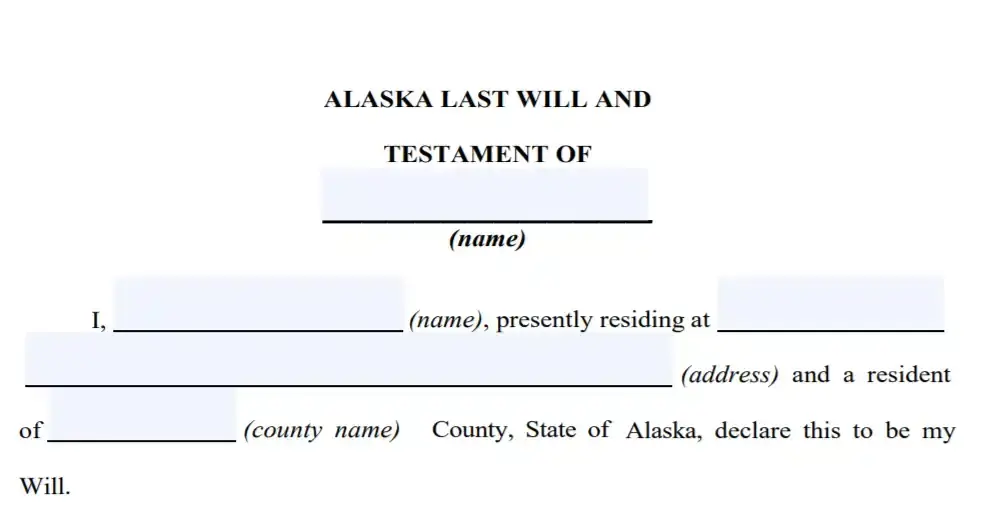
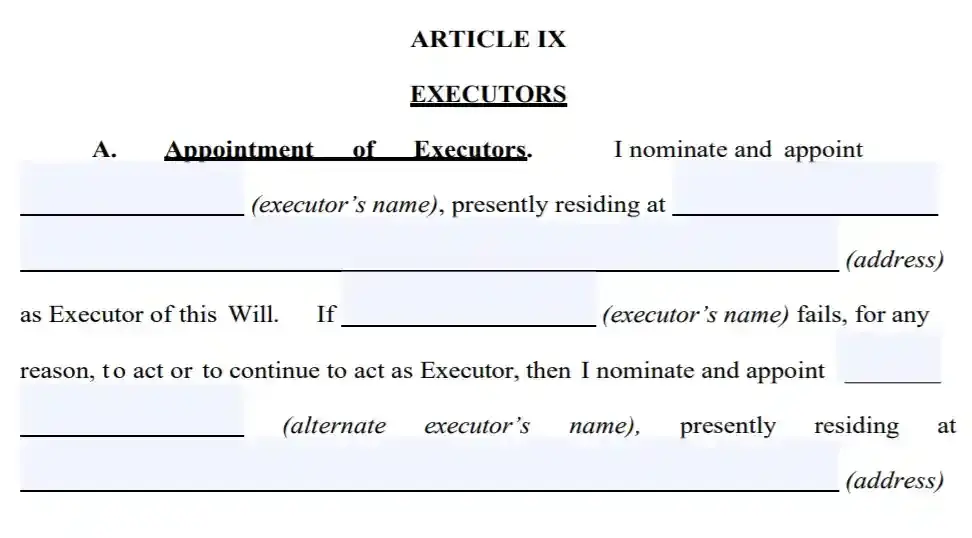
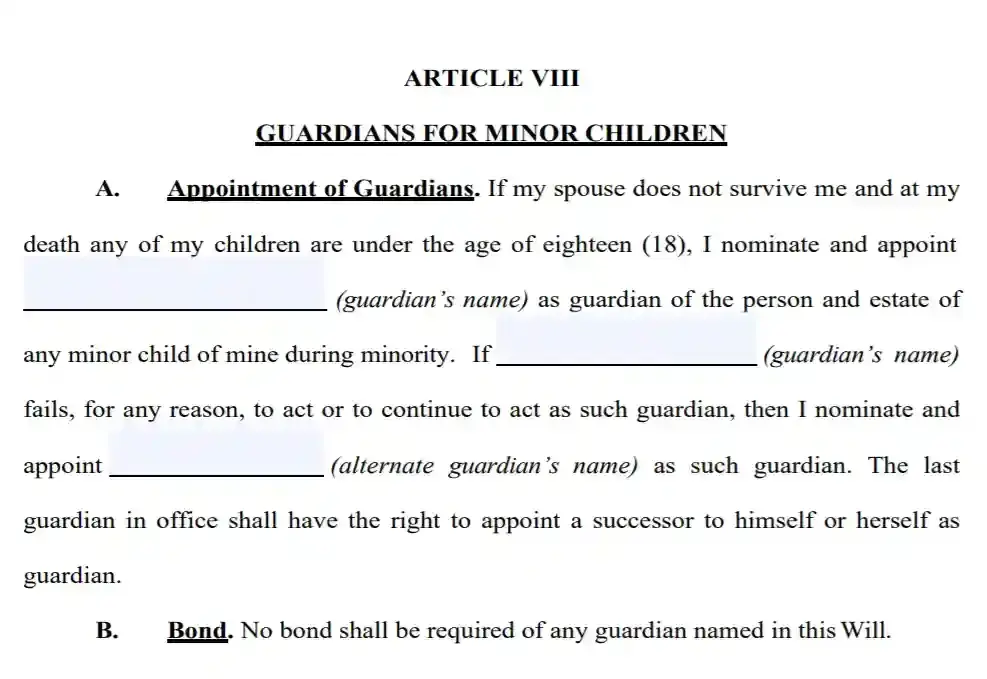
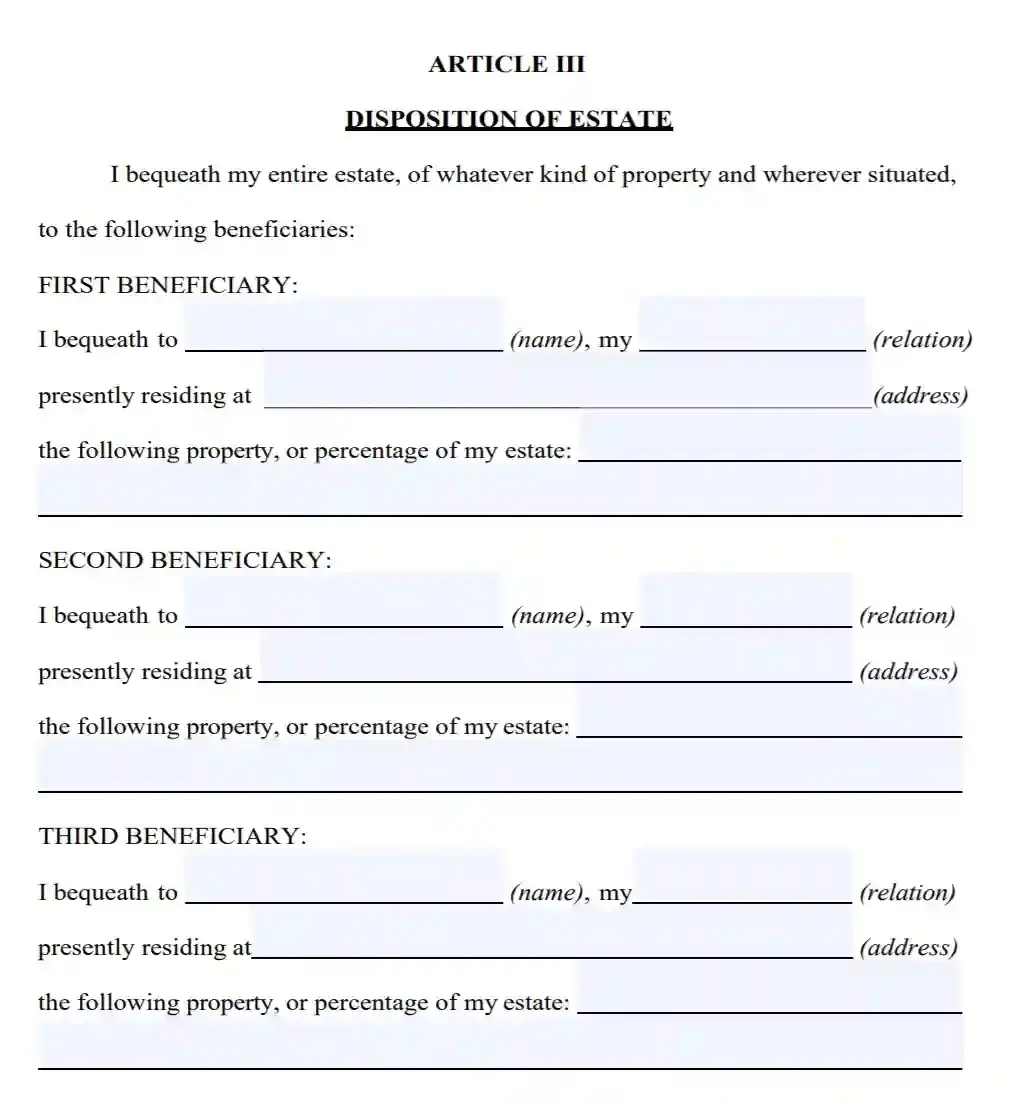
FormsPal’s builder creates a customized Alaska last will and testament in minutes. You answer a short set of questions about your executor, beneficiaries, and property, and the builder applies Alaska’s own signing and witness rules automatically. When you finish, download the completed document as a PDF or Word file, ready to print and sign in front of two witnesses.
A last will in Alaska is valid without notarization. Even so, it is possible to make your will self-proving by attaching an affidavit to it, and you will need to hire a notary if you want to do that. [1.3] In the event that you make your will self-proving, the court won’t have to make contact with the witnesses to determine the legality of the document, which will expedite the probate.
No, in Alaska, there is no such prerequisite. Attaching one can still help, because it removes the need for the witnesses to testify at probate.[1.3] Under Alaska Stat. § 13.12.504, a will becomes self-proved when it is executed and attested simultaneously, the testator acknowledges the will, and the witnesses sign affidavits before an officer authorized to administer oaths, such as a notary public.
Alaska law limits how far you can disinherit a spouse. A surviving spouse left out of the will, or left very little, can typically claim a share of the estate under Alaska’s elective share rules, so a spouse can rarely be completely disinherited.
Jointly owned property, and property covered by a valid prenuptial agreement, can pass outside the will and outside this elective share.
Aside from a spouse, Alaska law lets you disinherit other family members, including children, by adding disinheritance provisions to your will.
Yes, you can alter it.
You can revoke a will in one of two ways. Make a new will that cancels the old one, or take a deliberate action such as burning, tearing, or canceling the document with the intent to revoke it.[1.6] [1.6]
A person who wrote the will is allowed to alter or revoke their last will and testament at any time. The sole situation that won’t allow you to do it is when such doing is outlawed under the contract you concluded.
It’ll also be wise to update your last will and testament in the following situations:
Alaska law implies that a will can be accepted in case it’s lost or destroyed. But, just the original of the will is likely to be approved by the probate court.
If the original will cannot be found after the testator’s death, Alaska courts may presume it was revoked, though this presumption can be rebutted with evidence. Whoever offers the lost will for probate then carries the burden of proving it is genuine.
For a holographic will, you would need sworn witnesses and testimony to demonstrate. That will make the situation much more difficult. The cause for not producing the will and its contents is be proven as well.
Alaska Estate Code enables another individual to sign your will solely per your directive and with you present. [1.2] It’s possible to give a particular directive in some ways, including speaking, a positive response to a question, or a gesture.
A notary public can sign the testator’s name in case the testator isn’t able to do it on account of a physical disability. The notary must be guided to perform it in the presence of a witness. Alaska law does not require this witness to have no stake in the will. Under Alaska Stat. § 13.12.505, a witness who also stands to inherit under the will does not make the will invalid, though many people still prefer a disinterested witness to avoid disputes later.[1.4]
| Related documents | Instances when you may want to have one |
| Codicil | There are a few minor changes you want to make to your will. |
| Self-proving affidavit | You need to expedite the probate in the future. |
| Living will | You want to state your wishes concerning the end-of-life treatment and life-prolonging measures. |
| Living trust | You want more protection and confidentiality once the time to distribute your possessions comes. |
FormsPal publishes a free last will and testament template for every state, each written around that state’s own signing and witness rules. Use the links below to find the template for another state.
This page is general information about Alaska last wills, not legal advice. For advice on your situation, talk to an Alaska attorney.
