Favourite Books in First Half of 2025

It’s always tricky to attempt an annual summary and reduce it to a manageable number of books when you’ve read over 120 books during the year. I’ve tried to organise it by genre or by seasons in the past few years but I’ll keep it really simple this time and just go by first half of the year in one post, to be followed by a second half after Christmas (just in case I get to read something astounding by then).

January has always been about Japan for me, at least since Dolce Belezza started her January in Japan reading challenge. The year did not necessarily start with the best reads in that respect: I did not really appreciate Hunchback or Snakes and Earrings, but one ‘shocking’ novella that did stay with me was Astral Season, Beastly Season by Tahi Saihate. I also enjoyed the return to modern Japanese literature classics like Mishima and Kono Taeko. Finally, a return to Murakami Ryu and the discovery of new-to-me writer Kazushige Abe provided me with more memorable reading – all of them as far removed as possible from the cosy, cat-covered books or puzzle mysteries that publishers have given us in recent years.

February brought a real bout of good reading. I’d been eagerly anticipating Han Kang’s We Do Not Part and it did not disappoint: a combination of eerie, historical, heartwarming and heartbreaking that probably shouldn’t work, but does. Another book by a Nobel Prize winner, The Empusium, I also really enjoyed, although perhaps not quite as much as others by Tokarczuk. I also reread an old favourite for my personal French February reading challenge, namely Saint-Exupery and his Vol de Nuit, which was as beautiful as I remembered, and I discovered a new poet (well, new to me, as he’s been dead for nearly 100 years now): the highly experimental, surrealist Yi Sang.

March and April were largely dedicated to the International Booker longlist, and the books were mercifully shorter and more interesting/varied than the ones from the previous year. I loved the strong narrative voice and irony of There’s a Monster Behind the Door by Gaelle Belem and my personal favourite to win was Kawakami’s Under the Eye of the Big Bird (it didn’t). I was much more impressed by Murakami Haruki’s non-fiction reportage Underground than I’ve been by his last few novels, and it seemed an appropriate time to read it, thirty years after the sarin gas attack on the Tokyo metro. Another non-Booker book which really stuck with me during April was Ex-Wife by Ursual Parrott, hard to believe that it was written a hundred years ago! Last but not least, I read my first László Krasznahorkai and was absolutely charmed with the Genji reference.

You’ll be relieved to hear that there was only one truly memorable book in May (at the distance of several months now): a collection of surreal short stories by Korean author Lee Yuri entitled Broccoli Punch.

June was another great month for reading. I reread and continued to be very impressed with Small Island by Andrea Levy. I absolutely loved Jen Calleja’s memoir and manifesto about translation Fair. For a very different change of pace, I absolutely raced through the frighteningly plausible and exciting thriller The Man with a Thousand Faces by Dutch author Lex Noteboom, and was pleased to be back in the company of Ikmen and Mehmet in Barbara Nadel’s The Wooden Library (this time featuring a trip to Romania!).

So that was the first half of my year and I think what’s remarkable is that of the seventeen books I mention here, only three were written in English. And that’s not because the number of translated books have vastly outnumbered the English language books on my reading list (the proportion is probably more like half and half), but because the translated books (and the English books I enjoyed) were mostly published by small indie presses, who are the only respite from a ‘mainstream culture of dumbing down and selling out’, as this furious but accurate and funny article by Lucy Mercer describes it.

As for my favourite book covers (for the books I read during this period)? Well, this time I have to say that although several were ok, none really blew my socks off, but I am including my three favourites in this post (they’re not necessarily the covers of the editions that I was able to find and read in the UK). Am I becoming too prone to noticing fads and copycats now that I am a publisher myself?If I had to pick a winner, it would probably be There’s a Monster Behind the Door, which does a good job of conveying the atmosphere of the book while using the currently fashionable floral design.

If I had to pick a top five from the books listed above, and remembering that Top Five does not necessarily reflect quality, but degree of obsession, I would say We Do Not Part, Fair, Vol de Nuit, Underground and Yi Sang are the ones that have haunted me for the rest of the year.

Mid-Year Check-In Tag

I saw this on Eleanor’s blog and thought it looked like a fun way to briefly reflect on my reading journey so far in 2025. But let me also credit Eric Karl Anderson (Lonesome Reader) for his video presentation of the tag.

1. How many books have you read so far this year?

70 books, my Goodreads informs me, although it is also telling me I’m currently reading six books simultaneously, which I’m not quite, just dipping in and out of some of them. My target is 120, so I’m well placed to achieve it, except that I’ll be moving house, which may decrease my reading productivity (or may increase it, out of desperate search for escapism, who knows).

2. What’s your favourite book so far this year?

I can never answer this type of question easily, as it changes according to mood, and besides, I always have at least five favourites. But let’s say it’s Han Kang’s We Do Not Part, which I was most disappointed not to see on the International Booker longlist (but I understand that the judges felt that she does not need any further recognition).

3. What’s the most disappointing book you’ve read this year?

It wasn’t a bad book, but it’s always disappointing when you have such high expectations for a book (unrealistically so, in most cases) that it can’t possibly live up to it. In this case, it was the David Bowie in the title that created such expectations in me: Jean-Michel Guenassia’s book about the influence of David Bowie on young girls.

4. What genre have you read most this year? 

It’s not really a genre, but I suspect that I’ve read more books in translation than anything else. When it comes to true genre, I suspect it’s an even split between literary and crime fiction, although I’ve also read more memoir, short stories, speculative fiction this year.

5. Name a new favourite author that you’ve discovered this year.

The Korean poet Yi Sang. I first found out about him at an exhibition about Korean literature at the Korean Cultural Institute in London, and then I read a translation of a selection of his poems and prose works, and he is that kind of experimental, avant-garde writers of the 1930s that I know well from Romanian and French literature. I felt an instant connection with him, and of course his story of writing under the Japanese occupation and premature death also tugged at my heartstrings.

6. What’s the most surprisingly good book you’ve read so far this year? 

Lex Noteboom’s The Man with a Thousand Faces is just coming out now, but I read a Netgalley ARC because the author was on a panel with our Icelandic author Jon Atli Jonasson at Capital Crime. It’s a spy thriller set in an ex-Soviet (imaginary) republic in Caucasus, so I thought I’d hate it, since books by Western authors about spies cavorting in Eastern Europe is probably my least preferred genre. (Yes, I have a chip on my shoulder) However, I was pleasantly surprised, because not only was the book frighteningly plausible in terms of geopolitics and manipulation of technology, but it also explored the idea of what might make a normal, average, good person turn into a dictator, and how they might be able to justify it to themselves.

7. What are your favourite and most anticipated 2025 releases? 

I seldom remember to pre-order books (which is terrible to admit, since I know how important pre-orders can be, especially for smaller publishers), but one book which I did pre-order and read as soon as it arrived on my doorstep was Jen Calleja’s Fair, a sort of translation memoir/manifesto, which was full of wisdom and relatable anecdotes.

Another author that I’ve newly discovered this year and greatly enjoyed is Abe Kazushige. Two of his books have been published by Pushkin Press: Nipponia Nippon and Mysterious Setting, and I really hope that there will be more to come (no info about that yet from Pushkin Press, so probably not in time for 2025).

8. What’s your next big priority for your reading?

What with moving, packing my books, perhaps putting things into storage for a while, it will be chaotic over the next few months, so I’ll be grateful for any reading or writing that I’m able to do. However, I am currently doing a slow, chapter by chapter rereading of Tale of Genji, inspired by Tony Malone, and I’m absolutely loving that.

9. What’s been your bookish highlight of the year so far?

I assume this means literary events, and heaven knows, I’ve been lucky enough to attend a bunch of those. The ones where my authors are present are always fun, but also a bit stressful (will everything turn out fine?): Bristol CrimeFest, Capital Crime, author events at Bookmarks bookshop, as are those where I am in ‘work mode’ (London Book Fair, Indie Press Network spring showcase). Much easier when I’m just attending as a spectator (seeing Robert Seethaler at the Austrian Cultural Forum, readings by the translators for the shortlisted International Booker titles, Oxford Translation Day). But I think the most rewarding in terms of reading and discussing with other people has been taking part in the International Booker Shadow Panel, even though we didn’t always agree with the official panel of judges (or even amongst ourselves). Because we are all passionate about books and translations, so it’s the power of discussing things with like-minded people.

Best Books of My Reading Year 2024 – Oct to Dec

The last three months of the year were the most sociable of all: I either had guests or went out with friends every single week. We also had a book launch for Teresa Solana’s novel Black Storms, translated from Catalan and set in Barcelona, and went to Newcastle Noir with Teresa and her translator/husband Peter Bush.

I don’t know if it’s the recency effect on my reading memory, or if I get more picky about my reading towards the end of the year, but I seem to have read quite a few memorable books in the last part of this year. A couple of the books provoked a visceral reaction, reminding me of my own past, and this bittersweet nostalgia with a shot of trauma (but mostly affectionate remembrance) marked these last few months, especially once I unearthed a box full of old letters and diaries while clearing out the loft. I would therefore argue that perhaps the books I branded ‘most memorable’ for this part of the year were the ones that left me most emotionally drained.

After Han Kang won the Nobel Prize for Literature, I wanted to read more than The Vegetarian by her, and am so glad I did so, as I really liked Greek Lessons, while Human Acts bowled me over. I read another Korean book about student protests, I’ll Be Right There by Kyung Sook Shin, which was perhaps less dramatic and lyrical, but felt like a more personal story.

German Literature Month in November was a great opportunity to catch up with two of my Austrian favourites, Odon von Horvath and Marlen Haushofer . Further books in translation included the fierce, profoundly uncomfortable Japanese novella Cannibals and the very creative use of fake memoir format of Taiwan Travelogue. The wistfulness of Jessica Au’s Cold Enough for Snow might seem the polar opposite of the boisterous middle-aged wife of Empar Moliner’s Beloved but I loved them both, while the gay love story set against a historical backdrop in The Betrayal of Thomas True appealed to my more sentimental side.

Aside from reading, I got to discover the Bertha Dochouse cinema at Curzon Bloomsbury dedicated to feature-length documentaries from around the world and saw a film about the women divers of Jeju Island in South Korea as well as the Black Box Diaries, about a notorious (and still very rare) case of a young woman journalist in Japan suing a TV boss for sexual assault. I continued watching and rewatching Wong Kar Wai films, finally got to see Happy Together, which is usually harder to find. It also proved to be a very good period for Asian TV series, with the ones that particularly stood out for me including the fun, irreverent historical drama Mr Queen, the Korean-Japanese co-production What Comes After Love, the Japanese tearjerker that went beyond the obvious resolutions in Beyond Goodbye, the energetic yet poignant depiction of Love in the Big City and, above all, Mr Plankton, which, despite its rather silly title, has scenes that I keep rewatching.

This may well be my last post for the year (although if I have time, I will also do a December wrap-up), so this might be a good time to reflect on the kind of reading year I’ve had. As you can see from my four seasonal summaries, much of the best reading this year came from other countries and languages. (Incidentally, so did most of my film viewing.) I suspect this is partly because I already have a foot out the door as I prepare to leave the UK. Back in the late 1980s and 1993/94, when I was pining for Britain, I was reading mostly English books and those were by far the most meaningful ones for me at that time. This may well be the case again once I settle in Berlin and start missing all the best things about Britain.

Another obvious pattern in my reading is my preference for fiction, particularly novels and novellas. Only a couple of non-fiction books made the cut for the best books of the year, although I read many more memoirs than in previous years. However, my Goodreads list usually does not reflect any of the plays or poetry that I might have read during the year. So maybe I should make a more deliberate choice in reviewing and promoting such works.

Finally, I should say that this year I set myself only an eminently achievable target of 100 books (I usually read around 150 per year). I did go over this target, but there have been a few months when I read far fewer books than ever previously (or at least since records began). The price to pay for extensive socialising and also binge-watching TV series.

For next year, I will maintain January in Japan but probably will start packing away my library and only keep the books on my trolley to hand, so there might be an odd collection of books being read and reviewed in the coming two or three months.

More Student Revolutions: Shin Kyung-Sook

Shin Kyung-Sook: I’ll Be Right There, transl. Sora Kim-Russell, Other Press, 2013

This book came out before the big boom in K-Lit, which began in the second half of the 2010s, but the author was one of the best-known Korean authors of that time, since her book Please Look After Mum won the Man Asian Literary Prize (which no longer exists). I came across it by pure chance and internet, because, after I posted how Han Kang’s Human Acts utterly destroyed my composure, Bella Azam on Twitter happened to mention that this might be a good follow-up so that I can continue crying over revolutionary young people. And what better time to do so than in the run-up to celebrating 35 years since the 1989 revolution in Romania, just after our national holiday on the 1st of December, and in the midst of chaotic presidential and parliamentary elections (to make us all wonder/remember what we fought for back then)?

Unlike Human Acts, this book contains no graphic descriptions of brutal repression or torture. In fact, in what might be seen as an odd authorly decision, most of the big events take place off-stage, and are then narrated or mused over by the main protagonists in retrospect. Romance and friendship take centre stage, and it’s much more of a coming of age story rather than purely political. The sentiment I felt upon reading this book was less heartbreak, more a gentle melancholia, a sadness at the loss of lives and end of friendships and love affairs.

Jung Yoon is the main protagonist, who receives a phone call out of the blue from her college sweetheart, with whom she’d broken up eight years ago. We are instantly struck by the rather incongruous exchange between them: ‘As soon as he said “Hello?’, I asked “Where are you?”, but as the story unfolds, we discover that there is a real poignant meaning to this awkward exchange of greetings. They are brought together by the death of their most loved college professors and this brings forth a bout of reminiscing, as well as extracts from the Brown Notebook, a kind of journal compiled by Yi Myungsuh (the ex-boyfriend), and letters between friends, such as Dahn (Yoon’s childhood friend) and Miru (Myungsuh’s childhood friend).

This is how the author describes the book in the afterword: ‘ a story of young people living in tragic times. It is also the story of people who find themselves separated, despite their love for each other, because they carry wounds that are too deep to overcome, and who struggle to come back together’. Set against a backdrop of regular marches and protests, we see examples of police kettling protestors and throwing their possessions in back alleys, young people suddenly going missing, setting fire to themselves or suffering mysterious ‘accidental’ deaths during military service and the impact that has on their families. Yoon becomes fascinated by the mysterious and attractive couple-who-are-not-a-couple Myungsuh and Miru, who used to live together in the same house, together with Miru’s sister, who is now dead. Miru is mourning the loss of her sister and desperately seeking her sister’s boyfriend. Yoon herself has become closed in and terrified of attending college after the death of her mother. Myungsuh gets caught up in student demonstrations, and finds Yoon at one of these protests, although she happened to be there purely by accident, while taking her endless long walks across the city. Their shared admiration for their professor turns into a deeper sentiment, part confusion, part inspiration, when the professor is forced to stop lecturing for ideological reasons.

Where the book succeeds best is in exploring the solidarity and affection that can arise when fighting against a common enemy, even if that doesn’t help us to overcome individual traumas entirely. Because it is set eight years after the events unfolded, there is also quite a lot in the book about the slippery nature of memory.

The future rushes in and all we can do is take our memories and move forward with them. Memory keeps only what it wants. Images from memories are sprinkled throughout our lives, but that does not mean we must believe that our own or other people’s memories are of things that really happened. When someone stubbornly insists that they saw something with their own eyes, I take it as a statement mixed with wishful thinking. As what they want to believe.

Interesting how the Korean cover seems to show an idyllic rural landscape rather than anything too overtly urban and protest-heavy.

I was also struck by those passages where the young protestors start wondering if all their suffering and demonstrations are in vain. Losing their idealism as they get older but also as the battles they are fighting are not easily or rapidly won. How to keep the courage and optimism flowing when it becomes a war of nerves and attrition?

‘They can’t stand it… and that’s why they form barricades, throw paving bricks, and run away only to get caught and arrested. What they can’t stand is that nothing ever gets better. Nothing has changed since last year. It’s as if time has stopped… It only feels like time is the passing, and only the character change. We are torn apart and chased around. We fight back and get chased some more… We all stare at the walls and complain of loneliness. All we have to do is turn around, but instead we keep our faces to the walls… The streets are quiet now. All of that excitement, like we were going to make something happen, has vanished. Our push for change has come to a standstill. Even our solidarity is now just another phenomenon. The people I once marched with have all scattered and dispersed without having changed anything.

The author is well-versed in Western literature and she quotes poets such as Emily Dickinson (there is even a deaf cat named after her), Rilke, Francis Jammes, Jules Supervielle, as well as referencing Western art and music. This makes the experience feel more universal – these could be students anywhere in the world protesting against tyranny – although I also loved the specificity of certain locations in the book – the Namsan Tower or the second floor of the Gyeonghoeru Pavilion.

This book very successfully blends coming-of-age personal narrative with nostalgia and politics. It’s infused with a more melodramatic feel than Human Acts, and may not always be entirely convincing in romantic conversations, but nevertheless, I connected quite a bit with the mood it conveyed.

November Reading and Watching Summary

I am NOT a fan of the month of November, although this year it hasn’t been all that bad, mostly because I had a lot of social plans. Nevertheless, given that it has what feels like 1008 days, it’s not surprising that I read quite a lot of books this month (eleven, of which nine were in translation), some for #GermanLitMonth and some for #NovellaNovember, and some random ones. And yes, I’m posting early because I want to be done with this endless month!

German Lit Month saw me reading two contemporary women authors, praised in their native countries for their candid humour (and certainly better than the Rossbacher book I read in October and which I didn’t review at length), a first novel by one of my favourite Austrian authors, Marlen Haushofer, and a classic from the 1930s, this last also falling under the Novella umbrella.

  • Der Hahn ist tot by Ingrid Noll
  • Ein Kind unserer Zeit by Ödön von Horváth – this was by far the most disturbing of the German titles
  • Eine Handvoll Leben by Marlen Haushofer – this was by far the most beautifully written
  • Iowa by Stefanie Sargnagel – this was by far the funniest, about an Austrian writer and her comedian friend going to a little university town in Iowa to teach creative writing – won’t have time to review it this month, but maybe in early December? Incidentally, the author’s surname is funny in itself – it literally means ‘nail in the coffin’.

For Novellas in November, I read two books by Han Kang (whom I only knew for The Vegetarian prior to her Nobel win). I’m glad I gave her another go, because both Greek Lessons and Human Acts were very impressive. Far less impressive, in fact, rather underwhelming, was the Japanese novella Gifted by Suzuki Suzumi, for which I had high hopes initially. There were two more novellas that were impulse purchases from bookshops and which I very much enjoyed but did not review: The Divorce by Cesar Aira and The Anthropologists by Ayşegül Savaş.

The third Korean book I read this month The Trunk by Kim Ryeo-ryeong was not as impressive, partly because it couldn’t quite decide what it wanted to be and what subjects to tackle, but it was interesting from the translation point of view because it was translated by The KoLab, a collaboration between students and translators of Korean literature based in Australia. A K-drama adaptation of the book will appear on Netflix shortly, but, judging from the trailers, it is much more of a thriller than this book.

The final book was a non-fiction travelogue that I borrowed from a friend, The Road to Sata by Alan Booth. Alan is an Englishman who decided to embark upon a 2000 mile journey on foot from the northernmost tip of Hokkaido to the southernmost tip of Kyushu in Japan. The journey was undertaken in the early 1980s, the book was published in 1985, and it shows. Although generally written in a breezy, humorous style and often containing some pertinent information about festivals, customs and sights off the beaten track, it does feel dated. I’ve no doubt that in remote parts of Japan they might still be bewildered at the sight of gaijin (foreigner), but the joke does become wearisome and repetitive after a while, as does his shtick about pretty girls that he sees along the way.

Plans for December? Well, I do like a bit of ice and snow in December, so I might opt for a few Russians, Canadians or Scandinavians. I also might read ahead for January in Japan, which is always a highlight of my year. But I’m also keen to read more memoirs, especially translation memoirs, although my own memoir-writing project seems to be going nowhere. But December is also going to be very social, with plans for a wine-tasting and vineyard trip with a friend, Newcastle Noir, a book launch for Black Storms, family over for Christmas etc. So in the end, I might not get that much reading done!

It’s been a good month for films too, both in the cinema (some of them rewatches) and TV series.

Films:

  • Gilda: Rita Hayworth is unbelievably charismatic in that film, although the dialogue does show its age at times (upon the nth rewatch)
  • Aimless Bullet: feels like The Bicycle Thieves or Rome Open City but set in Seoul – quite depressing, and the grandmother crying out ‘Gadza, gadza!’ (Let’s go) will haunt me forever
  • Happy Together: the Wong Kar Wai film that I hadn’t seen yet, and a very impressive story of gay love, which was simply miles better than the recent film Queer (although rather similar in setting and plot)
  • The Falling: a strange little film about sexual awakening, reminding me of the Alsatian dancing plague of 1518, but set in a girls’ school in possibly 1980s, remarkable performances by Maisie Williams and Florence Pugh
  • Chungking Express: probably my second favourite Wong Kar Wai film after In the Mood for Love, still as funny/melancholic as I remembered it, and of course outstanding acting performances throughout. It also (incidentally rather than deliberately) proved to be a good testing ground for compatibility with someone whom I took to see the film.
  • Sweet and Sour: a Korean remake of a Japanese film based on a book, Initiation Love, which is famous for its twist towards the end, but actually is a realistic description of relationships over time, especially in such a hardworking culture as Japan/Korea.

TV series:

A great month of new releases on Viki Rakuten (which I joined for one month just for these new releases) and Netflix.

Korean poster for Mr. Plankton
  • Love in the Big City – the drama series, not the film – fantastic performances and such a good adaptation of the book, which I also loved (not surprising, since the screenplay was written by the author Sang Young Park)
  • Mr. Plankton – I was already a Woo Do Hwan fan, so it’s delightful to see so many others discovering him in this bittersweet tragicomedy – and thank you to the writer/director team for including so many gratuitous topless scenes ;-). After being submerged for so many decades in the male gaze (of female bodies) in Western films, it feels great to see the female gaze (on male bodies) for a change.
  • Beyond Goodbye – watched this Japanese series because of another favourite actor Sakaguchi Kentaro, but what I liked about it is that, although it includes a lot of melodramatic tropes (dead fiance, heart transplant, forbidden love), it actually ends up being much deeper and more meaningful about grief
  • The 8 Show – think Squid Game but with only 8 players stuck in a building together and trying to figure out the rules of the game and organise their lives – oddly appropriate one to be watching during the American or Romanian elections (and thinking about the fallibility of human nature)

Books that Break You: Han Kang’s Human Acts

Han Kang: Human Acts, transl. Deborah Smith, Portobello Books (Granta), 2016

I like the original Korean cover the best, because those white flowers are for funerals, but I can see why it might not have translated well to the West. I really don’t like the new cover by Granta.

This was the book by Nobel Prize winner Han Kang that I was most looking forward to reading, because I like fiction that brings in political and social themes, and I can usually handle dark subject matter pretty well. And it proved indeed to be a remarkably well-written and memorable book, but I was not expecting it to open some wounds inside me that I didn’t even know I had. I’m still reluctant to label what I experienced as PTSD (considering that others have experienced far, far worse things than I have), but it was a sneaky pain that crept up on me unawares, making it difficult for me to read more than one chapter at a time, especially since the chapters build upon each other in a crescendo of emotion.

The book is about the student uprising in May 1980 in the southern city of Gwangju in South Korea. Following the assassination of President Park Chung Hee in late 1979, there was a period of instability and attempt at democratisation and unionisation, but a military coup installed another dictator, Chun Doo-Hwan, who promptly declared martial law. The students and some of the population of Gwangju protested against this and demanded free elections, but their brief uprising was brutally repressed and there is still no consensus about the actual death toll during that month. It remains a sensitive topic in South Korea even nowadays, with an investigation into government repression being reopened in 2017 and a Truth Commission being established in 2020. However, this novel was written in 2014, before these last two events. It might also help to know that the US tacitly (and militarily) supported the repression of the movement, for fear that North Korea might intervene and lead to another Korean war.

I much prefer this cover to the new cover. You can see what this cover symbolises and hear Han Kang discussing the cover art in this short video from Granta

Han Kang’s family were from Gwangju and had just moved away from the city a year before the uprising. The author herself was nine years old at the time, but, as she explains in the last chapter of this book, her family had a personal connection with the boy who disappeared and whom she writes about in the novel. Each chapter is written from a different point of view and at a different point in time, demonstrating just what long shadows such brutal events can cast.

The Boy 1980 is written by Dong-ho, who followed his friend Jeong-dae to the streets and the university campus, then witnessed the attacks and later helps clean and store the bodies in the morgue for the families to be able to identify them. It is written in second person, and it is probably the most factual of all the chapters, introducing the young people involved, establishing the links between Dong-ho’s family and Jeong-dae and his sister Jeong-mi, who are tenants in part of their house, and also describing the outburst of violence and its aftermath. Dong-ho is still very young (third year at middle school, so about 15) and shocked and puzzled by what he sees around him:

The one stage in the process that you couldn’t quite get your head around was the singing of the national anthem, which took place at a brief, informal memorial service for the bereaved families…. It was also strange to see the Taegukgi, the national flag, being spread over each coffin… Why would you sing the national anthem for people who’d been killed by soldiers? Why cover the coffin with the Taegukgi? As though it wasn’t the nation itself that had murdered them.

When you cautiously voiced these thoughts, Eun-sook’s round eyes grew even larger. ‘But the generals are rebels, they seized power unlawfully… The ordinary soldiers were following the orders of their superiors. How can you call them the nation?’

You found this confusing, as though it had answered an entirely different question to the one you’d wanted to ask.

The Boy’s Friend 1980 is written from Jeong-dae’s point of view, as a dead body in a mountain of cadavers, with the spirits of the dead hovering above them, unsure where to go or how to communicate with each other. This was the most poetic chapter, but also quite simply heartbreaking.

I moved quickly up to the top of the tower of bodies, anchoring myself to that final man to watch a pale light seep through wisps of grey cloud, a shroud for the half-moon. The leaves and branches of the thicket intersected that light, their shadows throwing patterns on the dead faces like ghastly tattoos. It must have been about midnight when I felt it touch me; that breath-soft slip of incorporeal something, that faceless shadow, lacking even language, now, to give it body. I waited for a while in doubt and ignorance, of who it was, of how to communicate with it. No one had ever taught me how to address a person’s soul.

The Editor 1985 is written by a former demonstrator who has just been slapped seven times for daring to bring a translated document to the censor (Chun Doo-Hwan’s dictatorship continued until 1988) – the most effective chapter at showing us how events are deliberately forgotten or manipulated to fit a certain narrative, and how futile the protests seem in retrospect. The Prisoner 1990 is written by another former demonstrator, who was imprisoned and tortured for taking part in the uprising. This is perhaps the most difficult chapter to read, as it contains graphic details about torture methods and suffering. It also explores the long-term consequences, the trauma endured by all prisoners, even the ones that were eventually released.

Some memories never heal. Rather than fading with the passage of time, those memories become the only things that are left behind when all else is abraded. The world darkens, like electric bulbs going out one by one. I am aware that I am not a safe person.

Is it true that human beings are fundamentally cruel? Is the experience of cruelty the only thing we share as a species? Is the dignity that we cling to nothing but self-delusion, masking from ourselves this single truth: that each one of us is capable to being reduced to an insect, a ravening beast, a lump of meat? To be degraded, damaged, slaughtered – is this the essential fate of humankind, one which history has confirmed as inevitable?

The Factory Girl 2002 is from the point of view of a woman who was part of a union at her factory and participated in the uprising as a young girl, who has tried to forget and close herself off from those traumatic memories, but is plagued by survivor’s guilt. The loss of innocence once you’ve witnessed the worst that humans can do to each other is very difficult to stomach.

Twenty years lie between that summer and now. Red bitches, we’re going to exterminate the lot of you. But you’ve turned your back on all that. On spat curses, the abrupt smack of water against skin. The door leading back to that summer has been slammed shut; you’ve made sure of that. But that means that the way is also closed which might have led back to the time before. There is no way back to the world before the torture. No way back to the world before the massacre.

The Boy’s Mother 2010 is the shortest and saddest chapter, describing the pain of a mother that has lost her youngest child. Her two older sons blame each other for not taking care of their brother, and she joins the association of the bereaved parents demanding justice. Finally, the author herself describes her research among pictures and archives, how some soldiers were particularly cruel, while others were particularly non-aggressive. The book ends with the author’s visit to the gravestone of the boy, after the bodies had been exhumed, identified and reburied in the newly constructed May 18 National Cemetery.

Photo from cpcml.ca

While the subject matter is tough to stomach (but probably easier for those who have not had personal experience of similar events), it is undoubtedly an important book, certainly in its specificity, to make sure that the Gwangju massacre is not forgotten. A Korean friend born that year told me that for her parents, living in Seoul at the time, Gwangju seemed very remote, so it felt like a mere ‘incident’ or riot – probably also because of how it was reported at the time. For those unaffected by the events, it probably remained a mere chapter in history, still open to some debate. However, Han Kang has found the words to describe universal experiences of mass protests and their consequences, which is why it resonated so profoundly with me.

The book brought home to me how many memories of December 1989 I’ve suppressed myself: how I’ve blithely talked about the Romanian Revolution as if it has been a highlight of my life, carefully locking away the emotions that existed alongside the euphoria and reckless courage of those days. I was almost proud to have participated in such a historical event, despite the subsequent anger and depression that followed when I realised that the revolution had been stolen from us (and that we protestors were cannon fodder for hidden internal and external interests). Inevitably all revolutions morph into something more manageable, either new dog old tricks, or else same dog new tricks, or at best a diluted version of your ideals. But how much more painful it must be to find out the futility of such movements, that political changes are often decided elsewhere, and that your blood is used merely to seal a deal.

#NovNov24: Greek Lessons by Han Kang

Han Kang: Greek Lessons, transl, Deborah Smith & E. Yaewon, Penguin Books, 2024

I’ve been thinking about this book ever since I finished reading it last week and am eager to reread it, it made such a profound impression on me in just 148 pages. Han Kang certainly deserves the Nobel Prize, and this wasn’t even the book of hers I most looked forward to reading!

I’ve been recommending it to so many people since but I’ve struggled to come up with an intriguing one sentence pitch to convince them. How about: Two quiet, lonely and vulnerable people are initially connect with each other via the power of language and the interplay with silence, and how both of these shape our world. They’re initially sceptical about any connection, preferring to isolate themselves from others and live mainly in their heads, yet ultimately there is a yearning within them to see and be seen, to hear and be heard.

Both the main characters are unnamed, we only know them as the (male) Greek lecturer and the woman. In fact, nearly all of the characters in this novel are unnamed – we know them by their occupation or relationship to others (the postgrad, the philosophy student, the son, the therapist). Only two characters are named, both of them important to the lecturer in Ancient Greek: Ran, his sister, and Joachim Gründel, his best friend from the time he lived in Germany, who had been condemned to die young by a failing body despite dozens of operations. The lecturer himself is on the verge of losing his eyesight, although he’s managed to keep it hidden so far from the college authorities.

Some chapters are in first person from the lecturer’s point of view (and often written as letters to his sister or his first love in Germany), while the woman’s chapters are in third person, perhaps echoing the fact that she has lost her voice. She has not spoken since her divorce and battle for child custody, although there’s nothing wrong with her vocal chords. Rather, it seems that she feels the burden, the weight of the world too much, and it had built up gradually within her over time, even before she lost custody of her child.

Around the period her child… first learned to speak, she had dreamed of a single word in which all human language was encompassed. It was a nightmare so vivid as to leave her back drenched in sweat. On single word, bonded with a tremendous density and gravity. A language that would, the moment someone opened their mouth and pronounced it, explode and expand as all matter had at the universe’s beginning.

Well, would you be able to bear the responsibility of uttering such a word, if there is a possibility that it exists? Even more interestingly, the woman had lost her ability to speak once before, as a child, and what brought it back was her learning a new language, French. So she has started learning Ancient Greek in an effort to bring back her speech. It doesn’t seem to work, and in fact her language teacher suspects that she might be deaf as well as mute. So how can these two isolated people who yearn for some sort of connection communicate with each other without language?

This is a book for linguists, anthropologists, philosophers, because it shows us how language shapes the way we see the world, but also that there is a world beyond language, that we are unable to describe but nevertheless can viscerally feel is there. The author does a fantastic job of conveying that with language that feels like poetry and is all about the gaps, the blank spaces, as well as every word carrying its weight.

It feels like she’s walked this road before, wrapped up in a similar sense of shame and embarrassment. She would still have had language then, so the emotions would have been clearer, stronger.

But now there are no words inside her.

Words and sentences track her like ghosts, at a remove from her body, but near enough to be within ear- and eyeshot.

It is thanks to that distance that any emotion not strong enough drops away from her like a scrap of weakly adhering tape.

She only looks. She looks, and doesn’t translate any of the things that she sees into language.

Images of objects form in her eyes, and they move, fluctuate, or are erased in time with her steps, without ever being translated into words.

Language becomes inadequate to express the richness of human experience or of the universe. It often feels like the woman is experiencing writer’s block, or that she is feeling the futility of attempting to make sense of the world.

Language worn ragged over thousands of years, from wear and tear by countless tongues and pens. Language worn ragged over the course of her life, by her own tongue and pen. Each time she tried to begin a sentence, she could feel her aged heart. Her patched and repatched, dried-up, expressionless heart.

Well, if that doesn’t echo my experience of attending a memoir writing course! 😉

The book is also about displacement, about living among other languages and cultures, about the ways in which the new identities we are able to create for ourselves when we move to another country are never completely distinct, but rather like palimpsests:

Ink overlays ink, memory overlays memory, bloodstain overlays bloodstain. Serenity over serenity, smile over smile, bears down.

There are so many layers to this book, so many ways that each passage could be interpreted, which is why I want to return to it again and again. The prose throughout is hauntingly beautiful, by turns lyrical and resilient, melancholy and fierce. As for the last few chapters (with their hugely varied appearance on the page in terms of italics or standard font, and line spacing), they feel like pure prose poems. Han Kang has really pushed hard with this work to make us question the concept of a novel and its form, but it certainly worked well for me. Above all, the book feels like it’s an exhortation to live rather than overthink, although you might say it is in itself a beautiful poetic exercise in overthinking. And yet:

You said, This thing we call life mustn’t ever become something endured.

You said, Dreaming of another world than this is a sin.

And so to you, beauty was the thronging streets.

That tram that stops brimming with simmering sunshine.

The furiously racing heart,

the swelling lungs,

the still-warm lips,

and the fervent rubbing of those lips against another’s.

Finally, I must express my respect and admiration for the translators of this novel. It must have been very much like translating poetry, where each word carries so many nuances and so much weight. Add to that all the philosophical concepts, the many references to science and Greek, Hangul and Chinese signs appearing in the text and requiring explanation, and you can see that this is a virtuoso text in the original, rendered (performed?) with consummate skill into English by the translators.

The Translated Literature Book Tag

I saw a blog post this week on Portuguese reader Susana’s blog A Bag Full of Stories, and I enjoyed it so much that I decided to tag myself and take part. As you know, I am very opinionated when it comes to translations!

A translated novel you would recommend to everyone

Tove Jansson’s The True Deceiver (trans. Thomas Teal) is such a deceptively simple story of village life in winter and the friendship between two women, but it is full of undercurrents, ambiguity, darkness. Of course, if you haven’t read Tove Jansson at all, then I suggest you start with the Moomins, which are just as wonderful for grown-ups as they are for children.

A recently read “old” translated novel you enjoyed

The Strugatsky brothers’ Roadside Picnic, which was the inspiration for Tarkovsky’s film Stalker, was even better than I expected.

A translated book you could not get into

Everybody knows that my Achilles heel is The Brothers Karamazov, which is ironic, given that I love everything else that Dostoevsky wrote (and generally prefer him to Tolstoy). I have bought myself a new copy of it and will attempt it again (for the 5th time?).

Your most anticipated translated novel release

This is a little under the radar, but it sounds fascinating: Istros Books (one of my favourite publishers, for its brave championing of a part of Europe that is still woefully under-translated) is bringing out The Trap by Ludovic Bruckstein, a Romanian Jewish writer virtually unknown to me (because he emigrated in 1970 and was declared persona non grata in Romania). The book is made up of two novellas, offering, as the publisher blurb goes, ‘a fascinating depiction of rural life in the Carpathians around the time of the Second World War, tracing the chilling descent into disorder and fear of two cosmopolitan communities that had hitherto appeared to be havens of religious and racial acceptance’. The official launch will take place on 26th of September in London and you bet that I’ll be there!

A “foreign-language” author you would love to read more of

I only discovered Argentinean author Cesar Aira in 2018, and he is so vastly prolific (and reasonably frequently translated) that I have quite a task ahead of me to catch up. His novels are exhilarating, slightly mad and, most importantly, quite short.

A translated novel which you consider to be better that the film

Movie still from Gigi.

Not many people will agree with me, but I prefer the very short novella Gigi by Colette to the famous musical version of it, starring Leslie Caron and Maurice Chevalier. The book’s ending is much more open to interpretation and makes you doubt the long-term happiness of young Gigi. It can be read as a satire and critique of the shallow world of Parisian society and the limited choices women had within it at the time.

A translated “philosophical” fiction book you recommend

Not sure I’ve read many of those! Reading biographies of philosophers or their actual work is more fun. The only example I can think of, and which I enjoyed at the time but haven’t reread in years, is Sophie’s World by Jostein Gaarder, transl. Paulette Moller.

A translated fiction book that has been on your TBR for far too long

Marlen Haushofer’s The Wall (trans. Shaun Whiteside) is a post-apocalyptic novel with a difference. I’ve been meaning to read this much praised novel forever, but in the original, so I finally bought it in Berlin last year… and still haven’t got around to reading it.

A popular translated fiction book you have not read yet

Korean fiction seems to be having a moment in the sun right now (thanks to a great influx of funding for translation and publication), especially the author Han Kang. I haven’t read the ever-popular The Vegetarian but her more recently translated one Human Acts (trans. Deborah Smith) sounds more on my wavelength, with its examination of policital dissent and its repercussions.

A translated fiction book you have heard a lot about and would like to find more about or read

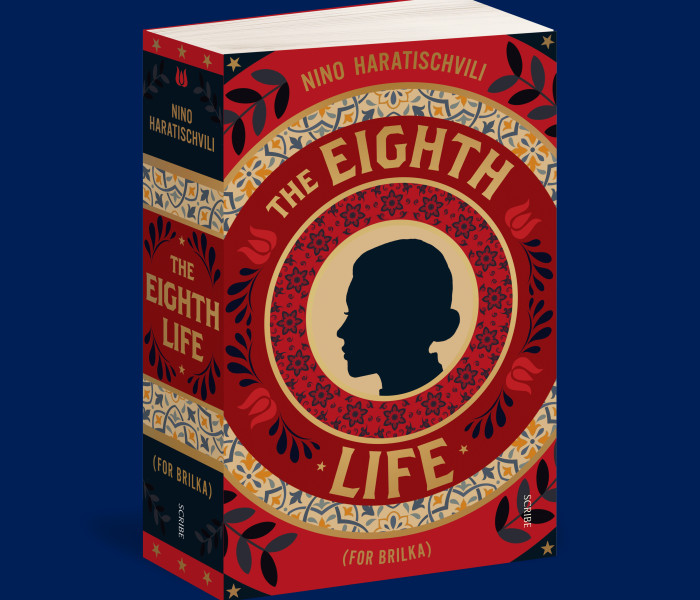
The Eighth Life by Nino Haratischwili, translated by Charlotte Collins and Ruth Martin is perhaps far too intimidatingly long (1000 pages) for me to read, but it sounds epic: six generations of a Georgian family living through the turbulent Soviet 20th century.