Heroic-a Series: Empowering Women of #WWII – Andree de Jongh – Code names – Dedee and Postman

Welcome to today’s post about empowering heroines of World War II. Today I’m going to share a bit about the heroics of one tiny, petite young woman of age twenty-four who didn’t even look twenty – Andree de Jongh – Code Names – Dedee and Postman.

Andree de Jongh was born in WWI, Schaerbeek, Belgium. De Jongh was studying to become a nurse. In 1940 she moved to Brussels and joined the Red Cross voluntarily and got involved with rescuing and hiding allied airmen. In total,776 stranded allied airmen were rescued through her creation of the ‘Comet Line’. This was the route she traveled over twenty-four times, 800 kilometres each way back and forth, to guide stranded allied airmen out of Brussels, taking them through the Pyrenees to Bilboa Spain’s British consulate. When De Jongh made her first journey through to Spain, the British almost didn’t believe this tiny woman led the allies to them, they were convinced it was a German plot! Interesting the route went to Spain, considering Spain pretended to be neutral in the war but kept a covert allegiance to Germany and Italy.

De Jongh’s team were also referred to as the ‘DDD’s’ because their surnames all began with the letter ‘D’, hence, the code name Dedee. De Jongh was known as a real firecracker. In fact, her father named her ‘little cyclone’ when she was just a little girl.

These missions took place because every soldier was crucially needed to fight the Nazis, so if uninjured, the soldiers were sent back to war. The first mission was the only one that wasn’t 100% foolproof. The soldiers were led safely to Spain, but not taken directly to the consulate, which caused several airmen re-arrested when caught trying to get to Bilboa. From 1941 through 1943, De Jongh had made twenty-four trips back and forth. British MI6 and MI9 got involved with the program and sponsored it.

There were 3000 volunteers for these missions, 70% being women. At the end of the war approximately 290 of those volunteers were captured and/or killed. The Comet Line route wasn’t an easy one. It began in Brussels to Paris by train, cross the Sommes at Corbie, Paris to Bordeaux to Bayonnne or St. Jean de Luz by overnight express. Bayonne to Urrugnu by bike or foot to the Pyrenees – an eight hour trek overnight of twenty-five kilometres climbing six hundred-foot mountains, in all weather. The dangers were weather, terrain – and worse, the traitors and betrayers.

De Jongh was caught and interrogated and the Germans refused to believe such a pretty and tiny young woman could possibly be capable of such journeys, so instead of killing her, they sent her to a concentration camp in January 1943, first to Ravensbruck, then to Mauthausen, and there she remained until Liberation Day. When the war ended, she was freed by the allies, weight under eighty pounds and dying from Tuberculosis. But she didn’t die!

After the war, De Jongh was invited to receive the George Medal at Buckingham Palace, in 1946. She also received numerous other medals from many allied countries who fought the war, such as the Medal of Freedom, the French Legion d’honneur, the Belgian Croix de Guerre, and a few more. In 1985, the king of Belgium made her a Countess. De Jongh completed her nursing degree then moved to Africa to help the leper communities. She died in Brussels at the age of ninety on October 13th, 2007.

Below is a video with more details how this incredulous woman became a heroine of WWII.

©DGKaye2026

Smorgasbord Blog Magazine – Guest Post – Who has influenced you the most in your life? #BestFriend by D.G. Kaye | Smorgasbord Blog Magazine

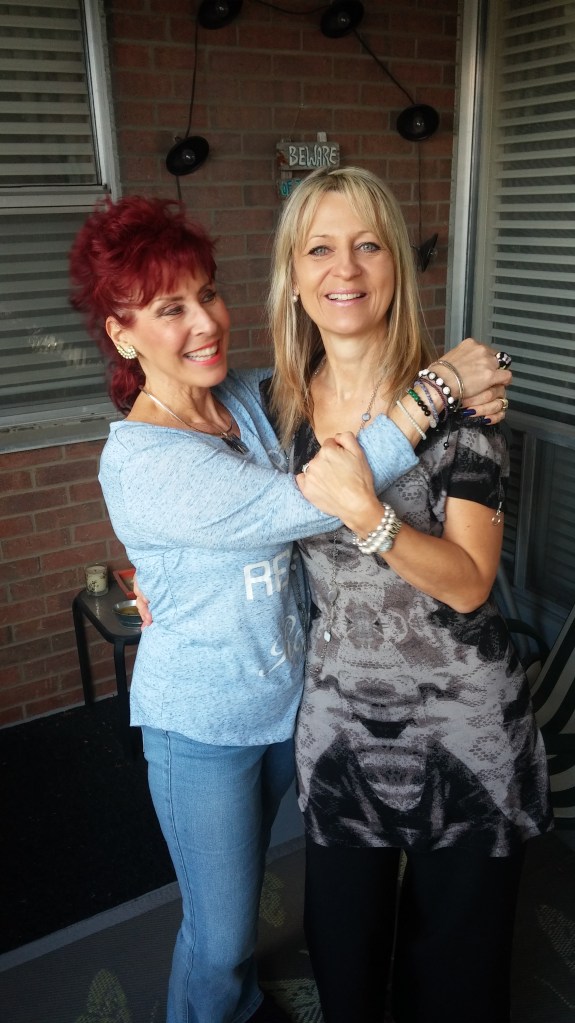
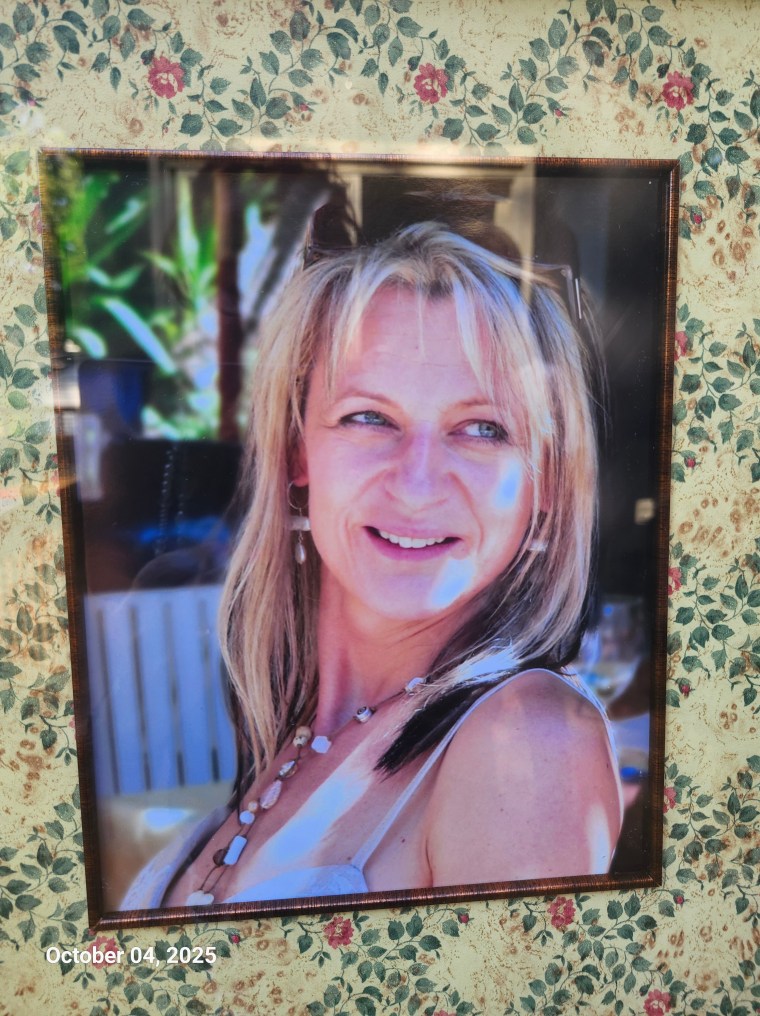
I was recently featured at Sally Cronin’s Smorgasbord Blog in her series – Who has influenced you the most in your life? Today I’m sharing the person who introduced me to many things in life – especially love, my best friend of forty-six years, Sanja, who I lost last summer to the dreaded cancer.

This series is about the person you feel has had the most influence on your life and has shaped the person you are today, and what you have achieved. That might be in reaching personal goals or to do with your career.

best friends

I didn’t have to think too long about who I’d choose for this important person who opened my world to life, living, friendship; and the first person in my life who showed me unconditional love – my soul sister and best friend for forty-six years, my Sanja.

There was a me always inside me that I kept hidden from my family while growing up. I observed everything I saw and heard, didn’t dare question anything, and was never invited to share my thoughts, dreams, or aspirations while growing up. Nobody asked, and so, I never felt the comfort to share.

‘I love you,’ were unfamiliar and uncomfortable words for me while growing up. I mostly lived in my head, documented my feelings, and my sanctity was music. For an outgoing personality, I always felt stifled by all my thoughts and dreams; I felt uncomfortable sharing with anyone in my family circle. My circle was small. I grew up solely around liberal Jewish people and community – including school, and a predominantly Jewish high school. I always felt out of place, feeling though I didn’t really connect with anyone and always looked forward to just coming home from school and playing music and living in my imagination. I had no exposure to other cultures, save for the interesting and sometimes savory characters my mother brought round to our home from her extra curricular activities – mostly gambling.

My marks were always high in school, despite me being a last -minute studier for a test – I always did and do my best work under pressure. I was closest with my father, and my Aunty Sherry, my mother’s sister. Yet, I was still hesitant to share what went on in my head with anyone. My mother was rather intimidating to speak with, mostly because all four of us kids learned young, how to dance around my mother’s moods and angry outbursts. My father used to warn us – “Lookout today kids, your mother is on the warpath again.”

It wasn’t until my parents finally divorced when I was almost seventeen that my father sold the family home. My aunt was the rental agent in a very sought after building complex that had wait lists two years long to get into. My father and my aunt knew well of the turbulent childhood I endured under the rule of my mother and miraculously came up with the great idea to set me free on my own and put the onus back on my mother to take care of her other three children. The deal was sealed when my aunt got me my own apartment, lease signed and rent paid for the first two years by my father as I learned to stand alone on my own. I was elated to break free from the chains of emotional domination by my mother and eager to live my own life at only a few months before my nineteenth birthday.

My aunt also got me a part-time receptionist job right in my building in the gym and recreation center. That is where and when my life opened and began.

Most Saturdays were quiet at the gym. Sanja would sit in her lifeguard office up at the pool as I’d sit at reception, often bored, and we began calling one another to gab to pass the empty hours. Within weeks our lives became intertwined forever – until forever was cut short last August when she was unjustly taken from this world.

Sanja was unlike anyone I’d ever known. She was originally born in then Yugoslavia, a free spirit who exuded joy and happiness no matter the occasion. Sanja lit up a room wherever she walked in. From the day I met her there was a light in her that became the light that guided me through my own life and learning. I wasn’t realizing it at the time, but that girl was a beacon gifted to me. A beacon who led me through life – all the good and the bad she was there for, and I was always learning from her. She brought me into her world of people, friendships, and love. And I learned a lot about how real families interact. None in my new circles, except one, were of the Jewish faith in my ever-growing circle of friends, and eventually, my Catholic friend Marg married the only other of our friends who was Jewish. My circle grew, making more friends with many cultures who’d emigrated from other countries. There was love, friendships, conversations, and much I’d learned as the sheltered girl who joined this circle of life.

Sanja taught me many things in life without realizing she was teaching me, and it all felt good and albeit, a little strange at first when my growing social life was first evolving. But the most important thing I learned from her was unconditional love. I had never known unconditional love, never knew it existed. Growing up around my parents’ fighting and my mother’s rule, I was always trying to be the peacekeeper, yet, not feeling liberated to say what I felt because I was insecure about how my feelings would be taken, with an outburst from my mother or a threat for speaking my feelings. I never realized while living at home how much I craved being loved and listened to without reprimanding, until I learned it existed.

When Sanja would hug me if something wasn’t going well, or if something happened to me, which somehow often did, she’d kiss me and hug me and told me the words – I love you. It felt strange at first, but as time went by and we became best friends and sisters for the rest of our days together, I felt like she was the mother I never had, and the big sister I never had – even though she was five months younger than me. She was my guiding light, my twin-flame, sister, and soulmate. And I’m glad she knew how much she meant to me. She is the other hole in my heart that sits beside the hole from my beloved husband.

Sanja

Like a first true love, I learned from my best friend what love meant.

©DGKayewriter.com2026

Originally posted at: Smorgasbord Blog Magazine – Guest Post – Who has influenced you the most in your life? #BestFriend by D.G. Kaye | Smorgasbord Blog Magazine

The Sunshine Blogger Award – BOOKS THAT MAKE YOU THINK – #appreciation

It’s been a while since I was nominated for a blogger award, so I was pleasantly surprised to be nominated by Laura Lyndhurst over at Books That Make You Think for the Sunshine Blogger Award. If you’d like to pop by Laura’s blog, you’ll find answers to questions about her, and I am sharing her questions for her nominees, with my answers below.

1. Do you still live in the place where you were born? If not, where are you now?

I am living minutes away from where I grew up, only, the name of my borough in the City of Toronto has changed from Willowdale to North York.


2. What’s your favourite type of music and performer?

I am addicted to the 70s and 80s music. Period.


3. If you’d had a choice, where in the world would you have spent lockdown?

Absolutely, in Puerto Vallarta, Mexico.


4. What’s your ideal way to spend a day?

Go take a gym class or two with my gal pals then go for lunch. Lol, I know, so exciting 😂🤣 But I’ve reached a point where I enjoy being mobile and agile – and that doesn’t come by sitting on a couch. And just spending time with friends who like to talk, listen, and laugh.


5. Do you have a favourite childhood memory?

I didn’t have many family outings, but when my Aunty Sherry visited or stayed with us, we’d have so much fun going to a movie, stopping at the candy store on the way home (for more candy), going home to watch another movie and having lots of laughter with her.


6. Did you always know what you wanted to be when you grew up?

Let’s say I was on the right track. Since I was a little girl I wanted to be an investigative journalist. Nobody inspired or asked about my aspirations and I just let life take the lead. Even now, I know I missed my calling.


7. What’s the food you like most in the world?

That’s almost a toughie because I’m not much of a foodie, but I do have my preferences. I mostly enjoy Mediterranean foods as well as Japanese and Thai. That’s my palate.


8. What do you dislike most?

Inhumanity.


9. Do you have a hobby you’re passionate about?

Does going to the gym – a lot, count? Of course, that’s besides reading and writing.


10. What got you started on blogging?

I started blogging in late 2013 while I was writing my first book, Conflicted Hearts. I was also learning the self-publishing biz and learned fast that it was important to have a platform. When I began blogging, I honestly had no idea what I’d be blogging about. Here I am, thirteen years later. I finally landed.

Thanks to Laura for the nomination.

Source: The Sunshine Blogger Award – BOOKS THAT MAKE YOU THINK

©DGKayewriter 2026

Smorgasbord Book Promotions 2026 – Share an Excerpt – Boost one of your books – #Grief #Relationships #Strength – About the Real Stages of Grief: A Journey Through Loss by D.G. Kaye | Smorgasbord Blog Magazine

I was thrilled to be featured at Sally Cronin’s new book promotion series at her Smorgasbord Blog Magazine. In this series we share an excerpt of one of our books. Sally invites authors who’ve previously been featured at her blog to be featured in this series.

In this regular series for 2026, you are invited to share an excerpt of 400 to 500 words from any book you have written you would like to give a boost to.

This feature is for any author who has been promoted on Smorgasbord previously.

Please read full details of how to participate at the end of the post and I will respond to your emails as soon as possible.

The aim of the series

  • To showcase any of your books you would like to give a boost to.
  • To gain more reviews for the book.
  • Promote a selection of your other books that are available

Today an excerpt from my friend and collaborator D.G. Kaye, Debby Gies… About the Real Stages of Grief: A Journey Through Loss 

About the Real Stages of Grief, Memoir

About the book

The truth about grief: it has filled countless pages in clinical studies and personal stories, but no words can prepare us for its reality. When I lost my beloved husband, I searched for solace in grief groups and forums, longing to make sense of my experience. There I discovered something rarely spoken aloud—that many of us carry the same hidden aches and side effects of loss, the ones that seldom find their way into books.

Love does not die, and so grief never truly leaves us. It lingers, reshaping itself, teaching us to live with its many faces. This book is the story of my own passage through loss—an endurance of sorrow, and a testament to the strength of those left behind.

Grief is a heart-wrenching journey each of us will one day face. I write not only for those who are grieving, but also for the ones who walk beside them—for the friends, family, and witnesses to heartbreak—so they might understand, even a little, what it means to live with loss.

Trailer created for Debby by author Diana Wallace Peach.

Thanks so much for featuring my book here today, Sally. I’m always stoked to be featured at your house of Smorgasbord Blog Magazine.

I chose this excerpt – Condolences, to share here today because I wrote this chapter with people in mind who find it difficult to find the appropriate words when approaching someone who is grieving.

The friend who can be silent with us in a moment of despair or confusion, who can stay with us in an hour of grief and bereavement, who can tolerate not knowing…not healing, not curing…that is a friend who cares.” — Henri Nouwen

Condolences. There are no right or soothing words for a griever. Just be present.
Why is it often so difficult for people to offer their condolences? I know this difficulty myself; when it’s my turn to send condolences, I too feel stumped. In my case, I know it’s because my empathy makes me feel too much and believe that the words I have to offer could never be adequate, because I can’t make it better for them. So I do have an inkling about why so many people have a difficult time expressing condolences.
Friends have asked me, what is the right thing to say? I admit, it’s a tricky topic because trying to muster up those words can sometimes become difficult. This is because, in essence, there really are no appropriate words to make us grievers feel any better in our darkest moments of loss. One thing I can say for sure; plenty of things are better left unsaid.

Sometimes, people who are lucky enough not to be familiar with this painful thing called grief may say the wrong things unintentionally. Even with good intentions, their words may not bring any comfort to us. Let’s begin with what not to say.

When we hear things like “He’s in a better place,” “He’s at peace,” “At least he’s not suffering” ad nauseum, these words only make me think, No! He was better off here with me on earth, not under it. So please refrain from these cliches. Like I said earlier, a hug and an ear are what is most beneficial for us. Sometimes, there are just no appropriate words.

We don’t need people offering us cures for our broken hearts and souls. These aren’t comforting to us while we are in the depths of our sadness—because there is no cure, merely the time, however long of it, that it takes for us to learn how to live with our grief and move forward with it. Some people feel compelled to blurt out things they think we may want to hear, just as some will say things we’d prefer be left unsaid. Yes, in our hearts, we know our loved ones are in a better place than that of suffering. But our grief is raw. And despite our knowing this is true, our hearts are aching to have them here with us. After burying the loves of our lives, we know we didn’t want them to suffer, but we are not yet ready to acknowledge the loss in our hearts.

Saying something more heartfelt is a much better option in those awkward moments. So—what is more heartfelt? For me, more heartfelt words are those that convey an understanding of the person who is grieving. For example, if a friend or family member has just lost someone, say something to the effect of “I can’t pretend to imagine your great loss, but I am here for you.” This does a lot more for me than someone saying things that have no value or leave the wrong taste.

Having said this, and having been in the same position when it’s me offering condolences, I know how easy it is to be caught off guard when comforting someone I care about who has just suffered a giant loss. We always mean well in these situations, even though our words don’t always come off as warm and fuzzy. Many people are death averse. When faced with grievers, they appear like deer in headlights—stuck for words. It happens.

Please visit Sally’s blog for a great review for this book, and for Sally’s instructions for how to be featured at Smorgasbord Blog Magazine.

©D.G. Kaye

Smorgasbord Book Promotions 2026 – Share an Excerpt – Boost one of your books – #Grief #Relationships #Strength – About the Real Stages of Grief: A Journey Through Loss by D.G. Kaye

Source: Smorgasbord Book Promotions 2026 – Share an Excerpt – Boost one of your books – #Grief #Relationships #Strength – About the Real Stages of Grief: A Journey Through Loss by D.G. Kaye | Smorgasbord Blog Magazine

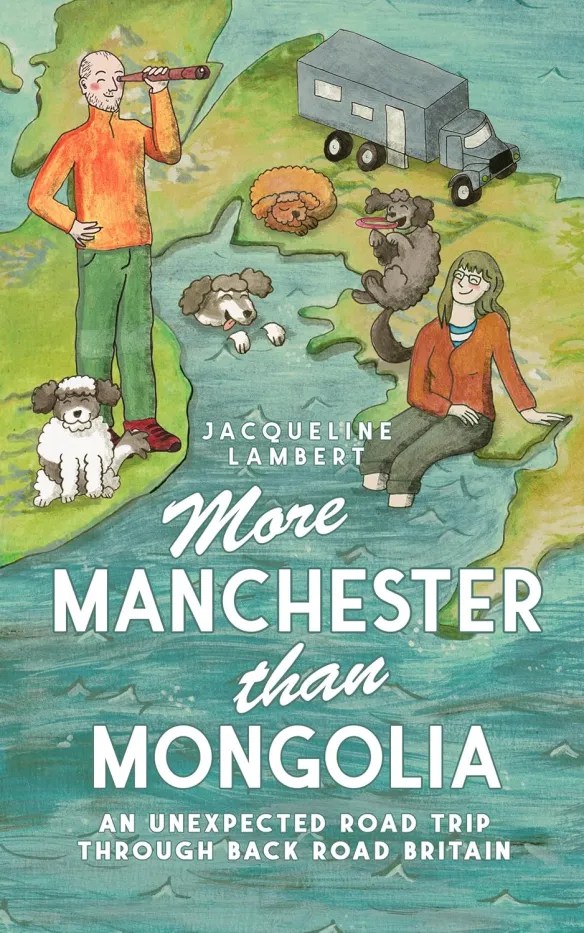
Sunday Book Review – More Manchester than Mongolia: An unexpected roadtrip through back road Britain by Jacqueline Lambert

Welcome to my last Sunday Book Review before my blogging break. Today I’m reviewing Jackie Lambert’s second book to her ‘Beast’ series, book 2. In this second book of Jackie’s adventures, traveling narrow roads in the UK with the tank-like beast provides lots of humor and good information on the trials and tribulations of building this beast, getting it road worthy, and all the bits and bobs that go on to make this journey fun and doable.

Get This Book on Amazon

The Comic Memoir of a Grand Plan Gone Wrong

“I haven’t laughed so much at the written word since Pam Ayres released Some of Me Poetry in 1976!” Drew Johnson, author of the Andalucian Adventures series

When Jackie and Mark bought The Beast, a vintage, six-wheel army lorry sight unseen off the internet, they planned the ultimate overland adventure to Mongolia with their four dogs. But when COVID-19 slammed shut international borders – it abruptly rerouted their dream.

Stranded in the U.K., they tackle life on the road in a home-built truck camper laughably over-engineered for the quaint English countryside. What follows is a laugh-out-loud British road trip, filled with mishaps, mechanical mayhem – and the hidden marvels of their homeland.

Blending travel tales with dogs, wit, and heart, More Manchester than Mongolia is a celebration of embracing life when it doesn’t go to plan. Perfect for fans of Bill Bryson, Tony Hawks, and Mark Wallington, this is a funny, feel-good memoir of resilience, rediscovery, and finding that sometimes, the best adventures are the ones we never intended to take.

After reading the first book in this series, it was a given I had to read this one. Lambert has an interesting way of sharing her storied journeys, including lots of nuggets of wisdom shared along the journey, written as though she’s speaking directly to us in her stories and descriptions.

In this book, the author shares the story about their journey through the UK in their converted, newly re-fitted (Swedish army tank) – perhaps, not yet finished, as the author, her hubby Mark, and their dog family attempt to drive to Scotland as a test drive with their new monster vehicle/home. Narrow ancient roads and all, this beast is moving! Maybe just not to Mongolia. And maybe they don’t even make it to Scotland!

Time constraints with the length it took to convert this vehicle – and Covid and Brexit, got them to a late finish, and ultimately, leaving them no choice but to move into the vehicle before, let’s say, all was perfected. Brexit added to making travel that much harder for Brits going to the EU. Praying for luck, the Beast sets out, first facing some very narrow country roads, which the author describes perfectly with added hilarity. And not to mention the many passerbyers who are marveled at such a creation. Trials and tribulations abound from sticky crossings, to broken windshield(s), to new tires required, let’s not forget about visa issues, add some electrical issues and getting stuck in soggy grounds, and just about any obstacle to put a pause on things, will happen. But then there are always – the people we meet along the way that just helps to make life better – especially at times you really need them.

On the maiden jaunt north to Scotland, the Lamberts encounter some interesting twists and turns, and some interesting people along the way, as well as the author sharing of some interesting literary sights in her detailed journey and guided tours of people, places, and events of some of the UK’s rich history. And some very helpful information for fellow RVers along the way.

A few poignant quotes from the author and what inspired the journey sums up the adventure perfectly:

“The path Mark and I have chosen is not just a way of living. It’s a means to reclaim freedom in a society that tells you to anchor yourself with a house, mortgage, and possessions. Preferably ones you need to get in debt to afford.”

“Our lifestyle offers something different. It offers time. Time to explore, to think, to breathe. And time to be present in an existence that rushes by too quickly.”

“From our obsession with travel, we had already learned that happiness doesn’t come from things; it comes from experience. And we’d observed that variety, and breaking out of everyday patterns, had the side effect of making time appear to slow down.”

” An obsession with longevity urges us to hoard time, clinging to it as though we could own it. But the lesson of a free life is that it’s not the years or the possessions you accumulate that count. It’s the richness of your days…”

“Our lifestyle is not about rejecting responsibility or ambition. It’s about prioritising joy and meaning. It’s realising that the best way to honour time is not to stretch it out endlessly, but to savour it deeply.”

If you’ve ever wondered what it would be like to turn an army tank into your abode and means of travel transportation, with roadblocks, restrictions, and plans, you’ll want to read this fun jaunt with the Lambert’s through some interesting parts of England for entertainment, and for some wonderful lessons in history. Like we say – it’s not only about the destination – but the journey to there.

©DGKaye 2026

Sunday Book Review Special – About the Real Stages of Grief – Graffiti Lux Art & More – Resa McConaghy Interview and Review with D.G. Kaye

Welcome to my Sunday Book Review – something a little different. Kismet happened. The book I recently finished, didn’t make it to the cut for a Sunday Book Review. My mantra about reviewing books is – if I can’t give it at least four stars, how can I recommend it here to my polished readers? And as serendipity happens, I received an email from Resa McConaghy, telling me she was writing one of her ‘classic Resa book reviews’ for my book! If you aren’t familiar with Resa, she’s an amazing artist, writer, photographer, fashion gown designer, and one of the most unique book reviewers I’ve met. I was absolutely stoked when Resa contacted me to collaborate with her by answering select questions.

Today’s Sunday Book Review is a reblog of my interview with Resa.

About the Real Stages of Grief

About the Real Stages of Grief, Memoir

How does one review a heart, soul and mind book like this? Does one say it’s well written? It answers very human questions in an ordinary way that all can understand? Many of us will go through this, so it’s a helpful read?

A Journey Through Loss

Written by D.G.Kaye, after the death of her husband, the love of her life; this helpful book speaks from the pain of experience. She is not a therapist, nor a psychiatrist, nor a professional healer of any sort. And she is right up front about that fact.

In her own words “I devoured books on everything from grief to the afterlife, always striving to make sense of the roller coaster ride I was on,”

I think the best way to impart something more of this book is to speak directly to D. G.

Resa – The cover of your book has the words: Shock, Fog, Anger, Triggers, Guilt, Anxiety and Denial swirling in a circle. At first I thought the words were repeating in order, but upon a closer look, I realize that they are not in any order, but do repeat. How did you come up with it? Why the words are not in any order?

D.G. –  For this cover, the concept came to me immediately.

Grief is like an ongoing spiral with ups and downs. The words inside are just some of the phases grievers experience. The fact that the words are in no particular order and some not repeated is precisely how grief works.

We may visit phases over and over again through time, and some may dissipate with time. Thus, the grief spiral  is far from linear but, more chaotic.

It was above 0c and cloudy out, not a peep of sun in the sky. A perfect day to shoot a shadow free piece of wall art, that seemed perfect for this post. It was only a 20 minute walk to get there.

Suddenlyas I arrived, it became a sunny day with nary a cloud in the sky. There was a barren tree’s shadow over the painting. I shot it anyway. To me, there is something poetic in this image, that relates to grief – something about the shadow.

Resa – Debby, can you see why I think that? Can you put it into words? 

D.G. – Oh wow Resa. I love the shot with the tree’s shadow. If I were to relate it to grief I would say that when you love deep, it’s like carrying sunshine in your heart. And when you lose that love of your life, despite all the horribleness, there will be days when the obstinate clouds clear and the sun shines through, although the shadow of grief is never too far away.

Resa – Perfectly, poetically and profound said.

After the pics were taken, there was still not a cloud in the sky. So, I hopped on a streetcar, heading home. About 3 stops later, Suddenly, it clouded over. There was nary a crack of sun to find. 

Resa – This seemed mystical to me, Debby. Does this touch you, or am I just a sentimental fool? 

D.G. – Oh no Resa, you may be sentimental – like me, but no fool. I love that you were working on this post and came across these poignant images in your travels.

Remembering that grief is love with nowhere to go, the image reminds that even without sunshine, the shadow of love always sticks with us. Not to mention, it reminds me of the Tree of Life – rain or shine, we are branches off the Tree of Life where memories live deep within, sometimes shadowed, but always there.

Please head over to Resa’s blog to read the conclusion of this heartfelt and beautiful display of Resa’s copyrighted artwork and mural captures she chose to weave through our words . . .

Source: About the Real Stages of Grief – Graffiti Lux Art & More

©DGKaye2026

Hello 80’s Leg Warmers – What’s Old is New

Happy New Year! I needed a digital week off and it was well appreciated. And while I was off, we’ve had nothing but arctic temps here in Canada – mainly, Toronto. This brings me to the point of this post – Leg warmers.

Remember them? Ya, when I first think of leg warmers, I’m taken right back to the 80’s and Jane Fonda workout videos, lol. But why did I remember them? Heck, I honestly never wore them when they were a fashion thing.

So what brought these relics back to mind was the unbearable cold I have to endure everyday – just from the car to the gym and back again. When temps are minus twenty, and despite wearing full winter garb, I’m still only wearing thin lycra legging tights for gym. Yes, I’m typically always hot, hence I also wear a tank top in gym classes – least clothes on me the better when working out; I wear a hoodie under my coat to stop the frigid air from going up my coat sleeves, but what about my legs?

One day after following my routine after returning home from gym, I went directly into a very hot shower and stood in it for a good ten minutes – mostly to turn my frozen legs warm again then I put on my fleece homewear. As I was doing so, I started to think about this ongoing situation of my freezing legs. I began thinking about the ‘snowpants’ I wore as a kid walking to school across huge snowbanks and thought about how nice it would be to have snowpants again. And as I thought of the snowpants, the leg warmer idea followed.

I wondered where on earth I may find such things in the 21st century, and my go-to was Amazon. Sure enough, leg warmers were there o’plenty! I ordered a pair that were faux fur lined and came up to the knee. I wore them to gym keeping them on to toast my shins when several girls and the instructor came up to me asking where I got the leg warmers. LOL. Did I just start a vintage trend?

For those of you who aren’t familiar with leg warmers, they must be quite old because I couldn’t even find the right picture on image sites, so I saved this image from Amazon

I’ve been wearing those babies to gym daily for the past two weeks, and although my shins were toasty, the tops of my thighs weren’t. Later that evening, my good friend Zahra called me to tell me she ordered thigh-high leg warmers from Amazon. Of course I had to order another pair!

They work! Although I have no problem wearing the shorter ones in class, I remove the thigh-highs once I arrive in class. Those babies are great for the outside, but keep me heated inside. But I’m so glad I found them.

Now, I know not all of you have to live through arctic temps, but if so, think about investing in a cheap pair. Whether or not they are fashionable or fashion faux pas, they work!

Of course I want to know if any of you reading here wore leg warmers in the 80s, and if you may be possibly wearing them again in this century? 😊

©DGkaye2026

Sunday Book Review – Fragments of Isabella: A Memoir of Auschwitz by Isabella Leitner

Welcome to my Sunday Book Review. Today I’m reviewing a book I grabbed while it was on FREE, and glad I did because unlike many books on this topic, the subject matter wasn’t detailed with stories of the inhumanity the nazis exerted over the Jews, as much as it is Isabella’s own survival story, and how she managed to stay alive through three death camps that gripped me. Isabella Leitner wrote this book in the late 70s.

Get This Book on Amazon

The deeply moving, Pulitzer Prize–nominated memoir of a young Jewish woman’s imprisonment at the Auschwitz death camp.

In 1944, on the morning of May 29th, her twenty-third birthday, Isabella Leitner and her family were deported to Auschwitz, the Nazi extermination camp. There, she and her siblings relied on one another’s love and support to remain hopeful in the midst of the great evil surrounding them.


In Fragments of Isabella, Leitner reveals a glimpse of humanity in a world of darkness. Hailed by Publishers Weekly as “a celebration of the strength of the human spirit as it passes through fire,” this powerful and luminous Pulitzer Prize–nominated memoir, written thirty years after the author’s escape from the Nazis, has become a classic of holocaust literature and human survival.

Isabella Leitner born in 1921 Hungary, survived the genocide of World War II, and lived to tell, until 2009. A remarkable long life after all she endured and suffered.

In this book, Isabella tells her story from the time the Germans deported Jews from Hungary, through all of the inhumane conditions she managed to remain alive, and her resilience to defy death at any cost, to the liberations of the holocaust victims by the Red Army, to her eventual migration to America.

On her 23rd birthday, May 29, 1944, Isabella was deported to Auschwitz from the Hungarian ghetto she was already forced to live in with her mother, four sisters, and a brother. Her father had already sensed the winds of war coming for him and his family and managed to get to America before the war began, in efforts to seek passage to bring his family to America. But sadly, before anything could be arranged for his family, the Germans got to them first. The story is written as an accounting of what happened to one family during the occupation, almost non chalant does the author reveal her stories. Not looking for pitty, but brazenly just telling it how it was, leaving us, the readers to form our own empathy.

The title for this book is definitely apropos. And the author’s writing style was one that just kept me captivated throughout until the last page. The book isn’t written as a novel. It’s a memoir written as fragmented bits of important moments and remembrances of the time her family suffered to live, relayed throughout the book, and the taste left behind after the war had left its psychological damage on survivors, some who couldn’t even bear hearing German words again. This book is one woman’s testament to the horrors of the holocaust, and the undeniable will to survive.

©DGKaye2025