
My latest guest post on the Story Empire website is now live, and can be found by following the link given below.

My latest guest post on the Story Empire website is now live, and can be found by following the link given below.

… and maybe that’s why I’m feeling rather out of things and without too much to say for myself this week. We’ve had hot weather, which is by no means a given for a UK summer, and of course it’s been rather too hot on occasion—meaning even less inclination to do much.
A bit of midsummer magic might be hanging around since the Summer Solstice two weeks ago, which could account for a couple of untoward happenings, both related to my reading. First, I read Mania by Lionel Shriver, in which the protagonist is an escapee from Jehovah’s Witness parents; and lo and behold, the day after I finished the book a couple of these worthy folks fetched up on my doorstep. At first I thought the doorbell was the man, who’d gone for a physio appointment for his bad back and left his keys behind. Opening the door and peering out, I saw the two ladies approaching the other door—as I hadn’t opened too quickly—and realised who they were, closing the door quickly and quietly, locking it and hitting the deck to hide until they’d gone. Then I worried that they might look through the letter box, so crawled to a more secluded place of safety; when things went quiet I sneaked upstairs to peep through the front bedroom blind, to see them getting into their car and leaving.
Phew. I’ve nothing against these women. They’ve called before, as there’s a Kingdom Hall nearby and we’re in their catchment area. I wasn’t in the mood, however, and off my guard as we haven’t seen them in a while; and why did they call just when I’d been reading about some of their community?
The other weird thing concerned my next read, The Delivery, by Gregg Hurwitz, and I’ve mentioned in my review that I couldn’t remember how it got on my Kindle, not being the sort of book I’d pick for myself. Before I realised it was a Free Prime Bonus book, however, and when I’d started it and realised that it centred around an AI-created android, I had the uneasy thought that the AI in the system might have downloaded it of its own volition. Spooky.
Elsewhere in books I’m finally reading The Iliad in its entirety. I’ve only worked through certain chapters before and, as I know the story, I’d convinced myself that I’d read the whole thing. Using it for my fortnightly Storytelling Project blog—which is going well, so far—and realising my error, I decided to correct that lack. Lots of fighting, in graphic detail—many skulls crushed and entrails spilled, plus one guy gets a spear in one ear which exits through the other—after bold Greek warrior Achilles pulls a hissy fit when Agamemnon takes from him a girl, Briseis, who’d he’d taken in turn on one of their forays into the surrounding countryside.
Marvellous, isn’t it? They’ve amassed this huge army and gone to Troy to get back Helen, wife to Agamemnon’s brother Menelaus, who’s been taken away by Trojan prince Paris; and once encamped there they’re taking the local females in much the same way. It would’ve undoubtedly been better all around if Agamemnon had said ‘Leave it bro, she’s not worth it’, but no; a principle had been broken, Paris had stolen something which belonged to Menelaus, and the brothers were going to get it back. Whether Helen had gone willingly or not with Paris is arguable, but her status and that of other women depicted in The Iliad confirms their status as property—and don’t get me started on that subject.
Elsewhere, the hot weather seems to be having negative consequences all around. We had an indifferent lunch at our favourite restaurant—staff wilting in the kitchen from the heat?—and the supermarket cancelled not one but two deliveries due to malfunctions in their fridges, meaning we had to venture to another branch of the shop in person and push a trolley up and down the aisles. Not my favourite occupation at the best of times—hence the deliveries—and certainly not in this hot weather. It was great to get back home, where cooking’s cancelled and cold food rules the roost for the duration, with a plentiful supply of tennis—Queen’s, Eastbourne and now Wimbledon—on the box; not to mention football, which I swore I wouldn’t watch, but which is irresistible when England’s on.
Plant-wise, the orchids are nearing the end of their flowering time, which is a shame as they’re so beautiful, and they’ve not been helped by the fan which we’ve had on for much of the time. Outside, the garden’s blooming and colourful, but needs watering too often, given the heat—but that’s the man’s job. I’m happy to be inside, not the least because I’ve got some niggling health issues which are best cared for—in my opinion—curled up on the sofa with me and the blogs I’m trying to put together and the books I’m avoiding writing.
Sorry it’s not more exciting. Maybe next time.
PS: Another weird thing just happened. Perfume by Patrick Süskind was published in 1985; we read it soon after publication and later saw the film. Since then we’ve hardly ever mentioned it, until the man spoke of it yesterday. Today somebody has published a review of it on WordPress …


I found this book on my Kindle app, and couldn’t remember how it got there. Investigation revealed it to be a Prime First Read, which I get each month; it must have been the bonus short story for that month, because it’s not something I would have chosen, in which case I got a good deal, it being not a short story but a novella. Read More …
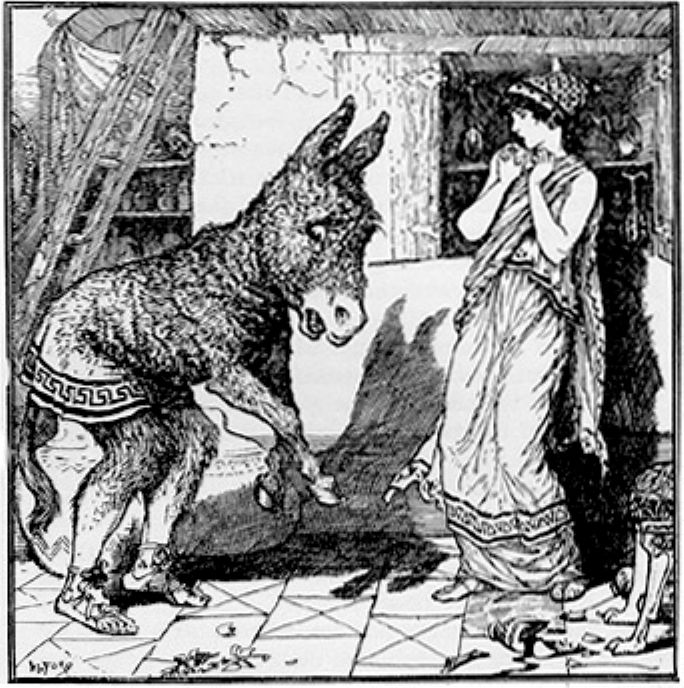
We’ve seen the magic of the sorceress Circe and the enchantress Calypso on the margins of The Odyssey. In The Golden Ass, however, it moves to centre stage, not just through the inept experimentation by Lucius which leads to all his troubles, but through the inclusion of the tale of Cupid and Psyche, which puts the fairy in fairytale by virtue of being the first-ever such story.
First though, The Golden Ass, written in the second century A.D. by one Apuleius, a citizen of Madaura, situated in the North-African province of Numidia and a Roman Colony. It’s generally agreed that the Roman Empire began its slow decline at around the time Apuleius was writing this tale, and the lawlessness and disintegration of behaviour which signals such social decay is shown in the text.
As in The Odyssey there’s a quest to be undertaken, but a comic one. The overarching frame tale concerns one Lucius, a young man too curious for his own good, as well as having an unhealthy interest in magic; to which end he goes to ‘Thessaly, renowned the whole world over as the cradle of magic arts and spells.’ Staying in the town of Hypata with an old acquaintance named Milo, he’s warned against this man’s wife, Pamphile, as ‘a top-class witch’. His curiosity getting the better of him, however, he spies on her magic ritual one evening and sees her metamorphose into an owl. Desperate to experience the same transformation, and assisted by the maid of the house, Photis—with whom he’s entered into a sexual relationship (a bit of bawdiness there)—he applies liberally a magic ointment, and is promptly turned into an ass.
Thereafter, the book is a string of stories, which Lucius hears and experiences during his quest for roses, the antidote which will restore his human form. It takes him a good year—roses being out of season—so there’s a plethora of tales. Some contain themes familiar to us, such as that of Charite and Tlepolemus, in which the ghost of the slain husband appears to his wife to reveal the name of his murderer and ask her to extract revenge. Hamlet’s father, anyone? Or, more recently, Patrick Swayze in Ghost? There’s also a comic Trojan-Horse style story of a robber who gains entry to a house disguised as a bear (you’ll have to take my word for it) and admits his fellow thieves during the night. What by consensus is the most important tale in the book, however, is that of ‘Cupid and Psyche.’

The story, acknowledged to be ‘the first fairy tale of Western literature’, concerns a beautiful young girl names Psyche (Greek for ‘soul’) who incurs the wrath of Venus when people worship her instead of the goddess. Venus demands of her son, Cupid, that he cause Psyche to fall in love with a low, dishonourable man, to humiliate her. Instead, Cupid falls for the girl himself, transporting her to a mountain hideaway where he visits her in the dark. She’s forbidden to ever see him in the light, or try to discover his identity; and she goes along with it, until her two jealous (ugly?) older sisters convince her that her husband is some kind of monster (Beauty and the Beast?). She looks at him while he sleeps, but a drop of hot wax from her candle awakens him, and then it’s goodbye to love as Cupid departs at speed.
Psyche doesn’t give up, however, going on her own quest to get him back—during which she has to carry out tasks for (wicked) mother-in-law Venus—who of courses makes them as difficult as possible. Enter ‘Nature’s little helpers’, and if Psyche doesn’t exactly whistle while she works she manages to push through to Happy Ever After—as does Lucius in the frame tale.
There are other familiar tropes in the stories—which have inspired later writers like Chaucer, Shakespeare and Boccaccio—but we don’t have time for all of them here. I would like to give a mention to hair, as symbolic of sexuality, given how Lucius fixates on the long hair of Photis during his nocturnal encounters with her. Fairytale-wise it’s in the story of Rapunzel, and it’s crossed into real life too; nuns cutting their hair, monks sporting tonsures, girls putting up their hair once they’re married and older women keeping their hair short—not forgetting the hippy movement and ‘free love’.
The book’s also an early example of what came much later to be known as ‘Bildungsroman’; a story of education, in which a protagonist—often young, but not always—learns a lesson through experience and is changed, usually for the better (but not always; see Blackadder’s Christmas Carol). Here, both Lucius and Psyche qualify. Enough of that for now. If you fancy reading The Golden Ass, or even just the story of ‘Cupid and Psyche’, I’ve found a free online copy which has a modern translation (most of them are couched in 16th-century language and are dire) and which can be downloaded in various formats here. (You’ll need to scroll up to the top of the page, as for some reason it opens halfway down).
It’s a great story, and I hope I’ve done it justice with this short introduction. I’ll leave you with a reminder of Lucius’s obsession with magic, by which he attempts to turn into a bird and becomes as ass instead; a fitting metaphor for this not-too-bright young man who, on arrival in Hypata, gawks at the place in awe:
‘I thought the very stones I stumbled against must be petrified human beings … I expected statues and pictures to start walking, walls to speak, oxen and other cattle to utter prophesies …’
Which very neatly introduces the text for next time; Ovid’s Metamorphoses.
See you there, fellow travellers.

‘This beautiful poetry collection offers gentle yet thoughtful reflections on life, change, and what it means to keep moving forward. They explore identity, showing who people are beneath the surface, and resilience, revealing how they keep moving forward through hardship and emotional struggle.
The poems, written in free verse, use a single extended image placed in front of the poem to guide the narrative. Some pieces are more symbolic or reflective, but all blend humour, feeling, and cultural insight in a natural, engaging way.
At the start of the book, In Laua’s first poem, “Beached”, the boat represents a human life. Going ahead In Person of Colour, Laura writes about a funeral not as a sad moment but as a joyful final performance where musicians reunite “on the other side.” With humour and warmth, the poem honours the shared spirit of Black musicians. In the poem Helix, life is depicted as a spiral staircase we must keep climbing, always moving toward a distant light.
The book ends with Modern Day Munch because it delivers the strongest truth: some people live with real, ongoing trauma every day. It deepens the whole collection; it shifts the reader from lighter, reflective themes into something raw and real.
The poems I’ve chosen (the same as those in the book) reflect Laura’s writing style, but each piece is unique and represents its own layer of symbolism, insight, and thoughtful depth. I loved poems for their honesty and humanity, and readers who enjoy reflecting on their own lives will find them deeply rewarding.
This poetry book carries Laura Lyndhurst’s signature writing style—an exploration of life’s intricacies and human complexity, written with unmistakable depth and reflection.
As an author myself, it was my pleasure to read her book, learn about her writing, and have the honour of rating the book with a well-deserved five-star review.
I wish her all the best in her future life and creative journey.
Stacy Nicholson’
If you’re interested in reading October Poems, you can find it here.

As an escapee from the religious sect into which she was born and didn’t wish to be a part of, Pearson Converse isn’t one to take kindly to being forced to participate in something in which she doesn’t believe; but as the concept of ‘Mental Parity’ (MP) has taken over society, she finds herself increasingly on the wrong side of the prevailing ideology in the USA, and it’s getting worse. Read More …

I’m not usually one for certain fixed ‘celebration days’, such as Mothers’ Day and Fathers’ Day. I’m not saying they’re not good for other people; if they work for you, that’s fine. I just preferred to celebrate my parents whenever I wanted, rather than make it a group occasion. I’ve had more than one occasion to refer to my father in blog posts in recent months, however, which has sparked more memories and caused me to write about him—unusually—on this Fathers’ Day.
Both my parents are gone now; long-gone, in the case of my father, forty years this September, and he went far too soon. I still remember him often, every day when I look in the mirror, in fact. I have some of his features, which take centre stage when I smile—and when I see him smiling back at me, I smile even more.
He was born in Islington, London, long before it was ‘gentrified’, and it used to amuse me—whenever I went to the area as recently as twelve years ago—to think that I was walking the streets he’d frequented as a child. He was the second-youngest of eleven children, and never met his oldest sibling, a sister who died at the age of sixteen, some years before he was born. The next-eldest sister married and gave birth to her first child one week after their mother had my father; when she came to visit she’d put her daughter into the cradle next to him, an uncle at one week old.
The family moved out to the North London suburbs at some point, and my father-to-be grew up to be an ordinary working man, of great natural intelligence but with a minimum of education. Not his fault: he lost a kidney at the age of twelve, spent two years in hospital, and having missed so much school was sent straight out to work. This was the 1930s, and the advent of WWII saw him joining the Home Guard, his missing kidney rendering him unfit for active service overseas.
At some point he began working regularly at the London manufacturing plant of the music company Boosey & Hawkes—which is still going—as a pieceworker, polishing clarinet keys. I sometimes wonder—given that musical instruments can keep going for many years—if the clarinets I see when I watch an orchestra have keys which were polished by him.
He was offered promotion to foreman on more than one occasion, but always turned it down, being able to earn more doing what he’d by now become an expert at. He’d met my mother and married, although not until the age of twenty-eight—back then you got a bit of money behind you before you undertook support of a wife and children. They had four daughters, of which I was the second, and there was never any disappointment or complaint over the lack of a son; he accepted what came and was a proud father. Aged eight, I remember him in tears when my youngest sister arrived.
He was also a loving father, working hard all week but always finding time to spend with us. He always told us bedtime stories—and that’s ‘told’, not ‘read’, the stories all coming from his head, those he’d been told as a child. He was a great storyteller, doing all the voices, soft tones, loud tones, adding suspense and excitement as required and holding us a captive audience. When I studied the oral tradition of storytelling many years after his death I thought of him a great deal.
I remember him taking me to the cinema to see films which couldn’t have been to his taste—My Fair Lady springs to mind, along with The Sound of Music. He always walked me to meetings when I joined the Brownies, coming back to collect me at the end of the evening. There was the occasion when our Brownie pack was going to a Jamboree at Alexandra Palace, although we didn’t have a pennant with our pack insignia on it. I told my dad this, and when he took me to the next meeting he had a conversation with ‘Brown Owl’—our adult leader. The upshot was the arrival of a shiny new pennant, which we carried proudly in the parade when we arrived at the venue. We’d travelled on a special bus paid for by pack funds, and when Dad took me to get on board he gave Brown Owl a big box containing sweets, a treat for us all to make the day even more special.
He didn’t earn a fortune, and with a wife and four children to provide for he didn’t have much money to spare—but he’d inherited a generous streak from his mother, who was known as ‘Goody’ around the neighbourhood due to her willingness to help those in need. His own wants were modest; to keep his family fed and housed, to go fishing occasionally and paint the house when required. He liked a pint now and then, but never drank at home and never to excess. He liked to catch the news on TV when he got home in the evenings, and to watch the football on Saturdays—I’m not a fan, but I have a soft spot for Arsenal, the local team for his area of London.
Unfortunately life wasn’t as generous to him as he was to others. He died suddenly, of a stroke, at the age of sixty-four and just six months after he’d taken early retirement. He and my mother didn’t have a social life as we’d understand it now—no parties, no dinners out at restaurants, just the occasional trip to the cinema—but the turnout for his funeral was extraordinary, people who knew him from his everyday life and cared enough to take the time and attend. The undertaker walked ahead of the hearse for some distance, an old custom which hadn’t been in use for some time but which displayed an extra level of respect.
I miss him; so thank goodness I can still see him, whenever I smile at myself in the mirror.
Laura Lyndhurst is a multi-genre author of contemporary fiction, psychological suspense and poetry who’s published fifteen books since she retired from a globe-trotting lifestyle in 2016 to the peace of rural Lincolnshire. She blogs about life, the universe and everything, from the world of writing to happenings observed in her everyday life, as well as publishing reviews of books she’s read and interviewing other authors in line with her belief of authors supporting authors.
If you’d like to browse her books, along with reading her blogs, reviews and interviews, you can do so on her website at https://booksthatmakeyouthink2.co.uk/


When an earthquake occurs, the earth eventually settles again; just not exactly as it was before. In the same way, when the centre of any structure is destabilised, the whole is thrown off balance, in need of regaining equilibrium in order to survive. When the structure in question is a family, and the central figure holding everything together is removed unexpectedly, the consequences can be destruction, or reconstruction. Read More …
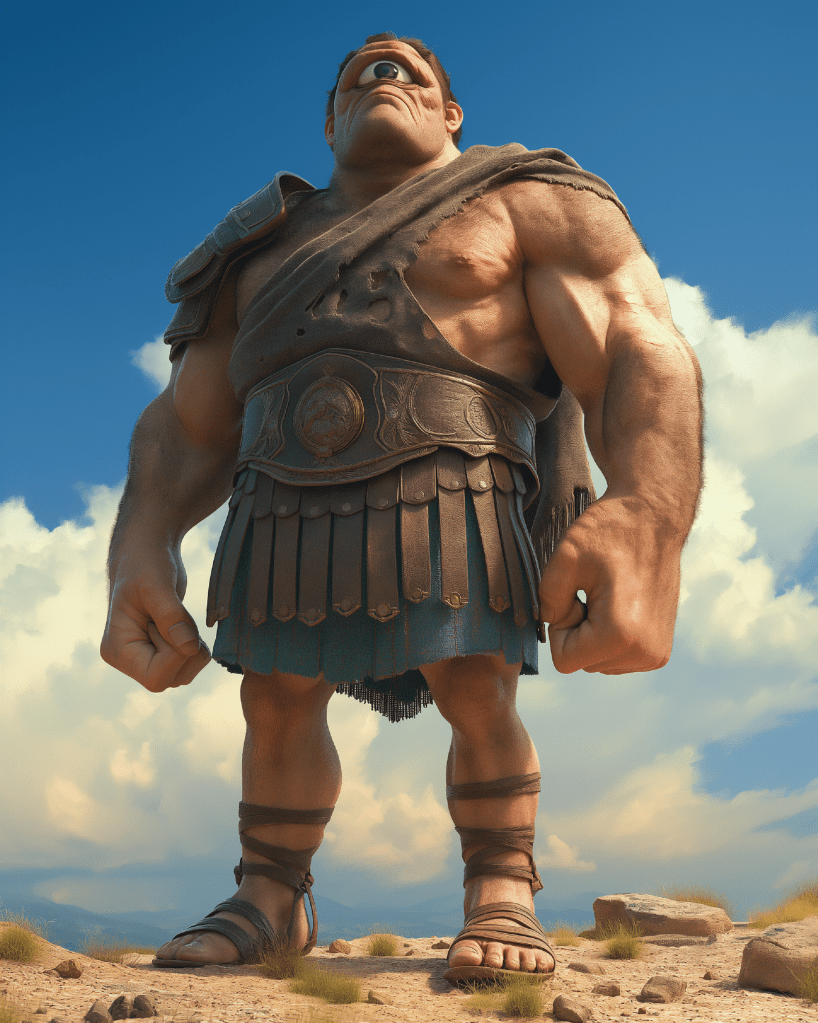
I don’t think the character pictured above needs any introduction, as he features in one of the best-known stories from the next stop on our epic journey into the history of storytelling—and I do mean Epic, the format for Homer’s Iliad and Odyssey—which form the cornerstone of Western literature. They’re not the first—that distinction goes to The Epic of Gilgamesh—but as that story wasn’t dug up—literally—until the nineteenth century, Homer’s works have come down to us with the honour and influenced so much else on the way.
An epic. A long narrative poem, usually dealing with exceptional characters and their deeds, often engaged with deities or other superhuman beings. Typically, they were composed to be recited, meaning they were learned word for word; a superhuman task indeed, when you look at the roll call alone of those who showed up for the Trojan War. It’s been said, as Christopher Marlowe wrote in Doctor Faustus, that Helen was ‘the face that launched a thousand ships’, and by Jove, Homer notes each and every one of them—I have it on good authority that the exact number is 1,100—in stanzas covering almost ten pages of The Iliad. Fortunately, someone—possibly Homer himself, but given his recorded blindness perhaps another—wrote down his epic poems, ensuring thereby their survival when reciting them by mouth became less popular.
An important technique for the oral recital of his work is known as ‘Homeric epithet’; individual characters or aspects of the world were given their own little descriptive phrases, used whenever they’re mentioned to help with the flow of the narrative. If you’ve read any Homer you’ll know them, if not you can read it and find them easily, as in ‘the nimble-witted Odysseus’, ‘the divine Calypso’, ‘Hermes of the golden wand’, ‘the wine-dark sea’, ‘white-armed Helen’, ‘rosy-fingered dawn’, ‘the bright-eyed goddess Athene’ and so on and so forth.
We still utilise the idea today, in music as well as writing. When I was a child we were taught music at school via a musical story entitled Peter and the Wolf, in which every character had its own instrument and theme. More recently, we always know when Darth Vader’s on the way in Star Wars, because his theme precedes him, as does that of the Klingons on Star Trek.
In my own writing I’ve had characters who’re found smoking a particular type of cigarette, or favouring a particular colour. I’ve one who has no time for nicknames, so when another character receives a phone call from someone who uses her full name rather than the diminutive she’s usually known by, we know without being told who’s on the other end of the phone. You get the idea, and you’ve probably used it, if you’re a writer of fiction.
Go back to that list of ships and consider the journey to the Underworld by Gilgamesh, where repetition of phrases is used to illustrate how far he’d gone, how many poles he’d used, giving the impression of a long and weary journey. The roll-call in The Iliad gives the impression of size; all those pages of all those ships, and men, from all those places. This was a force to be reckoned with, is what we get from this telling; and yet after all those years they were still sitting outside the walls of Troy and—apart from regular battles—getting absolutely nowhere. Reasons for that include a) gods, and b) the man named Odysseus, which is why I’d like now to focus on The Odyssey, which word has come into everyday language to represent a long and arduous journey, in both the physical and metaphorical senses, and other well-known examples have sprung up to use the title.
James Joyce used the story for his Ulysses—the Roman form of ‘Odysseus’—a daunting novel which sits on my Kindle as we speak and jeers at my fear whenever I open the darned thing. On a lighter level, if you’re a Star Trek fan you’ll know of Voyager, a ship which ends up a very long way from home and encounters many adventures in trying to get back there. And then of course there’s The Lord of the Rings and the epic journey of the Fellowship to return the ring to Mordor and save the world. In the real world there’s the film 2001: A Space Odyssey, for which the 2001 Mars Odyssey spacecraft was named, while before that the Apollo 13 Command Module was named Odyssey.
The adventures in Homer’s Odyssey consist of tales within tales, the whole forming one well-structured overarching story. We don’t meet Odysseus immediately; rather we’re shown what’s been going on in Ithaca during his long absence, the suitors hanging around and eating their unwilling hosts out of house and home. Telemachus, son of Odysseus and Penelope, sets out at the behest of the Goddess Athene to visit Menelaus and Helen—who got home ages ago, and made things up too—to see if they have any news of his father. It’s only when the scene is set that we find Odysseus, bemoaning his fate as, becalmed and detained on her island by the semi-goddess Calypso, he can’t get home. He gets a bad press nowadays, on account of the seven years he stayed with her, as well as the relationship he had with Circe some time beforehand. Yes, he was a married man, but he was also an Ancient Greek, with a whole pantheon of gods who you refused at your peril. If Odysseus was aware of Gilgamesh he’d have known that things didn’t turn out well when the latter refused the advances of the goddess Ishtar. Miffed, she ran to Daddy, the sky god Anu, who set out to destroy Gilgamesh and his kingdom. Earthquakes, famine, total chaos and the death of his friend Enkidu occurred before Gilgamesh had to confront his own mortality and undertake an ultimately failed quest for eternal life.
Odysseus had a bit more sense. The Ancient Greeks liked their heroes as ‘wysiwyg’ figures; height, girth, bulging biceps and the rest, but Odysseus was a new kind of hero, bringing brains rather than brawn to the table. He could hold his own in a fight—as is seen in The Iliad—but he was chiefly known for his cunning. It was he who thought up the Wooden Horse, which did the trick for the Greeks; but it seems to be what initially turned the god Poseidon—who favoured Troy—against him. All the way home, Odysseus had Poseidon ranged against him, especially when he blinded the Cyclops Polyphemus, a son of Poseidon. Fortunately the goddess Athene favoured Odysseus, but even she didn’t help him escape from Calypso until he’d been with her for seven years.
Gods were fickle beings then, and Odysseus didn’t need any more of them ranged against him. When Circe turned his men to pigs therefore, he gave in to her wishes to get them turned back again, as well as to enlist her help in his onward journey; and when he’d lost all his men and arrived alone on Calypso’s island he didn’t really have any option but to play along with her for as long as it took before Athene decided to favour him once more and help him get home.
So much for Odysseus. He has similarities with Gilgamesh—that trip to the Underworld for one—and with other characters we’ll meet later. For now I’ll leave you with the expectation of a rather different quest by a young man named Lucius and what’s been called the ‘first fairytale of Western Literature’ in The Golden Ass of Apuleius.
 BOOKS THAT MAKE YOU THINK