blue poppies

Familiar scene of rustic bench near the pond in autumn (fall) with hardy cyclamen and hostas

The Garden at 30. Part 2: The Reality

Part of starting the new garden was drawing up plans for the various beds. It occurs to me now this is analogous to plotting a novel. After all, garden beds and borders are also called “plots.” But writers know that the finished work doesn’t always turn out as plotted.

Plan for Old Front Perennial and Shrub Bed from 1994
Optimistic plan for a front garden perennial bed, from 1994

As I introduced plants into my new garden, inevitably I became aware of some realities I would have to cope with.

Tree Roots and Shade

In 1992, when I came to this garden, the previous owners had lopped the two Norway maples on the western edge of the back yard, the area I was to turn into my dream garden. Whether intentionally or not, this was a crude form of pollarding. The idea is to turn a large tree into a smaller, round-headed one. The treatment has to be repeated regularly to maintain the shape and size, like the trimming given to topiaries. I had no intention of doing that. I didn’t like the ugly stubs many of the branches had been reduced to. I remember the two of us climbing ladders and even into the trees themselves (we were in our 30s, remember) to saw off the stubs and allow the trees to resume their natural shapes. Which they certainly did.

The Norway maples. Imagine the roots!

What I didn’t realize was that as the trees grew, their root zones would expand too, as would the amount of shade cast by their crowns. The first few years, I actually had a vegetable garden, growing cucumbers, tomatoes, beans, and even corn (to the delight of the local raccoons). Eventually, this gave way to peas, lettuce, spinach, and scarlet runner beans. Finally, I gave up on vegetables, which need good soil, adequate moisture, and lots of sunlight. Now I grow both tomatoes and garlic in big pots in one of the few areas that gets enough sun, namely the driveway.

Plan for Vegetable and Herb Patch from 1994
Laughably naïve plan for the vegetable and herb garden, from 1994.

The soil here is a thin, sandy loam, probably acidic, although I’ve never had it tested. With generous additions of compost, manure, and fertilizers, it can be enriched, and the drainage is excellent. The real problem is that when I stick a spade into the dirt almost anywhere in the back garden, I encounter a spongy mat of maple feeding roots 10 to 20 cm (6-8 inches) thick. Under that is a complex network of woody roots, ranging in diameter from 1 to 3 cm and thicker. With large trees on two sides of the space, there really is no root-free zone in the whole back garden. Dry shade is the least hospitable condition for garden plants.

Many perennials will not tolerate these conditions, as I discovered when I introduced them to my carefully planned beds in the 1990s. Either they swiftly died or refused to grow to their full potential and bloom. There are bearded irises and daylilies that have never bloomed. Hostas and delphiniums perform satisfactorily only when grown in pots.

Delphiniums in June 2010. Note that they’re growing in pots.

Then there were the Himalayan blue poppies (Meconopsis). Even under good conditions (“… an evenly cool temperature and shaded conditions, in somewhat acid soil which remains reliably moist”) they are not easy plants. I actually managed to grow plants from seed several times and had them bloom in different spots in the garden, but failed to carry them into the following year. Shaded conditions provided by Norway maples aren’t appreciated by these poppies, and the soil wasn’t “reliably moist.” Even when it was, in pots and tubs, something went wrong. Eventually I gave up on blue poppies. (For now.)

Soup can stuffed with labels from deceased plants
Soup can stuffed with labels from plants that didn’t make it. Note two blue poppy (Meconopsis) labels.

Over the years I’ve discovered which plants will grow happily in dry shade. Hellebores are the stars of the show, along with bergenias, periwinkle, lamb’s ears, rose campion, and toadflax. The last two are quasi-weeds, but I’ve learned how to work with them to minimize their weedy qualities and take advantage of their toughness. Periwinkle (Vinca) and ivy love it here. Both must be brutally restrained or they would run rampant. Shrub roses do fairly well, and asters bring the season to a satisfying conclusion.

The Need for Watering

People call Canada’s west coast the “wet coast,” because of frequent rain in the winter. In the winter. Summers, which are the main growing season, are often sunny and dry. The normal rainfall from May to August in my area is about 70 mm (fewer than 3 inches). Months with no rain at all are not uncommon. Moisture-retentive soils can support most plants without much supplementary watering. But well-drained soils full of maple roots won’t do that. Watering is a necessity, especially now that summers are getting warmer and drier.

In a good summer, I don’t start serious watering until the end of June and stop in early September. In especially dry years, watering begins in May and continues through September. I refuse to water in October. In fact, by late August, I’m fed up with the whole hose, sprinkler, and watering can scene. I sometimes imagine how wonderful it must be to garden in places with summer rain. My biggest garden expense is water.

The obvious fix is: just don’t do it. Stop watering (or don’t even start). English gardener Beth Chatto, in her book The Dry Garden, says: “I don’t really hold with watering,” and goes on to declare that with the exception of new plants, she doesn’t water the garden in periods of drought. I tell myself I should do the same. The plants that cope with drought will survive and those that can’t will die. By late August I think I might do that someday, but in spring, when soil moisture has been restored by winter rains, everything looks lush and wonderful and I want to keep it that way. So when the dry days come, I turn on the tap.

Back garden, April 2022

Another fix is an irrigation system. You hire dudes to install underground pipes and sprinklers or emitters. You can even do it yourself (my idea of a nightmare!) Then you install a timer that turns the water on and off. Instant lushness.

Except it’s cheating. The whole point of gardening is to develop a relationship with the plants and the elements that sustain them, i.e., soil and water. Besides which, I don’t like the idea of underground pipes that might leak, become plugged, or be punctured by digging tools. Not to mention guys with size 12 boots stomping around and digging trenches.

So I lay out soaker hoses in early spring, before plants have much top growth. Once I have to start irrigating, I make up a schedule that ensures every area gets enough water to sustain life for a week or two. Some areas are watered by one of two sprinklers for two hours every ten days. The sprinklers deliver about 10 or 11 mm of water, which is less than half an inch. I smile at the advice to give plantings an inch of water every week. Not here! Pots and newly-planted things are watered by hand, meaning my hands pouring water from a can. It works, but it’s repetitive and feels like an endless burden at times. Even the pond needs to be topped up once a week at the height of the summer. While the hose is running to do that, I fill and refill my 7-litre watering can and run around to the dozen or so pots in the immediate area. I tell myself it’s a form of weight-lifting.

It has taken me a while to accept the constraints of dry shade and create a garden that matched my expectations, in part by adjusting those expectations. More in Part 3.

Continued from Part 1.

Back garden overview June 2019 with kale tree in bloom

The Marvels of May

May is over, but here is a bouquet of sights from my garden gathered during that month. It was a great year for irises. Two managed to bloom that had not for years, probably due to shade and dry conditions. And I have blue poppies once more. I can’t take any credit for them as yet; if they survive the next winter to bloom again, I’ll have something to brag about. The mass of yellow bloom on the right side of the featured photo is a giant kale plant, almost a tree.

Pale yellow irises with dark red purple bearded irises
These irises (names unknown to me) have always been here. This year they’re blooming better than normal.
Pale yellow irises
Dependable pale yellow iris, type and name unknown to me. They’re increasing nicely in the dry shade of the back garden.
Bearded iris, white with blue edge
Surprise iris (not it’s real name). I vaguely remember it in bloom many years ago. I moved it to a better spot a couple of years ago; it must be happy there.
Purple bearded iris
Another surprise iris, a big purple one this time. No idea when I planted it. It must have languished bloomless for years, until now.
Primula auricula in bloom with tomato plants and potted dahlia with blooming thyme in background
Primula auricula. I have two plants, which both bloomed well this year. Small tomato plants in lower left corner, sprouting dahlia “Bishop of Llandaff” above.
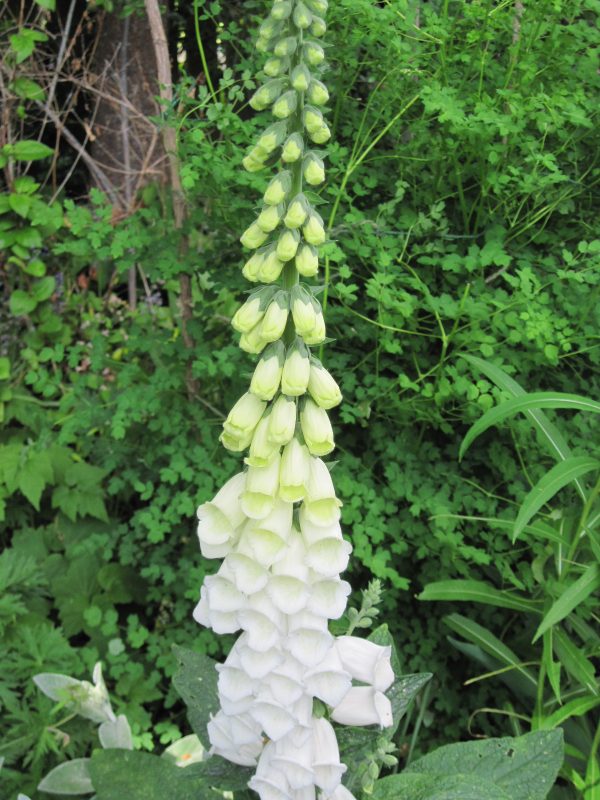
White foxglove with thalictrum behind
Volunteer (meaning self-sown) foxglove. It’s right at the front of a border, but I’m glad I didn’t weed it out.
White foxglove spotless
Close up of the foxglove flowers. It’s totally spotless; a plant elsewhere has purple spots inside the flowers.
Urban deer
Trouble in paradise — plant-nibbling urban deer. They cruise by regularly and sample the garden buffet. On the plus side, I’ve seen them eating bindweed.
Mixed foliage in the front garden with "Pink Panda" ornamental strawberry flowers
Mixed foliage in the front garden, with a few flowers of ornamental strawberry “Pink Panda”

Here are four photos of the two blue poppy plants I bought a few months ago. Their labels call them Meconopsis sheldonii “Lingholm” (grandis).

Rosa glauca, red-leaf rose, blooming in the rain
Rain-washed leaves and flowers of the red-leaf rose, Rosa glauca. The inch or so of rain was most welcome.

I’m looking forward to June, but sorry to see the end of iris time.

Lily-flowered magnolia "Susan" in April 2014

The Rites (and Wrongs) of Spring

Spring has settled in and I’ve done the usual things associated with the season: edging the perennial beds, distributing enriched compost, cutting the grass, seeding tomatoes (indoors), cutting down old dead stuff, and, of course, pruning. Pruning is always a challenge, often involving ladders, rose thorns, and holly prickles. Then there’s disposal of the trimmed off stuff — more thorns and prickles.

But now all that’s done, and the deadheading and watering phase hasn’t started. The garden is looking pretty good (except for certain spots to a discerning eye). Time to list the good and the less-than-good (i.e. bad) things I’ve noticed so far.

The Bad

  • poppy pagoda to protect blue poppies from winter rainAll except one of the blue poppies (Meconopsis) perished over the winter, despite (or maybe because of) being transplanted to deluxe quarters in half-barrels last autumn. Even the specially built roofs on legs, intended to protect them from winter rain, didn’t do the trick. I think my mistake was the pea gravel mulch, which kept the soil too moist through the winter. The sole survivor looks a bit feeble, but I’m letting myself hope it will survive. Local nurseries don’t as yet have any plants in stock, but I plan to give this fussy species another try.
  • The reliable-as-furniture ferns (Dryopteris species and others) haven’t unfurled their fiddleheads yet. Usually by mid-April they are well under way. They’re alive but dawdling. Why? The past winter wasn’t that harsh. Could it be because I cut down last year’s fronds too early, before the last hard frosts?
  • A potted delphinium has, like the blue poppies, succumbed to root or crown rot, probably because I didn’t repot it into fresh, uncompacted soil last year. Delphiniums need that near-mythical combination of “moist but well-drained” soil. If they’re grown in pots, the gardener needs to keep in mind that the soil becomes dense and less well-drained over two or three years. The next winter administers the kiss of death. Goodbye, delphinium.
  • A couple of tulips appear to have “tulip fire,” a disease caused by the fungus Botrytis tulipae. They will have to be dug up and disposed of. This problem is new to me. Those particular tulips have occupied their spots for years — which, I understand, is the problem. The longer they remain undisturbed, the more susceptible they are. If I decide to replace them, the new bulbs will have to be planted in different locations.

The Good

  • The winter massacre of crocuses (most likely by rats) wasn’t as bad as I thought. Some areas escaped completely.
  • A potted hosta I thought was a goner after it was dug and dumped by some creature (probably a raccoon) has sprouted out nicely.
  • The pretty blue* bindweed relative, Convolvulus sabatius, has survived the winter well, unlike other years when it didn’t show above ground until June. I also have hopes that Gaura lindheimeri made it. I still don’t know why this plant, supposedly hardy to Zone 5 or 6, has a habit of dying here in Zone 8. My soil is sandy and well-drained, which is supposedly what it needs.
  • Daylily “Hyperion,” which I dug up and divided in February because it seemed to be in decline due to pushy maple roots, appears to be doing well, both in its old spot (from which I removed a lot of roots) and the two new ones.
  • Clematis armandii foliage and flowers in holly bush

    Clematis armandii and holly

    I managed to prune both Clematis armandii and the holly that supports it without inflicting major unintended damage to the clematis. It tends to grow in loops and figure eights, so if pruning is needed (best done as its blooming period ends), you can’t just snip anywhere. My rule is never to make a cut unless I can see the end of the thing being cut. There’s nothing worse than seeing a whole section of the plant wilting a few days later because of a blind cut.

  • After a dry March, we’ve had an abundance of rain in April. The real test, of course, will be June, July, and August. At least one of these months will be rainless. If it’s two consecutive months, there will be groaning and gnashing of teeth by this gardener.
  • The pink magnolia is blooming heartily. So are forget-me-nots and bluebells. And gentians, which are intensely blue.*
  • The apple tree and lilac have obvious plans to bloom soon. In general, the garden looks fine.

Back garden spring 2018 birthday birdbath

Part of the back garden, featuring the birdbath that was this year’s birthday present. A few birds have actually used it for bathing purposes.

April 6, 2016

Gentiana acaulis

* Like many gardeners, I have a thing for blue flowering plants, many of which are hard to grow (blue poppies and delphiniums, for instance). One type of gentian (Gentiana acaulis) seems to do fairly well here, and forget-me-nots are practically a weed. For them I am grateful.

White daffodil with pale yellow middle near pond

Plant Material

Now that spring is imminent, perennials are poking their noses above the ground, telling gardeners that they are alive and ready for another growing season. Gardeners hover anxiously over spots where particularly fussy or cold-intolerant specimens were last seen, hoping for a sign of life.

003I’ve been hovering over my blue poppies. Late last summer, I transplanted them to what I thought were deluxe accommodations in half-barrels. Excellent soil, no tree roots, and a pea gravel mulch intended to prevent crown rot. Custom made roofs on legs to keep away winter rain. No efforts were spared. The plants settled in nicely and made new growth before they went dormant for winter. So far this spring, things don’t look good. I’m beginning to think the pea gravel was a mistake; it probably kept the top layer of soil moist enough for the dreaded crown rot to do its thing. If all seven plants are dead, I’ll have to acquire new ones and try again.
The white and yellow daffodil in the featured image has bloomed faithfully each spring since the mid 1990s. At first there was only one flower; a few years later, there were two, and the past two or three springs, it’s produced three flowers. So what? Daffodils are planted out by the thousands in parks and even in some private gardens. But this one plant is easily identifiable, and so regular, that I have come to recognize it as an individual.

This picture — of a gardener fussing over a few plants, or even a single one — is completely removed from the way plants are sold and handled on a commercial scale. We’ve all seen hundreds of potted plants for sale, not at nurseries or even garden centres, but at grocery stores, hardware stores, and discount consumer outlets. No one fusses over these units produced by mass propagation. They’re given minimal attention by busy staff, wheeled in and out of display areas daily, get knocked over by windstorms, and finally start to look a bit stressed. Plants that don’t sell by the end of July are put on deep discount and finally trashed. At least they’re compostable.

Then there are instant gardens installed by landscape contractors driving trucks with graphically designed logos on the doors. In a week, the job is done. A multitude of perennials and shrubs has been plugged into the ground in pleasing patterns. The operation has more in common with laying carpets or interlocking bricks than with my kind of gardening. Freshly finished, such gardens look lovely and (on a bad day) make me think mine — the result of a quarter century of earnest digging, planting, watering, and anxious hovering — looks pathetic by comparison. Of course, if not maintained by someone who knows what they’re doing, those installed gardens go downhill pretty fast. I’ve seen it happen.

Those who do large scale garden work seem to have a utilitarian or even disrespectful attitude toward plants. Often, it starts with razing and removal of every growing thing on a city lot — and of the original house too — followed by digging a great big hole, maybe a bit of blasting. A huge house is erected and landscaping installed by a contractor. Another contractor provides an irrigation system, probably programmed and controlled with a smartphone app. A truck pulls up once a week, disgorging fast-moving people wielding power tools who buzz through the place, mowing, trimming, fluffing up the soil and adding mulch. As long as the bills are paid, the place looks fine. In such gardens, you don’t see any shabbily-dressed figures (i.e., resident gardeners) drifting around, peering at plants and scuffling inefficiently, making repeated trips to the shed for yet another tool, a couple more stakes, or a ball of twine.

I want to say that the instant garden isn’t really  a garden, and those yard maintenance folks aren’t gardeners. I suspect this idea may be tainted with irrational sentimentality, but I’m clinging to it anyway. To me a garden is a patch of earth sweated over by someone who knows almost every plant that grows from it, who rejoices when those first shoots appear in spring and mourns when they don’t.

I suppose what I’m really talking about is analogous to the difference between the backyard chicken flock where every hen has a name, and the industrial poultry system. The small, personal garden and the installed landscape are really two different (if related) things. Each has a place, but in me they evoke opposite reactions.


asters, nerines, senecio 'Sunshine', fall

Poppy Pagodas And Autumn In The Garden

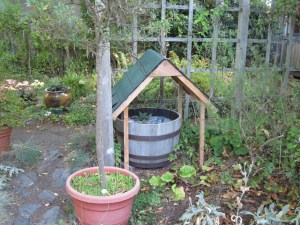
Now that the seven remaining blue poppy plants have been rescued from maple and magnolia roots and given deluxe accommodations in a couple of half-barrels, I thought they should also have protection from excessive winter rain.

In their native environments (Tibet and the Himalayas), rainfall distribution is exactly the reverse of Victoria’s — wet during the monsoon season (May through October) and pretty much dry from November through March. Here, the dormant poppy plants are bathed in rains during the winter months, which often results in crown rot and death, even in my sandy soil.

The solution? Poppy “pagodas” — charming little roofs on stilts that fit over the half-barrels.

IMG_2481

They’ll remain in place until next spring, making sure the soil around the precious poppy roots is damp, rather than sopping. If it seems to be drying out, I’ll dribble in a bit of water.IMG_2480

After all this fussing to accommodate them, I have great expectations of these plants. We all know where that can go, however, so I’ve reserved a bit of cynicism, just in case.

Otherwise, the garden is going through its usual autumn process. I wouldn’t call it “decline,” because I love fall, and because from certain angles, the garden looks better than it did a few weeks ago.

IMG_2471

Aster “Pink Cloud” living up to its name.

IMG_2485

Pink nerines finally blooming well.

I’ve hung the hummingbird feeder out again. Back in May it became obvious that the hummingbirds were more interested in flower nectar than the sugar water in the feeder (and why not?), so I removed it for the summer. Now they are visiting again, and this morning a crowd of bushtits showed up. They don’t have the right sort of beaks to use the feeder, but seem to get something from it, so good for them. Dark-eyed juncos are back in town after spending the summer elsewhere, and I’ve heard robins calling in the evenings, a particularly plaintive song that seems right for this time of year.

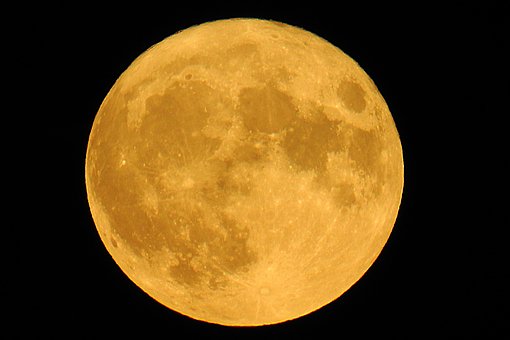
It’s the first full moon of autumn tonight — not to be missed!

super-full-moon-2016-1826416__340

Image from Pixabay


Repurposed: A New Role For The Barrel

For years, I had a funky wooden rain barrel, as well as a couple of plastic garbage cans that had been modified into water storage devices. The wooden one was more ornamental than practical, but was a fixture of the place.

After new eavestroughs and downspouts were installed, the wooden barrel no longer had a function as a “rain barrel.” For several months it sat there unused, until I decided, coincidentally, to try growing blue poppies (Meconopsis) in containers once more. The soil in my garden is sandy and too full of tree roots for these fussy (but gorgeous) plants. It’s hard to maintain sufficient nutrient levels without also encouraging tree root proliferation.

Several years ago, I tried growing blue poppies in 1 and 2 gallon plastic pots, but that attempt resulted in crown rot and failure. So as a last ditch effort, I decided to try really big containers that will have better internal drainage than the plastic pots. Enter the barrel, in the form of two half-barrels.

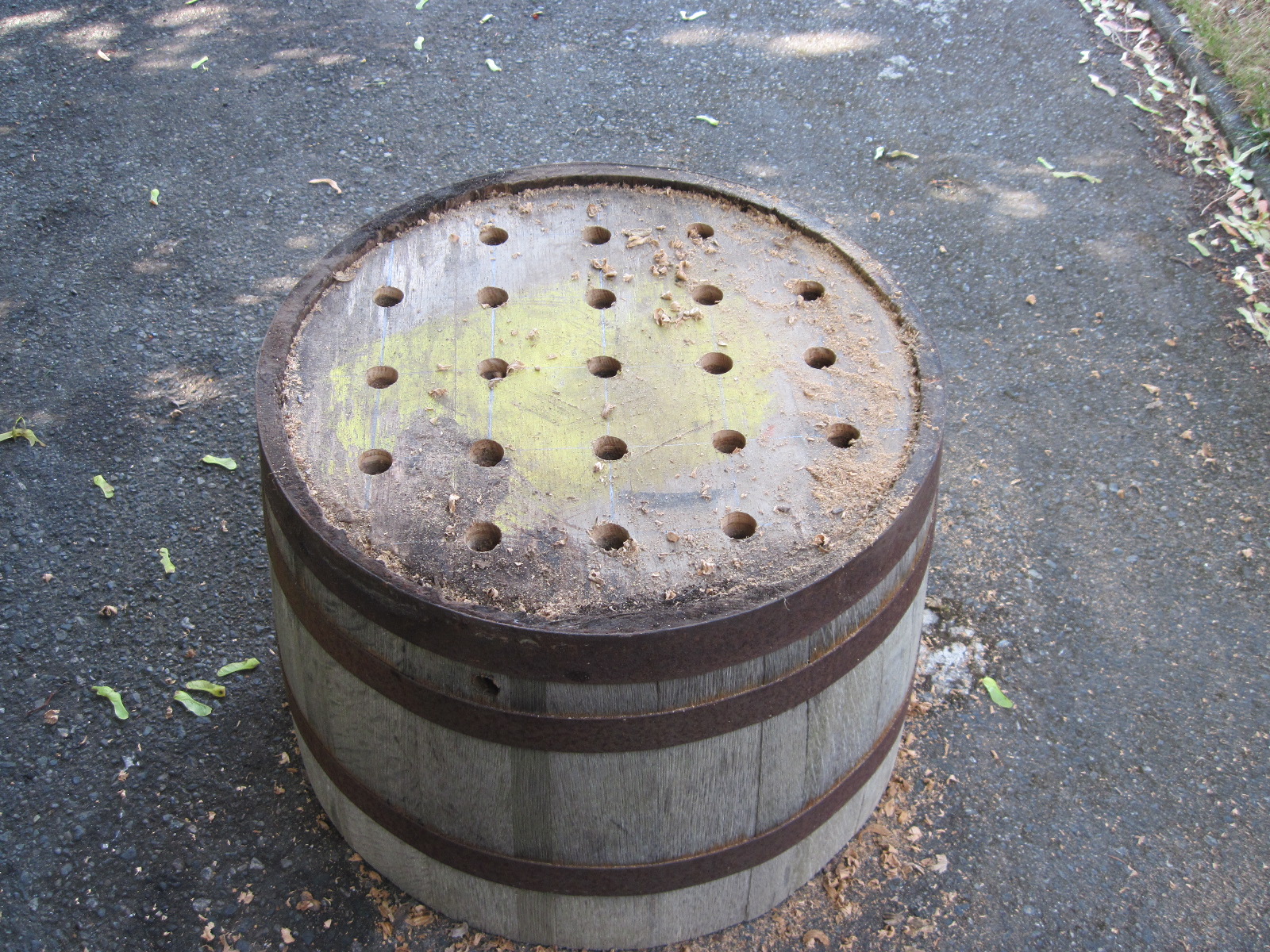
After sawing around the middle, each half was furnished with drainage holes.

Half barrel drainage holes

I positioned the half-barrels in semi-shady spots in the garden, setting them on chunks of concrete and making sure they were more or less level.

IMG_2449

Then I mixed up what I hope is a suitable growing medium — compost, sand, manure, peat moss, kelp meal, slow-release fertilizer, some actual soil (also known as “dirt”), and a bit of commercial container mix as insurance. The compost and soil are in the bottom parts of the half-barrels, with the other stuff on top. This is to avoid the prolific crop of volunteer seedlings that always sprouts from my compost.

IMG_2450

Once the soil was in place, I dug up the six surviving Meconopsis plants and removed astonishing mats of maple feeding roots from each root ball. No wonder there have been almost no blooms the last couple of years! The only roots in their new barrel quarters will be their own. I hope they appreciate this by settling in and putting forth some new leaves before going into dormancy.

IMG_2451


The trick will be overwintering the dormant plants. In their native environment, precipitation is lowest in winter, highest in summer — the opposite of what we have here. Watering containers in summer is easy, but keeping excess rain out of the half-barrels in winter will probably involve some sort of charming roof-like structures that will allow air circulation. Covering with (ugly) plastic sheets, I suspect, would ensure permanent dormancy, otherwise known as death.

IMG_2452

The pea-gravel mulch is intended to protect the crowns from excessive wetness and fungal evils, but I’m starting to wonder if it’s a good idea. That’s the thing about gardening — you do something that seems like a great idea, but as soon as it’s done, doubts creep in. Trouble is, you have to wait for months to see how things work out.

I’m hoping the barrel method will work. It has been done, in a garden just across Juan de Fuca Strait.

seeds and seed packets

Potential Plants

Reasons gardeners grow plants from seed:

  • They need a lot of plants at once
  • They can’t afford to buy plants
  • They’re purists
  • They’re snobs
  • They can’t help collecting seeds and finally decide to do something with them
  • All or some of the above.

After 35 years of gardening, I have a lot of seeds — packets bought for ambitious projects years ago, tail-ends of vegetable and herb seeds from before my veggie patch became the ex-veggie patch, and assorted envelopes containing seeds gathered from my garden or from road- and trail-sides. Most of them are neatly filed away in a three boxes, one labelled “Perennials,” another “Annuals and Herbs,” and the third “Vegetables.”

It’s funny — there are plants I take pains to prevent from seeding (Lychnis coronaria), and others I cajole and pray over, hoping they will produce even a few seeds (Meconopsis, of course, but not M. cambrica — that one is in the deadhead a.s.a.p. category). Then there are those with rare or atypical colours — pink, cream-coloured, and tawny California poppies, for example. I can’t resist saving their seeds. Maybe this colour won’t ever appear again, I think; better get ’em while they’re here. So I end up with half a dozen envelopes — California poppies, 2010, 2011, 2013, etc.

Eventually, the obvious becomes inescapable — there’s no point in collecting seeds for their own sake. Each seed is a potential plant, but that potential will not be realized inside the seed packet. Soil, water, warmth, time, and luck are necessary before that tomato, delphinium, or poppy grows and blooms in the garden.

Unlike wine in the cellar, seeds do not improve with age. There’s no point in hoarding them. Yes, there’s that story about 3,000-year-old viable seeds from Egyptian tombs, but they’re the exception. Most seeds retain viability for only a few years — perhaps five years at most. Tomatoes appear to be an exception; I successfully grew plants from seeds almost 20 years old. Seeds of the Himalayan blue poppies (Meconopsis), on the other hand, must be sown the winter following harvest. A year later is too late.

I’ve grown hundreds, if not thousands of plants from seed. Back when I had a lot of bare earth to cover, I set up a plant factory in my basement — fluorescent lights, a heating cable, lots of suitable containers, and bags of sterile seed-starting soil mix. I made “paper pots” using a clever wooden device called a Potmaker to roll and fold newspaper into pot-like shapes two inches in diameter and about four inches tall. Packed together in a wooden or plastic flat, these “pots” lasted long enough to nurture annual seedlings until they were ready for life in the garden, at which point pot and all could be planted. Much cheaper than peat pots, and a “green” option as well.

Growing some plants from seed is dead easy; others are long-term projects often doomed to failure. Some seeds need exposure to freezing temperatures to induce germination. Others (Romneya coulteri, the California tree poppy, for example) germinate best after fires — not easy to do at home. Then there’s double dormancy, which may require two years before a sprout is seen. Many gardeners give up before that happens, or simply forget what’s supposed to happen in that pot and repurpose it. Working with challenging seeds requires dedication, labels, record-keeping, and space, as well as a good supply of patience.

The emergence of sprouts is always a thrill, no matter how long it takes, and especially if it takes a long time. A few years ago, I managed to sprout four seeds of Lilium columbianum, a native yellow lily. As I recall it, the sprouts emerged the second spring after planting. They went dormant for the summer, at which point I thought they had died, but last spring two tiny plants appeared. (I guess the other two decided to stay permanently dormant). One of the two survivors was cut down by slugs (probably a single slug, actually, because the plant was less than an inch tall). The other persisted for a couple more months, then vanished. Dead or dormant? Imagine what a thrill it was to see a lily-like sprout emerge last week, and a second one today! If I manage to foil the slugs, it’s possible I’ll actually have two plants taller than one inch by summertime, and who knows — maybe in a couple of years I’ll see at least one of them bloom. And if it produces seeds, I can do the whole process again — if I’m up to the effort.

As for all the old seeds I have stashed away in envelopes, pill bottles and other containers, the best thing would be to sort through them and get rid of any that are more than five years old. They don’t have a future, except as sad mementos of plants that have vanished, or that never progressed beyond the seed stage.

As a last-ditch effort in some cases, I could do germination tests — spread a sample of seeds between layers of dampened paper towels and see if anything happens. Unlike other unwanted items, disposal of old seeds is easy — mix them up and cast them to the winds. If any of them manage to sprout, I’ll consider it a gift from the garden gods.

IMG_2329

Tomato seedlings

One Perfect Poppy

I have often grumbled about the difficulties of growing blue poppies (Meconopsis species). Over the past 20 years I have grown numbers of plants from seed obtained from two plants I bought — Meconopsis betonicifolia and Meconopsis x sheldonii ‘Lingholm.’ Most of my plants now are seedlings of Lingholm; all traces of M. betonicifolia have vanished from my place.

On two occasions in those 20 years I have had spectacular success (in a relative sense, of course) with my blue poppies. In May 2000 I had seven plants blooming well in a small rectangular bed. I did not take any pictures, expecting a repeat performance. Ha. In 2013, after working hard at producing more seedlings and preparing a bed for them near a large magnolia, I had 7 or 8 plants in bloom, This time I did take pictures, but because the bed was long and skinny — crescent-shaped, in fact — the effect was not as wonderful as when the flowers were massed together in a smaller space.

This year, I have one plant in bloom. Only one, but I have made sure to take pictures of both blooms.

April 19, 2015

This was the first one. As it faded, the second bud began to open.

001Fully open, it proved to be a much better flower than its predecessor.

003That colour! The ethereal texture of the petals! Definitely worth the trouble.

I hope to obtain some seeds from these two flowers, to plant next January or February.

Spring in the Garden

Spring hit really early this year on southern Vancouver Island. I’m still trying to catch up.

Things in the garden are racing ahead. I saw a note in my garden and weather book from April 24, 2013: Apple tree starting to bloom. This year, the apple tree has finished blooming. The flowers have faded and leaves are growing (as yet uneaten by little green worms).

002

A couple of weeks ago, it looked like this. So we are three to four weeks ahead of schedule (assuming nature has a schedule, which is doubtful).

The garden is almost through its blue-and-gold period, now that the daffodils are finished. Blue is still dominant, what with bluebells (Scilla), forget-me-nots and abundant rosemary flowers. But the star of the show for me is the single blue poppy (Meconopsis), a triumph after no blooms at all last year.

April 19, 2015

There is one more bud. The other blue poppy plants don’t seem to have any plans to bloom, but with blue poppies you are grateful for whatever you get.

The so-called “neckless” gentians (Gentiana acaulis) are more dependable. I suspect the buds of my main planting were nibbled by deer, but these young transplants are performing well.

April 19, 2015

And I’m happy to report that the great camas (Camassia leichtlinii) are also in fine form, showing lots of buds. One especially tall plant is already in bloom.

April 19, 2015

And there are roses! Roses in April! (And blackspot starting too, I see. In gardens, perfection is to be sought but rarely attained).

April 24, 2015


Blue Poppies in Pots? Not!

One of the most common internet searches that leads to hits on my blog is “growing blue poppies  in pots.” Sadly, I think I can now say that it’s not possible to do this well.

I have grown blue poppies (Meconopsis)  in pots and in the ground, and the differences in plant size and vigor are striking.

Three or four years ago I had 12 plants (mostly seedlings of ‘Lingholm’) in gallon-sized pots. A couple of them bloomed in the spring of 2010, but none bloomed well, and all but one perished in subsequent winters. It’s hard to regulate soil drainage in a pot, and I suspect they simply rotted.

Last spring I grew another batch of plants, fifteen of which came through the winter (in 4-inch pots) and sprouted out this spring. I planted eleven of them in a crescent-shaped bed on the north side of a large deciduous magnolia. This spring and summer have been cool and relatively wet, ideal conditions for blue poppies. I watered the plants thoroughly once per week. Now, near the end of July, they look promising, and certainly more robust than any of my pot-grown specimens. The biggest problem has been leaf-stems being snapped as the leaves are whirled around by occasional strong winds. I have planted three plants of Lamium maculatum ‘Pink Pewter’ near some of the blue poppies, hoping that they will act as a kind of windbreak. (I may come to regret this, if the lamium proves too vigorous and swamps the poppies).

Most of them have formed small offsets, and I hope for blooms next spring. Remembering my very first planting of M. betonicifolia in 2000, I am confident that they will winter well, since my sandy soil is well-drained. (It’s too bad I didn’t bother taking pictures of those original blue poppies when they bloomed in 2001. They were doomed, of course, because M. betonicifolia has that monocarpic habit to start with, and these were way too close to a Tree of Heaven. A few sprouted out feebly the following spring, but I could see that they had no future).

If this lot blooms next year, I will definitely take pictures. It remains to be seen how well they tolerate magnolia roots.