Tag Archives: writing

Priming the Pump (Part III)

10 Jul

To get over the hurdle of getting to write, I’ve already talked about using this blog or recording my audiobook to get over the initial fear of the blank page. However, the best system I’ve been using to get the urge to write turned out to be the part of writing I hate the most.

“Writing is re-writing” is a slogan I put on my computer when I was editing my first novel back in the nineties. I remember that big vacuum-tube monitor on my grandparents’ kitchen nook where I set up my computer to write. (I was in college, my grandparents were in Texas for the summer, I got to use the house.) I had already written 500 single-spaced pages of a novel that turned out never to see the light of day. Mostly because it was crap, partly because it was rejected by publishers, and now, because it’s hopelessly out of date. This was a different obstacle; going back through what I thought came out perfect the first time and saying “How do I make this better?”

What I needed was someone else to read what I wrote and make some suggestions on how to improve it. What I thought I had was a co-author; I printed and mailed him copies of my first drafts, and since his name was going to be on the page, I thought that would make him incentivized to actually work on it. However, when he dropped out of college, we didn’t have that daily connection to work on the story, and between being depressed, working, and physically distant, he never wrote one damned word afterwards.

I keep telling myself I forgave him for that, but then I keep bringing up this story, so… have I?

This has led to a long tradition of my friends saying they’d read something of mine and then blowing me off. And yeah, that hurts. Especially when I need an editor that I can’t afford to publish books no one reads. Thankfully, technology has come to save me. The much maligned AI chatbots, which will probably kill so many careers, has already started to kill my brother-in-law’s career as an editor. (I can’t afford him either.) He also is physically in another state and it takes time for him to read and make suggestions. AI can do it in 15 seconds.

I actually use two chatbots to do my initial editing with. I used to use Microsoft Copilot for initial run through, but even though it has the “conversation” that I’ve written my current trilogy in throughout, it doesn’t check further back than… oh, a couple weeks of transcripts? And I understand – this is a free service and there’s a limit to how much processing power it will provide me. However, I discovered Google Gemini does go back through the whole conversation and does a better job of line-level editing for me.

For the second draft, I run it through Claude. This chatbot is amazing, it does everything I want it to, and it does it well. If I want it to crank out extensive fan-fic histories combining the Act of Union in 1707 with the rise of the Ministry of Magic (they are connected, my friends!), it writes a compelling essay on the subject. But man, are they stingy with their processing time. If you’re trying to type during the work day (whistling nervously), then I get one chapter edit before it locks me out for five hours. If I wanted to spend $20 to $100/month, I’d hire my brother!

However, having that immediate feedback on my writing, really inspires me to write more. If I start the day with having the chatbots going back over what I wrote the previous day, that really gets me going to keep writing. Now, do I always take their advice? No. However, sometimes it comes up with better ways to write lines than I ever used. So my story is… 5% written by AI, but if I wanted it to write the story instead, that would kill the fun I’m having! And personally, I think it comes out better.

If you’re curious what an AI edited, human written original piece looks like, check out No Such Wizard, my recent novel. If you’re a dedicated Kindle user like I am, it’s only $0.99. Check it out. If you’re a cheapskate like me, I still want you to read it, but you can check it out on An Archive of Our Own (AO3) with simpler formatting, but the words are all the same. Enjoy!

Priming the Pump (Part II)

9 Jul

When you’re facing your fear of the “blank page,” I’ve been developing a lot of fun little tools to help me get over that hump. However, there’s another I’ve only recently learned that I didn’t expect. What inspires you better than having to record your previous book?

I didn’t expect this blog post would extend into more than one post, but as I thought about it, different tricks in getting your writing juices going requires a little extra time to explain. So yesterday was about how blogging can get you started (as it is now), but I also want to spend some time talking about what I was doing before this; recording my audiobook.

This is one of those obstacles I thought was going to be too difficult for me to overcome. Who can survive recording their own book for hours. Plus I have a personal distaste for the sound of my own voice; “who wants to list me drone on for hours on end!” However, since recording voice-overs is part of my job, I knew I had all the skills necessary to accomplish this. I had done it many times before. All I had to do was transition my skills to a longer style recording.

When tackling any insurmountable task, the first job is to break the task down into small, bite-size chunks. In this case, since I wrote about 3-5 pages (my pages, single-spaced, 12 point Arial font) per chapter, I figured if I did a chapter a day, that wasn’t going to be that difficult. Each chapter seems to take about 20-30 minutes to record, even with stopping and restarting due to mistakes (do you hard it is to say “Woolworth?”)

What I didn’t expect was how much I would like it. I frequently cram in another chapter while recording. While I’m rereading my work, I’m realizing, “Man, I wish I had flushed this out better,” or “These characters have developed so much since then.” It really gets me excited about tackling this story again. So even when I’m faced with the “how am I going to make this scene exciting,” recording another chapter of my audiobook does inspire me to tackle it again.

Although I’m going to admit, Chapter Thirteen of No Such President was a real challenge to get through. Making a council meeting interesting while throwing in speeches…. ooof! Why did I outline this chapter?! 🙂

Hopefully, you’ll get a chance to listen to my audiobook soon. If you can’t wait that long, go ahead and read No Such Wizard, my recent novel, before I can get the audio version online. If you’re a dedicated Kindle user like I am, it’s only $0.99. Check it out. If you’re a cheapskate like me, I still want you to read it, but you can check it out on An Archive of Our Own (AO3) with simpler formatting, but the words are all the same. Enjoy!

Priming the Pump (Part I)

8 Jul

The hardest part about writing is starting with a blank page. When there is nothing in front of you, nothing to work of, it is probably the most frightening obstacle you have to face. So how do you get past this hurdle? Simple; write about something else!

The purpose of my blog is to attract people to read more of my writing, but over the years, I’ve also discovered it has another purpose. It helps build up my desire to actually write more. When I’m stuck on an idea or not sure where to go, simply writing in my blog helps me get past the fear of having nothing to write.

There’s a scene in the movie Finding Forrester where the J.D. Salinger character (Forrester) is teaching the young kid how to write. He recommends starting to type by copying the first few lines off of something else he wrote. Once he does, he finds that the words come easier and the essay builds quite well. The problem that has to be resolved at the end of the story is that the kid forgets to take off the first couple of lines that he cribbed from (what turned out to be) a published story.

He also recommends banging on the keys, which drives my wife nuts, but I thoroughly recommend as well.

There are many days I don’t feel like writing or not sure if I want to write the next chapter because certain things have to be resolved that are not as fun to write. Things like action sequences… but once you start typing, you’re more likely to finish than if you did nothing at all. Then everything can be edited once its down on paper, but that’s a story for another post.

If you’ve read this far, why not read No Such Wizard, my recent novel. If you’re a dedicated Kindle user like I am, it’s only $0.99. Check it out. If you’re a cheapskate like me, I still want you to read it, but you can check it out on An Archive of Our Own (AO3) with simpler formatting, but the words are all the same. Enjoy

Tunes to Devastate Fantasy Universes To

7 Jul

What do you listen to while writing? You might have different tunes for different moods, or just like to have background noises, but for my money, it has to be German Folk Metal.

How’s that for an intro? So why specifically German Folk Metal? The answer is… it doesn’t have to be, but that’s what mostly been on my rotation. In fact, most of the time, I’ve been listening to it at barely low volume to use as background. Because as I’ve talked about while recording audiobooks, when you have nothing in the background, every other sound gets amplified in your mind to the point of distraction.

I used to listen to EDM music while I wrote, specifically trance, for the very same reason I’m listening to YouTube clips of metal concerts from Germany. Because for writing music to be useful to me, it has to be catchy and preferably, without words. But wait, Marcus, metal music has words… yes, it does, but in a language I don’t understand! With that, my brain can tune out the rest and let me focus on writing things like this blog post. (Currently playing: Gojira from Hellfest 2019.)

As I’ve learned it doesn’t have to be specifically German; it can even be in English if it’s sufficiently quiet or is just yelled enough to be distorted. I’ve been listening to recorded concerts specifically because I can let them run for an hour and change and not have to worry about fixing the music.

The danger comes when I get too into this music I don’t understand. For example, keeping with the German Folk Metal subgenre, D’Artagnan is a band I’ve become a huge fan of. Yes, French musketeer theme, bagpipes and violins playing, music all in German. Feuerschwanz is also amazing. Also has violins, bagpipes, and German singing, but they have so much fun while playing. It really is happy metal… as bizarre a contradiction as that sounds.

However, playing concerts leads YouTube to offer other bizarre music. My favorite has been Electric Callboy, which is a electronica / metal combination which jumps between pop and death metal, and they have a lot of fun playing. It’s wonderful. Sometimes you get absolutely beautiful music like Harakiri for the Sky, a Viennese death metal band where the artists are incredibly talented, but their singer just yells everything to the point of distortion.

Whatever obscure thing I listen seems to get results. In fact, why don’t you read No Such Wizard, my recent novel. If you’re a dedicated Kindle user like I am, it’s only $0.99. Check it out. If you’re a cheapskate like me, I still want you to read it, but you can check it out on An Archive of Our Own (AO3) with simpler formatting, but the words are all the same. Then maybe you’ll be jamming to some obscure subgenre you’ve never heard of too.

“She’ll Tell You She’s An Orphan / After You Meet Her Family”

3 Jul

There are different ways to explore a character’s personality. My favorite is what the character drinks. Another way is the character’s family. Normally, in a story, you might run into their relatives once, and that helps advance the plot. However, when you’re writing the third in a series, and the parents keep coming back, you have to answer the question: who are these people?

In my first book, No Such Wizard, we run into Jack Crane’s family in Chapter 4. You meet his stoic father, his cold mother, and his rather nice brother… who’s been assigned to bust him and his illegal activities. Okay, that’s cool; Jack’s rejection by his parents turned him into the man he is. We keep running into his brother constantly throughout all three books, so the comparison between the wizard Jack was supposed to be (Val) and the no-maj that he actually became is obvious.

The brother was so much fun that Val Crane becomes a recurring, if not main, character. Val is the mirror in the wizarding world that Jack can only look into. They were both working “the case” from different perspectives, and as a result, he became important for advancing the plot. Then Val has to meet another of the main character’s (Claire) families in the sequel, No Such Squib. Suddenly I introduce the polar opposite of Val’s family and it’s a lot of fun. Not only was writing Claire’s family so much fun, but it shows you where did she get her personality from, her skills… it advances the plot and keeps things moving.

However, now in my third book, the outline points Jack back to seeing his family again, whom I never really expected to see again. I have to revisit the character of Jack and Val’s mom, Seraphima, who’s worried about her husband, Montague. Now as I joke, these two are about as warm and comforting as bricks. It’s a fun scene, Jack gets to feel twelve years old again, and the moment fades.

But then it keeps bugging me. Why are Montague and Seraphima married? Why are they still together? And how did they end up this way? Why their Monty and Sera married is because they were expected to. Whether that was because they met in school and recognized a kindred spirit or they met through many of the social functions that the wealthy wizarding families would have rotated through or whether their marriage was arranged doesn’t matter. The two of them married because it was the right thing to do.

Does that mean they don’t love each other? No. They do, but not in a way that we would recognize as romantic love. They stay together because they compliment each other; they also don’t ask each other for something the other can’t provide. Both of them grew up in a world of expectations and duty, and when they meet someone who’s able to respect what each other does, they hold on to that person.

I’ve got a lot more notes on their relationship, but I think that’s enough for one blog post. If you want to see these amazing characters I created, read No Such Wizard, my recent novel, I could publish it. If you’re a dedicated Kindle user like I am, it’s only $0.99. Check it out. If you’re a cheapskate like me, I still want you to read it, but you can check it out on An Archive of Our Own (AO3) with simpler formatting, but the words are all the same. Enjoy!

Victory Over Sequels!

23 Jun

That’s right, I finally finished it – No Such Squib, the sequel to No Such Wizard, is finally complete! After complaining about losing my mojo, having to grind out the ending, it turned out that I ended up writing five more chapters! Wow!

This is my V-S day; victory over sequels. I was so determine to continue the story that I cranked out another 53k words to do it; the last three chapters I finished in one day. Woo – I am pumped! It’s time to party!

So what’s next on Marcus’s writing schedule? These are in no particular order:

  • Most importantly, do not start outlining Book 3. I want to… God, I want to badly, but finish the other steps before starting the next book.
  • Create a paperback version of No Such Wizard. Adding to my bookshelf of honor another finished novel makes me so happy. Counted it today, this is #14.
  • Create the Kindle version of this book, No Such Squib,
  • Then the paperback version of No Such Squib.
  • Try your hand at recording the audiobook version of No Such Wizard.

You can read the sequel, but I’d suggest reading the first novel first, No Such Wizard. If you’re a dedicated Kindle user like I am, it’s only $0.99. Check it out. If you’re a cheapskate like me, I still want you to read it, but you can check it out on An Archive of Our Own (AO3) with simpler formatting, but the words are all the same. Enjoy!

Dropping Out of the Zone

16 Jun

I’ve been the writing “zone” for over a month. I couldn’t wait to get back to my story! I was cranking out a thousand to three thousands words a day, it’s been awesome. I have never been on a streak like this before. And then, the moment passes, and my creative streak has ended.

It’s been a good run; 80,000 words is no small achievement. Completely finished one novel, mostly finished with the sequel, and then poof! Suddenly, I fall out of the writing zone, and I see the sign, “Welcome back to the grind.”

My first thought was, “Well, you just don’t like writing the combat scenes,” which I wrote about yesterday. I’m approaching the climax of the story, so there’s going to be the inevitable face-off between good and evil. Can’t talk your way out of this one, Jack. 🙂 I managed to write the first combat scene, but even that came out… a little flatter than I had hoped. So I had to ask myself, has the moment passed? And as I thought about it, I realized, “Yeah.”

I just wish it had lasted a little bit longer… like so I could finish the novel I’m working on. 10,000 words to go, man! Just a little bit longer. Instead, you’re stuck in Grindville. Now, I could bother you with the normal platitudes: “Writing is rewriting.” “Inspiration gets you started, it’s not what keeps you going.” I’m familiar with the “writer’s high.” When I finished my first novel, Manifest Destiny (don’t bother googling it, it’s never been published), I wrote another 10,000 words of another novel. And then the high stopped.

However, that was over 25 years ago. Since then, I’ve written ten (or more) books, participated in lots of NaNoWriMos, and cranked out endless blogs. Most importantly, I’ve gone through grad school… twice. Nothing will prepare you better as a writer, regardless of what you’re studying, than having to crank out endless pages on the drop of a hat. Thirty pages a week, no problem. 500 words? Don’t make me laugh. So I’m a long time resident of Grindville. You don’t need inspiration to do your work, but man, does it really help getting the desire.

Now this is a purely creative project; no one’s clamoring for it, no one’s demanding I finish the story. I could just stop writing now. But I want to complete it; I may have lost my inspiration, but I haven’t lost the joy of writing. It’s the only project in my life that’s more than the just the everyday demands of work and home. Writing on this blog helps me prep for getting back into the novel. The process brings me joy.

So all I need to do now is push past the difficult to get to the conclusion. I’ll make it, but it just won’t be as fast, but I can only hope that the final product is satisfying and delicious. If you’re curious what a wave of inspiration looks like, read No Such Wizard, my recent novel. If you’re a dedicated Kindle user like I am, it’s only $0.99. Check it out. If you’re a cheapskate like me, I still want you to read it, but you can check it out on An Archive of Our Own (AO3) with simpler formatting, but the words are all the same. Enjoy.

I Hate Writing Combat Scenes

15 Jun

You’re building a mystery, you’ve finally cornered the big bad, and then… a fight breaks out. It’s the natural conclusion, climax, or just necessary scene to push the story forward. And that’s where my fingers freeze on the keyboard. Because the last thing I want to do is write combat. Why? Why is it that the combat the hardest thing to write? Well, the simple answer is that it’s hard.

“Write what you know.” That’s the maxim given to every writer who’s having trouble trying to get past the blank page that has been tormenting them from the start. I’ve been in exactly two fights in my life. The first time, I just sat on the guy until they stopped bugging me and the second, I threw him into a locker. So I can’t say that I know combat.

Conversation? Sure, it can be just as uncomfortable as fighting, but at least I’ve done it before. I have conversations every day. So once you know who your characters, you can pretend how they would say things, what sentence follows another, and the final objective that you’re trying to reach. The more often you write conversational scenes, the easier they are, especially if they’re with the same characters that you’ve already developed.

Fighting? It’s not as easy to predict what someone will do, how they will react, how tough they are in taking a shot and how tough your character is in receiving it. Plus, since I haven’t been in that many fights, what I say happens may come across as simply bad. Two months of martial arts training is not enough for me to say “Oh, yeah, that would be so effective.”

Now… there is a way to cheat yourself out of the fight scene. Both of which were used successfully by one of my favorite authors, Colleen McCullough (of blessed memory). When she was writing her Masters of Rome series, which involves a lot of battles, she would just skip to the end. There would be the buildup, the initial rush, and… then the characters would be left with the aftermath of what they did.

Colleen also used to show you things in the distance as well. This is especially useful for large scale combats, where her main characters were simply the generals, so they rarely get in deep with the mud and blood. Or if the battle is coming towards you, simplify or blur the action (which is realistic), and get it done as fast as possible so you get to the aftermath.

But as I said, that’s cheating. So I’ve learned a couple tricks to get me through the combat that I’ve been avoiding typing on my word processor. First is easy; combat is personal. If you’re only showing the battle from one person’s perspective, you can fill in the emotions, the pain… hey, I know all about that! Then it becomes less about the moves and the actions and more about your experience in the crucial moment.

The second is what I’m currently doing in my Potter-verse adjacent story, No Such Squib. When magic is involved, no one can say “That couldn’t possibly work,” because… you know, magic. The only person who can definitely say that the magic works or not is the person who defined the rules of that magic, i.e., me. Here’s the best part, “magic is a force multiplier.” One wizard can fight off one-on-one, or against multiple witches, depending on how tough they are. And once again, who can say the relative toughness of the individual wizard? Me.

If you gotta write what you know, you might as well make it as easy as you can for yourself, because writing is tough enough as is. However, I think my results speak for themselves, but I’ll let you be the judge of that. A month ago I finished No Such Wizard, my most recent novel. Lots of magic, fighting, talking, and fighting with magic. If you’re a dedicated Kindle user like I am, it’s only $0.99. Check it out. If you’re a cheapskate like me, I still want you to read it, but you can check it out on An Archive of Our Own (AO3) with simpler formatting, but the words are all the same. Let me know what you think!

I Need a Secret Dungeon. Where Is it?!

9 Jun

Real life can be disappointing sometimes, which I suppose why we write stories. However, part of the fun in my current story, No Such Squib, is that I use real-life locations and give them mystical significance. However, when I’m trying to use an actual historic site, that’s supposed to be haunted and have sealed rooms… the reality is quite boring.

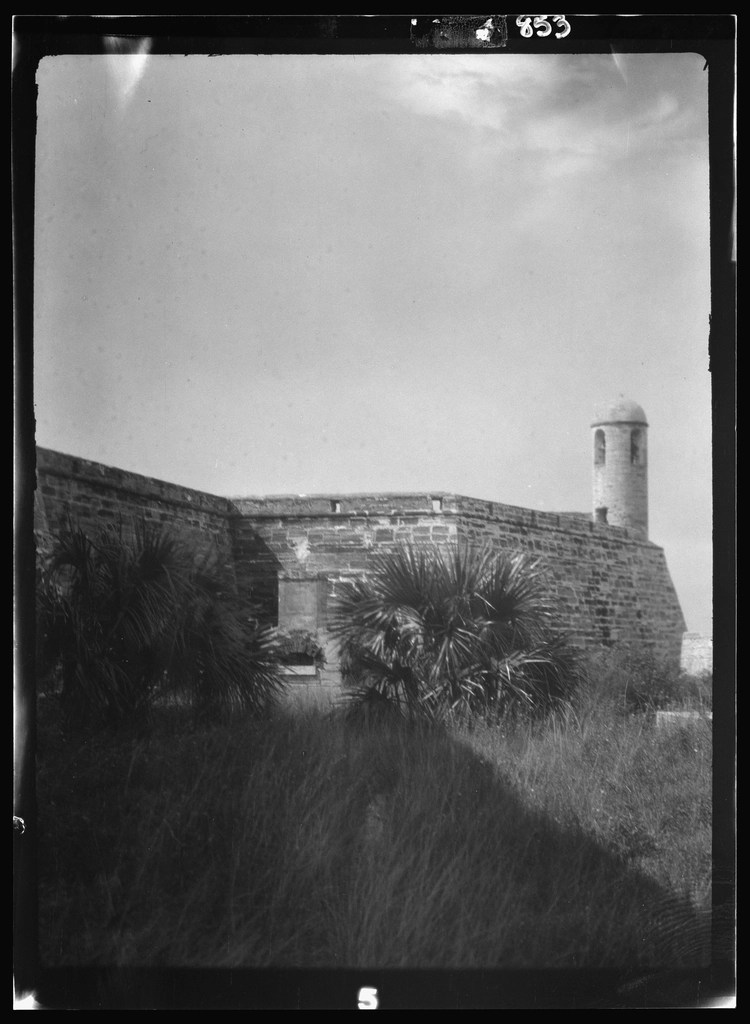
The place is called the Castillo de San Marcos in St. Augustine, Florida, which is one of the best preserved 17th-18th Century forts in the world. Built by the Spanish in the 1670’s, in 1702, it held off a British siege for 51 days, which leads to the sealed room. For those who have never been to Florida, it’s hot, humid and marshy, which exactly what you don’t want when you’re storing gunpowder. So the Spanish initial effort to build a gunpowder magazine failed; they ended up building a better one on the opposite end of the fort.

However, that was a convenient place to dump trash when a thousand soldiers and civilians are trapped in the middle of a siege. (Not human waste; they had a latrine system that flushed it all out to sea on the high tide.) When the siege is over, no one wanted to take the trash, so they just sealed it up. When it was opened a hundred years later, there were bones found among the trash, which led to stories of executions and ghosts wandering the heights.

They turned out to be animal bones. Chains that don’t rust? Nah, they rust just fine. The wall material is crushed seashells, so that’s cool; it means it flexes under bombardment, it does not break. Cell reception is fine, unless you go into the deep rooms, then yeah, it’s more difficult, just like most basements. So something I can build mystic elements around are fading fast.

The answer is obvious. “Marcus, you say you’re a writer; make something up!” However, the more suspension of disbelief you’re asking your audience to take, the greater the chance that you’ll lose them. You pop the immersion bubble and they might stop reading. So… is it likely where there is one hidden room, there are more? Sure. Is it a secret basement? In Florida, near the shoreline, where anything more than three feet deep is a wetland? No. However, as I’m working this out in my head, there are plenty of rooms in el castillo that are blocked off labeled “staff only.” Anyone of them could hold the Sacred Chalice of Rixx.

So what’s the point? If I were doing a maxim post, this would be a good time to explain “don’t let your wishes be the father of your thoughts,” but I’m not. In the end, though, when you’re writing a story, you use the existing material as best as you can, and then go from there. Sure, it’s fun playing with real history, but at some point, you’re still having wizards fighting each other. It’s fantasy, don’t get too much up your own behind.

However, as I mentioned at the beginning, that’s in No Such Squib, which you can read on An Archive of Our Own (or AO3). It’s not done yet, nor have I written the Castillo scene yet, but the beauty of that site is that you can build it chapter-by-chapter, and those who want to see the story build can read it and comment along the way. For me, it gives me instant gratification, which is why I started writing back here. But… if you’re one of those readers who actually wants a completed story before you start, then read No Such Wizard, the book that precedes it. If you’re a dedicated Kindle user like I am, it’s only $0.99. Check it out. If you’re a cheapskate like me, I still want you to read it, but you can check it out on An Archive of Our Own with simpler formatting, but the words are all the same. Enjoy!

How Did Wizards Get to America?

30 May

In the Potter-verse, we learn a lot about the wizards of Britain, something of the wizards of Europe, and virtually nothing of anywhere else. Because that’s where her stories are set. However, if you’re trying to set the wizarding world in modern-day America, you got to fill in the gaps.

As a writer, one of the tricks to creating a believable universe is having a ton of backstory that the reader will never get to read. And God, why would you?! However, if you’re like me, if you like the universe enough, then you really want to know that backstory. If so, my friends, this is your lucky day.

The first question you have to ask is “Why did the wizards want to leave Europe in the first place?” When you’re writing an alternate history (parallel history, perhaps?) that involves magic, it’s best to keep as close to the established facts as possible. What do we know about American wizardry? Thanks to the first Fantastic Beasts film and Pottermore… something. Again, Rowling didn’t write about Shangri-La, the mystical wizarding school in the Himalayas, still mostly in Britain.

Let’s start with what we know: MACUSA (The Magical Congress of America) was established in 1693 as a direct result of the Salem Witch Trials. Witches and warlocks (but mostly witches) were hunted down a lot in the 17th Century, and in certain unenlightened parts of the world (Scotland, Massachusetts) through the 18th Century. Magic was known, it was feared, and five years earlier, representatives of the English wizarding community came to King William and Queen Mary and asked for protection from the crown; they were refused. Which led to the Statute being formalized across the world in 1697.

Now the history goes on from there, but we need to start at the beginning. The witches were threatened, the American community banded together, but instead of going to the English authorities for help, they declared independence. Why? Well, we could mention the Confederation of New England and how the colonies had already formed together for mutual assistance, but that was disbanded in 1686. Curious timing. Why? Because King James II was repealing colonial charters in an attempt to centralize government control, taking it away from Parliament, and concentrating it in the person of the crown. Governors were sent to the colonies as a result, instead of them electing their own representatives.

Naturally, Parliament didn’t like that, and so we have the Glorious Revolution of 1688. Jimmy was out, but the governors stayed in, and we know that William and Mary weren’t interested in defending wizard rights. So why would the governors? What about the Ministry of Magic? Well, that didn’t exist yet; that wasn’t formed until 1707. What we know from Pottermore is that the Wizards’ Council preceded that, founded in 1347. So why didn’t they help?

Because they couldn’t. The 17th Century was not a safe time in English history; what century was? We start with Elizabeth I, give the throne to the Scottish James I (and VI), then Charles I. Because he was also trying to centralize power, cut out Parliament, he ended up losing his head. Which means that the Wizards’ Council, affiliated with the Crown, also went out of favor as the Roundheads started marching in. So from the beginning of 1649 until May of 1660, wizards would have been fleeing from the new Commonwealth just like the nobility was.

The Cavaliers fled to France, and surely most wizards did too, but with the new opportunities in the Americas, some of them probably thought that the new world was a safer bet. With the Restoration of Charles II, whatever was left of the Wizards’ Council probably wasn’t strong enough to do much. The King was a little busy whoring and keeping his throne (oh, not to mention the Great Fire of 1666) to really support a tiny minority that did nothing to get him back on the throne. So American wizards, already distrustful of a failed English state, unable to even save the muggles, said “We’re better off without them.”

Why didn’t the Canadians join them? Well, for one, they were French at that point, but we’ll investigate Canadian wizardry in another post. If you want to know why I was thinking about this topic, read No Such Wizard (I’m very proud of it). If you’re a dedicated Kindle user like I am, it’s only $0.99. Check it out. If you’re a cheapskate (also like me), I still want you to read it, but you can check it out on An Archive of Our Own for free. Either way, have fun exploring the wizarding world with me.

Tales from a broken doll

Short stories, poetry, musings and rambling.

Poteci de dor

"Adevărul, pur şi simplu, e rareori pur şi aproape niciodată simplu" - Oscar Wilde

O Miau do Leão

Uma pequena voz da Flandres

A Life's Journey

Little things matter 🌼

Dreamy_parakeet

A curious soul, unveiling her heart through musings and story telling✍️💫

Talkin' to Myself

I'm listening

Nature Whispering

From Sunset to Dawn

Riverside Peace

Discover how God works through his creation and Scripture to show us his love.

I didn't have my glasses on....

A trip through life with fingers crossed and eternal optimism.

Looking to God

Seek first the kingdom of God and his righteousness. (Matthew 6:33)

ROBERTO ALBORGHETTI

We may see things that we don't even imagine.

Decaf white

No Sugar

Retiredकलम

Mere khayal aap tak..

The Haute Mommy Handbook

Motherhood Misadventures + Creative Living

Hangaku Gozen

For we cannot tarry here, We must march my darlings

A Cornered Gurl

I am more than breath & bones. I am nectar in waiting.

Design a site like this with WordPress.com
Get started