
Context: I’m currently taking a class on public planning and this post is actually one of my homework assignments. However, I liked my answers so much I thought I’d share. So enjoy!
It’s easy to split every issue into a dichotomy; bikes versus cars, sustainability versus sprawl, good versus evil. When your job is to literally change the shape the earth, even on the smaller scale of cities, that desire to do good and make the world a better place is overwhelming. However, nothing is that simple. “In short, the planner must reconcile not two, but at least three conflicting interests: to “grow” the economy, distribute this growth fairly, and in the process not degrade the ecosystem.” (Campbell, 1996) Transportation is designed to get people from point A to point B; the greatest demand is to get people to work. So mass transit is usually designed to help people to get from the suburbs to the central business district (CBD). Except what happens is your job is not in the CBD? What if people’s choices in where to live are not balanced by distance to work but rather distance to entertainment, schools, or family?

Which is why “community development planners typically work in neighbourhoods (sic) where the housing is substandard, where crime, property abandonment and low-quality retail and recreational options curtail day-to-day social and economic functions and interactions, where few people have meaningful or well-remunerated work, and where marginalization and lack of recognition limit people’s capability to flourish as political subjects.” (Wolf-Powers, 2014) When we remove the economic difficulties, suddenly making a social equitable and environmentally friendly neighborhood becomes far easier! It also helps that many of these residents are already using public transit, because of the expense of car ownership, to make it easier for people to use what you already want them to use.
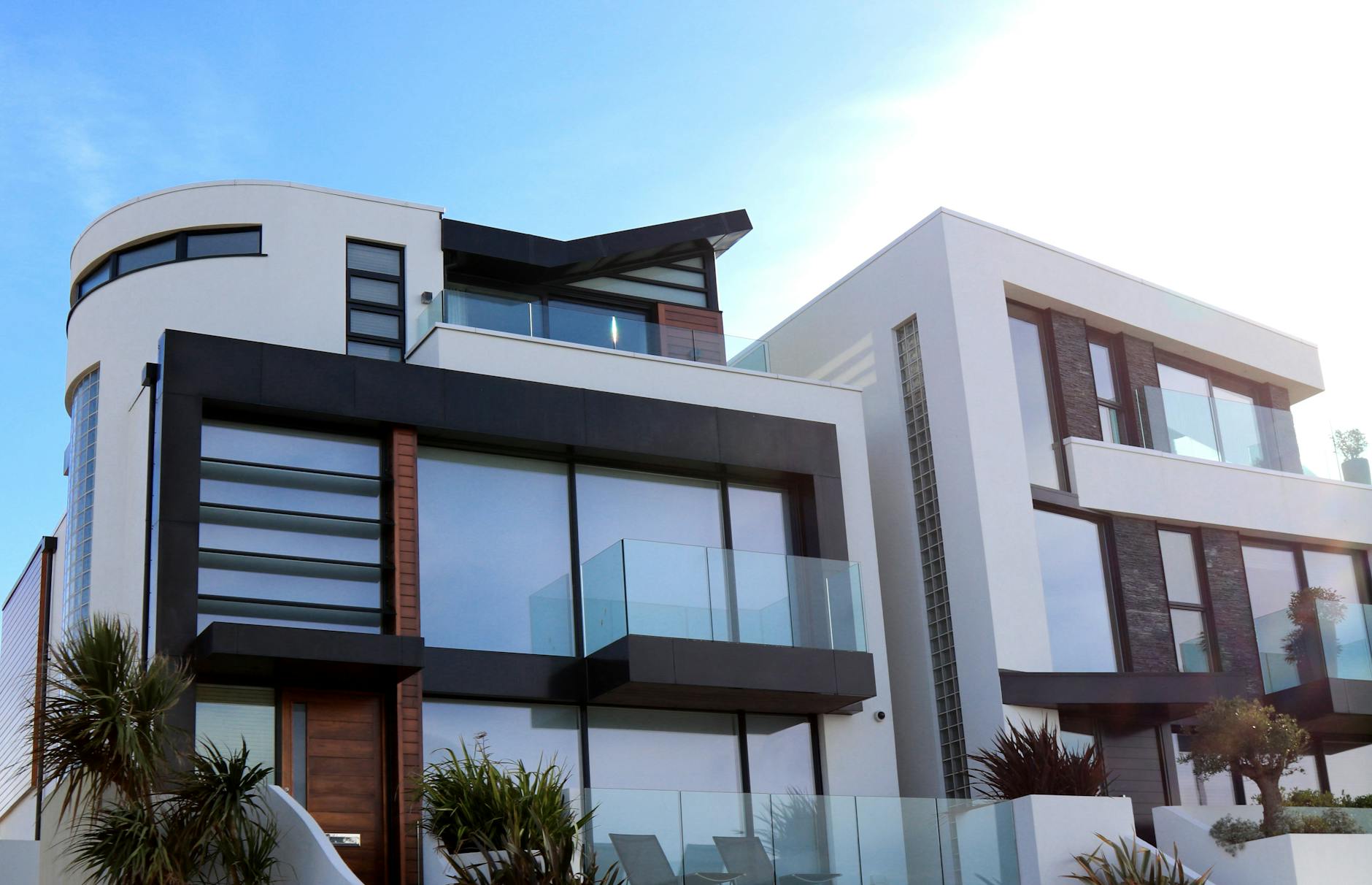
But what about convincing the middle and upper class? Take what is happening in my hometown; a real estate development called Culdesac Tempe. It is located right along the light rail, makes ample use of rideshares and car-sharing services, but “personal cars are not allowed…” because it “does not have to devote any space to parking, creating ‘ample open space for a large dog park and pool.’” (Budin, 2003) This 700 unit apartment complex broke ground in 2019. As of today (January 2024), it still hasn’t opened completely. Only 114 units have been opened, with another 174 to open by the end of 2025. (Boudway, 2023) It has been sitting as an unfinished hulk along one of the most highly development parts of the city. Why the delay? Part of it is the cost. Rents start at $1420 for a one-bedroom and $3000 for a three bedroom. Only 400 of the nearly 10,000 people interested have put down a $100 refundable deposit. (ibid) The other part is city ordinances which still demand parking minimums for all new construction, which as anyone who tries to build in Tempe will tell you, getting exemptions from their planning department is a bear.

That is why “clean slate” projects are far easier to push forward instead of novel renovations of existing framework. As Scott Campbell (1996) explains, “planners will not always be able, on their own, to represent and balance social, economic, and environmental interests simultaneously.” You have trade off one goal for another. So you can build affordable low-cost housing with access to public transit, but you can’t build it in the middle of the most expensive real-estate. You can build environmentally sound, less car use neighborhoods, but it will cost an arm and a leg. Planners have to choose their goals and stop thinking they’re saving the world.
Bibliography
Boudway, Ira. This Development Wants Residents to Ditch Their Cars. In Phoenix. Bloomberg. July 31, 2023. https://www.bloomberg.com/news/features/2023-07-31/how-a-car-free-community-in-phoenix-defeated-parking-minimums
Budin, Jeremiah. This futuristic neighborhood is ‘banning’ cars for all residents — but it’s offering them a thought-provoking deal in return. The Cool Down. October 16, 2003. https://www.yahoo.com/news/neighborhood-banning-cars-residents-offering-111500286.html
Campbell, Scott. Green Cities, Growing Cities, Just Cities? Urban Planning and the Contradictions of Sustainable Development. Journal of the American Planning Association. 62, 3. Summer 1996.
Wolf-Powers, Laura. Understanding community development in a “theory of action” framework: Norms, markets, justice. Planning Theory & Practice. 15, 2. Pp. 202-219. 2014



 Albigensia Press