Category Archives: Classics

Classics Club Spin #44

It’s time for another Classics Club “spin!”

Here’s how the Spin works:

  • Go to your blog.
  • Pick twenty books that you’ve got left to read from your Classics Club List.
  • Post that list, numbered 1-20, on your blog before Sunday 17th May 2026.
  • We’ll announce a number from 1-20.
  • Read that book by 5th July.

I enjoy these Classics Club spins, although I haven’t always finished my chosen book. However, since it’s supposed to be a fun, stressless event, I just read for the enjoyment of it, and like having the book chosen for me at random.

Here are the twenty choices from my Classics Club List (round 3):

  1. Agee, James:  A Death in the Family
  2. Babbitt, Natalie:  The Moon Over High Street
  3. Beston, Henry:  The Northern Farm: A Glorious Year on a Small Maine Farm
  4. Buck, Pearl S.:  Sons
  5. Camus, Albert:  The Stranger
  6. Chagall, Marc:  My Life
  7. de Beauvoir, Simone:  Inseparable
  8. Doig, Ivan:  The Whistling Season
  9. Kuroyanagi, Tetsuko:  Totto-Chan: The Little Girl at the Window

  10. Lindbergh, Anne Morrow:  North to the Orient
  11. Malraux, Andre:  Man’s Fate
  12. Mansfield, Katherine:  New Zealand Stories
  13. Morrison, Toni:  Home
  14. Narayan, R.K.:  Malgudi Days
  15. O’Nan, Stewart:  Emily, Alone
  16. Proust, Marcel:  Days of Reading
  17. Miss Read:  Thrush Green
  18. Soseki, Natsume:  Botchan
  19. von Arnim, Elizabeth:  The Caravaners
  20. Wiesel, Elie:  Night

Happy reading to all those participating in this 44th Classics Club Spin!
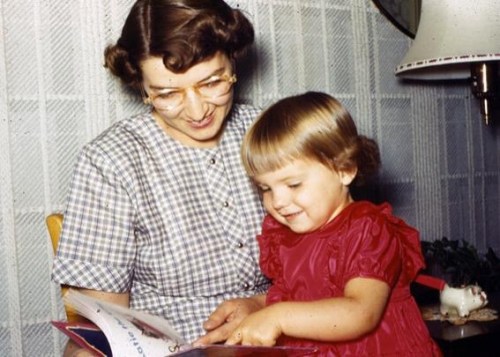
Mom and me…

Two Science Fiction Classics

I recently read two science fiction classics from my list of 50 books to read in 5 years, round 2,  with The Classics Club. The first one was The Hopkins Manuscript, by R.C. Sherriff. The second one was 20,000 Leagues Under the Sea, by Jules Verne. I enjoyed both of them!

Illustration from the Persephone Books version…

The Hopkins Manuscript was published in 1939, and was a fascinating read. The main character is Edgar Hopkins, a retired teacher with an interest in science, and a member of the British Lunar Society. He is called to London by the Society, where they were told in the strictest confidence that the moon had fallen out of its orbit and was now on a collision course with Earth, impact expected in seven months. The government decided to keep this information secret for as long as possible to avoid widespread panic, and the local members of the Lunar Society were tasked with preparing their communities for this coming catastrophe.

The story is very detailed about the kinds of preparations they tried to make. If the moon hit Earth directly, there was no chance of survival, but if it was a glancing blow, they had to prepare to survive the cataclysm. I thought the story was a brilliant exploration of human nature, and a fascinating look at what it would be like to face and possibly survive such an event. I really enjoyed this book!

The second science fiction classic, 20000 Leagues Under the Sea, was a lot of fun, although it bogged down in spots. It was first published in serial form between 1869 – 1870, and then in book form in 1870.  It was clear to me that Jules Verne loved science and loved teaching his readers about it all. It felt like a complete education in oceanography, marine biology, geography, and all that went into creating this underwater adventure that took place in the oceans and seas around the world. And the amazing technological wonder of the submarine, Nautilus, the adventure and mystery, and the anti-social Captain Nemo, kept the story moving. I enjoyed it, but probably won’t ever reread it.

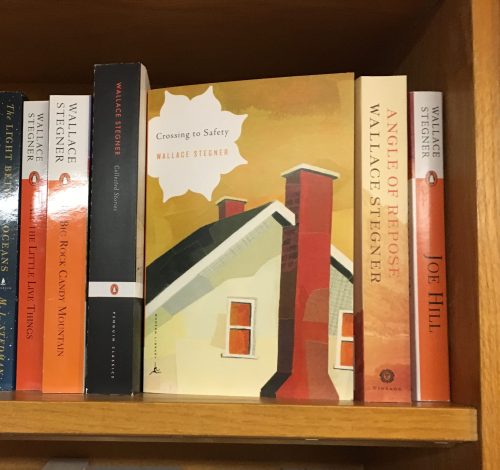
Crossing to Safety


Anything written by Wallace Stegner is an incredible reading experience. I loved reading his novel, The Spectator Bird (click here to read my thoughts on it), and I have just finished reading Crossing to Safety. My friend, Marlo, and I read it “together,” one chapter a day, and I’m glad we chose to share this book and read it that way because there was so much to absorb and process in each chapter. That’s the thing about Stegner, it’s not just a story, although the story is powerful, but it is also a profound exploration of Life. The pages are packed with wisdom, humor, and teaching/learning. He was, after all, a teacher as well as an explorer of the human condition.

Crossing to Safety is a story of friendship and growth, the story of friendship between two couples who met during the Great Depression and became lifelong friends.

From the publisher:

Tracing the lives, loves, and aspirations of two couples who move between Vermont and Wisconsin, it is a work of quiet majesty, deep compassion, and powerful insight into the alchemy of friendship and marriage.

The two couples all met on a university campus, the husbands both young professors just starting their careers, both multitalented as teachers and writers. Their wives were also bright and talented, and both were devoted to their husband’s careers. Their personalities were all different, as were their marriages, but they supported each other as life began to hit them with all its challenges. Their friendship was forged by the happiness and hope of youth and the tragedies of time. Their friendship at times was difficult but at other times literally life saving.

Stegner’s characters were of the “Greatest Generation,” and he described the landscape of their lives so clearly he transported me back in time. I recognized my parents and the pace and focus of their lives. It brought back so many memories and I connected with this story on so many different levels! My father was a college professor and I grew up witnessing many of the same dynamics as described in this story — the world of academia, the collegial friendships, the children of the families all hanging out together while our parents were deep in discussions and trying to make sense of the world. It was easy for me to picture the struggles, the pressures of the academic world, the frustrations and competitive atmosphere, and the depth and importance of those friendships.

This book was Wallace Stegner’s last published work. From my perspective, he put the wisdom of his lifetime as a scholar, teacher, writer, husband and father into this book. It is full of profound and poignant insights as revealed through each character and the growth of love and friendship over time.

Wallace Stegner’s typewriter…


The Classics Club, Round 3


I first joined The Classics Club in March of 2017 and signed up to read 50 books in 5 years. I finished those first fifty books and it turned out to be a really enjoyable reading experience for me. I do love reading the classics, so I immediately started a second round of reading 50 books in the next 5 years! I have just finished reading those 50 books, and I’m now ready to start my third list of 50 classics!

One disclaimer… As you can see from looking at the list of my second round of classics, I did not review all that I read on the list. After my husband’s death in 2022, I found it difficult to read, my blogging became very inconsistent, and I simply couldn’t focus to write reviews of the books I was able to read. My reading focus has returned, but I can’t promise to write a review of every book I read now. Life has changed for me, so I am giving myself permission to simply continue participating in The Classics Club and reading another 50 classics in 5 years, and writing as many reviews of those books as I can.

As with my first two lists, my reading will be a mix of novels, novellas, non-fiction, short stories, and poetry — a combination of adult and children’s literature. This time I’ve decided to create a pool of classics I’m interested in reading, add to it often as I run into other books I’d like to read, and choose my 50 from that changing pool of books. I will keep a running list of the books I read along this journey, so please check back here to see my progress. My new time goal for completing this third round of reading 50 books in 5 years is March 30, 2031!  Once again, that sounds so far away, but I know that five years goes by in a flash, and what pleasurable reading years they will be!

The Classics Club List #3

GOAL DATE:  March 30, 2026 – March 30, 2031
Progress = 00/50

Red = Link to my review
Blue = Read but not reviewed yet

GOAL DATE:  March 30, 2026 – March 30, 2031

Classics Completed:

  1. Crossing to Safety, by Wallace Stegner
  2. The Road From Coorain, by Jill Ker Conway
  3. The Daughter of Time, by Josephine Tey
  4. .


MY POOL OF CLASSICS I’M INTERESTED IN READING:

  • Agee, James:  A Death in the Family
  • Allende, Isabel:  The House of the Spirits
  • Arkell, Reginald:  Old Herbaceous
  • Austin, Mary Hunter:  The Land of Little Rain
  • Babbitt, Natalie:  The Moon Over High Street
  • Baldwin, James:  The Fire Next Time
  • Berry, Wendell:  Hannah Coulter
  • Beston, Henry:  The Northern Farm: A Glorious Year on a Small Maine Farm
  • Blythe, Ronald:  In the Artist’s Garden
  • Buck, Pearl S.:  Sons
  • Camus, Albert:  The Stranger
  • Chagall, Marc:  My Life
  • Choi, Sook Nyul:  Year of Impossible Goodbyes
  • Chute, Marchette:  An Introduction to Shakespeare
  • Conrad, Joseph:  The Secret Agent
  • Conway, Jill Ker:  The Road from Coorain
  • de Beauvoir, Simone:  Inseparable
  • Dostoyevsky, Fyodor:  The Idiot
  • Eliot, George:  Daniel Deronda
  • Emecheta, Buhi:  The Joys of Motherhood
  • Gogol, Nicolai:  Dead Souls
  • Goldman, William:  The Princess Bride
  • Gunther, John:  Death Be Not Proud
  • Hesse, Hermann:  Siddhartha
  • Hinton, S.E.:  The Outsiders
  • Irving, Washington:  Tales of the Alhambra
  • Knowles, John:  A Separate Peace
  • Kuroyanagi, Tetsuko:  Totto-Chan, The Little Girl at the Window
  • Lee, Laurie:  As I Walked Out One Morning
  • Lindbergh, Anne Morrow:  North to the Orient
  • Malraux, Andre:  Man’s Fate
  • Mansfield, Katherine:  New Zealand Stories
  • Márquez, Gabriel García:  Chronicle of a Death Foretold
  • Miller, Arthur:  Death of a Salesman
  • Momaday, N. Scott:  House Made of Dawn
  • Morrison, Toni:  Home
  • Narayan, R.K.:  Malgudi Days
  • O’Nan, Stewart:  Emily, Alone
  • Okakura, Kazuko:  The Book of Tea
  • Pilcher, Rosamunde:  A Place Like Home
  • Potter, Beatrix:  The Fairy Caravan
  • Proust, Marcel:  Days of Reading
  • Proust, Marcel:  Remembrance of Things Past
  • Miss Read:  Thrush Green
  • Rushdie, Salman:  The Enchantress of Florence
  • Shakespeare, William:  Hamlet
  • Sharma, Bulbul:  The Ramayana
  • Shute, Nevil:  On the Beach
  • Soseki, Natsume:  Botchan
  • Soseki, Natsume:  Kokoro
  • Stegner, Wallace:  Crossing to Safety
  • Steinbeck, John:  Cannery Row
  • Steinbeck, John:  East of Eden
  • Tanizaki, Jun’ichirō:  The Makioka Sisters
  • Tey, Josephine:  The Daughter of Time
  • Tokarczuk, Olga:  Flights
  • Tolstoy, Leo:  Anna Karenina
  • Tzu, Lao:  Tao Te Ching
  • von Arnim, Elizabeth:  The Caravaners
  • Wiesel, Elie:  Night
  • Woolf, Virginia:  A Room of One’s Own

Porchreader…

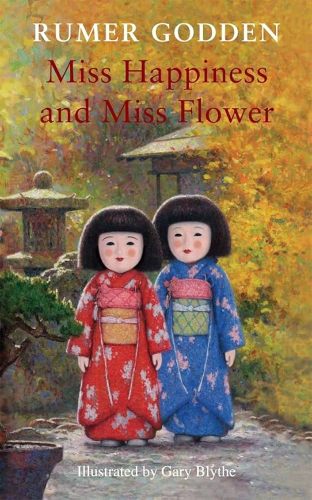
Miss Happiness and Miss Flower

Miss Happiness and Miss Flower, by Rumer Godden, was such a sweet book to complete my 50 books in 5 years challenge with The Classics Club! I am going to list Rumer Godden as one of my favorite authors now because I’ve really enjoyed each book I’ve read by her so far, both her books for children and for adults. Thank goodness there are a lot more to read!

This story warmed my heart. A young girl who has been living in India is sent to England to live with her aunt and uncle and cousins. She is very shy and very homesick, and just doesn’t fit in anywhere. But a great aunt living in the United States sends her a package with two Japanese dolls, Miss Happiness and Miss Flower. The dolls, too, are very homesick, and Nona senses this and decides to make a home for them. She first goes to the local bookshop to find out about Japanese houses. The bookstore owner is a grumpy old man who is immediately charmed by Nona’s  joy of reading and her intense desire to learn. So he provides the books she wants to read about Japanese culture. To build the dollhouse, she enlists the aid of her cousin, Tom, who loves woodworking. And as she begins to gather materials to make all the furniture and clothing, and even a garden, her enthusiasm is contagious and brings help from lots of different people. The project brings together school friends and parents and community members. The only problem is that her cousin Belinda feels left out and jealous…

I would have loved this book as a child! It is very respectful in how it presents cultural differences, and very respectful to the reader in providing a lot of extra information and explanations about Japanese culture.

Death

The Dance of Death, from the film, The Seventh Seal, by Ingmar Bergman…

Now that’s a post title that certainly grabs attention, but it’s a subject I would like to talk about and share with you. It is something I think of daily, for so many reasons: my own aging, personal losses of loved ones and friends, the state of the country and the world. But I am not a morbid person, and I find that my particular awareness of the presence of death gives me a deep and reverent appreciation for LIFE. But even though, that’s not something we talk about every day in our culture… but we do read about it often!

A quick look at my bookshelves and my reading lists reveal an inordinate number of books that have Death in the title. Death is the subject of so many of our greatest classics, because what gives us a deeper look into LIFE than ruminating about Death?

So I find myself reading more deliberately about death these days, not shying from the subject. This morning I finished reading Leo Tolstoy’s The Death of Ivan Iliych, and earlier this week I finished Willa Cather’s Death Comes for the Archbishop. Two very different stories about death written by great authors, both stories were very moving. Willa Cather’s beautifully written story about the life and death of a French Catholic priest relocated to New Mexico, was gorgeously described. Leo Tolstoy’s step by step account of the decline and death of this man was harder for me to read because I couldn’t find much to respect in the man’s life or in the way he faced death. It was so different from my own experiences with the decline and death of loved ones close to me.

When I read Simone de Beauvoir’s A Very Easy Death, (about the death of her mother) six months before my own mother died in 2018, I was deeply moved by the intimate honesty of it, and it helped me to deal with my own loss later that year.

Other titles that I find on my bookshelves are Death of a Salesman, by Arthur Miller; Death Be Not Proud, by John Gunther;  A Death in the Family, by James Agee,  Year of the Death of Ricardo Reis, by Jose Saramago; Dead Souls, by Nicolai Gogol; and Chronicle of a Death Foretold, by Gabriel García Márquez. Some of these titles have been on the shelf for a long long time. But I seem to be slowly getting to all of them!

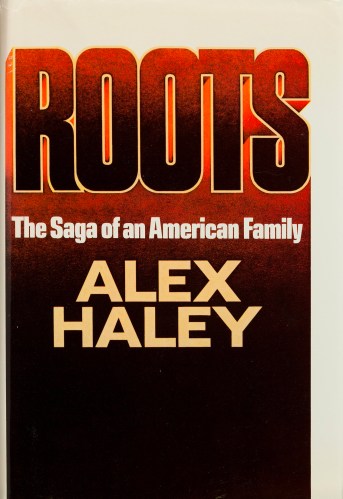
Roots

We hear a lot these days about “intergenerational trauma,” a term that describes the impact of traumatic experiences on subsequent generations in a family. I thought of this term as I finished reading Roots: The Saga of an American Family, by Alex Haley, this week. But I felt that what I would call “intergenerational resilience” is what this story is really about.

The story begins with the birth of Kunte Kinte in 1750, in the village of Juffure, in the Gambia, West Africa, who grew up with a rich inheritance of intelligence, strong spiritual beliefs, a deep understanding of the natural world, and with powerful leadership skills. His potential for excellence in his close-knit community within a deeply rich culture, was great. However, all of that was stolen from him when he was kidnapped as a teenager, and sold into slavery. He survived the horrific journey across the ocean in a slave ship, and was sold upon arrival to a slave owner who saw him simply as a good workhorse.

Kunte fought for his freedom with every fiber of his being, running away numerous times only to be caught each time. The final attempt to flee to freedom resulted in his being maimed by the slave owner, so he could never run away again. But the maiming also awakened in Kinte a new strength and will to live. He had survived the unsurvivable, and had lived. Everything he had been taught by his family, all his experiences growing up in his culture, fed that resilience, and from that came a strength that runs through his family to this day. Each subsequent generation of his family shared the stories of Kunte’s life, each generation drew strength from those stories and lived their own lives with great integrity and dignity, their true inheritance.

I started reading this book on January 1st as part of an unusual reading challenge created by Nick Senger: American Masters Chapter-a-Day Read-along. It was an incredible experience to read this book one chapter at a time. I had time to really absorb and appreciate each nuance of the story, to fully feel the impact of every carefully chosen and crafted word Mr. Haley wrote.

This has been a profound reading experience for me. After reading this story, I don’t think I can ever see the world quite the same again. It made me look again at my own family background and family struggles over time, and appreciate them with new eyes.  And reading it at this time, with all the turmoil within our country right now, added a powerful current dimension to understanding the struggles of Alex Haley’s family within our American culture. The problems at the heart of this story still exist today.

It is going to take me a long time to process this book. I know I’ll be thinking of it for a long time yet. And if asked, I’d have to say that this is one of the best books I’ve read over a lifetime of reading.

A huge Thank You to Nick Senger for creating the challenge that led to this amazing reading experience. And another Thank You to my friend, Marlo, who read it alongside me (although we live many miles away from each other). Sharing our thoughts and reactions as we read through the book really enriched my experience with it.

“Early in the spring of 1750, in the village of Juffure, four days upriver from the coast of The Gambia, West Africa, a man-child was born to Omoro and Binta Kinte.”

Down the Garden Path

One of my annual winter pleasures is to read books about gardens and gardening. Over the years I have collected so many books and ebooks, it will take me many winters to get through them all. I keep finding treasures on my bookshelves…garden books I’d forgotten I own. One of those that recently drew my attention is  Down the Garden Path, by Beverley Nichols, a book published in 1932.

Beverley Nichols was an English playwright and author of more than 60 books and plays. In 1928, he bought a thatched cottage in a village called Glatton, Cambridgeshire, UK, and named the cottage, “Allways.” Down the Garden Path is the story of his first garden, created there, and all the learning adventures that such a first time experience brought. It was written in a fun and easy to read tone, very humorous and down to earth. It was a love letter to gardens and gardeners, and especially relatable since most of us who garden still consider ourselves to be newbies to the art.

Mr. Nichols’ metamorphosis into a gardener is both delightful and contagious, and you just can’t help but smile and laugh along with him as he creates his garden…and inspires you to create your own.

“To dig one’s own spade into one’s own earth! Has life anything better to offer the this?”

Down the Garden Path is considered a classic in the gardening genre. It is full of wonderful information about plants and many interesting stories about neighbors and villagers. It is also a book immersed in the culture of 100 years ago, showing some of the attitudes and views on class and on women, in particular. But, overall, it is a delightful book for anyone who loves gardens and gardening.

A hardcopy of this book is hard to find these days, even at the library, but the ebook is available.

Allways, in the spring…

Thimble Summer

Thimble Summer, by Elizabeth Enright, is a sweet story of a special summer in the life of a young farm girl in Wisconsin during the Depression in the 1930s. She finds a silver thimble one day, and almost immediately good things start to happen. For example, the rain comes after a long drought.

But all night long the rain fell steadily with a sound of gutters running, eaves dripping, wet leaves slapping together, water coming through a leak in the attic and dropping into a dishpan, ping-ping-ping, like someone beating a little gong. When Garnet held her breath and listened very carefully, it almost seemed as if she could hear roots deep in the wet earth drinking and coming to life again.

Garnet believed that the thimble was magic and responsible for all the good things that ended up happening that summer — the building of the new barn, the arrival of an orphan boy to help on the farm, many fun adventures with friends, and her pet pig winning a blue ribbon at the County Fair. The real magic, though, was summer itself, and the wonderful summer experiences that make up a season in the life of a young girl. It’s quite a lovely story, and brought back memories of my own happy summer days growing up. I didn’t live on a farm, but I loved the many special things that summer brought — reading outside on the grass and watching contrails crisscross the blue sky, playing outside with friends until late evening, walking to the library…the stuff of my many happy summer memories. I identified with Garnet, and that’s the magic of this story. It brings back summer memories for anyone who reads it.

The book won the Newbery Award in 1939.


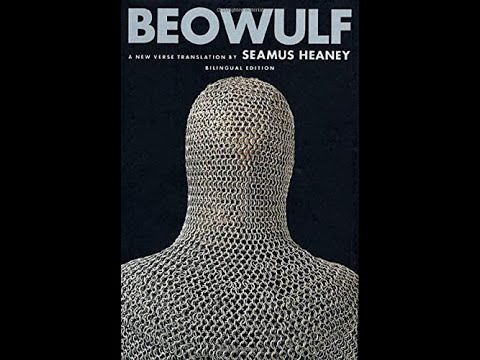
Beowulf


One of my favorite authors that I follow on social media is Ann Patchett at Parnassus Books on Instagram. Her short and fun reviews have exponentially increased the height of my mountain of TBR books. The other day, she reviewed Seamus Heaney’s translation of Beowulf.  It was such a wonderful review that I immediately downloaded the book from my library and read it.

Beowulf is one of those classics that many of us had to read in high school and haven’t revisited since. But Ann Patchett convinced me that it is a story for our times and that we should revisit it right now. There’s so much anxiety many of us are feeling these days, so much of life that seems out of control and overwhelming. The story of Beowulf is one of a hero saving the people of Geets (Denmark)  from a truly awful and overwhelming situation–a horrible man-eating monster and his mother!  Ann Patchett said that it is a very satisfying read, and, for me, that was true!

From the publisher:

Composed toward the end of the first millennium, is the elegiac narrative of the adventures of Beowulf, a Scandinavian hero who saves the Danes from the seemingly invincible monster Grendel and, later, from Grendel’s mother. He then returns to his own country and dies in old age in a vivid fight against a dragon. The poem is about encountering the monstrous, defeating it, and then having to live on in the exhausted aftermath.

The book is short and this translation is very readable. The audiobook version is read by Seamus Heaney himself, and it is very nice to listen to. So if you are feeling overwhelmed by current events, and/or feeling that life is out of control in almost every way, take Ann Patchett’s advice and read Beowulf.

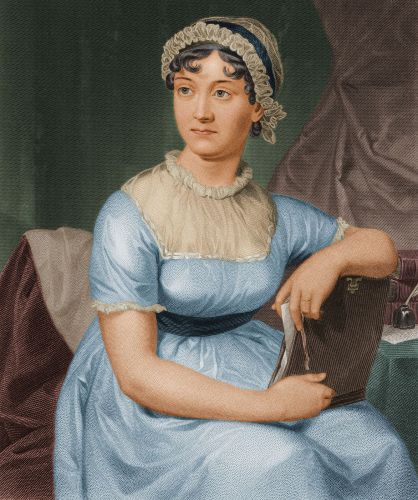
Revisiting Pride and Prejudice


As part of my celebration of 250 years since Jane Austen’s birth, I am rereading her wonderful books again. I just finished rereading Pride and Prejudice, first published in 1813. I’d like to share with you a post I wrote back in 2007, which focused on the different marriages in the book. (The photos are from the 2005 film of Pride and Prejudice, directed by Joe Wright.)

From the archives:

It’s a delight to reread Jane Austen’s stories at different stages of my life. I see the story differently each time, and I understand and appreciate it in new ways as I get older. Last week, Byron and I celebrated our 38th wedding anniversary. It wasn’t a planned part of this year’s celebration, but both of us just finished listening to the audiobook version of Pride and Prejudice. So of course, with this reread, and with our anniversary in mind, I particularly enjoyed the views of the many different marriages in the story…

Mr. & Mrs. Bennet … They’ve been married a long time, but Mr. Bennet’s choice of Mrs. Bennet was “imprudent.” He was taken by her youth and beauty, which we all know are fleeting, and now with both youth and beauty gone, they have settled into their separate lives, together.


Charlotte Lucas & Mr. Collins
… Charlotte Lucas was already considered an old maid at age 27, so when the opportunity arose for a respectable marriage to Mr. Collins, she didn’t hesitate even though she found him “irksome.” She was loyal to and supportive of him, but encouraged his separate interests and activities away from her. And she loved running her own household, which was one of the freedoms gained by marriage.


Mr. & Mrs. Gardiner
… The Gardiners are a sensible and loving couple. They reminded me of Admiral and Mrs. Croft in Persuasion — still very much in love after many years of marriage. They obviously respect each other, communicate well, work in harmony, and share their lives.


Jane & Mr. Bingley
… are so well suited for each other! She is beautiful and humble, always thinking the best of people and situations. He is generous and good. They love each other deeply, and Jane Austen tells us that their marriage will be a happy one.


Elizabeth & Mr. Darcy
… They are such a wonderful couple, but each had to grow up first before they could realize how much they really loved each other. They are alike, yet different, intelligent and independent, and they end up having a deep respect for each other. Their marriage is one of equal partnership, and their complex relationship is my favorite one in the book.


Rereading Pride and Prejudice is always enjoyable, but it was particularly fun this time as an “anniversary read.”


The Classics Club Spin #40

It’s been awhile since I participated in a Classics Club “spin.” I joined The Classics Club years ago and am on my second round of reading 50 classics in 5 years. It’s always fun to read a book chosen at random from my list of classics, so I’m going to make my spin list and see which book is chosen this time. Here’s how it works:

  1. Pick twenty books that you’ve got left to read from your Classics Club List.
  2. Post that list, numbered 1-20, on your blog before Sunday 16th February 2025.
  3. We’ll announce a number from 1-20.
  4. Read that book by 11th April.

Please check back here after February 16th to see which classic I will be reading for this Spin!

My Spin list of 20 classics: 

  1. Arkell, Reginald:  Old Herbaceous
  2. Austen, Jane:  Persuasion
  3. Austin, Mary Hunter:  The Land of Little Rain
  4. Baldwin, James:  The Fire Next Time
  5. Beston, Henry:  The Northern Farm: A Glorious Year on a Small Maine Farm
  6. Buck, Pearl S:  Sons
  7. Goldman, William:  The Princess Bride
  8. Gunther, John:  Death Be Not Proud
  9. Lee, Laurie:  As I Walked Out One Morning
  10. Lindbergh, Anne Morrow:  North to the Orient
  11. Malraux, Andre:  Man’s Fate
  12. Morrison, Toni:  Home
  13. Narayan, R.K.:  Malgudi Days
  14. Okakura, Kazuko:  The Book of Tea
  15. Perenyi, Eleanor:  Green Thoughts
  16. Proust, Marcel:  Days of Reading
  17. Tolstoy, Leo:  The Cossacks
  18. Trollope, Anthony:  Barchester Towers
  19. Wharton, Edith:  In Morocco
  20. Wiesel, Elie:  Night

Artwork by Lori Lebel…